The Grow Awards 2026 🏆
Likes
Comments
Share
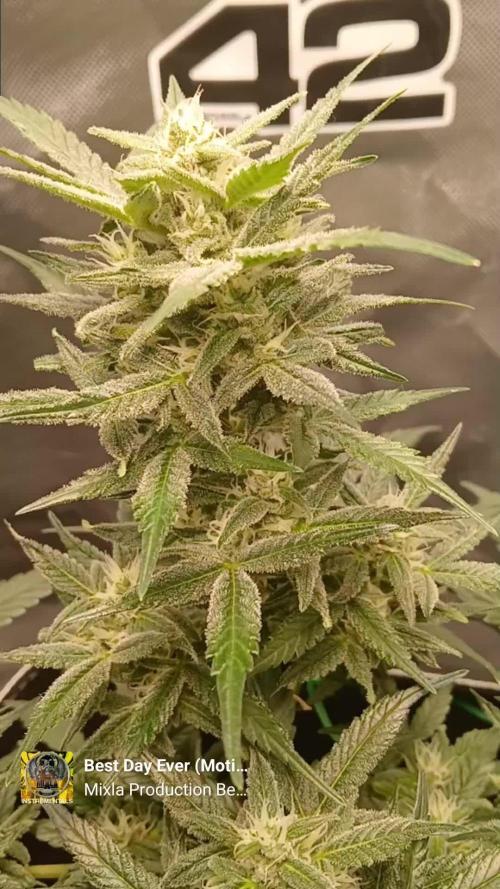
🗓️ WEEK 2 / DAY 8-14 ⚡ Light: 40 cm / 75 watt; ⌛ Schedule: 20/4; 🌡️ 22.5° C - 65% RH average; 📑 PH 5.8 - EC 0.8; 💧 Watering every other day trough the clay with 50 ml solution: tap water + Fire Yields 1 ml/l; 🌱 Removed Pheno #3, the other two seedlings are doing very fine; ⚙️ Fan, extractor and pump ON 24/0. No Humidifier. 👯‍♀️ As you can see in the pics, I have other seedlings in my grow-box, here the diaries if you want to take a look: - White Widow (GHS): https://growdiaries.com/diaries/198827-green-house-seed-co-white-widow-grow-journal-by-deepwatergrower
Likes
15
Share
Likes
10
Share
@VovaFarms
Follow
Very easy to grow strain! It was a lot of fun growing it! I am very happy with the outcome and i cant wait to dry and cure it for further examination :) I am very happy with this grow and i would definitely recommend this masterpiece to everybody!
Likes
6
Share
@BLAZED
Follow
Week 16 (Harvest) 30-1 First day of darkness. Temperature: 27.9 degrees (lights on) 18.8 degrees (lights off) Humidity: 65% (highest) 48% (lowest) 31-1 Second day of darkness. Temperature: 24.5 degrees (lights on) 19.5 degrees (lights off) Humidity: 65% (highest) 50% (lowest) 1-2 Drying day 1 The Saparot is ready to be harvested! Before chopping her down, i took a lot of pictures. I was able to remove most of the soil to see the rootball. I hang plant as a whole to have a slow dry. The exhaust fan is on setting 4. 2-2 Drying day 2 Temperature: 19.1 to 17.5 degrees Humidity: 62% to 57% I changed the exhaust fan to setting 2 because setting 4 was a bit high in my opinion. 3-2 Drying day 3 Temperature: 19.9 to 18 degrees Humidity: 62% to 59% I changed the exhaust fan to setting 1, as someone told me that it was enough air movement for drying. 4-2 Drying day 4 Temperature: 19.8 to 18.5 degrees Humidity: 62% to 59% 5-2 Drying day 5 Temperature: 19.9 to 18.8 degrees Humidity: 62% to 59% Today i checked on the drying plants and the buds are shrinking a bit, they are getting a little bit crispy on the outside aswell, I hope they wont dry as fast, and i aim for a 12/14 day dry. Cant find the temps for 6-2 to 2-13. I do have a video when she was at the half of the dry process. 14-2 Trim day, yay! She was easy to trim, the buds are nice and dense, and there was not a too high bud/leaf ratio! She dried for 14 days. End results: Dried buds: 81 Grams. Dried Trim: 18.5 Grams. I am really surprised how good these genetics are! If you like CBD, i really suggest trying JYM Seeds out! The Saparot smells very fruity almost like a fruity coctail. The buds are super dense, and very bag appealing. After some months of curing the sweet fruity smell changed to a more sour smell, but still smells amazing! To be honest, i cured her a bit poorly, burped too less, and because the buds are so compact she holds moisture better then normal, so she tastes harsh, but thats on me. I have a pack of JYM's Sour Fruit aswell, so i will for sure try it out again! And my hope is already very high :D Thanks for following my diary, and feel free to check my others out aswell! See you at the next one!
Likes
22
Share
Seeding March 16 Germination 21-25 march 🇱🇺🌱🤩 Day 56 from seeding, flower in full progress Grow method 12/12 from seed- Sea of green here I'am again, yesterdy morning my ladies had their last schwazzing that means day 20-21 in flower, all in all everything looks very good, from yesterda on my CO² system is also in operation, tomorrow my ladies only have a bit of ph reg. water from me and giving them some time to revover from the defoliation stress before i start with nutes again.... and now I leave them alone until further notice.... Cheerio & Tataaa🤜🤛👊🏻🇱🇺🌱 ⚠️ Short info about my Humidity: as you can see my humidity sensor from my CT grow system that I have is around 80% RH, but that is not right, my humidity  is around 49-52% my sensor gets 24 hours  fully blown by my humidifier  onto the sensor no matter where I hang it because my ventilation is all around and is blown from top to bottom and a box fan lets everything circulate through the growroom so my old hygrometer is hanging in there againe and everything is fine Amnesia by & for @Superstrains Official Runtz by & for @Zamnesia Webshop came in 1 week later Sour Diesel by & for @Inseedious NL Cobalt Haze by @Sensi Seeds  & Arjans Strawberry Haze by @Greenhouse Seeds  for @Amsterdam Seed Center Under & for @Mars Hydro Factory Nutes by & for @Hy-Pro Fertilizers Soil: Atami light mix & 5mm broken puffed clay & 16mm puffed clay on the bottem of my 5.5L. pots Temp: 24,56 °C temp outside 15°C Lights: 12/12 Humidity: 49-52 % Vpd kpa: 1.3-1.4 Roots 17.50°C Ph : 5.90 Tds/ec 1.5 Water: 0.8L. p.plant  23°C CO²: No Mercy Tabs & boost bucket Nutes by Hy-Pro Fertilizers HyPro : Spraymix 0ml by 1L. HyPro : Terra vegi & bloom 4.5ml by 1L. HyPro : Rootstimulator 5ml by 1L. HyPro : Generator 0.16ml by 1L. HyPro : Epic Bloom 00ml by 1L. HyPro : Cal-Mag  0.5 ml by 1L. Light distance: =55cm to plant = 30cm to CTgrow sensor dimmer on 80% = 980umol/m²PPDF +-10 Vpd/kpa  - 1.350 -1.400 Gear all controlled by @ctgrow 1x MarsHydro TSW3000 1x MarsHydro TSL 2000 Air Van: 900m³ Prima Klima on 30% Filter: Prima Klima 660m³ for seed& veg stage & 660m3 CanLite for bloom stage 3 l water cooling airco Diamant... 3.3l humidifier 1.8l dehumidifier My grow room is variable in size 120cmx120cm² Custom Grow space for sog 150cmx150cm for scrog   Big THANKS to my lovely sponsors : Super Strains,  HyPro Fertilizers, Amsterdam Seed Center, Zamnesia, Inseedious, BTB Grow Supplies, Mars Hydro & CT Grow Systems
Likes
92
Share
@GMSgrows
Follow
Everything is doing fine. Checked the runoff waters and the ppm going in was 800, 1.6 sec and the ph was 5.8 using Cyco nutrients, and it says to keep ph from 5.5 to 5.8 through bloom. So the runoff water was at 900 ppm and pump ph is sitting at 6.0. The top of the one cheese is past the light, but she is so large there is a lot of flowers under the light. There starting to do some bulking now. The odours from the cheese is pretty strong. Looking forward to getting this month finished. Some fine strains to try next.
Likes
9
Share
This strain was perfect for my first grow was resistant asf even in the 38 degree heat these plants showed little stress. I’ve learned a lot during this grow and decide to go with this strain again for my next, The smell of my harvest isn’t that strong bud the high is. Smell is really nice and the taste 🤤 gave some to a friend who say “ it fruitier than Alan carr” but yeah have nothing bad to say about bpp and will be one of my go toos for now on
Likes
61
Share
Well as the strain that was completely making my grow room stink I'm glad she is down finally . Anyone looking for some stinky buds and a girl who can give you nice compact buds and a good amount look no further .I'm going to run these girls again sometime soon as they were just so dam good at taking what ever I threw at them ..They had no nutrient burn or lockout issues , they lived high humidity and never showed stress . They could go with out water for an extended time and recover no problem . The team that did these girls really made a winner here I would recommend this one to anyone out there looking for easy to grow plants with a good return .. cheers canna family check me out on instagram @cannibal19888
Likes
3
Share
63 days of flowering have passed, according to various colleagues they are 1/2 weeks behind on the swelling. But to me they look squat enough to pick up. Quite evident smell of sweet Hashy. Fed lightly with Bio Bloom but it was more of a rinse. 2.22l per day for 6 days, including 2 days put 1 drop of Bio Bloom in the irrigation
Processing
Likes
20
Share
@No_Clout
Follow
Started flush at start of week 9, will flush all the way till the end of week 10. To be honest I’m not sure we’re I land with the grapey Walters, they have some nice big colas but they don’t seem to be dense at all not sure if that’s my fault or if it’s just the genetics, their mildly frosty no were near as frosty as the sour stompers ajecent to them. They do have a lovely smell and I hope that I’m wrong and I might end up being a fan of them depending on the high/taste, only time will tell. ✌️🏻
Likes
13
Share
Right before flowering I've decided to LOLLIPOP these ladies, so I stripped them under the trellis net : ) They are looking gorgeous and enjoying life so everything's looking good in the hood ! By the way, the veg lasted 7 weeks from seed, not 12 ! The timeline of this diary is a bit strange, better stick to the days from seed ; )
Likes
12
Share
@GrowGuy97
Follow
Day 35 - Ladies are way taller than I could have ever imagined & starting to get extremely dark pruple😍 make sure to check back for daily updates & happy growing friends✌️🏼🌱
Likes
7
Share
@Maven26
Follow
Great White in AutoPots System. Im thinking I need to upgrade my light system. May need better light coverage. Glad to see how she has caught herself.
Likes
38
Share
The scent is getting sweet and pungent. The flowers are sticky to the touch. Everything g is coming along so perfectly. I love Growing Marijuana.
Likes
2
Share
Just keep watering as it drys. Supporting buds along the way that are getting too heavy. Smells like skunk and gas. Little fruit but not much. Trics still getting thick. Look forward to it finishing. Tricomes still cloudy. Little amber on sugar leaves but it's still going strong. Some leave fading finally to fall colors.
Likes
8
Share
@BeanCrop
Follow
Lot more to this girl this week her buds are starting to bulk nicely and she is producing more of a smell I'm really pleased with how she is turning out for my first ever grow and a DIY Aero/Hydroponic system. This was the last week of nutrients I will now start to dilute/flush my reservoir by just adding water of PH 6.2 to the solution for the next few weeks and then plan to do a complete reservoir change to just water at a PH of 5.8 - 6.2 for the final flush. Happy growing 🌱
Likes
1
Share
@ladyjane
Follow
8/12 - Dropped 4 seeds into RO water to germinate 8/13 - Placed seeds into re-hydrated peat pellets soaked in Extreme Serene then placed on heat mat to complete germination. 8/14 - All four seeds have sprouted! I have 100% germination. I watered w/ a little RO water and molasses and placed back in tent. 8/15 - Three of the four seeds already have their true leaves and have stretched so much that they HAVE to be planted! I prepared four 1-gallon pots with Roots Organics Original soil and added 1 cup of Bad Bunny nutrients and mixed well. I topped it with Mosquito Bits for added BTI for pest prevention. Finally, I wet the pots down with RO water and Organic Black Strap Molasses. Then planted the four seeds and placed them in the 4x5 tent. I placed a humidity dome one the one that still does not have it's true leaves to keep in moisture. 8/16 - The last of the Purple Microdots has sprouted her true leaves so I have removed her dome. I sprayed them lightly again today with RO water and molasses.
Processing
Likes
9
Share
Damn they fine looking Ladies!🌿😍 Doing LST on the next week
Processing
Likes
16
Share
@S1993
Follow
Second week of flower and my ladys have all grown rapidly in the last week bud seem to be blooming already at a decent size also main stem has gone quite thick.
Likes
96
Share
💩Alrighty then Growmies We Are Back At it 💩 Well folks we just finished up the last run and so we are bad to do it all over again 😁 So what do you say we have some fun 👈 We got some Z & Z 🚗 🚘 🚗 🚘 👉 From Exotic Seeds Well we are just 28 days and folks shes doing pretty good 👌 It's been a crazy week 👉 huge storm rolled in and we lost power for around 4 days😳 so I had to get creative and have things on back up 👈 Shes in her preflower so the stretch is on 👌 So this week I've started her nutrients regiments 👌Just need to remind myself to take it easy 🤔 FC4800 from MarsHydro Lights being readjusted and chart updated .........👍I've added a UR45 to the mix👈 www.marshydro.ca 👉I used NutriNPK for nutrients for my grows and welcome anyone to give them a try .👈 👉 www.nutrinpk.com 👈 NutriNPK Cal MAG 14-0-14 NutriNPK Grow 28-14-14 NutriNPK Bloom 8-20-30 NutriNPK Bloom Booster 0-52-34 I GOT MULTIPLE DIARIES ON THE GO 😱 please check them out 😎 👉THANKS FOR TAKING THE TIME TO GO OVER MY DIARIES 👈 Would you like to hang with the growdiary community 👉 https://discord.gg/gr4cHGDpdb 👈
Likes
34
Share
Yellow butterfly came to see me the other day; that was nice. Starting to show signs of stress on the odd leaf, localized isolated blips, blemishes, who said growing up was going to be easy! Smaller leaves have less surface area for stomata to occupy, so the stomata are packed more densely to maintain adequate gas exchange. Smaller leaves might have higher stomatal density to compensate for their smaller size, potentially maximizing carbon uptake and minimizing water loss. Environmental conditions like light intensity and water availability can influence stomatal density, and these factors can affect leaf size as well. Leaf development involves cell division and expansion, and stomatal differentiation is sensitive to these processes. In essence, the smaller leaf size can lead to a higher stomatal density due to the constraints of available space and the need to optimize gas exchange for photosynthesis and transpiration. In the long term, UV-B radiation can lead to more complex changes in stomatal morphology, including effects on both stomatal density and size, potentially impacting carbon sequestration and water use. In essence, UV-B can be a double-edged sword for stomata: It can induce stomatal closure and potentially reduce stomatal size, but it may also trigger an increase in stomatal density as a compensatory mechanism. It is generally more efficient for gas exchange to have smaller leaves with a higher stomatal density, rather than large leaves with lower stomatal density. This is because smaller stomata can facilitate faster gas exchange due to shorter diffusion pathways, even though they may have the same total pore area as fewer, larger stomata. Leaf size tends to decrease in colder climates to reduce heat loss, while larger leaves are more common in warmer, humid environments. Plants in arid regions often develop smaller leaves with a thicker cuticle and/or hairs to minimize water loss through transpiration. Conversely, plants in wet environments may have larger leaves and drip tips to facilitate water runoff. Leaf size and shape can vary based on light availability. For example, leaves in shaded areas may be larger and thinner to maximize light absorption. Leaf mass per area (LMA) can be higher in stressful environments with limited nutrients, indicating a greater investment in structural components for protection and critical resource conservation. Wind speed, humidity, and soil conditions can also influence leaf morphology, leading to variations in leaf shape, size, and surface characteristics. Small leaves: Reduce water loss in arid or cold climates. Environmental conditions significantly affect gene expression in plants. Plants are sessile organisms, meaning they cannot move to escape unfavorable conditions, so they rely on gene expression to adapt to their surroundings. Environmental factors like light, temperature, water, and nutrient availability can trigger changes in gene expression, allowing plants to respond to and survive in diverse environments. Depending on the environment a young seedling encounters, the developmental program following seed germination could be skotomorphogenesis in the dark or photomorphogenesis in the light. Light signals are interpreted by a repertoire of photoreceptors followed by sophisticated gene expression networks, eventually resulting in developmental changes. The expression and functions of photoreceptors and key signaling molecules are highly coordinated and regulated at multiple levels of the central dogma in molecular biology. Light activates gene expression through the actions of positive transcriptional regulators and the relaxation of chromatin by histone acetylation. Small regulatory RNAs help attenuate the expression of light-responsive genes. Alternative splicing, protein phosphorylation/dephosphorylation, the formation of diverse transcriptional complexes, and selective protein degradation all contribute to proteome diversity and change the functions of individual proteins. Photomorphogenesis, the light-driven developmental changes in plants, significantly impacts gene expression. It involves a cascade of events where light signals, perceived by photoreceptors, trigger changes in gene expression patterns, ultimately leading to the development of a plant in response to its light environment. Genes are expressed, not dictated! While having the potential to encode proteins, genes are not automatically and constantly active. Instead, their expression (the process of turning them into proteins) is carefully regulated by the cell, responding to internal and external signals. This means that genes can be "turned on" or "turned off," and the level of expression can be adjusted, depending on the cell's needs and the surrounding environment. In plants, genes are not simply "on" or "off" but rather their expression is carefully regulated based on various factors, including the cell type, developmental stage, and environmental conditions. This means that while all cells in a plant contain the same genetic information (the same genes), different cells will express different subsets of those genes at different times. This regulation is crucial for the proper functioning and development of the plant. When a green plant is exposed to red light, much of the red light is absorbed, but some is also reflected back. The reflected red light, along with any blue light reflected from other parts of the plant, can be perceived by our eyes as purple. Carotenoids absorb light in blue-green region of the visible spectrum, complementing chlorophyll's absorption in the red region. They safeguard the photosynthetic machinery from excessive light by activating singlet oxygen, an oxidant formed during photosynthesis. Carotenoids also quench triplet chlorophyll, which can negatively affect photosynthesis, and scavenge reactive oxygen species (ROS) that can damage cellular proteins. Additionally, carotenoid derivatives signal plant development and responses to environmental cues. They serve as precursors for the biosynthesis of phytohormones such as abscisic acid () and strigolactones (SLs). These pigments are responsible for the orange, red, and yellow hues of fruits and vegetables, while acting as free scavengers to protect plants during photosynthesis. Singlet oxygen (¹O₂) is an electronically excited state of molecular oxygen (O₂). Singlet oxygen is produced as a byproduct during photosynthesis, primarily within the photosystem II (PSII) reaction center and light-harvesting antenna complex. This occurs when excess energy from excited chlorophyll molecules is transferred to molecular oxygen. While singlet oxygen can cause oxidative damage, plants have mechanisms to manage its production and mitigate its harmful effects. Singlet oxygen (¹O₂) is considered a reactive oxygen species (ROS). It's a form of oxygen with higher energy and reactivity compared to the more common triplet oxygen found in its ground state. Singlet oxygen is generated both in biological systems, such as during photosynthesis in plants, and in cellular processes, and through chemical and photochemical reactions. While singlet oxygen is a ROS, it's important to note that it differs from other ROS like superoxide (O₂⁻), hydrogen peroxide (H₂O₂), and hydroxyl radicals (OH) in its formation, reactivity, and specific biological roles. Non-photochemical quenching (NPQ) protects plants from damage caused by reactive oxygen species (ROS) by dissipating excess light energy as heat. This process reduces the overexcitation of photosynthetic pigments, which can lead to the production of ROS, thus mitigating the potential for photodamage. Zeaxanthin, a carotenoid pigment, plays a crucial role in photoprotection in plants by both enhancing non-photochemical quenching (NPQ) and scavenging reactive oxygen species (ROS). In high-light conditions, zeaxanthin is synthesized from violaxanthin through the xanthophyll cycle, and this zeaxanthin then facilitates heat dissipation of excess light energy (NPQ) and quenches harmful ROS. The Issue of Singlet Oxygen!! ROS Formation: Blue light, with its higher energy photons, can promote the formation of reactive oxygen species (ROS), including singlet oxygen, within the plant. Potential Damage: High levels of ROS can damage cellular components, including proteins, lipids, and DNA, potentially impacting plant health and productivity. Balancing Act: A balanced spectrum of light, including both blue and red light, is crucial for mitigating the harmful effects of excessive blue light and promoting optimal plant growth and stress tolerance. The Importance of Red Light: Red light (especially far-red) can help to mitigate the negative effects of excessive blue light by: Balancing the Photoreceptor Response: Red light can influence the activity of photoreceptors like phytochrome, which are involved in regulating plant responses to different light wavelengths. Enhancing Antioxidant Production: Red and blue light can stimulate the production of antioxidants, which help to neutralize ROS and protect the plant from oxidative damage. Optimizing Photosynthesis: Red light is efficiently used in photosynthesis, and its combination with blue light can lead to increased photosynthetic efficiency and biomass production. In controlled environments like greenhouses and vertical farms, optimizing the ratio of blue and red light is a key strategy for promoting healthy plant growth and yield. Understanding the interplay between blue light signaling, ROS production, and antioxidant defense mechanisms can inform breeding programs and biotechnological interventions aimed at improving plant stress resistance. In summary, while blue light is essential for plant development and photosynthesis, it's crucial to balance it with other light wavelengths, particularly red light, to prevent excessive ROS formation and promote overall plant health. Oxidative damage in plants occurs when there's an imbalance between the production of reactive oxygen species (ROS) and the plant's ability to neutralize them, leading to cellular damage. This imbalance, known as oxidative stress, can result from various environmental stressors, affecting plant growth, development, and overall productivity. Causes of Oxidative Damage: Abiotic stresses: These include extreme temperatures (heat and cold), drought, salinity, heavy metal toxicity, and excessive light. Biotic stresses: Pathogen attacks and insect infestations can also trigger oxidative stress. Metabolic processes: Normal cellular activities, particularly in chloroplasts, mitochondria, and peroxisomes, can generate ROS as byproducts. Certain chlorophyll biosynthesis intermediates can produce singlet oxygen (1O2), a potent ROS, leading to oxidative damage. ROS can damage lipids (lipid peroxidation), proteins, carbohydrates, and nucleic acids (DNA). Oxidative stress can compromise the integrity of cell membranes, affecting their function and permeability. Oxidative damage can interfere with essential cellular functions, including photosynthesis, respiration, and signal transduction. In severe cases, oxidative stress can trigger programmed cell death (apoptosis). Oxidative damage can lead to stunted growth, reduced biomass, and lower crop yields. Plants have evolved intricate antioxidant defense systems to counteract oxidative stress. These include: Enzymes like superoxide dismutase (SOD), catalase (CAT), and various peroxidases scavenge ROS and neutralize their damaging effects. Antioxidant molecules like glutathione, ascorbic acid (vitamin C), C60 fullerene, and carotenoids directly neutralize ROS. Developing plant varieties with gene expression focused on enhanced antioxidant capacity and stress tolerance is crucial. Optimizing irrigation, fertilization, and other management practices can help minimize stress and oxidative damage. Applying antioxidant compounds or elicitors can help plants cope with oxidative stress. Introducing genes for enhanced antioxidant enzymes or stress-related proteins over generations. Phytohormones, also known as plant hormones, are a group of naturally occurring organic compounds that regulate plant growth, development, and various physiological processes. The five major classes of phytohormones are: auxins, gibberellins, cytokinins, ethylene, and abscisic acid. In addition to these, other phytohormones like brassinosteroids, jasmonates, and salicylates also play significant roles. Here's a breakdown of the key phytohormones: Auxins: Primarily involved in cell elongation, root initiation, and apical dominance. Gibberellins: Promote stem elongation, seed germination, and flowering. Cytokinins: Stimulate cell division and differentiation, and delay leaf senescence. Ethylene: Regulates fruit ripening, leaf abscission, and senescence. Abscisic acid (ABA): Plays a role in seed dormancy, stomatal closure, and stress responses. Brassinosteroids: Involved in cell elongation, division, and stress responses. Jasmonates: Regulate plant defense against pathogens and herbivores, as well as other processes. Salicylic acid: Plays a role in plant defense against pathogens. 1. Red and Far-Red Light (Phytochromes): Red light: Primarily activates the phytochrome system, converting it to its active form (Pfr), which promotes processes like stem elongation and flowering. Far-red light: Inhibits the phytochrome system by converting the active Pfr form back to the inactive Pr form. This can trigger shade avoidance responses and inhibit germination. Phytohormones: Red and far-red light regulate phytohormones like auxin and gibberellins, which are involved in stem elongation and other growth processes. 2. Blue Light (Cryptochromes and Phototropins): Blue light: Activates cryptochromes and phototropins, which are involved in various processes like stomatal opening, seedling de-etiolation, and phototropism (growth towards light). Phytohormones: Blue light affects auxin levels, influencing stem growth, and also impacts other phytohormones involved in these processes. Example: Blue light can promote vegetative growth and can interact with red light to promote flowering. 3. UV-B Light (UV-B Receptors): UV-B light: Perceived by UVR8 receptors, it can affect plant growth and development and has roles in stress responses, like UV protection. Phytohormones: UV-B light can influence phytohormones involved in stress responses, potentially affecting growth and development. 4. Other Colors: Green light: Plants are generally less sensitive to green light, as chlorophyll reflects it. Other wavelengths: While less studied, other wavelengths can also influence plant growth and development through interactions with different photoreceptors and phytohormones. Key Points: Cross-Signaling: Plants often experience a mix of light wavelengths, leading to complex interactions between different photoreceptors and phytohormones. Species Variability: The precise effects of light color on phytohormones can vary between different plant species. Hormonal Interactions: Phytohormones don't act in isolation; their interactions and interplay with other phytohormones and environmental signals are critical for plant responses. The spectral ratio of light (the composition of different colors of light) significantly influences a plant's hormonal balance. Different wavelengths of light are perceived by specific photoreceptors in plants, which in turn regulate the production and activity of various plant hormones (phytohormones). These hormones then control a wide range of developmental processes.