Likes
23
Share
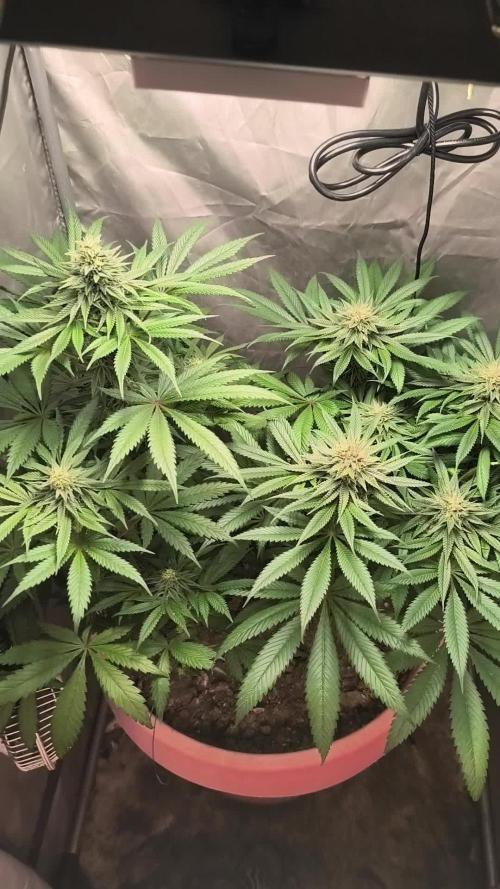
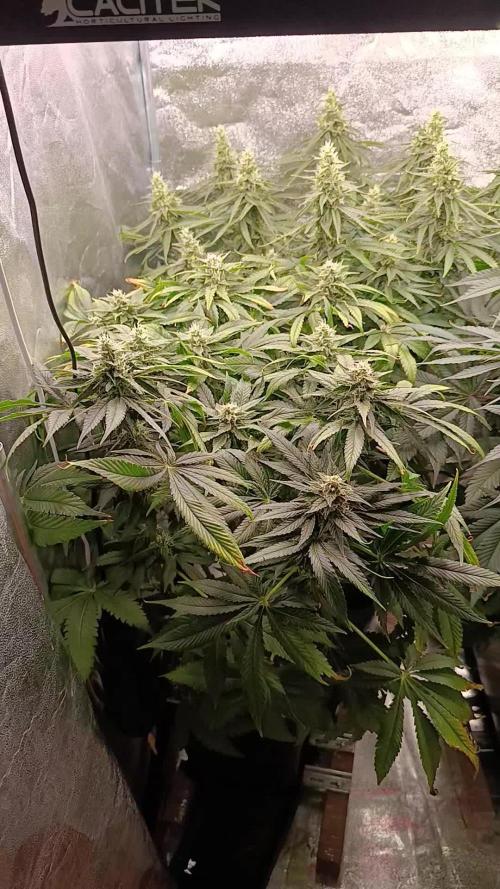
Day 56 flowering: I love Gorilla zkittelz with a passion!!!!. They have been consistent throughout the grow even if the pheno kept the other 2 smaller. Their buds are amazing to see in the light and full of trichs. They smell so fruity/candy now too. Another few days for these 2 ladies and its into the dark for 48 hrs. They have begun to fade slightly now so hopefully know they are close to their end , and start hitting the stored supplies to clear out some chlorophyll. Their buds are rock solid now and dont move and inch when pressed. Cannot wait to sample this strain.
Processing
Likes
7
Share
@gablmo
Follow
Finally flower. They are 4 feet now. What am I going to do? I don't want them to burn into the light.
Likes
11
Share
It’s bern roughly two months these guys have been growing! Lst’d Both but untied the gg because I wasn’t sure she was benefiting from it so I’m going to do it over. These ladies (I hope) will start their flower journey next week when I revive my new flower tent 😎..stay tuned for some epic buds..I hope!!
Likes
129
Share
@StarLorr
Follow
Welcome to my Cherry🍒Cola diary. In this Diary: Seeds: [420 Fast Buds]from my growmie Tropicannibis_Todd 👊🏻😎 Media: Pro~Mix HP Open Top Grow Bag, Connect. Nutrients: Green Planet Nutrients, 2 Part Dual Fuel starter kit. RealGrowers: Recharge. Diablo nutrients: Ripping. Feeding : Tue 26Mar: 2L Nutes/Recharge pH'd 6.5 Fri 29Mar: 2L Monster K pH'd 6.5 ___________________________ The buds are very hard and heavy. Trichomes are white and the amber should be at my satisfaction by next weekend, sorry for the quality of the trichomes video... i know it looks like the same cameraman who captured UFO🛸on a pogo stick... will try harder next time😅😂............ i can see the finish line🏁👀1 more lap😎 ___________________________ Thanks for stopping by, likes and comments are appreciated.👊🏻😎 Keep on growin! Keep on tokin!!! 😙💨💨💨💨💨
Processing
Likes
4
Share
Gunna keep em vegging for 4/5 more days then flip em to 12-12 and flower :) Not gunna top, fim THIS TIME I've just done a bit of LST on the smaller of the 2 girls....
Likes
6
Share
Likes
34
Share
Dear Friends, 👨‍🌾 👩‍🌾 we are here to show you our journey with the MIMOSA X ORANGE PUNCH™️ by Barney’s Farm. Germination started on the 10/11/2022, the root sprout on the 12/11/2022. ✅ VEGETATIVE week #7 (LAST WEEK) 30/12 SWITCH 12/12H 📅this week goes from 26/12 to 01/01.📅 💡💡💡Viparspectra XS2000 is working at 50% power. 💉🔍Fertilization schedule:🔍💉 26/12 3ml/lt TOP VEG 30/12 TOP MASS 0.2ml/L + 2.2 ml/L TOP VEG 31/12 SENSI CAL MAG EXTRA 2ml/L foliar spray This new strain is hybrid produced from a cross between Mimosa Evo and Orange Punch. It is a mostly indica strain, so, short flowering and big and dense buds! It is one of the most colourful editions to their Cali Collection. This strain will surely be amazing, I can’t wait to smell the tangerine aroma and its sweet smoke. We are glad to have the opportunity to try this strain from this experienced seed bank, we will do our best to grow this baby as well as possible. THANK YOU Barney’s Farm ❤️❤️❤️ ***WE ARE BACK!!! We are back after a little pause. We take a break because we were too busy to post high quality diaries. In the last diaries we tried to post as good as possible and we have to publish about 6 or 8 diaries (in addition to these that we will publish shortly). We opened also an educational Instagram page, we growed a lot in a short amount of time BUT, Instagram suspended our account and we lost all our posts, I was so sad and disappointed... a lot of work lost in a night....*** 🤓+DATA SHEET+🤓 MIMOSA X ORANGE PUNCH™️ Cannabis Seeds Strain Specifications Type: Feminised photoperiodic Genetics: Mimosa Evo x Orange Punch Effect: Euphoric, Happy, Uplifted Outdoor Yield (g): up to 1.5 kg per plant Indoor Yield (g):up to 700 gr/m² Flowering Time (days): 55 - 60 Indica %: 65% Sativa %: 35% Taste: Citrusy Candy Orange 💸💸💸💸💸 Buy MIMOSA X ORANGE PUNCH™️: https://www.barneysfarm.com/mimosa-x-orange-punch-552 _______________________________________________________________________ 🔧💡OUR SET UP💡🔧 ✔️ 💲💲💲VIPARSPECTRA 🚀🚀🚀🌕🌕 ViparSpectra®️ XS2000 240W Infrared Full Spectrum LED Grow Light: Excellent ratio between wattage and ppfd, excellent light penetraton, perfect light spectrum (it also has IR 🤩) and it has the best build quality on the market. Until now, built quality is really awesome. You can touch that quality. Materials are really strong, excellent driver and the best leds on the market. Heat dissipation is perfect, the lamp is never too hot and it has a passive dissipator so you will have zero noise. It also has IP65 certification. I like that this lamp is bigger than others, so the 240w of power are well distribuited on the space. Viparspectra has an awesome customer service, and shipping was creazy fast! This awesome brand also offers 3 years warranty. This lamp has no rivals. A special thanks to Emily of Viparspectra ❤️❤️❤️❤️ HERE YOU CAN BUY THIS PROFESSIONAL LIGHT: https://www.viparspectra.com/products/xs-series-xs2000 or https://amzn.to/3dyUoJl and here you can buy other awesome stuff: https://www.viparspectra.com ✔️ 💲💲💲MARSHYDRO 🚀🚀🚀🌕🌕 📦120X120 GROW TENT: an awesome box, easy and fast to assembly. Made by strong materials, solid zips and it is totally lightproof. The position of holes is optimal and the two lateral windows will make easier the work inside the box. There is also a double end, so you are 100% sure that dirt or liquids will not spill out. You can find it here: https://www.mars-hydro.com/grow-tent/buy-mars-hydro-grow-tent-48x48x80-1680d-4-x-4-size-keeps-all-light-in-top-quality-1680d-canvas-is-tear-proof-and-double-stitched-light-blocking-fast-installation-for-sale 💡TS 600 FULL SPECTRUM 100W LED GROW LIGHT : with this light you will achieve excellent buds, you will not need anything more. This lamp replace a 150w HPS lamp, but, with this Led Light you will smoke bigger, harder and tastier buds because Led have a complete spectrum and a powerful light penetration, so your plants will work as much as possible to make you happy. Psssssss it it extremely cheap and it is only 100w, your bills will never be too high, YOU HAVE NO EXCUSES!! Here if you want this little beast: https://www.mars-hydro.com/led-grow-light/mars-ts-series-led-grow-light/mars-tsw-600-led-full-spectrum-hydroponic-led-grow-light Thank you Eleen of Marshydro❤️❤️❤️❤️ 💣Quantum board - 480w - 4x120w Boards by Zhoangshan Koray Opto-Electronic Ltd. Samsung LM301B 288 led/board 3000K 0dB noise +24led/board led Osram 660nm Efficiency 2.6 umol/J 220 lm/w Driver: Meanwell HLG-480H-36B 💣Quantum board - 240w - 2x120w Boards by Shenzen Yuanhui Led Ltd. Samsung LM301H 504 led 3500K 0dB noise +24led/board led Osram 660nm Efficiency 2.7 umol/J 220 lm/w Driver: Meanwell HLG-240H-48B -ESTRACTION FAN: Blauberg 125 Turbo Pro Series Maximum air flow: 430-560 m³ / h 50W 32-44 dBA 💊💉💊FEEDINGS: We are growing in BioBizz Light Mix, it is perfect also for the first weeks. TOP CROP: -DEEPER UNDERGROUND: to stimulate roots system -TOP VEG: for a excellent growth in the vegetative phase -GREEN EXPLOSION: to promote creation of bud sites and to allow a faster growth -MICRO VITA: bacterias for equilibrate the soil and to make the plant healty -BIG ONE: to stimulate bud sites and to stimulate resin production -TOP BLOOM: to achieve excellent big and hard buds -TOP CANDY: to feed the buds with molasses for a tastier smoke and to gain weight -TOP BUD: to enlarge buds and to gain weight PLAGRON: PK 13-14 to have big and hard buds and to feed plants with lower effort ADVANCED NUTRIENTS: Sensi Cal-Mag Extra-> for cal mag deficiency GROTEK: CAL MAG for cal mag deficiency HESI: PowerZyme to clean and balance the soil. It feeds the plant cleaning the soil. GHE: - Final Part (ex Ripen) accelerate the final flowering phase, dissolves minerals in excess - Flash Clean to flush the plant and to be sure that all excesses are out from plant and pot These two products improve A LOT the smoke of our babies -PURPINATOR to stimulate flavonoids and to have a better taste and smell. ____________________________________________________________________________________________ 🙏❤️ THANK YOU FOR BEING HERE ❤️🙏 Please leave a comment with your opinions, it is very important to us to have a comparison. If you like our job, tap the weed button and follow us. It will be really appreciated.🙏 We want to thank again everyone that help us in our project. You support us to support our dream. ❤️ SPREAD THE LOVE OF THIS PLANT ALL AROUND THE WORLD 🌿Thank you again🌿 ❤️Sweet hugs❤️ 👨‍🌾CHILLING_RACOONS👩‍🌾
Processing
Likes
8
Share
наконец то почти всех уронил. к сожалению сломал одно колу((
Likes
26
Share
@BunnyBud
Follow
There has been quite a bit of stress from nutrient deficiencies and excess water due to my inexperience but with the lemon I am avoiding all of this, I am still satisfied because it is precisely from mistakes that we learn ❤️❤️
Likes
25
Share
ANTHOCYANIN production is primarily controlled by the Cryptochrome (CR1) Photoreceptor ( !! UV and Blue Spectrums are primary drivers in the production of the pigment that replaces chlorophyll, isn't that awesome! 1. Diverse photoreceptors in plants Many civilizations, including the sun god of ancient Egypt, thought that the blessings of sunlight were the source of life. In fact, the survival of all life, including humans, is supported by the photosynthesis of plants that capture solar energy. Plants that perform photosynthesis have no means of transportation except for some algae. Therefore, it is necessary to monitor various changes in the external environment and respond appropriately to the place to survive. Among various environmental information, light is especially important information for plants that perform photosynthesis. In the process of evolution, plants acquired phytochrome, which mainly receives light in the red light region, and multiple blue light receptors, including his hytropin and phototropin, in order to sense the light environment. .. In addition to these, an ultraviolet light receptor named UVR8 was recently discovered. The latest image of the molecular structure and function of these various plant photoreceptors (Fig. 1), focusing on phytochrome and phototropin. Figure 1 Ultraviolet-visible absorption spectra of phytochrome, cryptochrome, phototropin, and UVR8. The dashed line represents each bioactive absorption spectrum. 2. Phytochrome; red-far red photoreversible molecular switch What is phytochrome? Phytochrome is a photochromic photoreceptor, and has two absorption types, a red light absorption type Pr (absorption maximum wavelength of about 665 nm) and a far-red light absorption type Pfr (730 nm). Reversible light conversion between the two by red light and far-red light, respectively(Fig. 1A, solid line and broken line). In general, Pfr is the active form that causes a physiological response. With some exceptions, phytochrome can be said to function as a photoreversible molecular switch. The background of the discovery is as follows. There are some types of plants that require light for germination (light seed germination). From that study, it was found that germination was induced by red light, the effect was inhibited by subsequent far-red light irradiation, and this could be repeated, and the existence of photoreceptors that reversibly photoconvert was predicted. In 1959, its existence was confirmed by the absorption spectrum measurement of the yellow sprout tissue, and it was named phytochrome. Why does the plant have a sensor to distinguish between such red light and far-red light? There is no big difference between the red and far-red light regions in the open-field spectrum of sunlight, but the proportion of red light is greatly reduced due to the absorption of chloroplasts in the shade of plants. Similar changes in light quality occur in the evening sunlight. Plants perceive this difference in light quality as the ratio of Pr and Pfr, recognize the light environment, and respond to it. Subsequent studies have revealed that it is responsible for various photomorphogenic reactions such as photoperiodic flowering induction, shade repellent, and deyellowing (greening). Furthermore, with the introduction of the model plant Arabidopsis thaliana (At) and the development of molecular biological analysis methods, research has progressed dramatically, and his five types of phytochromes (phyA-E) are present in Arabidopsis thaliana. all right. With the progress of the genome project, Fi’s tochrome-like photoreceptors were found in cyanobacteria, a photosynthetic prokaryotes other than plants. Furthermore, in non-photosynthetic bacteria, a homologue molecule called bacteriophytochrome photoreceptor (BphP) was found in Pseudomonas aeruginosa (Pa) and radiation-resistant bacteria (Deinococcus radiodurans, Dr). Domain structure of phytochrome molecule Phytochrome molecule can be roughly divided into N-terminal side and C-terminal side region. PAS (Per / Arndt / Sim: blue), GAF (cGMP phosphodiesterase / adenylyl cyclase / FhlA: green), PHY (phyto-chrome: purple) 3 in the N-terminal region of plant phytochrome (Fig. 2A) There are two domains and an N-terminal extension region (NTE: dark blue), and phytochromobilin (PΦB), which is one of the ring-opening tetrapyrroles, is thioether-bonded to the system stored in GAF as a chromophore. ing. PAS is a domain involved in the interaction between signal transduction-related proteins, and PHY is a phytochrome-specific domain. There are two PASs and her histidine kinase-related (HKR) domain (red) in the C-terminal region, but the histidine essential for kinase activity is not conserved. 3. Phototropin; photosynthetic efficiency optimized blue light receptor What is phototropin? Charles Darwin, who is famous for his theory of evolution, wrote in his book “The power of move-ment in plants” published in 1882 that plants bend toward blue light. Approximately 100 years later, the protein nph1 (nonphoto-tropic hypocotyl 1) encoded by one of the causative genes of Arabidopsis mutants causing phototropic abnormalities was identified as a blue photoreceptor. Later, another isotype npl1 was found and renamed phototropin 1 (phot1) and 2 (phot2), respectively. In addition to phototropism, phototropin is damaged by chloroplast photolocalization (chloroplasts move through the epidermal cells of the leaves and gather on the cell surface under appropriate light intensity for photosynthesis. As a photoreceptor for reactions such as escaping to the side of cells under dangerous strong light) and stomata (reactions that open stomata to optimize the uptake of carbon dioxide, which is the rate-determining process of photosynthetic reactions). It became clear that it worked. In this way, phototropin can be said to be a blue light receptor responsible for optimizing photosynthetic efficiency. Domain structure and LOV photoreaction of phototropin molecule Phototropin molecule has two photoreceptive domains (LOV1 and LOV2) called LOV (Light-Oxygen-Voltage sensing) on the N-terminal side, and serine / on the C-terminal side. It is a protein kinase that forms threonine kinase (STK) (Fig. 4Aa) and whose activity is regulated by light. LOV is one molecule as a chromophore, he binds FMN (flavin mononucleotide) non-covalently. The LOV forms an α/βfold, and the FMN is located on a β-sheet consisting of five antiparallel β-strands (Fig. 4B). The FMN in the ground state LOV shows the absorption spectrum of a typical oxidized flavin protein with a triplet oscillation structure and an absorption maximum wavelength of 450 nm, and is called D450 (Fig. 1C and Fig. 4E). After being excited to the singlet excited state by blue light, the FMN shifts to the triplet excited state (L660t *) due to intersystem crossing, and then the C4 (Fig. 4C) of the isoaroxazine ring of the FMN is conserved in the vicinity. It forms a transient accretionary prism with the tain (red part in Fig. 4B Eα) (S390I). When this cysteine is replaced with alanine (C / A substitution), the addition reaction does not occur. The effect of adduct formation propagates to the protein moiety, causing kinase activation (S390II). After that, the formed cysteine-flavin adduct spontaneously dissociates and returns to the original D450 (Fig. 4E, dark regression reaction). Phototropin kinase activity control mechanism by LOV2 Why does phototropin have two LOVs? Atphot1 was found as a protein that is rapidly autophosphorylated when irradiated with blue light. The effect of the above C / A substitution on this self-phosphorylation reaction and phototropism was investigated, and LOV2 is the main photomolecular switch in both self-phosphorylation and phototropism. It turns out that it functions as. After that, from experiments using artificial substrates, STK has a constitutive activity, LOV2 functions as an inhibitory domain of this activity, and the inhibition is eliminated by photoreaction, while LOV1 is kinase light. It was shown to modify the photosensitivity of the activation reaction. In addition to this, LOV1 was found to act as a dimerization site from the crystal structure and his SAXS. What kind of molecular mechanism does LOV2 use to photoregulate kinase activity? The following two modules play important roles in this intramolecular signal transduction. Figure 4 (A) Domain structure of LOV photoreceptors. a: Phototropin b: Neochrome c: FKF1 family protein d: Aureochrome (B) Crystal structure of auto barley phot1 LOV2. (C) Structure of FMN isoaroxazine ring. (D) Schematic diagram of the functional domain and module of Arabidopsis thaliana phot1. L, A’α, and Jα represent linker, A’α helix, and Jα helix, respectively. (E) LOV photoreaction. (F) Molecular structure model (mesh) of the LOV2-STK sample (black line) containing A’α of phot2 obtained based on SAXS under dark (top) and under bright (bottom). The yellow, red, and green space-filled models represent the crystal structures of LOV2-Jα, protein kinase A N-lobe, and C-robe, respectively, and black represents FMN. See the text for details. 1) Jα. LOV2 C of oat phot1-to α immediately after the terminus Rix (Jα) is present (Fig. 4D), which interacts with the β-sheet (Fig. 4B) that forms the FMN-bound scaffold of LOV2 in the dark, but unfolds and dissociates from the β-sheet with photoreaction. It was shown by NMR that it does. According to the crystal structure of LOV2-Jα, this Jα is located on the back surface of the β sheet and mainly has a hydrophobic interaction. The formation of S390II causes twisting of the isoaroxazine ring and protonation of N5 (Fig. 4C). As a result, the glutamine side chain present on his Iβ strand (Fig. 4B) in the β-sheet rotates to form a hydrogen bond with this protonated N5. Jα interacts with this his Iβ strand, and these changes are thought to cause the unfold-ing of Jα and dissociation from the β-sheet described above. Experiments such as amino acid substitution of Iβ strands revealed that kinases exhibit constitutive activity when this interaction is eliminated, and that Jα plays an important role in photoactivation of kinases. 2) A’α / Aβ gap. Recently, several results have been reported showing the involvement of amino acids near the A’α helix (Fig. 4D) located upstream of the N-terminal of LOV2 in kinase photoactivation. Therefore, he investigated the role of this A’α and its neighboring amino acids in kinase photoactivation, photoreaction, and Jα structural change for Atphot1. The LOV2-STK polypeptide (Fig. 4D, underlined in black) was used as a photocontrollable kinase for kinase activity analysis. As a result, it was found that the photoactivation of the kinase was abolished when amino acid substitution was introduced into the A’α / Aβ gap between A’α and Aβ of the LOV2 core. Interestingly, he had no effect on the structural changes in Jα examined on the peptide map due to the photoreaction of LOV2 or trypsin degradation. Therefore, the A’α / Aβ gap is considered to play an important role in intramolecular signal transduction after Jα. Structural changes detected by SAXS Structural changes of Jα have been detected by various biophysical methods other than NMR, but structural information on samples including up to STK is reported only by his results to his SAXS. Not. The SAXS measurement of the Atphot2 LOV2-STK polypeptide showed that the radius of inertia increased from 32.4 Å to 34.8 Å, and the molecular model (Fig. 4F) obtained by the ab initio modeling software GASBOR is that of LOV2 and STK. It was shown that the N lobes and C lobes lined up in tandem, and the relative position of LOV2 with respect to STK shifted by about 13 Å under light irradiation. The difference in the molecular model between the two is considered to reflect the structural changes that occur in the Jα and A’α / Aβ gaps mentioned above. Two phototropins with different photosensitivity In the phototropic reaction of Arabidopsis Arabidopsis, Arabidopsis responds to a very wide range of light intensities from 10–4 to 102 μmol photon / sec / m2. At that time, phot1 functions as an optical sensor in a wide range from low light to strong light, while phot2 reacts with light stronger than 1 μmol photon / sec / m2. What is the origin of these differences? As is well known, animal photoreceptors have a high photosensitivity due to the abundance of rhodopsin and the presence of biochemical amplification mechanisms. The exact abundance of phot1 and phot2 in vivo is unknown, but interesting results have been obtained in terms of amplification. The light intensity dependence of the photoactivation of the LOV2-STK polypeptide used in the above kinase analysis was investigated. It was found that phot1 was about 10 times more photosensitive than phot2. On the other hand, when the photochemical reactions of both were examined, it was found that the rate of the dark return reaction of phot1 was about 10 times slower than that of phot2. This result indicates that the longer the lifetime of S390II, which is in the kinase-activated state, the higher the photosensitivity of kinase activation. This correlation was further confirmed by extending the lifespan of her S390II with amino acid substitutions. This alone cannot explain the widespread differences in photosensitivity between phot1 and phot2, but it may explain some of them. Furthermore, it is necessary to investigate in detail protein modifications such as phosphorylation and the effects of phot interacting factors on photosensitivity. Other LOV photoreceptors Among fern plants and green algae, phytochrome ɾphotosensory module (PSM) on the N-terminal side and chimera photoreceptor with full-length phototropin on the C-terminal side, neochrome (Fig. There are types with 4Ab). It has been reported that some neochromes play a role in chloroplast photolocalization as a red light receiver. It is considered that fern plants have such a chimera photoreceptor in order to survive in a habitat such as undergrowth in a jungle where only red light reaches. In addition to this, plants have only one LOV domain, and three proteins involved in the degradation of photomorphogenesis-related proteins, FKF1 (Flavin-binding, Kelch repeat, F-box 1, ZTL (ZEITLUPE)), LKP2 ( There are LOV Kelch Protein2) (Fig. 4Ac) and aureochrome (Fig. 4Ad), which has a bZip domain on the N-terminal side of LOV and functions as a gene transcription factor. 4. Cryptochrome and UVR8 Cryptochrome is one of the blue photoreceptors and forms a superfamily with the DNA photoreceptor photolyase. It has FAD (flavin adenine dinucle-otide) as a chromophore and tetrahydrofolic acid, which is a condensing pigment. The ground state of FAD is considered to be the oxidized type, and the radical type (broken line in Fig. 1B) generated by blue light irradiation is considered to be the signaling state. The radical type also absorbs in the green to orange light region, and may widen the wavelength region of the plant morphogenesis reaction spectrum. Cryptochrome uses blue light to control physiological functions similar to phytochrome. It was identified as a photoreceptor from one of the causative genes of UVR8 Arabidopsis thaliana, and the chromophore is absorbed in the UVB region by a Trp triad consisting of three tryptophans (Fig. 1D). It is involved in the biosynthesis of flavonoids and anthocyanins that function as UV scavengers in plants. Conclusion It is thought that plants have acquired various photoreceptors necessary for their survival during a long evolutionary process. The photoreceptors that cover the existing far-red light to UVB mentioned here are considered to be some of them. More and more diverse photoreceptor genes are conserved in cyanobacteria and marine plankton. By examining these, it is thought that the understanding of plant photoreceptors will be further deepened.
Likes
4
Share
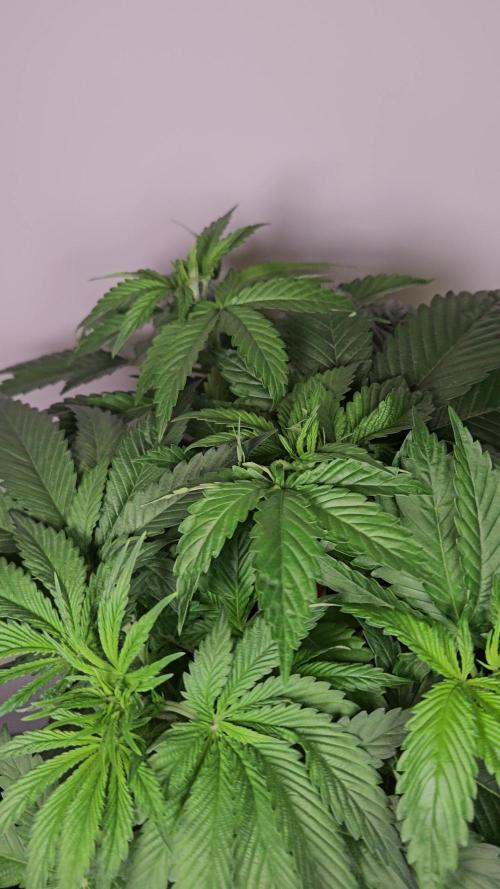
This lady growing monstrously. Growing at 10 nodes the plant is absolutely covered with growth. Due to late LST this lady has gotten some length and has grown firm.
Likes
5
Share
For the past two weeks I've been taking it outside for an hour or two sometimes three or four on a sunny days. Yesterday I took it outside and right after I made the video the wind picked up something crazy and knocked my plant over and subsequently two branches were hanging on by some bark. :/ Two broken branches (of 8 total)and lesson learned. i mended them with some wire and string but I'm not sure if they will die off, we will find out either way I'll be happy with what I get since it's so 🔥 👍😁✌️
Likes
6
Share
@Dengued
Follow
Day 77...the one grown in soil that survived the dog attack when young, stopped drinking a couple of weeks ago, so got the chop...drying under a tree for 4 days the other 2 grown in coco are doing great and still perhaps a couple of weeks away
Likes
250
Share
@Ju_Bps
Follow
Hello my friends 👩‍🌾👨‍🌾, Week was good, nice weather, some days too much hot 🔥, but no rain . I've removed several leaved burned by heat, they was all dried. I've given 1.5l per plant, #1 and #2 1x 1.5l water + canazym + sugar royal #3 2× 1.5l water only 1x 1.5l water + canazym + sugar royal PH @6 Harvest is very close ✂️✂️🌲🌲, I had not yet check trychrome, and as usually I'm in late lol... (See videos) I'll start my flush this week, weather would be nice for the last week, under 30*C with nice sun 😎🌞🌞 and low humidity. See you soon for harvest my friends 👩‍🌾👨‍🌾💕 Thanks for likes, comments and follows 😘
Likes
15
Share
@MrJones
Follow
MrJones Ztrawberriez Auto 🍓╰⊰🍓´🍓⊱╮🍓╰⊰🍓´🍓⊱╮🍓╰⊰🍓´🍓⊱╮🍓╰⊰🍓´🍓⊱╮🍓 💧 Feeding - Using Gaia Green Grow / Bloom and Compost Teas 🍃Training / LST-Defoliation-Topping TBA 🕷️ IPM - Will be using Green Cleaner" 1 OZ per Gallon, and CannControl from Mammoth alternating between products each month for Integrated Pest 🍓╰⊰🍓´🍓⊱╮🍓╰⊰🍓´🍓⊱╮🍓╰⊰🍓´🍓⊱╮🍓╰⊰🍓´🍓⊱╮🍓 ▶️Saturday 11.18.23 - These girls are just blowing up, always like the flower stretch of FastBuds strains, the smells are nice and they are starting to drink more, the closet is filling up, did another PPM treatment with CanControl. 🍓´🍓⊱╮🍓╰⊰🍓´🍓⊱╮🍓╰⊰🍓´🍓⊱╮🍓╰⊰🍓´🍓⊱╮🍓 ▶️Bud Description Ztrawberriez Auto produces long and fat buds with a beautiful light green shade with oftentimes purplish hues and a thick layer of resin that starts at the top of the flowers and continues all the way to the tip of the sugar leaves. It’s the typical bud structure you would expect from hybrid varieties topped with an explosion of fruity terps that’ll hit you in the face with a blend of creamy, fruity, and sweet aromas as soon as you break the buds open. Definitely a must for terp heads and extractors looking for exaggerated flavors and aromas 🍓╰⊰🍓´🍓⊱╮🍓╰⊰🍓´🍓⊱╮🍓╰⊰🍓´🍓⊱╮🍓╰⊰🍓´🍓⊱╮🍓 ▶️SOIL MIX 40% ProMix HP 40% Coco Coir 70/30 15% Worm Castings 05% Malibu Compost 🍓╰⊰🍓´🍓⊱╮🍓╰⊰🍓´🍓⊱╮🍓╰⊰🍓´🍓⊱╮🍓╰⊰🍓´🍓⊱╮🍓
Likes
2
Share
Flowering starts
Likes
58
Share
@Coopmc
Follow
Starting week 4 for seeds bearing plant week 5 start for the Pollen maker Balls starting to open and female flowers are ready!! Pollen !!! SVT, SubLIMEinaL, Peyote Gorilla and Royal Gorilla in with SVT pollen doner