


Likes
Comments
Share


@Boomer911
Follow
As we hit day 56 of my cannabis grow journey 7 plants 3 LST 3 Normal 1 Top. Let's catch up on how the Gorilla Glue strain is doing:
Plant Growth:
The Gorilla Glue plants are standing tall, measuring between 40-45cm, with the ones under low-stress training (LST) slightly shorter. Despite the unpredictable weather, they're thriving, boasting lush foliage and dense bud formations hinting at the upcoming harvest. It's clear that each plant has benefited from the TLC poured into their care.
Nutrient Regimen:
With flowering in full swing and the weather throwing curveballs, I've tweaked the nutrient mix to ensure the buds get the support they need. Alongside the usual Bio Bloom, Autogrow nutrients, SST Juice, Guano, and Worm castings tea, I've introduced Rockbastyk, a supplement tailored for the end of the flowering stage. It's all about giving them the best shot at success.
Observations:
The weather has been all over the place, with temperatures fluctuating like crazy. Despite this, the Gorilla Glue plants are soldiers, adapting to whatever nature throws at them. They've shown incredible resilience, proving that they're up for any challenge.
The Low-Stress Training (LST) plants are a prime example of this resilience, despite their shorter stature. Their buds are flourishing, filling every nook and cranny thanks to the LST technique. However, one plant got a bit too stressed and ended up stunted. I'm keeping a close eye on it, giving it the extra care it needs to bounce back.
The untouched plants are also holding their own, growing bigger with "fluffier" buds. It's fascinating to see how they compare to the manipulated ones.
As for the topped plant, it hit a rough patch with stunted growth initially. But it's bouncing back nicely now, sporting four main apex buds, albeit a tad behind schedule.
Last week, I did a major trim to tackle the bushy look that was getting out of hand. I made sure to only remove what was necessary, allowing for proper photosynthesis and nutrient distribution to continue uninterrupted.


Likes
6
Share


@XanHalen
Follow
Jan 23
Doing great, lookin about 70% cloudy 20 - 25% clear, and little amber, flush prolly next week!!

Likes
2
Share


@ChiTaN
Follow
The girls are developing properly, frosting is beginning to be clearly visible.Also the smell has become clear and very intense.White Widow X Big Bud is the most noticeable.From today, the girls are switching to a different spectrum of light, UV light will be added.


Likes
88
Share


@ZoobZoob_farmZ
Follow
Phénotype hermaphrodite je viens de trouver une 1ere fleur mal JeCroise les doigtsPour qUe J'en ai peu
Phénotype coloré cool j'ai hâte de voir l'évolution !!!!!! merci a tous ceux qui sont passés !!!
👍 Watermelon Automatic: Meet the Offspring of Tropicanna Cookies and Lemon OG
Our talented breeders wanted to create a strain that tickled the taste buds to the highest point. To achieve such a terpene profile, they selected two incredibly tasty parent varieties: Tropicanna Cookies and Lemon OG. These two varieties are full of limonene, myrcene and other fruity and earthy molecules.
After back-cross and stabilization of these varieties over several generations, Watermelon Automatic appeared with a genetic composition of 75% indica, 20% sativa and 5% ruderalis. This fast autoflowering strain has managed to inherit the delicious terpenes of its ancestors.
Growing Watermelon Automatic: A Real Delight On All Plans
Watermelon Automatic has a fast life cycle that will deliver some rewarding yields. In addition, its compact and discreet nature allows growers to grow it in places with limited space or environments hidden outside.
Indoor plants reach heights of 70—110 cm and if left to their own devices, they will form a broad central branch of heads. If subjected to low-stress trellising techniques, this variety will grow closer to the ground and form a more uniform and productive canopy. Expect a satisfactory harvest of 500 g/m² in just 8-9 weeks post-germination.
Plants grown outdoors reach slightly higher heights of 90—120 cm and produce a respectable yield of 100 g/plant. They thrive well in containers, raised beds or directly in the ground.
Watermelon Automatic's Aromas, Flavors and Effects: A Triple Threat on All Fronts
Although compact and cute, its resinous buds have a heavy striking force. A 20% THC level will smash the body with a superb comforting indica effect that will soothe body, mind and soul. Average levels of CBD come into synergy with the psychotropic cannabinoid to balance the slightest shattering ounce.
Take advantage of this strain in the evening to fully enjoy its enjoyable euphoria. By doing this, you will encounter a real armada of divine flavors and aromas from its superb terpene profile. Typical scents of watermelons come to mix with other tropical fruits and earthy notes sublimate an undeniably refreshing smoke.
Watermelon Automatic data sheet
Variety type: Auto flowering
THC: 20
CBD: Medium
Indoor Yield: 450 - 500 gr/m2
Outdoor Yield: 50 - 90 gr
Indoor Height: 80 - 110 cm
Outdoor Height: 100 - 120 cm
Flowering Time: 6 - 7 Weeks
Harvest Month: 8-9 Weeks after germination
Origin & Breeding History: Tropicanna Cookies x Lemon OG
Type: 20% Sativa, 75% Indica, 5% Ruderalis
Effect: Calming
Climate: Summer Long
Taste: Fruity, Watermelon
https://marshydro.eu/products/100x100x180cm-grow-tent/
https://marshydro.eu/collections/ts-series/products/ts-1000/
Likes
36
Share


@Stevodidge
Follow
Lots of foliage growth over the last week. Not much height growth though. Little sister is now nearly twice the height of her but with much less foliage. Not sure if the height thing is something i should be worried about. Ive only got a 60cm x 60cm x 140cm grow space for 2 plants so short plants would be great, so long as they still produce a decent crop.

Likes
34
Share


@Bluntblazer66
Follow
Feb 22nd
Plants are doing well but they seam to have stunted
They are growing lots of branches but not growing in length
Also I have been having difficulty keeping my PH balanced out
Feb 25th
I have taken all of the tie downs off because these plants are stunted
I have decided to do a flush of the system, and put in fresh nutes.
I will also flush each plant with a few gallons of pure PH’d water
I will put the new nute strengths on next week’s update
As for now I am going to feed just PH’d water @ 6.0
Feb 28th
Plants have responded well to flushing
New growth showing so I have resumed LST

Likes
14
Share


@Svansson
Follow
Diese Woche mal ein wenig basteln müssen um die Lampe noch etwas höher zu bekommen, da die kleine an der Spitze etwas viel Licht bekommt, so wie es aussieht. Ansonsten finde ich macht sie sich weiter sehr gut. Der Duft ist so geil, das man sofort probieren möchte 🤤😁 bin auf die nächsten Wochen gespannt und freu mich jetzt schon auf die Ernte.

Likes
2
Share

@RatmanJR
Follow
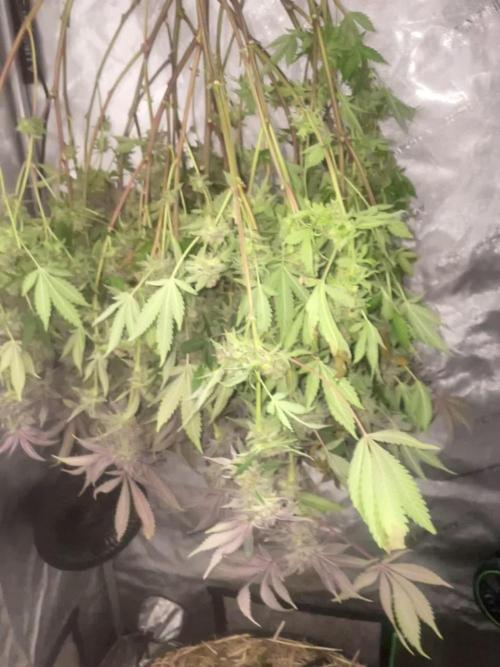
Chopped on July 28th. Hung for 6 days and trimmed on August 3rd and Put into grove bags.
When I first put them into bags I was getting a 65% reading so I have been opening bags once a day for the last week. That takes us too today August 10th. Bags are finally reading 62 stable so they will be getting sealed for the next two weeks where they will thank you be transferred to jars.
Got right around 5.3oz with my lazy trim so figuring a little under 5 when fully trimmed.
I purposefully leave more leaves on than most people because the leaves protect the Trichomes. I do the final trim directly before smoking.
Thank you guys so much for following the diary and God bless!
Likes
8
Share


@valiotoro
Follow
Hello everyone 😎
Week 4 of flower for the Orange Sherbet auto from Fast Buds 💥
She grew fast with a beautiful green color,for the nutrient 4ml/L terra bloom & 1ml/L power buds from Plagron
Spider Farmer SE-7000 70%
Have a nice day 😋
Likes
73
Share


@Andres
Follow
I mean this genetics it's excellent ... if I would grow zombie kush again ... good job ripper seed ... she fought and was very strong against the plagues after a beginning outdoors ... she fought against the white fly. worms .. red spider and other insects ... and deserves your recognition ... it will not be the most beautiful plant with its leaves impeccable ... but she is a champion ... thank you ripper seed .. .

Likes
68
Share

@Ultraviolet
Follow
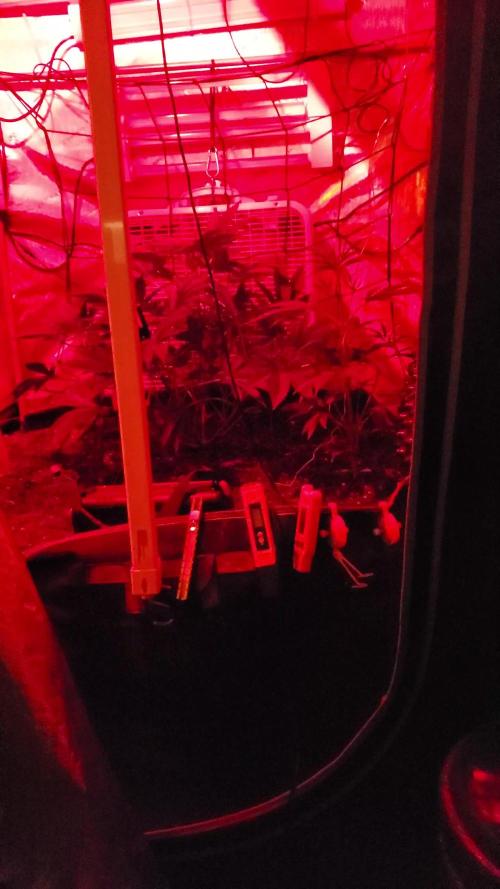
Removed autoflower and put her in her own pot outside the tent.
Foliars applied in strong blue 430nm with 4000Hz tone. 20-minute dose prior to application.
In essence, you're seeing a combination of the infrared light reflected by the plant, which the camera perceives as red, and any residual visible blue light the plant reflects, which results in a purple hue.
I was doing more stretching of the stems, adjusting weights, just a little too much, and it snapped almost clean. I got a little lucky in that it was still connected, wrapped her almost instantly while holding her in place with yoyo's. The core framework is now in place.
If your soil has a high pH, it's not ideal; you want a pH of 6.4, 6.5, or 6.6, which is ideal. If you are over a pH of 7, you have no hydrogen on the clay colloid. If you want your pH down, add Carbon. If you keep the pH below 7, you will unlock hydrogen, a whole host of new microbes become active and begin working, the plant will now be able to make more sugar because she has microbes giving off carbon dioxide, and the carbon you added hangs onto water. Everything has electricity in it. When you get the microbes eating carbon, breathing oxygen, giving off CO2, those aerobic soil microbes will carry about 0.5V of electricity that makes up the EC. The microorganisms will take a metal-based mineral and a non-metal-based mineral with about 1000 different combinations, and they will create an organic salt! That doesn't kill them, that the plant loves, that the plant enjoys. This creates an environment that is conducive to growing its own food.
Metal-based: Could include elements like iron, manganese, copper, or zinc, which are essential nutrients for plants but can exist in forms not readily accessible.
Non-metal-based: Examples like calcium carbonate, phosphate, or sulfur are also important for plant growth and potentially serve as building blocks for the organic salt.
Chelation in a plant medium is a chemical process where a chelating agent, a negatively charged organic compound, binds to positively charged metal ions, like iron, zinc, and manganese. This forms a stable, soluble complex that protects the micronutrient from becoming unavailable to the plant in the soil or solution. The chelate complex is then more easily absorbed by the plant's roots, preventing nutrient deficiency, improving nutrient uptake, and enhancing plant growth. Chelation is similar to how microorganisms create organic salts, as both involve using organic molecules to bind with metal ions, but chelation specifically forms ring-like structures, or chelates, while the "organic salts" of microorganisms primarily refer to metal-complexed low molecular weight organic acids like gluconic acid. Microorganisms use this process to solubilize soil phosphates by chelating cations such as iron (Fe) and calcium (Ca), increasing their availability.
Added sugars stimulate soil microbial activity, but directly applying sugar, especially in viscous form, can be tricky to dilute. Adding to the soil is generally not a beneficial practice for the plant itself and is not a substitute for fertilizer. While beneficial microbes can be encouraged by the sugar, harmful ones may also be stimulated, and the added sugar is a poor source of essential plant nutrients. Sugar in soil acts as a food source for microbes, but its effects on plants vary significantly with the sugar's form and concentration: simple sugars like glucose can quickly boost microbial activity and nutrient release. But scavenge A LOT of oxygen in the process, precious oxygen. Overly high concentrations of any sugar can attract pests, cause root rot by disrupting osmotic balance, and lead to detrimental fungal growth. If you are one who likes warm tropical high rh, dead already. Beneficial, absolutely, but only to those who don't run out of oxygen. Blackstrap is mostly glucose, iirc regular molasses is mostly sucrose. Sugars, especially sucrose, act as signaling molecules that interact with plant hormones and regulate gene expression, which are critical for triggering the floral transition. When sucrose is added to the growth medium significantly influences its effect on floral transition.
Probably wouldn't bother with blackstrap given its higher glucose content. Microbes in the soil consume the sugar and, in the process, draw nitrogen from the soil, which is the same nutrient the plant needs. Glucose is not an oxygen scavenger itself, but it acts as a substrate for the glucose oxidase (GOx) enzyme, effectively removing oxygen from a system. Regular molasses (powdered if you can), as soon as she flips to flower or a week before, the wrong form of sugar can delay flower, or worse. Wrong quantity, not great either. The timing of sucrose application is crucial. It was more complicated than I gave it credit for, that's for sure. When a medium's carbon-to-nitrogen (C:N) ratio reaches 24:1, it signifies an optimal balance for soil microbes to thrive, leading to efficient decomposition and nutrient cycling. At this ratio, soil microorganisms have enough nitrogen for their metabolic needs, allowing them to break down organic matter and release vital nutrients like phosphorus and zinc for plants. Exceeding this ratio results in slower decomposition and nitrogen immobilization, while a ratio below 24:1 leads to faster breakdown and excess nitrogen availability.
Carbon and nitrogen are two elements in soils and are required by most biology for energy. Carbon and nitrogen occur in the soil as both organic and inorganic forms. The inorganic carbon in the soil has minimal effect on soil biochemical activity, whereas the organic forms of carbon are essential for biological activity. Inorganic carbon in the soil is primarily present as carbonates, whereas organic carbon is present in many forms, including live and dead plant materials and microorganisms; some are more labile and therefore can be easily decomposed, such as sugars, amino acids, and root exudates, while others are more recalcitrant, such as lignin, humin, and humic acids. Soil nitrogen is mostly present in organic forms (usually more than 95 % of the total soil nitrogen), but also in inorganic forms, such as nitrate and ammonium. Soil biology prefers a certain ratio of carbon to nitrogen (C:N). Amino acids make up proteins and are one of the nitrogen-containing compounds in the soil that are essential for biological energy. The C:N ratio of soil microbes is about 10:1, whereas the preferred C:N ratio of their food is 24:1 (USDA Natural Resource Conservation Service 2011). Soil bacteria (3-10:1 C:N ratio) generally have a lower C:N ratio than soil fungi (4-18:1 C:N ratio) (Hoorman & Islam 2010; Zhang and Elser 2017). It is also important to mention that the ratio of carbon to other nutrients, such as sulfur (S) and phosphorous (P) also are relevant to determine net mineralization/immobilization. For example, plant material with C:S ratio smaller than 200:1 will promote mineralization of sulfate, while C:S ratio higher than 400:1 will promote immobilization (Scherer 2001).
In soil science and microbiology, the C:S ratio helps determine whether sulfur will be released (mineralized) or tied up (immobilized) by microorganisms.
A carbon-to-sulfur (C:S) ratio smaller than 200:1 promotes the mineralization of sulfate, when the C:S ratio is low, it indicates that the organic matter decomposing in the soil is rich in sulfur relative to carbon. Microorganisms require both carbon and sulfur for their metabolic processes. With an excess of sulfur, microbes take what they need and release the surplus sulfur into the soil as plant-available sulfate
A carbon-to-sulfur (C:S) ratio higher than 400:1 will promote the immobilization of sulfur from the soil. This occurs because when high-carbon, low-sulfur materials (like sawdust) are added to soil, microbes consume the carbon and pull sulfur from the soil to meet their nutritional needs, temporarily making it unavailable to plants.
200:1 C:S 400:1: In this range, both mineralization and immobilization can occur simultaneously, making the net availability of sulfur less predictable.
This dynamic is similar to how the carbon-to-nitrogen (C:N) ratio regulates the availability of nitrogen in soil. Just as microbes need a certain amount of nitrogen to process carbon, they also require a balanced amount of sulfur. Both mineralization and immobilization are driven by the metabolic needs of the soil's microbial population.
Sulfur is crucial for protein synthesis. A balanced ratio is particularly important in relation to nitrogen (N), as plants need adequate sulfur to efficiently use nitrogen. A severely imbalanced C:S ratio can hinder the efficient use of nitrogen, as seen in trials where adding nitrogen without balancing sulfur levels actually lowered crop yields.
Maintaining a balanced carbon-to-sulfur (C:S) ratio is highly beneficial for plant growth, but this happens indirectly by regulating soil microbial activity. Unlike the C:N ratio, which is widely discussed for its direct effect on nutrient availability, the C:S ratio determines whether sulfur in the soil's organic matter is released (mineralized) or temporarily locked up (immobilized).
Applied 3-day drought stress.
Glucose will hinder oxygenation more than sucrose in a solution because glucose is consumed faster and has a higher oxygen demand, leading to a more rapid decrease in oxygen levels. When cells respire, they use oxygen to break down glucose, and this process requires more oxygen for glucose than for sucrose because sucrose must first be broken down into glucose and fructose before it can be metabolized.
In a growth medium, glucose is a more immediate and universal signaling molecule for unicellular and multicellular organisms because it is directly used for energy and triggers a rapid gene expression response. In contrast, sucrose primarily acts as a signaling molecule in plants to regulate specific developmental processes by being transported or broken down, which can be a more complex and slower signaling process.
Critical stuff.
During wakefulness (DC electric current) life can not entangle electrons and protons. During the daytime, the light is sensed as multiple color frequencies in sunlight. Coherence requires monochromatic light. Therefore, at night, IR light dominates cell biology. This is another reason why the DC electric current disappears during the night. The coherence of water is maintained by using its density changes imparted by infrared light released from mitochondria in the absence of light. This density change can be examined by NMR analysis, and water is found to be in its icosahedral molecular form. This is the state that water should be in at night. This is when a light frequency is lowest and when the wave part of the photoelectric effect is in maximum use.
3600



Likes
11
Share


@Sejnik
Follow
Vlhkost snížená na 60%
Světlo 50% 155w a 45cm od vrcholu rostlin
Shogun 5 a Haze Berry 1 mají popálené listy živinami 😢
D44 Pondělí:
Zalito 0,5L vody s 0.5ml/l RQS: Flowering booster- Bigger Flowers
D46 Středa:
Obě Special Kush jsem přesadil do jednoho 11L květináče a zastřihl je od spodu u druhého nodu
Všechny holky jsem naposledy zastřihl pro vytvoření 8 hlavních větví.
Zalil jsem každou 1L vody se všemi živinami které máte vypsané výše.
Likes
9
Share

@valiotoro
Follow
Let’s start with the smell absolutely wonderful it’s floral & sweet it reminds me a jasmine green tea🤤
The buds are SUPER sticky✂️
See you in one month for the smoke review
Take care 😎
Oh & happy new year
Likes
8
Share


@LokalGrenz
Follow
Build a soil kind of drys out fast to me so I started to use the barley straw to help with moisture but so far it seems good to go haven’t ph the water yet think imma start next week been using RO water and I’ve used spring deer park water couple times

Likes
26
Share


@MadeInGermany
Follow
Flowering day 3 since time change to 12 / 12 h
Hey guys .
My cutting heating broke 3-4 weeks ago, which was fixed immediately and everything went wonderfully.
Now, 3 days ago, the central heating broke down in the entire room, so that at night I only have temperatures of around 13 degrees :-( .
One or the other lady is slowly starting to see a phosphorus blockage, as this can no longer be absorbed at temperatures below 15 degrees, like many other nutrients :-( .
A friend looked at the heating yesterday and came to the conclusion that a real company had to do it, which is by no means possible for a stranger to enter my room.
I quickly ordered heating mats for all the boxes so that the ladies could at least get warm feet.
That's all I have this winter full can do .
Let's hope everything will be fine 🙏🏻.
As soon as the heating mats are attached in the coming days, I will post them in the pictures.
Now for the update.
Despite the severe cold, the ladies are still doing well and have made good progres .
The ladies only had to be watered once this week, each time with 1 l, because it absorbs the water very slowly because of the cold and I don't want to overwater it.
I took every single plant in the pot to take a close look at their roots.
These are snow white and look very healthy 🙏🏻.
It was also the last time neem oil sprayed so that the last trips are finally gone.
Otherwise everything was checked and a lot of planning was done, like I do with the heating mats.
Since a friend had the same problem in one winter and the heating mats got 10 degrees plus on the pots, I am very confident that it will at least bring something for the last cold month 😃
🙏🏻.
I've started flowering even if some are still a bit small, but otherwise they'll get too wide from training and end up taking up space :-)
until then have fun and stay healthy 🙏🏻
👇🏼👇🏼👇🏼👇🏼👇🏼👇🏼👇🏼👇🏼👇🏼👇🏼👇🏼👇🏼
You can buy this Nutrients at :
https://greenbuzzliquids.com/en/shop/
With the discount code: Made_in_Germany you get a discount of 15% on all products from an order value of 100 euros.
👇🏼👇🏼👇🏼👇🏼👇🏼👇🏼👇🏼👇🏼👇🏼👇🏼👇🏼👇🏼
You can buy this strain at :
https://www.exoticseed.eu/de/hanfsamen/lemon-candy
Water 💧 💧💧
Osmosis water mixed with normal water (24 hours stale that the chlorine evaporates) to 0.2 EC. Add Cal / Mag to 0.4 Ec Ph with Organic Ph - to 5.8 - 6.4
MadeInGermany

Likes
Comments
Share

@Yamamoto420
Follow
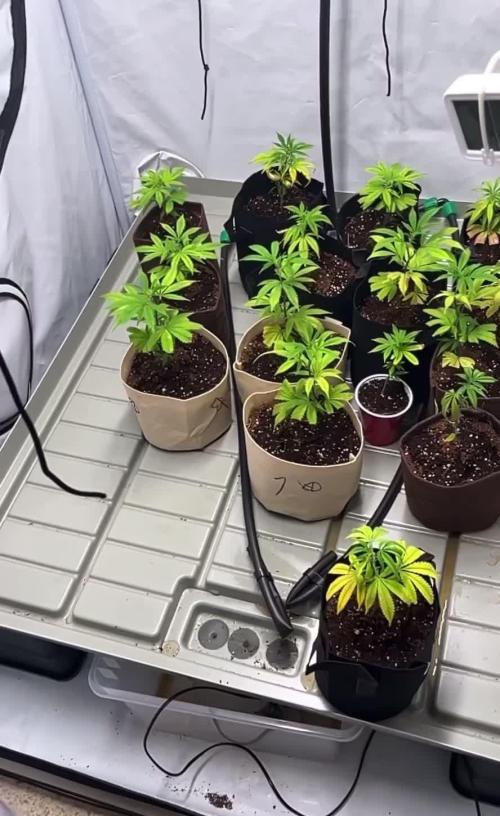
After a weeks that I took the clones from the other solo cups and transplanted from cups to 1 gallons fabric coco and cior, and install the water pipe and the irrigation system and all the systems that control the reservoir
Likes
7
Share


@KarukeraOxymore
Follow
she likes the heat a lot, i added the co2 on the 21st day, i saw all the difference in the next hour, it's amazing how they can store so much light / elle aime beaucoup la chaleur , j'ai ajouté le co2 au 21eme jour , j'ai vu toute la différence dans l'heure qui suivait, c'est incroyable comment elles peuvent emmagasiner autant de lumière
* I still have not turned on the HLG 300 /. je n'ai toujours pas allumer le HLG 300w


Likes
5
Share


@Bread_n_Buds
Follow
Our Gush Mintz have undergone a small revolution and are still super beautiful, even more than before.
One of the plants was damaged during the main lining I broke a brunch and it was transformed into a LST plant, the other one that was proceeding straight without techine was worked with topping at the 5th internode and LST on the other branches left below.
Comparison is the salt of experience so the plant in the other diary will be worked very differently.
We have started the Plagron fertilization program, we are in 100% organic configuration, the soil is recycled Promix + 1/3 fresh soil + 10% Perlite + RQS Mycorrhiza Mix (4 g in the mix, 1 g under the small fiber pot).
We are administering // 1 ml/l Power Roots - 1 ml/l Pure Zym - 1 ml/l Sugar Royal - 3 ml/l Alga Grow
We sprayed Vita Race Foliare 3 ml/l.
https://plagron.com/en
The doubts about the compatibility between Pure Zym and mycorrhizae have been dispelled, they can get along according to Plagron experts. If someone tells you that enzymes eat mycorrhizae, which in principle may seem possible, explain to them that it is not true.
https://www.royalqueenseeds.it/growing/452-easy-roots-mix-di-micorrhize.html
Try this strain, it's a top strain of the last few years very high thc level
------------------------------------------------------------------- https://www.zamnesia.io/it/11234-zamnesia-seeds-gush-mintz-automatic.html
Brief description of Zamnesia // Gush Mintz Auto is a relaxing hybrid strain that derives from the original Gush Mintz and a high-performance ruderalis specimen. This cross produced a plant with 70% indica and 30% sativa genetics. Her parents have given her a range of interesting traits, including mint and candy flavors and a high THC content of 20%. Smoking these buds provides creative vibes, a sense of euphoria and a pleasant sensation from head to toe. In addition to its enticing flavors and powerful effects, Gush Mintz Auto produces large yields of compact buds in just 9–10 weeks from germination.
Gush Mintz Auto is extremely easy to grow, with plants reaching an average height of 70cm indoors and 120cm outdoors, making her ideal for discreet grows or limited spaces both indoors and outdoors. This strain is well suited to LST (Low Stress Training) and performs best in a ScrOG setup (a technique that optimizes light exposure to maximize yields).
Punching aromas and deeply relaxing effects
As she grows, Gush Mintz Auto's aroma intensifies, releasing sweet and minty notes. This refreshing flavor profile really comes into its own when smoked, offering an inviting combination of minty freshness and sweetness. The effects are deeply relaxing, enveloping the body in a pleasant well-being without being too sedative. Gush Mintz Auto is perfect for those seeking creative inspiration, making writing, painting or music-making sessions smoother and more inspiring.
At Zamnesia you can find the whole world of growing and much more. Take a tour around the site and you will find "all the best that nature has to offer" in various shapes and colors.
The new strains are amazing and the old ones are no exception... p.s. for now zero Hermaphrodites, growers, can you say the same?
--- // www.zamnesia.com