


Likes
Comments
Share


@Cannaapeace80
Follow
Hey
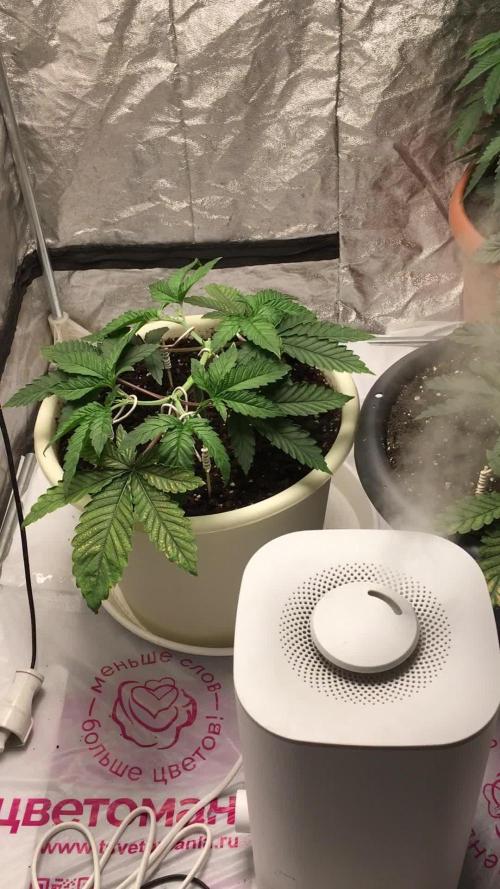
Nothing Much to say, she smells very good and is happy.
I have a lot to do at the moment, which is why there is not so much to say this week.
I have a problem with humidity but I can fix it
Cannaapeace

Likes
2
Share



Likes
17
Share


@Tazard
Follow
WOW. She’s going to easily double. I’m going to have to do some serious bending. She’s developing quite nicely but I didn’t expect her to double based on her description. Maybe I have an odd pheno? Oh well, I’ll do the best I can to control her.

Likes
49
Share


@Roberts
Follow
FBT 2401 is sprouted and doing well. This was the second seed. I forgot to water the first seed, and it was too late by the time I got to it. This was my mistake. This seedling is doing good though. She has Athena blended line nutrition in the solution waiting for her. Noting else to report at the moment. Thank you Fast Buds. 🤜🏻🤛🏻🌱🌱🌱
Thank you grow diaries community for the 👇likes👇, follows, comments, and subscriptions on my YouTube channel👇. ❄️🌱🍻
Happy Growing 🌱🌱🌱
https://youtube.com/channel/UCAhN7yRzWLpcaRHhMIQ7X4g
If anyone needs to purchase fastbuds here is a link for my affiliate program
https://myfastbuds.com/?a_aid=60910eaff2419


Processing
Likes
4
Share


@Skillgrower
Follow
Estamos a meio da 2° semana a crescer bem ja cm boa ramificação mas a dar indicios de falta de magnezio, mais uma semana começa o lst
Afinal vai começou mais cedo q o esperado.. a crescer muito rápido, mais uns dias estamos no inicio da 3°semana

Likes
7
Share


@FumateAlgoo
Follow
🌱 Semana 5 de cultivo: ¡Se notan los cambios! 🌱
Esta semana fue clave: cambiamos las plantas de carpa a una más adecuada para su tamaño, ya que ¡han crecido muchísimo! Se nota que están en plena etapa de desarrollo, no solo por su tamaño, sino también por su apetito: están pidiendo más agua que antes.
Como desde el inicio hemos estado aportando fertilizantes, en estos últimos riegos decidí usar solo agua con pH controlado y una EC muy baja. Esto me permite equilibrar el sustrato y evitar una sobre-fertilización, que en esta etapa podría ser contraproducente.
Todo va viento en popa, y las plantas están respondiendo muy bien. Seguimos atentos y con muchas ganas de ver cómo evolucionan en esta etapa.
¡Nos vemos la próxima semana con más avances! 🌿💧✨

Likes
53
Share


@DogDoctorOfficial
Follow
Ladies, gentlemen, and all the wonderful beings following this journey, I am thrilled to announce that we have reached the highly anticipated harvest week for our beautiful PCRs. This has been an incredible journey, and now it's time to reap the rewards of our hard work and dedication.
The PCRs are nothing short of perfection. Their frost-covered buds are a sight to behold, glistening like they've been kissed by winter's breath. The trichomes are abundant and sparkling, making these ladies look absolutely stunning. The aroma is intoxicating, a true testament to their strong genetics and the care they've received.
Upon taking them out of the tent, I was amazed by their strength and resilience. Despite my best efforts to make them dance, these ladies stood tall and proud, requiring no support at all. This just goes to show the exceptional quality and sturdiness of the PCR strain.
Aptus Holland's Enzym+. This product is a game-changer, breaking down dead root material and turning it into usable nutrients, ensuring our soil remains rich and fertile for future grows. Speaking of which, I do plan to reuse the soil, thanks to the amazing benefits of Enzym+. This enzyme product not only helps with nutrient uptake but also keeps the soil ecosystem healthy and thriving.
Here's the final stats for this week:
TDS: 130
PH: 6.8
Temp: 21°C
A huge shout-out to Aptus Holland for their incredible products that have consistently supported my plants' growth and health. Also, a massive thank you to Art Genetix for creating the phenomenal PCR strain that has brought so much joy to this grow.
To all my fellow growers, followers, and the entire community, your support and encouragement mean the world to me. This journey wouldn't be the same without you. As we move forward, let's continue to spread love, positivity, and the joy of cultivating these amazing plants.
Stay tuned for the final results and more updates as we dry and cure these beautiful buds. Until then, keep growing, stay positive, and never stop believing in the magic of cultivation.
Peace, love, and happy growing!
Genetics - P.C.R. @Art_Genetix_Team https://artgenetix.world/
Nutricion @aptusholland https://aptus-holland.com/
LED Power @Lumatek and @viparspectra
As always thank you all for stopping by , for the love and for it all, i fell blessed to have you all with me for one more love journey Thank you Thank you Thank you , you guys are great and have been amazing , thank you for everything !
#aptus #aptusplanttech #aptusgang #aptusfamily #aptustrueplantscience #inbalancewithnature #trueplantscience #dogdoctorofficial #growerslove
With true love comes happiness , Always believe in your self and always do things expecting nothing and with an open heart , be a giver and the universe will give back to you in ways you could not even imagine so !
Friendly reminder all you see here is pure research and for educational purposes only
Growers Love To you All
Discount Codes :
@thecannakan DOGDOCTOR 15% off
@theneutralizer PORKIT5-DOG 15% off
@kannabiaglobal DOGDOCTOR 30% off
@seedsmangenetics DOGDOCTOR 10%off
@terpyz.mutant.genetics DOCTOR 15% off
Have a fantastic week!


Likes
42
Share


@Brown832
Follow
Last leaf trim.
Hopefully there's enough light getting to the lower bud sites now. Upped the bloom feed a little and turned on the secondary fan.
Started to get a couple wet leaves where they were touching.
I set up another tent too. 😬😬

Likes
63
Share


@AsNoriu
Follow
Day 29. Girls grow slow, but most important ....
Could be i overwatered with 2.5 liters of water or i stonly watered them twice ;)))
Girls didnt drop pot weight till day 31, on days 32 morning ill do new round of lst.
Will feed them hard, will defoliate all bigger old leaves which are covering new grow, plants are strong enough to take pain now ;)))
Its sad situation a bit, i got flue and with that corona madness my mood was very down and i didnt work with plants at all, anyway, they made to that stage where harm can be done and its time.
Gorillas looks okeish even without work, really good strain at least for now. Cookies are very picky, its hardest to veg strain from all i ever tried, lets see, maybe food and heavy training will make them fit ;)
Day 32. Girls are finaly light, so heavy training and huge feeding.
I dont know what hapend, but they refused to drink for 8 days almost, one cookie has obvious sighns of overwatering and if to be honest all cookies are crap, gorillas grow amazing, especially self toped one, she made natural mainlining and covers space perfectly.
Guess in next 2-3 days they will blast off, but i cant feed silica till more branches will grow up, cookies too small, lets wait and see...
Day 33. Girls loved food, plenty new grow, all tops are facing sun again , they will bush up in next few days.
Next watering - silica and cal mag and next after - fish mix.
Day 34. Girls are drinking again, so i gave 1ml/l fishmix.
Cookies show strange colours and on fresh grow you can see cal mag def. Next feed will give them extra, normaly TopMax should be enough...
I dont like Cookies genetics so much, that i planted last 5th bean ;))
Want to check two things :
1. Are my lights strong to grow something not under direct light
2. Are those Cookies such crap, that i should never try any seeds from RQS.
I planted 4 new girls, no work,no top - nothing will be done to them. Hope to see last Cookie bean growing beter than almost two years old Incredible Bulk x2 and last StrawberyCough bagseed bean, otherwise its sad quality for such big house.
Cant find why all 4 Cookies grow so slow compaired to all 4 perfect Gorillas. Was using new worm castings, too ritch ??
maybe thats the answer in test grow i put pure BIOBIZZ AllMix soil, nothing extra.
Had to top one Cookie, new grow was all damaged and didnt want to develop, will harm them even harder next time before silica and cal mag, which i thought not to use in this run ...
Lets see ....
Happy growing !


Processing
Likes
8
Share


@eldruida_lamota
Follow
Bueno pues lo dicho familia, es una cepa dulzona y acaramelada, con un porcentaje medio de 16% thc , me parece bastante potente está indica en verdad es un cebollazo épico, si te pasas sentirás hormigueo en las extremidades asegurado.
Sencillisima de cultivar, muy rápida de verdad tamaño entre 45/60cms no es muy grande pero las flores son muy compactas.
Espero que os guste este último trabajo, os dejo muchas fotos y algunos vídeos finales , un saludo y buenos humos.

Likes
4
Share


@Aleks555
Follow
🚀 Dutch Passion - Melonads Runtz 🚀 It’s been 80 days since planting, and she’s been flowering for 32 days now! During this time, she’s gained impressive volume, with her buds absolutely covered in trichomes — even the leaves around the buds sparkle like magic. We continue feeding her with Xpert Nutrients fertilizers, and the results are simply outstanding — the proof is in the plant! Every day, she gets more impressive and powerful, showing off the amazing potential of this strain. She looks stunning, and I can’t wait to see the final results!
Big thanks to Dutch Passion and Xpert Nutrients for this amazing journey!
Likes
39
Share


@BelgianBudtender
Follow
Heya Growmies, this week was pretty eventful
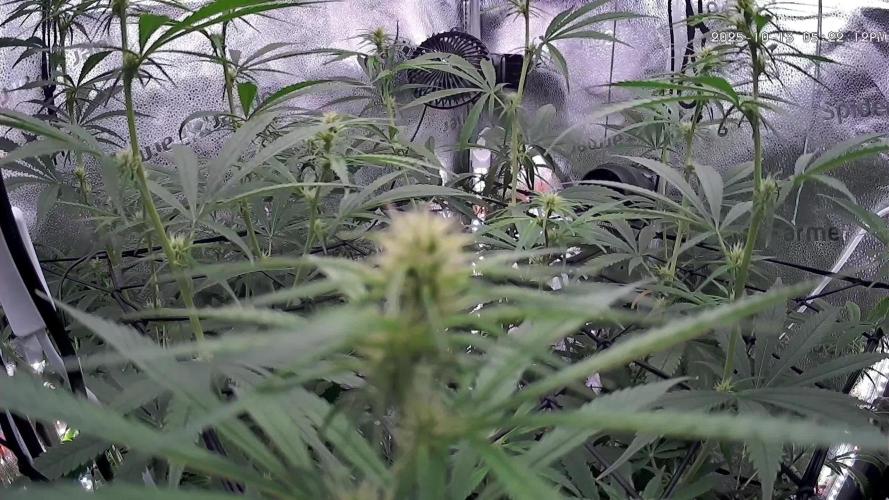
first off, the plant is in flowering in full force and doing really well despite a lot of user error throughout its life!
I mentioned last week I was going to do two things, the plants last major defoliation and turn my DWC into a 2 bucket RDWC.
I have managed to get around to both, I am always anxious when defoliating, scared of taking off too much but this time I really pushed my comfort zone, let me know what you think.
before, in my other grows, I have a lot of larfy buds, I dont want those, I want tight, dense small nuggies, I think one of my bigger problems back then was defoliation amount, I just left too many fan leaves.
RDWC.... Let me just say that I have proven to myself this week that I'm not destined to become a plumber, in my first iteration the drain line was too small, causing the pump to overpower it and overflow the plant bucket, I changed out the hose for some 50mm pvc tubing, which worked wonders, for the first few hours I sprung leaks and had to pull my plant out during her dark period to fix it; no bueno.
All is well right now though, no leaks and everything is circulating nicely at 500 liters an hour. I could probably get a bigger pump, but its fine, I'm going to stop tempting fate.
From here on out honestly, theres not much more for me to do other than go into the garden, pull a fan leave here or there, check flowers for nanners and balls and adjust the water. It's on cruise control now
Stay safe out there growmies, keep growing!

Likes
175
Share


@love_2_grow
Follow
Day 29 Flower (Day 71)
Woohoo! First day of week five of flower and an easy day at that. I just gave the right girl 3 liters of pH 6.2 water and took some pics.
I'm still experimenting with bud photography. This time with a tripod but still no additional lights. I also need to take the pics when the lights are off as the flowers look funky under the LEDs.
The right girl is slowly starting to bulk up, but the left girl is lagging. That is no wonder, though, considering that she has had much less light due to those space issues.
Also, there's a huge quality difference between the lights in each tent. So I'm looking forward to comparing the bud quality that each tent will generate.
Day 30 Flower (Day 72)
It slipped my mind, but it's been over two weeks since I gave the girls nematodes to get rid of the gnats. As always, the nemos did their job quickly and effectively, and I haven't seen any gnats since. However, to ensure that they stayed gone, I did a second treatment today, mixed up 10 million nemos into 6 liters of water, and gave each girl half at pH 6.6.
Day 31 Flower (Day 73)
Chill day. I just gave the right girl 3 liters of pH 6.5 water and cut some clones from her.
She is deep in flower so I'll try to monster-crop her. Never tried that before but have heard that it creates some really bushy plants. As she already is bushy I'm curious to see how bushy a monster-cropped clone of her will be. She had a few low branches that I left during lollipopping for this reason and I cut four of them with a sterile razor blade, then scraped the lower part of the stem and dipped them in Clonex. They're now sitting in the window with a small LED spot to make sure that they have enough light to re-veg.
Day 32 Flower (Day 74)
I know that I got a new tent for my left girl only a few days ago, but I decided to upgrade to give her a bit more space.
I went to my local grow store today and picked up a tent made by the same company as my main tent (UndrCovrLab).
This new tent is also made specifically for my wardrobe, maximizing the available space. I went from a tiny 40x40 cm tent to a "massive" 75x45 cm tent. Still very small but almost 2x bigger. Woohoo!
The left girl was squeezed into the 40x40 tent for so long that I had to use some LST to spread her out and increase light penetration now when she has some more breathing room.
Speaking of lights, my small ViparSpectra is a bit underpowered now in this larger space, so now I have to consider upgrading that as well. The simplest solution would be to get another ViparSpectra, and while this little light has been performing well, it lacks UV diodes. I'll look around for options.
We have gotten hit by a heatwave here, so now my tents are sweltering. The main tent reached 36 degrees C today at one point :/
Oh well, I cannot do much about it except hope that the heat doesn't stress out the girls too severely.
The girls are very thirsty in this heat though, and I gave each 4.5 liters of pH 6.5 water.
Day 33 Flower (Day 75)
All I did today was to give the right girl 3 liters of pH 5.9 water. A bit low as I used too much pH down and then was too lazy to fix it.
Day 34 Flower (Day 76)
No idea what happened, but an army of fungus gnats invaded my right girl. It's only four days ago since I watered her with Nematodes against gnats, and there were no gnats at all then. A few days later, it is gnat central in my main tent (the left girl in the other tent has no gnats). It's almost like I didn't give nemos to the plant but instead gave her gnats. Weird as the nemos have always worked great in the past. Now I need to start fighting these annoying little shits. Sigh. I'll give nemos another go, and if they don't work, then I'll use some sand. Worst case scenario, I'll use Neem oil, but I really don't want to go that far.
I gave each girl 3 liters of pH 6.5 water, and that was it for today.
Day 35 Flower (Day 77)
The last day of the fifth week of flower and all is (pretty well) well in the tents.
The left girl is 103 cm tall (6 cm increase in a week), and she is lagging quite a bit behind the right girl. She is healthy and quite sticky to the touch, but the flowers still have a lot of fattening up to do. I hope that will speed up now when she has a bit more room to spread out so the light can penetrate the canopy deeper. Getting a more powerful light would also help. When in doubt, add more photons!
Someone who doesn't need more photons, though, is the right girl. The top bud has been burnt slightly, and there's light bleaching on a couple of colas as well as on a few fan leaves. I removed the driver from one of the lights and raised the light a bit higher. Every centimeter counts when you're running out of space! The right girl increased another 3 cm this week and is now 123 cm tall. I hope that is it as I'm now completely out of room.
The gnat army in my main tent is still going strong. So strong that they have now sent out a small expeditionary force to my small tent and started to colonize the area. Sigh. I Will hit the girls in a day or two with nemos, but today I just put up some yellow sticky traps and gave the right girl 3 liters of pH 6.5 water.


Likes
12
Share


@AGP90
Follow
4th week done, have some kind of deficiency that I'm not 100% sure on. Keeping an eye on PH more and making sure it stays a little higher. Started adding silicone as heavy buds was starting to make colas lean


Likes
8
Share


@Hawkbo
Follow
She has some strange growth I'm not sure if I'll keep it or not yet, might just throw it in a 1 gal and see how it turns out. Just want to maximize space if it's not perfectly healthy I'll try somethin else.


