


Likes
Comments
Share


@Appoldro420
Follow
This week in my grow room has been full of developments. First, I added additional lights because I couldn't get the relative humidity (RH) under control. I ordered a dehumidifier, but it will take a few weeks to arrive, so I had to find a temporary solution. I also emptied the reservoir and refilled it with fresh water and nutrients. I secured the net to ensure it stays in place under tension. In two days, I plan to switch the light schedule to 12/12, hoping the plants will stretch a bit during the switch to avoid having overly large buds that aren't evenly spread.
Seventeen hours later, I decided to keep the lights on a 16/8 schedule for a few more days. The plants are starting to show signs of something happening, so I want to see how they develop. I will keep you updated on the progress. Then, I received a message from my supplier that the dehumidifier would arrive today. Great news—time to spice things up!
On June 2nd, the dehumidifier arrived, and I managed to get my Vapor Pressure Deficit (VPD) to 1.17! This is fantastic news, and I'm very curious how this will affect water usage. The dehumidifier seems pretty powerful, with water literally dripping out of the hose, so I'm no longer worried about high humidity levels. It's a shame it doesn't have a range setting, but I couldn't expect more for the price. I'm considering ordering the Dimlux Auxbox to set a working range and separate day/night settings. Thankfully, the dehumidifier has an auto-restart function after a power loss.
On June 3rd, the night is over, and while my values are now more stable, I haven't noticed any significant differences in water absorption. What I do notice is that the pots seem much drier. The difference in leaf temperature compared to the room temperature has increased slightly, now about a 2˚C difference, indicating that evaporation has increased somewhat. Despite the dehumidifier cooling the air, the room temperature has risen. This is explainable since dry air heats up faster than humid air. The CO2 heater is also running significantly longer. So, although there are no immediately visible differences, there are indeed some changes.
Today is the last short night of 8 hours, and tomorrow will be the first night of 12 hours. I am contemplating doing a 10-hour night first and will decide later tonight. After closely reviewing the video footage, I noticed some divergent colors on the leaves. My pH is currently 6.4, which I had adjusted to compensate for the low pH last week—a foolish decision in coco, I know. I plan to make videos of each individual plant for my records to investigate further. The light is too intense to inspect them up close, so the videos will help me get a better look.


Likes
90
Share

@Growbody
Follow
Meine lieben Freunde und Freundinnen, Brüder und Schwestern im Geistigen und Tatkräftigen, herzlich Willkommen zum Greenhouse Summer Outdoor Grow 2026.
Der erste Strain des Outdoor Grows den ich Euch vorstellen werde ist die Purple Lemonade FF von 2Fast4Buds, eine 60% Sativa die laut FastBuds etwas nebulös als eine Kreuzung aus purple und citrus Cali Genetik beschrieben wird. Egal, sie soll sehr fruchtig und zitronig schmecken und könnte schöne Farben bekommen. Außerdem soll Sie eine kurze Blütezeit haben. Hier ist die URL:
https://2fast4buds.com/de/seeds/purple-lemonade-fast-flowering#description
Der zweite Strain der im Set mit dabei ist, ist die Mimosa x Orange Punch fem. von Barney's Farm, die ihre Genetik und den Taste bereits im Namen trägt, eine 65% Indica, die laut Barney's "ein wirklich sensationelles, zitrusähnliches und mandarinenartig-süßes Aroma" haben soll. Auch sie könnte interessante Farben bekommen. Hier die URL:
https://www.barneysfarm.de/mimosa-x-orange-punch-552
Last but not least, der dritte Strain ist die Chocolate Sherbet fem. von Grower's Choice, eine 70% Sativa, deren Eltern Chocolope x Sunset Sherbet sind. Auf den Geschmack bin ich schon jetzt gespannt, cremiges Haschisch. Mit bis zu 240cm könnte sie die größte im Greenhouse werden und würde dann bis zur Decke wachsen. Hier ist die URL:
https://www.growerschoice.nl/de/chocolate-sherbet.html#description
EDIT:
Nachdem die oben aufgeführten Pflänzchen nicht so recht loslegen wollten, habe ich mich entschlossen, fertige Stecklinge von Hanfgarten aus Österreich dazuzubestellen. Die Stecklinge kommen in die Mörtelwannen, die selbst gezogenen kommen in die bereits bewährten 15 und 20 Liter ROOTiES. So kann ich die auch mal direkt in die Sonne stellen.
Der erste Steckling ist die Blueberry von Hanfgarten, eine 80% Indica, einer Kreuzung aus Afghan Indica x (Thai Sativa x Mexican Oaxacan Sativa), die nach 8 Wochen Blüte Mitte Oktober fertig sein soll. Außerdem soll sie fruchtig, beerig und süß schmecken. Auch hier gibt es eine URL:
https://www.hanfgartenshop.de/blueberry.html
Der zweite Steckling ist die Runtz, ebenfalls von Hanfgarten, ein Hybrid aus Zkittlez × Gelato, die auch nur 8-9 Wochen Blüte hat, mal sehen. Wenn sie ein ähnliches Aroma hat wie die Wurlz bin ich happy. Die URL:
https://www.hanfgartenshop.de/runtz.html
Der dritte Steckling ist die Super Lemon Haze, eine 80% Sativa von Greenhouse Seeds, deren Genetik von Lemon Skunk x Super Silver Haze stammt. Mit 9-10 Wochen Blüte steht sie wohl mit am längsten im Greenhouse. I💖Haze und hier sind die URL's:
https://www.hanfgartenshop.de/super-lemon-haze.html
https://shop.greenhouseseeds.nl/feminised-cannabis-seeds/1-seed-pack/super-lemon-haze/?variation_id=604
Auch dieses Jahr gibt es wieder etwas Neues:
Mir ist vor einigen Wochen im Baumarkt ein Foliengewächshäuschen begegnet. Die Aussicht, meine Schätzchen immer im Trockenen zu Wissen, lies mich sofort (also sofort nach einem Recall mit meiner Liebsten) zuschlagen. Danach war nur noch ein teilweiser Umbau unseres Gartens nötig, einen kleinen Weg anders verlegen, ein Fundament ausheben, Bordsteine zersägen, 2 Zentner Beton verbuddeln, Löcher bohren, verdübeln und verschrauben ohne das der Beton ausplatzt, einen haufen Astwerk vom Wein opfern und viel Rasen neu anlegen, das war's schon fast.
Neu:
Sind auch die zwei 90 Liter Maurerbottiche, in denen sich meine Pflanzen wohlfühlen dürfen, 4x soviel Platz wie im letzten Summer Outdoor Grow. Zur Drainage habe ich Rheinkiesel 9-18 verwendet. Da drauf kam mein altes Erdmischungsrezept mit frischem Kompost von Piluweris, Lehm, den die Wühlmäuse ständig in unserem Rasen aufwerfen und Sand aus'm Kieswerk mit gaaanz viel Staub drinne, praktisch Gesteinsmehl. Auch hier gab's was Neues: Hornmehl zusätzlich, hatich früher schon verwendet und ganz vergessen. Der erste Sack Sonnenerde Hanferde wurde mit der oberen Schicht meiner Mischung vermischt. Der zweite Sack kam dann blank obendrauf.
Neu:
Für mich ist auch die angewendete Keimmethode noch neu, die Samen zuerst in einem Marmeladenglas mit temperiertem Wasser mit Zusatz von Wasserstoffperoxyd keimen zu lassen.
Neu:
In die Wannen kommen zusätzlich Gäste als da wären erprobte und neue sowie überwinterte Chilisorten, verschiedene Basiliken oder -kums, Weiße Melisse, Roter Klee, paar Blumen und so.
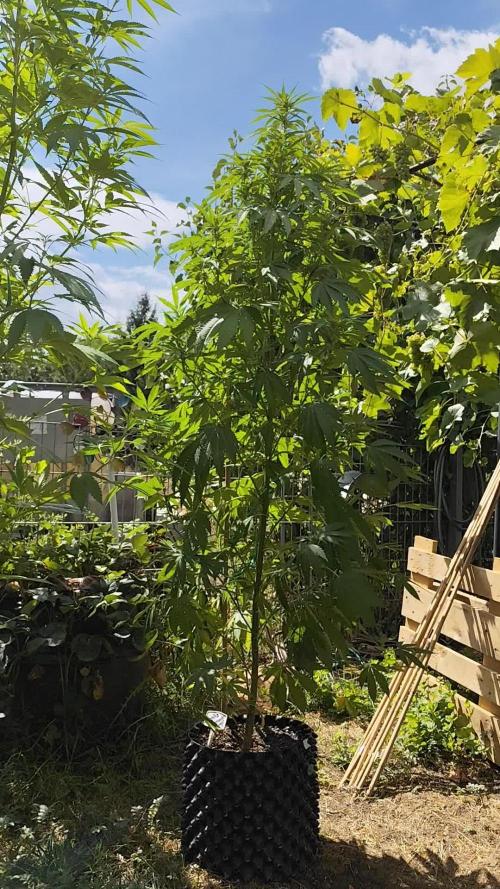
Tag 120: Heute wird es deutlicher, die Minosa x Orange Punch hat auch mit der Blüte begonnen 💮 Die Blueberry von Hanfgarten ist diese Woche nur noch 1 cm auf 161 cm gewachsen. Die Runtz von Hanfgarten wächst weiter auf 135 cm. Die Super Lemon Haze Hanfgarten/Greenhousseeds ist nochmal richtig auf 173 cm geschossen, hat nochmal 15 cm zugelegt. Die kleine Schafgarbe hab ich beim spazierengehen entdeckt, die großen sind schon länger abgeblüht, da muss ich ein Auge drauf haben und Samen holen, wenn's soweit ist. Draussen geht es weiter mit der Minosa x Orange Punch, die ist jetzt auf 178 cm und blüht. Die Chocolate Sherbet von Grower's Choice, die Größte von allen, kommt auf 215 cm. Sie zeigt noch gar keinen Hang zur Blütenbildung. Die Purple Lemonade FF von 2Fast4Buds sieht einfach fantastisch aus mit den anschwellenden Blüten und hat mit ihren 172 cm nochmal etwas zugelegt. Bei der Hitze bekommen die drei Grazien draussen 2-3x am Tag ~3 Liter Brunnenwasser. Tagestemperatur im Greenhouse heute 37°C bei 33%, nachts 18°C bei 87% RLF.
Tag 121: Es hat etwas draussen abgekühlt. Die Temperaturen im Greenhouse sind heute 28°C bei 38%, nachts 16°C bei 89%.
Tag 122: Heute ist der "kühlste" Tag der Woche mit nur 25°C bei 61%, nachts 12°C bei 98%, 17 Liter schöner gleichmäßiger Regen.
Tag 124: Die Temperaturen steigen wieder auf Tags 26°C bei 47%, nachts coole 10°C bei 96%.
Tag 126: Tags 29°C bei 63%, nachts 14°C bei 95%.
Eins kann ich versprechen: It will take a very, very long time 😃 Schön das du es bist, der mich begleitet 👍😎



Likes
11
Share


@w33dfoxPT
Follow
THIS IS NOT GELATO: IS MORE ONE HARVEST OF REST OF OTHER PLANT AND OTHER ONE. BECOUSE CONTESTS I CANT CHANGE IT SO, I WILL WRITE SOMETHING LIKE I HAD DO THERE, IN MARK AS BLUECHEESE THE GELATO ONCE I HARVEST SHE. NEXT TIME I WILL DO A DIARY FOR EACH SEED TO AVOID THIS CONFUSIONS. SORRY
Likes
13
Share


@raulmoat123
Follow
Week 3 flowering some flowering quicker then others which is expected as its about 15 different fire strains
I have had to show my diaries in 3 parts this is my inhouse gentics I am so glad to finally get my hands on these , I'm pheno hunting a massive summer run with some fire gentics.
I have inhouse
2x platinum gushers
2x terples
1x dolato s1
1x slurmint
All from seed so hopefully I find a nice pheno
I also have seedsman
2x strawberry banana grape which are both the biggest in tent
2 x peyote gorrilla
2 x wedding cake limited editions . Smells aboustley fire already 🔥
I have zamiensa seeds
3x larry bird kush one of the phenos are smelling like nothing I have smelt before
Barneys farm
3x phantom OG which was clones from my last run
Phoenix seeds
X5 super kush clones from my last run
Also I have grew 2 super silver haze OG which I got as freebies from seedsman they smell beautiful 😍


Likes
45
Share


@AsNoriu
Follow
No training, just hope for them to deliver.
Day 57 . All is good, small doubts about FD3 but she has to make it or bin it ...
Future looks brighter, other girls form some buds and 50 g is looking achievable at least on couple of them ;) Future will show ;))
N went down as feed chart, still no huge hopes from them....
Some leaves look hungry, couple redish stemps with mini Mag def on FD and thats all for now....
Day 58 Morning. Girls starts to love it 4 sure. Droped down temp by 2 degrees from 28 to 26, they liked it even more. Hope it will stop pistils going amber in begining of flower ...
In the midle of the day all will get molasses and cal mag, leaves a bit too bright, hope molasses will boost bacterias and last bits of N will be used. Increasing level of Top-Max aswel.
So feed looked like :
Heavy feed
Water with silica
Water
Water with molasses and CalMag
At the end of the week they will get heavy feed again.
Day 58 Evening. New attack system ;)) instead of 2-3-3 , girls regrouped into two heavy rows and now go like 2-2-2-2 ;))))
Girls are drinking really fast, still get only around 1.5 liters every second day. For auto i quess its ok. In couple hours afer feed they pray, so its a good sign always ...
Day 60. Heavy feed day, they started to bulk up everyday, really nice to see them everytime.
Day 61. They are bulking up. Thats all i have to say and i really really like it ;)))
Day 63. End of week. Everything looks fine, just i really would want to defoliate them a bit, but dont want to stress at the same time. They look too sensi for me.
All 3 FastDiesels started to show Mag def even on stemps, gave stronger cal mag water mix just for them. They need it often and a lot.
Happy growing !


Likes
10
Share


@barlobruz
Follow
7/6/2021
- Trimmed lower fan leaves as they were being blocked completely, and a few tips were yellowing.
- Continuing to lightly bend the upper branches so the lowers can catch up.
- Bought some Gaia Green veg + bloom dry fertilizers as I expect I'll be flipping to flower soon.
7/7/2021
- Watered in a little bit of Gaia Green's veg fertilizer.
- Foliar fed w/ DIY kelp extract.
- Yellowing/browing on a new leaf, can't identify what it is.
- Staked down the branches on the upper mains this evening to open her up for more light penetration, she was gettin' real bushy.
7/9/2021
- Trimmed out middle to expose canopy

Likes
18
Share


@Cortez_The_Konqueror
Follow
Canopy is filling out nicely and starting to get more vertical growth as well ✌️


Processing
Likes
6
Share


@BigGGrows
Follow
This week was a big week for the candy cush. I noticed upon watering her to run off, that in the same day the pot would go super dry and light weight. I also noticed stress in the leaves and roots poking out the bottom of the pot. It was time for a transplant. So far so good! Upon transplanting i performed more LST to help her fill in the pot. She went from a 1 gallon to a 5 gallon. She was also defoliated thia week.

Likes
376
Share


@Metatronix
Follow
Hello to all my friends and visitors here on GD
As you can see on the photographs from this week growth that after the raw cold days, the girls did get better and recovered, but they also spread out in development, the difference is about two to three weeks between the plants...it's manageable though :)
The SE7000 runs at 520 Watt and about 32cm from the canopy.
I added nutriants at 03.04. the EC is at 2.7 EC I also performed some LST on them, all goes well except the dehumidifier will not come for yet another week.
That's it, I hope to see y'all next week growmies.

Likes
6
Share


@xMuuy
Follow
Another week went by so fast!
Her buds are developing nicely, becoming more colorful and much thicker. After each defoliation we are discovering more and more buds that were growing beneath the leaves.
The numerous trichomes turn into milky, little bubbleheads. I really adore the look of her buds this close; the colors, as well as the overall look is just stunning!
Topdressed her with worm castings (Plagron.-Mega Worm) for supplementary nutrients. Additionally watering with pure water to balance out the nutrient level within the plant.
Also added some SF nematodes (Steinernema feltiae) to resolve our issue with fungus gnats.
Likes
26
Share


@eldruida_lamota
Follow
Bueno familia ya finalizamos con el proyecto de las Zkittalicious, son una cepa bestial.
La verdad que el secado muy bien 7 días en Malla y a los botes, 50% humedad y 23 grados es la temperatura ambiental que han tenido en el secado.
En resumen la cepa es muy fácil de cultivar, la única pega igual
El tiempo de floración, pienso que es muy rápida los tricomas ya estaban hechos y se me hecho el tiempo encima.
Por lo demás de miedo os la recomiendo.
Gracias a Agrobeta y Mars hydro , sin ellos este proyecto no sería igual 🙏.
Agrobeta:
https://www.agrobeta.com/agrobetatiendaonline/36-abonos-canamo
Mars hydro:
Code discount: EL420
https://www.mars-hydro.com/
Buenos humos 💨💨💨

Likes
74
Share


@MrHightimes
Follow
A happy home and these girls are doing what nature intended! 🚀🚀🚀
______________________________________________________________
The time has gotten away from me! I was over here using a dropper on these ladies when i realized the needed a full-blown drain to waste FEED!!!!
I consulted the feed chart and stuck them on a week 2 regimen. I learned the 3gal pots hold 2 containers in veg and 3 in flower. good to know for measurements.
There was a little yelllowing of the leaf on 2 plants but i think its from the neglect! Lets see what a delicious meal brings about!!!
______________________________________________________________
They aren't 100% happy, but I'm hoping they grow out of it! Not sure why one plant has all they yellow spots when 3 others don't
They also arent drying out fast, i think it was a bit to early for a drain to waste. Struggling to decide when to water again

Processing
Likes
4
Share


@CanadianFillmore
Follow
Start of week 7! Week 6 went really well for the Glueberry OG. She has also show some nute deficiency signs, a few rust spots, but otherwise is healthy and the buds are packing on weight. This lady is on an 8 week schedule, removed big bud and added overdrive to the nute lineup.

Likes
7
Share

@xhibo
Follow
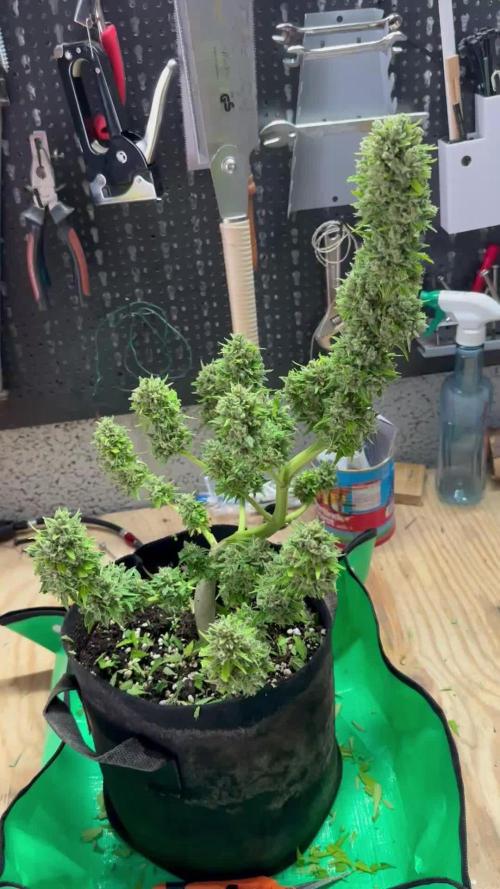
Tag 81: Es wurde geerntet, da die nächste Tage nur noch Regen angesagt ist und ich keine weitere Ertragssteigerung erwarte und die Schimmelgefahr da ist. Bisher habe ich grob wettrimmed und lasse sie nun 14 Tage in der Garagen trocknen.
Update 29g trocken

Likes
78
Share

@squalino
Follow
🌿 Journal de Culture : Mac 1 – "Spirit" (Plante #2) – Floraison Avancée / Explosion de Résine
#Dryrocket
Date du jour : 23/06/2026
Âge de la plante : J+73 (Semaine 11 - Fin / Début Semaine 12)
Taille actuelle : 136 cm
Évolution :
Hauteur stabilisée, mais volume floral démultiplié
On bascule dans une autre dimension cette semaine. Spirit ne grandit plus en hauteur, mais ce qu'elle développe sur ses branches est tout simplement irréel. Elle me fait complètement rêver.
👽 Descriptif des Fleurs :
L'Alien de la Tente
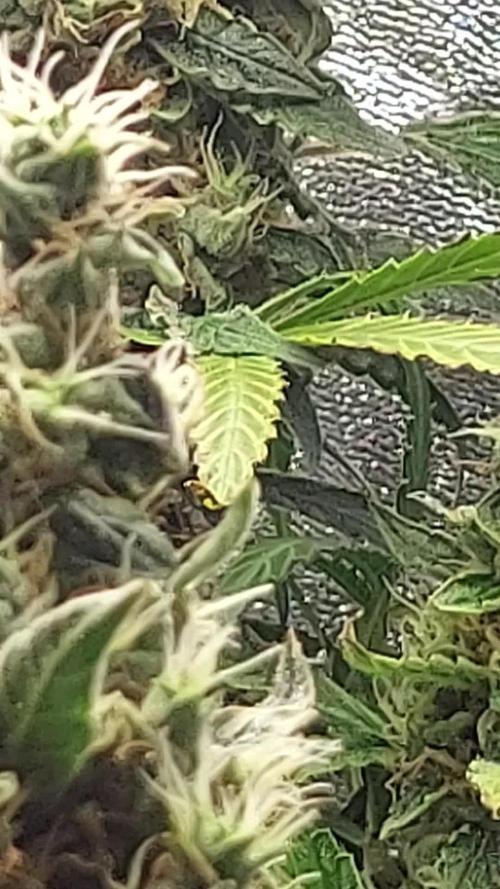
Des structures hors normes : Je n’ai pas de mots pour la décrire... Cette plante est une véritable alien. Les têtes sont devenues énormes, s’étirant sur de longues structures aussi massives et épaisses que des bouteilles d’eau.
Une compacité extraterrestre :
L'allure Sativa de ses longs bras contraste avec la dureté des buds, qui continuent de se densifier de manière spectaculaire. Les calices s'empilent pour former des tours massives recouvertes d'un givre de trichomes brillant et collant. Elle semble venue d'une autre planète.
Vigueur du feuillage :
La structure reste d'une beauté magnifique. Bien qu'elle continue de dominer l'espace et de faire de l'ombre à sa sœur Bee Apee, sa santé reste de fer. Elle a l'air de vouloir encore et encore se développer, sans montrer le moindre signe de fatigue ou de fin de cycle précoce.
Profil aromatique :
L'arôme sucré et divin se complexifie, enveloppant l'espace d'un parfum riche et enivrant dès qu'on s'en approche.
⚙️ Paramètres Environnementaux
Climat & Tente :
Toujours parfaitement stables (24°C jour / 21°C nuit, humidité gérée de près avec le déshumidificateur pour protéger ces têtes gigantesques de toute moisissure).
Lumière : Intensité à 75%. La cime principale flirte toujours à 15 cm du panneau, tandis que le reste profite des 35 cm de pénétration.
Arrosage :
Le système Autopot tourne en continu à l'eau claire, maintenant le substrat parfaitement hydraté en arrière-plan.
Nutrition & Entretien (Aujourd'hui)
Le repas :
Face à cette poussée de fin de vie qui n'en finit pas, j'ai légèrement ajusté le tir aujourd'hui en lui donnant 4 ml de Bio PK 5-8 de Biotabs dans mon arrosage manuel.
Réaction :
Cette gourmande insatiable convertit instantanément chaque apport en résine pure et en gonflement floral.
📝 Résumé de la situation
Spirit offre un spectacle hallucinant. Ses buds en forme de bouteilles d'eau défient les lois de l'espace restreint de mon local. Elle est massive, résineuse à souhait, dure comme la pierre et continue de pousser ses calices vers l'extérieur. La fin de session s'annonce dantesque et la planification de la récolte commence doucement à se dessiner à l'horizon.
🙏 Remerciements
Un immense merci à @mia_biotabs et à @Mrs_Larimar _Larimar pour m'avoir guidé jusqu'à l'obtention de ce monstre sacré.
Un grand merci également à @Dryrocket pour me donner l'opportunité d'essayer leur appareil Dryrocket pour le futur séchage ; j'espère de tout cœur que j'aurai assez de silice pour le faire tourner à plein régime le moment venu !
Enfin, merci à vous tous qui suivez l'évolution de cette alien depuis le premier jour.
Le show de Spirit continue, restez branchés pour la suite !❤️❤️
Likes
6
Share


@Lazuli
Follow
I defoliated this plant before the pictures so i can really push weight out of her


Likes
3
Share


@Renatissima
Follow
* Watering 2l every 3 days
* Always tuck in the leaves to expose lower tops
* Check the trichomes for amber

Likes
14
Share


@MadeInGermany
Follow
Info:
Unfortunately, I had to find out that my account is used for fake pages in social media.
I am only active here on growdiaries.
I am not on facebook instagram twitter etc All accounts except this one are fake.
Flowering day 4
since time change
to 12/12 h.
Hey everyone ☺️.
4 days ago she was placed in the flowering tent.
Thanks to the training it has become very bushy :-).
1 g Enhancer Pro l cocos was added.
As always, a cuttings were cut before moving 👍.
Otherwise everything was cleaned and checked.
Have fun and stay healthy 🙏🏻
You can buy this Strain at
https://www.amsterdamgenetics.com/product/super-silver-haze/
Type:
Super Silver Haze
☝️🏼
Genetics:
Haze x Skunk #1 x Northern Lights
Type:
70% Sativa – 30% Indica
👍
Vega lamp:
2 x Todogrow Led
Quantum Board 100 W
💡
Bloom Lamp :
2 x Todogrow Led
Cxb 3590 COB 3500 K 205W
💡💡☝️🏼
Soil :
Canna Coco Professional +
☝️🏼
Fertilizer:
Green House Powder Feeding
☝️🏼🌱
Water:
Osmosis water mixed with normal water (24 hours stale that the chlorine evaporates) to 0.2 EC. Add Cal / Mag to 0.4 Ec Ph with Organic Ph - to 5.5 - 5.8 .

Likes
31
Share


@LockDownGrow
Follow
Ok so I'm going too only feed pH water from here on out too force the plants too use up all that's in the soil , I am hoping I can carry them on now for the next 2 weeks like this before they are ripe ,