


Likes
Comments
Share


@Xandao_SeeWeed
Follow
Good morning, everyone!
Today, I bring mixed news from our garden. Unfortunately, the news is not the best for our beloved feminized plant. As we can see in the picture, the stem is quite thin and fragile, which compromises the healthy growth of the plant. As we know, the stem plays a fundamental role in the structure and development of the plant. It provides support for the branches and leaves, allowing them to carry out photosynthesis. Additionally, it is through the stem that water is transported from the roots to all parts of the plant.
Despite having placed a support that has helped a little, only the next few weeks will tell how her development will be. I am sharing my experience with plant growth, and you are invited to follow this mystery with me. Will she reach flowering? What will be the maximum height she will reach? I will document each stage, and together we will discover the outcome of this story.
On the other hand, the news is promising for our automatic plant! Since the last update, it has grown another 4 cm. The temperature this week has been quite favorable, with plenty of sun and little wind. By watering it with pH 6.5 - 7 water and using quality soil, I am confident that it will continue to thrive and reach the 5th week of vegetation in great condition.
I will continue to monitor and share the progress of both plants. Until the next update!
check out my instagram: @_see_weed. maybe you will like the content
Loving all the processes.
Can U SeeWeed?

Likes
11
Share


@4_Pro2Bono_0
Follow
Everything after germination has been pretty smooth. The plants in veg had a couple small brown spots due to under watering but no extreme signs or any abnormalities.

Likes
5
Share


@Bryankush
Follow
Giorno 2 Lei è in forma e molto profumata😋, pochi pistilli stanno iniziando lentamente a diventare gialli quindi credo che manchino circa 3 settimane
Giorno 6 annaffiata con 2L di acqua


Likes
9
Share

@Thedibber
Follow
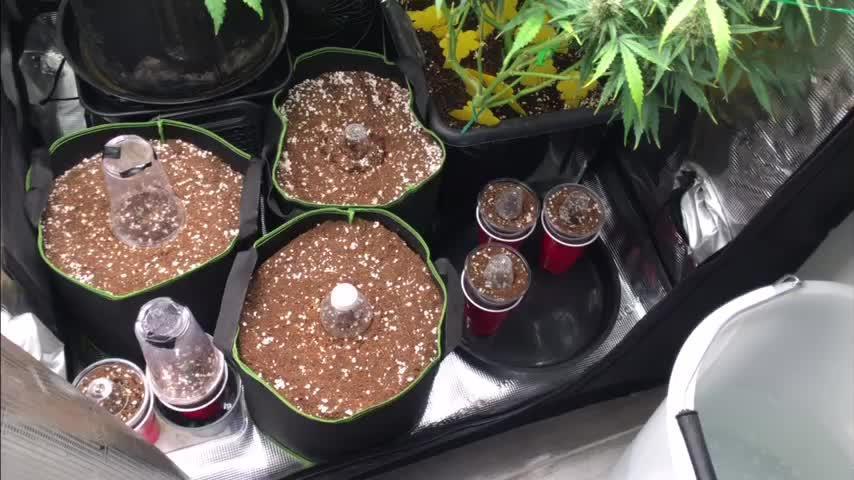
12/09/25 - Another week for the Gorilla cookies but shes stacking on well still. The nugs are solid although pretty small theres soooo many. Watered 3L Ph 6.0 going to start tapering off the nutrients for this girl although ive not overfed her. Im thinking 1month left but with how fast it changed in 2weeks it could be in 2weeks 😆
13/09/25 - Watered 3L Ph 6.0 Looks like its got weeks left so keeping up with the bloom feed and biobizz
14/09/25 - Watered late last night so planning on watering early morning 15th Sep. Hospital trip messed up my watering scedule 😂
15/09/25 - Watered 3L Ph 6.0
16/09/25- Watered 3L Ph 5.9
17/09/25 - Watered 3: Ph 6.1 no bloom just Acti-vera

Likes
3
Share

@Mxlan10
Follow
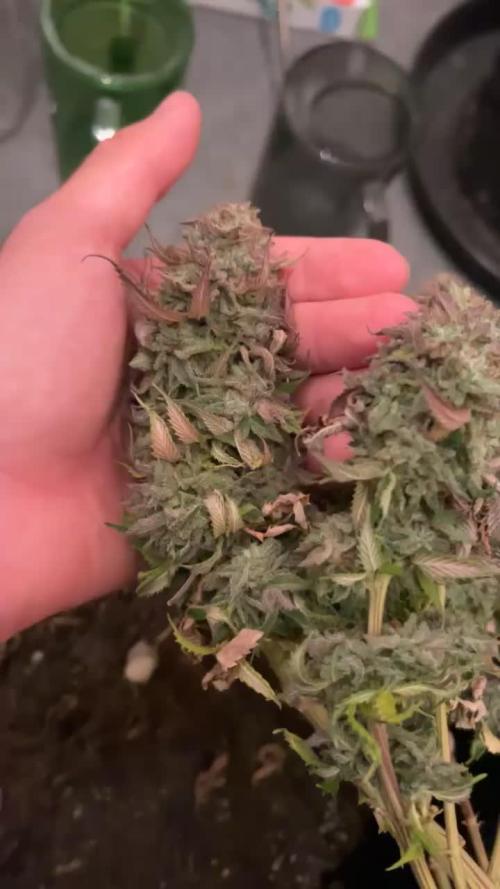
Die Pflanze blieb insgesamt ziemlich klein, hat aber dicke Buds produziert. Leider farblich nicht so besonders wie ich das von einem Doja Strain erwartet hätte. Auch der smell ist nicht wirklich exotisch. Eine Sorte die wahrscheinlich nicht so schnell wieder angebaut wird.

Likes
6
Share


@Spearfish
Follow
Nothing exciting for day 22. Added sensizym and cal-mag xtra after changing out the water (RO). No preflowers, but starting to smell more than just green.
Day 23. Removed some of the fan leaves.
Day 27, thinned out the larger one, still no preflowers

Likes
6
Share


@ForbiddenBotanist
Follow
Not a lot to say, leaves look a little different than the other seed but thats about all.
Transferred to 7gal and added some myco supreme and now we wait

Likes
23
Share

@SwabianMadness
Follow
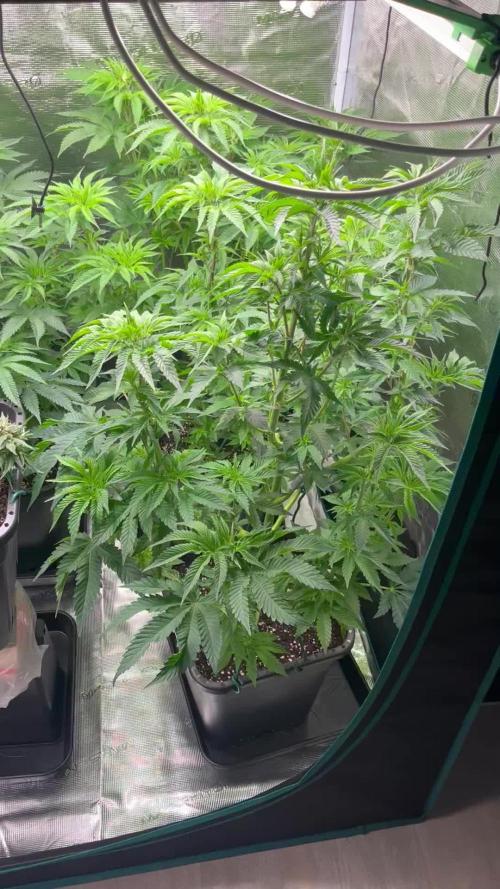
Was little bit nervous when i see them after the 5 Days. The Tent looks so empty because the Leafs hang down. I gave them 1,5 Liter of Water with Calmag. And next morning everything looks fine again 😊
The Stems where i cropped them are healed almost. Just two needs some Days more
It’s done with the vegetative Stage. They get to big if i wait longer. Gave them yesterday a Top Dressing with Mega Worm. And 15ml of Orgatrex in 6 Litre of Water. After one Litre the Pots are full. The other one i give them today
One thing i learned this Time is that you better don’t run IR Light on Vegi because the Nodes stretch to much. But the Photosynthesis Rate had a big Push..
Hope i can get the Ladies under Control


Likes
10
Share


@Murojuanna
Follow
Pulled the girls down today, on day 58.
Drying in 55% RH / 19c-21c - seems to be stable.

Likes
37
Share


@The_Bearded_Grower
Follow
welcome to Day 71 2/26/2021 well I am very happy she is putting on some weight and is still looking healthy. we are getting near the end of the grow now and i have a new sponsorship coming up in my next grow so stay tuned.
happy growing and as always keep your stick on the ice
Update with some macro shots
Likes
1
Share


@DharmaTheDog
Follow
Temperatures have dropped this week. Hoping for better weather to return, to complete the flowering
Likes
24
Share


@TerpTurtle
Follow
14 day dry | Curing in Grove bags, filled 7 QP bags & got 56g of keif out the trim bin from only 2 plants!
More pictures coming! STAY FROSTY GROWMIES

Likes
27
Share


@LockDownGrow
Follow
Starting too show the early stages of pre flowers , everything has gone nice up until now , she grew a very compact but bushy plant , that seemed too just bush about this week ,


Likes
17
Share


@Cannaguy
Follow
Larry OG started to have a very pleasant grape candy smell, peach maraschino also smell very sweet and candy like. Black Cherry Pound Cake has a slight gas smell too it which I look forward to! Dr. Grinspoon has yet to produce any overwhelming odor, the smell test I have received from the leaves defoliated and from touching the plant stalk resembles a nice spice and floral aroma. The strong heat days raise humidity from high 40’s to mid 50’s, the pint sized dehumidifier seems to work perfectly for my 3x3 tent by keeping it within that range and avoiding big fluctuations. By the end of the week both the Larry OGs and Black Cherry Pound Cake showed first signs of a nice purple fade despite warmer conditions. Larry OG (2) auto flower is showing signs of calcium and magnesium deficiency. I suspect the 2 auto flowers should be getting ready for harvest within the next few weeks, they started the flowering cycle before the photoperiod plants so I will be breaking out the jewelers loop to start checking out trichome heads

Likes
85
Share


@CRiSPrGrow
Follow
the c99s got ten days of plain water then came the chop at week 10 and 3 days with a fairly decent 30% amber all things considered !

Likes
76
Share


@BB_UK
Follow
Been a great week, not much to say on the dynomyco as it's early stages but im sure to see major improvement over the next week! I will say at this early stage though I do have alot of stable new growth so shows something is working in them roots but as for my females now, wow it's already shown it's work there as I used it on transfer and mixed Into the medium of the rear females so I'm impressed being a first time user! I will say i have learned alot about it following ari and the firebudz team on Instagram, so if anyone needs any pointers check them out they run classes too! Next one is Wednesday at 5pm PST very very educational growmies! Peace and love and stay tuned for greatness 💪🏽💯👊🏽💚


Likes
57
Share


@Ultraviolet
Follow
Views expressed are my own. All opinions are my own. The opinions expressed here belong solely to me and do not reflect the views of Growdiaries or Grandcru Genetics.
The cannabis strain Grape Guava can be a purple strain, depending on its specific phenotype and genetic makeup. While not all phenotypes of Grape Guava are purple, some variations, such as the Zatix Grape Guava, are noted for their striking purple appearance due to the genetic expression of anthocyanin pigments.
Grand Cru Genetics is a cannabis seed bank that emerged in 2018 from a group of breeders in Madrid to provide a satisfactory experience to all cannabis users.
"If we do things, we do them well. Due to our experience in the sector and our taste for excellence, we know high quality and we seek it in everything we propose and do."
"We have a “cultivate without giving up” philosophy that we apply to everything we do. We do not give up, we are friends of change, and we adapt as necessary in a still restricted sector."
"We speak relaxed because we know how to relax. We are not intense or preachy; we accept everyone as they are, and we understand that farming is not for everyone. But for those who do, we are here to accompany you. We like to do it and tell it. We are experts in the field because we are the first to do it. We speak from experience and connect with others because we share the passion for cultivation."
"Cannabis has the ability to show us a world of possibilities. When you cultivate and live its growth process, you enjoy a path full of emotions and not just the final destination. At Grand Cru we find beauty in small things. We are attentive, observant, detail-oriented and aware of everyday things, and we savor them without rushing."
In a garden of green, Grape Guava gleams,
With its fruity aroma, enchanting dreams.
Clusters of grapes, guava's sweetness ignite,
A strain so divine, in purple and white.
Euphoria whispers, a lush fruity haze,
Grape Guava's embrace, a tranquil daze.
Off and away.@1400ppm. The increased CO2 allows plants to thrive at higher temperatures, which in turn necessitates higher humidity to maintain the ideal VPD for healthy growth and transpiration. 80F -5F = 75F LST with 70% RH = 0.72 kPa. Higher temperatures and humidity promote rapid growth, nutrient uptake, and photosynthesis while maintaining a lower stress level. Temperature influences the rate of enzymatic reactions involved in aerobic respiration. Enzymes, such as those involved in glycolysis, the Krebs cycle, and the electron transport chain, work most efficiently at an optimal temperature range. In low temperatures, enzymatic activity will slow down, thus reducing the rate of aerobic respiration. In high temperatures, enzymes can become denatured, thus impairing their function and stopping the process of aerobic respiration. Glucose is the primary fuel for aerobic respiration. The rate of aerobic respiration increases with the availability of glucose, as it is the starting point for glycolysis. If glucose levels are low, cells may rely on alternative energy sources such as fatty acids or amino acids , but these processes may yield less ATP or be less efficient. To determine this effect, carbon dioxide volume was measured (as carbon dioxide is an output of aerobic respiration)
18/6 with the 6 being IR. The near infrared (IR-a) borders around 700nm up to 1400nm @ photon par flux density of 1.8 instead of darkness, keeping temps overnight a neat 77F-80F.
I think of my tent as a lung. What goes in must come out. When the rate of air going out exceeds the amount of air coming in, it creates a negative pressure. Tent concaves (bends in). If set up correctly, the RH will begin to drop slowly to the desired level I set, and the extraction turns off when it reaches the desired RH. The plant, as it performs cellular respiration, will always release more water into the air; therefore, the RH% of the tent overnight will increase, as long as oxidative phosphorylation is occurring. As soon as the RH% creeps back up to 55%, the extraction turns back on, over and over. This creates a strong pressure differential, which will work wonders with mass flow. Replicating high and low-pressure fronts in nature. Critical for oxygen diffusion at the critical time of peak cellular respiratory function..
Moisture will not transfer from a saturated atmosphere to another if that air is already at or above its saturation point, meaning the air can't hold any more water vapor. Once I understood that water is produced as a by product during cellular respiration, specifically at the very end of the electron transport chain (ETC) where electrons are finally transferred to molecular oxygen, the higher the RH of the air, the more resistance there is for more moisture to be added to that environment, and effects the ease with which it does so. But none of that water comes from the pot; it's pulled from the air. If you run high daytime RH, your medium/pot is 100% reliant on transpirational root pull to move water. ZERO evaporation happens across the atmosphere if the tent air has high RH%, the medium cannot release its water through evaporation. Once a canopy develops, light no longer slowly wicks and evaporates from the topsoil. The Soil-Plant-Atmosphere Continuum (SPAC) describes the continuous pathway and process of water movement, driven by a gradient in water potential, from the soil, through the plant's roots, stem, and leaves, and finally evaporating into the atmosphere through transpiration. There is evaporation, there is transpiration, and then there is evapotranspiration; Evapotranspiration (ET) is the combined total of two processes: evaporation (water lost directly from soil and surface water into the atmosphere) and transpiration (water released from plants to the atmosphere through their leaves). Evapotranspiration represents the total amount of water that moves from the medium into the air. There is no such thing as a medium with too much water, only a medium that retains too much for too long.
The water must always flow efficiently from one atmosphere(Medium) to another(Air) in a timely manner. Moisture is a critical factor for bacterial growth and decay. Dictating how long it's allowed to sit in any one location for any given period is a key preferred control. To ensure a net reduction in a bacterial population, the rate of removal (ET) must exceed the rate of bacterial growth (decay rate), which is often modeled as a growth rate for the specific bacterium under the given conditions. By optimizing daytime VPD, we also optimize conditions for bacterial growth to explode exponentially above 77°F.. If water is allowed to sit in a medium without an escape within a timeframe, nothing good will happen. IF High RH is maintained overnight as well as during the day, placing 100% of water movement at the behest of daytime transpiration, roots can only pull where they can reach, and if soil is compressed above a certain point, moisture will become trapped in a medium with no way of moving day or night. This will begin the countdown for decay to take hold. When water stagnates in a medium, it loses oxygen, creating anaerobic conditions that foster the growth of harmful microorganisms like bacteria and fungi, which can produce toxins and disease vectors.
Thigmomorphogenesis, the process by which plants respond to mechanical stimuli like touch by altering their growth and development, results in significant morphological changes to improve survival against mechanical perturbations. This complex response involves sensing touch and initiating physiological and genetic responses, leading to changes in form and structure over days or weeks. The process is triggered by physical forces such as wind, rain, or touch. Plants adapt to these stimuli by changing their shape and structure, which may include slower growth, thickened stems, or altered leaf development. Plants possess sophisticated mechanisms to detect even subtle mechanical stimuli and initiate responses. A variety of molecules, including calcium ions, jasmonates, ethylene, and nitric oxide, are involved in signaling these mechanical inputs. Touch can induce the expression of genes that encode proteins for calcium sensing, cell wall modification, and defense mechanisms. A plant exposed to constant wind may become shorter and sturdier. A plant that is touched frequently might grow more slowly to conserve energy and develop thicker cell walls. These changes increase a plant's resilience and ability to survive in harsh environments.
Let's get Thiggy with it.