


Likes
Comments
Share


@Shivashamboom1
Follow
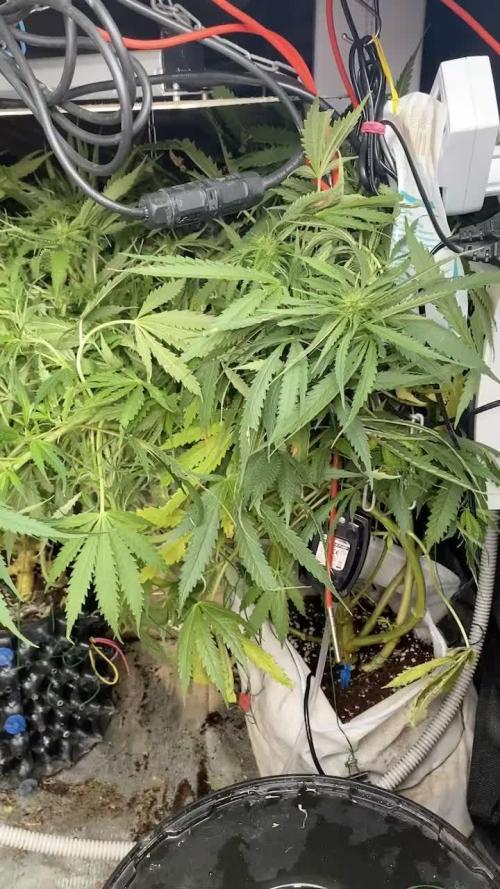
Questa watermelon della korngarden seed continua a crescere perfettamente 👍💪Buona genetica...
Me gusta mucho come viene su....
Per ora non posso che fare i complimenti a korngarden seeds,..
Per come cresce,molto resistente facile da fare anche per principianti...poi vi dirò com'è a livello di potenza,terpeni,ecc.....


Likes
1
Share

@HoneyBlunt42
Follow
Day 84
The Durban plants are actively growing foliage and reaching for the light, despite being bent. Every day after the lights go out, I bend their tops parallel to the floor (training). Sometimes the stems break slightly, but they are still flexible enough to recover. In 2-3 weeks, I plan to transplant them to a permanent location, where there will be 20-30 cm of space above the tops for ventilation.
In the next cycle, I think four weeks of vegetation will be enough for ripening. At Gordem Delicatesies (GD), Brazilians have stretched in 20 weeks, sometimes faster. For me, this variety develops more slowly; I'm not chasing maximum speed. Meanwhile, the Jack Herer is ripening in the box above them.
I'm waiting for a manicure table (thanks to Mila for the tip!). As soon as it arrives, I'll start harvesting. I'm glad that with this device I can meet the deadlines precisely.
Day 87
They hit a lamp and set one top on fire. The others miraculously survived. Today I tied the plants to their pots again with wire. I bent them so they were 10-15 cm from the lamp.
Some were tighter. I cut out a 5-liter bag containing the lower branches, which were turning yellow from lack of light, and the leaves the plant had shed on its own. Watering was light but regular.
I watered 3 liters by hand on top of the automatic watering. I added 1.5 liters of Simplex Taste and 1.5 liters of Simplex Aroma Punch. I started adding Simplex SilliX again—organic silicon is needed to strengthen the stems. Right now they look rather stiff; they bend easily by hand. This is a plus in my situation, but in a couple of weeks I want to see stronger, more vigorous central colas in the box.
Mold was appearing on the dry leaves at the bottom that I didn't remove in time. I took out all the bushes and carefully removed all the dry and yellow leaves. I chose the ones that came off without effort. Their plant has already finished growing. After this procedure, the fan was able to blow air through the base, meaning less mold.
Young buds are ripening on both plants, about 1 cm in diameter. The upper leaves and flowers are healthy; they were eating the lower burdock leaves. It's interesting to watch the biofertilizer from Greens work. I'll add Simplex Mass and Simplex Power separately in the next few days. And after that, HB-101. I'll water with Fitosporin at least once. I also want to add "33 Bogatyrs" bacteria – @NBRZ recommended it.
Once a week, I manually pour a liter of solution with Simplex Taste (very similar to horse manure from the garden) and Simplex Aroma Punch – a potassium-sulfur additive to enhance aroma and flavor.

Likes
68
Share

@Ultraviolet
Follow
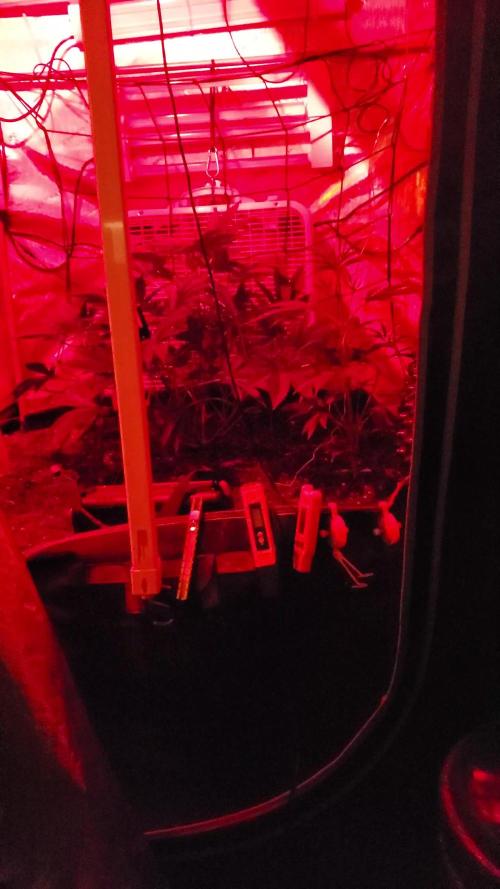
Removed autoflower and put her in her own pot outside the tent.
Foliars applied in strong blue 430nm with 4000Hz tone. 20-minute dose prior to application.
In essence, you're seeing a combination of the infrared light reflected by the plant, which the camera perceives as red, and any residual visible blue light the plant reflects, which results in a purple hue.
I was doing more stretching of the stems, adjusting weights, just a little too much, and it snapped almost clean. I got a little lucky in that it was still connected, wrapped her almost instantly while holding her in place with yoyo's. The core framework is now in place.
If your soil has a high pH, it's not ideal; you want a pH of 6.4, 6.5, or 6.6, which is ideal. If you are over a pH of 7, you have no hydrogen on the clay colloid. If you want your pH down, add Carbon. If you keep the pH below 7, you will unlock hydrogen, a whole host of new microbes become active and begin working, the plant will now be able to make more sugar because she has microbes giving off carbon dioxide, and the carbon you added hangs onto water. Everything has electricity in it. When you get the microbes eating carbon, breathing oxygen, giving off CO2, those aerobic soil microbes will carry about 0.5V of electricity that makes up the EC. The microorganisms will take a metal-based mineral and a non-metal-based mineral with about 1000 different combinations, and they will create an organic salt! That doesn't kill them, that the plant loves, that the plant enjoys. This creates an environment that is conducive to growing its own food.
Metal-based: Could include elements like iron, manganese, copper, or zinc, which are essential nutrients for plants but can exist in forms not readily accessible.
Non-metal-based: Examples like calcium carbonate, phosphate, or sulfur are also important for plant growth and potentially serve as building blocks for the organic salt.
Chelation in a plant medium is a chemical process where a chelating agent, a negatively charged organic compound, binds to positively charged metal ions, like iron, zinc, and manganese. This forms a stable, soluble complex that protects the micronutrient from becoming unavailable to the plant in the soil or solution. The chelate complex is then more easily absorbed by the plant's roots, preventing nutrient deficiency, improving nutrient uptake, and enhancing plant growth. Chelation is similar to how microorganisms create organic salts, as both involve using organic molecules to bind with metal ions, but chelation specifically forms ring-like structures, or chelates, while the "organic salts" of microorganisms primarily refer to metal-complexed low molecular weight organic acids like gluconic acid. Microorganisms use this process to solubilize soil phosphates by chelating cations such as iron (Fe) and calcium (Ca), increasing their availability.
Added sugars stimulate soil microbial activity, but directly applying sugar, especially in viscous form, can be tricky to dilute. Adding to the soil is generally not a beneficial practice for the plant itself and is not a substitute for fertilizer. While beneficial microbes can be encouraged by the sugar, harmful ones may also be stimulated, and the added sugar is a poor source of essential plant nutrients. Sugar in soil acts as a food source for microbes, but its effects on plants vary significantly with the sugar's form and concentration: simple sugars like glucose can quickly boost microbial activity and nutrient release. But scavenge A LOT of oxygen in the process, precious oxygen. Overly high concentrations of any sugar can attract pests, cause root rot by disrupting osmotic balance, and lead to detrimental fungal growth. If you are one who likes warm tropical high rh, dead already. Beneficial, absolutely, but only to those who don't run out of oxygen. Blackstrap is mostly glucose, iirc regular molasses is mostly sucrose. Sugars, especially sucrose, act as signaling molecules that interact with plant hormones and regulate gene expression, which are critical for triggering the floral transition. When sucrose is added to the growth medium significantly influences its effect on floral transition.
Probably wouldn't bother with blackstrap given its higher glucose content. Microbes in the soil consume the sugar and, in the process, draw nitrogen from the soil, which is the same nutrient the plant needs. Glucose is not an oxygen scavenger itself, but it acts as a substrate for the glucose oxidase (GOx) enzyme, effectively removing oxygen from a system. Regular molasses (powdered if you can), as soon as she flips to flower or a week before, the wrong form of sugar can delay flower, or worse. Wrong quantity, not great either. The timing of sucrose application is crucial. It was more complicated than I gave it credit for, that's for sure. When a medium's carbon-to-nitrogen (C:N) ratio reaches 24:1, it signifies an optimal balance for soil microbes to thrive, leading to efficient decomposition and nutrient cycling. At this ratio, soil microorganisms have enough nitrogen for their metabolic needs, allowing them to break down organic matter and release vital nutrients like phosphorus and zinc for plants. Exceeding this ratio results in slower decomposition and nitrogen immobilization, while a ratio below 24:1 leads to faster breakdown and excess nitrogen availability.
Carbon and nitrogen are two elements in soils and are required by most biology for energy. Carbon and nitrogen occur in the soil as both organic and inorganic forms. The inorganic carbon in the soil has minimal effect on soil biochemical activity, whereas the organic forms of carbon are essential for biological activity. Inorganic carbon in the soil is primarily present as carbonates, whereas organic carbon is present in many forms, including live and dead plant materials and microorganisms; some are more labile and therefore can be easily decomposed, such as sugars, amino acids, and root exudates, while others are more recalcitrant, such as lignin, humin, and humic acids. Soil nitrogen is mostly present in organic forms (usually more than 95 % of the total soil nitrogen), but also in inorganic forms, such as nitrate and ammonium. Soil biology prefers a certain ratio of carbon to nitrogen (C:N). Amino acids make up proteins and are one of the nitrogen-containing compounds in the soil that are essential for biological energy. The C:N ratio of soil microbes is about 10:1, whereas the preferred C:N ratio of their food is 24:1 (USDA Natural Resource Conservation Service 2011). Soil bacteria (3-10:1 C:N ratio) generally have a lower C:N ratio than soil fungi (4-18:1 C:N ratio) (Hoorman & Islam 2010; Zhang and Elser 2017). It is also important to mention that the ratio of carbon to other nutrients, such as sulfur (S) and phosphorous (P) also are relevant to determine net mineralization/immobilization. For example, plant material with C:S ratio smaller than 200:1 will promote mineralization of sulfate, while C:S ratio higher than 400:1 will promote immobilization (Scherer 2001).
In soil science and microbiology, the C:S ratio helps determine whether sulfur will be released (mineralized) or tied up (immobilized) by microorganisms.
A carbon-to-sulfur (C:S) ratio smaller than 200:1 promotes the mineralization of sulfate, when the C:S ratio is low, it indicates that the organic matter decomposing in the soil is rich in sulfur relative to carbon. Microorganisms require both carbon and sulfur for their metabolic processes. With an excess of sulfur, microbes take what they need and release the surplus sulfur into the soil as plant-available sulfate
A carbon-to-sulfur (C:S) ratio higher than 400:1 will promote the immobilization of sulfur from the soil. This occurs because when high-carbon, low-sulfur materials (like sawdust) are added to soil, microbes consume the carbon and pull sulfur from the soil to meet their nutritional needs, temporarily making it unavailable to plants.
200:1 C:S 400:1: In this range, both mineralization and immobilization can occur simultaneously, making the net availability of sulfur less predictable.
This dynamic is similar to how the carbon-to-nitrogen (C:N) ratio regulates the availability of nitrogen in soil. Just as microbes need a certain amount of nitrogen to process carbon, they also require a balanced amount of sulfur. Both mineralization and immobilization are driven by the metabolic needs of the soil's microbial population.
Sulfur is crucial for protein synthesis. A balanced ratio is particularly important in relation to nitrogen (N), as plants need adequate sulfur to efficiently use nitrogen. A severely imbalanced C:S ratio can hinder the efficient use of nitrogen, as seen in trials where adding nitrogen without balancing sulfur levels actually lowered crop yields.
Maintaining a balanced carbon-to-sulfur (C:S) ratio is highly beneficial for plant growth, but this happens indirectly by regulating soil microbial activity. Unlike the C:N ratio, which is widely discussed for its direct effect on nutrient availability, the C:S ratio determines whether sulfur in the soil's organic matter is released (mineralized) or temporarily locked up (immobilized).
Applied 3-day drought stress.
Glucose will hinder oxygenation more than sucrose in a solution because glucose is consumed faster and has a higher oxygen demand, leading to a more rapid decrease in oxygen levels. When cells respire, they use oxygen to break down glucose, and this process requires more oxygen for glucose than for sucrose because sucrose must first be broken down into glucose and fructose before it can be metabolized.
In a growth medium, glucose is a more immediate and universal signaling molecule for unicellular and multicellular organisms because it is directly used for energy and triggers a rapid gene expression response. In contrast, sucrose primarily acts as a signaling molecule in plants to regulate specific developmental processes by being transported or broken down, which can be a more complex and slower signaling process.
Critical stuff.
During wakefulness (DC electric current) life can not entangle electrons and protons. During the daytime, the light is sensed as multiple color frequencies in sunlight. Coherence requires monochromatic light. Therefore, at night, IR light dominates cell biology. This is another reason why the DC electric current disappears during the night. The coherence of water is maintained by using its density changes imparted by infrared light released from mitochondria in the absence of light. This density change can be examined by NMR analysis, and water is found to be in its icosahedral molecular form. This is the state that water should be in at night. This is when a light frequency is lowest and when the wave part of the photoelectric effect is in maximum use.
3600


Likes
6
Share


@ChrisNbran
Follow
She finally started flowering and stretching can’t wait to see how big she gets she def bushy and starting to get taller all the bud sites and canopy are pretty much even I clipped everything off the lower sites and upd the nutes defoliated some of the bigger leafs but the next day it looks like I did nothing until next time happy growing
Likes
49
Share

@wolfvb
Follow
🌿 Week 9: The Grand Root Reveal & Bud Sites Popping! 🏺🥦
Strain: Sticky Broccoli Automatic (Zamnesia)
Stage: Mid-Flowering / Bud Development
Light Cycle: 18/6
📝 The General Vibe:
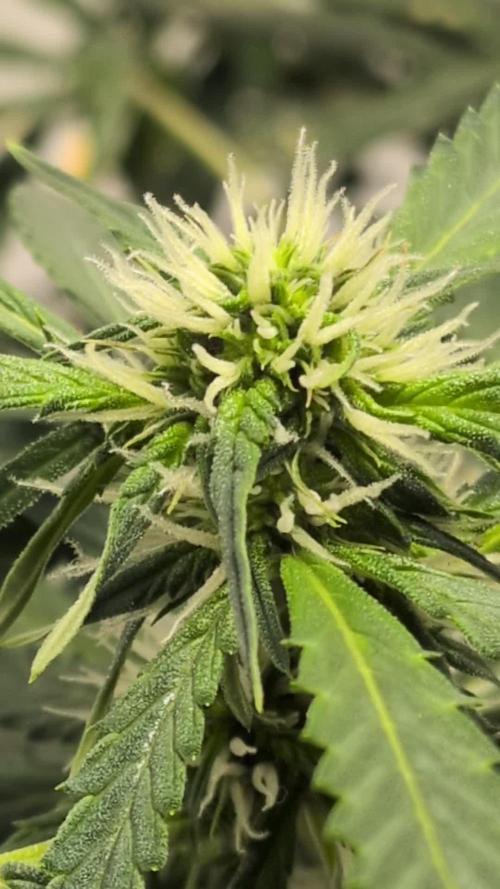
Welcome to Week 9! The stretch has slowed down, and the "Sticky Broccoli" is officially shifting all her energy into flower production. The canopy is an absolute jungle of tops! Those red and green LST clips did exactly what they were supposed to do, breaking the apical dominance and giving us a beautiful, bushy, multi-topped structure. White pistils are shooting out everywhere, and the bud sites are starting to look like perfect little pompoms.
🏺 The "Vase" Experiment Reveal!
This is the moment I’ve been waiting for! I finally pulled back the top layer to check on our hidden structure, and the results are amazing. The main stalk is incredibly thick and woody, and you can see the roots actively gripping and growing right over the little blue vase nested in the soil. The experiment is a massive success so far! She is anchored in deep and looking incredibly sturdy.
🍽️ The Menu (Nutrients) - Powered by Plagron, Hesi & BioBizz:
Continuing to push the bloom nutrients to help these flowers swell.
Plagron Green Sensation: (The secret weapon for heavier yields and resin production)
BioBizz Bio-Down: Keeping the pH dialed in around 5.9 - 6.0 for the coco mix.
🌿 Plant Progress & Observations:
Structure: Bushy and dense. The internodal spacing is tight, which means these colas are going to stack up nicely.
Health Check: I am noticing some slight yellowing/crisping on the very tips and edges of some of the older, mid-tier fan leaves. It looks like a little bit of nutrient burn from pushing the bloom feeds, or a slight pH fluctuation. I'll be keeping a close eye on the runoff and might dial the EC back just a fraction on the next watering so she stays happy.
Update: 10.03.26
She is getting better, been giving her Fish-mix and TNT for two times now.
👽 The Garden Guardian:
Our heavily tattooed Kewpie garden manager is still holding it down in the corner of the tent. No pests, no bad vibes, just pure Eternity Cup focus!
Let the bud swelling begin! Growers Love! 💚

Likes
82
Share


@BigBadLion
Follow
Hey everyone! 👋
Another week and another update, and in this week I finally flipped my babies! (and it wasn't a failed attempt) 😍 They are now in the 12/12 cycle and I must say last week's recovery was crucial to finally do it!
Besides of all that this week was quite uneventful compared to the other ones (which I suppose is a good thing! 😝)
The only things worth mentioning besides what I already wrote is that I overfed my babies (double dosage) but it seems they took them well and that Boomer and her sisters (specially Boomer) get thirsty really fast compared to before... which means I need to water them more frequently which isn't terrible.
I also finally have some new time lapses 😊 I hope you all enjoy them!
Thanks for reading! 🙌

Likes
102
Share


@Zurban_Poison
Follow
Hello everybody!
everything is just great! even there is nothing to say so much everything is good)))
I think it's not long left to wait for the harvest .. 2-3 weeks maximum!)
Likes
14
Share


@Farmerted
Follow
So with Christmas and an extreme cold front I got busy and am posting late this week. Got the pictures and videos on time though. So still fighting phosphorus deficiencies a little. That is why I am adding a pinch of Kool bloom to the mix when I feed. Seems to be helping so long as I don’t over do it. This tiny tiny cup is tough to keep balanced. If I do this again I will invest in IV bags and put it on a constant metered drip. Buds are getting a little larger and making so that is good. It is by itself in my seedling tent right now so it is easy to tell it’s that plant starting to smell nice. Let’s see where we land next week. She will make at least some smokable bud at this rate, not much but it has been fun.
Likes
166
Share


@iMeus
Follow
~ Update ~
Finally my friends, it looks like everything has officially started the flowering cycle. I had a few issues going on, black spots, drastic drop in temps, fungal gnats, and a little more. I got everything under control for now, gotta keep a watchful eye ;)
I’m a bit late with the notes and pics, so here they are! Enjoy :)
~ Individual Progress Notes ~
[CBD Blueberry]
Height: 23.3”
Tops: 8
Notes: The smell is getting more intense now. Still has hat tropical theme; papaya, melon, and sweet berries are the most prominent scents. I’m noticing slight purple towards the tips of buds and sugar leaves. Even though this pheno I have is acting up I like what I see, and smell ;)
[Mazar]
Height: 22.7”
Tops: 16
Notes: I’m going to use nothing but water for a while. The leaves look ashy, and bland when the others are lush green. I wonder if this girl is a light feeder? I will water the others with seperate nute regimen to avoid making this condition worse. I also have little dark spots that show up on the leaves which I haven't found on the other girls. This being a unique event, I’m not sure if it’s fungal or nutes. I will find out eventually. I pick off all the leaves that are contaminated to avoid spreading this condition (if airborne or contact transfer applies). I will keep an eye on this one....
[Super Silver Haze]
Height: 23.8”
Tops: 16
Notes: This beast isn’t as full as WW for an example, though the stems and bud sites look solid! I really like how well this one is doing. Still has the biggest leaves too, I have high expectations for her. I wonder how much she’ll stretch in the next 3 weeks?
[White Widow]
Height: 22.5”
Tops: 16
Notes: Out of all the girls this one has the most purple action goin on, I love purple and to me this is a great sign. The nutes work the best for this girl too, need to be careful to not overfeed the others because of this reason. I think this girls will purple out on me, well I’m hoping for that at least. I might let the trics amber to 50/50 make this girl a heavy sedative and muscle relaxant, I have time so no rush. I could harvest some of the buds with 10-20% amber then let the rest mature more, just a thought :)
~ Final Thoughts ~
I glad the majority are having no troubles, it’s a bummer I can’t get rid of this spot problem with Mazar. I need to act fast to make sure I can stop this from spreading. I might quarantine her if it comes down to it. I believe I can get to the root of the issue here, in due time. Anyways I’m glad I’ve gotten to this point! I’m very excited, starting to get a bit impatient from the anticipation… I promise I won’t harvest early ;)
Much love you guys!
Meus <3


Likes
12
Share

@Growbody
Follow
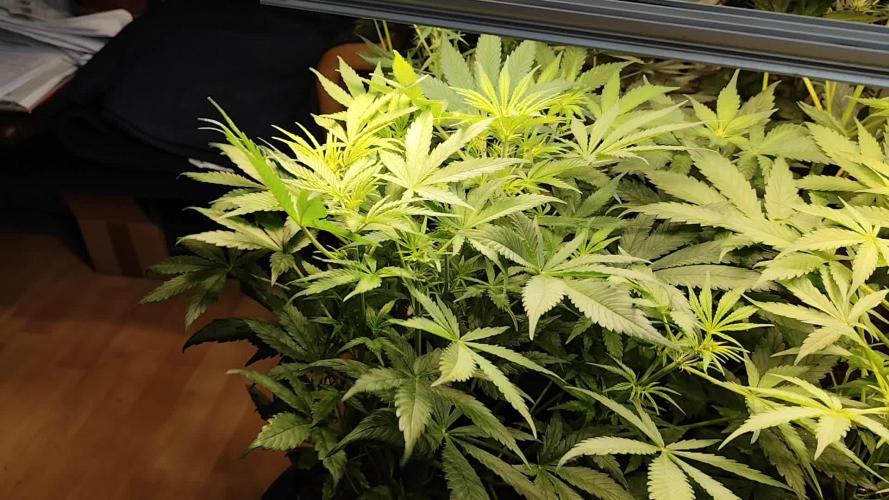
Herzlich willkommen zu meinem neuen Grow mit der Orange Sherbet Auto von 2Fast4Buds. Die Eltern sind Cookies Auto F5 x Tangie´matic, der Typ ist F3 Feminized Polyhybrid Autoflower. Der Strain war Winner of the American Autoflower Cup 2025, Kategorie Best Auto Hash. Die Aussicht auf frischen Orangensaftgeschmack macht mich wunderfizzig.
Wieder verwendet wurde für diesen Grow die 15Liter Stofftöpfe von ROOTiES, die Sonnenerde Bio Hanferde, BioBizz Wurmhumus, BIONOVA + zamnesias MonsterBud Mix Living Soil, zamnesias Smart Start Plugs und Plagrons Seedbooster Plus. Hat sich alles bestens bewährt.
Tag 37: Die Orange Sherbet Auto von 2Fast4Buds bekam 1,5 Liter Wasser und das war etwas zu viel. Der Stofftopf war unten 'rum nass.
Tag 39: 0,5 Liter Wasser.
Tag 41: 1,0 Liter Wasser. Der Stofftopf ist wieder trocken.
Schön, dass du dich für meinen Grow interessierst. Schau gerne wieder rein. 👋😎
Likes
23
Share


@XperencdGmanXG
Follow
These girls are now entering full bloom and are just beasting! The size of the buds now will tell how big and dense they will be at the end. From here on in they will power thorough to finish.
Likes
11
Share


@MistaOC
Follow
29.11. Blütetag 43
Gestern nochmal leicht mit Dünger gegossen.
auf 10L
22ml CalMag
20ml Canna BioFlores
10ml Canna BioBoost
——————————————————————
05.12. Blütetag 49
So langsam geht es dem Ende zu.
Ab jetzt wird nur noch mit calmag gegossen.
Ich denke hier sind die 56 Tage Blütezeit echt realistisch.
——————————————-

Likes
12
Share


@TheBudWhisperer
Follow
Off to the races after the first week of veg. And the girls are looking good. They had about 24-48 hours of transplant shock but have since turned over and look perky. They never fully transitioned and all of em look like they’re turning back around.
Definitely starting to see some pheno variation on one of the indicas (F6) - trademark from the Skywalker 100%. A light bluish/purpleish hue on the fan leaves. We’ll see what happens over the next week then probably just pick a day and flip. We don’t need em huge - just big enough to show off dem buds.
On the hardware side of this grow, the mods to the dutchy system look to be working well. It just makes plant management easier with a full trough drain as opposed to individual drainage holes. Really, the system isn’t a concern for the most part. It’s proven time and time again how manageable a recirc system can truly be. Scaling down to smaller pots and more plants has also been a revelation of sorts around here. We used to grow monsters and now the aim is strictly proportional yields across a wider array of genetics. Been a great trip so far🤟. Couple more boring weeks of veg. And as soon as the breeding tent is cleaned up and pollen free - it’s go for blast-off👍.
Background
This cycle of clones represents all the potential of this F1 line of WalkerBerry OG. Bred by myself over the last couple of years. This genetic shows excellent hybrid vigour, incredibly stable nutrition requirements to date and an eclectic mix of long and short internodal spacing bu specimen.
We know we have indica and sativa dominant traits spread evenly across the 6 available clones. Now it’s just a matter of seeing them run out under controlled and pollen free conditions.
We’ve labelled each plant and it’s resulting seed accordingly. Once we get to the F2 run, we’ll hopefully be able to isolate down to 2-3 phenos if the bud is any good. From there, who knows. It’d be great to get to a finished, stable generation that would be fem worthy but that could be a very long way off. For now - we’ll focus on this line and see where it goes🤞🤞.
Likes
19
Share


@Wenz004
Follow
Bissl fetter geworden, sieht man nur im Zeitraffer etwas. Ansonsten nix passiert.
Und...durch einen Düngerfehler die Spitzen etwas verbrannt👍


Likes
21
Share


@eldruida_lamota
Follow
Venga familia que ya viene la cosecha de estas Green Gelato de RoyalQueenSeeds, que ganas que tenia ya de pasarles la tijera.
Que locura de variedad , me encantó cultivarla, que aromas y que flores aparte de piedras, se ven resinosas y muy apetecibles.
a sido una genética con la que disfruté bastante todo el proceso, crece vigorosa y al final saca unos tonos bastante llamativos.
No supuso ningún problema todo el ciclo fue perfecto.
De 3 destacar que 2 salieron muy bien y una fue paja, no creo que ni la utilice para extracción ni na, lo demás top, no sé a qué se deberá.
Agrobeta:
https://www.agrobeta.com/agrobetatiendaonline/36-abonos-canamo
Mars hydro:
Code discount: Eldruida
https://www.mars-hydro.com/
Hasta aquí es todo , espero que lo disfrutéis, buenos humos 💨💨.