


Likes
Comments
Share


@Fibro_Witch
Follow
Still waiting for this girl to find her stride, she's filling out slowly but surely. Sprayed with some Neem Oil to thwart the bugs and will water in some Big bloom and Molasses later. Grow Baby Grow🙏!

Likes
18
Share


@valiotoro
Follow
I want this monster to turn purple so im gonna drop the night temp to 13• degrees for one week!

Likes
42
Share


@MrGrow
Follow
8.03.2022
Proceduto al taglio e al lavaggio delle infiorescenze al 63 giorno di fioritura.
Ottimo il risultato finale, in uno spazio di 1,2 m² ho prodotto un raccolto di 540 gr di cime secche e rifilate pronte da fumare💚
Con i ritagli delle foglie e dei fiori più piccoli sono riuscito a tirare fuori un po di kief di prima qualità.
Aggiornerò tra qualche settimana con il rapporto sul fumo, dopo che avrò fatto maturare e ruttare le cime in barattoli di vetro.🙏💚

Likes
21
Share


@420DeepGrow
Follow
Este sueño es posible gracias a Royal Queen Seeds, Marshydro, XpertNutrients y Trolmaster, sin ellos esto no se podria cumplir .
💐🍁 Dynamite Diesel:
Royal Queen Seeds se ha asociado con Tyson 2.0 para ofrecer la genética desarrollada por este campeón en forma de semillas.
La Dynamite Diesel recibe su nombre en honor al apodo de Mike Tyson al inicio de su carrera, Kid Dynamite. Es un cruce entre dos variedades míticas, la Sour Diesel y la Skywalker OG, que son conocidas por sus intensos sabores y sus efectos estimulantes,tiene un 22% de THC, lo que la sitúa en la categoría de peso crucero.
En interior, esta variedad crece a alturas de 100-150cm y produce hasta 550g/m² tras una fase de floración de unas 9 semanas. Al aire libre, puede alcanzar hasta 2m de altura y produce una cosecha máxima de 675g por planta.
🚀 Consigue aqui tus semillas:
https://www.royalqueenseeds.es/rqs-semillas-cannabis-tyson/664-dynamite-diesel.html
💡TS-3000 + TS-1000: se usaran dos de las lámparas de la serie TS de Marshydro, para cubrir todas las necesidades de las plantas durante el ciclo de cultivo, uso las dos lámparas en floracion para llegar a toda la carpa de 1.50 x 1.50 x 1.80.
https://marshydro.eu/products/mars-hydro-ts-3000-led-grow-light/
🏠 : Marshydro 1.50 x 1.50 x 1.80, carpa 100% estanca con ventanas laterales para llegar a todos los lugares durante el grow
https://marshydro.eu/products/diy-150x150x200cm-grow-tent-kit
🌬️💨 Marshydro 6inch + filtro carbon para evitar olores indeseables.
https://marshydro.eu/products/ifresh-smart-6inch-filter-kits/
💻 Trolmaster Tent-X TCS-1 como controlador de luz, optimiza tu cultivo con la última tecnología del mercado, desde donde puedes controlar todos los parametros.
https://www.trolmaster.com/Products/Details/TCS-1
🍣🍦🌴 Xpert Nutrients es una empresa especializada en la producción y comercialización de fertilizantes líquidos y tierras, que garantizan excelentes cosechas y un crecimiento activo para sus plantas durante todas las fases de cultivo.
Consigue aqui tus Nutrientes:
https://xpertnutrients.com/es/shop/
📆 Semana 2:
Gran primera semana, ella ha dado un gran estiron estos días, si sigue así será una gran cosecha.
Esta semana se practica defoliacion, poda de ramas bajas y se le agrega Sticky Fingers .
La carpa está ocupada al 100%, sigue una floracion explosiva gracias a @Marshydro y @Xpertnutrients y @Trolmaster con esta gran genética 💪.
Potencia de la lámpara: 70%
Likes
41
Share


@MadeInGermany
Follow
COMMENTED BY
MadeInGermany MadeInGermany 8 minutes ago
Flowering day 68
since clock change
to 12/12
Hey guys :-) .
It's so far, the lady is ripe and will be cut at the bottom end in the coming days and hung upside down in the drying tent :-) .
Next week there will be an extra update on how they are hanging.
Watering would be done twice this week with 1 l each (nutrients see table above)
Otherwise it was checked and everything was cleaned.
Have fun and stay healthy 💚🙏🏻
👇🏼👇🏼👇🏼👇🏼👇🏼👇🏼👇🏼👇🏼👇🏼👇🏼👇🏼👇🏼
You can buy this Nutrients at :
https://greenbuzzliquids.com/en/shop/
With the discount code: Made_in_Germany you get a discount of 15% on all products from an order value of 100 euros.
👇🏼👇🏼👇🏼👇🏼👇🏼👇🏼👇🏼👇🏼👇🏼👇🏼👇🏼👇🏼
You can buy this strain at :
https://www.exoticseed.eu/
Water 💧 💧💧
Osmosis water mixed with normal water (24 hours stale that the chlorine evaporates) to 0.2 EC. Add Cal / Mag to 0.4 Ec Ph with Organic Ph - to 5.8 - 6.5
MadeInGermany


Likes
61
Share


@Dunk_Junk
Follow
This week She grew 13cm. Flowering stretch slowing down.
Her flower sites look absolutely lovely!!!
No sign of any purple as of yet though 😭

Likes
18
Share


@cheetah844
Follow
The second tallest one of the bunch. I'm excited to watch how a strain rich in CBD grows in comparison to THC rich strains.
I topped and defoliated every plant. I'm trying to form them into canna-bushes. Hopefully I'm doing the correct training procedures to make them all grow that way both indoors and out.
Likes
6
Share

@WaffleTerps
Follow
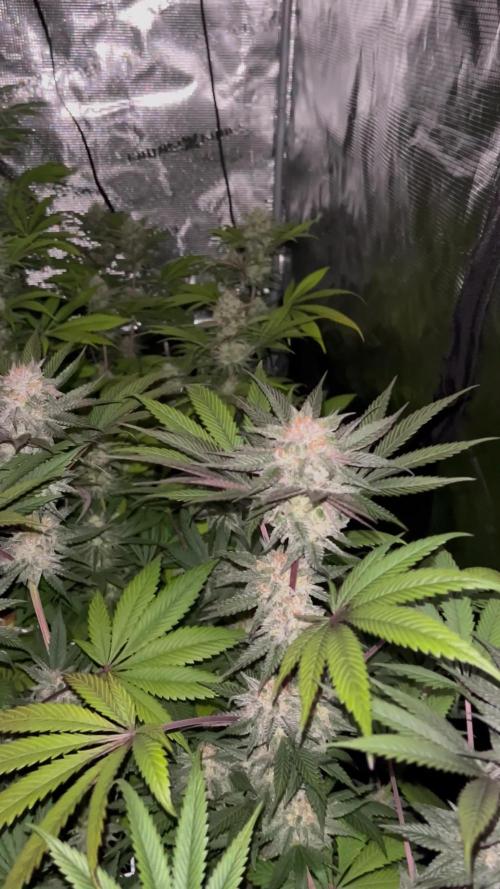
Week update – Full bulking mode 🌱🔥
This week we increased plant nutrition, pushing feeding up to EC 1.57 / pH 6.3, using a total irrigation volume of 22 L (GrowDiaries doses shown in ml/L).
Feeding recipe (22 L total):
• CalMag Xtra: 30 ml
• Bio·Grow: 6.3 ml
• Bio·Bloom: 133 ml
• Top·Max: 23 ml
• Bio·Heaven: 21 ml
• Bud Candy: 38 ml
• Atazyme: 25 ml
Irrigation is done via drip system + manual support watering to ensure full substrate homogenization.
We also fixed a flow imbalance on one dripper so all plants now receive identical flow.
Environmental parameters this week:
Air temp: 24.6 °C
💧 RH: 52.4 %
📈 VPD: 1.47 kPa
☀️ PPFD: ~914 µmol/m²/s
🌞 DLI: 39.74 mol/m²/day
CO₂: ~910 ppm
New Spider Farmer dehumidifier has been fully integrated, allowing tighter humidity and VPD control during bulking.
Plants are responding well, buds are stacking and swelling.
You can also check the microscope shots we took this week and daily progress on Instagram (link in profile).
More detailed tracking on GrowDiaries 📊🔥

Likes
26
Share


@Highgrade_Harvests
Follow
Girls are really starting to to take off now. Ramping up the nutrients slightly and started defoliation. It's interesting to see the phenotypes coming out. 3 plants. One short and bushy, one in between and one tall and lanky. Excited to watch the rest of the grow and how they end up. Off to a really good start. Tons of side growth. Completely topped 2 of them and fimmed the last one to see what happens. Currently trying to figure out the timelapse on my camera it only wants to save in few second long clips. I'll get it. I posted them anyway they are kinda neat.

Likes
10
Share


@bcuzZ
Follow
Haben 3 Nächte Abwesenheit überstanden.
Nochmal kräftig entlaubt und schon partiell lollipopped.
Die kleinen Abfall Triebe mit Blüten im vaporizer probiert und ES WIRKT schon bisschen!! :D

Likes
39
Share


@SirBudAlotts
Follow
This week I decided to start feeding her some nutes.
She went through some serious lollipopping aswell 😳..😆!!
So she basically received a bloom booster ( 1: 12:12 ), I also added some potassium booster ( 0:0:35 ).
I think she loves her nutes alot! She gave me a good stretch and formed much more bud sites which has me all excited 😊..
Likes
16
Share
@420DeepGrow
Follow
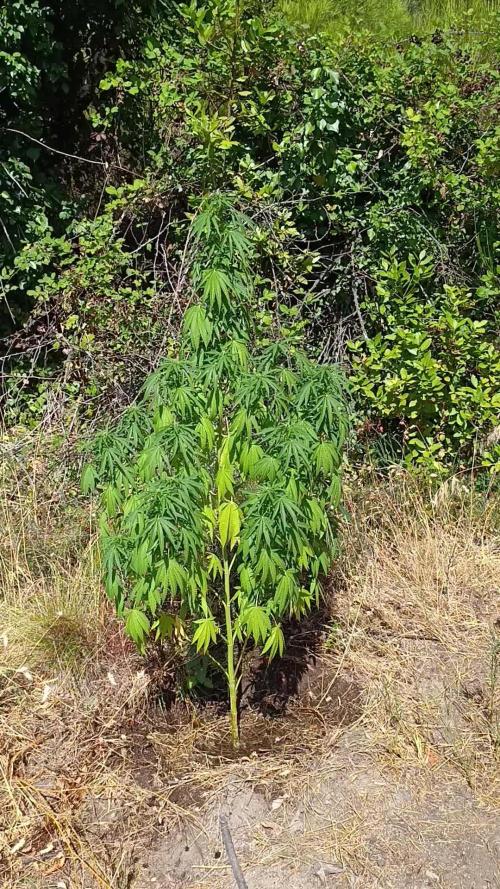
📆 Semana 7
Durante esta séptima semana, la recuperación continúa avanzando de forma positiva. Aunque todavía conserva algunas hojas amarillentas como consecuencia del estrés acumulado, la planta presenta un aspecto mucho más vigoroso y una estructura bien formada.
Las puntas continúan desarrollándose con fuerza y la floración avanza de manera clara, con una buena formación de flores y nuevos signos de producción de resina. La regularidad en los riegos está ayudando a mantener una evolución estable, incluso después de los últimos periodos de falta de agua.
⚡ EC: 1.3–1.4
💧 pH: 6.2–6.5
🌡️ Agua: 20–23°C
🌫️ Humedad: 50–60%
💡 PPFD: Luz solar exterior
🌡️ Temp. ambiente: 20–32°C
🔥 Nota: La recuperación sigue avanzando y la floración empieza a tomar protagonismo. La planta mantiene una estructura muy fuerte y responde cada vez mejor. Ahora toca mantener la constancia y dejar que continúe desarrollando las flores.
Seguimos creciendo fuerte 💪!
Likes
Comments
Share

@SubliminalSociety
Follow
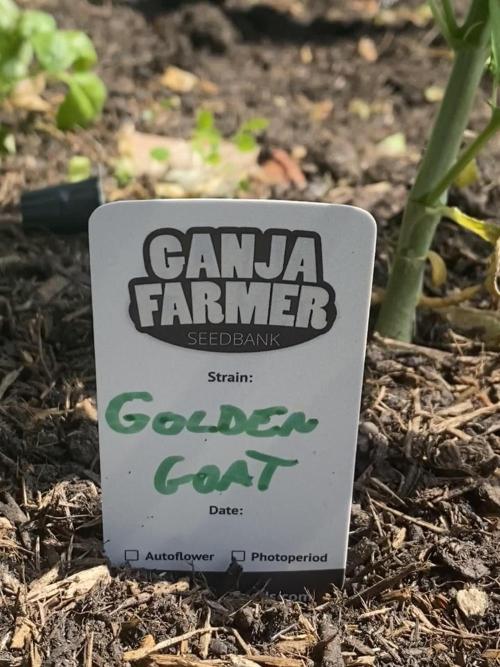
Okay, fimming didnt work at all. In fact, I stunted her a little. No growth since last week. Learning: learn safe topping.
We also had a lot less sun due to clouds but it was very light and windy.
She's starting to smell, I'm excited to see how she does.
Likes
58
Share


@Kmikaz420
Follow
La fin se rapproche pour la bannana x purple punch (je vien de lui donné sont premier rincage;)
C est une plante vraiment facile à faire pousser elle peut encaisser de gros EC
Et elle n à pas trop de feuille (facile à trimer ;) je pense donc que même un débutant peut avoir de très bon résultats avec cette souche il faudra juste la nourrir correctement (pas besoin de lst ou autre technique, juste lui laisser assez de place pour grandir (en hauteur comme pour les racines = big roots = big fruits ;)
Pour la WEST COAST OG c est pareil on dirais elle sont en pilot automatique (tellement je n ai rien a faire a part arroser )
J ai au début mis 2 anneaux (technique que j aime bien quand j fais pousser une plante la première fois, au cas où il faudrait écarté les branches etc) mais la on en aurait presque pas besoin pareil que pour ka bannana il faut juste lui laisser assez de place pour les racines et lui laisser assez de place (largeur hauteur ) et des bon nutriment à bonne dose et normalement vous devriez avoir le même résultat que moi ;)
Je doit dire que la west coast a une odeur magnifique et les photos pour toutes seul pour se qui est de la cristallisation :)
Voilà les amis je m arrêt ici pour cette semaine on se retrouve pour la recolte de la bannana (la west coast à besoin de bien 10 jours encore avant le rincage)
Processing
Likes
19
Share


@Ganjagrandaddy
Follow
Day 56 from seed(16flowering)
Smoothie by name smoothie by nature !. She has been so easy to work with and train to this point and her smell is very sweet up close.
#1 The Los girl is huge. she has sites throughout her structure that are developing nicely together. I expect she would have been a very big plant without the lst and would have outgrew my room very quickly. Buds are slowly developing and I expect she has at least another 3-4 weeks before harvest.
#2 coco and mc have been keeping her happy. despite the poorly appearance of her mottled damage and some.dying lower leaf from before , she is growing well. her structure is natural and no ties or last at all so she is taller than her sisters. lots of sites on her so let's see what she does.
#3 is one of the smaller girls in the grow and now moved into the middle to bathe her in more light. she has sites poking out of her low canopy so should still be a decent yield.
Merry Christmas All on grow dairies and staff


Likes
9
Share


@AgentOrange
Follow
Not sure how long these have got before they need to be harvested?? What do you think ?
Likes
3
Share


@Lazuli
Follow
One of the best smelling plants ive had wow what a terpenes, its like bubblegum

Likes
18
Share


Likes
76
Share


@GrowBeforeHoe
Follow
This week was pretty rainy and the plants didn't get much sun... Hopefully the buds didn't get moldy! 🙄
The Amnesia Mac Ganja got pre-harvested but she needs one more week to go. (High was uplifting! 😍)
The Quick Ones are stacking buds now! Really amazing!
They need 3 weeks to get finished... I hope the weather gets more sunny. ☀️🙏🏼
Royal Sherbet started flowering 2 weeks ago so they also need some weeks to get ready... At least 4 weeks to go I guess. 👀
Stay tuned and
Keep growing everyone! 💚🌱

Quick One · Royal Queen Seeds
Northern Light Automatic · Royal Queen Seeds
Royal Haze Automatic · Royal Queen Seeds
Special Kush #1 · Royal Queen Seeds
Purple Queen · Royal Queen Seeds
Royal Jack Automatic · Royal Queen Seeds
Royal Critical Automatic · Royal Queen Seeds
Royal Cheese Automatic · Royal Queen Seeds
Sherbet Queen · Royal Queen Seeds
Amnesia Mac Ganja · Royal Queen Seeds