


@TheSurfBud
Follow
Flowers are shaping up nice and phat.
Very sweet smells, leaves are fading out.
Always following High Powered Organics Gro-dirt Gro-Guide
@highpoweredorganics or
www.highpoweredorganics.com for more info


@Foggedaboudit
Follow
Start of week 9! The buds are really starting to swell and look more spectacular every day! The smell is intensely fruity too! I reckon about two more weeks and it’ll be time! Last feeding before flush!


@HappyHarvest
Follow
Buds are stacking real nice and the trichomes keep coming like sprinkled white snow. I cleaned up the bottom one more time. the purples colours are starting to show up on the upper leaves. I will be top dressing this next week and it will be the last before harvest.


@Wenz004
Follow
EC schrittweise auf 1.3 - 1.4
Die ersten 4 Tage im Video kaum Wachstum (war unterwegs)...Blumat war verstopft...Blätter sind unheimlich dünn geworden und die untersten großen verwelkt...ab Mitte der Woche 4 konnte ich eingreifen...danach bissl manuell LST (mit der Hand gebogen) betrieben und entlaubt...bissl später scrog Netz spannen und Pflanze schön in die Breite ziehen. Im Großen und Ganzen hat sich die Pflanze wieder schnell erholt und gedeiht weiter.
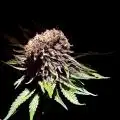
Heute auf 12h umgestellt (bin schon ganz aufgeregt...SF1000 raus und SF2000 rein(füllt die gesamte Breite des Zeltes aus😬)...zunächst ca. 45 cm Abstand und 80% trotzdem Photonen schon ca. 40% mehr...in paar Tagen gehe ich auf 100%...habe auch Seitenlampen (Niello T8) bereits installiert aber noch nicht eingeschaltet...evtl. wird das zuviel aber ich experimentiere halt gern...3 Optionen...die Pflanze geht dann richtig ab...Sie geht ein...oder es beeinflusst nichts ausser Stromrechnung.


@MaxWax
Follow
I started flushing my plants three days ago, except for the Captain Future, which needs a little longer. I’ve been checking the trichomes under the microscope; most are milky now, so it won’t be long until there’s enough amber—which is exactly what I’m looking for🙃




@adam_pawloski87
Follow
This week went very well! One will be getting cut an hung to dry while the rest finish up with one more week of flush ! These ladies are smelling so lovely I hope you all enjoy! Stay tuned for next week! Cheers 😤💨💨💨💨💨



@Ganjin
Follow
☀️ // Day 43 🍁
Hello my friends, we are approaching the final weeks. If the 9 weeks are a reliable prediction from Compound, then this will take 3 more. But I take all the time ithe plant needs since I am doing a growing break over the summer. It just get's too hot in this region to grow peacefully indoors. So there is no stress for me to finish her quickly to go on. If she needs 10 weeks, that's fine for me.
The buds are starting to mature. But I mean just slightly, as you can clearly see that she needs at least 3 more weeks. The frost production is superb, she has no deficiencies and the size of the buds is very satisfactory. The leafs are starting to get a real deep green color just like they're supposed to, if you look at the pictures from Compound.
The only thing I can complain about is the smell of the plant. It seems very unspecific. If I rub on the trichomes, I get some freshness and some spicyness, which you could describe as dank & "gassy", but that's basicially how most weed smells at the beginning. I don't know if I just had a really good phenotype of the Jelly Donutz in my last grow but that plant reeked right from the beginning how it was supposed to. The whole box smelled like baked goods, milkshakes and dessert sweetness. I mean, there are still some weeks to go and there still is the cure to go through but I hoped to get at least a hint on what this strain will have to offer. Some real gas, some gelato cream or some biscotti dankness would be appreciated but for now, there just is nothing like that. We'll see how she evolves in the upcoming weeks.
The plant got 4.5 L of water today with epsom salt. She is still getting water every 4 days, which is totally fine. I mean in the end, the more she drinks, the more she evolves and the fatter she gets, right?
☀️ // Day 47 🍁
Got the usual 4.5 L of water with epsom salt. Nothing to report, smooth sailing. She drinks a total of 9 L like every week.
💦 Watering: 9 L with pH = 6.3
💊 Fertilizer: Epsom Salt
💡 Light: 700 PPFD at 70%


@Cannabalkon
Follow
In den ersten zwei Wochen haben wir sie praktisch einfach wachsen lassen, da sie Kathi’s kleines Experiment war.


@Chase13852
Follow
Still having a little issue with deficiency and hoping that the top dressing takes hold soon. Getting close to finish. Possibly 3 to 4 more weeks maybe a bit more. Will be adding a top dressing schedule to my next grow after these 4 are done.


@Roberts
Follow
Auto Opium grew okay. She took a long time to flower, but has come to a finish. She did get a little too close to the grow light. She has a fruity hash smell and looks like it will be a good smoke. Thank you Medic Grow, and Divine Seeds. 🤜🏻🤛🏻🌱🌱🌱
Thank you grow diaries community for the 👇likes👇, follows, comments, and subscriptions on my YouTube channel👇.
❄️🌱🍻 Happy Growing 🌱🌱🌱
https://youtube.com/channel/UCAhN7yRzWLpcaRHhMIQ7X4g

shorts_status_processing


@clstr8
Follow
3-29-20: Took a couple leaves off of her from the bottom and checking to see if training lines are tight daily.
3-31-20: Exciting week, she really took off. about 2 more weeks until i flip the light schedule to 12-12. all the flowering sites are receiving good light so far with only 2 slightly under the canopy.


@Docteur_8
Follow
1st week of grow, wonder how long i will let them veg before switch to bloom.
Didnt precise that seeds from this part of the box are not feminized, I’ll maybe lose some of them during stretch.
Strengh and pleasure to all during this worldwide weird period 🌱💪🏼


@Love420bluedream
Follow
I'm very happy I've already got 107 grams out. I still have 2 plants drying and I'm excited to see how they turn out😊😊💚



@World_Breeders
Follow
Tropicana Cookies enters week 6 showing a clear increase in flower size, density and resin production. The colas are stacking evenly across the canopy, with swollen calyxes and heavy trichome coverage extending onto the sugar leaves. The plant has maintained its vigorous structure while developing excellent bag appeal, and the terpene profile is becoming noticeably louder, with its characteristic sweet citrus and tropical notes. Everything points toward a strong finish as it enters the final ripening phase.
Seeds by World Breeders
Cultivated by Piperoots 🇲🇦 🌱🔥


@Ultraviolet
Follow
Lacewings seemed to have mostly killed themselves by flying into hot light fixtures. I may have left the UV on which was smart of me :) Done very little to combat if anything but make a sea of carcasses, on the bright side its good nutrition for the soil.
Made a concoction of ethanol 70%, equal parts water, and cayenne pepper with a couple of squirts of dish soap.
Took around an hour of good scrubbing the entire canopy.
Worked a lot more effectively and way cheaper.
Scorched earth right now, but it seems to have wiped them out almost entirely very pleased.
Attempted a "Fudge I Missed" for the topping. So just time to wait and see how it goes.
Question?
If I attached a plant to two separate pots but it was connected by rootzone, one has a pH of 7.5 ish the other has 4.5. Would the Intelligence of the plant able to dictate each pot separately to uptake the nutrients best suited to pH or would it still try to draw nitrogen from a pot with a pH where nitrogen struggles to uptake?
Food for stoner thought experiments!
Another was on my mind.
What happens when a plant gets too much light?
Well, it burns and curls up leaves.
That's the heat radiation, let's remove excess heat, now what?
I've always read it's just bad, or not good, but when I look for an explanation on a deeper level it's just bad and you shouldn't do it.
So I did.
How much can a cannabis plant absorb, 40 moles in a day, ok I'll give it 60 moles. 80 nothing bad ever happened.
The answer, finally. Oh great........more questions........
Reactive oxygen species (ROS) are molecules capable of independent existence, containing at least one oxygen atom and one or more unpaired electrons.
"Sunlight is the essential source of energy for most photosynthetic organisms, yet sunlight in excess of the organism’s photosynthetic capacity can generate reactive oxygen species (ROS) that lead to cellular damage. To avoid damage, plants respond to high light (HL) by activating photophysical pathways that safely convert excess energy to heat, which is known as nonphotochemical quenching (NPQ) (Rochaix, 2014). While NPQ allows for healthy growth, it also limits the overall photosynthetic efficiency under many conditions. If NPQ were optimized for biomass, yields would improve dramatically, potentially by up to 30% (Kromdijk et al., 2016; Zhu et al., 2010). However, critical information to guide optimization is still lacking, including the molecular origin of NPQ and the mechanism of regulation."
What I found most interesting was research pointing out that pH is linked to this defense mechanism. The organism can better facilitate "quenching" when oversaturated with light in a low pH. Now I Know during photosynthesis plants naturally produce exudates (chemicals that are secreted through their roots). Do they have the ability to alter pH themselves using these excretions? Or is that done by the beneficial bacteria?
If I can prevent reactive oxygen species from causing damage by "too much light".
The extra water needed to keep this level of burn cooled though, I must learn to crawl before I can run.
Reactive oxygen species (ROS) are key signaling molecules that enable cells to rapidly respond to different stimuli. In plants, ROS plays a crucial role in abiotic and biotic stress sensing, integration of different environmental signals, and activation of stress-response networks, thus contributing to the establishment of defense mechanisms and plant resilience. Recent advances in the study of ROS signaling in plants include the identification of ROS receptors and key regulatory hubs that connect ROS signaling with other important stress-response signal transduction pathways and hormones, as well as new roles for ROS in organelle-to-organelle and cell-to-cell signaling. Our understanding of how ROS are regulated in cells by balancing production, scavenging, and transport has also increased. In this Review, we discuss these promising developments and how they might be used to increase plant resilience to environmental stress.
Temperature stress is one of the major abiotic stresses that adversely affect agricultural productivity worldwide. Temperatures beyond a plant's physiological optimum can trigger significant physiological and biochemical perturbations, reducing plant growth and tolerance to stress. Improving a plant's tolerance to these temperature fluctuations requires a deep understanding of its responses to environmental change. To adapt to temperature fluctuations, plants tailor their acclimatory signal transduction events, specifically, cellular redox state, that are governed by plant hormones, reactive oxygen species (ROS) regulatory systems, and other molecular components. The role of ROS in plants as important signaling molecules during stress acclimation has recently been established. Here, hormone-triggered ROS produced by NADPH oxidases, feedback regulation, and integrated signaling events during temperature stress activate stress-response pathways and induce acclimation or defense mechanisms. At the other extreme, excess ROS accumulation, following temperature-induced oxidative stress, can have negative consequences on plant growth and stress acclimation. The excessive ROS is regulated by the ROS scavenging system, which subsequently promotes plant tolerance. All these signaling events, including crosstalk between hormones and ROS, modify the plant's transcriptomic, metabolomic, and biochemical states and promote plant acclimation, tolerance, and survival. Here, we provide a comprehensive review of the ROS, hormones, and their joint role in shaping a plant's responses to high and low temperatures, and we conclude by outlining hormone/ROS-regulated plant-responsive strategies for developing stress-tolerant crops to combat temperature changes.
Onward upward for now.
Next!
Adenosine triphosphate
(ATP) is an energy-carrying molecule known as "the energy currency of life" or "the fuel of life," because it's the universal energy source for all living cells.1
Every living organism consists of cells that rely on ATP for their energy needs. ATP is made by converting the food we eat into energy. It's an essential building block for all life forms. Without ATP, cells wouldn't have the fuel or power to perform functions necessary to stay alive, and they would eventually die. All forms of life rely on ATP to do the things they must do to survive.2
ATP is made of a nitrogen base (adenine) and a sugar molecule (ribose), which create adenosine, plus three phosphate molecules. If adenosine only has one phosphate molecule, it’s called adenosine monophosphate (AMP). If it has two phosphates, it’s called adenosine diphosphate (ADP).
Although adenosine is a fundamental part of ATP, when it comes to providing energy to a cell and fueling cellular processes, the phosphate molecules are what really matter. The most energy-loaded composition for adenosine is ATP, which has three phosphates.3
ATP was first discovered in the 1920s. In 1929, Karl Lohmann—a German chemist studying muscle contractions—isolated what we now call adenosine triphosphate in a laboratory. At the time, Lohmann called ATP by a different name. It wasn't until a decade later, in 1939, that Nobel Prize–-winner Fritz Lipmann established that ATP is the universal carrier of energy in all living cells and coined the term "energy-rich phosphate bonds."45
Lipmann focused on phosphate bonds as the key to ATP being the universal energy source for all living cells, because adenosine triphosphate releases energy when one of its three phosphate bonds breaks off to form ADP. ATP is a high-energy molecule with three phosphate bonds; ADP is low-energy with only two phosphate bonds.
The Twos and Threes of ATP and ADP
Adenosine triphosphate (ATP) becomes adenosine diphosphate (ADP) when one of its three phosphate molecules breaks free and releases energy (“tri” means “three,” while “di” means “two”). Conversely, ADP becomes ATP when a phosphate molecule is added. As part of an ongoing energy cycle, ADP is constantly recycled back into ATP.3
Much like a rechargeable battery with a fluctuating state of charge, ATP represents a fully charged battery, and ADP represents a "low-power mode." Every time a fully charged ATP molecule loses a phosphate bond, it becomes ADP; energy is released via the process of ATP becoming ADP.
On the flip side, when a phosphate bond is added, ADP becomes ATP. When ADP becomes ATP, what was previously a low-charged energy adenosine molecule (ADP) becomes fully charged ATP. This energy-creation and energy-depletion cycle happens time and time again, much like your smartphone battery can be recharged countless times during its lifespan.
The human body uses molecules held in the fats, proteins, and carbohydrates we eat or drink as sources of energy to make ATP. This happens through a process called hydrolysis
.
After food is digested, it's synthesized into glucose, which is a form of sugar. Glucose is the main source of fuel that our cells' mitochondria
use to convert caloric energy from food into ATP, which is an energy form that can be used by cells.
ATP is made via a process called cellular respiration that occurs in the mitochondria of a cell. Mitochondria are tiny subunits within a cell that specialize in extracting energy from the foods we eat and converting it into ATP.
Mitochondria can convert glucose into ATP via two different types of cellular respiration:
Aerobic (with oxygen)
Anaerobic (without oxygen)
Aerobic cellular respiration transforms glucose into ATP in a three-step process, as follows:
Step 1: Glycolysis
Step 2: The Krebs cycle (also called the citric acid cycle)
Step 3: Electron transport chain
During glycolysis, glucose (i.e., sugar) from food sources is broken down into pyruvate
molecules. This is followed by the Krebs cycle, which is an aerobic process that uses oxygen to finish breaking down sugar and harnesses energy into electron carriers that fuel the synthesis of ATP. Lastly, the electron transport chain (ETC) pumps positively charged protons that drive ATP production throughout the mitochondria’s inner membrane.2
ATP can also be produced without oxygen (i.e., anaerobic), which is something plants, algae, and some bacteria do by converting the energy held in sunlight into energy that can be used by a cell via photosynthesis.
Anaerobic exercise means that your body is working out "without oxygen." Anaerobic glycolysis occurs in human cells when there isn't enough oxygen available during an anaerobic workout. If no oxygen is present during cellular respiration, pyruvate can't enter the Krebs cycle and is oxidized into lactic acid. In the absence of oxygen, lactic acid fermentation makes ATP anaerobically.
The burning sensation you feel in your muscles when you're huffing and puffing during anaerobic high-intensity interval training (HIIT) that maxes out your aerobic capacity or during a strenuous weight-lifting workout is lactic acid, which is used to make ATP via anaerobic glycolysis.
During aerobic exercise, mitochondria have enough oxygen to make ATP aerobically. However, when you're out of breath and your cells don’t have enough oxygen to perform cellular respiration aerobically, the process can still happen anaerobically, but it creates a temporary burning sensation in your skeletal muscles.
Why ATP Is So Important?
ATP is essential for life and makes it possible for us to do the things we do. Without ATP, cells wouldn't be able to use the energy held in food to fuel cellular processes, and an organism couldn't stay alive.
As a real-world example, when a car runs out of gas and is parked on the side of the road, the only thing that will make the car drivable again is putting some gasoline back in the tank. For all living cells, ATP is like the gas in a car's fuel tank. Without ATP, cells wouldn't have a source of usable energy, and the organism would die.
Eating a well-balanced diet and staying hydrated should give your body all the resources it needs to produce plenty of ATP. Although some athletes may slightly improve their performance by taking supplements or ergonomic aids designed to increase ATP production, it's debatable that oral adenosine triphosphate supplementation actually increases energy.
An average cell in the human body uses about 10 million ATP molecules per second and can recycle all of its ATP in less than a minute. Over 24 hours, the human body turns over its weight in ATP.
You can last weeks without food.
You can last days without water.
You can last minutes without oxygen.
You can last 16 seconds at most without ATP.
Food amounts to one-third of ATP production within the human body.


@Lucidite
Follow
For 30th April: The aroma in the tent is ramping up. It is pure correlation, but it seemed to have increased as soon as the UV light was installed. The white widows all have a delicate perfumed lemon mango smell. The gorilla glue is spice and pine.
Ph is good at 6-7 in all four pots. Still fighting the deficiencies in one of the widows. The brown spots didn’t seem to slow down my last widow grow. But it also has very pointy leaves, where the other two younger widows have fat dark leaves. She’s bigger, older and hungrier than the other two. She might just need more feed. I need to keep the calmag going. I have been sporadic with it but I’ll make it a regular feed addition from now on.


@World_Breeders
Follow
Thanks to everyone who followed the diary, left a comment and shared the journey with us.
And a special thanks to Piperoots for the great work behind this grow. The dedication and consistency throughout the whole cycle made it possible to show Tropicana Cookies from the first stages all the way to harvest.
This is what we love: putting genetics into real hands, testing them in real conditions and documenting the results.
Much respect to everyone following the project. More genetics, more tests and more diaries coming.



@vertex8
Follow
Thing's are still going well, feeding is going well and they are eating at 2.2 e.c, plenty of food and boost in the solution with no burn, I may increase over recommended amount, had some weird stretching on two of the plants, not sure if something is wrong or just the genetics.. seen first video for example..
Ended up having a fair amount of stretching from the two Jaffa Cakes relative to the washing machine so I've out up the second support net but used it to further hold down the branches.
They are drinking lots at the moment, fill recommended dose of A/B/B-52/BigBud, drinking a total of 5-6ltr per 48hrs, e.c coming on around 2.4 to 2.6 however plants seem to be absolutely loving life :)
