The Grow Awards 2026 🏆 






Likes
Comments
Share
@Terpyboyz
Follow
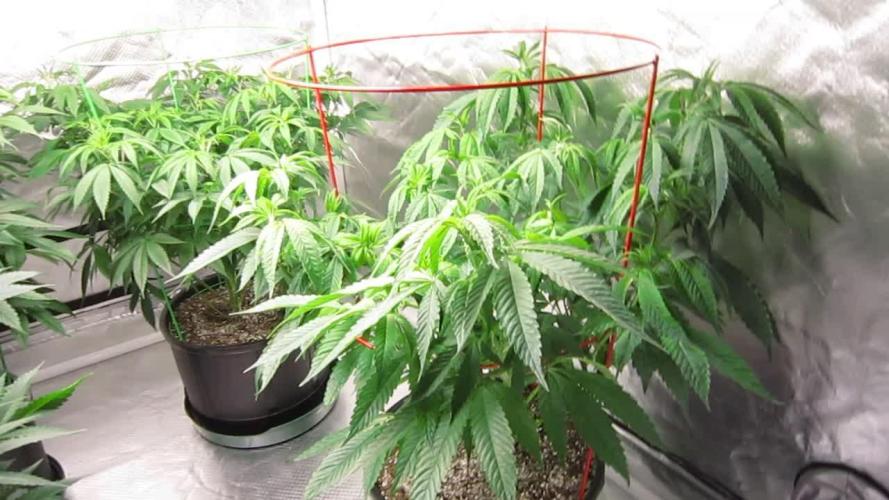
Hi growmies 👌🏻 so we’re on week 3 - day 6 of flowering these big girls 🙌🏻 still having a few slight deficiencies as these girls are Hungryy! It’s what happens when you veg for over 2 month 😂.. all is looking well thou colours are starting to appear on these Zake (perm marker cross kmintz). And these runtz s1 are starting to form up nicely 🕺
The clones are getting flowered on week 4 of flowering once the rooms be fixed. These are starting to come along nicely and I’ve found my keeper cutz of in house genetics stay tuned for some heavy bud formation within the next week or so


Likes
28
Share
@Theia
Follow
This may be the last week for the widow. She is huge..The last week saw her swell and eat most of the leaf on the buds. This week I am feeding her water only. She was flushed through with 2L of water at 6.5 with around 600ml run of which came through at PH 6.53. I will check her trichomes over the weekend once she has drunk some of the water she had. Not much else to say. She is a tough old bastard and she has made me want to test some other white widow genetics. Any recommendations please say.
Happy grows🌿🌱.
Stay safe😷😷😷

Processing
Likes
9
Share
@Silverback_Guerilla
Follow
SUNDAY 6/23:
I floated a single Zkittlez bean today to try in my Summer outdoor grow.
Once it sprouts I'll sprinkle it with great white and plant it in a rockwool cube. Once I see a good amount of roots sticking out I'll sprinkle the roots with mycotrex and plant it in a 3 gallon pot that's already prepared with startrex and silicium. I'm also gonna be using biotabs, orgatrex, bactrex, mycotrex, boom boom spray, PK booster compost tee, bud candy, and terpinator in this grow.
I've got a new outdoor faucet timer that I'll have run a soaker hose for 10 minutes at a time, several times per day through the hottest part of the Summer. (105f-110f), and she will be located in a fairly shady spot,. Hopefully baked Zkittlez are as good as the regular kind...😁
MONDAY:
I figured what the hell and floated a second Zkittlez bean today...I've got the space, and I really like candy...
TUESDAY:
The first one sprouted into an inch-long seedling overnight, so I dipped the taproot into Great White, and put some more down the hole before planting it. The second one sunk.
For stealth purposes, simplicity in transfer, and to give the seedlings an advantage, I've decided to transfer the rockwool-cubed seedlings from the dome to some 6" pots (1/2 gallon) that I've prepared with startrex and silicium flash. I'll grow the seedlings under my 2000w blurple light for a couple of weeks before taking them outside. I should be able to carry all of them in a big box out to the site without injuring them. This will give me time to start sneaking the big pots out to the site. I'll pre-mix the startrex and silicium flash on-site and add the mycrotrex when I transplant them to the 3 gallon pots and give them a good douching with bactrex and orgatrex to get them started well.
My soil has been recharging for several months with tons of good stuff added (earthworm castings, bat guano, azomite, biochar, bokashi, nectar for the godz one-shot and myco), plus I'll be growing them with the biotabs line of products, so they will have a good chance. I figure that I'll probably fix up their first batch of PK booster compost tea right away and douche them with it in their first week outdoors. Every little thing I can do to help them strengthen for the oncoming heat they'll experience...probably some extra kelp too...
FRIDAY:
Still only one of them has emerged, but it looks good so far.
FRIDAY 7/5:
Still just the one..giving up on the other. Week 2 begins Sunday.


Likes
69
Share
@nonick123
Follow
Día 129 (07/10) Riego con 750 / 1.000 ml H2O de osmosis
Empiezan a moderarse las temperaturas con 28 ºC de máxima
Día 130 (08/10) Riego con 500 / 1.000 ml H2O de ósmosis
Las temperaturas están sobre 25 °C
Día 131 (09/10) Riego con 500 / 750 ml H2O de ósmosis
Día 132 (10/10) Riego con 750 / 1,250 ml H2O de ósmosis
Día 133 (11/10) Riego con 750 / 1,250 ml H2O de ósmosis
Día 134 (12/10) Riego con 500 / 1.000 ml H2O de ósmosis
Reviso los tricomas y estos indican que estamos más o menos a una semana de la cosecha! 50% trasparentes / 50% nublados
Día 135 (13/10) Riego con 1 litro H2O pH 6,5 + Kelp Hidrolizado 0,3 g/L
💦Nutrients by Lurpe Solutions - www.lurpenaturalsolutions.com
🌱Substrate PRO-MIX HP BACILLUS + MYCORRHIZAE - www.pthorticulture.com/en/products/pro-mix-hp-biostimulant-plus-mycorrhizae
Likes
21
Share
@Stick
Follow
Coming along nicely, buds are shaped like christmas trees, slowly expanding. I was worried about mold but this baby didn't show any sign of infection, whereas two other plants in the tent got slightly affected. A few more days to go...Stay tuned! 😎

Likes
27
Share
@GrowinHome
Follow
The ladies had some nice stretching the last few days, I wonder how much more stretch we will get.
This coming weekend we're going to do some defolating to expose more budsights and to improve aircirculation. It also helps in lowering the humidity.

Likes
19
Share
@LittleBigTrees
Follow
They've stretched through the net a fair bit , all different heights.
Defoliated reasonably hard on day 20 .
Started sugar royal at half dose this week.
Will start green sensation also from plagron from week 4 as recommended.


Processing
Likes
7
Share
@Cogollo_eu
Follow
**Encontrarás la traducción a español al final de la descripción**
From/Desde: 12/04/19 || To/Hasta: 18/04/19
From day/Desde día: 50 || To day/Hasta día: 56
You can find the Gorillas Diary here:
** Podéis encontrar el diario de las Gorilla aquí:**
https://growdiaries.com/diaries/25675-makingmoney-with-gorilla-mm-vs-gorilla
-----IMAGES & VIDEOS-----
I'm sorry for not having a tlapse video this week, i slaved the cam onto my 60x60 tent to record the first growing week of another plants, next week i will return with more tlapse videos.
-----WEEK SUMMARY-----
To have a visual size of the plants take into consideration that the SCROG net it's fixed 24 cm abobe the top part of the soil.
Remarking what i've told last week, i must say the SCROG is not a true SCROG, as some colas begin below others, and also colas are of different heights among all plants. Anyway i'm very happy on how everything is going. And insisting again, I have very very few experience growing cannabis, this is my 3rd grow, 2nd indoor, and first time with photo-period at indoors, and of course is the first time too i'm trying to apply growing technics on a serious way. I really don't know if i'm doing things right or wrong.
-----WATERING CALENDAR-----
13/04/19 - 1.250 ml with all week nutrients -(Sensizym, bloom stimulator, bloom nutrition & amino complex) @ PH6.4 & 1.3 E.C.
17/04/19 - 1.250 ml with Silica Power, Pro Active, Bloom Stimulator, Bloom Nutrition, Sensizym & 5 drops of Amino Complex @ PH6.5 & 1.3 E.C.
*****ESPAÑOL*****
-----IMÁGENES Y VÍDEOS-----
Siento no tener vídeos timelapse esta semana, he esclavizado la cámara en el armario de 60x60 para grabar la primera semana de crecimiento con otras plantas que tengo en el.
-----SUMARIO SEMANAL-----
Para tener una idea más o menos certera del tamaño de las partes de las plantas, tened en cuenta que la red está fija a 24 cm de la parte superior de la tierra de los tiestos.
Remarcando lo que dije durante la última semana, he de decir que el SCROG no es un SCROG real, ya que las colas no empiezan desde la misma altura ni son de la misma altura, ni las plantas son de la misma altura. Pero yo estoy muy contento con como va la cosa, vuelvo a insistir que es mi primera vez con foto-dependientes indoor, mi segundo armario indoor y el tercer cultivo de mi vida, y por supuesto la primera vez que aplico o intento aplicar las técnicas de cultivo. Lo estoy intentando realizar bien y de manera eficaz, pero realmente no se si lo estoy haciendo bien o mal, yo simplemente me lio y veo como responden las plantas.
-----CALENDARIO DE RIEGO-----
13/04/19 - 1.250 ml con todos los nutrientes semanales -(Sensizym, bloom stimulator, bloom nutrition & amino complex) @ PH6.4 & 1.3 E.C.
17/04/19 - 1.250 ml con Silica Power, Pro Active, Bloom Stimulator, Bloom Nutrition, Sensizym & 5 gotas de Amino Complex @ PH6.5 & 1.3 E.C.

Processing
Likes
46
Share
@TessaMaria
Follow
This week went well I am continuing to harvest buds as they become ready. The leaves are yellowing more and more letting me know that she is almost complete. I think the lower bids have about one more week until they are ready and that will complete the harvest for Big Girl.
Little girl is now declining, she has not branches out or grown new tops.

Likes
6
Share
@gottagrowsometime
Follow
DOGK Is on week 11, week 6 of flowering. It's stayed in a 2L pot. (Wasn't my intention. But after a silly mistake. 2 seeds stems were crushed with pebbles)
She SMELLS F.....g amazing & I'm absolutely raging this is her size. Had I known what I do now. I'd of put these in a 20L pot like Euphoria. For being stuck in a 2L pot. She has grown fairly well. Few issues on the leaves but Nothing that set her back. The buds are still fattening lower but the tops are rock hard. She stinks of gasey berries. OMG it smells DIVINE, :-).
(NOTE: I will back date pics. I've misplaced my other device with the past 4 weeks of photos. Missed her past 2 weeks. But, she's a breeze to deal with in such a small pot & being hydro. "Coco/pebbles 40/60"
I'd say she has roughly 3+ weeks left to go..
HST was done after preflower, week 3 of flowering(still some growing left in her) and she grew up to her OG height. She will get a heavy & last defol in the next week. Her tops are done. But, 80% down she is still fattening.
Week12
Day80
I've decided that 90% of her is done. She's only been 7-8 weeks flowering. The 2L pot sped things up. Yield will be tiny. 7-10g of A grade bud. The smell is just astounding. The buds glisten with resin and sticky af..
COUPONS
20% OFF ZAMNESIAS ENTIRE BREEDER CATALOGUE WITH CODE: ZAMMIGROW2024
20% OFF XPERT NUTRIENTS & KANNABIA
WITH CODE:

Likes
4
Share
@MitterSNachtS
Follow
This week the ladys growed so fcking good, have some biggs on the back, and some pretty on the middle, all of the autos are flowering, and the Special Kush are on LST hardcore mode(not so much XP), so for this week its just that, stay tuned for more gg, i'm putting some timelapse thats going on work, thanks.


Processing
Likes
6
Share
@Ferenc
Follow
Hi there! First week I have looked after the plants alone and they are excellent. Fruit Tree is getting the fastest and the densest buds plant beyond them so I think she is the fastest. No more ferilization for her just clean water every day I am planning to harvest at the beggining of February. Rest of them look fine maturing with time buds getting thick. All good so far back.next week.


Processing
Likes
20
Share
@The_Bearded_Grower
Follow
day 79 of flower 8/18/19 boy of boy the girls are putting on the weight now

Likes
2
Share
@krst97
Follow
10/06 - Starting week
Feeding:
-BioProtect
-Bloom Complex (2.5ml/L)
-SuperVit .
-pH 6.35 EC 601
I added a temperature and humidity sensor to the Pi, and a moisture sensor that warns if the value does not exceed a certain threshold.
The plant is rising too much, soon I will be forced to take action. My grow is only 1.60m high.
As from the last photo of 10/06, I folded the stem of the plant to allow it to stay inside the grow box.
13/06
Feeding:
-Bloom Complex (7.5ml/1.5L)
-pH 6.18 EC 1085
14/06
The plant has become too high, I have to bend it again and drastically this time.
I decided to apply the supercropping technique.
15/06
The plant seems to have reacted well to supercropping, and is giving off purple hues on the flowers.
17/06 - End week
Feeding:
-Bloom Complex (7.5ml/1.5L)
-pH 6.8 EC 1500
Likes
49
Share
@Schnabeldino
Follow
_____📅 Week 5 | 📅 Day 29 - 35 | 27.05 - 02.06 ______
27.05.25 | Day 29 🌞💧
🔸The ladies moved into the big tent on the 29th day after I had cleaned it and hung up my new lights.
🔸Oreoz is the smallest of all 4 and the most underdeveloped, but it has stabilized and is now really stepping on the gas, unfortunately a branch broke off during the LST with clips, well, 2 new shoots are coming at this point.
🔸I only work with hooks and occasionally with clips, but I've often broken branches with them so I prefer to use hooks hehe :D
01.06 | Day 34 💧
🔸 1500 ml
🔸 Sorry not the best pictures/vids this week, we are currently down with the flu again - only the bare minimum is being done 😅
_________________________________________________________________________________________
current conditions:
🌡️🔆= 24-25°
🌡️🌜= 18-19°
💨 Hum. = 65%
🔦 PPFD = 500 umol 18/6
🔦⌚DLI = ~ 32
_________________________________________________________________________________________
Equipment to use:
💡 Light: 2 x Sanlight Evo 4- 120 on 50%
⛺ 120 x120 x 180
🍯 Pots: 18 liter pot
🌱 Soil: Bio-Bizz light mix
💊 Nutrients: Advanced Nutrients
💧 Water: Tap Water 0,5 EC

Likes
6
Share
@LeRaar
Follow
Semana de mucho calor, se a regado en 2 oportunidades solo con agua ya que se evapora muy rapido!
Video 15 dias luego de pasar a 12/12
Hoy 28-07 ya aplacando el calor
Dias pasados hasta 39 grados soportando las niñas
Likes
1
Share
@Chucky324
Follow
Hello. This is the end of week 10 and the beginning of week 11 of veg.
She's doing good. Did some trimming up on her last week.
Got some of those huge leaves taken off, so the branch tops can get some light and grow.
Trimmed under the plant too. Took off those sucker branches, the ones that don't reach up through the canopy..
I'll let her heal this week and then turn her over to flowering next week.
OK. Be Good. and Merry... Happy... to All.

Likes
28
Share
@xmackobox
Follow
Bien pues el domingo 15/05/22 hice defoliacion con 66 dias desde la germi. Hoy lunes por la noche, las pongo ya a 12/12 y que empiecen a florecer. Considero que estan robustas y fuertes para la etapa de flora.
Me lie con stories y videos y se me paso hace fotos detelladas para aqui... lo siento, os dejo las stories y fotos de esta mañana
Creo que vamos a ver buenas cosas aqui :D
Son 10 Tropicanna cookies con 48 dias desde la germinacion y 5 MAC, 4 Bannana wafflez y 1 Apple friter con 67 dias desde la germi.
Hoy lunes 16/05/22 por la noche las paso a 12/12
Todo de GBSTRAINS abonado con BOOM NUTRIENTS bajo los paneles LED de GBLIGHTING
GB THE GREEN BRAND

Likes
10
Share
@DrDuhboto
Follow
Very Happy plants, soaking up the rays.
When you place your face near the buds you get an amazing sweet fruity aroma, the leaves smell like skunk and cheese.
Each plant is getting 10 liters every 4 days. I water with 6.3ph tap water twice for every time I add nutrients.
I use Alaska fish fertilizer when its been a few times since a nutrient feed but the plants are showing no deficiency's.
They are Fed by a drip system which takes 16 hours to deliver the 10 liters to each plant, this works really well in the Fabric smart pots.
I use metal racks to keep the plants off the ground then place a drip tray underneath each plant. When using the drip system very little run off occurs.
I added a spider farmer sf-1000 to the room, it is full spectrum and ir, and is great for getting the corners of the room or the less dense areas of the canopy.