




Likes
22
Share


@BruWeed
Follow
☘️15/11 - Empieza su segunda semana en Etapa de Floración.
☘️Creció muy rápido en tan poco tiempo, tiene una altura de 64 cm de largo.
☘️Por el momento viene creciendo y desarrollándose de manera correcta sin ningún problema.
☘️Estos días seguiré subiendo más imágenes de como viene su evolución.

Likes
3
Share

@Greybeardbud
Follow
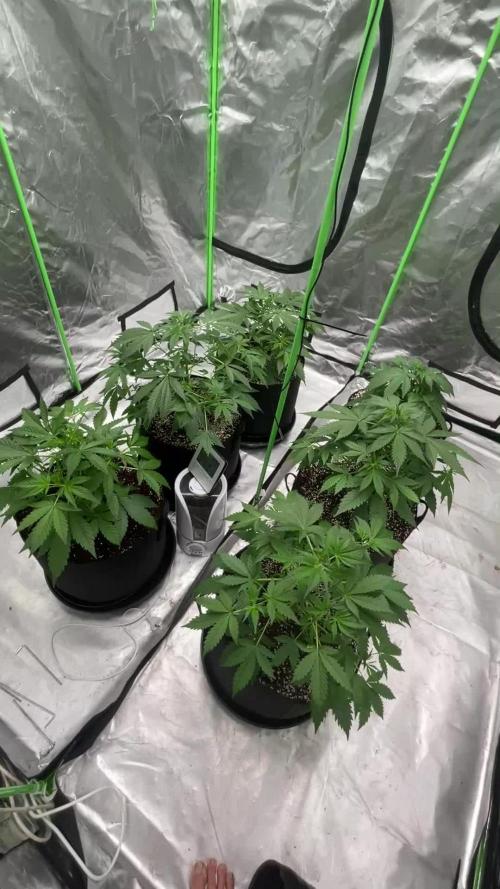
Another week of autopilot, the girls have almost all doubled in size in a week, still looking good. Now feeding 2.2 ec still doing 5L /48 hr and still on 24/0 light. Veg channel 55% bloom 25%. Will increase bloom once pistils appear and transition to bloom nutrients, until then will stay on their current feed schedule and potentially increasing to daily feeds instead of every other day. Will not be topping or fimming these ladies, and will resist the urge to defoliate as much as possible. By start of week 5 Scrog will be installed at 50cm, with a second layer planned for around 90cm.
Plant sizing from start week 3 to start week 4
Pm1 16cm - 30cm
Pm2 21cm - 40cm
Gc1 16cm - 30cm
Gc2 14cm - 27cm
Gc3 22cm - 38cm
Gc4 20cm - 37cm
Edit - had a look, pistils are there so have started a transition to flowering and reducing super n+ cal/mag

Likes
81
Share


@UnorthadoxDude
Follow
Hey! Welcome to week 8! Karen is mid way through her flowering stretch. Please check back to last week as I update daily so the week is now complete. I count about 20 colas now.
Day 51: Have reconfigured the tent, see video. Karen is now 36cm and still stretching. Karen has more light now. Smell is still there hits you when you open the tent. Fertigated 2l.
Day 52: Height: 39cm. Karen's scent is heavenly. I have reconfigured again and installed some upgrades. Better reflector. Much bigger carbon filter. Increased airflow. Better config. More efficient pot layout. Karen is lovely.
I am grateful to her and for her, so I wrote her a little poem, I hope she liked it.
"Karen! Oh Karen! The phoenix of flowers,
Three lowly weeks she struggled in vain,
Shadowed and starved for five hundred hours,
He slowly wept to witness her pain.
Karen! Oh Karen! I P-H'd your showers,
and in the fourth week you started to gain,
Hallowed and hard you survived as you cowered,
I thought you meek, I was wrong once again.
Karen! Oh Karen! Forgave me my howlers.
She set a pace, a pace she maintained,
Now shes a girl at the peak of her powers,
And so I'm a geek, with buds on the brain."
Day 53: Approx 48h into a simulated dry spell.
Alright I think it is time for Karen to get her first MAJOR defoliation. I will update shortly with photos and info. I will also be doing some gentle LST to separate the colas a bit.
Day 53.5: Defoliation and LST. Finally got chance to photograph that bunda. Enjoy!
Day 53.75: Bit of a fail. Messed up the timer and the lights ended up being off for about 3 or 4 hours. Because I was cooling the room (open window) to keep temperature in the tent down, without any light the temperatures absolutely plummeted as it is sub-zero outside. By the time I realised and turned the lights on, the temp in the main tent had dropped to 14 degrees celsius. Whoops! How is that for mistreating your girl? Defoliated about 80% of her leaves, 4 nodes, significant LST, then stuck her in the cold and dark for 1/6 of a day. Not to mention she is now almost 3 days into a "dry spell". There do not seem to be ill effects, and Karen has already begun to respond to the LST; all the colas that had been changed in angle are now upright again.
The dry spell I keep mentioning, there is a method behind my madness, I have spotted one or two small flies and I think they may be fungus gnats. I am starting to suspect that the 2nd seedling in the Purple OG Punch Auto grow was actually beheaded by fungus gnat larvae. So I am drying out the mediums as much as I dare. I am closely monitoring the plants, so far the only one I have had to break the drought for is Enigma; all the girls in big pots haven't even noticed it's dry yet. How far am I going to push it? Well I will judge it on a plant by plant basis, but quite honestly I am hoping to see physical signs of thirst before I breakdrought. Of all the plants the two I think will respond most strongly to this will be Karen and Bertha, because of where they are. Karen here is actually probably 4 weeks into flowering rather than two, so about now is a good time to give her a little hydration stress. I do not think I will push it past 5 days, as RH is 34%. By now all the plants will be compensating for the lack of moisture and the high temperatures and low humidity. They will be taking more and more moisture out of the coco, and as the coco dries further and further down, those plants that have space will start desperately growing roots to find moisture. Mark my words, 24 hours after I end this drought, every plant in the tent will throw out crazy growth.
Day 54: Ended drought and fertigated 6l, no run off, I will re-fertigate tomorrow. Karen is still stretching her height post LST is now 37cm. The two tallest colas seem to have stopped but the other colas are still stretching.
Day 55: Alright so it has been 5 hours since lights on, and Karen is looking in good shape, all her drooping leaves have perked back up and she has added quite a bit of foliar growth. The colas are all still rising, except perhaps the two tallest. This girl is absolutely loaded with pistils, I'm starting to see trichomes on the sugar leaves, but trich production hasn't started in earnest yet. She has a least 20 colas, and 6 of them are thicker/taller than the primary cola at her tip. Every one of her nodes has reinforced itself with a bulbous growth and these cola branches are swelling rapidly. I am increasingly of the opinion that, all being well, this girl is going to surprise us all with her yield. My first grow, which was just mucking about really, I got 60-70g of the two main plants, and they were just bare sticks with 2 colas. Although her height is less than theirs was, 2/3 of their height was bare stick... whereas every mm of her is befoliaged and living. So in terms of the height of the actual cola I think they were about comparable in usable space on a per cola basis. The main difference being that Karen has 20+ colas whereas they had 2 primary and 2 lower. I know that it is probably unrealistic to expect more than 70g from a single auto grown indoors. Nevertheless my gut tells me this baby could achieve at least 100g, perhaps as much as 150g. The next few weeks will determine that, but given where we were in week 3 I will be grateful for any yield of quality bud. I have dropped the lights down to 18/6 from 'tonight' onwards.
I really have no idea how long we have left for Karen. According the the "brochure" she flowers for 7-8 weeks, with a total crop time of 9 weeks. The problem is I don't know what a total crop time is? Does that mean from seed to finish? If so Karen is clearly not going to be anywhere near that timescale.I am going to go ahead an assume that, for my plant anyway, the first 4 weeks were veg weeks. I think it is fair to count week 5 and 6 as flowering because pistils were popping out very early in week 5 if not before. So that makes this week four of flowering. I am going to assume 8 weeks rather than 7, so I think we have another 4 full weeks give or take a week. On that basis I am expect harvest week to be around week 12 or so. I am not fixed on this though, I am determined not to harvest this girl early.
Day 55: Photos taken 00:00 9/3/23 Strong 24h of veg growth as predicted.
Day 56: Existing leaves continue to swell. Stretch appears to be slowing. I've taken so many media this week that I cannot scroll down far enough to select a recent thumbnail. Probably Karen's biggest week in terms of changes. She is looking like she is going to impress. Height 39cm.

Likes
9
Share


@Mr_nugs_lover_David
Follow
This ladies got pretty big for real, hands down the biggest autos I've ever had grown in 7l pots, excellent performance, and the flowers start to stink really strong, there is one pheno which is more developed than the other 2 phenos but the 3 have developed really good and they are producing a lot of sticky and stinky trichomes! Let's see how this will end up! Can't wait 🤤

Likes
8
Share


@Pistachios
Follow
To hot outside can only give 12 hrs light per day , having issues with watering as they dry to quick due to heat but flowers keeping up a bit of defoliantan

Likes
2
Share


@KeemBboomin
Follow
It’s now time to start flower. They are looking amazing and I’m going to go ahead and throw his crocs in there. I have one tent that I have not put in flower yet just for the main fact that one of my seats became a auto flower so I’m letting them run more time to let that auto flower finish and see what that becomes
Likes
20
Share


@ZeroTheHero
Follow
The buds are starting to get ready. I cut all the nutes and gonna feed her only sink water from now on. She getting some crazy colors. Hope she'll finish fast. I have some time restrictions on my apartment haha. Good week and keep growing 💚

Likes
7
Share


@Staffedition
Follow
Привет друзья!
Сегодня нам 26 дней
Растение по виду здоровое и счастливое.
Всем мира и добра!

Likes
Comments
Share

@The_Doctor_Green
Follow
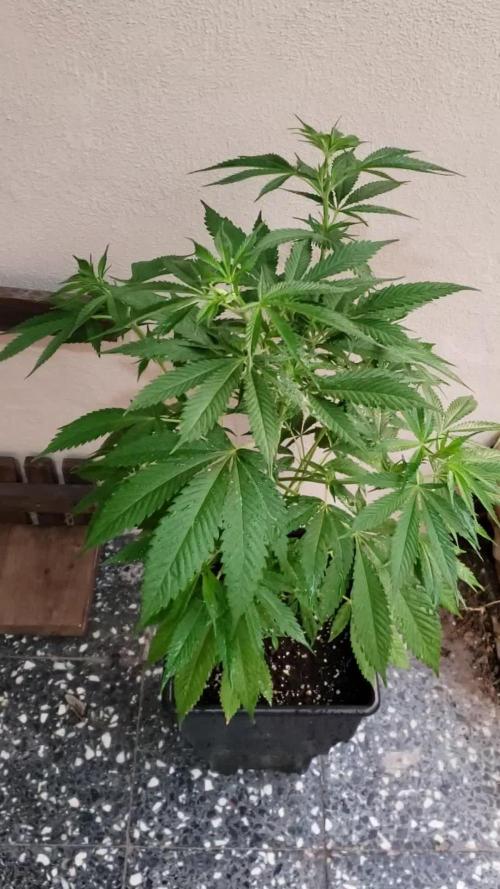
Hola a todos! Esta semana he regado solo con agua, la planta viene creciendo bien y ha demostrado sus preflores, así que esta semana regular ha sido niña👏👏💪💪.


Processing
Likes
26
Share


@rhodes68
Follow
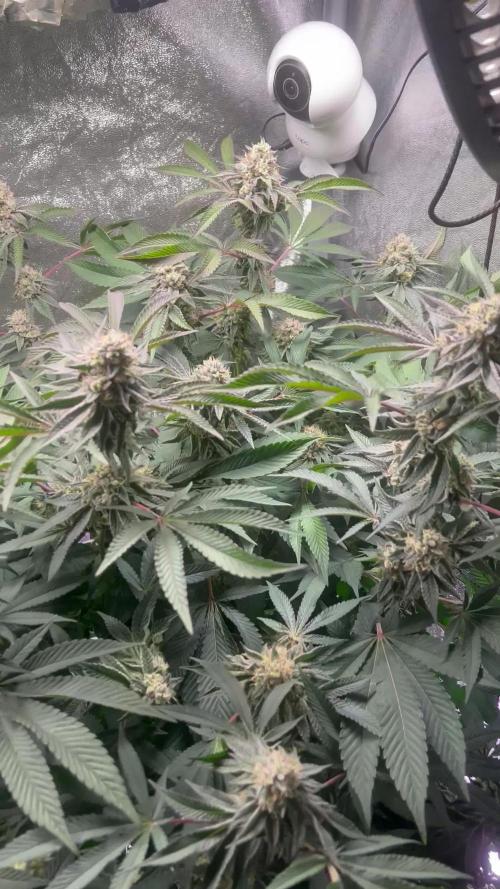
9/6 Week 8 And she is doing very well
No signs of any problems nuets doing a great job
Added another light, custom 90w LED
Stretch has ended on her
9/8
Buds beginning to form tent is VERY full doing what we can to alleviate some crowding
9/9
Increased nuets due to purplish stems seen on the indicas. CocoTek to 10ml/gal A&B
Just trying to get things to behave in the tent its really full humidity is very low so thats helping
Took longer for things to get into full flower than we wanted, have to work on that
9/10
Pics Vid
Looks like stretch has stopped more or less

Likes
Comments
Share


Likes
2
Share

@GingerGarageGrow420
Follow
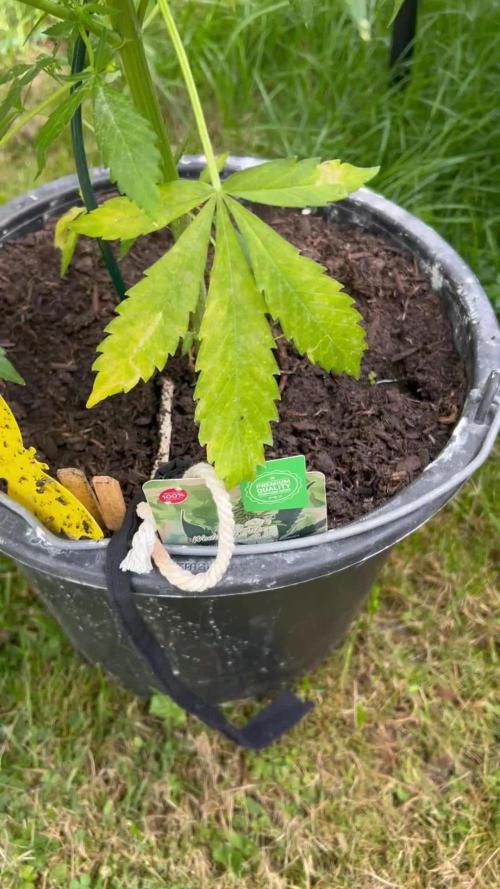
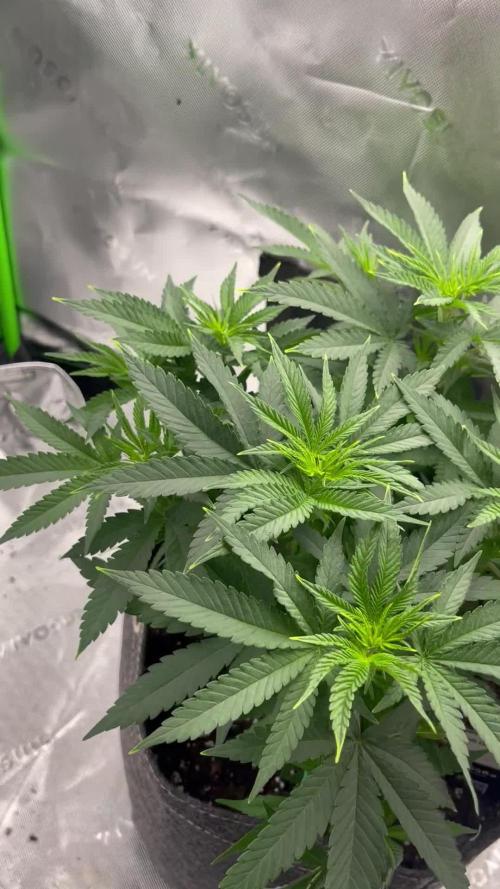
Day: 42 from sprout
Strain: Chill Out OG F4
Medium: Fox Farm Ocean Forest
Light: Vivosun VS2000 switched to 75%
Light Distance: 12 inches
Watering: By hand, ~12 oz daily
Nutrients: pH Perfect Advanced Nutrition Grow, Bloom, Micro 2 ml / L
Likes
2
Share

@Danger_Mouse
Follow
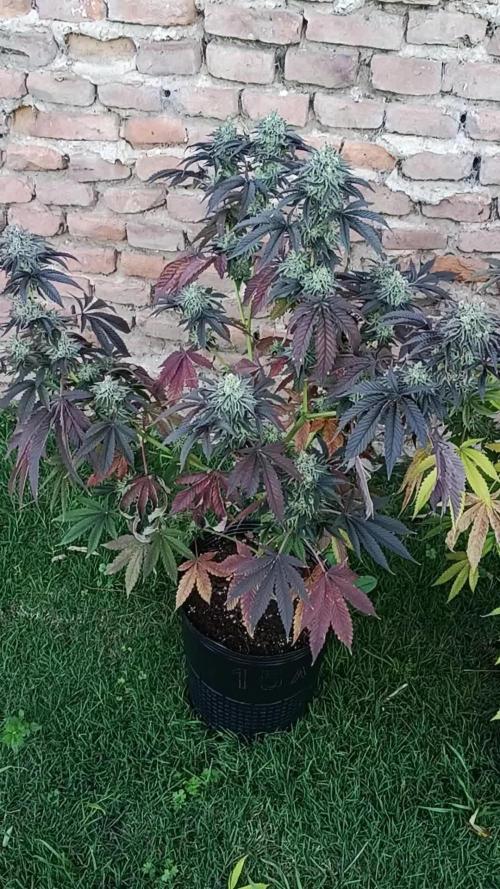
Plantas super faciles de cultivar y muy resistente a Botryitis (las 3 Radical Juice fueron las unicas que no tuvieron ni el mas minimo sintoma a pesar de que 6ta y 7ma semana de floración fueron dias de muchisima humedad ambiente). Hare la reseña final cuando este secos los cogollos. El olor en verde recuerda un poco a Tangilope, Clementine, NYC Diesel.




Likes
167
Share


@DeepWaterGrower
Follow
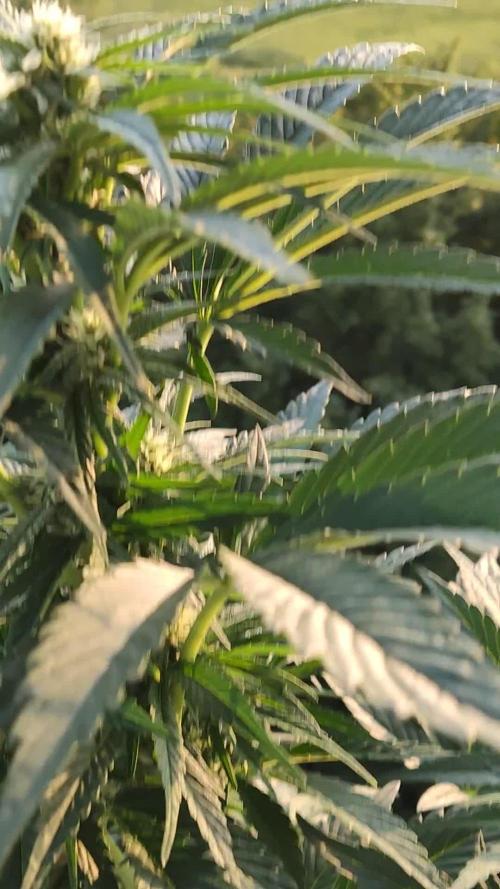
🗓️ 6° WEEK FLO // DAY 36-42 (from switch) // DAY 113-119 (from dry seed)
⚡- Light: 30 cm / 250 watt;
⌛- Schedule: 12/12;
🌡️- 22° C - 65% RH average;
📑- PH 5.9 - EC 2.3. PH is dropping on the #2. I'll change the DWCs next week, meanwhile I'm trying to keep the PH in the right range;
💧- 7° DWC change;
🍔- Flowering blend: tap water EC 0.4 + Silic 0.5 ml/l + CalMag 1 ml/l + Hydro A-B 1.8 ml/l + Oligo Spectrum 2 ml/l + Green Sensation 1 ml/l;
🌱- Things are moving forward, both are gaining weight.
🆕- Last week I got the TrolMaster TCS-1 (@TrolMaster_Europe) and I started to track my grow box data. I will add these info once I harvest!
Likes
16
Share


@HowtoBubatz
Follow
The cannabis plant is generally growing well and is progressing as expected during the flowering stage.
Despite the positive overall growth, brown spots have appeared on some of the leaves and I dont really know what it is.
While the appearance of brown spots is concerning, the overall health of the cannabis plant remains good. With careful monitoring and appropriate adjustments, the plant should continue to develop successfully.
It will be exciting to see how the plant progresses as it matures, even if its growth rate is somewhat slower than expected.

Likes
72
Share


@Roberts
Follow
Auto Maxi Gom is still flowering, and looking kinda crappy. I have had this happen once before like this. I dunno if it is genetic or something I did. I plan to finish her out, and use flower for infusing. Thank you Medic Grow, Xpert Nutrients, and Seeds Mafia. 🤜🏻🤛🏻🌱🌱🌱
Thank you grow diaries community for the 👇likes👇, follows, comments, and subscriptions on my YouTube channel👇. ❄️🌱🍻
Happy Growing 🌱🌱🌱
https://youtube.com/channel/UCAhN7yRzWLpcaRHhMIQ7X4g
Likes
8
Share


