Likes
13
Share
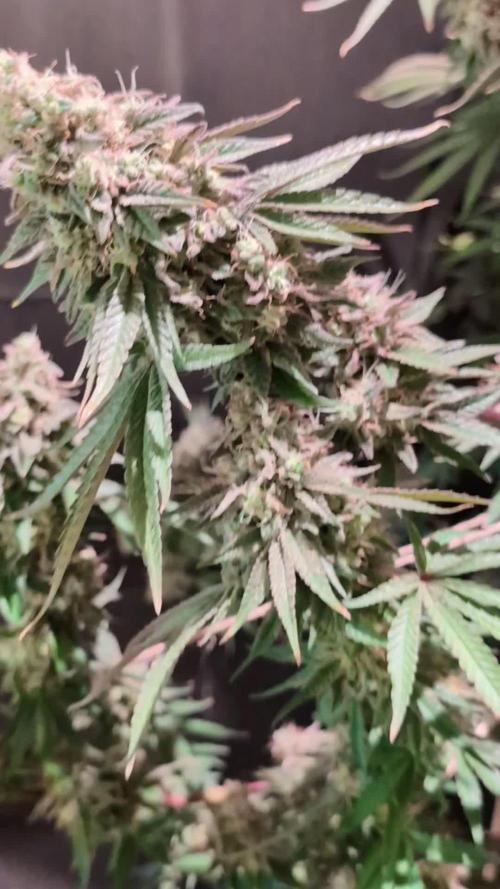
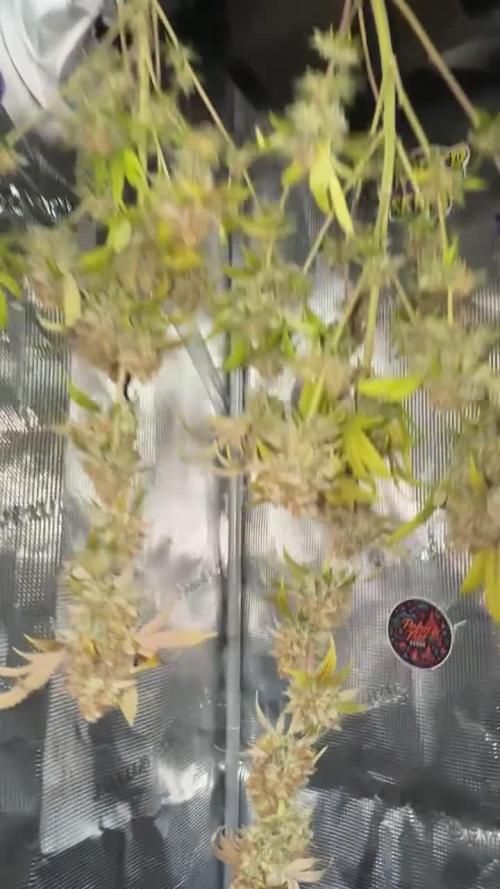
I liked growing this strain very much, it was very easy growing and everything worked out nice, I like the structure of this plant the node spaces are not so big and everything filled in nicely when she was flowering. The fastbuds zkittelz has giant huge buds they where one of the biggest buds i grow on auto's. It was a plesure to see em getting bigger and bigger. I found that the plant was very forgiving as in mistakes you make, so i recomend this to every grower out there. They only thing is it takes a little bit longer then they advertise. But then again maybe the company's are giving you the most early time you can harvest if you do everything as perfect as you can. I think you cannot do much more perfect as you have a plant that grow as big as this one. So that being said i think if you let em go for 2 weeks more then in the last 2 weeks the buds are really fattening up and they double in size sometimes. In the end i had some foxtails on my buds, not all of them but still a few, I was thinking about it, and maybe it is because i pushed her a little bit too much in the end with the nutrients, She was not that close to the lights i think. Or maybe it is also a little bit in the strain. I definitely grow this strain again. (no rights to the music in the video)
Likes
5
Share
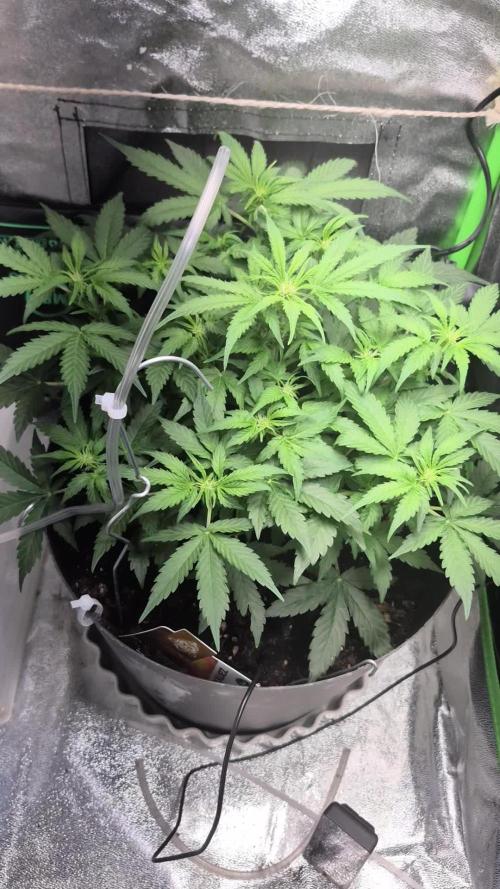
This week about day 46 or so I did a heavy defoliation and some branch bending/LST to get more light to the newly forming bud sites as well as to even out the canopy a little more. She is requesting a little more frequent watering about every 2-3 days and I go until I see run off and I let the run off sit for about 8-12 hrs to allow the medium to absorb as much as it wants then dump off the remaining. I am starting to notice a slight smell now that the flowing has started it’s very earthy and kind of like fresh grass. After adding the Dr earth last week I have not seen any more yellowing of my leaves which is a huge relief. At this point I’m going to be as hands off as I can some simple fan leaf tucking and maybe some branch bending to keep the smaller bud sites open to light as they seem to be swallowed up after a day or two and the fan leaves raise back up. I would like to find Dr earth bloom to add as a top dress either this week or next if I can find it just to give it a little more of a boost. I’m trying to keep this grow as organic as possible and probably will continue to be my niche for every grow going forward until I have it perfectly dialed in. I’m not seeing much more of a stretch and assume this plant will be a little stalky girl I’m hoping the main colas fill out decently and I’m hoping by the next grow I have a better light set up that may help my production of bud sites when she flips to flower. I also plan to start a more detailed journal at home that specifies what days into the grow I do what for better accuracy and to improve future grows. I just hope I get at least some harvest on my first try! Happy growing thanks for stopping by!
Likes
52
Share
@wolfvb
Follow
🌿 RS11 "B" - Following in Her Sister's Footsteps! 🏙️? Let's go! New week for RS11 "B". She is doing absolutely incredible out on the balcony and is right behind her giant sister, officially hitting a massive 145cm! 📈 The Details / Progress Report: Chasing the Canopy: She is at 145cm and stretching beautifully! She might be a little shorter than her sister, but she is building a fantastic, wide, and sturdy structure to handle the outdoor breezes. 🌳 Still Vegging Hard: Just like her sister, she is a true photoperiod plant enjoying the Berlin summer. With around 16 hours of daylight right now, it is not possible for her to be in flower yet! She is strictly in her vegetative phase, using all that glorious sun to pack on size and build up her frame before the days get shorter. ☀️ Flawless Health: Looking at the close-ups, her canopy is a vibrant, lush green. The fan leaves are completely pristine, praying beautifully to the light with zero signs of stress or pests. The preventative care we did a couple of weeks ago has kept her perfectly safe! 🍃 Pre-Flower Prep: While she isn't flowering, you can see that the top nodes are getting incredibly tight. She is structuring herself perfectly so she's ready to explode with bud sites as soon as that light schedule naturally flips. 💧 Next Steps: With her hitting 145cm, making sure she has proper wind support on the balcony is still a top priority. I'm going to keep her feed consistent to support this massive vegetative growth and just let her keep soaking up the long Berlin days until the transition begins! She is looking amazing! Let's keep it growing! 🌱💨
Likes
25
Share
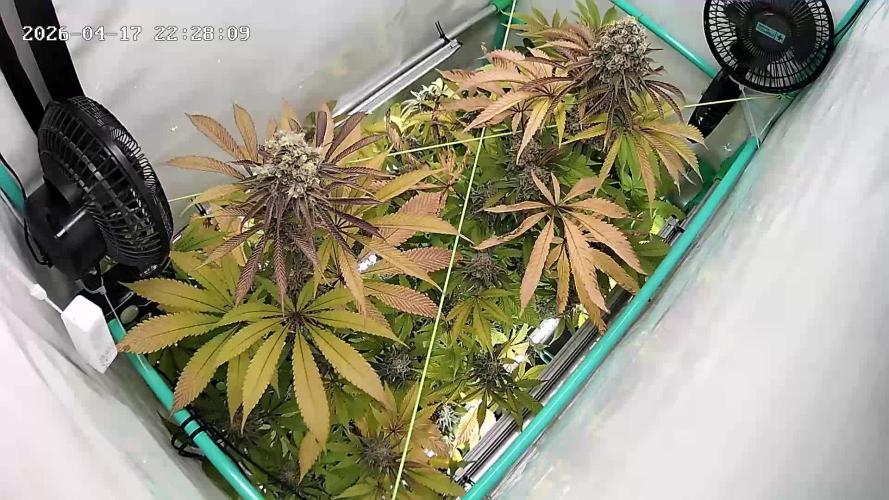
ANTHOCYANIN production is primarily controlled by the Cryptochrome (CR1) Photoreceptor ( !! UV and Blue Spectrums are primary drivers in the production of the pigment that replaces chlorophyll, isn't that awesome! 1. Diverse photoreceptors in plants Many civilizations, including the sun god of ancient Egypt, thought that the blessings of sunlight were the source of life. In fact, the survival of all life, including humans, is supported by the photosynthesis of plants that capture solar energy. Plants that perform photosynthesis have no means of transportation except for some algae. Therefore, it is necessary to monitor various changes in the external environment and respond appropriately to the place to survive. Among various environmental information, light is especially important information for plants that perform photosynthesis. In the process of evolution, plants acquired phytochrome, which mainly receives light in the red light region, and multiple blue light receptors, including his hytropin and phototropin, in order to sense the light environment. .. In addition to these, an ultraviolet light receptor named UVR8 was recently discovered. The latest image of the molecular structure and function of these various plant photoreceptors (Fig. 1), focusing on phytochrome and phototropin. Figure 1 Ultraviolet-visible absorption spectra of phytochrome, cryptochrome, phototropin, and UVR8. The dashed line represents each bioactive absorption spectrum. 2. Phytochrome; red-far red photoreversible molecular switch What is phytochrome? Phytochrome is a photochromic photoreceptor, and has two absorption types, a red light absorption type Pr (absorption maximum wavelength of about 665 nm) and a far-red light absorption type Pfr (730 nm). Reversible light conversion between the two by red light and far-red light, respectively(Fig. 1A, solid line and broken line). In general, Pfr is the active form that causes a physiological response. With some exceptions, phytochrome can be said to function as a photoreversible molecular switch. The background of the discovery is as follows. There are some types of plants that require light for germination (light seed germination). From that study, it was found that germination was induced by red light, the effect was inhibited by subsequent far-red light irradiation, and this could be repeated, and the existence of photoreceptors that reversibly photoconvert was predicted. In 1959, its existence was confirmed by the absorption spectrum measurement of the yellow sprout tissue, and it was named phytochrome. Why does the plant have a sensor to distinguish between such red light and far-red light? There is no big difference between the red and far-red light regions in the open-field spectrum of sunlight, but the proportion of red light is greatly reduced due to the absorption of chloroplasts in the shade of plants. Similar changes in light quality occur in the evening sunlight. Plants perceive this difference in light quality as the ratio of Pr and Pfr, recognize the light environment, and respond to it. Subsequent studies have revealed that it is responsible for various photomorphogenic reactions such as photoperiodic flowering induction, shade repellent, and deyellowing (greening). Furthermore, with the introduction of the model plant Arabidopsis thaliana (At) and the development of molecular biological analysis methods, research has progressed dramatically, and his five types of phytochromes (phyA-E) are present in Arabidopsis thaliana. all right. With the progress of the genome project, Fi’s tochrome-like photoreceptors were found in cyanobacteria, a photosynthetic prokaryotes other than plants. Furthermore, in non-photosynthetic bacteria, a homologue molecule called bacteriophytochrome photoreceptor (BphP) was found in Pseudomonas aeruginosa (Pa) and radiation-resistant bacteria (Deinococcus radiodurans, Dr). Domain structure of phytochrome molecule Phytochrome molecule can be roughly divided into N-terminal side and C-terminal side region. PAS (Per / Arndt / Sim: blue), GAF (cGMP phosphodiesterase / adenylyl cyclase / FhlA: green), PHY (phyto-chrome: purple) 3 in the N-terminal region of plant phytochrome (Fig. 2A) There are two domains and an N-terminal extension region (NTE: dark blue), and phytochromobilin (PΦB), which is one of the ring-opening tetrapyrroles, is thioether-bonded to the system stored in GAF as a chromophore. ing. PAS is a domain involved in the interaction between signal transduction-related proteins, and PHY is a phytochrome-specific domain. There are two PASs and her histidine kinase-related (HKR) domain (red) in the C-terminal region, but the histidine essential for kinase activity is not conserved. 3. Phototropin; photosynthetic efficiency optimized blue light receptor What is phototropin? Charles Darwin, who is famous for his theory of evolution, wrote in his book “The power of move-ment in plants” published in 1882 that plants bend toward blue light. Approximately 100 years later, the protein nph1 (nonphoto-tropic hypocotyl 1) encoded by one of the causative genes of Arabidopsis mutants causing phototropic abnormalities was identified as a blue photoreceptor. Later, another isotype npl1 was found and renamed phototropin 1 (phot1) and 2 (phot2), respectively. In addition to phototropism, phototropin is damaged by chloroplast photolocalization (chloroplasts move through the epidermal cells of the leaves and gather on the cell surface under appropriate light intensity for photosynthesis. As a photoreceptor for reactions such as escaping to the side of cells under dangerous strong light) and stomata (reactions that open stomata to optimize the uptake of carbon dioxide, which is the rate-determining process of photosynthetic reactions). It became clear that it worked. In this way, phototropin can be said to be a blue light receptor responsible for optimizing photosynthetic efficiency. Domain structure and LOV photoreaction of phototropin molecule Phototropin molecule has two photoreceptive domains (LOV1 and LOV2) called LOV (Light-Oxygen-Voltage sensing) on the N-terminal side, and serine / on the C-terminal side. It is a protein kinase that forms threonine kinase (STK) (Fig. 4Aa) and whose activity is regulated by light. LOV is one molecule as a chromophore, he binds FMN (flavin mononucleotide) non-covalently. The LOV forms an α/βfold, and the FMN is located on a β-sheet consisting of five antiparallel β-strands (Fig. 4B). The FMN in the ground state LOV shows the absorption spectrum of a typical oxidized flavin protein with a triplet oscillation structure and an absorption maximum wavelength of 450 nm, and is called D450 (Fig. 1C and Fig. 4E). After being excited to the singlet excited state by blue light, the FMN shifts to the triplet excited state (L660t *) due to intersystem crossing, and then the C4 (Fig. 4C) of the isoaroxazine ring of the FMN is conserved in the vicinity. It forms a transient accretionary prism with the tain (red part in Fig. 4B Eα) (S390I). When this cysteine is replaced with alanine (C / A substitution), the addition reaction does not occur. The effect of adduct formation propagates to the protein moiety, causing kinase activation (S390II). After that, the formed cysteine-flavin adduct spontaneously dissociates and returns to the original D450 (Fig. 4E, dark regression reaction). Phototropin kinase activity control mechanism by LOV2 Why does phototropin have two LOVs? Atphot1 was found as a protein that is rapidly autophosphorylated when irradiated with blue light. The effect of the above C / A substitution on this self-phosphorylation reaction and phototropism was investigated, and LOV2 is the main photomolecular switch in both self-phosphorylation and phototropism. It turns out that it functions as. After that, from experiments using artificial substrates, STK has a constitutive activity, LOV2 functions as an inhibitory domain of this activity, and the inhibition is eliminated by photoreaction, while LOV1 is kinase light. It was shown to modify the photosensitivity of the activation reaction. In addition to this, LOV1 was found to act as a dimerization site from the crystal structure and his SAXS. What kind of molecular mechanism does LOV2 use to photoregulate kinase activity? The following two modules play important roles in this intramolecular signal transduction. Figure 4 (A) Domain structure of LOV photoreceptors. a: Phototropin b: Neochrome c: FKF1 family protein d: Aureochrome (B) Crystal structure of auto barley phot1 LOV2. (C) Structure of FMN isoaroxazine ring. (D) Schematic diagram of the functional domain and module of Arabidopsis thaliana phot1. L, A’α, and Jα represent linker, A’α helix, and Jα helix, respectively. (E) LOV photoreaction. (F) Molecular structure model (mesh) of the LOV2-STK sample (black line) containing A’α of phot2 obtained based on SAXS under dark (top) and under bright (bottom). The yellow, red, and green space-filled models represent the crystal structures of LOV2-Jα, protein kinase A N-lobe, and C-robe, respectively, and black represents FMN. See the text for details. 1) Jα. LOV2 C of oat phot1-to α immediately after the terminus Rix (Jα) is present (Fig. 4D), which interacts with the β-sheet (Fig. 4B) that forms the FMN-bound scaffold of LOV2 in the dark, but unfolds and dissociates from the β-sheet with photoreaction. It was shown by NMR that it does. According to the crystal structure of LOV2-Jα, this Jα is located on the back surface of the β sheet and mainly has a hydrophobic interaction. The formation of S390II causes twisting of the isoaroxazine ring and protonation of N5 (Fig. 4C). As a result, the glutamine side chain present on his Iβ strand (Fig. 4B) in the β-sheet rotates to form a hydrogen bond with this protonated N5. Jα interacts with this his Iβ strand, and these changes are thought to cause the unfold-ing of Jα and dissociation from the β-sheet described above. Experiments such as amino acid substitution of Iβ strands revealed that kinases exhibit constitutive activity when this interaction is eliminated, and that Jα plays an important role in photoactivation of kinases. 2) A’α / Aβ gap. Recently, several results have been reported showing the involvement of amino acids near the A’α helix (Fig. 4D) located upstream of the N-terminal of LOV2 in kinase photoactivation. Therefore, he investigated the role of this A’α and its neighboring amino acids in kinase photoactivation, photoreaction, and Jα structural change for Atphot1. The LOV2-STK polypeptide (Fig. 4D, underlined in black) was used as a photocontrollable kinase for kinase activity analysis. As a result, it was found that the photoactivation of the kinase was abolished when amino acid substitution was introduced into the A’α / Aβ gap between A’α and Aβ of the LOV2 core. Interestingly, he had no effect on the structural changes in Jα examined on the peptide map due to the photoreaction of LOV2 or trypsin degradation. Therefore, the A’α / Aβ gap is considered to play an important role in intramolecular signal transduction after Jα. Structural changes detected by SAXS Structural changes of Jα have been detected by various biophysical methods other than NMR, but structural information on samples including up to STK is reported only by his results to his SAXS. Not. The SAXS measurement of the Atphot2 LOV2-STK polypeptide showed that the radius of inertia increased from 32.4 Å to 34.8 Å, and the molecular model (Fig. 4F) obtained by the ab initio modeling software GASBOR is that of LOV2 and STK. It was shown that the N lobes and C lobes lined up in tandem, and the relative position of LOV2 with respect to STK shifted by about 13 Å under light irradiation. The difference in the molecular model between the two is considered to reflect the structural changes that occur in the Jα and A’α / Aβ gaps mentioned above. Two phototropins with different photosensitivity In the phototropic reaction of Arabidopsis Arabidopsis, Arabidopsis responds to a very wide range of light intensities from 10–4 to 102 μmol photon / sec / m2. At that time, phot1 functions as an optical sensor in a wide range from low light to strong light, while phot2 reacts with light stronger than 1 μmol photon / sec / m2. What is the origin of these differences? As is well known, animal photoreceptors have a high photosensitivity due to the abundance of rhodopsin and the presence of biochemical amplification mechanisms. The exact abundance of phot1 and phot2 in vivo is unknown, but interesting results have been obtained in terms of amplification. The light intensity dependence of the photoactivation of the LOV2-STK polypeptide used in the above kinase analysis was investigated. It was found that phot1 was about 10 times more photosensitive than phot2. On the other hand, when the photochemical reactions of both were examined, it was found that the rate of the dark return reaction of phot1 was about 10 times slower than that of phot2. This result indicates that the longer the lifetime of S390II, which is in the kinase-activated state, the higher the photosensitivity of kinase activation. This correlation was further confirmed by extending the lifespan of her S390II with amino acid substitutions. This alone cannot explain the widespread differences in photosensitivity between phot1 and phot2, but it may explain some of them. Furthermore, it is necessary to investigate in detail protein modifications such as phosphorylation and the effects of phot interacting factors on photosensitivity. Other LOV photoreceptors Among fern plants and green algae, phytochrome ɾphotosensory module (PSM) on the N-terminal side and chimera photoreceptor with full-length phototropin on the C-terminal side, neochrome (Fig. There are types with 4Ab). It has been reported that some neochromes play a role in chloroplast photolocalization as a red light receiver. It is considered that fern plants have such a chimera photoreceptor in order to survive in a habitat such as undergrowth in a jungle where only red light reaches. In addition to this, plants have only one LOV domain, and three proteins involved in the degradation of photomorphogenesis-related proteins, FKF1 (Flavin-binding, Kelch repeat, F-box 1, ZTL (ZEITLUPE)), LKP2 ( There are LOV Kelch Protein2) (Fig. 4Ac) and aureochrome (Fig. 4Ad), which has a bZip domain on the N-terminal side of LOV and functions as a gene transcription factor. 4. Cryptochrome and UVR8 Cryptochrome is one of the blue photoreceptors and forms a superfamily with the DNA photoreceptor photolyase. It has FAD (flavin adenine dinucle-otide) as a chromophore and tetrahydrofolic acid, which is a condensing pigment. The ground state of FAD is considered to be the oxidized type, and the radical type (broken line in Fig. 1B) generated by blue light irradiation is considered to be the signaling state. The radical type also absorbs in the green to orange light region, and may widen the wavelength region of the plant morphogenesis reaction spectrum. Cryptochrome uses blue light to control physiological functions similar to phytochrome. It was identified as a photoreceptor from one of the causative genes of UVR8 Arabidopsis thaliana, and the chromophore is absorbed in the UVB region by a Trp triad consisting of three tryptophans (Fig. 1D). It is involved in the biosynthesis of flavonoids and anthocyanins that function as UV scavengers in plants. Conclusion It is thought that plants have acquired various photoreceptors necessary for their survival during a long evolutionary process. The photoreceptors that cover the existing far-red light to UVB mentioned here are considered to be some of them. More and more diverse photoreceptor genes are conserved in cyanobacteria and marine plankton. By examining these, it is thought that the understanding of plant photoreceptors will be further deepened.
Processing
Likes
15
Share
Flushing begins for the Og kush and blueberry. All three plants are incredibly sticky, stanky, dense and heavy! The OG Kush plants are blowing my mind, I'm amazed at how much they have fattened up the last week. The super lemon haze starts week 7 and is also sticky and stanky, she's also starting to pack on weight and density.
Likes
4
Share
Recovering from being topped, bushing out. Some leave damage, stress or weather I assume
Likes
5
Share
Así termina nuestra preciosa Kerosene Krash, llena de flores pesadas y resinosas que doblan sus ramas laterales del peso. Ahora toca cosechar sus increíbles flores para proceder al secado y curado. Espero que os guste,un saludo!
Likes
27
Share
Die Pflanzen werden durstiger. An einer Pflanze sterben unten bereits die ersten Blätter ab. Ich vermute, dass ich zu wenig dünge. Die Blüten sind noch relativ klein aber die ersten Blütenstempel sind bereits orange. Die Pflanze hat laut RQS noch 3 Wochen Blüte also werde ich von 2 auf 3 mal düngen die Woche erhöhen und generell etwas mehr Wasser geben. Trotzdem denke ich, dass die Entwicklung ganz ok ist. Oder seht ihr das anders? Gebt mir gerne Input. =) ###English### The plants become thirstier. The first leaves are already dying at the bottom of one plant. I suspect that I am not fertilizing enough. The flowers are still relatively small but the first pistils are already orange. According to RQS, the plant still has 3 weeks of flowering so I will increase the fertilization from 2 to 3 times a week and generally give it a little more water. Nevertheless, I think the development is quite ok. Or do you see it differently? Please give me some input. =)
Processing
Likes
3
Share
@PoshGrow
Follow
Welcome to GhostGrow Chapter One by PoshGrow! 🌳 Week #2 All strains look happy and healthy, growing very fast. This week watering when needed, every other watering I used Fox Farm Big Bloom & Grow Big.
Likes
7
Share
Well, well, here we are at week 4 and doing my best to keep up with this diary. I truly enough it but I'm also a blessed dad with lots of kids. But the plant is looking very well and will have photos, and even another video coming along with this week.
Likes
51
Share
17.11. Day 43 Blüte 8 Hallo. Sie ist jetzt die Größte im Zelt. 20.11. HST in diesem Fall habe ich ihre Makkaroni dicken Äste und Stamm zusammen gedrückt bis es Kracht und splittert. 21.11. Invasion der Thirpse Teil 4.. Die Antwort: Arnold Pyrolitenegger. 22.11. noch 51 Tage Blüte...(oh shit) 23.11. Pyrolytenegger. UND was ne Genetik. Der Stamm ist dick wie eine Maispflanze.
Likes
31
Share
@Tackle123
Follow
She has stretched 30cm in a week!!! I don’t know if this is the moment where i should feel happy about or not LOL. But my grow space is kinda limited and she has stretch so much it made my SCroG looked like it is the base of the plant. I bought a dehumidifier cuz i reckon the grow room was too humid for the plant during flowering phase but unfortunately i think the room is too big for the dehumidifier to work efficiently. The humidity is around 55-60 % which i think is a little bit too high but there is no better options . For the next grow i will have to invest on a new grow tent since growing in a room is kinda hard to manipulate the environment . By this week i cannot turn off my AC unit at all since the smell is very strong almost like i’m in a supermarket full of vegs .XD I put turn my AC and dehumidifier on full time and let’s hope that she stops the stretch before i run out of room!!
Likes
14
Share
A great week for the girls, an explosion of flower growth. They are not the largest Autoflower’s, but they are robust. The main cola is about 9 inches, with tight bud spacing and stacking. The satellite buds are also nice size with some good density. These girls have not shown any issues with the cronk nutrient/dosage that has been given, while some of the others have been more finicky. They are feeling greasy, and have a some good terps starting as I open the tent. RH has been kept between 55-58 % while temps have gotten as high as 81, but typically hover around 78 degrees. They are getting close to a gallon of water at feed time, which is about every 4 days. I’m happy with these girls so far as there are a several weeks left in their cycle. Happy Gardening 🇨🇦👊❤️
Likes
8
Share
She didn't care for the high dli I had goin apparently. Seems she topped herself from the light , dimmed back to a 40DLI and all is well looking. Rest of her looks nice and healthy just my mistake trying to push alil more with the co2 going for the photos In the room. But really strong smell of candy with this one right now, Skittles or Starburst I can quite place it without having the candy in my face too. Curious to see how it finishes tho, 57 days roughly from seed so she's going pretty well. Not looking for any specific number of days. She goes till It's goes basically .. Into week 8 we go !!
Likes
24
Share
The girls have survived another week ❤️ I did a light defoliation and have been monitoring the RH closely. We have had a very damp week here, and the RH kept climbing and had my fan working hard. They are starting to plump up and fill in 😋. They have also started to slow their drinking habits, instead of watering every three days, it has moved to every 4 now. Just a couple of weeks left, I think I will be harvesting these over Christmas 🎄, and will have some great bud ready for the new year! 🎉🎊🍾
Likes
5
Share
@braxat420
Follow
Chugging right along, the buds on this one are miniscule compared to the pot-mate's. Makes me wonder if it's a slower genetic, or just a low yielder. No top feeding again, except for the Tropicana Cookies is the 1 gal. 12 hrs 45 minutes on.
Likes
6
Share
@CalGonJim
Follow
1/19 1am MONDAY...TOO STONED TO TYPE..WHAT THE HELL IS THIS THEN..HEY SHUT UP....WAIT...IS THAT ME?😂 1/19 5 AM.🚨 I GOT THE HOLY TRIANGLE OF WEED THE WHOLE FUUCK'N TRAILER PARK IS HERE!!!!! Finally got black tea Tangie in the ground so Julian bubbles and Ricky are all growing with Montel and ice t. 1/20 1:20PM VEGING PERFECT AT 30 WATTS!!! 1/21 10:11 AM. The whole fucking park is here. Julian sprouted!!! Bubbles and Ricky are doing great. I’m gonna top them and then I’m gonna start them over from clones so they grow roughly the same time as Julian and I’ll keep the Ricky and the bubbles others as mother plants and I’ll just keep them going. 1/21 10:15 AM vegging 12 inches 30 W Samsung LED Mars Hydro light perfect 121 1:10 PM I moved black tea Tangie into the germination station. The 2 gallon fits in here just fine. This will be fine for germination.. She’s sprouted only after about 40 hours so she’s really strong.
Likes
95
Share
@Canna96
Follow
Hey Now, this week went good for the Cream Mandarine Auto, she keeps on stacking and I believe she has another week left to bulk up....I will switch her to ripening nutrients in another week and then flush her for a minute and then its chop time. This Cream Mandaraine Auto has been amazing, even when I left her for a week and let the EC get way too high.... I am going to pop a dutch passion/Think big and maybe a Gelato from Sweet Seeds here in the next couple days. Gonna try and stay focused on the plants but also gotta focus on fantasy football drafts LOL....If anyone gets the chance to go see Phish please do, as they are on fucking point right now. Be safe family and Blaze On!💪