




Likes
6
Share


@TheCannaHouse
Follow
Week 2:
Had some beautiful growth this week. I top dressed with Dragonfly Earth Medicine Nutrients.. Lush Roots, and Brilliant Black with some Earth Worm Castings
Since things are taking off so well I went ahead and begun training. Just some LST bending it over so the lowers can share in some light. I will continue this process, trying to open up as many bud sites as possible..
Temps and humidity have stayed pretty consistent for now 78/52-56 (Day) and 70/55+(5)
I will top dress once more before switching over to feeding teas. ( it is easier for ME to feed and adjust as I go.. Training sometimes makes it hard to get in and top dress.)
Likes
7
Share


@BasedBuds_89
Follow
Had a good week, buds popped up all over the place. Gonna be a good harvest.
Likes
57
Share


@SmokieMcPot
Follow
Two girls one cup week 5?? I cant count ATM.. if you're just tuning in, check previous week's for daily progression.
Day 28- off to an explosive start for the week. Eating and drinking more than ever. Topping off RES daily between 30-40 fl oz with calmag'd water. Changed RES yesterday to 3/4 strength week 4 GHE light. Breakdown as follows.
2gal water/calmag - 200ppm
Micro - 9mL
Grow - 8.4mL
Bloom - 6.3mL
RES total after ph corrections - 720 @ 5.68.
Light up 30in - 20 DLI
Already had to top off with 26oz calmag'd water this morning and I just changed RES last night. TDS dropped from 720 to 661 within 12hrs, as well as the water level. Ph drift up to 6.18 as usual. I really think every other day RES changes may help keep these girls npk right where it needs to be with how much they're eating. As long as I don't stress em too much more that is. Last week was rough on the girls for sure. Gave em a .5mL shot of Micro tonight to boost nitrogen levels a bit due to the coloration on lower fan leaves and some uppers. May supplement more N into next RES change right off the bat
Will add to the timelapse daily as long as i dont f up the footage like i have done many times already.
Day 29- still looking a little hungry and how fast tds is dropping it def shows in more than one place. Bump up RES to full strength week 4 GHE light. Breakdown as follows.
Water - 2gal
Micro - 12mL
Grow - 11.2mL
Bloom - 8.4mL
Total after ph corrections: 5.68/980
They're def bushing up. The stretch is coming and GC already shows signs of it starting. Wish they'd bush up more before, but i gotta roll with the flow. Definitely branching out down all over and are showing signs of explosive growth yet again. Thinking about turning on the green night light again to show night time movement with the day. Thoughts??
Day 30- these girls are some PIGS! I JUST changed RES yesterday, and they've already eaten 1/3rd of its concentration. From 980 down to 601 in 24hrs! More if you think about my RES top offs every 12hrs (with 200ppm calmag'd water) adding back something versus just diluting further. I know I said I wouldn't stress the girls anymore, BUT... I supercropped the stretching tops on both, and gave em a mild defoliation. Hated to see more big leaves go.. but they're blocking light to everything I want to bush out NOT stretch up. The stretch is coming, but we still have time to train so may as well.
*edit* went a lil nuts supercropping.. WG is taking it like a champ. GC I was a little rough with and crushed the 3 up top a lil too much. They're turned up towards the TSW2000, so they're not dead. RES change tonight with TDS drop as fast as it did. So there will be two updates today. woohoo!
Day 31- both made a speedy recovery from the second round of abuse. will be doing another RES change tonight. same week 4 GHE light, i may bump up the formula some since the TDS dropped 360+ ppm in 24 hrs the other day. just dont want to overdue it since i just got done stressing them TF out AGAIN and they wont be eating as much while repairing (i think)... i will update later after RES change if i decide on running anything other than whats mentioned above.
*TDS broke a thousand tonight.. lets see if we can keep em from dropping too much in the next 12hrs. Not fully repaired, but S.C. locations all over are already growing like nothing even happened. Wedding Glue's branches and main are thick asf! Wait till harvest and I bet they'll double or more. Will have to cut bigger openings in the silicon mat to keep from choking them off.
**update** AM RES check, TDS dropped from 1077 to 679 in 12hrs! And I've read all over not to take autos over 6-700ppm... seems I feed em more, they eat ALLOT more. WTF??!
Day 32- got out a net to see if it actually fits the tent, and to see how I felt about using it. So far, it fits but I'm not feeling it. So it came back out. Another round of defoliation tonight, and standard top off ph correct RES. am going to start every other day RES changes now to keep em happy.
Day 33- plants drinking roughly 42fl Oz every 12hr. Defol AGAIN... got rid of some of the smaller stuff down low so all the plants energy can be focused to somewhere that matters. bumped up the TDS around noon today a bit and moving towards bloom nutes. Giving them a little more calmag to help with repairs from supercropping and all the defol 3 days in a row. Breakdown as follows.
Water/calmag/h²o² - 2 gal (300ppm)
Micro - 10.6mL
Grow - 9.2mL
Bloom - 12mL
RES total after ph correction - 1174ppm
Just did my every 12hr RES check and TDS has dropped from 1174 to 881. I measure before topping off with calmag'd water too. Helps in my data crunching and calculations. At this rate, they'll be down below 600 by morning. Wasn't planning on daily RES changes until they were much further along. Really want to see how big the root structure is in the RES, but don't want to rip roots wrapped on the ice probe. If I had one of those probe cameras I could poke it in my top off/fill port and take a peek.
Day 34- really wish i had a spare down tube installed so i could utilize a top off RES. once this gets too low, it stops top feeding. not a big deal cause theres plenty of bubbles brewing in the RES to dwc it for a few hours. well... theres two bitches in the cup, theyre eating and drinking like pigs already. i am WELL over the "650-700" max ppm for an auto and climbing trying to keep both of them as happy as possible without hurting em. theyre only going to get bigger, thirstier, and hungrier as time passes. i see the 2k mark in the near future for sure. GC showing some purple on the tops of a few bigger petioles on GC and WG showing purple striping on the bottom of some of its branches. after watching vid from today, I DEF need to hit my fans with some tape like a lint roll. and yes, I play them music 🤣. WG is def a strong fucking pheno for sure!! thick branches, tight node spacing when given appropriate lighting. props to FastBuds for sure! changed RES tonight around 6pm to the GHE wk1 bloom MEDIUM feed. breakdown as follows:
water - 2gal (300ppm)
micro - 12.2mL
grow - 10.6mL
bloom - 13.6mL
RES totals after PH corrections - 1237 ppm, 5.51 PH (letting them get the full sweep today)
didn't I say I wasn't going to stress the girls anymore?? damnit! guess I'm a liar.. did a lil schwazzz on the girls tonight. left a few fans for shits and giggles. they're either going to stack up or herm out 🤣.. either way, we're in this together to the end.
Thanks for stopping by and checking out my current grow. I apologize for rambling, but information collected will be good references for future auto grows for me.


Likes
22
Share

@TrickzGrowz
Follow
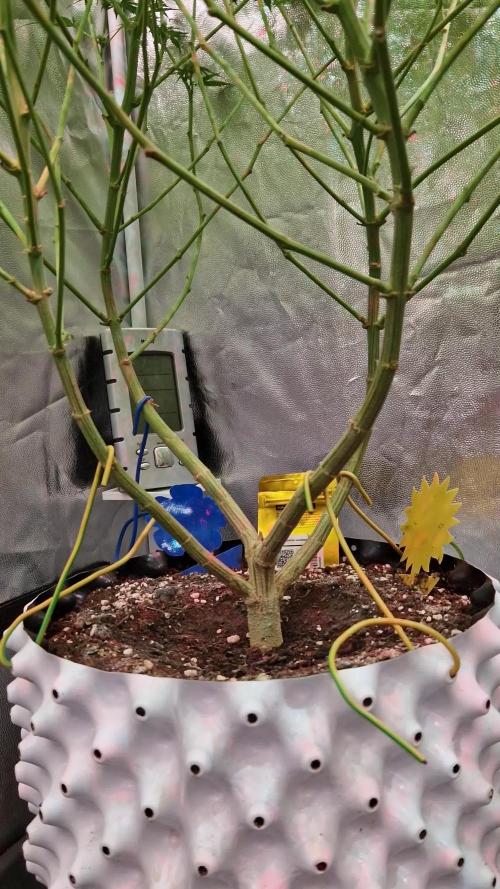
Die Blüten werden langsam dicker. Die Dame wird immer durstiger. Sie ist schon echt klebrig und man kann wirklich Lemonen und Mamdarinen Terpene wahrnehmen.


Likes
7
Share

@NSABND
Follow
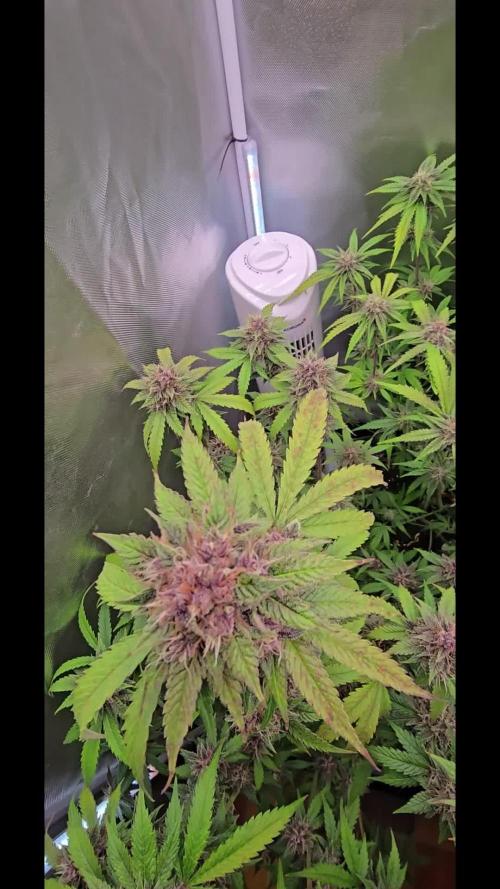
Day 57 😁👌all the queens are ok 🙏
Day 58 the queens got some fertilizer 💪😃👍
Day 59 what should i say... everything seems to fine 😃🙏👍
Day 60 the queens got some fertilizer 💪😃👍
Day 61 all queens are in good shape 😃🙏
Likes
9
Share


@Canadian_Growology
Follow
Growing amazingly. I started compost teas with rabbit manure and worm casting. I grinder up the rabbit pellets before adding to tea. Also threw down some 444 284 and Azos with mychorrizal with peat and perlite as a top dress. Sprayed with kelp 1 once so far this year. I'll be doing that once a month from now on until flowering.


Likes
6
Share


@HIAZ_urbanbudfarmer
Follow
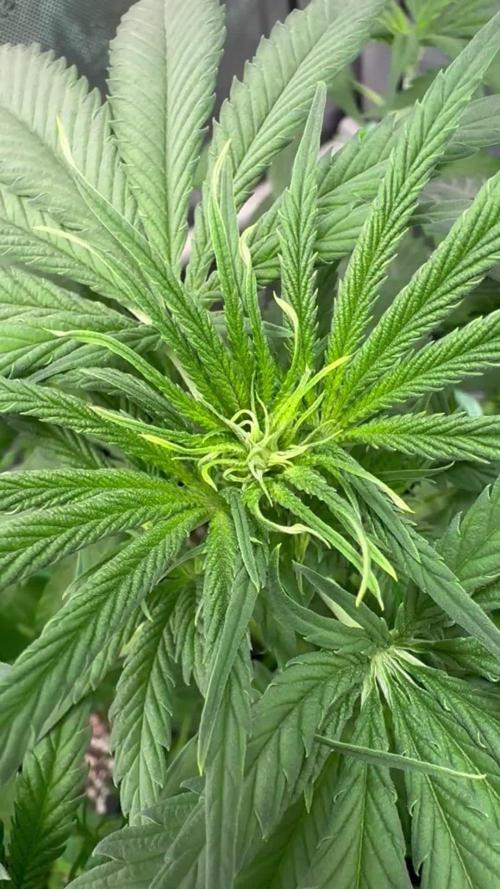
Week 6 of flowering, everything going well, very strong smell, all buds are very sticky & frosty 😃. #5 growing big dense solid buds about 5inches long & 5inches in girth & solid as a rock, very, very sticky. #A1 is starting to 🦊 tail a bit. Lower leaves turning a purple colour on some plants. Trichomes are still clear

Likes
16
Share

@H0BBYGAERTNER
Follow
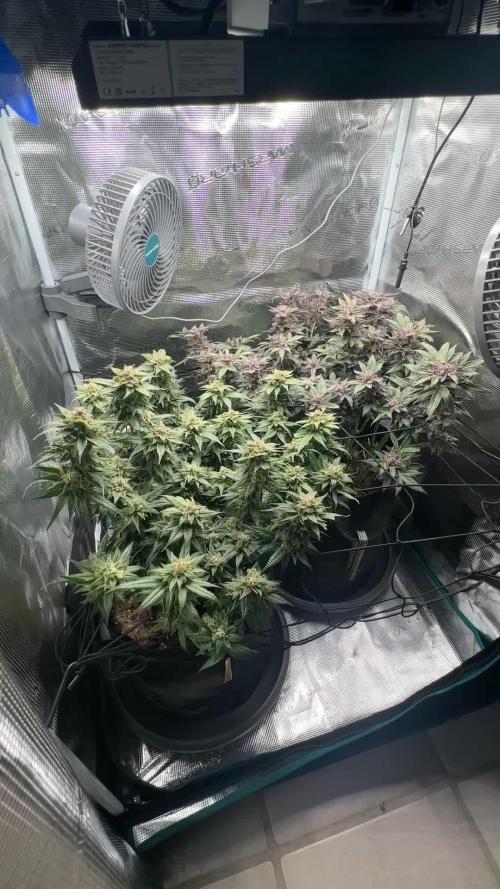
WEEK #22 - SLOW AS A DEAD SNAIL
First, i downscaled the photos and used the affinity standard balance filters. Do the photos look better now?
Maaan, either i have problems with my eyes or nothing is happening. Well, nothing but shitty, crispy leaves on Slush Mint Cake, although i have watered a bit more the last days. Have i done something wrong on the final stretch? Seems like it.
Might be "stress" from switching brand of fertilizer last minute, maybe pH off/a bit too low (seems like sub 6.0 1 or 2 times), or not watering enough the weeks before and now the plants are just too senior with small-ish buds. Or do YOU know any reasons for that? Next run will be just standard max. topping.
As SMC will be harvested somewhat soonish (likely a few buds each day in the upcoming week - depending on how much time i have to spare) i took a bunch of photos and details (let's see what the maximum capacity of GD is 😇), however again no real progress in amber trichomes. You've got me stumped.
SMC: Took a little test nugget during last week, and another one today. The smell ist still super delicious: fresh-lemony-sweet-frutiness. And the blossoms just do look pretty pretty. 😍
Skywalker: Your time will come!
SUPPOSED duration of bloom: Skywalker 9-10 weeks / SMC 8-9 weeks
IS: 12 weeks
..and the calyxes of SMC do look prety decent, although not thickest buds.
Next update might be a harvest post!

Likes
10
Share


@Diegobike
Follow
He estado de viaje hoy vuelvo y veo mi niña ya empezando floración como dios manda esperemos que está mamba salga re bombastic

Likes
19
Share


@Tommy716
Follow
Well my lovely ladies grew wonderfully it was my first grow with LED. Definitely a little learning curve still. I ended up with about 700 g out of eight plants not too bad for the size girl over my head. The smoke is amazing smooth with a henna citrus then knock you on your butt I did harvest plants at different time so I do have different outcomes some is a little more of the knock you down while others are a little more energetic. Great girl have lots to learn will continue to post in here love you guys.


Likes
48
Share


@Papablob
Follow
03/04 Belle grande dame. H - 3s. théoriquement avant effeuillage 🤪.
04/04 je l'ai nourrie Tous les jour la semaine dernière. Plus 2 arrosage a l'eau le soir tellement elle réclame. 😀
09/04 Dernier dosage de nute. Elle commence à ambrer. Tous vas bien.😍👍
Likes
2
Share

@Chrisbowa
Follow
Mar 30 - Apr 3 Crazy weather this week. Tent temp reached 90 and above. Decided to change light schedule from off 12am on 4am to off 10am on 3pm. Seems to help. Hope all is well. Anyway, I cut my first leaf off the bottom of the plant. Getting in the way for watering and starting to block the fan. Strange growth. Some branches have Left side 1 fan leaf 1 bud site, above that Right side 1 fan leaf 1 bud site. Looking ok. Lots of bud sites. Watered twice. One neutreants, one no neut.


Likes
16
Share


@AestheticGenetics
Follow
4/15/25 This plant is blowing my freaking mind. Long stacked colas. Even the lower buds are plumping up like golf balls. This is an exceptional plant so far.
Shes starting to show the classic "sherbert" purple that ive noticed shows up with anything that has sunset sherbert in the lineage. Some of the leaves are starting to fade slightly and the purple is coming in.
The rs11 that this seed came from, produced the most from a single plant out of all plants ive grown and trained and kept that small. She yielded 3.5 ounces or a 1/4lb of top nugs from a plant that was only about 18 inches tall and vegged for 6 weeks before flip.
Once i start to clear out all of the fan leaves later on in flower, its just going to be buds running the length of the stems
4/18/25
I really believe this may be a keeper. She is absolutely stunning. Just everything is perfect. She has super long stacking of buds up and down the stems.
Im actually super stoked to see how she finishes up.
One of the craziest parts is that shes in a plastic 2 or 3 gallon pot and this plant is going to yield insane.
