Likes
Comments
Share
@Roberts
Follow
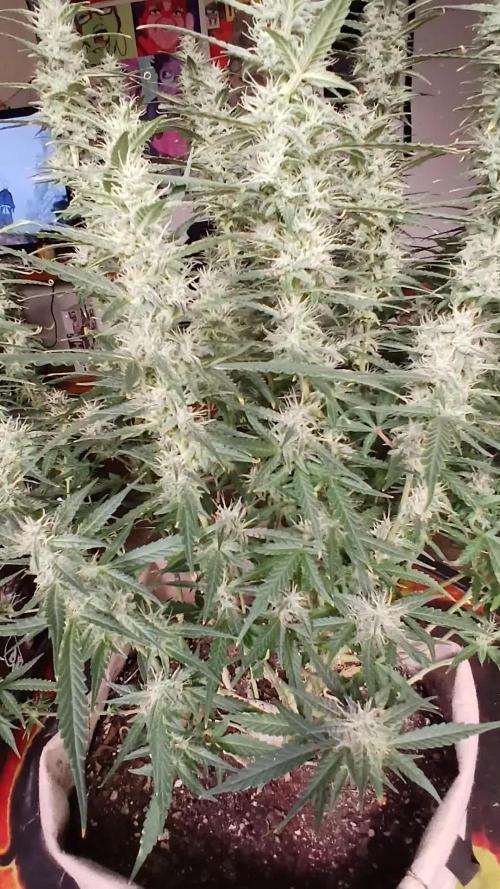
RSV11 has been growing great. She got lollipopped today. I also did some hst with a selective defoliation as well. She has been growing strong and dominates the other plants in the room. Everything has been going smooth since the pest issue. Thank you Spider Farmer, and Terpyz mutant Genetics. 🤜🏻🤛🏻🌱🌱🌱 Thank you grow diaries community for the 👇likes👇, follows, comments, and subscriptions on my YouTube channel👇. ❄️🌱🍻 Happy Growing 🌱🌱🌱 https://youtube.com/channel/UCAhN7yRzWLpcaRHhMIQ7X4g
Likes
13
Share
MrHide Seeds Test BESTAVA Quantum Board 2000W (SAMSUNG LM301B LED) Muy feliz ! Cero plagas con la tierra diatomea , se las tiro por todo lado. Se me dañó el deshumidificador y el porcentaje está en 80%, pero aún están en vegetación entonces no estoy preocupado. Crecen super fuertes, sin deficiencias aparentes o daños. Las Kritical Red ya están empezando a dar signos de floración, vamos a dejarlas que den sus primeros pasos solas y en unos días le empezamos a dar de comer y estimular nuevamente. Esta semana les he ido haciendo defoliación fuerte y ha dado resultados. Los brotes inferiores han subido bastante y se les ve mejor estructura. Esperemos den buenas flores. Buenos Humos para todos los cultivadores ! ¡cerotes, gueyes, culiados, pizados, boludos, jodidos, maes, patas, parces!
Likes
18
Share
F29 beginning of 4th week of flowering SD3 - initially sweet orange then engine grease SD2 - initially sharp vaseline then engine grease mixed with kerosine.I personally like SD2 more. Even with the stunted growth. SD3 is getting yellow from the bottom and i dont know what to do. I had thrips so i sprinkled diatomaceus earth on top of the soil and rubbed some on the fan leaves and stems. Sorry for the reddish pics
Likes
Comments
Share
@Trichoma
Follow
Second week in stretch training a bit more with the net.
Likes
16
Share
@Naujas
Follow
It seems that the girl is counting her last days, some of the trichomes are already showing an amber color, the buds look simply fantastic, it's a pity that I can't transfer that image with my phone - share that image with you, you need to see it live :) good luck to everyone:)
Likes
10
Share
Sempre più belle Umidità un po' instabile La notte raggiunge il 70% ma fuori piove potrebbe essere quella la causa Genetica fantastica, la amo sempre di più
Likes
7
Share
I would say medium size on harvest, what meph lack in yield they make up for in quality.. do see the small video after some curing, thanks for reading
Likes
17
Share
@EllysGrow
Follow
Auch in Woche 8 machen die Ladys bemerkenswerte Fortschritte. Die Pistel verfärben sich nun nach und nach 😍
Likes
4
Share
Apple fritter and wilson! Zero are 7 weeks from popping the seed's in ro water ph to 6.2 and mystery mix, Geist grow are 4 weeks from popping the seed's same process as above. Blumat watering system 3x3 area for growing 4 plants in 4 10gallon fabric pots in living soil top feed with compost tea and foliage spray (LABS) lactic acid bacteria. 2 x TS1000 and I use pod tech to feed my worms with down to earth amendments.
Likes
12
Share
Esta es la última semana de crecimiento. Espero llegar a unos 30cm de altura para esta semana. He hecho varios cortes de bajos, defoliacion y super cropping. Se ven saludables y sigo esperando el estiramiento de la pequeña que quedó atrás. Iré actualizando. Día 25. Hoy hice una corte de hojas grande. Esta noche voy a aplicar EMRO foliar. Algunas plantas se van muy arriba. Pero dentro de todo vienen parejas. En unos días paso a floración. Probablemente ya la próxima semana sea naranja. Día 28. Último día de crecimiento. Esta noche cambio el depósito. Voy a tener que comprar otro, o ir rellenando a los 3 días del cambio, dado que estan tomando mucha solución. Algunas se estiraron más de lo esperado y la pequeña no alcanzó el tamaño deseado, pero no importa. Voy a ir aplicando LST para mantener una altura pareja. Las raíces crecieron muchísimo, pero por ahora es manejable el tema. Ahora llega la hora de la verdad.
Likes
68
Share
Removed autoflower and put her in her own pot outside the tent. Foliars applied in strong blue 430nm with 4000Hz tone. 20-minute dose prior to application. In essence, you're seeing a combination of the infrared light reflected by the plant, which the camera perceives as red, and any residual visible blue light the plant reflects, which results in a purple hue. I was doing more stretching of the stems, adjusting weights, just a little too much, and it snapped almost clean. I got a little lucky in that it was still connected, wrapped her almost instantly while holding her in place with yoyo's. The core framework is now in place. If your soil has a high pH, it's not ideal; you want a pH of 6.4, 6.5, or 6.6, which is ideal. If you are over a pH of 7, you have no hydrogen on the clay colloid. If you want your pH down, add Carbon. If you keep the pH below 7, you will unlock hydrogen, a whole host of new microbes become active and begin working, the plant will now be able to make more sugar because she has microbes giving off carbon dioxide, and the carbon you added hangs onto water. Everything has electricity in it. When you get the microbes eating carbon, breathing oxygen, giving off CO2, those aerobic soil microbes will carry about 0.5V of electricity that makes up the EC. The microorganisms will take a metal-based mineral and a non-metal-based mineral with about 1000 different combinations, and they will create an organic salt! That doesn't kill them, that the plant loves, that the plant enjoys. This creates an environment that is conducive to growing its own food. Metal-based: Could include elements like iron, manganese, copper, or zinc, which are essential nutrients for plants but can exist in forms not readily accessible. Non-metal-based: Examples like calcium carbonate, phosphate, or sulfur are also important for plant growth and potentially serve as building blocks for the organic salt. Chelation in a plant medium is a chemical process where a chelating agent, a negatively charged organic compound, binds to positively charged metal ions, like iron, zinc, and manganese. This forms a stable, soluble complex that protects the micronutrient from becoming unavailable to the plant in the soil or solution. The chelate complex is then more easily absorbed by the plant's roots, preventing nutrient deficiency, improving nutrient uptake, and enhancing plant growth. Chelation is similar to how microorganisms create organic salts, as both involve using organic molecules to bind with metal ions, but chelation specifically forms ring-like structures, or chelates, while the "organic salts" of microorganisms primarily refer to metal-complexed low molecular weight organic acids like gluconic acid. Microorganisms use this process to solubilize soil phosphates by chelating cations such as iron (Fe) and calcium (Ca), increasing their availability. Added sugars stimulate soil microbial activity, but directly applying sugar, especially in viscous form, can be tricky to dilute. Adding to the soil is generally not a beneficial practice for the plant itself and is not a substitute for fertilizer. While beneficial microbes can be encouraged by the sugar, harmful ones may also be stimulated, and the added sugar is a poor source of essential plant nutrients. Sugar in soil acts as a food source for microbes, but its effects on plants vary significantly with the sugar's form and concentration: simple sugars like glucose can quickly boost microbial activity and nutrient release. But scavenge A LOT of oxygen in the process, precious oxygen. Overly high concentrations of any sugar can attract pests, cause root rot by disrupting osmotic balance, and lead to detrimental fungal growth. If you are one who likes warm tropical high rh, dead already. Beneficial, absolutely, but only to those who don't run out of oxygen. Blackstrap is mostly glucose, iirc regular molasses is mostly sucrose. Sugars, especially sucrose, act as signaling molecules that interact with plant hormones and regulate gene expression, which are critical for triggering the floral transition. When sucrose is added to the growth medium significantly influences its effect on floral transition. Probably wouldn't bother with blackstrap given its higher glucose content. Microbes in the soil consume the sugar and, in the process, draw nitrogen from the soil, which is the same nutrient the plant needs. Glucose is not an oxygen scavenger itself, but it acts as a substrate for the glucose oxidase (GOx) enzyme, effectively removing oxygen from a system. Regular molasses (powdered if you can), as soon as she flips to flower or a week before, the wrong form of sugar can delay flower, or worse. Wrong quantity, not great either. The timing of sucrose application is crucial. It was more complicated than I gave it credit for, that's for sure. When a medium's carbon-to-nitrogen (C:N) ratio reaches 24:1, it signifies an optimal balance for soil microbes to thrive, leading to efficient decomposition and nutrient cycling. At this ratio, soil microorganisms have enough nitrogen for their metabolic needs, allowing them to break down organic matter and release vital nutrients like phosphorus and zinc for plants. Exceeding this ratio results in slower decomposition and nitrogen immobilization, while a ratio below 24:1 leads to faster breakdown and excess nitrogen availability. Carbon and nitrogen are two elements in soils and are required by most biology for energy. Carbon and nitrogen occur in the soil as both organic and inorganic forms. The inorganic carbon in the soil has minimal effect on soil biochemical activity, whereas the organic forms of carbon are essential for biological activity. Inorganic carbon in the soil is primarily present as carbonates, whereas organic carbon is present in many forms, including live and dead plant materials and microorganisms; some are more labile and therefore can be easily decomposed, such as sugars, amino acids, and root exudates, while others are more recalcitrant, such as lignin, humin, and humic acids. Soil nitrogen is mostly present in organic forms (usually more than 95 % of the total soil nitrogen), but also in inorganic forms, such as nitrate and ammonium. Soil biology prefers a certain ratio of carbon to nitrogen (C:N). Amino acids make up proteins and are one of the nitrogen-containing compounds in the soil that are essential for biological energy. The C:N ratio of soil microbes is about 10:1, whereas the preferred C:N ratio of their food is 24:1 (USDA Natural Resource Conservation Service 2011). Soil bacteria (3-10:1 C:N ratio) generally have a lower C:N ratio than soil fungi (4-18:1 C:N ratio) (Hoorman & Islam 2010; Zhang and Elser 2017). It is also important to mention that the ratio of carbon to other nutrients, such as sulfur (S) and phosphorous (P) also are relevant to determine net mineralization/immobilization. For example, plant material with C:S ratio smaller than 200:1 will promote mineralization of sulfate, while C:S ratio higher than 400:1 will promote immobilization (Scherer 2001). In soil science and microbiology, the C:S ratio helps determine whether sulfur will be released (mineralized) or tied up (immobilized) by microorganisms. A carbon-to-sulfur (C:S) ratio smaller than 200:1 promotes the mineralization of sulfate, when the C:S ratio is low, it indicates that the organic matter decomposing in the soil is rich in sulfur relative to carbon. Microorganisms require both carbon and sulfur for their metabolic processes. With an excess of sulfur, microbes take what they need and release the surplus sulfur into the soil as plant-available sulfate A carbon-to-sulfur (C:S) ratio higher than 400:1 will promote the immobilization of sulfur from the soil. This occurs because when high-carbon, low-sulfur materials (like sawdust) are added to soil, microbes consume the carbon and pull sulfur from the soil to meet their nutritional needs, temporarily making it unavailable to plants. 200:1 C:S 400:1: In this range, both mineralization and immobilization can occur simultaneously, making the net availability of sulfur less predictable. This dynamic is similar to how the carbon-to-nitrogen (C:N) ratio regulates the availability of nitrogen in soil. Just as microbes need a certain amount of nitrogen to process carbon, they also require a balanced amount of sulfur. Both mineralization and immobilization are driven by the metabolic needs of the soil's microbial population. Sulfur is crucial for protein synthesis. A balanced ratio is particularly important in relation to nitrogen (N), as plants need adequate sulfur to efficiently use nitrogen. A severely imbalanced C:S ratio can hinder the efficient use of nitrogen, as seen in trials where adding nitrogen without balancing sulfur levels actually lowered crop yields. Maintaining a balanced carbon-to-sulfur (C:S) ratio is highly beneficial for plant growth, but this happens indirectly by regulating soil microbial activity. Unlike the C:N ratio, which is widely discussed for its direct effect on nutrient availability, the C:S ratio determines whether sulfur in the soil's organic matter is released (mineralized) or temporarily locked up (immobilized). Applied 3-day drought stress. Glucose will hinder oxygenation more than sucrose in a solution because glucose is consumed faster and has a higher oxygen demand, leading to a more rapid decrease in oxygen levels. When cells respire, they use oxygen to break down glucose, and this process requires more oxygen for glucose than for sucrose because sucrose must first be broken down into glucose and fructose before it can be metabolized. In a growth medium, glucose is a more immediate and universal signaling molecule for unicellular and multicellular organisms because it is directly used for energy and triggers a rapid gene expression response. In contrast, sucrose primarily acts as a signaling molecule in plants to regulate specific developmental processes by being transported or broken down, which can be a more complex and slower signaling process. Critical stuff. During wakefulness (DC electric current) life can not entangle electrons and protons. During the daytime, the light is sensed as multiple color frequencies in sunlight. Coherence requires monochromatic light. Therefore, at night, IR light dominates cell biology. This is another reason why the DC electric current disappears during the night. The coherence of water is maintained by using its density changes imparted by infrared light released from mitochondria in the absence of light. This density change can be examined by NMR analysis, and water is found to be in its icosahedral molecular form. This is the state that water should be in at night. This is when a light frequency is lowest and when the wave part of the photoelectric effect is in maximum use. 3600
Likes
10
Share
Shes stays nice and short and bushy which i like defo shell we do good with some LST but ive left her on her own to do her things very sticky and smell rather gassy not so much purple thou but maybe in another week or two we mite see some colours 💪🎄🍀🔥💚
Likes
12
Share
@BLKSWN
Follow
Another late week, but... so like I said I add the 300w led (150w)to the room and I think the girl is loving it. I had to raise the HPS up due to the heat, so the HPS is at 17” from the top of the canopy and the LED at 12”. The colour in the room is unbelievable. I can’t wait to see how this GG turns out.
Likes
25
Share
Day 36 08/08/24 Thursday Feed today using de-chlorinated tap water pH 6 with Plagron PK13-14. Showing her pre stretch and pistils 😍 Day 38 10/08/24 Saturday De-chlorinated tap water pH 6 today again with calmag. 400ml with run off now. I will update pictures and videos tonight ✌️💚 Day 39 11/08/24 Sunday De-chlorinated tap water pH 6 today again with calmag. 400ml with little run off. Pistils forming in bunches now seeing beginning of bud formations 😍 Day 40 12/08/24 Monday Feed today, it was warm again so they drank the whole 300ml each so I have topped up another 150ml to see run off to prevent salt build up. All thriving 😍✌️💚 Video uodate
Likes
Comments
Share
@Pablo_420
Follow
Muy contento con los resultados y estás es una de ellas las demás increíbles también
Likes
14
Share
Que pasa familia, vamos con la cosecha de estas Rainbow Melon de FastBuds, las flores son bien compactas y van repletas de resina, son muy pegajosas, tienen tonos verde oscuros bien bonitos, y tiene unos aromas dulces y tropicales bastante marcados. Es una cepa normal de cultivar, es de ciclo de 2 meses y medio y bien agradecida, tiene buenos satélites. Hasta aquí todo, Buenos humos 💨💨💨
Likes
14
Share
@Kakui
Follow
11 Noviembre: Primer riego con 2.5EC y 5.9pH, runoff de 2.9EC y 6.2pH, en una semana más ya deberían estar recibiendo 3.0EC y seguir con esa concentración por todo el cultivo. Alturas están entre 15cm y 20cm. 13 Noviembre: Riego 2.5EC y 5.9pH, runoff de 3.3EC y 6.2pH. Hoy se removieron los primeros nodos de cada planta y se les hizo poda apical. 14 Noviembre: Riego 2.5EC y 5.9pH, runoff de 3.3EC y 6.2pH en la mañana. En la tarde se realizó transplante a maceteros definitivos de 5 litros con 4 litros de sustrato aprox. el cual fue pre cargado hasta la capacidad de campo, con 3.0EC y 5.8pH, desde este punto se debe esperar un par de días hasta que el dryback(secado) del sustrato sea de un 35-40%, lo cual vendría siendo el primer P3 del cultivo, una vez se alcance ese porcentaje de secado, se comenzará con los primeros riegos de precisión llamados P1.