


Likes
Comments
Share


Processing
Likes
2
Share


@MidwestBudz
Follow
Off to another great start, with feeding can’t wait to see what adventures these girls will test my learning knowledge in this hobby I’m enjoying!!


Likes
1
Share

@c1note
Follow
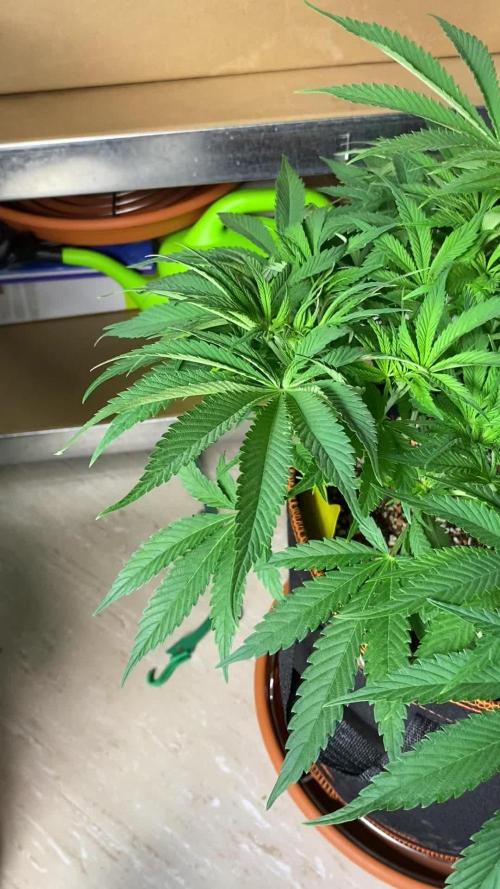
17.11 Lampe auf 100% PPFD 850-950. DlI 38 - 41. Vpd 1- 1.1. 1.5L mit 1.9 Ec.
14.11 gute erste Blütewoche gehabt. DLI auf 33-36 erhöht. Ernährung bleibt erstmal gleich bis auf ne kleine Steigerung beim CalMag. Ich scorg wieder im Verlauf der Woche.

Likes
6
Share

@Northern_Ent
Follow
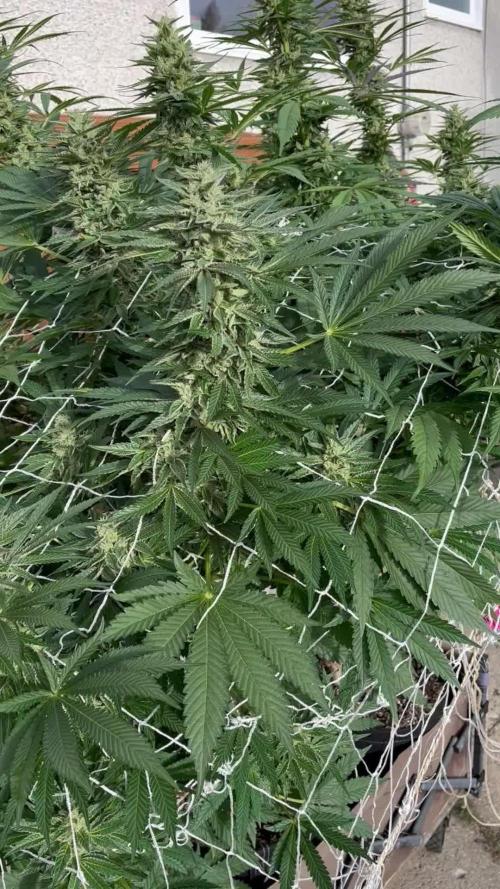
Sep 12: Amnesia Haze is almost ready. Two more weeks at most I think.
Doing Final Flush using 9L in the 27 L of soil.

Likes
16
Share


@Septooth
Follow
Results were awesome! 9.5oz Dry.....Loving it! Will be growing"The Church" again!

Processing
Likes
3
Share


@420cfm
Follow
The tent smells great this week. Very sweet, pineapple citrus. Buds continue to grow with new pistals daily. Lots of crystal showing now too. I didn’t defoliate as much as I’d hoped due to hermie sighting in week 3; but they’re looking good and I’m happy with grow three so far. So much learned, so much progress. Hopefully the results speak for themselves...
Likes
10
Share


@SnoopyShaggy
Follow
The purple/pink/orange hues from the strawberry cough is solid forming into decent size nugs. Those huge colas are a sexy sight to watch however the tendency for mould attack is high for those strawberry. Hoping my fan, air circulation, and humidity will stop those mould from coming. Also i am turning up my AC to 20hours when it is day 90 onwards, using panasonic nano AC to clear up any pollutants from entering the tent.
There is a purple punch indica dominant hiding under those autoflowers i know it is hard to spot them, will keep those purple punch longer in flowering since they are bullied by 2 monstrous autos.
Feeding them with just 3.5L water+feed. 2.5 litres of water and 1 litre of feed. I feed them 1L on Sundays, and on friday i water them with 2.5L of water, by doing this, my humidity remains within 55%max and 38% minimum when the pot dries.
Likes
2
Share


@MarianoDoBom
Follow
Seguimos com as meninas agora no scrog, estão desenvolvendo bem, daqui a pouco começamos com a fase de engorda.

Likes
12
Share


@AlpineGoat
Follow
I think its going to slowly turn every inch of its green part into yellow one.. the fan leafs already turned yellow, but I will not remove them.. i wanna see how it turns!
Do you think I can hit week 13-14? Or even 15?
Likes
11
Share


@DixTheReal
Follow
Ho iniziato a fare LST presto, già dal giorno 15, i fertilizzanti li ho iniziati giorno 18. Alla fine della settimana si sono visti i primi peletti, sta entrando in fioritura.

Likes
26
Share


@Highgrade_Harvests
Follow
The 3 that are in the 5 gallon pots are the gorilla gas seeds and the one in the litte pot is the blueberry pie f1 fast and another grow off im involved in with seedsman. All of them are off to a great start in seedling starter mix. Just transplanted the gorilla gas seeds into their 5 gallon pots where they will remain for the rest of the grow. Right now I'm just feeding them 6.5.ph water. The coco I'm using is preamended with nutrients to last a couple weeks. Can't wait to watch these girls grow! I'm going to try to get a time lapse video of the grow if I can get my camera working right.

Likes
2
Share


@Naujas
Follow
14 days, the girl looks great, a little wrinkled due to the humidity which is only 40-45%, but I don't know if all this will soon resolve itself, I just need to water it more often :) this week I'm changing the light to mars sp150 which will stay until the end of growth :) I'm giving the girl 6.3 ph water with 2 ml of heaven :) good luck to everyone.
Likes
46
Share


@MaryJaneUSA
Follow
Dudes, this girl is butt wild, she won’t stop growing. I had to defoliate her severally times over the course of 2 weeks. I am running out of growing space for her. She measures more than 2x2 (L x W). Drinks more than a gallon of water every 3-4 days. May need to invest in a RO system. However, I am very thankful that shes doing well. This is a GG#4 x Zkittlez by Cream of the crop seeds.
Likes
Comments
Share

@Bir7822
Follow
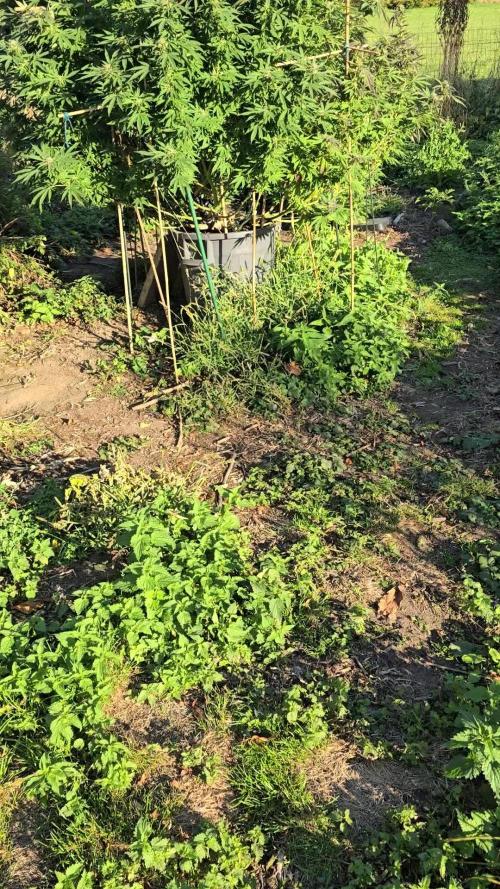
27-09-2025 le temps à été fort médiocre, pluie et vent, mais ici cela s'améliore pour une bonne grosse semaine, plein soleil...


Likes
7
Share


@HookahCli
Follow
d33
Hoy subo fotos unos días antes de esta semana, mejor, tendremos más fotos.
Hoy me he puesto a revisar un poco las plantas y me he dado cuenta de que las Lemon Krystal son hermafroditas, la que estaba en la parte de dentro, solo tiene unos pocos sacos de polen que todavía no están maduros, se los he arrancado y cortado 2 ramas que tenían mala pinta con eso, el resto de ramas parece estar bastante bien y son flores macho, la Lemon Krystal que esta mas cerca de la puerta del armario, esta bastante mal y la tendré que desechar ya que no quiero que polinice al resto de plantas.
También una Kandy Kush, la de la derecha, le he quitado 2 flores macho, no parecía tener más, unas flores espontáneas, pero semillas a granel a veces pueden pasar estas cosas, no es lo normal, pero parece que la cepa de Lemon Krystal esta un poco jodida... Para añadir, la LK que parece que podremos sacar adelante(pero bajo supervisión) tiene una rama que tiene 4 cogollos en vez de 2, mola, pero si no se pone a sacar flores macho, la podremos continuar haciendo seguimiento.
Tenemos un cogollo de la Kandy Kush(planta del centro) que es doble.
Puede ser que tengamos algo polinizado en el Indoor, pero pues es algo que ha pasado, espero no tener muchas semillas mermara la calidad...
d35
Unas fotitos rapidas...
Parece que estan progresando las deficiencias, a final de semana añadiremos un poco m'as de abono a ver como responde
Likes
Comments
Share

@ellioschka
Follow
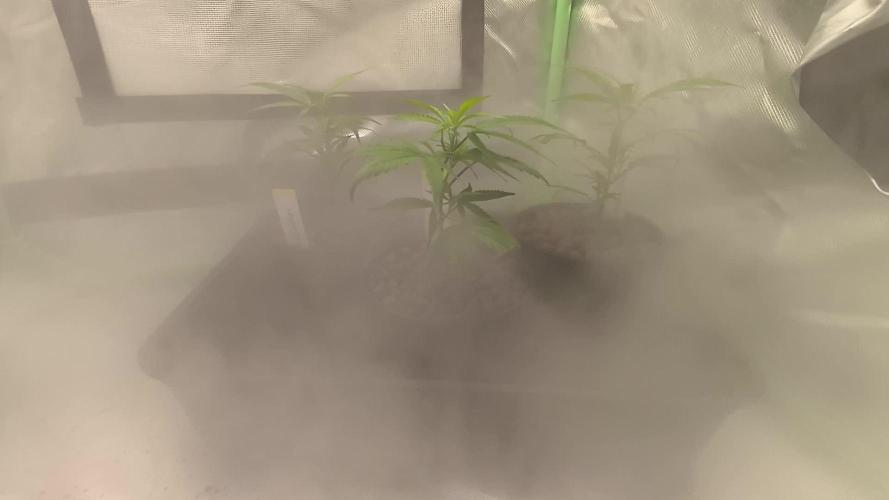
Die Damen machen sich gut und wurzeln schön in alle Richtungen. Die Starter Dosis des Düngers ist mittlerweile etwas zu schwach. Ich hätte, wegen der Pflanzengröße, wohl etwas früher die Dosierung erhöhen bzw. die Dosierung der Folgewoche benutzen sollen. Sichtbar an dem leichten Magensiumdefizit der unteren Blätter. 😇
Auch hier sind leichte Adlerkrallen durch die zu feuchte Umgebung zu sehen. VPD Bereich werde ich jetzt höher stellen, dann bekommt der Luftbefeuchter auch etwas mehr Pause. 💤

Processing
Likes
84
Share


@Beans
Follow
Sorry I was traveling the globe with my new charitable organization i founded called "Smite the Mite" trying to help those in need of some mite smiting. Those little bastards are everywhere! Did u know they have mites in Antarctica too? They have their little pervert parties on penguins and eat dead ski off them...that's nasty as hell! Possibly not true as well... cuz I just made that up as I went. It could very well be a scientific fact too. 1 discovered by the Smite the Mite Foundation and is now the intellectual property of yours truly. So forget it immediately or pay me!

Likes
237
Share


@1Right_Angle
Follow
May 9th
- began today replacing the CMH lite that kicked-off during the night (new bulb is done!) MARS HYDRO to the rescue with a TS-1000 hanging above the kids now. Fine-tuning as we speak
- began mixing a Tea for tonight/tomorrow’s dinner
- LST to begin with a few of the plants this evening
- Defoliated some of the large fan-leaf pairs and now the plant structures can be fortified and shaped
- grabbed 6 clones from the Panama Reds and 2 each from Fighting Buddha and Pine Tar Kush !!! Into the LED Dome
(And i’m out of cubes… profanity)
- some branches get tied down tonight; let the games begin
10th,
- Nutrients fed for breakfast
- how to say this: things are so steady with daily progression
- raised lights again to maintain 2c difference between Room temp / Top-Leaf temp. My Phlizon 4500 is almost topped out in the room, and its running at 50% power. This last blast of growth and transition within the plants, tells me this set-up is going to last Just long enough !!!
Just big enough
- 2 more weeks come on!
- a few more clones taken last-nite; cloudwalker / black tuna / lsd / alaskan purple etc etc PurpsBerry will be last clone taken
- no foliar misting on Food mornings like today; every other day is still the target here in mid-Veg
11th,
- while rummaging through the crop early today, I found what is certainly a Male Panama Red plant. Action taken and trying to secure that new home. Picture 11, 12, 13
- Panama Red #2 removed
- Foliar Misted the Tent at lites-out
- clones treated to a Foliar Misting. Feeding them through their already developed Stomata on the leaves; when they have no roots to uptake nutrients yet. “Thanks Andrew at LegacyMarketFarm for that detail”
May 14
- the one plant i took real pride in FIMming successfully, has also raised the Kilt and declared his Gonads; dammit.
So, he’s gone lol. 2 males out of 38 plants… (txerri bilbo haze, the very first of many seeds produced alongside killer bud to show Male)
- 2 LSD clones appear to be doing well
May 15th
- Foliar Misted after Lites-out


Likes
5
Share


@Mr_nugs_lover_David
Follow
Amo este fenotipo tanto como el otro esta genetica es magistral,cogollos compactos,pegajosos,super duros un aroma muy rico y agradable,no se puede pedir mas,este es el último riego que realizo con nutrientes a partir de ahora comienzo a lavar las raices por tanto solo regaré con agua con su ph bien ajustado a 6,5 para que ka planta se vaya alimentando de todo de lo que quede y eliminar cualquier resto que pueda quedar que empeora la calidad a la hora de fumar,exquisitez de 00 seed bank!

Likes
14
Share


@eldruida_lamota
Follow
Venga familia que ya viene la cosecha de estas Punch Pie de RoyalQueenSeeds , que ganas que tenia ya de darles machetazo.
No veas que pinta que tienen estas plantas.
Las flores aparte se ven bien resinosas.
a sido una genética con la que disfruté mucho cultivarla, es algo complicada cultivarla pero merece la pena si eres cultivador con experiencia no te será problema cosechar.
Agrobeta:
https://www.agrobeta.com/agrobetatiendaonline/36-abonos-canamo
Mars hydro:
Code discount: EL420
https://www.mars-hydro.com/
Hasta aquí es todo , espero que lo disfrutéis, buenos humos 💨💨.