


Likes
Comments
Share


@Downunder90
Follow
## Week 4 Update: Thriving Growth and New Techniques!
### 🌱 Vigorous Growth with Greenhouse Super Lemon Haze, Humboldt Seed Bubba Kush, and Blueberry Muffin 🌱
Welcome back to another exciting update on my grow journey with Greenhouse Super Lemon Haze, Humboldt Seed Bubba Kush, and Blueberry Muffin. The plants are thriving under optimal conditions, and I’ve started experimenting with new techniques to maximize their potential.
---
### Diary Snippet: Advanced Techniques and Optimal Conditions
In Week 4, the plants are growing like weeds thanks to maintaining high PPFD (Photosynthetic Photon Flux Density) and optimal temperatures in the grow tent. These conditions are essential for maximizing photosynthesis and ensuring vigorous growth.
---
### Techniques Applied: LST and Defoliation
#### Low-Stress Training (LST)
This week, I applied Low-Stress Training (LST) for the first time. By gently bending and tying down the branches, I've created a more even canopy. This technique helps to:
- **Increase Light Exposure:** Ensures all parts of the plant receive sufficient light.
- **Improve Air Circulation:** Reduces the risk of mold and pests by allowing better airflow between the branches.
- **Boost Yield:** Promotes the development of multiple colas, potentially increasing the overall yield.
#### Defoliation
In addition to LST, I also began defoliation, selectively removing some fan leaves to:
- **Enhance Light Penetration:** Allows more light to reach the lower parts of the plant.
- **Stimulate Growth:** Encourages the plant to focus its energy on bud development rather than foliage.
---
### Nutrient Management: Increasing Plagron Dosage
As the plants grow, their nutritional needs increase. I've started to gradually increase the dosage of Plagron nutrients, following a careful schedule to prevent nutrient burn. Key benefits of Plagron nutrients include:
- **Balanced Nutrient Profile:** Provides essential macro and micronutrients for robust plant growth.
- **Improved Soil Structure:** Enhances the soil's ability to retain water and nutrients.
- **Enhanced Flavor and Aroma:** Contributes to the development of rich, flavorful buds.
---
### Technology in Action: TM+ Pro App and TrollMaster
To maintain and monitor the optimal growing conditions, I'm utilizing the TM+ Pro App and TrollMaster system:
#### TM+ Pro App
The TM+ Pro App has been invaluable for tracking and adjusting the environmental conditions in real-time. Key features include:
- **Remote Monitoring:** Allows me to keep an eye on temperature, humidity, and light levels from anywhere.
- **Data Logging:** Records environmental data for analysis, helping to fine-tune the growing conditions.
- **Alerts:** Sends notifications if conditions deviate from the optimal range, enabling quick corrective actions.
#### TrollMaster
The TrollMaster system is integrated with the grow tent to automate and control various aspects of the environment:
- **Climate Control:** Manages temperature and humidity levels to ensure a stable environment.
- **Lighting Automation:** Adjusts the light intensity and schedule to mimic natural sunlight patterns.
- **Nutrient Delivery:** Automates the feeding schedule, ensuring the plants receive nutrients at the right time and in the right amounts.
---
### Spotlight on Blueberry Muffin 🌿 🥦🥦🥦🥦🥦
**Cannabis Strain Benefits** 🧐 🤓
Blueberry Muffin has been a delightful addition to the grow tent. This strain is known for its sweet, berry-like aroma and potent relaxing effects. It's been growing robustly alongside the other strains and is responding well to the advanced techniques applied.
- **Parentals:** Blueberry x Purple Panty Dropper
- **Type:** Indica-dominant Hybrid
- **Flowering Time:** 8-9 Weeks
- **Flavor / Taste / Smell:** Berry, Sweet, Earthy
- **Effect:** Relaxing, Euphoric, Happy
- **THC Content:** 18-22%
- **Characteristics:** Dense Buds, High Resin Production
The Blueberry Muffin plants are showing strong growth and developing beautiful, dense buds with a rich aroma. They are a bit more sensitive to defoliation, so I've been careful to remove only the necessary leaves to ensure optimal growth without stressing the plants too much.
---
### Looking Ahead
With the application of LST, defoliation, and precise nutrient management, the plants are set for an impressive growth phase. The TM+ Pro App and TrollMaster system will continue to play a crucial role in maintaining optimal conditions.
Stay tuned for next week's update as the plants progress and more advanced techniques are applied!
Happy growing! 🌿💚



Likes
Comments
Share

@BasedBuds_89
Follow
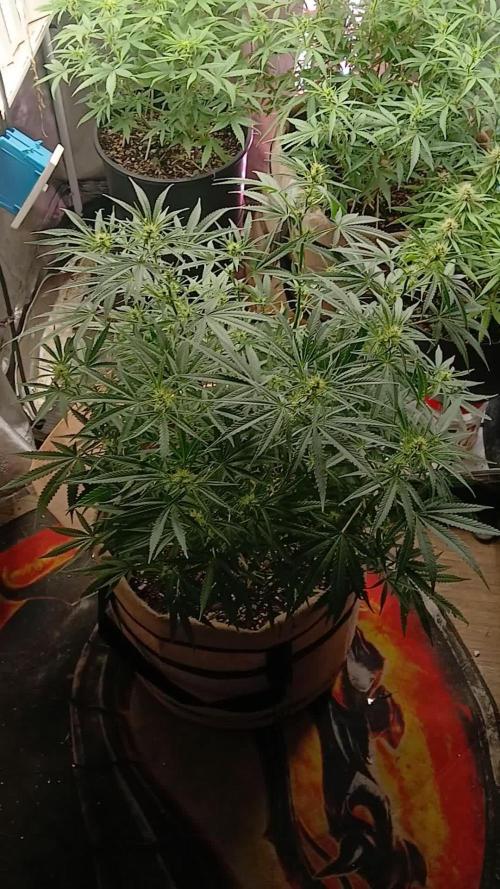
Had a great week, started to lollipop all of my plants, cut nitrogen all the way back and am sticking to Big Buds nutrients. The smell is already amazing, very skunky.

Likes
26
Share


@Char23
Follow
Hi guys,
First off I just want to say thanks to everyone that has commented.
After the issues last week I flushed all 3 plants on Sunday.
They then all had around 500ml of nutrient fed water on Monday which actually gave a little run off. I also added a fan down by the passive inlet pointed to push some more air around the tent and this has worked well.
Run off was just about hitting the 6.0 mark when I flushed so I am watering at 6.8.
I now have a tds meter so will be adding this in when I do water next.
The plants have been bouncing back well as you can see from the photos. The Zkittlez has a new lease of life and has stretched out well.
The black twisted growth on the blueberry mango and gorilla infested gelato stopped and the plants seem to have recovered well but do look maybe a little hungry? Dark green growth which made me think nitrogen but then they are recovering from that weird growth from the lockout so this could be part of this recovery.
I will keep an eye judge how they react from the next watering.
I am really happy with the lst. It looks as though I am going to have a nice even canopy so fingers crossed for some nice buds.
I am waiting for the soil to dry out a little more before the next water/feed. This should be Sunday by the feel of the soil. I am sticking to a wet/dry cycle.
It has been a little hot (around 25 degrees) so I have now got an inlet fan that I will be installing on the weekend to pull more fresh air in. I can then get rid of the extra fan I have on the floor by the passive intake.
The humidifier has hardly kicked in so I think it is time to introduce my dehumidifier within the next week or so. I’ll start by putting it on for an hour every 4 hours and see how that effects the environment.
If anyone has any recommendations please comment and let me know.
Thanks everyone :)


Likes
2
Share

@PapaTerps
Follow
Wizard Fuel - Wizard Trees
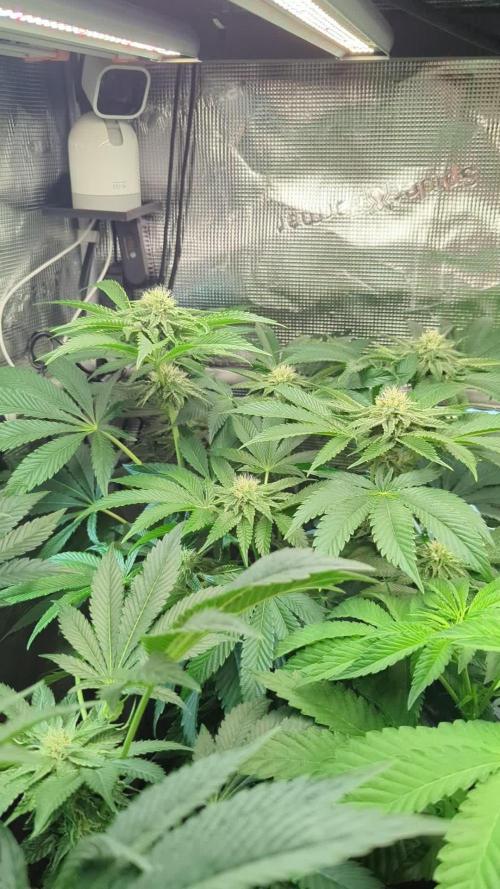
Day 70 - Watered with 3L of RO tap water with nutrients, mixed individually, in order and then pH'd to 6.3! She has completed her stretch phase, has developed her bud sites and is now focusing on bulking her flower 🙏🏻I removed a couple of fans leaves to improve general airflow in the tent 💪🏻 She has developed a good amount of trichomes on her buds and her smell has also started to appear - very gas earthy 👌🏻

Likes
2
Share

@Oldwied
Follow
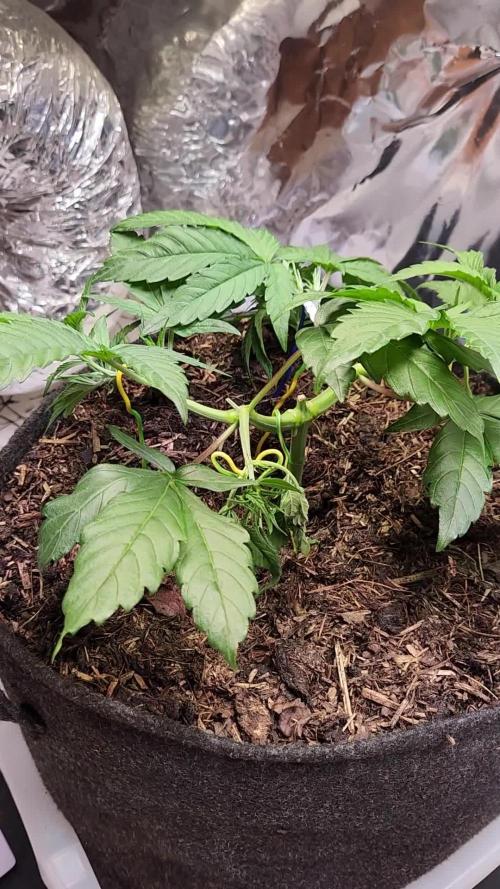
The cursed sixth week, I wasn't careful enough. First, a branch broke off near the base, but it's still hanging on the stem and fighting for survival. Two days later, another branch broke, but I was able to fix it immediately with aluminium tape.
This strain is not ideal for my training. It grows too tall and the branches become very thick very quickly. Great genetics, but unfortunately not for me as I am very limited in terms of height.
I will make the best of it.
Light Power: 60%
Day 35
LST
Day 37
Photoshooting
LST
Likes
Comments
Share


@eldruida_lamota
Follow
Vamos familia, actualizamos la cuarta semana de floración de estas Forbidden Mochi fast de Seedstockers, Aplicamos varios productos de Agrobeta, que son increíbles para aportar una buena alimentación a las plantas.
Temperatura y humedad dentro de los rangos correctos dentro de la etapa de floración.
La tierra utilizada es al mix top crop, por cambiar.
De 5 ejemplares seleccioné 4 para completar el indoor y trasplanté directamente a macetas de 7 litros, cambie el fotoperiodo a 12/12 y aplique una buena poda de bajos, se ven bien sanas las plantas tienen un buen color y progresan a muy buen ritmo, ya empezaron a progresar las flores a tricomar y a coger tonos púrpuras rosáceos, están increíbles.
Agrobeta:
https://www.agrobeta.com/agrobetatiendaonline/36-abonos-canamo
Hasta aquí todo, Buenos humos 💨💨💨

Likes
14
Share


@Fullmeltalchemist
Follow
D50 - 11.2 - Everything is going great! They are drinking a lot more as expected. Decided we continue vegging for another week or two.
**Very curious if super soil growers ever come across any deficiencies? You can see a couple lower fan leaves I removed today. I'm sure leaf loss to some extent is natural, but I read that the lower leaves are your indicators, so I wanted to run these by yall to see if you suspect and deficiencies cropping up.**
Seriously, I appreciate everyone hear so much! Thanks for checking out my grow! 👽🙏
D52 - 11.4 - They loved the foliar spray I made, treated right at lights out yesterday.
Heck watering these, even with my gravity fed tube is such a pain haha. I don't have good access except from the front, due to this giant black box being crammed into my bedroom, so I have to spray across the tent kinda in plank straddling plants using pressure from my thumb and forefinger and HECK! Everything will be easier when 4 of them get sploit off into the 3x3 but I already got my eye on some blumats for next grow haha
Anyway, I've never found a hobby so enriching. I look in my tents and see these babies praying and it's just the most content I've ever felt. I've loved plants since I was a kid and always had had bonsai trees, bamboo and vines in my bedroom window. I felt the pull to grow a decade ago but prohibition in my state and some very unsympathetic ‘rents made that impossible. My dad actually burned my hps lights and DIY aeroponics box in a bon fire before they every got to be used. So this is a dream I’ve been patiently waiting to become a reality. As much as I love cannabis and benefit from its medicinal use, I’m finding the grow grounding and therapeutic. I feel like I’m getting to express a part of myself I haven’t before and it’s a joy.


Likes
2
Share


@DisTentAint4Campin
Follow
I topped this one too jus tucking bigger fan leaves until i can fo some LST .she growing jus as good so my little experiment grow dots vs. Bottles is so far the same both have vigorous growth still early to decide but will definitely keep updating only issue when it came time to feed the other I forgot that this girl already got food on her plate and I poured jus a cunt hair of nutes on her before I realized I gave her growdots so I made me a little sign just as a reminder lol happy growing 🤙

Likes
33
Share


@PEAKYPLANTERS
Follow
hi all, friends of the good weed
we are proceeding with the drying and then dry cutting as we usually do
these beauties have gone over and have not been able to contain the feedings well, but nothing to worry as they have popped out of the really beautiful and cold buds
stay up to date for the smoke

Likes
9
Share


@Naujas
Follow
a lot of rain and little sun does not allow the girl to enjoy flowering, but it will stop soon :).

Likes
3
Share


@Kushizlez
Follow
Day 28-35 (May 28th - June 4th)
(Day 29) My rooted blackberry #3 clone looks like it’s finally starting to reveg. It’s starting to stretch it’s internodes but no new growth yet. Nearly all 9 are pushing roots now. What a waste of time taking clones in flower! Won’t ever do that again.
Grapefruit #1 has a twin! I thought it was just an odd formation on the taproot but two seedlings are pushing out. I wonder if it will be genetically identical. It’s definitely slower growing than the other one so who knows. I will try to train them apart when the time comes.
(Day 30) I think the EC/PPMs are too high on nearly every plant including my veggies. The promix is actually really hot for a “blank” medium coming in at 1800. Adding compost and amendments to that is probably raising it to 2500+ at least. It should self balance the more I water it but I know for a fact I can get better growth by leaching the soil around each plant. Next time I use promix for anything, I’m going to prewash it like coco coir and add a dash of oyster shell flour for pH and calcium.
(Day 32) Purple tuna is now big enough to start lst on now. I’m going to wait a little while for the slurricanes.
(Day 33) One of the grapefruits has a twin that actually popped... I’m going to leave it and see how she turns out
(Day 35) I’m going to prune off the lower leaves on each plant. I was going to lst Purple tuna but it’s so vigorous I may as well just top/mainline it.
Autoflowers are looking established and should be taking off this week. I wonder if this will give them enough time to veg into decent sized plants before they flower. I won’t be topping or even doing lst. My goal is 22 big spear colas from each plant.
I’m going to get all my rooted clones into 1.7 gallon pots over the next week or so.


Likes
50
Share


@Blabina
Follow
5th of november 2021 / DAY 30 👉 The new p.h. seems effectiv, uploaded x18 time laps
👉 👽Calmag 1 ml/2L + 👽 Bio-Heaven 1 ml/2L 👽Bio-Grow 1 ml/2L /// 😇2 L. p.h. 5.8 EC : 0.7 degree 24.8° 👉 Run-off for QuickGreen is : EC 0.7, ph 7.6 20.4° QuickPink is : EC 0.6 ph 7.8 20.2° QuickBlue is : EC 0.5 ph 7.6 20.2°
😥I give up, p.h is increasing. I don't know what to do, but to me they are dead. I will keep doing what I do, but I don't know how to fix this p.h issue. If I have to give them 6 litters per plant with a ph 3 to try to reach a 5.8 p.h. again.😥
6th of november 2021 / DAY 31 👉 1L per plant : Water + ph down : 3.ph. run-off : 6.0-6.1 +1L per plant : 👽Calmag 1 ml/3L + 👽 Bio-Heaven 2 ml/3L 👽Bio-Grow 3 ml/3L
/// 😇3 L. p.h. 5.8 EC : 1.0 degree 24.8° 👉 Run-off about 6.0 per plant.
7th of november 2021 / DAY 32 👉 Upload photos, checking them. I see some greens, I don't want to give up really, I will see if I will have dwarves again... They are small and sick
8th of november 2021 / DAY 33 👉 I took them down to don't see them suffer more. A bit the hart broken.
End of diary... It was an experience.

Likes
8
Share


@Gorilla_alien
Follow
End of week 3 plants look healthy for the most part fed lightly once at the beginning of the week just water and recharge seems to be working great!!! Gave them their first nute feeding on day 20 at 1/4 strength using flora grow, flora micro, flora bloom, cal mag, and 1/2 teaspoon of recharge ph’d at 6.6 so hopefully we see some big growth this week!!!!

Likes
10
Share


@HideAndFly420
Follow
Day 43 this orange is running absolutely faster than the last I did. Every day flowers are getting bigggers and resin is awful to be at 42 days.
I’m really loving aptus product, but I really can’t ell what’s is pushing her so fast.
Behind, in the video, you can see another auto is a strawberry banana and germinated with just 24 h difference but is starting just now to get into flowering, same soil ‘, same feeding..
incredible
Let’s see what s happen
Likes
13
Share


@Youngicons
Follow
Week 2 of flower and they have grown fast.
Incorporated flower fuel and calimagic into their watering. Definitely getting a bigger tent. They are about to explode I can tell.
I had one grow too tall and started to burn from the light so I'm trying to learn more about scrog and hst to help this grow flourish.
I also removed a few fan leaves that were dying and some others to allow more light to the bottom.
Likes
4
Share


@GorkedOut
Follow
Plant 1 chopped on day 75, dried for 7 days- yielded 36.8 grams dry (1.31 oz)
Plant 2 chopped on day 85, dried for 8 days- yielded 81.6 grams dry (2.91 oz)
Total dry weight is 4.23 Ounces (118.4 grams(
The plant smells very strong terps. Curing in grove bags now.
Likes
9
Share


@threalsanchez
Follow
keep forgetting i have this diary going and keep forgetting to keep it updated. these have just been topped dressed and are loving the environment. just starting on the second week of flower.

Likes
16
Share


@ChewiesGrow420
Follow
Today on day 17 from date of birth Iam preparing a worm casting tea. In a cheese cloth bag ,Made up of 2 cups of worm castings 2 tablespoons of unsulfured molasses,2 tablespoons of mineralized phosphate (bat shit) ,2 tablespoons of soluble seaweed extract . 2 tablespoons of alfalfa meal 2 tablespoons of all purpose 4-4-4 all Gia green products other than. I also sprinkled in some great white premium mycorrhizae inton2 gallons of water. Tea will brew for 24 hours before applying.
Likes
3
Share


@TheSurfBud
Follow
Ganja Farmer Seeds
Amnesia Haze Auto
In @highpoweredorganics new ISLAND-BLEND.
Fed water soluble powders.
AQUA-MARINE Grow Formula 5.1.4 paired with OCEAN-POTION and RHIZO-MOJO in dechlorinated water.
Alternating ANTI-MATTER & DARK-MATTER feds weekly.
Foliar fed GREEN-SUPREME daily
Following High Powered Organics Island-Blend Feed Guide.
https://www.highpoweredorganics.com/
Happy growing friends 🇦🇺🇦🇺🇦🇺
Likes
16
Share


@Archieballs
Follow
All looking good. Did a bit of defoliating. They still have at least 35 days left so still going strong.
