Likes
Comments
Share
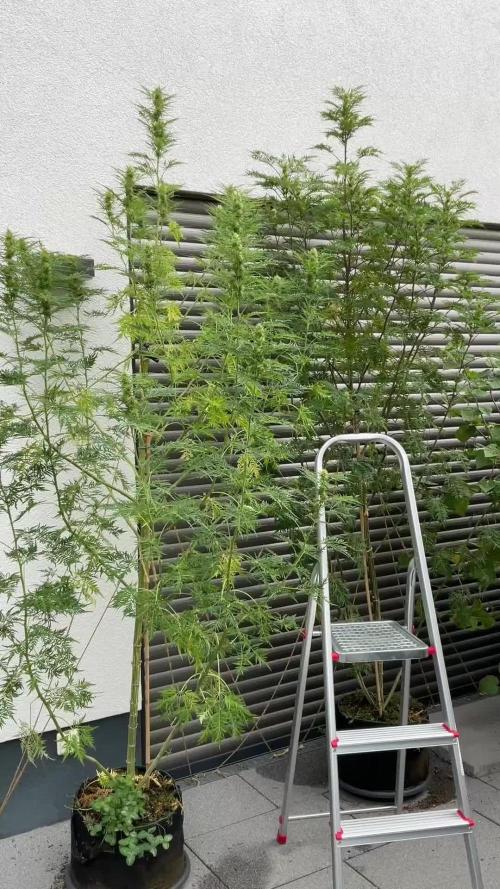
Hey y'all - this is the exciting one for me, this year - I'm submitting the buds from these plants to the 4Plants Cannabis Cup in November, wish me luck! I'm in the amateur medical category, growing one of my favourite strains, it's exciting! Hope you enjoy the video, I'm just a doofy guy growing some dope, hoping it's, um, dope! Thanks for looking, let me know if you have any questions or comments 🙏
Processing
Likes
142
Share
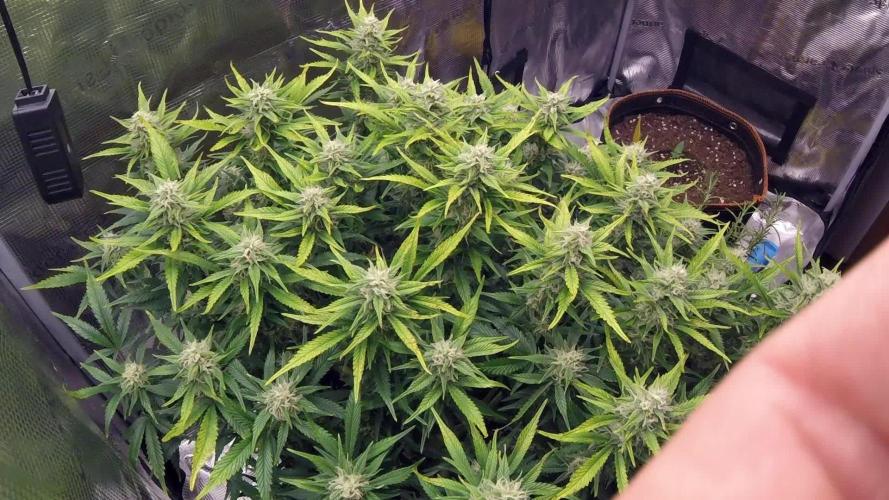
Hi everyone :-) This week the buds developed super ;-) All are beautiful 😍. Super genetics 👍. Blue Cheese pheno 1 is slowly coming to an end :-) This week I will start to use up the remaining nutrients and harvest in 10-14 days ;-) Everyone else needs something else :-) have fun with the videos, stay healthy 🙏🏻 and let it grow 🌱
Likes
81
Share
Transplanted to 40l container on week 4 day 1. Container has approx 30l in it. Also added a photo of the setup for size reference. Let me explain my thinking behind the repotting strategy. Firstly I should say that I am quite an old school kind of grower, although I've never grown cannabis before I have grown hundreds of other plants. Due to my experience with other plants, I understand the value of well planned and executed transplants, they can have an absolutely transformative effect upon root systems when done properly, as far as I know it's the main reason why they are done at all. It is fair to say I have never grown any auto-flowering plant indoors before, and I have read all about how you should not transplant autos, and all the good reasons why not. Ultimately though, as I am not called UnorthadoxDude for nothing, I believe that I can make it work with an auto, and get the benefit of improved root growth pattern, without delaying or interrupting the growth. I want to have my cake and eat it, as it were. So the strategy is to avoid transplant shock, which admittedly I have already failed in the first unplanned transplant, but in my hopeful naivety I still believe I can make the second one work! I'm using coco, and I have had the larger pot prepared and have been watering and feeding them as well as the plant. If I am careful not to disturb the plant at all, and move the entire contents of the pot gently into the larger pot (which is exactly the same medium in broadly the same state), then I may be able to avoid shocking the plant and just let it crack on. We will find out in a few days! If it stops growing or slows at all then I failed, otherwise it worked! A note about my use of organic nutes with coco. I have read a lot about coco and nutes and microbes and PH and TDS and what have you, and I know that the overwhelming majority of people believe that you can't or at least shouldn't use organic nutes with coco. The thing is, I like organic gardening, I prefer to cultivate a beneficial microbiota and keep it healthy. I recycle, and reuse all my compost except where a plant is diseased and this has worked well for me for a long time. I've never grown with coco before though, I always used soil. I wanted to gain the benefits of coco (better drainage, more air to roots, lighter, less inviting to pests, etc) - but I wanted to use a method of nutrition that I was already familiar with. I think I've mentioned that I am not called UnorthadoxDude for nothing, so I am using BioBizz and coco. By adding bacterial, mycorrhizal, and trichoderma inoculants and having the unplanted coco in the tent being fed and watered I hope to have cultivated a nice microbiota which will feed my plant. That's the theory. However just in case, I have a trick up my sleeve. Now, I do not know if you are aware of this, but there is a fiery debate raging on the internet about using BioBizz organic nutes with coco for cannabis. Some people try it, most people shout it down, and I have not found much in the way of solid evidence of it being a good idea. Except one! I found a commercial grower that has used biobizz nutes, and he said that as long as you are using "Acti-Vera" you can use anything from the BioBizz organic range. Apparently the enzymes in the mix break down nutes chemically in a similar way to what the theoretically missing microbes do. So I have ordered a bottle of that, and if my microbial cultivation attempts don't work out, I at least know I have a fallback that should work. Those are my thoughts on it, let's see how it pans out. Oh I should also probably point out that I am growing some companion plants, specifically alfalfa (nitrogen fixing), basil (improved flavour), and German Chamomile (increased essential oil production). Update week 4 day 2 dropped PH to 5.8 after advice from a grow question. Look! It's carried on growing... maybe there was no transplant shock? Update week 4 day 3: Growth continues, interveinal chlorosis lessening. Plant is pushing out node five at the moment. Update week 4 day 4: Growth continues, interveinal chlorosis further lessening. Apologies for the poor quality photos for the last few days, I was lazy and didn't want to move everything out to photograph. Today I have done that and the pic is better. I am declaring the second transplant a complete success. I do not believe that plant was in any way shocked. Update week 4 say 5: I think I've finally managed to overwater. Going to skip watering today. Update week 4 day 6: Photo taken just before lights on hence wilting. Growth continues to accelerate. I believe the alfalfa has been raising the PH so I've removed it. Today I will flush through with PH lowered water and then fertigate. The colour is still too pale but the growth and overall look and feel of the plant screams to me that it's happy and about to explode. Day 27.5 flushed with 30l of PH lowered water then fertigated with 5l. Day 28: Height 12cm Width: 28cm Nodes: 6 Weekly growth data: From 5cm Height to 12cm +140% From 12cm Width to 28cm +133% From 4 primary nodes to 6 +50% Summary: Wow, wow. Wow. What else can I say. What a crazy week, amazing and unexpected given the problems. I am really excited to see what happens over the next seven days!! It looks like it has quite severe chlorosis, but otherwise seems robust and is seriously stretching. Almost unbelievable growth. Pre-flowers appeared a few days ago, so I guess this was the final week of veg. Let's see how the first week of flowering stretch goes! Update 7/2/23: My instincts about this plant on week 4 day 6 were absolutely correct, she was happy and, she was about to explode. Since my early attempts at transplanting, I practiced multiple times with Citronella (a photoperiod plant) and then I did it again with an auto (Polly) - this one went flawlessly and further demonstrates that you can transplant an auto without shocking it. Time will tell, because I can compare Polly to both Misty and Nesia both of whom were sown directly in their final pots.
Likes
41
Share
12/24/18 Decided to make bubble hash with the trim and small buds from all 4 plants. The bubble hash is now drying. This plant has been a dream to grow. No problems from her at all. I even found a couple keeper phenos as well. The black magic soil and fertilizer, along with the aerated nutrient teas that these ladies were feed worked to perfection. All organic living soil is the way to go! Im not finished yet. I will update this diary soon with dry weight and a smoke report once the ladies are done drying.00000
Likes
35
Share
Impecable cosecha de Sweet Cheese, se llenó todo el espacio de secado de buenas cabezas, próximamente actualizaré números finales de cantidades pero hasta el momento se lo ve muy prometedor.
Likes
68
Share
Removed autoflower and put her in her own pot outside the tent. Foliars applied in strong blue 430nm with 4000Hz tone. 20-minute dose prior to application. In essence, you're seeing a combination of the infrared light reflected by the plant, which the camera perceives as red, and any residual visible blue light the plant reflects, which results in a purple hue. I was doing more stretching of the stems, adjusting weights, just a little too much, and it snapped almost clean. I got a little lucky in that it was still connected, wrapped her almost instantly while holding her in place with yoyo's. The core framework is now in place. If your soil has a high pH, it's not ideal; you want a pH of 6.4, 6.5, or 6.6, which is ideal. If you are over a pH of 7, you have no hydrogen on the clay colloid. If you want your pH down, add Carbon. If you keep the pH below 7, you will unlock hydrogen, a whole host of new microbes become active and begin working, the plant will now be able to make more sugar because she has microbes giving off carbon dioxide, and the carbon you added hangs onto water. Everything has electricity in it. When you get the microbes eating carbon, breathing oxygen, giving off CO2, those aerobic soil microbes will carry about 0.5V of electricity that makes up the EC. The microorganisms will take a metal-based mineral and a non-metal-based mineral with about 1000 different combinations, and they will create an organic salt! That doesn't kill them, that the plant loves, that the plant enjoys. This creates an environment that is conducive to growing its own food. Metal-based: Could include elements like iron, manganese, copper, or zinc, which are essential nutrients for plants but can exist in forms not readily accessible. Non-metal-based: Examples like calcium carbonate, phosphate, or sulfur are also important for plant growth and potentially serve as building blocks for the organic salt. Chelation in a plant medium is a chemical process where a chelating agent, a negatively charged organic compound, binds to positively charged metal ions, like iron, zinc, and manganese. This forms a stable, soluble complex that protects the micronutrient from becoming unavailable to the plant in the soil or solution. The chelate complex is then more easily absorbed by the plant's roots, preventing nutrient deficiency, improving nutrient uptake, and enhancing plant growth. Chelation is similar to how microorganisms create organic salts, as both involve using organic molecules to bind with metal ions, but chelation specifically forms ring-like structures, or chelates, while the "organic salts" of microorganisms primarily refer to metal-complexed low molecular weight organic acids like gluconic acid. Microorganisms use this process to solubilize soil phosphates by chelating cations such as iron (Fe) and calcium (Ca), increasing their availability. Added sugars stimulate soil microbial activity, but directly applying sugar, especially in viscous form, can be tricky to dilute. Adding to the soil is generally not a beneficial practice for the plant itself and is not a substitute for fertilizer. While beneficial microbes can be encouraged by the sugar, harmful ones may also be stimulated, and the added sugar is a poor source of essential plant nutrients. Sugar in soil acts as a food source for microbes, but its effects on plants vary significantly with the sugar's form and concentration: simple sugars like glucose can quickly boost microbial activity and nutrient release. But scavenge A LOT of oxygen in the process, precious oxygen. Overly high concentrations of any sugar can attract pests, cause root rot by disrupting osmotic balance, and lead to detrimental fungal growth. If you are one who likes warm tropical high rh, dead already. Beneficial, absolutely, but only to those who don't run out of oxygen. Blackstrap is mostly glucose, iirc regular molasses is mostly sucrose. Sugars, especially sucrose, act as signaling molecules that interact with plant hormones and regulate gene expression, which are critical for triggering the floral transition. When sucrose is added to the growth medium significantly influences its effect on floral transition. Probably wouldn't bother with blackstrap given its higher glucose content. Microbes in the soil consume the sugar and, in the process, draw nitrogen from the soil, which is the same nutrient the plant needs. Glucose is not an oxygen scavenger itself, but it acts as a substrate for the glucose oxidase (GOx) enzyme, effectively removing oxygen from a system. Regular molasses (powdered if you can), as soon as she flips to flower or a week before, the wrong form of sugar can delay flower, or worse. Wrong quantity, not great either. The timing of sucrose application is crucial. It was more complicated than I gave it credit for, that's for sure. When a medium's carbon-to-nitrogen (C:N) ratio reaches 24:1, it signifies an optimal balance for soil microbes to thrive, leading to efficient decomposition and nutrient cycling. At this ratio, soil microorganisms have enough nitrogen for their metabolic needs, allowing them to break down organic matter and release vital nutrients like phosphorus and zinc for plants. Exceeding this ratio results in slower decomposition and nitrogen immobilization, while a ratio below 24:1 leads to faster breakdown and excess nitrogen availability. Carbon and nitrogen are two elements in soils and are required by most biology for energy. Carbon and nitrogen occur in the soil as both organic and inorganic forms. The inorganic carbon in the soil has minimal effect on soil biochemical activity, whereas the organic forms of carbon are essential for biological activity. Inorganic carbon in the soil is primarily present as carbonates, whereas organic carbon is present in many forms, including live and dead plant materials and microorganisms; some are more labile and therefore can be easily decomposed, such as sugars, amino acids, and root exudates, while others are more recalcitrant, such as lignin, humin, and humic acids. Soil nitrogen is mostly present in organic forms (usually more than 95 % of the total soil nitrogen), but also in inorganic forms, such as nitrate and ammonium. Soil biology prefers a certain ratio of carbon to nitrogen (C:N). Amino acids make up proteins and are one of the nitrogen-containing compounds in the soil that are essential for biological energy. The C:N ratio of soil microbes is about 10:1, whereas the preferred C:N ratio of their food is 24:1 (USDA Natural Resource Conservation Service 2011). Soil bacteria (3-10:1 C:N ratio) generally have a lower C:N ratio than soil fungi (4-18:1 C:N ratio) (Hoorman & Islam 2010; Zhang and Elser 2017). It is also important to mention that the ratio of carbon to other nutrients, such as sulfur (S) and phosphorous (P) also are relevant to determine net mineralization/immobilization. For example, plant material with C:S ratio smaller than 200:1 will promote mineralization of sulfate, while C:S ratio higher than 400:1 will promote immobilization (Scherer 2001). In soil science and microbiology, the C:S ratio helps determine whether sulfur will be released (mineralized) or tied up (immobilized) by microorganisms. A carbon-to-sulfur (C:S) ratio smaller than 200:1 promotes the mineralization of sulfate, when the C:S ratio is low, it indicates that the organic matter decomposing in the soil is rich in sulfur relative to carbon. Microorganisms require both carbon and sulfur for their metabolic processes. With an excess of sulfur, microbes take what they need and release the surplus sulfur into the soil as plant-available sulfate A carbon-to-sulfur (C:S) ratio higher than 400:1 will promote the immobilization of sulfur from the soil. This occurs because when high-carbon, low-sulfur materials (like sawdust) are added to soil, microbes consume the carbon and pull sulfur from the soil to meet their nutritional needs, temporarily making it unavailable to plants. 200:1 C:S 400:1: In this range, both mineralization and immobilization can occur simultaneously, making the net availability of sulfur less predictable. This dynamic is similar to how the carbon-to-nitrogen (C:N) ratio regulates the availability of nitrogen in soil. Just as microbes need a certain amount of nitrogen to process carbon, they also require a balanced amount of sulfur. Both mineralization and immobilization are driven by the metabolic needs of the soil's microbial population. Sulfur is crucial for protein synthesis. A balanced ratio is particularly important in relation to nitrogen (N), as plants need adequate sulfur to efficiently use nitrogen. A severely imbalanced C:S ratio can hinder the efficient use of nitrogen, as seen in trials where adding nitrogen without balancing sulfur levels actually lowered crop yields. Maintaining a balanced carbon-to-sulfur (C:S) ratio is highly beneficial for plant growth, but this happens indirectly by regulating soil microbial activity. Unlike the C:N ratio, which is widely discussed for its direct effect on nutrient availability, the C:S ratio determines whether sulfur in the soil's organic matter is released (mineralized) or temporarily locked up (immobilized). Applied 3-day drought stress. Glucose will hinder oxygenation more than sucrose in a solution because glucose is consumed faster and has a higher oxygen demand, leading to a more rapid decrease in oxygen levels. When cells respire, they use oxygen to break down glucose, and this process requires more oxygen for glucose than for sucrose because sucrose must first be broken down into glucose and fructose before it can be metabolized. In a growth medium, glucose is a more immediate and universal signaling molecule for unicellular and multicellular organisms because it is directly used for energy and triggers a rapid gene expression response. In contrast, sucrose primarily acts as a signaling molecule in plants to regulate specific developmental processes by being transported or broken down, which can be a more complex and slower signaling process. Critical stuff. During wakefulness (DC electric current) life can not entangle electrons and protons. During the daytime, the light is sensed as multiple color frequencies in sunlight. Coherence requires monochromatic light. Therefore, at night, IR light dominates cell biology. This is another reason why the DC electric current disappears during the night. The coherence of water is maintained by using its density changes imparted by infrared light released from mitochondria in the absence of light. This density change can be examined by NMR analysis, and water is found to be in its icosahedral molecular form. This is the state that water should be in at night. This is when a light frequency is lowest and when the wave part of the photoelectric effect is in maximum use. 3600
Likes
Comments
Share
@Budhunter
Follow
Week 5 Veg - day 41 Lemon tree is healthy and growing tall 🙏🏼 1 or 2 more weeks and I will be flipping into flower. Let’s go
Likes
37
Share
@Hawkbo
Follow
Everything's in flush mode, didnt take any pics this week we had alot of work to do with the flush and harvest of the big citradellic and everything is so close to the chop I figured I would just wait until the day of to get the final pics. The video is from Tuesday which is when the harvest happened. The fades are coming in hot and the aromas are heavy filling the tent. Over the next week they will be coming down and will do another update.
Likes
6
Share
@yggy-420
Follow
Only water filled up again. 💦 Due to the rather humid living soul substrates, a few fungus gnats have appeared, which I will fight next week with SF nematodes.
Likes
2
Share
@Vet4weed
Follow
This week I switched over to 12/12 light cycle to begin flower stage. Cycled through a sequence of blue, red, and purple light to develop taller (red) and fuller (blue) foliage, using both (purple) at times as long as I could keep the temp under 79F. Man! once I switched over, they began taking off! Some of the more dominate branches began taking over and blocking the smaller ones in record time. I had to add a couple filler lamps (1 LED & 1 CFL, both white) to even things out a bit. NOTE: reverting back to actual Plant-to-Lamp distance (vs Screen/Net-to-Lamp).
Likes
6
Share
Wasn't satisfied with the net that came packed with the ACI 4x4 so I modified it with some string and zip ties. I find this works great because I have 2"x2" holes now that are partial elastic making weaving the tops much more forgiving on both me and her. I'm very happy with the direction this grow is heading. Along with the massive undertaking of redirecting all this growth. Roughly 8 hours off and on to redirect, defoliate and remove branches. She had a nutrient change and I moved on to week 5 of the FF Hydro schedule. I added about 1/2 tsp of Fox Farm Sledgehammer to the nutrients in my reservoir and let it sit for about 30 minutes. Then pumped out the solution and flushed with roughly 20 gallons of fresh cold 6.0 pH tap water. Then added the new solution with Tiger Bloom.
Likes
11
Share
Day 66 : This lady continues fattening, faster now. Also crystal production increased. The breeder suggests 70-75 days. For now all crystals are almost milky with some cloudy. So she need 1 week for sure, maybe a bit more. That gum smell is so attractive, you want to eat it. Reduced bio grow and removed Calcium. Edit 70 : I saw the first ambers, very little. So i watered for last time with juices Next watering will be flush to reduce the juices in the soil. So if initially has 1200-1300ppm i want to reduce it to 350-500ppm. After flush continue pure water until chop chop. This is my approach for all ladies always.
Likes
3
Share
@Kushizlez
Follow
Day 49-56 (June 18th - 25th) (Day 51) Slurricanes and tuna are doing excellent despite their hail damaged leaves. I’m seeing good growth and decent dry downs. One of them looks like it’s been ravaged by pests but I still can’t find any evidence or signs of a pest. I’m suspecting caterpillars so I’m going to grab some BTK killer and also some all purpose insecticide sometime this week if I have time. The clones are all really lagging so they won’t be flipped until July 15th at least. I’m still not seeing normal growth on any of them yet. It’s still quite gnarled and twisted. (Day 52) The slurricane and tuna roots are starting to poke through the bottom of my pots. This is usually from underwatering, a thick soil or a hot root zone. I’m going to give everything except for the autos a good watering with some runoff. I am going to start incorporating 5mm sand into all of my soil mixes to help make the soil more loamy and give it some better drainage. I will also top dress every container and bed plant I have. (Day 53) I was at a local department store today and I was shocked to see pallets of Destiny dark matter soil selling for 60% off! I bought 10 bags for a hundred bucks. At any hydro store that would have costed me 250 at least. I might go grab more because it looks like no one is buying it for 60% off even. (Day 54) I’m going to be harvesting both of my indoor crops today and tomorrow or the next day I am going to be reusing the soil-coco blend for the slurricanes. I’m first going to till it, add a gallon of sea compost, a gallon of Destiny soil and a few cups of 5mm sand per container. I will use the excess for 5 gal pots. I will be amending with: 5 tablespoons of nature’s pride bloom 4 tablespoons of kelp meal 2 tablespoons of Gaia green AP 2 tablespoons of glacial rock dust 2 tablespoons of oyster shell flour 2 tablespoons of alfalfa meal 1 tablespoon of rock dust blend 1/4 teaspoon of langbeinite (Day 56) The autos are really making a comeback now. I was under the impression that I was working against the clock and they would start flowering after 3-5 weeks. I guess if they’re stunted from the cold they will delay flowering. I don’t see any pistils or signs of flowering yet so I don’t think they’ve officially started flowering yet I didn’t get a chance to do my transplant this week or pest control. I will get to it ASAP because my photos are drinking almost a liter a day
Likes
7
Share
🍬 Candy Rain Auto by Zamnesia | Week 10 ✨ The Glamorous Survivor Keeps Shining Welcome back to another chapter of the 8×8 Adventure! 🌱💚 Some plants fight for attention. Some plants demand it. Some plants seem determined to become the biggest, loudest personality in the entire room. And then there is Candy Rain. Our solo survivor. The girl who started this adventure simply because she was the one who remained... and somehow, week after week, she keeps becoming more beautiful. At this point, I don't even know if "survivor" is still the right word. Because she isn't just surviving anymore. She's thriving. And honestly? This girl is becoming glamorous. 🍬✨ 🍬 The Solo Survivor Has Her Own Role I've said it before, and I'm probably going to say it again... I really like the role this girl has taken in the 8×8 Adventure. She's not trying to compete with anybody. She's not trying to become the tallest. She's not demanding constant attention. She's not creating problems for me to solve. She's simply doing her own thing. And she's doing it beautifully. That's probably what I appreciate most about her. She has developed her own personality within this experiment, and at this stage, my job is becoming wonderfully simple: Provide. Observe. Document. That's it. She knows what she's doing. 😂💚 🌿 Deep Green Beauty The first thing that catches my attention this week is the colour. Those deep greens are absolutely beautiful. The foliage has that rich, healthy appearance that makes the plant look incredibly alive. And when you put that deep green foliage together with the developing flowers, the contrast becomes gorgeous. She's got that elegant appearance I really enjoy photographing. Not chaotic. Not overly complicated. Just... beautiful. There's something about a plant that looks comfortable in its environment. And that's exactly how Candy Rain looks to me right now. Comfortable. Established. Confident. And completely herself. ✨ She's Doing Her Own Thing One of the biggest lessons from this entire 8×8 Adventure continues to be that plants don't follow our expectations. We can give them the same room. The same lighting. The same environmental conditions. The same general feeding strategy. The same irrigation philosophy. And then... they decide what they're going to become. Candy Rain decided to become Candy Rain. And I couldn't be happier about it. She's not trying to imitate another phenotype. She's not trying to match anybody else's timing. She's following her own rhythm. And at Week 10, that rhythm is looking very good. 🌸 The Flowers Keep Moving Forward The flowering development continues to progress beautifully. The flower structures are becoming increasingly established, and the plant is clearly moving further into this later stage of flowering. The photographs show those developing flowers surrounded by that beautiful deep green foliage. And that's one of the things I really enjoy about this stage. We're no longer looking at a plant simply beginning to flower. We're watching the work from all those previous weeks become increasingly visible. The branches have their flowers. The flowers have their structure. The plant has its character. And now... we wait. We provide. And we watch. ❄️ The Details Keep Getting Better This is also the point in the run where photography becomes especially rewarding. From a distance, Candy Rain is simply a beautiful flowering plant. But get closer... and there is another world happening. The developing flower structures. The pistils. The calyxes. The resin. The textures. The little details that you simply don't appreciate from across the room. This is why I keep coming back with the camera. Every week gives me another reason to get closer. And Candy Rain is giving me plenty of reasons. 🍬📸 🌿 No Need to Force Anything One thing remains very clear with this girl: I'm not looking for reasons to interfere. She's not asking for major intervention. She's not showing me a structure that needs to be completely changed. She's not demanding that I redesign her. She's growing. She's flowering. She's maintaining beautiful foliage. She's developing. So why would I try to turn her into something else? This is one of those moments where the grower has to know when to step back. Sometimes cultivation is about action. Sometimes cultivation is about restraint. And right now? I'm choosing restraint. Let her do her thing. 💚 Provide. Observe. Enjoy. I think this is probably the simplest way I can describe where we are with Candy Rain. We provide. Water. Nutrition. Light. A stable environment. And support when necessary. We observe. The flowers. The foliage. The structure. The maturation. The changes from week to week. And then... we enjoy it. Because what's the point of doing all this if we don't stop occasionally and appreciate what the plants are giving us? Candy Rain is giving me a beautiful plant. A beautiful story. And honestly... a beautiful reason to smile every time I open the tent. 🍬💚✨ 🌱 One Survivor. One Story. For anyone joining the diary now, the Candy Rain story is a little different from the others. She is the solo survivor from her seed pack in this experiment. What began as an accident became an opportunity. And that opportunity became one of the plants I now genuinely look forward to documenting every week. That's one of the funny things about growing. You don't always know which plant is going to become special to you. Sometimes it's the biggest. Sometimes it's the strangest. Sometimes it's the one that gives you the hardest time. And sometimes... it's the one that simply keeps getting better. Candy Rain has become that girl. 💡 The 8×8 Adventure Continues And of course, Candy Rain remains part of the bigger experiment. For anyone discovering the project for the first time: We're growing twelve different plants together under the same general ecosystem. Same room. Same 12/12 lighting schedule. Same environmental strategy. Same general nutritional approach. Same grower. Different genetics. Different phenotypes. Different personalities. And that's what makes the comparison so interesting. The environment gives them the opportunity. Genetics decide how they express it. Candy Rain's expression has been one of balance, elegance and consistency. And at Week 10... I really like what I'm seeing. 💧 Still Just Giving Her What She Needs The feeding strategy remains consistent with the flowering program. 🌸 Terra Bloom — 2.2 ml/L 🌱 Power Buds — 1 ml/L ✨ Green Sensation — 1 ml/L 🍯 Sugar Royal — 1 ml/L ⚗️ pH adjustment products — as required Current recorded solution strength is approximately 2.0 mS/cm, with pH around 6.0. Watering remains approximately 1.25 L per plant / 24h. Nothing dramatic. No special recipe. No complicated intervention. We're simply providing what she needs and letting her continue doing what she's been doing so well. And visually? She's answering beautifully. 🌡️ Current Conditions Current recorded conditions for Week 10: 🌸 Flowering: Week 10 📏 Height: 90 cm 💡 Light schedule: 12/12 🌡️ Day temperature: 29.9°C 🌙 Night temperature: 25°C 💧 Relative humidity: 60% ⚗️ pH: ~6.0 ⚡ EC: ~2.0 mS/cm 🌡️ Solution temperature: 25°C 🌱 Substrate temperature: 26°C 🌬️ CO₂: 639 ppm ? Pot size: 15 L 💦 Watering: ~1.25 L per plant / 24h The environment continues to remain consistent. And that consistency is important because it allows us to keep watching the plants themselves rather than constantly wondering whether environmental changes are responsible for every difference. Same stage. Same room. Different expressions. 📸 This Week's Gallery I think this week's photographs capture Candy Rain exactly as she is right now. Beautiful. Elegant. Deep green. Flowering. And completely comfortable being herself. There isn't one dramatic feature that needs to carry the entire story. It's the combination. The plant structure. The foliage. The flowers. The colours. The developing resin. The overall balance. She doesn't need to scream for attention. She just looks good. And sometimes... that's enough. Actually, it's more than enough. 🍬✨ 👑 The Glamorous Survivor I think I've found her new title. Not just the survivor. Not just the elegant survivor. She's becoming the Glamorous Survivor. 😂🍬✨ Because look at her. She made it through the beginning. She established herself. She developed her structure. She entered flowering. She kept her beautiful foliage. She kept moving. And now she's standing there looking increasingly refined. She's not trying to be the queen of the room. She's not fighting anybody for the crown. She's just... glamorous. And I absolutely love it. 🔮 Looking Ahead At this point, there isn't much I want to change. And that's actually a wonderful place to be. I'll continue watching the flowers develop. I'll continue watching the resin. I'll continue monitoring the colour and overall plant health. I'll keep documenting the changes with the camera. And most importantly... I'll let her tell me what comes next. Because Candy Rain has already shown me that she knows how to surprise me. She started as the survivor. Then she became the elegant one. Now she's becoming the glamorous one. Who knows what title she'll earn next? 😂🍬 ✨ Let Her Shine I know I'm repeating myself. But honestly... sometimes repetition is deserved. She's amazing. She's beautiful. She's doing her own thing. She's maintaining those gorgeous deep greens. She's developing her flowers. She's moving toward maturity. And she isn't asking for much. So what am I supposed to do? I'm going to give her what she needs. I'm going to keep watching. I'm going to keep photographing. And I'm going to enjoy the hell out of watching this girl finish her story. Candy Rain doesn't need me to make her shine. She's already doing that. I'm just making sure nothing gets in her way. 🍬💚✨ 💚 Final Thoughts Week 10. And our solo survivor continues to impress me. She's not the loudest plant in the room. She's not the tallest. She's not the most demanding. She's not trying to become something she isn't. She's simply... Candy Rain. Deep green. Beautifully structured. Flowering beautifully. Developing her frost. Moving toward maturity. And doing it all in her own rhythm. That is probably what I appreciate most about her. She doesn't need a dramatic story every week. Her story is simply: she keeps getting better. And sometimes, that's the best story of all. The girl who was simply lucky enough to remain... became a plant I genuinely love watching. The solo survivor. The elegant survivor. And now... the glamorous survivor. 🍬✨👑 Let's make her shine. 🙏 Thank You Another week. Another chapter. Another reminder of why this 8×8 Adventure has become such a fascinating journey. A huge thank you to GrowDiaries for giving growers a place to document these experiments, compare plants and share what we learn. Thank you to Zamnesia for the genetics behind our Candy Rain survivor. Thank you to Plagron for supporting the nutritional side of the adventure. Thank you to Future of Grow LED for powering the main lighting environment. Thank you to Lumiflora for bringing additional lighting into the canopy and giving us another interesting variable to observe. And thank you to TrolMaster for helping maintain the stable environment behind the scenes. And, of course, thank you to everyone following along. Every comment. Every question. Every bit of feedback. Every person stopping by to watch these plants develop. It all makes this adventure even more enjoyable. And Candy Rain? She'll keep doing what Candy Rain does. She'll keep growing. She'll keep flowering. She'll keep shining. And I'll keep providing what she needs while she writes the rest of her story. The solo survivor is still here. Still beautiful. Still glamorous. Still doing her own thing. And honestly... I wouldn't have it any other way. 🍬💚✨ Growers Love, my friends! 🌱💚
Likes
8
Share
Eccoci di nuovo qui!!! Super eccitato per questa nuova collab con Anesia Seeds, team davvero al top, che mi ha dato l’opportunità di testare questa nuova genetica e di condividere i progressi con tutti voi!!! Come sempre partiamo nei bicchieri per poi travasare.. Questa volta verrà svolto tutto sotto la Lumatek Zeus 465 ProC, mi aspetto molto da questo ciclo!! Settimana pazzesca!!!! Piante davvero incredibili!!! Grazie a tutti per il supporto ❤️🍀🔥
Likes
59
Share
@BnV405
Follow
This week was great aside from my first sour d fell off the table and I lost the seedling. This is my second go, no paper towel germ this time, directly in soil
Likes
8
Share
End of week 4 and what a week. This poor girl was getting roasted by the heater because silly me had put the thermometer too far away 🤦‍♂️ lesson learned and problem solved. I also may have been slightly over watering her. I'll surely be more vigilant on the coming weeks. On day 22 I started LST with this girl, just bending her over to open up the new growth to the lights. Day 27 I brewed up a compost tea and they reacted very well. I used 1 cup of Herbis brew starter, 1 cup of worm castings and 1 cup of organic compost. I used the left overs as a top dress And today on day 28 I realized she was getting cooked next to the heater so moved them all away and re-positioned the thermometer to properly warm them. Today I also lightly defoliated her and continued LST Learned a lot this week and will not be making these same mistakes again. Hope you all had a good week and thanks for checking in 🙏
Likes
10
Share
@Fubar_420
Follow
The girls are doing well lots of bud sites and smells heavenly. The mars sp250 is alot stronger light then I gave it credit for and had to raise it a little higher then my burple lights as it was trying to burn the top of one. Defoliated some of the bigger leaves that were blocking some bud sites but other than that I pretty much let them do their thing
Likes
Comments
Share
@Mars8_8
Follow
Been MIA for awhile but here’s the update on these girls. Two chem brulee, one northern lights, and one 5150 made it into the flower tent. I gave the spice cut and Runtz to a buddy. The chem brulee is on the left and northern lights is the front right of the picture. Duuude this chem is a crazy grower. I took some cuts and got 3 clones ready to go for the next run. The stem on one of them is a quarter thick. 3 gallon pots, used a lot more silica this run and it’s showing. Think I ran out of nitrogen last harvest so adding bay guano to the tea this flower. Wish me luck 🤙🏻