


Likes
Comments
Share


@AustinRon
Follow
LJ 2Q24 Flower Week 6
Start of Week:
- [Sun Aug 4, 2024, LJ 2Q24 36:F:6:1]
- Plant Heights: [ 25, in]
End of Week:
- [Sat Aug 10, 2024 LJ 2Q24 42:F:6:7]
- Plant Heights: [ 26, in]
EC: 2.4. # Until Week 10
__
Sun Aug 4, 2024
LJ 2Q24 36:F:6:1
Add 7.5 ml of Dr. Zymes to 1 PT of Last Two Plants Feed (Ran out last night)
THIS CHART FOR WEEKS 7 -
DEHU Water, Reducing Lush Green (N), Eliminating Root Anchor
+ PSP, 1 Drop Beauvaria Bassiana Soluble
__
Mon Aug 5, 2024
LJ 2Q24 37:F:6:2
RLA Week 6 +BioAg TM-7
Nik wonders if it might actually be a molybdenum deficiency w/ Lemon Jeffery.
__
Tue Aug 6, 2024
LJ 2Q24 38:F:6:3


Environmental:
- LightIntensityAvg: [ 836, µMol/m2/s]
- TempAvg: [ 78.4, °F]
- RHAvg: [ 65.7 , %]
- VPDAvg: [ 0.90 , kPa]
- EC: [ 2.4, mS]
Note:
- Nik @TheRootedLeaf mentioned Molybendum as an ESSENTIAL µNutrient participating in Nitrogen Reduction.
- The BioAg TM-7 contains Mb, Apply @ 1 tsp/gal

__
Wed Aug 7, 2024
LJ 2Q24 39:F:6:4
__
Thu Aug 8, 2024
LJ 2Q24 40:F:6:5
Note:
- We really need at least 2 Fertigations/day, @2000 & @0130
- We’ll water to saturation each event (10% Pot Volume, 440 ml/plant/event)
- We need 440 * 2 * 7: 6.16 Liters,Need 1.62 Liters, Will mix 1.75
- Need to increase daily total from 1.5 to 2 Gallons
- 1.1 L/Plant/Day
- 440 ml/plant/event * 2
Per Event
- Estimate Minimal Runoff
- Pot Size 4.4 Liters
- Saturation: 440 ml
- 0% Runoff
1.75 Gal, 5700 ml, 814 ml
- [x] Light Defoliation (as needed/lowers)
Feed Chart for 1.75 Gallons
Apply 440 ml/plant @ 2000 & @ 0130
- [x] Mixed! 2024-08-08T16:03:01-0500


__
Fri Aug 9, 2024
LJ 2Q24 41:F:6:6
- [ ] Collect Dehu Water
- [ ] Water 440/plant @ 2000
- [ ] Water 440/plant @ 0130
880 ml/plant/day * 7 : 6160 ml, 1.62 Gal
__
Sat Aug 10, 2024
LJ 2Q24 42:F:6:7

Likes
21
Share


@GRow_M8s
Follow
- We had a flying start until 7-10 days ago when we noticed some toxicity early signs,
* Dark green leaves,
* Slow bud progress
* Burning tips,
* Crispy leaves.
⚠️ PH testing at mediums(soil) run off and the confirmation was there.
Too low PH (<4) & the roots started to lock down = (slowing nut - water uptake) -> slowing transpiration -> showing ☝️ toxicity-deficiencies.
- We stopped feeding and started to flush with tap water at 7 PH (3 waterings -7l/plant), at first run off was really low (under 4 PH) and after the flush we were at 5 PH.
- From now on we will adjust our waterings at 6.5 PH and start microdosing atami PK and snacks.
- The plants responed quickly after the first flushings and we will be back on track fast.
- Room smells like sparkling lemonade 🍋 only when teasing the buds, the humidifier/ionist keep the smells low and fastening the transpiration.
* Update at half week 6.👇
- After flush we start feeding with the atami duo and some snacks, the PH steady at 6.5.
- Buds fattening faster the last days.

Likes
22
Share


@RDWCGrowing
Follow
4/27/2024 Flower Week 10 Day 1- Water Change Day!!!! Still about a week out.. but her grow sister is ready.. I setup the Dry tent, and I have moved everything in the Cannatrol so I have room for 2.2lbs wet in the cannatrol and everything else will be hanging.. I have my AC unit in the tent, I have my Dehumidifier's setup and I have my fans. I have one more fan that will be delivered tomorrow and I needed one more Carbon filter and inline fan and that will be here tomorrow as well. As soon as they get in I will go ahead and check one more time on the Trichomes of her grow sister and as long as she is where I want her to be.
My Dry tent temp will be 70 and my RH will be 55. Timber......
I added 36 gallons and the accompanying Nutes
I added the following Nutes:
CalMag= .50Mil/Gal= 18Mil
FloraMicro = 2.3Mil/Gal= 83Mil
FloraGro= 1.3Mil/Gal= 47Mil
FLoraBloom= 4.0Mil/Gal= 144Mil
ORCA = .5Mil/Gal= 18Mil
SIGNAL= 3.0Mil/Gal = 2.0Mil
Liquid KoolBloom= 2.5mil/Gal = 90Mil
EPSOM- 1 Big pinch
4/28/2024 Flower Week 10 Day 2- Did a Trichome check just to see where she is.. I think still about a week or 2 out.. will just keep looking every couple of days and see where we are. I love being able to grow.
4/29/2024 Flower Week 10 Day 3- Didn't do anything today but just get a few photos...
4/30/2024 Flower Week 10 Day 4- Didn't do anything today..
5/01/2024 Flower Week 10 Day 5- Didn't do anything today but get a few pics..
5/02/2024 Flower Week 10 Day 6- took Her grow sister down today.. Her grow sister was just ready and it giver her more space and light to herself..
5/03/2024 Flower Week 10 Day 7- Didn't do anything today but get a few pics.. She is already starting to darken up on the side that her grow sister was on that didn't get much light.
Since I took down her sister yesterday I have 4 days until I can take her down.. I will need to move the flower once dry from the cannatrol and put that in an auto cure tub and then put in a fresh 2.2lbs of wet from this harvest. Excited..

Likes
8
Share

@Pyrrus_
Follow
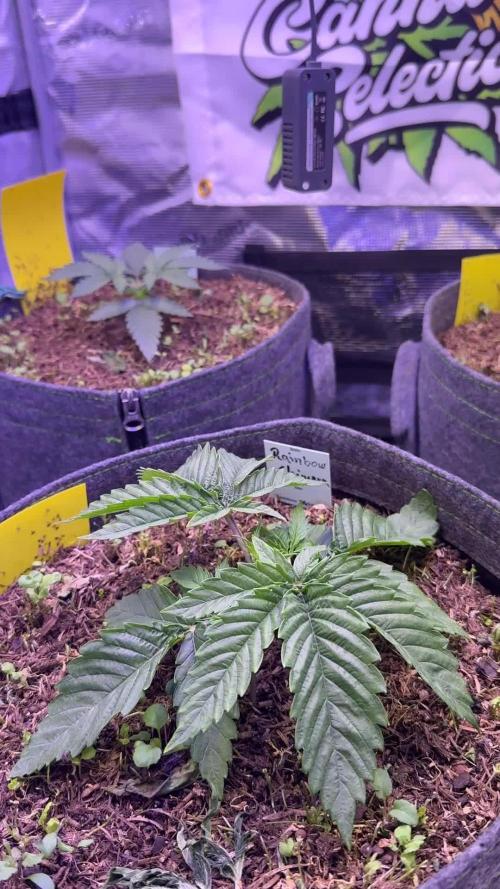
Tag 15 meine lieben die Ladys entwickeln sich super bleibt dran um nichts zu verpassen 💚


Likes
Comments
Share

@Growhome_90
Follow
10/07:
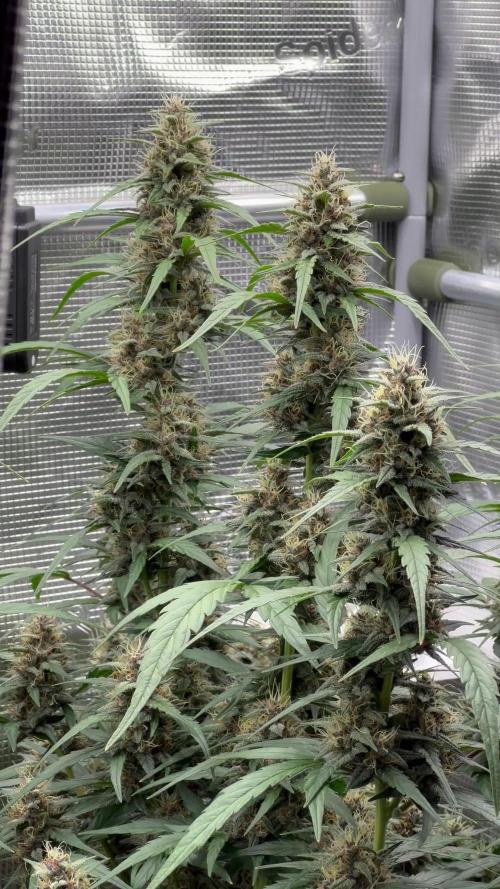
Aktuell ist es ein Selbstläufer. Gegossen wird ausschließlich mit Wasser.
Ein bis zwei mal in der Woche, lege ich ein paar Eiswürfel auf den Mulch, um das purplen etwas zu triggern.


Likes
134
Share


@DogDoctorOfficial
Follow
IPM (integrated pest management) thi Amsterdam Amnesia Haze that is looking outstanding by the way !!!
As my good friend 71DP0 once well said, it all starts by doing and applying it, in this case i am applying nematodes (steinernema faltiae) with you cant see at naked eye but will do they’re job on the soil and take on a microscopical way, i also am introducing some beneficial bugs to be more exact the stratiolaelaps scimitus they are machines killing trips, soil flies and a bunch of other plages we dont want around our girls and i also invited some Noseilus Californicus as a preventive for Any kind of non beneficial mites. With this i recipe i have faith my girls are safe and will roll all the way with one less worry in my head, non so ever one need to always keep the eyes open and be sharp …
With this said man does she looks amazing or does she looks amazing, i mean the trichome production is something out of this planet, specially for such early flower stage like she is, very curious to see were she is going from here lol apart from that all the rest is just perfect and great, i have nothing but good things to say about this run, she is strong af , beautiful and full of health and amazing greens <3
No changes on foods or anything for now, all is going as supposed and she is not asking for anything else yet, i will provably star adding some K next week or so , this will help her growing bigger , heavier fruits, but for now i dont want to mess much with her hahahaha
As always thank you all for stoping by, for your time, your love and for it all, i am truly blessed with you all.
All info and full product details can be find in can find @
https://dutch-passion.com/
https://aptus-holland.com/
#aptus #aptusplanttech #aptusgang #aptusfamily #aptustrueplantscience #inbalancewithnature #trueplantscience #dutchpassion #dogdoctorofficial #growerslove
With true love comes happiness , Always believe in your self and always do things expecting
nothing and with an open heart , be a giver and the universe will give back to you in ways you could not even imagine so
More info and full updates @
https://growdiaries.com/grower/dogdoctor
Growers love to you all

Likes
20
Share


@NOLOGIK
Follow
1/8 prepare Easy combo bloom:
hello then this day I prepared the easy combo bloom of the royal in 6 liters of water with controlled ph, this nutrients make the flowers become big, among other things this will be like a booster! on i bud
30/07/2019
I can say that this strain drinks! in fact, he drinks a lot and the nutrients don't seem to bother even at higher doses ...
has anyone noticed the same?
17/06
if you have seen the diary from the beginning you have understood that the counting of the weeks starts when I put the seed to sprout ....

Likes
17
Share


@Tokoyami
Follow
2 weeks of flowering and the girls are loving life! Nice cola development 🤩
Likes
24
Share


@Jays_Not_Here_Man
Follow
The Apple Betty Babies have been chugging along, doing their thing ❤️
The frost is starting! These girls are early producers, and seem to be responding well to the wind and light stress! The second trellis was definitely needed.
They have been keeping to the same schedule of needing to be watered every 72 hours. I will be switching from cal/Mag to Mag/Sulphur supplements later this week. ❤️ how readily available these Advanced Nutrients are.
The nutrient burn on some of the tips has not spread or gotten worse. The feed range seems to be the 700-750 range. Still keeping to the feed, water, feed schedule.
I’ve increased the light intensity to 90% and will probably be stopping there. The temps have been getting as high as 81 degrees, and low as 73 at night. I’ve decreased the humidity to fluctuate around 50% , giving a reasonable VPD for most of the time, thanks to the automation of the in-line exhaust fan.
Still have 4-5 weeks for these babies, I’m hoping they continue to plump up, they are showing some great promise. Happy Gardening 🤗❤️👊🇨🇦

Likes
7
Share


@Eddjack
Follow
Ci siamo !!! No vedo l ora di farmi il regalo di natale. Odora di dolce, fragola e zucchero. Il terreno e carico di nutrienti infatti credo che questa settimana andrà ad acqua . Piena di gemme appiccicose e profumate sarà pronta prima di natale speriamo bene.
Dajeforte growers!
Likes
1
Share


@Bwright_315
Follow
So far flowering has been going extremely well. The plant in the back that had deficiency 2 week ago is now bigger then the one in the front. And
The one in the front (the one i topped)is growing nice and even across with alot of bud site.

Likes
12
Share


@Siriuz
Follow
End of the first week, we feel victorious
Even tho we had our ups and down.
I had an accident while moving them, almost fell down with the plants, thank God they didn't suffer and I didn't fall but I almost had a heart attack!!! Phew!!!
Anyhow, we built a greenhouse for indoor growing since we noticed they were suffering from hot temperatures while being outdoor after 10.00am, weather gets real hot and they still too young to take that kind of sunlight.
Well around here temperatures can raise above 40 degrees and that's way too much.
Now we have them in a very comfortable zone, last picture can give you a heads up bout what's going on, we planned to upload more soon!
Beginning of the week #2 Starts now!
Guys feel free to comment
Any advise, any tips, it's more than welcome, we are new in the world of growing cannabis but we have a heart for mary Jane so help us have her comfortable at home so we can taste sweet Buds ^^!
Day 8
She's happy with her new greenhouse
INDOOR CFL while sun is way too hot
AC/on all day plus
Sunbathing early morning and late noon
Until sun is gone then they go to CFL
Until they have to go to sleep and rest
Until next day of course!
Day 9
Looking good tho, decided to feed her first meal, 0.4ml/1 gallon of water and added only 200ml per plant followed by 200/300ml.plain water with a little runoff so they can get all nutrients in good shape
Day 10
Went outside for some sunlight at the rooftop early morning
Day 11
Sunbathing her around 4.20 until sun is gone so she gets extra light
Day 12
Looking great I'm in love!
Day 13
Decided to change her pot for a bigger one and also readjusted her feeding schedule to once per week, since she only had her first meal at week #2 and only 171ppm, since she's doing so good and almost the start of the third week, today she got her second meal and its going to be like this until next Sunday.
Guys she's bout 3 weeks tomorrow after 6pm so I'm planing at the very end of this 3rd week increase her food to 5ml.
Today she got 1.5ml of Flora Nova grow / mix in 1 gallon of water thats 314ppm.
Followed by 200ml.of plain water and little runoff
Let's see what are the results she gives us this week, any comments, tips or advise is more than welcome!!
DAY 14
They are doing good - usual light schedule
Not much has changed
DAY 15 She's looking awesome guys
Thank you for taking the time to read my diary :)
Likes
18
Share


Likes
17
Share


@Gorrilla420
Follow
Did abit of chopping this week still abit to go, been looking at expanding this spot to try get few more plants down. Both plants looking healthy, the ny diesel is getting big now, as the cheese has got more closer node spacing. May do abit of lst this week coming as shouldn’t be long before pre flower.
That’s all this week, happy growing 🌱


Likes
21
Share

@Siriuz
Follow
Day 37
We started with nutes today
Then all day long outdoors
From 6AM to 6PM
Plus CFL afterwards
They rest for 3 hours and then CFL again
Btw accidentally snapped one part of one big leave but that okay
Since we don't do defoliation on her
We guessing it's okay she will recover soon
Day 38
Since she's such a queen we wanted to upload a video showing how she starts flowering for the record, thanks a lot
You can Always follow me at Instagram
@cannagrowersiriuz
Also don't forget to add your comment below, it is important to us!
We want to learn, any tips, suggestion, more than welcome my friends
Happy Growing
Day 39 Some mins before installing ScroG
Day 40 Wonderful, she's out of there already so huge, full of buds
Day 41 she's actually doing great full of buds but those 2 first leaves are a little bit sad looking weird plus those black dots idk and it's turning yellow in between I decided to remove it and well, I'm hoping she's doing well what else I could think of guys any help or concerns?
At the end of the day, she's overall healthy and strong
Day 42 Time to feed the babies, so we added 900PPM (300ml) floranova grow
Followed by 1590ppm (300ml) flora nova bloom to make sure she's got all nutrients balanced well, also added 400ml of plain water after that so they could get a nice run off.
I think they're happy and we gonna check on them in a couple days to see how they go, Ph is around 6.2
which is great
Temp outdoors from 7-@
1pm around 25C to 36C
Then back indoors
Temp is 28C and drop to 22 at night and dawn so they're good and comfortable
Keeping humidity lvls around 40/65% top
Nice AC and Fan for air circulation
Thank you all for your support


Likes
2
Share


Likes
8
Share


@Salokin
Follow
Week went again very uneventful. The plant does what she is supposed to be doing (gaining weight) :). Still lots of new pistils appearing overnight, I am checking the Trichomes daily, however, everything remains milky, with only very little % of amber trichomes. Once amber colours start increasing I will start flushing.

Likes
4
Share


@Tomdm123
Follow
This is my first ever experience with growing cannabis. So i lack some experience. But i think overal i’m doing fine for my first week.