



Likes
13
Share


@knicko
Follow
Auf der Waage im getrockneten Zustand waren es 130g somit habe ich mir den Fixkosten ein €/g von 2.55€/g das finde ich nicht schlecht


Likes
5
Share


@Dees_cultivares
Follow
Growing's been good this week she transitioned to the outside very nicely very easily with little to no stress! She been super easy to this point
Likes
29
Share


@Ultraviolet
Follow
Hope you are well. Thanks for taking the time.
Little main line defoliation to focus growth.
ATP (adenosine triphosphate) is the primary energy carrier in cells, including plant cells. It powers various cellular activities like nutrient uptake, protein synthesis, and cell division. Without ATP, the plant's metabolic machinery would grind to a halt, regardless of the presence of nutrients, oxygen, or carbon. Nutrients, like nitrogen, phosphorus, and potassium, are essential for building plant tissues and various molecules. They are incorporated into proteins, nucleic acids, and other vital compounds. While crucial, their uptake and utilization rely on ATP-driven processes. Oxygen is vital for cellular respiration, a process that generates ATP. While plants can produce ATP through photosynthesis, oxygen is essential for maximizing ATP production in mitochondria through oxidative phosphorylation. Carbon is the backbone of all organic molecules, including carbohydrates synthesized during photosynthesis. It's the fundamental building block of plant structures and fuels. However, its incorporation into organic molecules is also ATP-dependent.
45% Carbon.
43% Oxygen.
We don't grow we facilitate energy conversion.


Processing
Likes
19
Share


@Weed_nerd
Follow
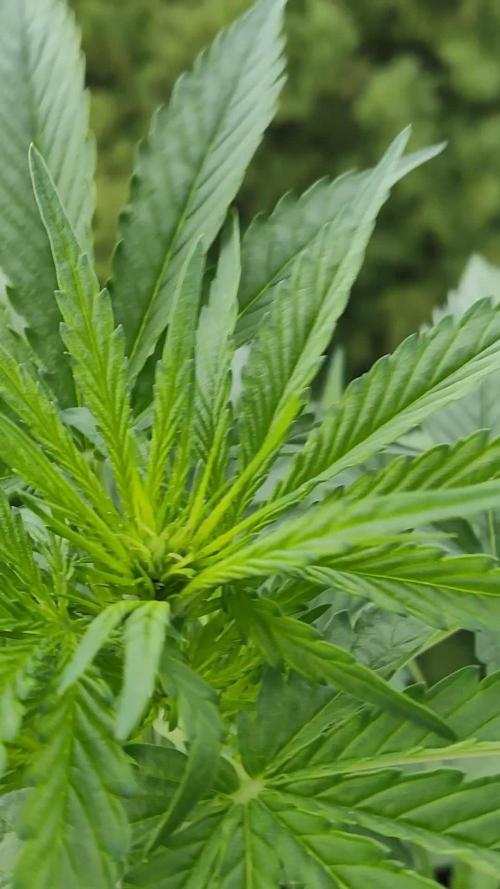
she grows very nicely takes water and nutrition well. I have started to train it and it responds well to that.excuse the lighting a get home the lamp for the photo and dry cabinet so there will be good pictures outside the tent too


Likes
9
Share


@Growbody
Follow
Willkommen zu meinem Growbericht der Gorilla Cookies Auto von 2Fast4Buds. Der Strain wurde 2022 zur besten Indica beim Autoflower World Cup gewählt. Laut FastBuds deren meistverkaufter Strain. Grund genug, den Strain zu testen.
Für den Grow verwende ich 15 Liter ROOTiES Stofftöpfe.
Ich war sehr zufrieden mit der Sonnenerde, deshalb habe ich nachbestellt. Sonnenerde hat seine Mischung für die Bio Hanferde letzten Oktober/November geändert. Jetzt sind da kleine Tonkügelchen drin und kleine Gipsstückchen. Laut Sonnenerde soll das die Erde luftiger machen. Auf den Fotos kann man die unterschiedlichen Mischungen gut erkennen. In den AirPots ist die alte Sonnenerde, in den Stofftöpfen die neue. So kann man das Wachstum in den verschiedenen Erden schön vergleichen.
Die Smart Start Plugs von zamnesia hab ich wieder verwendet.
Tag 29: Die Gorilla Cookies Automatic von FastBuds hat erste Blüteanzeichen und bekommt noch etwas LST.
Tag 32: Sie wächst wie ein Schirm.
Schön, das du dir meinen Bericht ansiehst. Schau gerne wieder rein. 👋😎
Likes
13
Share


@HAN_GROWER17
Follow
Esta semana esta rodeada de una paleta de olores bastante rica, se siente bastante agradezco contar con un buen filtro de olor (artesanal), el que cumple al 100% su trabajo, si se dan cuenta hay flores que se ven bien buenas, plantas que prometen ser bien productoras, esperemos se mantengan asi y las otras plantas que van un poco atrasadas culminen con un buen resultado.
Hemos implementado una poda RIB, para ver si potenciamos aun mas los resultados.
!Saludos!
Te invito a comentar cualquier sugerencia.

Likes
6
Share


@AGJr420
Follow
Honestly it took me 2 grows to catch on but my thumbs looking green y’all 😎💯✅

Likes
24
Share


@JUNGLE_B4RNS
Follow
Week 5 of flowering
It’s growing 😂
There’s not much to do, keeping an eye on the leaves helps me to tell if it still needs some nutrients or just water.
I’ve been able to readjust the lack of Cal on 2 plants (Strawberry Kush) unfortunately 2 others plants (1 Super Skunk and 1 Banana Kush) were too deficient to catch back.
I wish the Super Skunks were a bit more Indica. They are typically Sativa phenotypes, at 80% I would say, second time it happens in 3 years with this batch (ART. 1520007 , B19).
Normally they’re perfectly balanced and produce plenty of massive colas in a very short period.
1 of the White Gorilla Haze is making proper dark purple flowers, it’s a very nice pheno.
I will add more bud porn on next week 😊
(I’m looking for a job in the Cannabis industry as Master Grower, Mineralogist, Quality Control)

Likes
67
Share


@PapaNugs
Follow
Another good week here in the tent. Getting water daily. Defoliated as needed every other day. The girls are looking great and smelling great. Lots of frost coming off these girls.
Started the UVB at 30 minutes and have moved up to an hour. The tests went right to two hours but I wanted to ramp it up. Will go up thirty minutes tomorrow and continue that every few days to ramp up usage.
The trichomes are coming along but not milky

Likes
10
Share


@BOTAN1ST
Follow
Top row, left to right: Radical Juice, Mona Lisa, Challah Cake
Bottom row, left to right: Sexbud, Blueberry Muffin, SAD Afgani
The plants are still stretching quite a bit right now, with some of them naturally more than others. So we placed something under the smaller plants to ensure they all receive the same amount of light.
Day 33:
First fertilization: EC 1.1, ~60 mg/L nitrogen.
Purpose: Mild feeding to observe plant reactions.
Day 35+:
Observation: Slight interveinal chlorosis (yellowing between leaf veins).
Response: Added 0.25g of Epsom salt per liter of water.
Change: Epsom salt now added with every watering.
Day 36:
Light fertilization again: EC 1.2, 77 mg/L nitrogen.
Adjustment reason: Increased nitrogen as lower leaves started yellowing due to small (1L) containers.
Plant Note: SexBud
Issue: Developed male pollen sacs again, as in the previous grow.
Action: Pollen sacs were removed; the plant will be monitored.
Next Step: If more male flowers appear, the plant will be removed.




Likes
5
Share


@Elmike
Follow
Une autres belles semaines de floraison pour mon bébé. Les fleurs ne sont pas les plus grosse que j'ai eu à se stade-ci. Par contre elle sont très compacte, collante et odorante se que j'aime bien ;) Les trichomes me laissent croire qu'elle sera prête à être récolté dans 20, 25

Likes
33
Share


@SAC87
Follow
Day 18: They are all looking good. I did a full strength feed at 350 ppm. They got moved into the 4x4 under the sf4000 at 50%. They are between 4 & 5 nodes. I’m going to have to come up with a plan depending on plant structure. I cleared out the other 4x4 with 2 vivosun 600s as overflow if need be. Theres a short squat one and tall slender one and everything in between.
Im having trouble dialing in the temps but they’re looking happy so……
Just letting them grow, may do minor training or maybe major haha idk.
Happy Growing 🌱
Day 22: moved them to the flower tent, topped, SF4000 at 50% approx 40” above canopy.
Likes
12
Share


@Z420Organics
Follow
Kannabia Run – Flowering Day 7 🌸
It’s been 7 days since we flipped to 12/12, and the stretch is already happening! 🌿✨ The plants are growing fast, and we can already see the first pistils showing — a beautiful sign that flowering has officially begun. 🌸💚
Everything looks healthy and strong so far. The Monkey Grease in particular are showing a lot of potential — these ladies clearly want to grow big! 💪🔥 Some good LST will definitely help shape them and maximize their yield.
Excited to see how they evolve over the next weeks! 🚀.

Likes
4
Share


@matias_scrog
Follow
COLOCAMOS LA MALLA Y CAMBIAMOS EL FOTO PERIODO A 12/12. COLOCAMOS BIG ONE PARA EMPEZAR LA ESTIMULACION DE LA FLORACION

Likes
55
Share

@Ultraviolet
Follow
What's in the soil? What's not in the soil would be an easier question to answer. 16-18 DLI @ the minute. +++ as she grows.
Probably not recommended, but to get to where it needs to be, I need to start now.
Vegetative @1400ppm 0.8–1.2 kPa 80–86°F (26.7–30°C) 65–75%, LST Day 10, Fim'd Day 11
CEC (Cation Exchange Capacity):
This is a measure of a soil's ability to hold and exchange positively charged nutrients, like calcium, magnesium, and potassium. Soils with high CEC (more clay and organic matter) have more negative charges that attract and hold these essential nutrients, preventing them from leaching away.
Biochar is highly efficient at increasing cation exchange capacity (CEC) compared to many other amendments. Biochar's high CEC potential stems from its negatively charged functional groups, and studies show it can increase CEC by over 90%. Amendments like compost also increase CEC but are often more prone to rapid biodegradation, which can make biochar's effect more long-lasting. biochar acts as a long-lasting Cation Exchange Capacity (CEC) enhancer because its porous, carbon-rich structure provides sites for nutrients to bind to, effectively improving nutrient retention in soil without relying on the short-term benefits of fresh organic matter like compost or manure. Biochar's stability means these benefits last much longer than those from traditional organic amendments, making it a sustainable way to improve soil fertility, water retention, and structure over time. Needs to be charged first, similar to Coco, or it will immobilize cations, but at a much higher ratio.
a high cation exchange capacity (CEC) results in a high buffer protection, meaning the soil can better resist changes in pH and nutrient availability. This is because a high CEC soil has more negatively charged sites to hold onto essential positively charged nutrients, like calcium and magnesium, and to buffer against acid ions, such as hydrogen.
EC (Electrical Conductivity):
This measures the amount of soluble salts in the soil. High EC levels indicate a high concentration of dissolved salts and can be a sign of potential salinity issues that can harm plants.
The stored cations associated with a medium's cation exchange capacity (CEC) do not directly contribute to a real-time electrical conductivity (EC) reading. A real-time EC measurement reflects only the concentration of free, dissolved salt ions in the water solution within the medium.
98% of a plants nutrients comes directly from the water solution.
2% come directly from soil particles.
CEC is a mediums storage capacity for cations. These stored cations do not contribute to a mediums EC directly.
Electrical Conductivity (EC) does not measure salt ions adsorbed (stored) onto a Cation Exchange Capacity (CEC) site, as EC measures the conductivity of ions in solution within a soil or water sample, not those held on soil particles.
A medium releases stored cations to water by ion exchange, where a new, more desirable ion from the water solution temporarily displaces the stored cation from the medium's surface, a process also seen in plants absorbing nutrients via mass flow. For example, in water softeners, sodium ions are released from resin beads to bond with the medium's surface, displacing calcium and magnesium ions which then enter the water. This same principle applies when plants take up nutrients from the soil solution: the cations are released from the soil particles into the water in response to a concentration equilibrium, and then moved to the root surface via mass flow.
An example of ion exchange within the context of Cation Exchange Capacity (CEC) is a soil particle with a negative charge attracting and holding positively charged nutrient ions, like potassium (K+) or calcium (Ca2+), and then exchanging them for other positive ions present in the soil solution. For instance, a negatively charged clay particle in soil can hold a K+ ion and later release it to a plant's roots when a different cation, such as calcium (Ca2+), is abundant and replaces the potassium. This process of holding and swapping positively charged ions is fundamental to soil fertility, as it provides plants with essential nutrients.
Negative charges on soil particles: Soil particles, particularly clay and organic matter, have negatively charged surfaces due to their chemical structure.
Attraction of cations: These negative charges attract and hold positively charged ions, or cations, such as:
Potassium (K+)
Calcium (Ca2+)
Magnesium (Mg2+)
Sodium (Na+)
Ammonium (NH4+)
Plant roots excrete hydrogen ions (H+) through the action of proton pumps embedded in the root cell membranes, which use ATP (energy) to actively transport H+ ions from inside the root cell into the surrounding soil. This process lowers the pH of the soil, which helps to make certain mineral nutrients, such as iron, more available for uptake by the plant.
Mechanism of H+ Excretion
Proton Pumps: Root cells contain specialized proteins called proton pumps (H+-ATPases) in their cell membranes.
Active Transport: These proton pumps use energy from ATP to actively move H+ ions from the cytoplasm of the root cell into the soil, against their concentration gradient.
Role in pH Regulation: This active excretion of H+ is a major way plants regulate their internal cytoplasmic pH.
Nutrient Availability: The resulting decrease in soil pH makes certain essential mineral nutrients, like iron, more soluble and available for the root cells to absorb.
Ion Exchange: The H+ ions also displace positively charged mineral cations from the soil particles, making them available for uptake.
Iron Uptake: In response to iron deficiency stress, plants enhance H+ excretion and reductant release to lower the pH and convert Fe3+ to the more available form Fe2+. The altered pH can influence the activity and composition of beneficial microbes in the soil. The H+ gradient created by the proton pumps can also be used for other vital cell functions, such as ATP synthesis and the transport of other solutes. The hydrogen ions (H+) excreted during photosynthesis come from the splitting of water molecules. This splitting, called photolysis, occurs in Photosystem II to replace the electrons used in the light-dependent reactions. The released hydrogen ions are then pumped into the thylakoid lumen, creating a proton gradient that drives ATP synthesis.
Plants release hydrogen ions (H+) from their roots into the soil, a process that occurs in conjunction with nutrient uptake and photosynthesis. These H+ ions compete with mineral cations for the negatively charged sites on soil particles, a phenomenon known as cation exchange. By displacing beneficial mineral cations, the excreted H+ ions make these nutrients available for the plant to absorb, which can also lower the soil pH and indirectly affect its Cation Exchange Capacity (CEC) by altering the pool of exchangeable cations in the soil solution.
Plants use proton (H+) exudation, driven by the H+-ATPase enzyme, to release H+ ions into the soil, creating a more acidic rhizosphere, which enhances nutrient availability and influences nutrient cycling processes. This acidification mobilizes insoluble nutrients like iron (Fe) by breaking them down, while also facilitating the activity of beneficial microbes involved in the nutrient cycle. Therefore, H+ exudation is a critical plant strategy for nutrient acquisition and management, allowing plants to improve their access to essential elements from the soil.
A lack of water splitting during photosynthesis can affect iron uptake because the resulting energy imbalance disrupts the plant's ability to produce ATP and NADPH, which are crucial for overall photosynthetic energy conversion and can trigger a deficiency in iron homeostasis pathways. While photosynthesis uses hydrogen ions produced from water splitting for the Calvin cycle, not to create a hydrogen gas deficiency, the overall process is sensitive to nutrient availability, and iron is essential for chloroplast function.
In photosynthesis, water is split to provide electrons to replace those lost in Photosystem II, which is triggered by light absorption. These electrons then travel along a transport chain to generate ATP (energy currency) and NADPH (reducing power). Carbon Fixation: The generated ATP and NADPH are then used to convert carbon dioxide into carbohydrates in the Calvin cycle. Impaired water splitting (via water in or out) breaks the chain reaction of photosynthesis. This leads to an imbalance in ATP and NADPH levels, which disrupts the Calvin cycle and overall energy production in the plant. Plants require a sufficient supply of essential mineral elements like iron for photosynthesis. Iron is vital for chlorophyll formation and plays a crucial role in electron transport within the chloroplasts. The complex relationship between nutrient status and photosynthesis is evident when iron deficiency can be reverted by depleting other micronutrients like manganese. This highlights how nutrient homeostasis influences photosynthetic function. A lack of adequate energy and reducing power from photosynthesis, which is directly linked to water splitting, can trigger complex adaptive responses in the plant's iron uptake and distribution systems.
Plants possess receptors called transceptors that can directly detect specific nutrient concentrations in the soil or within the plant's tissues. These receptors trigger signaling pathways, sometimes involving calcium influx or changes in protein complex activity, that then influence nutrient uptake by the roots. Plants use this information to make long-term adjustments, such as Increasing root biomass to explore more soil for nutrients. Modifying metabolic pathways to make better use of available resources. Adjusting the rate of nutrient transport into the roots. That's why I keep a high EC. Abundance resonates Abundance.


Likes
38
Share


@RussianGrower
Follow
Приветствую своих друзей из разных уголков мира. Я приношу извинения за то, что я делаю не регулярные обновления, так как у меня очень много работы перед небольшим отпуском. Поэтому я хочу сделать как можно больше. Я собираю информацию о каждом своём дневнике.
Если вы следите за мной, то вы знаете, что я веду несколько дневников партизанского выращивания. Данные растения от Доктор Выбор я вынес на болоте с высоким камышом, после чего я пересадил растения в 10-12 литровые горшки и добавил корневых стимуляторов. Результаты прогресса видны сразу. Растения увеличили свой размер практически в 2 раза. Это полностью 100% сатива стиль.
Есть некоторые проблемы с насекомыми и слизнями, некоторые листья были покусаны, поэтому завтра я отправлюсь бороться с вредителями. А так же я планирую транспортировать туда ещё несколько других штаммов, в том числе один из штаммов будут растения Доктор Выбор, так как ценю его работу за тесные связи с Россией.
В целом у меня всё хорошо и потихоньку все мои дневники развиваются. Если вам интересно следить, за приключениями травки в России, подписывайтесь на мои дневники
