The Grow Awards 2026 🏆
Likes
Comments
Share
@Suprmoux
Follow
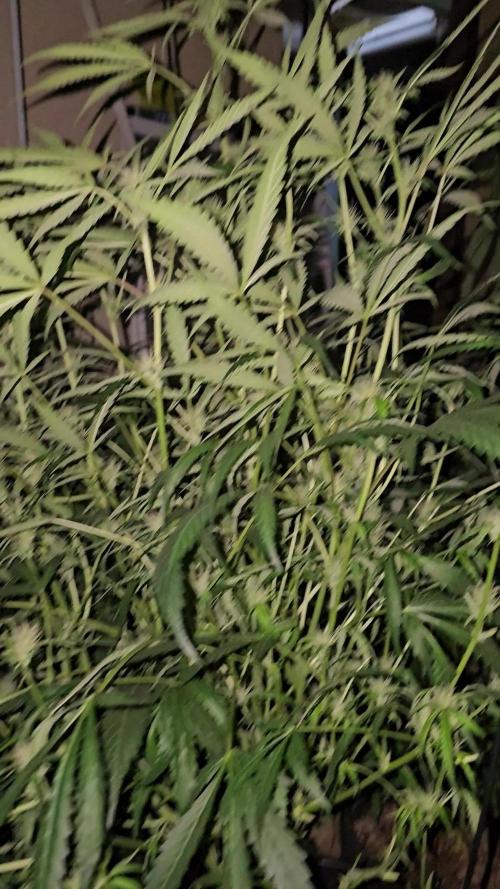
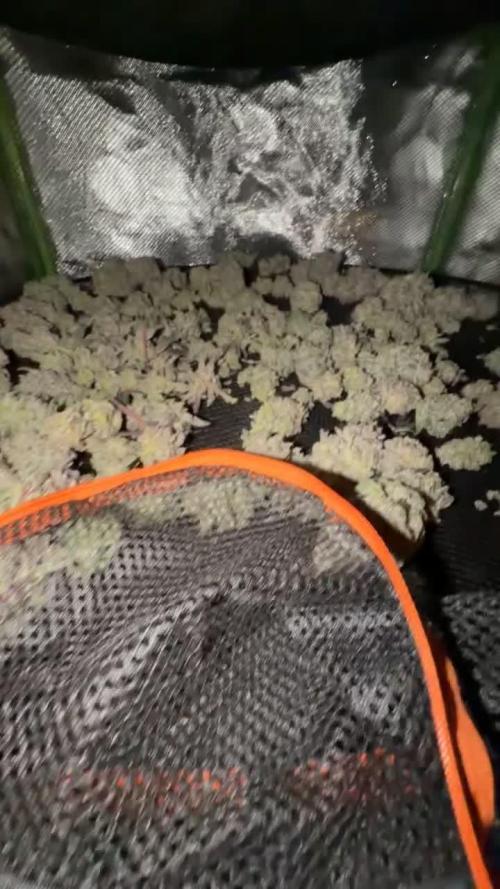
This week I harvested these two Quebec Black Bud, it was really a great experience. Its unique appearance and these colors charm us from start to finish. Calm in vegetation but surprises us in flowering. I can't wait to see the final product 😇 Harvest : Pheno #1 day 56 flowering 119 total Pheno #2 day 60 flowering 123 total Training : They have received my hand manipulation since day 8 and this every day to force them to grow bigger and stronger until the addition of the scrog. I started my base again on a manifold. For now I'm having fun like that, let's see later 😁 I'll leave you with these beautiful photos and come back to you later. After drying and curing I realize how the color is an intense purple almost black, The genetics are not called Quebec black bud for nothing. the buds are really compact, I know that with the auto pot system I give myself a chance that they will be denser but I believe that hard training leaves its mark.
Likes
56
Share
What's in the soil? What's not in the soil would be an easier question to answer. 16-18 DLI @ the minute. +++ as she grows. Probably not recommended, but to get to where it needs to be, I need to start now. Vegetative @1400ppm 0.8–1.2 kPa 80–86°F (26.7–30°C) 65–75%, LST Day 10, Fim'd Day 11 CEC (Cation Exchange Capacity): This is a measure of a soil's ability to hold and exchange positively charged nutrients, like calcium, magnesium, and potassium. Soils with high CEC (more clay and organic matter) have more negative charges that attract and hold these essential nutrients, preventing them from leaching away. Biochar is highly efficient at increasing cation exchange capacity (CEC) compared to many other amendments. Biochar's high CEC potential stems from its negatively charged functional groups, and studies show it can increase CEC by over 90%. Amendments like compost also increase CEC but are often more prone to rapid biodegradation, which can make biochar's effect more long-lasting. biochar acts as a long-lasting Cation Exchange Capacity (CEC) enhancer because its porous, carbon-rich structure provides sites for nutrients to bind to, effectively improving nutrient retention in soil without relying on the short-term benefits of fresh organic matter like compost or manure. Biochar's stability means these benefits last much longer than those from traditional organic amendments, making it a sustainable way to improve soil fertility, water retention, and structure over time. Needs to be charged first, similar to Coco, or it will immobilize cations, but at a much higher ratio. a high cation exchange capacity (CEC) results in a high buffer protection, meaning the soil can better resist changes in pH and nutrient availability. This is because a high CEC soil has more negatively charged sites to hold onto essential positively charged nutrients, like calcium and magnesium, and to buffer against acid ions, such as hydrogen. EC (Electrical Conductivity): This measures the amount of soluble salts in the soil. High EC levels indicate a high concentration of dissolved salts and can be a sign of potential salinity issues that can harm plants. The stored cations associated with a medium's cation exchange capacity (CEC) do not directly contribute to a real-time electrical conductivity (EC) reading. A real-time EC measurement reflects only the concentration of free, dissolved salt ions in the water solution within the medium. 98% of a plants nutrients comes directly from the water solution. 2% come directly from soil particles. CEC is a mediums storage capacity for cations. These stored cations do not contribute to a mediums EC directly. Electrical Conductivity (EC) does not measure salt ions adsorbed (stored) onto a Cation Exchange Capacity (CEC) site, as EC measures the conductivity of ions in solution within a soil or water sample, not those held on soil particles. A medium releases stored cations to water by ion exchange, where a new, more desirable ion from the water solution temporarily displaces the stored cation from the medium's surface, a process also seen in plants absorbing nutrients via mass flow. For example, in water softeners, sodium ions are released from resin beads to bond with the medium's surface, displacing calcium and magnesium ions which then enter the water. This same principle applies when plants take up nutrients from the soil solution: the cations are released from the soil particles into the water in response to a concentration equilibrium, and then moved to the root surface via mass flow. An example of ion exchange within the context of Cation Exchange Capacity (CEC) is a soil particle with a negative charge attracting and holding positively charged nutrient ions, like potassium (K+) or calcium (Ca2+), and then exchanging them for other positive ions present in the soil solution. For instance, a negatively charged clay particle in soil can hold a K+ ion and later release it to a plant's roots when a different cation, such as calcium (Ca2+), is abundant and replaces the potassium. This process of holding and swapping positively charged ions is fundamental to soil fertility, as it provides plants with essential nutrients. Negative charges on soil particles: Soil particles, particularly clay and organic matter, have negatively charged surfaces due to their chemical structure. Attraction of cations: These negative charges attract and hold positively charged ions, or cations, such as: Potassium (K+) Calcium (Ca2+) Magnesium (Mg2+) Sodium (Na+) Ammonium (NH4+) Plant roots excrete hydrogen ions (H+) through the action of proton pumps embedded in the root cell membranes, which use ATP (energy) to actively transport H+ ions from inside the root cell into the surrounding soil. This process lowers the pH of the soil, which helps to make certain mineral nutrients, such as iron, more available for uptake by the plant. Mechanism of H+ Excretion Proton Pumps: Root cells contain specialized proteins called proton pumps (H+-ATPases) in their cell membranes. Active Transport: These proton pumps use energy from ATP to actively move H+ ions from the cytoplasm of the root cell into the soil, against their concentration gradient. Role in pH Regulation: This active excretion of H+ is a major way plants regulate their internal cytoplasmic pH. Nutrient Availability: The resulting decrease in soil pH makes certain essential mineral nutrients, like iron, more soluble and available for the root cells to absorb. Ion Exchange: The H+ ions also displace positively charged mineral cations from the soil particles, making them available for uptake. Iron Uptake: In response to iron deficiency stress, plants enhance H+ excretion and reductant release to lower the pH and convert Fe3+ to the more available form Fe2+. The altered pH can influence the activity and composition of beneficial microbes in the soil. The H+ gradient created by the proton pumps can also be used for other vital cell functions, such as ATP synthesis and the transport of other solutes. The hydrogen ions (H+) excreted during photosynthesis come from the splitting of water molecules. This splitting, called photolysis, occurs in Photosystem II to replace the electrons used in the light-dependent reactions. The released hydrogen ions are then pumped into the thylakoid lumen, creating a proton gradient that drives ATP synthesis. Plants release hydrogen ions (H+) from their roots into the soil, a process that occurs in conjunction with nutrient uptake and photosynthesis. These H+ ions compete with mineral cations for the negatively charged sites on soil particles, a phenomenon known as cation exchange. By displacing beneficial mineral cations, the excreted H+ ions make these nutrients available for the plant to absorb, which can also lower the soil pH and indirectly affect its Cation Exchange Capacity (CEC) by altering the pool of exchangeable cations in the soil solution. Plants use proton (H+) exudation, driven by the H+-ATPase enzyme, to release H+ ions into the soil, creating a more acidic rhizosphere, which enhances nutrient availability and influences nutrient cycling processes. This acidification mobilizes insoluble nutrients like iron (Fe) by breaking them down, while also facilitating the activity of beneficial microbes involved in the nutrient cycle. Therefore, H+ exudation is a critical plant strategy for nutrient acquisition and management, allowing plants to improve their access to essential elements from the soil. A lack of water splitting during photosynthesis can affect iron uptake because the resulting energy imbalance disrupts the plant's ability to produce ATP and NADPH, which are crucial for overall photosynthetic energy conversion and can trigger a deficiency in iron homeostasis pathways. While photosynthesis uses hydrogen ions produced from water splitting for the Calvin cycle, not to create a hydrogen gas deficiency, the overall process is sensitive to nutrient availability, and iron is essential for chloroplast function. In photosynthesis, water is split to provide electrons to replace those lost in Photosystem II, which is triggered by light absorption. These electrons then travel along a transport chain to generate ATP (energy currency) and NADPH (reducing power). Carbon Fixation: The generated ATP and NADPH are then used to convert carbon dioxide into carbohydrates in the Calvin cycle. Impaired water splitting (via water in or out) breaks the chain reaction of photosynthesis. This leads to an imbalance in ATP and NADPH levels, which disrupts the Calvin cycle and overall energy production in the plant. Plants require a sufficient supply of essential mineral elements like iron for photosynthesis. Iron is vital for chlorophyll formation and plays a crucial role in electron transport within the chloroplasts. The complex relationship between nutrient status and photosynthesis is evident when iron deficiency can be reverted by depleting other micronutrients like manganese. This highlights how nutrient homeostasis influences photosynthetic function. A lack of adequate energy and reducing power from photosynthesis, which is directly linked to water splitting, can trigger complex adaptive responses in the plant's iron uptake and distribution systems. Plants possess receptors called transceptors that can directly detect specific nutrient concentrations in the soil or within the plant's tissues. These receptors trigger signaling pathways, sometimes involving calcium influx or changes in protein complex activity, that then influence nutrient uptake by the roots. Plants use this information to make long-term adjustments, such as Increasing root biomass to explore more soil for nutrients. Modifying metabolic pathways to make better use of available resources. Adjusting the rate of nutrient transport into the roots. That's why I keep a high EC. Abundance resonates Abundance.
Likes
4
Share
War nicht für ein Anbautagebuch geplant. Dennoch möchten wir euch kurz ein paar schöne Bilder und Video zeigen 👉 😊
Likes
4
Share
Well, boys and girls and those who don't differentiate, it's Weed Doctor Sam here and I'm about to fail gloriously or succeed by the skin of my teeth. This being my first grow -- of any kind, let alone a hydroponic grow involving (potentially) advanced training techniques -- I fully expect things to go wrong. And, well, golly... wouldn't it just be fun to watch? Tune in week to week to see what goes wrong, what goes right, and what goes just luckily enough not to fuck up the whole grow. Update to this week coming at the end of Week 1. Until then, may the rain fall soft on your fields.
Likes
8
Share
@Lord_21
Follow
Here’s 6 weeks of my baby. I tried LST for 3 days. So let’s wait!!
Likes
12
Share
@DreamIT
Follow
Normally I am not a plant abuser (at least not in the literal term of the word) but the last few cycles I have been very superficial in the care of my plants. The result is lovely but not very large plants. I'll make up for it with the next few cycles <3
Likes
8
Share
Ich hab mit der Spülung begonnen. Gespült wird für 1-2 Wochen.
Likes
62
Share
@nonick123
Follow
Día 78 (06/01) CBD Auto 20:1 #1 - El amarilleo continua... esperando que haga efecto el SILICIUM FLASH 💥 OG Kush Auto - Empieza la ventana de cosecha: Reviso los tricomas y solo hay algunos nublados (el resto trasparentes), pero creo que acabará en una semana más como máximo! Día 79 (07/01) CBD Auto 20:1 #1 - Parece que el amarilleo se frena un poco. ¿Será suficiente y formará unas buenas porras? OG Kush Auto - Riego 750 ml. Está consumiendo mucha agua en este tramo final! 😍 Día 80 (08/01) CBD Auto 20:1 #1 - Está recuperando el verdor! El SILICIUM FLASH está haciendo efecto! OG Kush Auto - La planta no para de beber y las ramas se doblan por el peso de los cogollos! 😍💥 Día 81 (09/01) CBD Auto 20:1 #1 - Los cogollos empiezan a coger mayor densidad. Según mis cálculos, le faltan 17 - 24 días OG Kush Auto - La senescencia sigue avanzando pero los tricomas aun no están listos (50% nublados). Espero cosechar en el día 84 aproximadamente Día 82 (10/01) Busy day Día 83 (11/01) CBD Auto 20:1 #1 - El SILICIUM FLASH ha hecho efecto y empieza a retomarse el verdor en las hojas! Que maravilla! OG Kush Auto - Los tricomas están mayoritariamente nublados y algo ámbar. Mañana la cosecha! 😁 Día 84 (12/01) CBD Auto 20:1 #1 - Los cogollos empiezan a apilarse y a engordar 😁 OG Kush Auto - Día de cosecha! 😍💥💨😁 FastBuds 15% DISCOUNT code "NONICK" 2fast4buds.com @fast_buds_official_ @fastbuds.official 💦 BioTabs 15% DISCOUNT code "GDBT420" biotabs.nl/en/shop/ @biotabs_official 🌱Substrate PRO-MIX HP BACILLUS + MYCORRHIZAE @promixmitch @promixgrowers_unfiltered 💡2 x Mars Hydro FC1500 EVO Led Grow Light (2024 NEW FC 1500-EVO Samsung LM301H 150W LED) - https://marshydro.eu/products/fc1500-evo-led-grow-lights/ - https://www.amazon.de/dp/B0CSSGN5D8?ref=myi_title_dp
Likes
5
Share
@Deebow
Follow
Got pretty hot in the afternoons when ac crapped out finished outdoors for the last 2 weeks Hang dryed for 7 days at 60°60% now bagged
Processing
Likes
38
Share
Harvested them on 10/4, washed them and hung them to dry for 4 days, then alternated them in brown paper bags and big jars for a few days until perfect. Final thoughts: Like most sativas I've grown, those biggass colas were kinda fluffy and shrunk up pretty bad once dry, but it's super frosty, tasty, and smells delicious as well. It was very easy to grow, but a pain to trim...too leafy. No deficiencies at all with normal feed, and they bulked up really well in the last two weeks. They are thirsty girls because they have a lot of foliage. They can withstand being less than a foot from quantum boards for their final week or two without burning up too much. I don't like that it took this strain almost two weeks longer than the others, but a good sativa usually takes quite a while longer than these did. Plant A: 79g Plant B: 75g Plant C: 74g Plant D: 88g (this is the one that split and had two colas) Potency: 9/10 Flavor: 8/10 Aroma: 8/10 Yield: 7/10 Bag-appeal: 7/10 Ease of growing: 10/10
Likes
14
Share
May 22nd - pH 6.1, PPM 1310, 2.6 EC, 85/75f, 47% humidity - late water change, around midnight, probably will add more CALiMAGic when I go to check the water later today (the 23rd), just very scared to have it turn cloudy af on me again and ruin the whole thing lol. May 23rd - pH 6.2, PPM 1650, 3.7 EC, 78/70f, 44% humidity - increased the amount of CALiMAGic, Micro, and Purpinator in the bucket, nutrients list updated to reflect, noticing some clawing, its either wind burn or nitrogen toxicity I'd guess. update: can't be wind burn, they're not going fast enough. don't really know what is up with those few clawing leaves just hope more don't happen. May 24th - Unable to get data this day. May 25th - pH 4.0(??) -> 6.2, PPM 2080, 4.2 EC, 82/69f, 47% humidity - Didn't get info yesterday, woke up before work to adjust plant and found it super low in pH? Pen stopped being calibrated so I pH'd to 6.0ish before I left and then recalibrated the pen when I got home and pH'd to 6.2. PPM is climbing, but the water level is going down too, will add more water tomorrow. May 26th - pH 6.0 -> 6.4, PPM 2100, 4.2 EC, 81/68f, 46% humidity - pH'd up to 6.2-6.5 range, noticed little rust spots. May 27th - Unable to get data this day. May 28th - pH 6.6 -> 6.1, PPM 2180, 4.4 EC, 81/72f, 38% humidity - pH'd down into range. Did some defoliation today, took a lot from the lower and middle 'cause 360° light. Added less than half a gallon of tap water.
Likes
37
Share
After germinating the seeds are transplanted into small pots with soil (see tutorial in VIDEO above). The soil is prepared with water mixed with a little bit of BIO NOVA Roots (0,5 ml/l), which aids the development of the seedling. Transplanting is very easy now, because they have grown a STRAIGHT tap-root while hanging during the SERIOUS' WAY of germination. This straight root allows for easy potting of the seeds. Simply make a little hole in the center of the soil with your pinky finger and carefully place the germinated seed with the white root pointing DOWNWARDS into the hole. Best is to lay it onto one side-wall of the hole with the seed shell right at the surface. Then I push the other side inwards and enclose the whole root with soil. At the end only the top of the seed-shell peeks out of the soil. IT IS VERY IMPORTANT to plant the seeds NOT TO DEEP into the soil. The seedling only needs extra strength to work itself upwards thru the soil and you run the risk of the soil drying out and the seed dying off. When you PLANT THE SEED VERY SHALLOW into the soil (=with the top of the seed-shell still peeking out) your seedling can grow out right away and you have a small plant already 24 hours after putting the seed into the soil. The small seedling sometimes still has the seed-shell on its 'head', it normally falls off by itself, but sometimes you have to carefully help and take it off with your finger nails. Be careful to NOT clip of the seedling accidentally when you do this! The seed-shall has an inner lining, which feeds the small seedling when it germinates. This inner lining sometimes gets tangled around the stem of the small seedling after the shell has fallen off. This little skin MUST be taken off the stem right away! Once it dries up, it gets hard and can strangulate the seedling around the stem. In order to avoid this, the skin must be taken off as soon as possible! I show it in the pics above and also made a video about taking off the inner lining of the seed.
Likes
6
Share
Nach dem Umtopfen ging es direkt weiter mit einem ordentlichen Wachstumsschub – richtig schön anzusehen! Die Pflanzen haben den Wechsel super weggesteckt und legen jetzt ordentlich zu. Alles verläuft bisher nach Plan, ohne nennenswerte Komplikationen. Die Symptome des Calciummangels sind komplett verschwunden – die neuen Blätter sehen gesund und kräftig aus. Offensichtlich zeigt die angepasste Düngung Wirkung. Auch die Thripse scheinen erfolgreich bekämpft worden zu sein. Ich konnte bisher keine neuen Spuren entdecken – hoffentlich bleibt das so. Heute stand noch ein wenig Entlaubung auf dem Programm, um Licht und Luft besser ins Innere der Pflanze zu bringen und die Schimmelgefahr weiter zu minimieren.
Likes
5
Share
@0xcrlt
Follow
- June 25 - Day 16 - Today she will be topped. Watered with 800 ml of water and about 1.5 ml of Bio-Grow. -
Likes
1
Share
@Blucha
Follow
Defoliated these ladies, still have the feeling that not enough I took down. What do you all think? Overall condition is great and buds are surprisingly well established at this stage. Stems already shaking some more weight and they gonna drop down easily.
Likes
3
Share
@LAShugars
Follow
Added a few 6ft bamboo poles for support. She’s going to be a thick girl ❤️ She already smells pretty loud! Can’t quite describe it yet other than mouth watering.
Likes
3
Share
@DannyDank
Follow
Colours are popping Again nothing is accurate just wanted to share this with you guys
Likes
5
Share
Decided to HST this lovely lady hope she takes a liking to it she’s really small for 5 weeks but hopefully she takes a stretch soon happy growing 👊
Likes
13
Share
@Wilstang
Follow
Her grow was super easy, no deficiencies and absolutely loved water all the time. Big stalk with large branches to hold her weight. She really enjoys heavy light and feeding ☀️💉. Recommend for an easy grow💯