


Likes
Comments
Share


@CanaryGrow
Follow
Flush mode: one lady already flushed yesterday, 2 got their last feeding, and heading into flush when they get dry (2-3 days). One is a bit behind, going to feed for another week or two. Exciting times, lets see what we managed to grow for the first time! :)

Likes
31
Share


@Regenwurm
Follow
Die Bedingungen sind in der letzten Blütewoche sehr gut!
Die Entwicklung der Blüten sind sehr gut und es geht dem Ende zu. Ich denke in 2-3 Tagen sind Sie bereit zur Fällung.
Tage der Keimung = 4 Tage.
Tage in Wachstum = 28 Tage
Tage Blüte = 42 Tage
Wachstum h Woche 9 = 0 cm
2 mal in dieser Woche mit Purolyt Mischung 1:25 besprüht
Lichtstärke: 75 %
PPFD: ca. 630 umol
Lichtabstand: 35 cm
Std Tag/Nacht: 18/6
Temperatur Tag: ca. 26,0 Grad
RLF Tag: 50%
Temperatur Nacht: 22 Grad
RLF Nacht: ca. 50 %
VPD Wert: ca. 1,0-1,2
PH Wert Wasser/Düngelösung: 6,3
EC Wert: 0,4
Ventilator Oszillation: Stufe 1
Befeuchter: an
Entfeuchter: aus
Zusätzlicher Entfeuchter: 0 Stk. außerhalb vom Zelt im Raum
Bewässerung: 2* bewässert mit Dünger mit den o.g. Mengen,
Purolyt Besprühung: 2 mal
Fast Plant Spray: 0 mal
Controlling: Grow Control
Dünger: Greenbuzz Nutrients
Licht: Pro Emit Vollspektrum
Abluft: EC Carbon Active 750 m3 gesteuert
Danke an James von Royal Queen Seeds für die F1 Seeds.
https://www.royalqueenseeds.de/56-f1-hybrid-cannabissamen
Danke an Greenbuzz
https://greenbuzznutrients.com/de/
Ihr bekommt 25 % Rabatt bei der Nutzung des Codes auf der GB Homepage
https://greenbuzzliquids.com/de/shop/
Code: GD42025
(Mindestbestellwert 75€)

Likes
10
Share


@Budhunter
Follow
Day 97 of cycle
Day 60 of flowering.
I cut the full plant and hanged it and now gonna leave drying for 2/3 weeks.
I prefer dry trimming because it’s easier.

Likes
3
Share


@Seventease
Follow
Buds growing nicely in size. Thrichomes forming on the sugar leaves. Looking nice and frosty!


Processing
Likes
12
Share


@CaliforniaOGkush
Follow
it's hotter and the heat is staying here for two more months hope theese plants make it thru
Likes
17
Share


@Gasoliere_sama
Follow
The smell is very good. A good weight if I consider that I have made some mistakes with Calmag.
Likes
11
Share


@PinkFloydLover
Follow
Flushing the bigger girl since day 140. Harvested the smaller girl on day 141, but will show you the results after I harvest the other one. I had a little of it, but I had cut some branches to smoke some weed previously!

Likes
28
Share


@GodZilla_Owner
Follow
All plants are developing well. It wasn't actually intended to grow three plants. But after the first two seeds didn't germinate, I doubted myself and sowed all the other seeds. Now I have three plants in a tent that is far too small.
Even though the Bruce Banner is an auto, it doesn't really fit into the grow. Without topping, I won't get very far with this one... Everything is rather suboptimal, so I may have to give up one of the plants.

Likes
14
Share


@BoNz4i
Follow
So langsam kommen die ersten braunen trichome
BioBizz halbe Dosis
18.10.
Wird langsam fertig.
Gebe ihr noch eine Woche 😎

Likes
4
Share


@Troxx
Follow
Clones are coming around they was shocked being up in Maine we had a light out for 3 days got too 40° in the cloner etcetc sooo trying to get them to root just gave them some clonex ✌️

Likes
17
Share


@The_Doctor_Green
Follow
Esta semana el drenaje del suelo me dio valores muy altos la EC en 3700 y el ph 8.3 , en los riegos anteriores el ph de riego eran de 6.3 y la EC de 1500 por eso el próximo riego volveré a hacerlo solo con agua, para ver si se normaliza.
La planta igualmente viene creciendo en optimas condiciones a nivel visual, con los cogollos desarrollándose de manera saludable.
Espero que siga asi.

Likes
105
Share


@Coopmc
Follow
Looking good Id say about 3 weeks left
Booming!!
This plant is blowing up!!!
5 foot tall exactly

Processing
Likes
22
Share


@420_TRON
Follow
overall very satisfied with the results and can't wait for the drying and curing to finish so i can lit one up!!
the growing process wasn't that hard until she stressed during one of the training sessions and i had to cut off 2 colas during the veg cycle.
for my first harvest ever i'm pretty happy with this little beauty:)
day 2 of drying:
weight dropped by half.
total is now 50g and there's some more to loose 🙈
started curing the buds after 4 days of drying- overall 20g of dried buds
------
first taste 👅 (2 weeks curing):
man it was worth waiting for an acceptable curing time before digging in, i tried it twice before and i have to say that curing plays a huge role when it comes to flavors, scents and high (so basically all the aspects that matter). wasn't even close to what i'm experiencing right now.
great high, the taste is great with yummy fruity aftertastes.
also looks like the volume of the buds have decreased by about 30-40% but they got denser
will wait some more to see how curing benefits this one!
------- update 11/19/20
i had the trimmed leaves freezes so i decided to make some coconut infused RSO
Likes
25
Share


@GROWitALL
Follow
Topped twice at 4th node. She stretched and popped off branches everywhere! Would recommend picking up a 10 pack of these beans to add to your collection. Beginners will have top shelf quality buds with this strain XD Happy as all ever and didn't have any issues with anything! Will have Dry weight soon! I didn't thinking toweigh it wet. As it made more sense to know what it is dry in my op. Thanks MSNL for making this awesome strain available! Boss Crosses😎

Likes
6
Share

@CanOli95
Follow
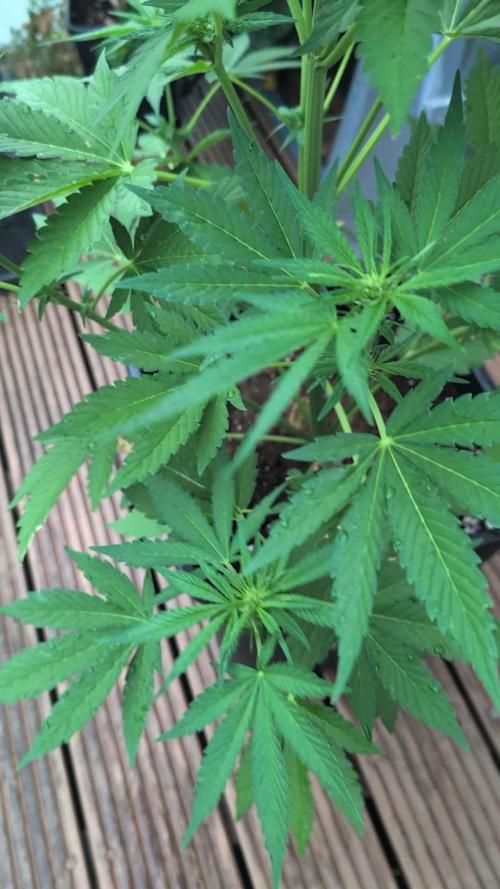
This plant is producing flowers very fast. A week before you could barely see pistols, now you can see them clearly stacking in every branch.
She trippeled her size in just 2 weeks.
Overall she is not a thirsty plant and accepts the substrate really well.
I did not use fertilizer , only some silicate, but no NPK fertilizer . But still, her leaves are in a healthy dark green colour, even though only a light-mix has been used. Maybe I will add some small amounts of P and K mono, but I don't think it's necessary.
So far no purple to be seen, I hope it changed in the further bud-development.
Likes
15
Share


@I_Identify_As_A_Dan
Follow
Week 6 for Peyote Zkittlez by seedsman
Absolutely loving the structure on this plant😍 Shes been topped a few times at this point already up to 16 tops for now... She was fed twice this week with some FPJ, Regulator, Enzym+ & Startboooster by @aptus_portugal just to give it an extra boost!😎
She will be moved outdoors as soon as the outdoor autos are done😁She will definitely benefit from the extra space outside + some high humidity 😂
Up there with my favourites of this season for now!
Likes
44
Share


@Cogollo_eu
Follow
**Encontrarás la traducción a español al final de la descripción**
From/Desde: 22/03/19 || To/Hasta: 28/03/19
From day/Desde día: 29 || To day/Hasta día: 35
You can find the Money Maker Diary here:
** Podéis encontrar el diario de las Money Maker aquí:**
https://growdiaries.com/diaries/25667-gorillamakingmoney-gorilla-vs-money-m
-----IMAGES & VIDEOS-----
Video 1:
Exactly the same video as 2 but accelerated +400% to fix it to 1 minute for instagram.
Video 2:
7 days (29~35) TimeLapse, 1 image each 60 secs @ 30 fps
Video 9:
An overview video not as awesome as it's music 😂💪
Video 10:
Myself working on the babies, lowering tops, topping & training.
Video 12:
Full working on the secondary Gorilla, twisting some branches, topping & training.
-----WEEK SUMMARY-----
Well, now i'm getting a bit scared as i adventured myself into Photoperiod, high training, full topping... in indoors at once. I feel that plants are going good, but i really don't know what am i doing, and if i'm doing well. Also i don't know how much time should i give them of vegetation stage, because i don't want to eternalize myself with this tent, so i'm planning to leave this upcoming 6th week and maybe the 7th of vegetation, but no more. Anyway they look pretty atm 😻. In video 10 the main-linning Gorilla suffered an accident as i grabbed the main left branch from a weak point and it has broken (sec 39 aprox.) so it has one less node than the right branch.
-----WATERING CALENDAR-----
24/03/19 - 1.000 ml with all week nutrients @ 0.9 E.C. PH5.8
*****ESPAÑOL*****
-----IMÁGENES & VÍDEOS-----
Vídeo 1:
TimeLapse, exactamente el mismo vídeo que el 2 pero acelerado a un poco más del 300% para ajustarlo a 1 minuto para Instagram.
Vídeo 2:
7 días (29~35) TimeLapse, 1 imagen cada 60 segundos @ 30 fps.
Vídeo 9:
Un vídeo general no tan increíble como la música de fondo 😂💪.
Video 10:
Trabajando en las pequeñas, rebajando las alturas, haciendo topping y entrenando.
Video 12:
Trabajando a pleno en la segunda Gorilla, girando algunas ramas, haciendo toppings y entrenándola.
-----SUMARIO SEMANAL-----
Bueno, ahora estoy empezando a estar asustado. Me he aventurado a probar con fotodependientes, entrenamiento fuerte y super topping, todo a la vez. Siento que las plantas van bien, pero realmente no se lo que estoy haciendo ni si lo estoy haciendo bien. También tengo dudas sobre cuanto tiempo más dejarlas en estado vegetativo ya que no me quiero eternizar con este armario, por lo que estoy planeando dejar esta sexta semana de crecimiento y quizás una séptima, pero no más. Aun así y con todo, las nenas se ven preciosas 😻. En el vídeo 10 sufro un accidente en la Gorila con main-linning ya que amarré el final del tallo principal izquierdo por un punto débil y este se partió (sec 39 aprox.), por lo que tiene un piso de topping de más en comparación con tallo derecho.
-----CALENDARIO DE RIEGO-----
24/03/19 - 1.000 ml con todos los nutrientes semanales @ 0.9 E.C. PH5.8

Likes
49
Share


@GreenHouseLab
Follow
Start of week 10
Day 64 - Lightly Defoliated today and she smells wonderful. I’m the worst at detailing odours but all I can say it’s pleasant to the 👃
Now in a 2x2’ area she get 135W (HLG 3k)
Next top dress should be coming up at the end of this week with Gaia Green 2-8-4
Day 70 - Received molasses Ph 6.4

Likes
11
Share


@Sawyer_grow
Follow
Hello guys,
hope you are doing well.
happy to start a new grow into my Ninja Bundle and what a grow : Bubba Slush from GHSC.
It all started well the seed germinate in 2 days, you can find the tutorial and video on my IG profile of course.
The plant is doing well 2 first leaves are out, no nutrients for the moment i will start it in 2 weeks only once she have reached a good size and anyways for the moment the nutrients in the soil are more than enough.
I got many messages about the first leaves of your grow don't worries they are always weird like your first steps when you are a baby. It's not an issue and not a sign of a weird plant just be patient and the plant will grow nice leaves very soon.
Take care all
Sawyer

Likes
5
Share

@peterfly98
Follow
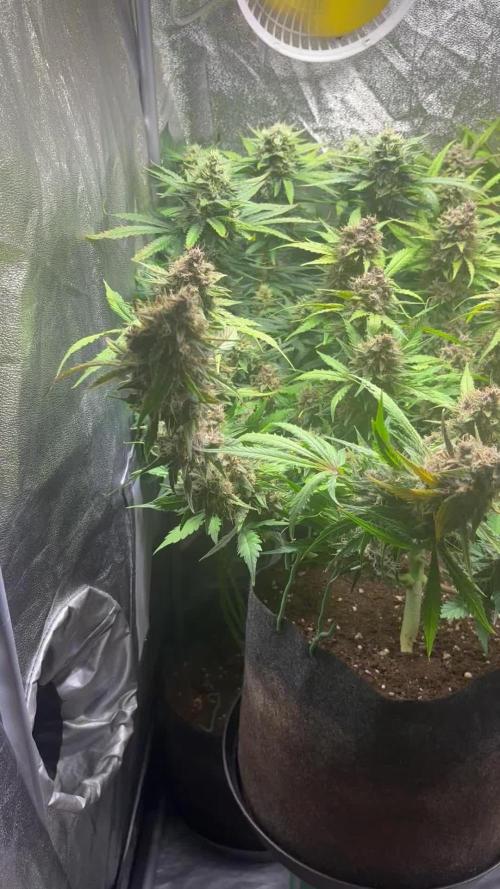
Massive heat wave still here. I had to reduce the light to 50% (450ppfd) to manage the heat.
Plants are doing well and with this heat they smell amazing.
G1 is almost ready! I’ll check the trichomes daily to have the optimal window for harvest.
G2 is super frosty and it swell a bit from the last week.
Frostbanger has 3 really big buds who will swell even more. She is 80cm tall so I’m using some support for the branches to help with the weight.