




Likes
12
Share


@Staffedition
Follow
Привет друзья. Моей растихе сегодня 112 дней
20.10 перевёл свет в режим 12/12
Начал применять LST технику на 19 дне и продалжаю применять её через день, а 18 августа добавил ДЕФОЛИЗАЦИЮ
С 20.08 ДЕФОЛИЗАЦИЮ делаю каждые 3,4 дня
С 20.08 LST технику делаю каждые 4.6 дней
На сегодняшний день влажность 54%
5.09.2023 заметил высокий Ph 7.9
С 48 дня Ph не ниже 5.8
На сегодняшний день Ph 6.0
Начал кормить с 60 дня Canna Terra Vega
PPM 870
Всем мира и добра!
Не забудь поставить лайк❤️, если понравилась как прошла неделя
И читайте наш TELEGRAM: https://t.me/smail_seeds
#Smail_Seeds 😀
Likes
151
Share


@BioBuds
Follow
These XtraKush are also finally starting to grow. It took them a while but they doubled in a week. Still a little bit pale compared to the other two strains.
With a new top layer of first worm castings and then neutral organic cocopeat to combat the gnat problem and we seem to have fixed most problems.
Temps are going down at night, I'm trying to fix this by keeping it warmer in the attic where the grow is.
In the coming week, I'm going to train/manifold them, they are getting a bit big.
Check out the great discounts on mars-hydro.com
Contact @MarsHydroLED for special offers!
Likes
20
Share


@RunWithIt
Follow
They seem to have stopped stretching and are now focusing on the buds. Very odd coloration happening on the leaves of the left plant. I'm thinking it's either a calcium deficiency or a manganese deficiency. Either way the buds are developing nicely still. Right is looking great right now, save for a few spider mites I had to squish earlier last week.
Nice and frosty at 5th week of flower. If all goes well with both of these girls, I'll be harvesting them at the end of January. I'll definitely give them a bud washing b/c I found mites.
Update 1/2/22: okay I've got a few notes to make on the progress as a whole. So after topping right, it seems like she started producing flowering hormones right after. While left focused on stretching for like a week more. Right has fat, compact and frosty buds- shaped like golf balls. Left has spire-shaped buds, not AS dense(still dense though, mind you), and less frost. So I'm thinking left is staggered behind right by about a week. Since this is week 5, we'll be able to tell just how far ahead she is by week 8.
Likes
50
Share


@BB_UK
Follow
What an amazing week, my north thunderfuck is right on the second scrog (dynomyco) closely followed by candy kush express, the other 2 are on their way up to the second scrog! They’re all showing some pistols and stretching up to enter there final stages! I expect big things 💚 added a photo of my striped tomato plant! She stands at around 5ft 🙏

Likes
5
Share


@Jays_Not_Here_Man
Follow
10 weeks from seed to harvest. The nutrient line I was using didn’t give me optimal growth, for this strain and my level of experience. Had some great growth and veg time, about 4 weeks, but when flower kicked in they got beastly. I would say I had two different phenos of this strain, and the one pheno that is unique, had slightly looser buds than the other two. This could be because of the LST/super cropping of the main cola. The other two had nice rock hard frosty buds and have similar smells and profile. The other one has more citrus, and was a bit lanky, more sativa in looks. Overall, easy enough to grow, no major surprises, and decent enough yield for 10 weeks. This is a strain that could have been better had I not had some issues with either lockout/deficiencies.

Likes
8
Share


@Blue_psyche
Follow
Strain Info:
THC: 16-20%
CBD: 0.4%
Indica: 58%
Sativa: 38.87%
Ruderalis: 3.12%
Yield: 35-150 g/plant
Harvest: 8 weeks from germination
Height: 60-90cm

Likes
20
Share


@Ieiogrow94
Follow
Eccoci qui...
Che splendore questa genetica, NON SEBRA MARIJUANA!!!
Questa settimana posso solo dire che sembrano fatte di marmo.
STRAIN 1 super compatta chissà come sarà alla fine del raccolto!!!!
Si inizia a vedere il viola nelle foglie FINALMENTE!!!!!!
Grazie a @Khalifa_Genetics per la collab e a tutti per il supporto🔥🌲❤️

Likes
28
Share


@Heregrowsnothing
Follow
And then there was one... This beast took over the tent and needed its own space so thats what I gave it and boy did it repay the favour! Plenty of really dense bud with a wonderful smell. It's beginning to look a lot like Christmas 💚

Likes
22
Share


@BCbuds76
Follow
West coast og is turning into a beast. Buds are filling out nicely . Some of the pistils are starting to change colour. I will start her on straight water soon . The mites are still hanging around so the leaves aren’t looking too healthy . I should still get a decent harvest by the looks of it

Likes
6
Share


@MyloGrow2019
Follow
End of week 8 in flower , girls are on flush now, I have lowered the temp to 72 with lights on and 60 for lights off , I’m running both my Dehumidifers to keep the humidity below 40%, I will give them 4 or 5 days of just water and then no water or light for 48 hrs before harvest, the room is pretty stinky , thank god for can filters, I will post results after the chop.


Likes
77
Share


@deFharo
Follow
Bienvenidos cultivadores de marihuana clandestinos y también a los que tienen la fortuna de no serlo!🖐️👨🌾
Esta es una historia, por capítulos, de un cultivo orgánico autosuficiente, con una cepa mestiza de nombre Congo, ella es chaparra pero fornida, con entrenudos cortos y fuertes ramas, vive en la mejor casa que he sabido darle (mira la composición del sustrato en la cuarta semana), y la alimento como se alimenta un amor para que no decaiga!💘💘
Séptima semana del cultivo, segunda desde el corte apical y primera desde el paso a floración, la planta continúa su crecimiento y bla, bla, bla, el consumo de agua aumenta, esta semana dos riegos profundos y bla, bla, bla... me aburro! 🤷♀️
Para combatir el gran aumento de la humedad relativa y la aparición de hongos, en el periodo de oscuridad estoy reuniendo los once cultivos actuales en una habitación con un des-humificador, manteniendo una humedad relativa durante ese periodo, alrededor del 55-60%. También, esta semana de días muy nublados, mantengo todas las plantas con luz interior, si vuelven días soleados, volveré a sacar mis plantas un par de horas a tomar, la gratuita e inimitable luz de sol.
• DATOS:
👨⚖️🤷♀️ Cultivo clandestino de marihuana en el norte de España
🌼 Maceta textil de 7l con base de piedras de rio.
🌍 Sustrato personalizado con minerales y etc... ver la composición en la cuarta semana de este diario.
💡 Luces ViparSpectra P1000 al 60% de potencia a una distancia media de 20cm.
🌞💡 Horario: 12h en interior.
🏠 Carpa de cultivo compartida con otras 4 plantas sativa: 60x60x140cm.
🥗 Nutrición soluble 3M, hecha en casa con Materia orgánica, Minerales y Microbiología.
=========================
• CON TU PERMISO, ME REBELO... 💃👨🌾
En el jardín mojado por la lluvia
Sin Gurú, sin Método, sin Maestro
Solo tú y yo, la naturaleza y el espíritu santo
Sin Gurú, sin Método, sin Maestro
Séptima semana desde que comencé la nueva temporada de cultivos, después de un breve descanso, una semana donde me cuestiono, una vez más, el sentido de estos diarios semanales en GD...
Después de más de dos años publicando mis cultivos orgánicos, aprendiendo, compartiendo, incansable, conocimiento, fórmulas y técnicas, escribiendo desde la emoción y la euforia del eterno aprendiz, sin apología, intentando al tiempo, amenizar con mis anti héroes y memes, perdedores que han tenido la oportunidad de expresarse con libertad, tal vez, porque yo soy uno de ellos, o todos! 👨🚀... todo bien! ha sido divertido y me ha permitido estructurar mejor mi experiencia... pero estoy cansado!!
La deriva que observo en GD no me gusta, el esfuerzo gozado antes, se ha convertido poco a poco, para mi, en vano y fútil, yo he buscado el conocimiento y compartirlo... ¿Hay alguien ahí?, he mantenido la independencia frente la industria del fertilizante soluble, orgánico o de síntesis química, y sus tablas predeterminadas de nutrición, me he resistido a algunos patrocinios... porque, algunos, piden más de lo que dan!😯 y ahora me encuentro como Simón en el desierto, pero, aun así, prefiero mantener mis diarios de cultivo limpios y libres de polvo y paja... ser o tener!!
Hay una tendencia, o mejor, carrera por los "me gusta", en la que yo también he participado, que mayormente está relacionado con los patrocinios, y también con aquellos, que a falta de otras cosas, quieren ganarse el cielo en GD... ¿Cuántos gurús habrá el mes que viene?... y el próximo? Habitualmente, recibo "me gusta" de desconocidos, a viejos comentarios de aquí y de allá, también mensajes amables en mis diarios de cultivo, pero serializados la mayoría, obviando cualquier contexto... todos a la espera de reciprocidad, y así me he comportado hasta ahora con este asunto, pero observo que esto lleva a una pérdida de autenticidad y hasta una perversión del sistema, porque creo que el interés ya no pasa por los diarios de cultivo. Yo por mi parte, no voy a devolver ningún "me gusta" descontextualizado o sistematizado, sea en mis diarios o fuera de ellos, agradezco y animo la comunicación entre cultivadores, y yo estoy siempre abierto, con entusiasmo, a compartir mi experiencia con quien lo desee.
En cuanto a mis diarios de cultivo, voy a ser mas críptico, a ver si consigo rescatar algo de tiempo y energía para hacer otras cosas y acabar los diarios de cultivo en curso.
Esto es todo por hoy...
SALUD CULTIVADORES!! 🖐️👨🌾🌞
================================= 🙄☮️👇🙏👌🤛👍👉👉👉❤️💜❤️👈👈👈🤜👌🙏👇☮️🤩🖐️🏻 =================================

Processing
Likes
4
Share


@Resist
Follow
Hello, I prepared a good natural soil for this cultivation, here we have a lot of earthworm humus, horse manure that I prepared and a little bone meal among other components, the idea is to take only water and some soil coverings in case of shortages . This time I think I managed to form a light and loose soil, the solution was to use a lot of dry leaves crushed and sifted in the soil, we have life here!
Likes
19
Share


@eldruida_lamota
Follow
Vamos familia tercera semana de floración de estás apollo black cherry de SeedStockers.
Que ganas tengo de ver el progreso de esta variedad, las plantas están sanas, se ven con buen color.
La cantidad de agua cada 48h entre riegos.
Esta semana añadimos nutrientes de la gama Agrobeta.
Las plantas están bastante bien ya llevan una semana en 12 horas de luz 12 oscuridad.
Estas próximas semanas veremos como avanzan.
Mars hydro:
Code discount: EL420
https://www.mars-hydro.com/
Agrobeta:
https://www.agrobeta.com/agrobetatiendaonline/36-abonos-canamo
Hasta aquí todo, Buenos humos 💨💨


Likes
48
Share


@Northern_Ent
Follow
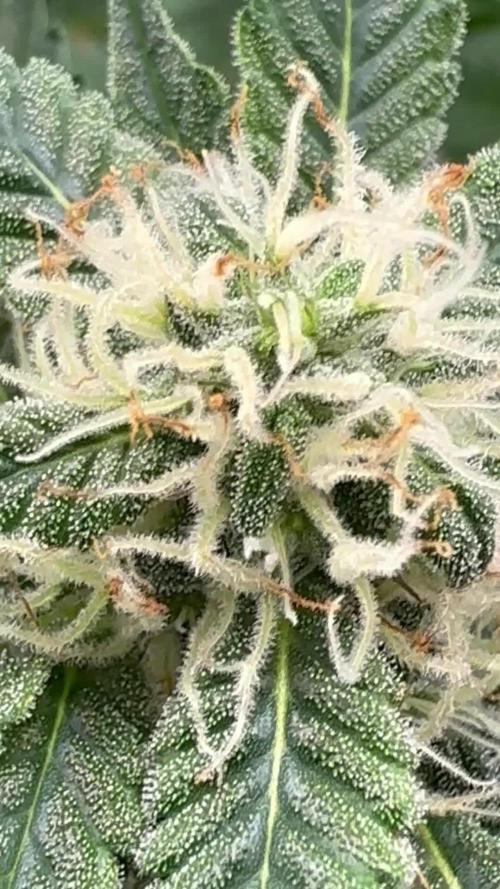
Aug 24: cool and rainy lately but will warm up again in a couple days. Gorilla Cookies looks really good and is flowering nicely. Very nice strain. Added some soluble seaweed to the water mostly for the K.
Don’t take flash pics of photoperiods unless you’re immediately using a 730 nm light to put them into dark mode.
Using the far red light like this is known as phyto-forcing and it’s like getting an extra two hours of darkness making a 26 h day. This far north I think it moves flowering up by 3-4 weeks so obviously a huge trick. Easy and cheap if you have daily access at dusk.
Aug 26: it’s been a couple of weeks but I figured it was time for a lazy compost tea. I watered with it slightly diluted and the plants look almost immediately greener and more vigorous…amazing actually. 👍👍
Aug 27: this is definitely the fastest flowering of the four. Hopefully it stays sunny for a few more weeks. Thinned out the understory a bit as there were some small branches and bud sites that were not going to do anything.
Check out the birds sounds on the first video. The magpies thought I was too close to their nest in the tree or something…they’re usually not quite that annoying.
Aug 29: this is a great strain, and the manifold is working its magic.




Likes
102
Share


@Aleks555
Follow
Dear team TrolMaster Europe,
We would like to express our sincere gratitude for providing us with the Tent-X controller. We are delighted with its functionality and performance! We are confident that this controller has significantly aided us in our journey with our beloved plant Jealousy from Zamnesia.💪🤝
We were pleasantly surprised by the efficiency and ease of use of the Tent-X. It seamlessly integrated into our plant care system and helped us achieve incredible results.
Once again, thank you very much for your support and high-quality equipment. We are immensely satisfied with your product and hope for long-term cooperation in the future.
Today marks the end of our journey with Jealousy from Zamnesia💚, and we want to express our heartfelt gratitude to Zamnesia for their support throughout this entire journey. We also want to extend our thanks to Plagron for providing us with their high-quality fertilizers. Their products are not only effective but also incredibly easy to use. We highly recommend them to everyone!

Likes
45
Share


@Robbaus
Follow
Ciao a tutti! Ho finalmente finito il mio primo giro in idroponica. Dunque, al netto dei miei errori che avevo messo in preventivo, è un metodo davvero ottimo per coltivare. Salta subito all'occhio la velocità palese con cui crescono le piante, molto di più rispetto al metodo classico a terra. A suo favore posso anche dire che lascia molto più pulito il box non avendo terra e quant'altro. I vasi da svuotare sono pratici, mi sono segnato però delle tacche per segnare i livelli a diversi litri, da poter capire come fare quando si deve rabboccare di acqua.
Le note dolenti. Beh innanzitutto sconsigliato assolutamente a luglio e agosto per via delle temperature, l'acqua nel vaso dovrebbe stare a 22 gradi al massimo, io stavo almeno a 5 in più. Poi, avendo 35 litri d'acqua in 3 vasi e avendo 10 prodotti da utilizzare nella quantità di 2 ml/l, non posso dire che sia la via più economica. Anche se bisogna valutare anche che, soprattutto in vegetativa, si rabboccano i prodotti anche a distanza di 2 settimane,quindi con ampie pause tra una volta e l'altra.
Ho sbagliato a calcolare l'allungamento quando le ho girate in fioritura, si sono allungate almeno il doppio di quello che pensavo e così facendo non si sono formati dei bei fiori apicali grossi, ma tanti fiori sulla stessa ramificazione e quindi ci ho rimesso almeno in impatto visivo di sicuro. Però questa è una cosa che dipende dalla velocità dell'idroponica, la prossima volta lo so e mi comporterò di conseguenza.
Nota dolente assai: la muffa. Ho sbagliato a volerla fare nel periodo estivo, fa troppo caldo e per mitigare la temperatura ho usato anche l'umidificatore in fioritura. Errore madornale, ho buttato via 60-70 grammi. Già l'estate scorsa ho avuto problemi di temperatura, la prossima sicuramente non coltiverò, sono stato un cretino.

Processing
Likes
11
Share


@PowerofNature96
Follow
Welcome to the fifth week of flowering ... The smell is strong enough. The tops are getting hard and filled with resin, the pistils are getting dark and some violet shades are noticed. Unfortunately for the hydroponic system my water pump broke when it was still in veg and as soon as I inserted the bloom the air pump broke too. I could not replace either of them and therefore the results in hydro are not abundant but the smell is very good. With the help of ga3 I produced some male flowers only on the Cranberry and therefore some seeds on the smaller flowers ... Happy growing to all
