


Likes
Comments
Share


@VallasDiaries
Follow
She start to smell very very Strong... I love it..
But sadly my neighbor come today and ask if it is possible to take her in my House...
Yes of course...NOT lol xD

Likes
31
Share


@MadeInGermany
Follow
Info:
Unfortunately, I had to find out that my account is used for fake pages in social media.
I am only active here on growdiaries.
I am not on facebook instagram twitter etc All accounts except this one are fake.
Harvest day 60
since the time
change to 12/12 hrs.
Hey guys :-)
Finally the time has come .
The lady was harvested.
After the trichomes have been checked (70% milky 30% amber) as always, it was left in complete darkness for 48 hours before it was neatly trimmed by hand.
After trimming, she was put back in the drying tent on nets.
There they are allowed to dry for the next 8-12 days at 62% humidity before they are put into the jar to ferment with 62% boveda packs.
After about 4-6 weeks in the jar I will swap the 62% boveda pack for a 58% boveda pack where it can be ready for another 4-6 weeks to enjoy :-).
As always, the remains of the leaves are used to make Ice o Lator and oil.
Of course, as always, there is a final update during the fermentation process.
Until then, I wish you all a lot of fun with this update.
Stay healthy 🙏🏻 and let it grow 👍.
You can buy this Strain at :
https://www.royalqueenseeds.de/feminisierte-hanfsamen/220-pineapple-kush.html
Type:
Pineapple Kush
☝️🏼
Genetics:
Pineapple x O.G. Kush
👍
Vega lamp:
2 x Todogrow Led
Quantum Board 100 W
💡
Bloom Lamp :
2 x Todogrow Led
Cxb 3590 COB 3500 K 205W
💡💡☝️🏼
Soil :
Canna Coco Professional +
☝️🏼
Fertilizer:
GHSC Powder Feeding Bio
☝️🏼🌱
Water:
Osmosis water mixed with normal water (24 hours stale that the chlorine evaporates) to 0.2 EC. Add Cal / Mag to 0.4 Ec Ph with Organic Ph - to 5.5 - 5.8 .





Likes
14
Share


@Greenislandfr
Follow
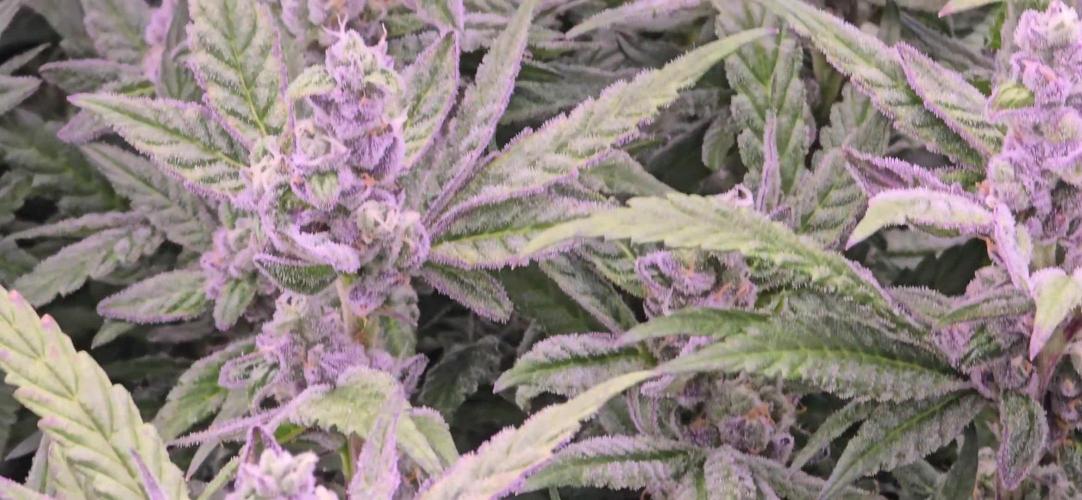
Semaine de pluie plus des FIM faite au hasard et des taille apicale sur toute les secondaires pour réduire la taille de la plante. Elle grandit énormément et resiste a TOUT. trop d'engrais ? Aucun soucis , pas de soleil ? Oklm pour quoi faire ? Pas possible de mettre de l'engrais ?" Bof tu m'en a mis pour 3 semaine dans la geule"

Likes
3
Share


@DeepSouthDank
Follow
Pheno number #1 is white and smells like sweet exo cheese, great smoke and effect too. The rest are pretty good too. 3 and 4 lacking terps. very woody..
Great grow all in all. about 35g of premium bud per plant.
Happy growing!


Likes
1
Share


@Deebow
Follow
Have grown 3 gorilla cookies autos out to harvest and all three have been noticeably different in growth and characteristics
Likes
Comments
Share


@Cultivandomedicinanatural
Follow
Por una parte tenemos la que llamaremos Biscotii 1:
Tiene un tamaño monstruoso, que tuve que doblar en varias ocasiones el tallo porque no me daba más el foco para subirlo. De hecho una de las ocasiones me quemo una hoja del puntal y un pelín la puntita y como se puede ver hizo que la punta parezca un monstruo!! enorme, grande y de forma especial.
Hay gente en instagram que me pregunta que si lleva anabolizantes jajaajja lo más parecido a eso es los nutrientes de plagron!!! Que las revienta a las pequeñas
Esta tiene unos tonos morados que la hacen muy atractiva y una resina generosa. El olor es fuerte y la altura estirada es una pasada!!
Por otra parte la Biscotti 2:
El tamaño es inferior que la anterior, pero no por eso diría que poco productiva... Tiene un central que da miedo igualmente, los satélites son una pasada llena de resina.
En esta ocasión no tiene tonos morados, pero tiene mayor resina.
En general ambas dos tapan la botella de litro y medio de agua, prieta, olorosa y con resina para aburrir!!
😍😍😍😍😍
El peso le pondré en seco en cuanto lo pese 😇
Likes
15
Share


@RDWCGrowing
Follow
2/1/2024- Pre-Germination Activities Day 1
I have 21 weeks until final photo is do.. I took 3 seeds out of cold storage and will let them get to room temp for the next 48 hours before I go with Glass of water for germination. I have 3 beans because I will start from the very beginning helping ensure I present the best Pheno. This is going to be a fun one.. I am a few days away from being able to clear my tent out for this run.. I have a breeding run in right now and the Seeds are a few days away from being mature enough for me to take down the girls.
Once I get them down I will need to get my tent cleaned up and turned over right away. This is going to be close, I will have to time them to the water and into the tray at the right time.. because I will need to get lighting on them right away.. I have my 2X2 and my light ready incase I need to hold them in the cloning machine if the others are not done in the next few days.. Glad I have options that can stretch me out for a week or 2 to give me a little more time.
2/2/2024- Pre-Germination Activities Day 2
I checked on my breeding run to see how close the seeds are and if the tent is ready for me to clear and clean but alas I am still going to need a few days. I setup the emergency 2X2 and that should give me 2-3 weeks. The plan is to still wait one more day to allow the beans to warm up to room temp and then drop them in Water sometime tomorrow.
Form my Emergency 2X2 I have the following:
4" inline fan and carbon filter
Fan
VS-2000 light
2/3/2024- Germination Activities Day 0 - Dropped the Beans in.. Today is 0 day.. Go.. Go .. Go..
2/4/2024- Germination Activities Day 0-1 - Checked in on them this morning and no tap roots yet.. covered them back up and back in to the closet they went. I setup the Root Riots and the Seed tray for them. I Ensured my water that I was soaking the root riots in was PHed to 5.8 and I used RO water.
Afternoon Update: Checked on my Breeders and they are done. I started to harvest them, I took down the one I had reversed with STS and I took down the Black African Magic- All but one bud, I wanted to get some pics of that one today.
I was only able to get 2lbs into the Cannatrol because I had to be very careful to keep the bud from the plant that was treated with the STS separated from the other seeded bud that was pollenated from the plant I reversed.
Cannatrol could have held an additional 2oz of wet but not today. Ideally I need 1 more Cannatrol so I can take an entire Tent, but will figure that out. I put an additional 1.5lbs into the freezer to wait it's turn into the Cannatrol, I would have left it on the plant and taken it in 4 days when the dry cycle gets done but wasn't sure how much 2.2 lbs was equivalent to chopped and wet trimmed.
2/5/2024- Germination Activities Day 0-2 - Checked in on them this morning and 2 of them have very small tap roots out.. one still doesn't going to give them some more time. I will check in on them this evening and see if they are more open if so I will transfer the ones that are ready to their medium and seed tray.
2/6/2024- Planting Day TRUE Germination Day 0- Checked in on them this morning and all 3 of them have tap roots out. I broke the bottom of the tap root for #1 which was the biggest.. pretty sad.. I hope she survives.. I tried to be careful it just snapped off when I was trying to get it in the root riot right. Other than that all three are now in their in-between home in the 2X2 while if finish clearing and cleaning out their forever homes.
2/7/2024- Germination Day 1- Checked in on them and no surprise no sprouts yet. Sprayed the dome to moist it and light spray to the tops of the Root Riots.
2/8/2024- Germination Day 2- #3 is popped and it looks like #2 will be popped by this evening.. I got my second Cannatrol today so now I can take down the rest of the tent and get it into the dry/cure.
2/9/2024- Germination Day 3- #2 is popped as well.. so I have #2 and #3 up and still waiting to see on #1 but that might be a loss since I accidently broke off some of the Tap root when transplanting.
2/10/2024- Germination Day 4- #1 has Popped... We have ignition on all 3.. YAY!! I finished clean up and install of RDWC system, this time was unique the back left buckets 3 inch pipe wasn't seated correctly so I had to clean up about 12 gallons of water all of the floor. I also had two leaks coming from one of the Waterfall return junctions, this is why I do a full pressure test before I put anything in. I will continue to monitor it through tomorrow to ensure that I am good to go and then I will finish setting up the baskets and prepping the water to be ready for the ladies planting day!!!
2/11/2024- Germination Day 5- #1 Of course is going to be my trouble plant.. No matter what If she lives through planting in the system and making it, I think I might not cull her at all regardless, she has been such a problem, makes me wonder if she will be super worth it towards the end.. We will see as we go through this grow, but #1 has a piece of the shell on the leaves,
Other than that I set up a new thing I have been doing since last grow converting my Baskets into Sure plants so I can see exactly where the water is when I plant them and ensure I have the water up high enough that they are able to access it and grow but not too high were they are drowning.
2/12/2024- Germination Day 6- Everything seems to be going good.. will just keep them moist and let the roots grow for a few more days before I transplant to forever home.
2/13/2024 - Germination Day 7- Just keeping them Moist.
2/14/2024 - Germination Day 8 - Planting day.. they are now in the system.. :-)I had to fill the water to the bottom of the basket where I could see water on the bottom rocks and just coming up where I had created my whole/ sure plant.
2/15/2024 - Germination Day 9- Top fed just a little to keep them moist and encourage root growth towards the water. I ensured the PH is right at 5.98-6.02 range.
2/16/2024 - Germination Day 10- Top fed just a little to keep them moist and encourage root growth towards the water.
Processing
Likes
10
Share


@UrbanFog
Follow
The ladies are starting to stretch and flower.
We also did a defoliation and lollipop session at the end of week 2 flower.
Canopy and bud sites look good and are a plenty. Looking forward to next couple of weeks.


Likes
Comments
Share

@Swanberg
Follow
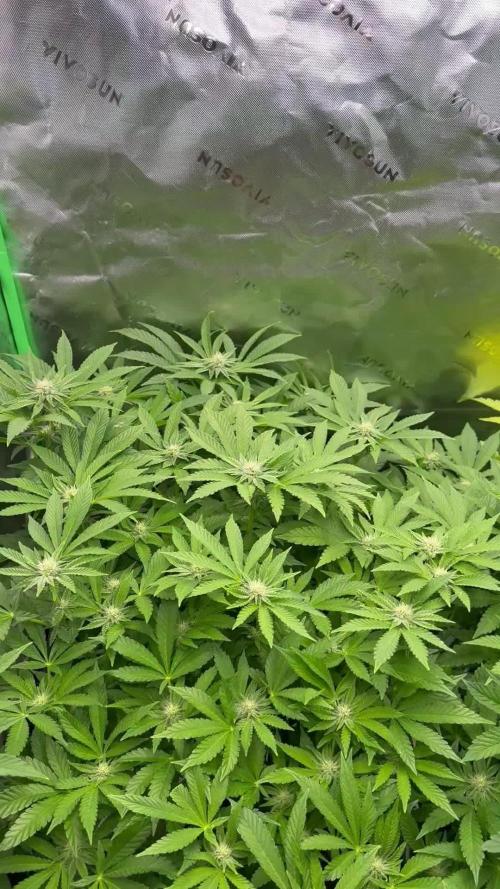
The spread of the large plant almost takes up this whole tent. Definitely in the market for larger flower tent.

Likes
9
Share


@DaddyPrime2
Follow
9/22 topped them at 4th node. some of them are looking better for mainlining that others. some of them i may not mainline and others i left an extra node in case i want to keep clones around.
#1 is looking happy with the topping and looks really good.
#2 is the only one thats been praying and is the tallest and strongest looking all around.
#5 short and such tight internodal spacing that it makes it hard to see whats all there. just looks like a bunch of small leaves until they grow out. i may not mainline this one either be cause of it being so tightly packed it may make it
9/27/24
day 20 theyre growing quite well. #1 i ended up taking the bottom nodes. i was originally goi g to use them as clones later on but decided to just let her go with her 4 nodes. #5 is so tightly packed, she has like 8 mains all in such a small space, its hard to even make sense of it all.


Likes
6
Share


@Eponymus29
Follow
Well I think I messed up, I started this auto in a seed starting tray and after reading a bit it seems I should've start her right in her final pot... I transplanted a couple days ago, hopefully she won't resent me for the rough start.
Likes
16
Share


@Mrg7667
Follow
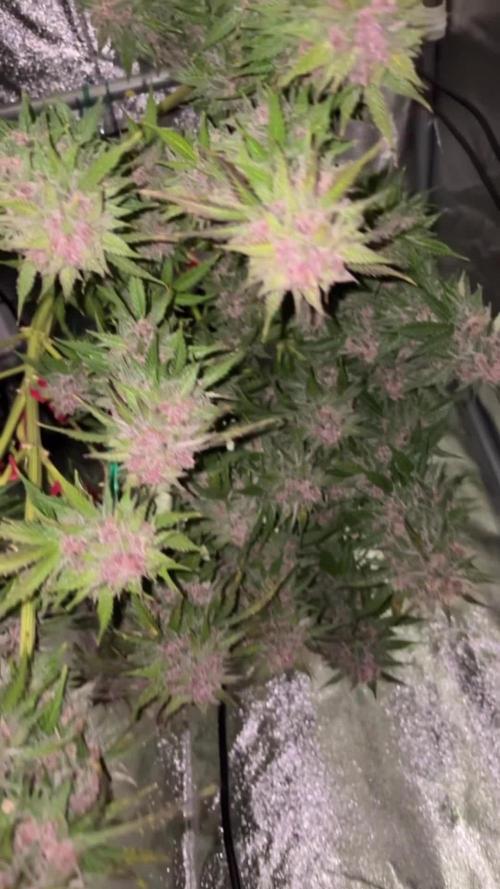
Slight light burn on a couple plants had to raise the LED. On the off week Light seems to be allot more effective at civering the space although the plants did not take well to the spectrum/heat adjustment so the first two days i had to ween the light on a couple hours at a time. I could tell when they needed a break because they woukd physically get droopy once they got over whelmed eventually they got used to it tho!



Likes
25
Share


@TheCannaProphet
Follow
____________________________
~Seedsman Fuel D.O.G.~
____________________________
'Fuel D.OG Feminized was bred by crossing two highly celebrated and popular strains from the USA - Chemdawg (Sour Diesel x OG Kush) and Fuel OG (Diesel x Headband). Fuel D.OG is a 70% sativa, 30% Indica plant with very good potential yields both indoors and outdoors. Resin and THC production is also at a very high level.
Fuel D.OG improves on Chemdawg, being a much more robust plant with a much more intense flavor while also developing a larger calyxes than Chemdawg. Its robust appearance is typified by a thicker central stem that is so strong that it does not need to be supported during the later flowering stage in spite of the high degree of sativa stretch it undergoes once flowering has been initiated. Large spear-shaped buds surround the main stem like a crown. Outdoor cultivation produces plants that can grow up to 350 cm. tall in optimum conditions.
When cultivated indoors Fuel D.OG produces yields of 450 - 600 gr/m2 in a 65 - 70 day flowering period with generous quantities of resin already noticeable in the nascent buds during the third week. Its height can be controlled indoors by switching to the flowering light-schedule once plants are established and also by the use of the SCRoG technique whereby plants are trained horizontally. Outdoors, each plant can yield 700 - 800 gr. of large, sticky buds with harvests in the northern hemisphere ready at the beginning of October. Its large trichomes, concentration of terpenes and the sheer quality of resin make this a very serious proposition for extract/concentrate makers.
Fuel D.OG has more intense OG Kush flavors than the Chemdawg parent, with increased diesel emphasis and with citric, lemon and grapefruit scents. THC content is very high with low proportions of CBD. The effect experienced by consumers is one of intense relaxation evolving into a long-lasting narcotic stone that makes Fuel D.OG more suitable for evenings unless there are no important tasks to be completed.'
*description credit to Seedsman Seeds
__________________________________________________________________________________________________________________________________________________________________________________________________________________________________________________________________________________________________________________________________________________________________________________________________________________________________________________
-Characteristics-
BREEDER/BRAND: Seedsman
GENETICS: Chemdawg (Sour Diesel x OG Kush) and Fuel OG (|Diesel x Headband)
VARIETY: Mostly Sativa
FLOWERING TYPE: Photoperiod
SEX: Feminized
THC CONTENT: 20% Plus
CBD CONTENT: <1%
YIELD: Indoors: 450 - 600 gr/m2; Outdoors: 700 - 800 gr/plant
PLANT HEIGHT: Up to 350 cm. outdoors
GROWS: Greenhouse, Indoors, Outdoors
FLOWERING TIME: 65 - 70 days
HARVEST MONTH: Beginning October
TASTE / FLAVOR: Citrus, Diesel, Grapefruit, Kush, Lemon
EFFECT: Powerful, Relaxing, Sedative, Stoned
__________________________________________________________________________________________________________________________________________________________________________________________________________________________________________________________________________________________________________________________________________________________________________________________________________________________________________________
THE SETUP:
~Planted into Jiffy Peat Pellets that were hydrated with de-chlorinated water with SuperThrive added then ph'd to 6.0 @ 80℉
~Grown 100% organic in 10g fabric pots with Mother Earth 70/30 Coco/Perlite medium amended with 2tbs/g of Down To Earth 4-4-4 / 2 cups/g of Earthworm Castings / 1tbs/g of Dr. Earth Flower Girl 3-9-4, 1tbs/g of Dr. Earth Bat Guano, 3/4 cup of Down To Earth Azomite and 1 tsp/g Down To Earth Fish Bone Meal.
~24hr light cycle during Germination / 19/5 light cycle for Vegetation and 12/12 for Flower
~Straight water ph'd @ 6.2-6.8 when needed and weekly Compost Tea's.
__________________________________________________________________________________________________________________________________________________________________________________________________________________________________________________________________________________________________________________________________________________________________________________________________________________________________________________
Weekly Updates:
10/11- Week Nine! Here we go on our way to sticking a fork in this run!
She's starting to fade and she's putting out trichomes like crazy! Possibly by week's end she'll be hanging after she spends a couple of nights in the dark.
I watered today using straight water that's ph'd to 6.5-6.7 @ 72℉. I gave her a little over 1.5g to keep her flush going and then turned her pot.
Trichome status: 70% milky / 30% clear
10/13- I watered today with 1.5g of straight water that was ph'd to 6.5-6.7 @ 72℉ and gave her pot a turn.
She's progressing in her fade and is still bulking up. Her trichomes aren't quite where I like them yet, so more than likely she'll be going in the dark by next weekend! She's absolutely one beautiful cultivar! 🤩💚
10/15- My routine of watering every other day continues. Yesterday I watered her with her usual 1.5g of straight de-chlorinated water that was ph'd to 6.5-6.7 @ 72℉ and gave her pot a turn. Today was just spent checking her over, turning her pot and doing a quick check of her trichomes which are close, but not quite ripe enough yet!
10/17- Wow!... Nine weeks of flower DONE! 😎👍
Now my sights are set on getting this girl finished up and on her way to 48 hours in the dark before she's hung to begin drying.
I went ahead and watered her with her usual 1.5g of straight de-chlorinated water that was ph'd to 6.7 @ 72℉ and checked her trichomes, which are looking just about right!
This journey is coming to a close in the next couple of weeks with her harvest, drying and trimming up. I so appreciate you following along with me , it's been a blast sharing with you all! 😎🙏
~Thanks so much for checking out my diary! This epic run is in the home stretch with harvest fast approaching...Stay lifted and be Blessed! 😎🙏~
This week promises to be exciting so don't forget to check in! Harvest time will be here before you know it and I'm getting stoked to see the results! 😎🙏💚
~Thanks for stopping in! This epic run is in the home stretch with harvest fast approaching...Stay lifted and be Blessed! 😎🙏~

Likes
19
Share


@Bubba_green
Follow
Fantastic and easy to grow had a few problems with not having enough light and when i did get the extra light the buds just exploded thanks for all who was following on this journey happy days and happy growing00
