


Likes
Comments
Share


@Itashish
Follow
Mise en route des graines pour ce test
Jour 1 : mise en pot 24/09/24
13graines ont germer
Recette du living soil pour 10l
5litre terreau compost équin bovin ovin végétal
5litre terreau intérieur
500gr biochar
900gr lombric
50gr luzerne
5gr micro granulée it45
5gr pollen d’abeille
5gr levure de bière
50gr tourteau karanja
10gr bactérie soluble
200 zeolith chabasit
10gr Levures Saccharomyces Cerevisiae
2gr Endomycorhizes RHIZOPHAGUS IRREGULARIS
2gr Bacillus IT35 Amyloliquefaciens
Il est actuellement en maturation depuis 2semaine j’attends que les graines germes et développe bien leur racines
Ensuite je rempoterai dans des pots de 300/400ml que je garderais pour une végétation de 3/4/5 semaines le temps que je récolte ce qui a dans la tente
Ça s’annonce beau !
Le terreau Terralba ou terre 4 composts est un terreau naturel exceptionnel. Il s'utilise tel quel en extérieur pour stimuler la vie de vos sols, planches de cultures, grands pots...
Augmente le stock d'humus dans le sol, la rétention d'eau et d'air. De la germination à la récolte. Sans risque de brûlure.
Ce terreau universel peur s'utiliser dans tous les cycles de cultures extérieures.
Nous vous conseillons un mélange à 50/50 avec notre terreau Horticole INNT pour une base de culture durable et réutilisable en intérieur.
Composition : composts équin, bovin, ovin et végétal maturés 24 mois minimum.
Composition :
1% (N) total
0,7% (P205)
0,9% (K20)
0,5% (MgO)
3,6 (CaO)
24% de MO
C/N : 11
PH : 8
Le terreau Terralba est un terreau universel exceptionnel.
Ce terreau innovant très drainant avec innovation fibre de mousse et fibre textile recyclées est comparable à un substrat de type fibre de coco. Il est aussi enrichi en compost. Il peut servir de la germination jusqu'à la récolte.
Nous vous conseillons un mélange à 50/50 avec notre terreau 4Xcomposts EXT&INT pour une base de culture durable et réutilisable.
Écologique, restructurant, la terreau enrichie et aère le sol durablement - notamment les sols argileux - tout en lui redonnant jeunesse !
Composition :
• 1,2% (N) total
• 0,4% (P205)
• 0,8% (K20)
• 49% de MO
• C/N : 22,4
• PH : 7,3
Le charbon végétal actif est capable d’absorber jusqu’à cinq fois son poids propre en eau ainsi que les éléments nutritifs qui s’y trouvent. Il joue ainsi le rôle de catalyseur et d'amplificateur pour les fertilisants traditionnels, qu'ils soient d'origine organique ou minérale. Ce pourquoi il est idéal pour activer un sol et pour les thés de compost oxygénés.
Le charbon végétal améliore la diffusion et la disponibilité des éléments nutritifs dans le sol et offre des conditions propices au développement des micro-organismes.
Le Biochar peut être introduit dans une grande variété de sols. Il est particulièrement efficace dans les sols pauvres, difficiles et acides.
Pour faire agir rapidement et efficacement sa capacité d’amendement, le charbon végétal est enrichi et biologiquement activé avec des micro-organismes. Le Biochar se comporte ainsi comme un structurateur et un activateur dans le but de valoriser les sols.
Composition :
• Charbon végétal actif 31%
• Matière organique 33%
• Matière sèche 75%
• C/N : 17
• PH : 7,2
• Azote (N) : 2,1 % dont 1,2 % azote organique
• Phosphore (P205) : 0,74%
• Potassium (K20) : 1,18%
• Calcium (Ca) : 6,8%
• Magnésium (MgO) : 0,65%
Le lombricompost apporte à la plante des éléments nutritifs tels que l'azote, le phosphore et le potassium, qui sont essentiels à sa croissance. En outre, il contient de nombreux oligo-éléments et micro-organismes qui peuvent être bénéfiques pour la plante.
Le lombricompost a également une forte capacité de rétention d'eau et peut améliorer la structure du sol, ce qui peut être bénéfique pour les plantes. En utilisant du lombricompost, vous pouvez ainsi favoriser la croissance de vos plantes de manière naturelle et écologique.
Le lombricompost est un fertilisant, amendement organique à la formule haut de gamme. Totalement naturel, il résulte de la digestion de fumier bovin et équin par des vers de terre. Les lombrics transforment ces déchets en un compost riche en nutriments et en micro-organismes bénéfiques pour les plantes.
Le lombricompost présente une texture fine et friable, regorgeant de nutriments essentiels tels que l’azote, le phosphore, le potassium et d’autres micro-organismes bénéfiques pour les plantes. Son utilisation améliore la qualité du sol, favorise la croissance des plantes et contribue à la conservation de l’environnement en réduisant les déchets organiques.
Le lombricompost est donc une source naturelle de nutriments et de matière organique pour les plantes, et peut être utilisé comme engrais ou comme amendement du sol. Il surpasse ainsi le compost, grâce au travail du lombric (E. Foetida) qui transforme le fumier en un super compost ! 10kg de fumier sont nécessaire pour obtenir 1kg de lombricompost.
Composition :
• Matière sèche 65,3%
• Matière organique 48,7%
• Ph 7,9 CE 5,98dS/m
• Azote (N) 2,4% dont NO3 0,28%
• Phosphore (P205) 3,2%
• Potasse (K2O) 3,8%
• Acides Humiques 6,2%
• Acides Fulviques 0,9%
• C/N 11,8
La luzerne fait un excellent paillis, c'est un inoculum de bactéries et de champignons ! Elle contient des niveaux élevés de protéines. Elle fournit de nombreux minéraux importants, dont l'azote, le potassium, le calcium, le fer, l’acide folique, etc.
Elle stimule la croissance saine des racines et elle contient des hormones naturelles qui aident à prévenir les maladies des racines. Idéal pour les thés de compost oxygénés (TCO)
Protéines : 16%.
Naturellement riche en protéines, minéraux, vitamines, enzymes et acides aminés.
Micro granules it45 Amendement calcaire, dolomie et gypse avec préparation microbienne à base de Bacillus Amyloliquefaciens IT45 et Saccharomyces cerevisiae LYCC6420
Formulation : micro granulés (1 – 1,6 mm) à base de rhizobactéries favorisant la croissance des plantes qui se multiplient et colonisent rapidement la zone des racines, et de levures Saccharomyces cerevisiae souche LYCC ayant un effet probiotique.
Les PGPR produisent des enzymes qui solubilisent le phosphore à partir de complexes inorganiques et organiques dans le sol et stimulent la croissance des racines efficaces augmentant ainsi la zone d'interception des éléments nutritifs. Les levures LYCC permettent une occupation de la rhizosphère par une flore bénéfique.
Composition :
• Matière sèche : 96,8%
• Matière organique : 91,5%
• N total : 6,6% dont N soluble dans l'eau 0,17%
• P total : 2%
• K total : 1,7%
Micro-granulés :
• Oxyde de calcium (CaO) total : 30%
• Oxyde de magnesium (MgO) total : 7%
• Anhydride sulfurique (SO3) : 13%
Le pollen d’abeille est l'ingrédient de base de la fabrication du miel par les abeilles. Riche en vitamines et minéraux, il est qualifié « d'aliment parfait », y compris pour les plantes !
La levure de bière est une matière vivante qui permet un meilleur fermentation pour les thés de compost oxygénés notamment conseillé pour accompagner les croissances ou apporter un gros coup de pousse pendant la floraisons.
La levure de bière stimule la vie des sols également à l'arrosage direct en apportant tout aussi bien que dans le TCO sa population l'espèce micro-bactérienne positive pour votre sols ainsi que des oligo-éléments et diverse vitamines.
Composition :
• 2,8% (N) total dont 1% (Norg),
• 2,3% (P205)
• 1,6% (K20)
• 35% de MO
• C/N : 8. PH : 8,4.
Le tourteau de Karanja est un complexe absorbant (argilo humique) qui renforce et stimule la vie microbienne du sol.
Riche en éléments fertilisants, il permet une assimilation lente et progressive de l'Azote et donc une régularité de l'apport.
Composition :
• 4,3% (N-Azote)
• 5,2% (P205-Phosphore)
• 2% (K2O-Potasse)
Matières Organiques : 67,3%
Carbone Organique : 33,7%
Les bactéries solubles sont utiles pour enrichir les sols, activer le processus de compostage et favoriser la création d'humus.
Avec plus de 55 éléments nutritifs, ce produit concentre un mélange de vie microbienne bénéfique à tous types de sols.
Véritable concentré de matières végétales et minérales, et d'une sélection de végétaux naturels compostés, nos bactéries solubles permettent une libération immédiate des nutriments.
• 2,8% (N) total dont 1% (Norg),
• 2,3% (P205)
• 1,6% (K20)
• 35% de MO
• C/N : 8. PH : 8,4.
Une zéolithe se comporte comme une « Super Argile » perméable qui retient l’Azote et les éléments minéraux nutritifs au voisinage des racines et les relâche lentement en fonction des besoins de la plante. Cela se traduit par une croissance constante mais rapide du végétal.
La zéolithe permet de réduire à la fois le nombre d’arrosages et la consommation en fertilisants car ces derniers sont moins soumis aux effets du lessivage et de l’évaporation. Améliore durablement la fertilité foncière des sols. Peut s’utiliser en mélange à tous types de substrats.
Récolte les surplus d’eau et réagit à la chaleur en suintant.
Diffuse lentement les éléments minéraux nutritifs et l’azote retenus dans l’eau (évite l’acidification des sols.
Riche en oligo-éléments, permet un développement racinaire soutenu. Retiens les pollutions des sols (nitrate, mercure).
Se mélange à tous types de substrats et toutes les cultures.
Idéal bonsaïs, plantes arides
Accroit la capacité d’échange globale du « complexe argilo-humique ».
Agit comme anti-mottant.
Allège les sols lourds et bloquants trop argileux en améliorant le drainage et le ressuyage en surface. Volume poral de 47%.
Améliore la structure des sols en s’opposant à l’acidification de ceux-ci par son effet tampon et par le retard de la nitrification de l’azote ammoniacal.
Apporte des oligo-éléments.
Augmente la résistance au piétinement.
Diminue la fréquence des rempotages.
Empêche le pourrissement des racines.
Favorise la ramification.
Modère le développement des mousses.
Permet des économies d’eaux et d’engrais.
Résiste au dessèchement et diminue la formation de « feutres ».
Retient l’eau sans changement de volume.
Sert de support aux microorganismes, ce qui contribue à la dégradation des déchets de coupes.
Les zéolithes sont des roches cristallines, présentant des capacités d'adsorption particulièrement importantes vis à vis des polluants que l'on rencontre dans l'eau et dans certains liquides, ainsi que dans l'air et les gaz. Elles sont extrêmement poreuses comme les charbons activés et elles peuvent être chargées électriquement pour opérer comme des échangeurs d'ions.
La zéolithe est un produit naturel qui respecte notre environnement. Utilisé dans le milieu industriel depuis de longues années déjà, ce minerai aux propriétés filtrantes particulières commence à se vulgariser dans le domaine de la piscine privée, de l'aquariophilie, des bassins d'agrément, de la récupération des eaux de pluie, ou encore de la culture des bonsaïs et autres plantations diverses par exemple...
4 points techniques majeurs :
- Grâce à leur propriété hydrophile, les zéolithes peuvent adsorber l'eau jusqu'à 30% de leur poids total et sans aucune variation de volume : pas de gonflement en présence d'eau ni de craquement en cas de déshydratation comme certaines argiles. Les zéolithes sont d'ailleurs de puissants agents anti-mottant (anti-agglomérant). Cette propriété est très appréciée dans le cas des terrains de golf et autres aires de jeux.
- Les zéolithes ne captent pas l'eau de façon irréversible, elles se comportent comme une réserve au voisinage des racines. Celles-ci peuvent capter l'eau en fonction de leur besoin. Les zéolithes permettent ainsi de réduire les besoins d'arrosage jusqu'à 35 %.
- Une zéolithe se comporte comme une "Zone de Stockage" qui retient l'azote et les éléments minéraux nutritifs au voisinage des racines et les relâche lentement en fonction des besoins de la plante. Cela se traduit par une croissance harmonieuse mais rapide du végétal.
- La capacité d'adsorption et l'énorme rapport surface/volume des zéolithes, vont permettre à la fois la rétention de la solution du sol et une bonne oxygénation au voisinage du système racinaire. Les zéolithes favorisent donc l'organisation biologique des sols en contribuant au développement de la micropopulation. L'apport en nutriments (N, P, K) est réduit de 20 à 25 %. Ces derniers, adsorbés par la zéolithe, sont beaucoup moins sensibles au lessivage et à l'évaporation.
Composition minéralogique :
Chabasite 70 %
Phillipsite 2 %
Feldspath 5 %
Augite 3 %
Illite - Mica 2%
Analyse atomique:
Sio2 52 %
AL2o3 17 %
CaO 5,7 %
K2O 6,1 %
MgO 2 %,
Na2O 0,6 %
Fe2O3 3,6 %
Cerevisiae Souche LYCC 6420
STIMULE LA VIE DU SOL PAR DÉCOMPOSITION 100% naturel, sans OGM et sans additifs, il a une action rapide qui permet la libération d'éléments nutritifs et la stabilisation des agrégats.
Conséquences ? Les besoins de la plante sont synchronisés, meilleur rendement et qualité à la clé !
• Stimule les population de micro-organismes « décomposeurs » : +32% de population 24 heures après apport
• Libère les éléments nutritifs fixés sur la matière organique : 40 à 50 U d’N, 5 à 15 U de P, 15 à 30 U de S libérées 1 à 3 mois après apport
• Améliore la structure du sol : stabilisation des agrégats
• Réduction de la fertilisation minérale et préservation de l’environnement
Sous forme de poudre mouillable. Il contient des spores du champignon mycorhizien Rhizophagus Irregularis MUCL57891 avec des levures inactivées spécifiques. 2000 spores/gramme d’endomycorhize Rhizophagus Irregularis MUCL57891 et Saccharomyces Cerevisiae LYC6420 inactivée. Se connecte efficacement au système racinaire et forme un vaste réseau souterrain de filaments, qui agissent comme des extensions pour atteindre les nutriments et l’eau au-delà de la rhizosphère
La bactérie Bacillus Amyloliquefaciens se fixe dans la rhizosphère en se nourrissant des exsudats racinaires. En contrepartie, elle stimule la croissance racinaire en sécrétant des métabolites de croissance et solubilise le phosphore en sécrétant des phytases (enzymes).
Effet probiotique consistant en l’utilisation de micro-organismes bénéfiques pour la nutrition et la santé des plantes.


Likes
9
Share
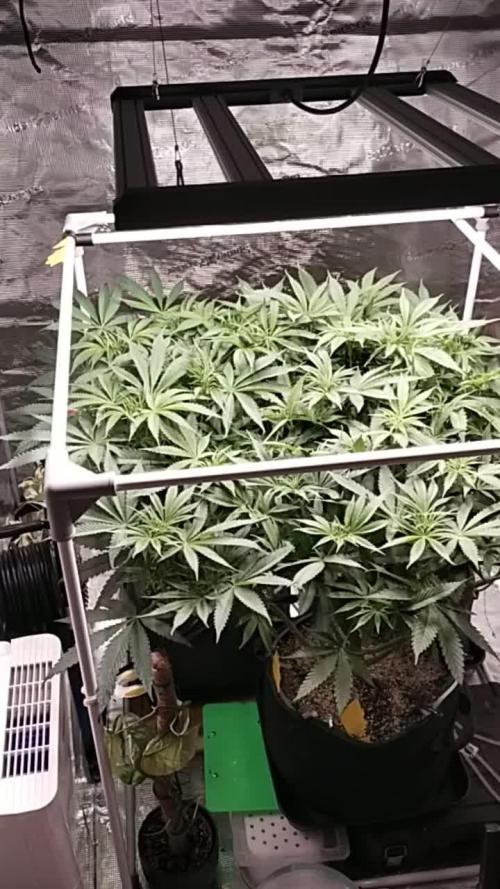

@TheGreenfulOne
Follow
Week 1 of flowering is progressing well. The canopy is flat and filling the net evenly. Started adding Top-Max and keeping up with Calmag

Likes
6
Share
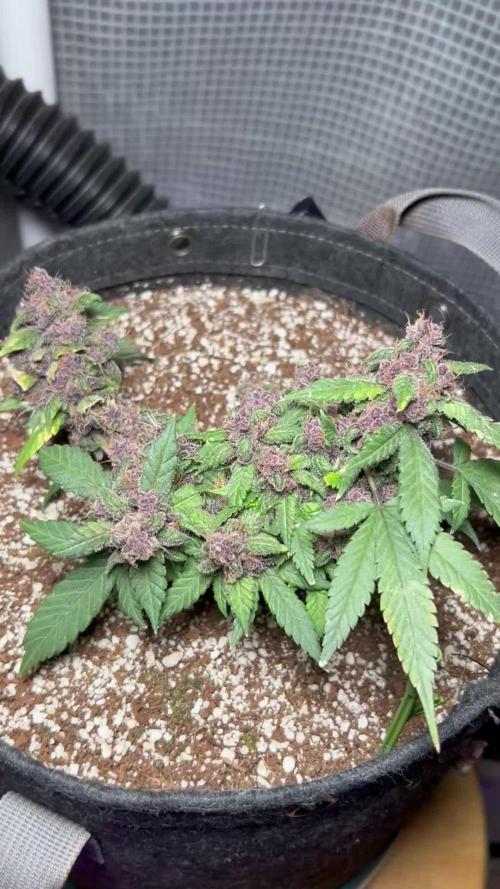

@Growstopher
Follow
6.18.25.
7th week of flower and buds look good just not much of them. 7 th week flower started on 6.16.25. Starting this week I have begun to lower strength of nutrient solution and getting her ready for harvest!
Thank you for checking out grow! Have a grow time all the time!!

Likes
40
Share


@Secretflower
Follow
Hello my friends,
...June 5, 2022..Day N°75..
...Flowering day N°29...
Fifth week of flowering for my 2 Feminized Runtz Gum, 2 Feminized zkittzy Gorilla and 2 Feminized Banana Sherbet. They are fine and they growing healthy. The flowers developing very good.
I gave them water with some Hybrid and Booster powder from Green House Feeding and some Cal-Green from Metrop.
My babys are under a Mars-Hydro SP 3000 at 70% of power and at 40 cm of the canopy.
www.originalsensible.com
www.mars-hydro.com
That's all for now my friends, thx for passing through here.
Wish you the best with your green projects.
See you soon..💨💨💨

Likes
22
Share


@ButterfliesLittleFarm
Follow
Hello Diary.
New diary, in the fifth farm I have three new residents, one Fat Banana and two Haze Berry. Both sides are from the Royal Queen Seeds. And this diary is dedicated only to Fat Banana.
I would like to thank the team from the Royal Queen Seeds who have recognized my efforts in keeping a diary and greatly support me in what I love.
I always try to make a balance between sativa and indica, since I do creative work, I am a big fan of sativa, although in the evening, when my obligations are over, I like to relax with indica. So this time I planted two Haze Berry Auto that are predominantly sativa and one Fat Banana which is more indica.
WHY FAT BANANA?
Fat Banana Automatic stinks of tropical fruits and produces large, chubby flowers. The strain is the autoflowering version of Fat Banana, an aromatic classic. The original made her mark on the cannabis world with her insane scent, massive THC level, and rewarding yield.
Fat Banana Automatic inherited indica-dominant genetics from the original strain. Much like her predecessor, she provokes a body-slamming high par excellence. Her effects take hold immediately, plunging users into a euphoric state of relaxation.
Fat Banana Automatic’s potency also gives her medicinal viability. Her calming nature is effective at reducing stress, and the physical aspect of her high may help to relieve aches and pains. The strain is ideal for evening smoke sessions. Users might feel too relaxed to function properly during the daytime. Cook some food, put on a good film, and get ready for a few hours of couch-lock.
LET'S START FIRST WITH THE FARM SET-UP:
Box - Secret Jardin DS120W 120x60x178
Lights - MIGRO 200+
Ventilation - Blauberg Turbo - E 100
Filter - Primaklima filter PK 100/125
Fan - Oscillating Koala Fan x2
Humidifier - Beurer LB 45
Soil - BIOBIZZ Light - Mix
Pot - 11L AirPot
Seed - Royal Queen Seed
Nutrition - BioBizz and RQS Organic nutrition
LET THE DIARY START OFFICIALLY:
14/09/2020
Planting. I prepared everything I needed for planting, cleaned the farm and changed the filter. I put Primaklima filter - PK 100/125. This time I decidet for AirPots, I also used them in the first two farms, BioBizz-Light Mix is already standard on my farm and Easy Boost and Easy Roots Mycorrhiza Mix from RQS as organic nutrition. Since the first farm I use only organic fertilizers and for now I have used BioBizz and RQS organic nutrition.
After I put the soil in the pot, I added 50g of Easy Boost Organic nutrition and mixed it well with the soil, after that I added 5g of Easy Roots Mycorrhiza Mix and also mixed everything once more.
I prepared 7 liters of water in which I regulated p.H with Plagron’s Lemon Kick, and soaked the soil well before making a hole in which I put the seed. Otherwise, the water would have pushed the seed much deeper into the ground.
After the planting is completed, they enter their new home. The temperature in the Box at that time was 26 degrees and the humidity was slightly below 60%.
I set the lights 35cm from the pots as Migro recommends.
14 - 17/09/2020
I sprayed the surface of the soil with water a couple of times to keep the soil moisture at the surface.
Also the humidity dropped so I put on a humidifier for a couple of days.
18/09/2020
Fat Banana sprouted, a day later from her first roommate Haze Berry.
19/09/2020
Watering. I watered with about a liter of water with regulated p.H.
23/09/2020
Watering. Regulated by p.H. at 6.4 and gave her approximately 1 liter of water.
I think Grow Diaries made a great decision to put this germination week as an option, yet that germination process is just as important and it’s great to have room to write more and show how each of us does it. See you next week.

Likes
7
Share


@Dralph87
Follow
RC#1 is in her last couple days. Main stem is starting to tilt with the weight of the buds 🤣 she was flushed yesturday for the final time with around 15 litres of water. Once the pot has dried out she will be swapped into my drying tent and left in darkness for 3 days before the chop. Feel like this day will never come lol. Very excited to try as this is my first ever grow.
RC#2 is starting to swell up but I think she has another 2 weeks in her, she got stunted for a while during week 6-7 so may have set her back a little. Bud sites look great I'm expecting no less than 8oz between the 2 girls, just by what I've sized up already. Well shall see....
18.03.20 (Day64)
Rc#1 has been chopped. Only got a few pics but I'll take them next week once it's all weighed up. RC#2 is starting its flush this week as I think it's only has around a week or so left.
Likes
12
Share


@CANNASIM
Follow
A lot of rain and wind, continuously. Temps have dropped as well.
I’m reading another week or two to chop this plants.
Sativa dominant hybrids did the best, the Fastberry and the banana purple punch did not really develop as the other two.
In specifics the cbd crack developed sizable buds, and the blue dream as well, the flowers are not as developed tight and dense as in the indoor grow. A bit of fox-tailing nothing too expressive.
Minimal work, as per the setup chosen, an no extra nutes this week.
Likes
30
Share


@dataTwiiix
Follow
05_02: ça y est là flo. A démarrer.
Un grand merci à @xpertnutrients pour son support! Pour l'instant j'utilise que les booster et les micro nuts de la game et ça le fait 👌 nickel. Je suis impatient de faire un session avec uniquement du xpert nutrients. En tout Cas leurs additifs sont aux top!

Likes
3
Share


@Kushizlez
Follow
Day 49-56 (June 18th - 25th)
(Day 51) Slurricanes and tuna are doing excellent despite their hail damaged leaves. I’m seeing good growth and decent dry downs. One of them looks like it’s been ravaged by pests but I still can’t find any evidence or signs of a pest. I’m suspecting caterpillars so I’m going to grab some BTK killer and also some all purpose insecticide sometime this week if I have time.
The clones are all really lagging so they won’t be flipped until July 15th at least. I’m still not seeing normal growth on any of them yet. It’s still quite gnarled and twisted.
(Day 52) The slurricane and tuna roots are starting to poke through the bottom of my pots. This is usually from underwatering, a thick soil or a hot root zone. I’m going to give everything except for the autos a good watering with some runoff. I am going to start incorporating 5mm sand into all of my soil mixes to help make the soil more loamy and give it some better drainage. I will also top dress every container and bed plant I have.
(Day 53) I was at a local department store today and I was shocked to see pallets of Destiny dark matter soil selling for 60% off! I bought 10 bags for a hundred bucks. At any hydro store that would have costed me 250 at least. I might go grab more because it looks like no one is buying it for 60% off even.
(Day 54) I’m going to be harvesting both of my indoor crops today and tomorrow or the next day I am going to be reusing the soil-coco blend for the slurricanes. I’m first going to till it, add a gallon of sea compost, a gallon of Destiny soil and a few cups of 5mm sand per container. I will use the excess for 5 gal pots.
I will be amending with:
5 tablespoons of nature’s pride bloom
4 tablespoons of kelp meal
2 tablespoons of Gaia green AP
2 tablespoons of glacial rock dust
2 tablespoons of oyster shell flour
2 tablespoons of alfalfa meal
1 tablespoon of rock dust blend
1/4 teaspoon of langbeinite
(Day 56) The autos are really making a comeback now. I was under the impression that I was working against the clock and they would start flowering after 3-5 weeks. I guess if they’re stunted from the cold they will delay flowering. I don’t see any pistils or signs of flowering yet so I don’t think they’ve officially started flowering yet
I didn’t get a chance to do my transplant this week or pest control. I will get to it ASAP because my photos are drinking almost a liter a day


Likes
7
Share


@PCGrows
Follow
This plant was going to be outstanding Until I stressed it out w a hug move
Likes
9
Share


@Rckeh
Follow
12/04/2023 - Day 1 : Placed Outside in the morning, Jiffy was shaded so it didnt get too hot on the roots. Left her ouside for 2 days as it was not raining.
15/04/2023 - Day 3: Roots just perfurated Jiffy, time to place her in the Pot and feed. After that just left her to be.
Didnt feed anymore this week as it rained and the plant was doing fine
Day 7 - She´s turning slightly light green
Likes
9
Share


@HUMO_Cultiva
Follow
Update day 10 of transition to bloom this Goofiez 2 it’s soy strong !!


Likes
107
Share


@DogDoctorOfficial
Follow
Oh man am i excited to share my journey with my Purple Lemonade ff baby from Fast Buds. This girl is growing like a champ, and I'm just amazed by her progress in the first week!
When it was time to transplant my plant, I decided to use Aptus Mycor Mix on the roots. Let me tell you, it was like giving my plant a magical boost! The mycorrhizal fungi in Aptus Mycor Mix formed a symbiotic relationship with the plant's roots, enhancing nutrient uptake and promoting overall plant health. It's truly amazing how nature works in harmony!
Speaking of transplanting, Im so glad i opted for small fabric pots, and I'm loving the results. Fabric pots provide excellent aeration, preventing root-bound issues and allowing for better drainage. Plus, they're eco-friendly and reusable, which is a big plus for me as an environmentally conscious grower.
Now let's talk about Aptus Holland Line for nutrition. I've always been a fan of organic and mineral-based nutrients, and Aptus Holland Line fits the bill perfectly. Their nutrient lines are carefully crafted with premium ingredients that are fully organic, ensuring my plant gets the best of both worlds. I love knowing that I'm feeding my plant with natural, sustainable, and effective nutrients that support healthy growth and i dont say this because they sponsor me , i am a long before user and believer , trust me on this one <3 <3 <3
And yes, you might have noticed some smoke in the background of my pictures. Well, let's just say I like to keep myself medicated while I tend to my green beauties. It's my way of staying relaxed and focused during the growing process, and it seems to be working wonders for my plants too!
In conclusion, my Purple Lemonade fast flowering baby is thriving thanks to the transplanting methods using Aptus Mycor Mix, the benefits of fabric pots, and the organic and mineral-based nutrients from Aptus Holland Line. It's been an amazing journey so far, and I can't wait to see my baby continue to flourish. Happy growing, and cheers to a green and smoky adventure!
As always thank you all for stopping by and for supporting me on this journey, i am super passion about growing and fell blessed to have you all with me on this new journey <3 <3 <3
Genetics - Fast Buds Purple Lemonade FF
Ligth - Lumatek ZEUS 465 COMPACT PRO
Food - Aptus Holland
#aptus #aptusplanttech #aptusgang #aptusfamily #aptustrueplantscience #inbalancewithnature #trueplantscience #fastbuds #dogdoctorofficial #growerslove
With true love comes happiness <3 <3 <3 Always believe in your self and always do things expecting nothing and with an open heart , be a giver and the universe will give back to you in ways you could not even imagine so <3 <3 <3
All info and full product details can be find in can find @
https://2fast4buds.com/ wen released
https://aptus-holland.com/
https://autopot.co.uk/
https://lumatek-lighting.com/
<3 <3 <3 Growers love to you all <3 <3 <3
Likes
37
Share


@Reyden
Follow
Continua la seconda settimana di fioritura per questa tenda Fast Buds e direi che tutto va alla grande! Sto dando circa 600 ml di acqua ogni 3 giorni al momento, quando le foglie più basse sono cadenti e il vaso super leggero, quello è il loro momento, chissà perché si è sempre più tentati a dare più acqua del dovuto? Sempre quella paura che muoiano di sete, no! Loro muoiono affogate di solito che è peggio 😈 sempre asciugare bene il vaso prima di ogni innaffiatura! Non smetterò mai di ripeterlo, perché sono il primo che ancora rischia di sbagliare eheheh
Likes
3
Share


@Ryno1990
Follow
This girl is really comming together an frosting up like crazy as her rock solid buds really start to fatten up threw week 6 of flower under the medic grow fold 6

Likes
27
Share


@adam_pawloski87
Follow
Let’s go Day 36 !!! This week went real great, girls built up a lot of structure, and stayed super healthy ! Today they got fed just water phd at 6.5 ! They been really loving that balance! I also removed a lot of under trim since we are going into preflower , so had to shave up those legs lol ! It’s really great for them , the love that airflow , but don’t take off too much or you could shock your plants so be careful ! Can’t wait to see what these girls do this week ! Hope you all enjoy an are ready for another amazing productive week ! Peace , Love , an positive vibes to y’all Cheers LetsGrowwww!!! 😶🌫️💨💨💨💨
Likes
48
Share


@DreamIT
Follow
🧙♂️🍁BUBBA HAZE BY REGULAR SEEDS 🍁🧙♂️
🧙♂️ 26.3...
🧙♂️ 27.3 All great. the plant is very tall, 108 centimeters. The flowers begin to swell and form well, soon it will start to release its scent, I'm very curious 😀
🧙♂️ 28.3
🧙♂️ 29.3
🧙♂️ 30.3
🧙♂️ 31.3
🧙♂️ 1.4
____________________________________________________________________________________
😮 What ???? New to Regular Seeds?
Take a look at their site, you won't regret it !!
http://bit.ly/REGULARSEEDS
________________________________________________________________
📜 A look at the details of what I'm growing 📜
🧙♂️🍁Bubba Haze 🍁🧙♂️
⚧ Gender
▪️ Regular
➰ Genes
▪️ 75% Indica / 25% Sativa
🎄 Genetics
▪️ Bubba Kush x Jack Herer x Cannalope Haze
🚜Harvest
▪️ 550 g/m²
🌷Flowering
▪️ 8 weeks
✨THC
▪️ Very High
✅CBD
▪️ 1.0%
🏡Room Type
▪️ Indoor
🌄Room Type
▪️ Outdoor
🕋Room Type
▪️ Greenhouse
__________________________________________________________________________
📷🥇 Follow the best photos on Instagram 🥇📷
https://www.instagram.com/dreamit420/
🔻🔻Leave a comment with your opinions if you pass by here🔻🔻
🤟🤗💚Thanks and Enjoy growth 💚🤗🤟
Likes
Comments
Share


@Kushncheeseplz
Follow
Right now , the challenge is the humidity
To combat against it., open the other tent

Likes
1
Share


@Hustle786
Follow
Hopefully Lemon 🍋 Should Be Fire
One 🍋 Plant Is Very Small HopeFully It Gives Big Bud
420💨💨💨