The Grow Awards 2026 🏆
Likes
Comments
Share
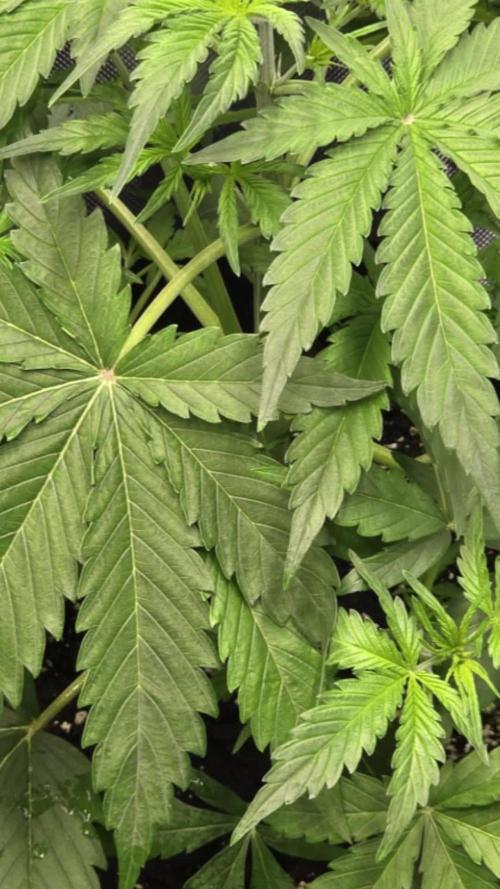
This week, the plant continued to develop with no major issues. However, signs of a magnesium and calcium deficiency have started to appear, which may require adjustments in the nutrient schedule with Calmag. The plant was watered once with clear, pH-adjusted water to maintain a stable environment. A mild yet distinct aroma has also begun to emerge, hinting at the plant’s unique character as it matures. Overall, growth is progressing well despite the minor nutrient deficiencies.
Likes
23
Share
Still got 2 do si dos and an amnesia in the cloner waiting to finish. 30 in the ground that is a mix of Alaskan purp, gelato, do si do, and amnesia haze and 1 huge blue headband. 4 in pots that are a mix of Skywalker, white widow, and Bruce banger. My goal is 20 lbs. In the fall.
Likes
43
Share
Likes
19
Share
Let’s go!!! Today is day 52 from seed , and we are officially in bloom stage😍!!! Not much of a change for this bloom schedule, everything will stay the same but instead of 3 tsps of grow and 1 tsp of bloom , we just turn that around to 3tsp of Bloom and 1 tsp of veg an we are good to go!!! Now we get to watch em stack up over the next few weeks Let’s grow lol ladies let’s grow!!! Hope you all enjoy and have an amazing productive day as well as the week. Peace, love, an positive vibes to all y’all Cheers 😶‍🌫️💨💨💨💨💨🤙🏻if there’s any questions please ask , more then happy to help anyone out!!!!
Likes
16
Share
Die letzte Woche habe ich nichts, dokumentiert oder aufgenommen. Die PermaFunk ist am weitesten, die AppleFritter hat anscheinend eine 2 Welle an Blüte Massephase, sie hat vor 3 Tagen angefangen neue weiße stigmen zu bilden und das nicht wenig. Deshalb erhält sie noch eine weitere Woche Futter. Die PermaFunk befindet sich gerade am Anfang der flush Phase. Am Blütetag 56 hat die Dame das letzte Mal Futter bekommen. Heute ist der 10.10.25 und somit befinden wir uns im Blütetag 60. Die LaBomba wird schätzungsweise bis Blütetag 70-72 weiter gefüttert bevor die Spülung kommt. Naja mal schauen, ich bin echt gespannt. Jede einzelne der Damen verströmt einen mega geilen starken touch mit besonderen Hauch an Aromen. Die AppleFritter riecht mega anziehend, hat eine cremige Note mit etwas vanille im Abgang. Die PermaFunk riecht nach einer typischen Cali Sorte, ich würde in Richtung purple punch ähnelt sagen. Die La Bomba bekommt langsam einen eigenen Geruch, eher Richtung zitrus. Ich bin gespannt...
Likes
39
Share
@KitaKush
Follow
First plant got a bunch of lockouts from the feed so I did an emergency flush..don't wanna mess with it anymore or cause nutrient burn on plant #2 so just water for the upcoming week. Will probably skip Cha Ching all together...not sure yet. Doesn't seem to me that either plant even needs it. Growing super frosty thoooo! Buds filling out I doubt they will get much thicker but I don't care...pretty exciting to watch them grow into their final form. I think these will be my best plants grown to date!!! :) Did a good amount of defoliation to get more light to the lower buds. Also cracked open my Mother Earth Coco Coir block for my next two grows and topped off these 5 gallon pots..the plants definitely seemed happier with that fresh layer added! Getting closer to the finish line!!
Likes
14
Share
So far it looks like I have control of the nute burn looking at the fan leave not burning/changing anymore. Started finish but started at 5pm and my led goes off at 6pm. I kept flushing till 6:20om but stopped due to the fear of the ladies herming, revegging, or anything that would cause my ladies to start off week 7 on a slow/bad start. Defoiling a little but mostly real bad burned fan leave because I believe your ladies will continue to try and repair them which pulls energy from bud developement. Flushed on 6/1/22 and ended on 6/2/22 all 3 ladies ppm is under 200 so I can make sure they have enough to ripen and fatten up. On week 8, I will do a ice flush and then 2-3 days of darkness while they freeze. Checked trichomes on 6-5-22 and some show maybe 10-20% on some colas. Will harvest all 3 on 6-12-22 probably in the morning which I seen and heard it is better because at a certain time in the day marijuana plants let out moisture and you want to keep as much of that as possible.n
Likes
64
Share
Buds are maturing. I think the Gorilla Cookies should be ready end of next week, the two others will maybe need more time. I added some strings to the Wedding Cheesecake because the branches were slowly falling, now it's good.
Likes
45
Share
@valiotoro
Follow
The smell is ABSOLUTELY divine 🤩 The trim was super easy,the buds are super dense & sticky👌
Likes
34
Share
Not much to say apart from they are getting bigger and all three seem to be girls now 11 days until I flip! Edit: I'm happy with the training and keeping them low, so the aim is to flip this week
Likes
4
Share
Cinderella is a great variety to grow a very quick sativa.. it's funny how she grows outdoors compared to indoors the bud structure is completely different.. but taking the Clones off of the outdoor tree.
Likes
8
Share
So far so good, Plant2 is one week behind in size on Plant1 but no reason to panic. Each seed has his own growing speed. Started some LST techniques to keep the plant low and let the side branches reach their full potential. The plants are looking happy and healthy. Because it are auto’s I’m expexting them to start flowering in a week or 2 but it’s hard to tell as I usually only grow non-auto’s I’ll switch to bloom nutrition as soon as I see the first pistils appear.
Likes
14
Share
Wow from day one this beauty has been my diamond in the garden .. she has the looks of a top notch bud and the smell is so good and strong it's great to walk into after some one burns a bud ...she was super disease and mildew resistant I never had to worry about her at all and she did well with minor what shortages .the only thing I would change is the temps when growing she will need above 70 or else she slowed growth a lot . The buds look and feel great and that smell so unique ..would highly recommend these guys they are the real deal cheers family cheers ....
Processing
Likes
10
Share
@PisBaked
Follow
Week 5.5 for PE, GSC (small one), & both GG's. Week 6 for everything else! Everything looks great other than the one GSC.. What I thought was light burn is apparently nute burn.... Run off PPM is about 100ppm higher than the rest... Gave the whole crop a little flush, and gave them half strength feedings for 2 days. Obviously the burnt tips won't recover, but it doesn't seem to be getting worse. Right now she's at a whopping FOURTY EIGHT inches... She is the most developed, and has officially begun producing buds. Scent def. resembles GSC, no question at all. Next best is the LSD25, growth is amazingly healthy, and is starting to form buds. Everything else is doing great, but going at pretty normal speed compared to the LSD & GSC Healthy white roots are exploding out the bottom of every pot; something I've never seen growing in soil.
Likes
7
Share
@Aleks555
Follow
Dutch Passion - Melonads Runtz Harvest We’ve completed this amazing grow, and I must say, we truly enjoyed it! The plant grew easily and initially had a bush-like shape, but later, it transformed into a Christmas tree look. The aroma is incredibly delicious, and the yield is impressive. The buds are dense and covered in resin; while trimming, our fingers were coated in such a thick layer of sticky resin that the scissors wouldn’t cut the leaves anymore. We want to extend our gratitude to Dutch Passion for such an amazing strain—we absolutely loved growing it. We also want to give a huge thanks to Xpert Nutrients for the outstanding fertilizer that has helped us grow such beautiful and powerful plants year after year. Without your products, it would have been much harder to achieve these results. The nutrients are easy to use and of exceptional quality! Why I Choose Xpert Nutrients: When it comes to growing strong, healthy plants, choosing the right fertilizer is key. After several years of experience in indoor cultivation, I can confidently say that Xpert Nutrients stands out from the rest, and here’s why: 1. Unmatched Quality: From the very first use, it’s clear that Xpert Nutrients is made from premium, high-quality ingredients. Every bottle is consistent, and the nutrients are perfectly balanced for each stage of the plant’s growth cycle. This attention to detail has allowed me to grow incredibly healthy plants with powerful roots, lush foliage, and dense, resin-packed buds. 2. Easy to Use: No complicated mixing instructions or guessing games. Xpert Nutrients provides clear guidelines, and I never have to worry about whether I’m giving too much or too little. The nutrients dissolve perfectly in water, leaving no residue or sediment in my system, making feeding a breeze. 3. Consistent Results Every Time: I’ve used Xpert Nutrients across multiple grows, and the results are consistently impressive. My plants grow faster, are more robust, and yield more, whether I’m growing autoflowers or photoperiod plants. Each time, the buds come out dense, sticky, and packed with potency. 4. Boosts Potency and Flavor: One thing I’ve noticed is that Xpert Nutrients doesn’t just help with growth; it also boosts the aroma and flavor of the final product. My plants consistently produce some of the most aromatic and flavorful buds I’ve ever grown, making each harvest a true sensory experience. 5. Optimal Performance with Every Strain: Whether I’m growing strains from Dutch Passion, Anesia Seeds, or Humboldt, Xpert Nutrients works wonders with all of them. I can rely on it to provide the essential nutrients my plants need to thrive, no matter the strain or growing conditions. 6. Support and Trust: The customer service and support from the Xpert Nutrients team have been incredible. They genuinely care about their customers' success and are always ready to provide advice and guidance. Knowing I have such a supportive company behind me is invaluable. After years of growing, I’ve tried a lot of different fertilizers, but Xpert Nutrients has consistently delivered the best results. It’s a product I trust, and it never lets me down. If you’re serious about growing the best plants possible, Xpert Nutrients is a game-changer you can’t afford to miss.
Likes
3
Share
Shes Starting to smell reallllly good! I shouldn't have too much larf if i had more room to spread her out in early flower she would be producing alot more.
Processing
Likes
32
Share
@Vega0284
Follow
Hey Guys! Super excited this week! I've really been wanting to try growing outdoors, so I built a cheap hoop house! Got most of this stuff for the frame from Lowes under 300$. All the soil products I got from GrowGreenMI. Some really cool people out there. One thing I'm super worried about is drainage. Right now those holes are about 4 feet deep and they've got about 4 inches of water in them already. What's been cautioned is that, eventually, about 2 months in these plants roots will grow and reach the bottom and cause root rot to form. One of the biggest things I was trying to be wary of was causing root rot. This was also the biggest precautionary measure I took when mixing the soil. Adding the extra perlite, coco, and clay pebbles. Best advice right now is to build the soil up on the holes another 16 to 18 inches and possible stick a PVC pipe down to the lowest drainage point of the hole to allow some of that natural occurring water to evaporate. Any advice anyone has on it is welcomed! Making a compost tea for the soil outdoors, will probably put 2 cups in each RDWC bucket as well and let that do it's magic for a day or so before nutrient change. Raised the bed about 14 inches as well! All the seeds sank! Off to a good start! Lol
Likes
52
Share
Lacewings seemed to have mostly killed themselves by flying into hot light fixtures. I may have left the UV on which was smart of me :) Done very little to combat if anything but make a sea of carcasses, on the bright side its good nutrition for the soil. Made a concoction of ethanol 70%, equal parts water, and cayenne pepper with a couple of squirts of dish soap. Took around an hour of good scrubbing the entire canopy. Worked a lot more effectively and way cheaper. Scorched earth right now, but it seems to have wiped them out almost entirely very pleased. Attempted a "Fudge I Missed" for the topping. So just time to wait and see how it goes. Question? If I attached a plant to two separate pots but it was connected by rootzone, one has a pH of 7.5 ish the other has 4.5. Would the Intelligence of the plant able to dictate each pot separately to uptake the nutrients best suited to pH or would it still try to draw nitrogen from a pot with a pH where nitrogen struggles to uptake? Food for stoner thought experiments! Another was on my mind. What happens when a plant gets too much light? Well, it burns and curls up leaves. That's the heat radiation, let's remove excess heat, now what? I've always read it's just bad, or not good, but when I look for an explanation on a deeper level it's just bad and you shouldn't do it. So I did. How much can a cannabis plant absorb, 40 moles in a day, ok I'll give it 60 moles. 80 nothing bad ever happened. The answer, finally. Oh great........more questions........ Reactive oxygen species (ROS) are molecules capable of independent existence, containing at least one oxygen atom and one or more unpaired electrons. "Sunlight is the essential source of energy for most photosynthetic organisms, yet sunlight in excess of the organism’s photosynthetic capacity can generate reactive oxygen species (ROS) that lead to cellular damage. To avoid damage, plants respond to high light (HL) by activating photophysical pathways that safely convert excess energy to heat, which is known as nonphotochemical quenching (NPQ) (Rochaix, 2014). While NPQ allows for healthy growth, it also limits the overall photosynthetic efficiency under many conditions. If NPQ were optimized for biomass, yields would improve dramatically, potentially by up to 30% (Kromdijk et al., 2016; Zhu et al., 2010). However, critical information to guide optimization is still lacking, including the molecular origin of NPQ and the mechanism of regulation." What I found most interesting was research pointing out that pH is linked to this defense mechanism. The organism can better facilitate "quenching" when oversaturated with light in a low pH. Now I Know during photosynthesis plants naturally produce exudates (chemicals that are secreted through their roots). Do they have the ability to alter pH themselves using these excretions? Or is that done by the beneficial bacteria? If I can prevent reactive oxygen species from causing damage by "too much light". The extra water needed to keep this level of burn cooled though, I must learn to crawl before I can run. Reactive oxygen species (ROS) are key signaling molecules that enable cells to rapidly respond to different stimuli. In plants, ROS plays a crucial role in abiotic and biotic stress sensing, integration of different environmental signals, and activation of stress-response networks, thus contributing to the establishment of defense mechanisms and plant resilience. Recent advances in the study of ROS signaling in plants include the identification of ROS receptors and key regulatory hubs that connect ROS signaling with other important stress-response signal transduction pathways and hormones, as well as new roles for ROS in organelle-to-organelle and cell-to-cell signaling. Our understanding of how ROS are regulated in cells by balancing production, scavenging, and transport has also increased. In this Review, we discuss these promising developments and how they might be used to increase plant resilience to environmental stress. Temperature stress is one of the major abiotic stresses that adversely affect agricultural productivity worldwide. Temperatures beyond a plant's physiological optimum can trigger significant physiological and biochemical perturbations, reducing plant growth and tolerance to stress. Improving a plant's tolerance to these temperature fluctuations requires a deep understanding of its responses to environmental change. To adapt to temperature fluctuations, plants tailor their acclimatory signal transduction events, specifically, cellular redox state, that are governed by plant hormones, reactive oxygen species (ROS) regulatory systems, and other molecular components. The role of ROS in plants as important signaling molecules during stress acclimation has recently been established. Here, hormone-triggered ROS produced by NADPH oxidases, feedback regulation, and integrated signaling events during temperature stress activate stress-response pathways and induce acclimation or defense mechanisms. At the other extreme, excess ROS accumulation, following temperature-induced oxidative stress, can have negative consequences on plant growth and stress acclimation. The excessive ROS is regulated by the ROS scavenging system, which subsequently promotes plant tolerance. All these signaling events, including crosstalk between hormones and ROS, modify the plant's transcriptomic, metabolomic, and biochemical states and promote plant acclimation, tolerance, and survival. Here, we provide a comprehensive review of the ROS, hormones, and their joint role in shaping a plant's responses to high and low temperatures, and we conclude by outlining hormone/ROS-regulated plant-responsive strategies for developing stress-tolerant crops to combat temperature changes. Onward upward for now. Next! Adenosine triphosphate (ATP) is an energy-carrying molecule known as "the energy currency of life" or "the fuel of life," because it's the universal energy source for all living cells.1 Every living organism consists of cells that rely on ATP for their energy needs. ATP is made by converting the food we eat into energy. It's an essential building block for all life forms. Without ATP, cells wouldn't have the fuel or power to perform functions necessary to stay alive, and they would eventually die. All forms of life rely on ATP to do the things they must do to survive.2 ATP is made of a nitrogen base (adenine) and a sugar molecule (ribose), which create adenosine, plus three phosphate molecules. If adenosine only has one phosphate molecule, it’s called adenosine monophosphate (AMP). If it has two phosphates, it’s called adenosine diphosphate (ADP). Although adenosine is a fundamental part of ATP, when it comes to providing energy to a cell and fueling cellular processes, the phosphate molecules are what really matter. The most energy-loaded composition for adenosine is ATP, which has three phosphates.3 ATP was first discovered in the 1920s. In 1929, Karl Lohmann—a German chemist studying muscle contractions—isolated what we now call adenosine triphosphate in a laboratory. At the time, Lohmann called ATP by a different name. It wasn't until a decade later, in 1939, that Nobel Prize–-winner Fritz Lipmann established that ATP is the universal carrier of energy in all living cells and coined the term "energy-rich phosphate bonds."45 Lipmann focused on phosphate bonds as the key to ATP being the universal energy source for all living cells, because adenosine triphosphate releases energy when one of its three phosphate bonds breaks off to form ADP. ATP is a high-energy molecule with three phosphate bonds; ADP is low-energy with only two phosphate bonds. The Twos and Threes of ATP and ADP Adenosine triphosphate (ATP) becomes adenosine diphosphate (ADP) when one of its three phosphate molecules breaks free and releases energy (“tri” means “three,” while “di” means “two”). Conversely, ADP becomes ATP when a phosphate molecule is added. As part of an ongoing energy cycle, ADP is constantly recycled back into ATP.3 Much like a rechargeable battery with a fluctuating state of charge, ATP represents a fully charged battery, and ADP represents a "low-power mode." Every time a fully charged ATP molecule loses a phosphate bond, it becomes ADP; energy is released via the process of ATP becoming ADP. On the flip side, when a phosphate bond is added, ADP becomes ATP. When ADP becomes ATP, what was previously a low-charged energy adenosine molecule (ADP) becomes fully charged ATP. This energy-creation and energy-depletion cycle happens time and time again, much like your smartphone battery can be recharged countless times during its lifespan. The human body uses molecules held in the fats, proteins, and carbohydrates we eat or drink as sources of energy to make ATP. This happens through a process called hydrolysis . After food is digested, it's synthesized into glucose, which is a form of sugar. Glucose is the main source of fuel that our cells' mitochondria use to convert caloric energy from food into ATP, which is an energy form that can be used by cells. ATP is made via a process called cellular respiration that occurs in the mitochondria of a cell. Mitochondria are tiny subunits within a cell that specialize in extracting energy from the foods we eat and converting it into ATP. Mitochondria can convert glucose into ATP via two different types of cellular respiration: Aerobic (with oxygen) Anaerobic (without oxygen) Aerobic cellular respiration transforms glucose into ATP in a three-step process, as follows: Step 1: Glycolysis Step 2: The Krebs cycle (also called the citric acid cycle) Step 3: Electron transport chain During glycolysis, glucose (i.e., sugar) from food sources is broken down into pyruvate molecules. This is followed by the Krebs cycle, which is an aerobic process that uses oxygen to finish breaking down sugar and harnesses energy into electron carriers that fuel the synthesis of ATP. Lastly, the electron transport chain (ETC) pumps positively charged protons that drive ATP production throughout the mitochondria’s inner membrane.2 ATP can also be produced without oxygen (i.e., anaerobic), which is something plants, algae, and some bacteria do by converting the energy held in sunlight into energy that can be used by a cell via photosynthesis. Anaerobic exercise means that your body is working out "without oxygen." Anaerobic glycolysis occurs in human cells when there isn't enough oxygen available during an anaerobic workout. If no oxygen is present during cellular respiration, pyruvate can't enter the Krebs cycle and is oxidized into lactic acid. In the absence of oxygen, lactic acid fermentation makes ATP anaerobically. The burning sensation you feel in your muscles when you're huffing and puffing during anaerobic high-intensity interval training (HIIT) that maxes out your aerobic capacity or during a strenuous weight-lifting workout is lactic acid, which is used to make ATP via anaerobic glycolysis. During aerobic exercise, mitochondria have enough oxygen to make ATP aerobically. However, when you're out of breath and your cells don’t have enough oxygen to perform cellular respiration aerobically, the process can still happen anaerobically, but it creates a temporary burning sensation in your skeletal muscles. Why ATP Is So Important? ATP is essential for life and makes it possible for us to do the things we do. Without ATP, cells wouldn't be able to use the energy held in food to fuel cellular processes, and an organism couldn't stay alive. As a real-world example, when a car runs out of gas and is parked on the side of the road, the only thing that will make the car drivable again is putting some gasoline back in the tank. For all living cells, ATP is like the gas in a car's fuel tank. Without ATP, cells wouldn't have a source of usable energy, and the organism would die. Eating a well-balanced diet and staying hydrated should give your body all the resources it needs to produce plenty of ATP. Although some athletes may slightly improve their performance by taking supplements or ergonomic aids designed to increase ATP production, it's debatable that oral adenosine triphosphate supplementation actually increases energy. An average cell in the human body uses about 10 million ATP molecules per second and can recycle all of its ATP in less than a minute. Over 24 hours, the human body turns over its weight in ATP. You can last weeks without food. You can last days without water. You can last minutes without oxygen. You can last 16 seconds at most without ATP. Food amounts to one-third of ATP production within the human body.
Likes
6
Share
🌸 Week 6 Flower – RollerCoaster Haze 🌸 The RollerCoaster Haze ladies continue to impress, towering, branching, and now fully focused on flower production. At this stage, the stretch has slowed down and the energy is clearly moving into bud development. Both phenos are responding exactly as expected: stacking, swelling, and pushing out white pistils everywhere. 📸 Media Update This week we worked mostly with video content, editing clips to show different angles of the canopy, along with a handful of carefully edited photos. I also tested the GoPro inside the tent. While it captures the energy of the grow, the challenge remains: grow lights and reflective walls can be tricky for sensors. It’s part of the experimentation, learning what tools work best for documenting the journey. 🌱 Plant Development • Flowers: Buds are bulking up, calyxes swelling, and pistils standing tall and abundant. • Colas: Long, thick colas are forming, showing that the plants are putting their full effort into bloom. • Health: Leaves remain vibrant and healthy, a great sign that the nutrition plan is balanced. • Size: The girls are still ginormous, filling the tent with their structure and presence. 💧 Feeding & Environment The recipe continues as in Week 5 with the Aptus + Plagron combo, fine-tuned to deliver exactly what they need in mid-flower. The soil’s foundation combined with targeted liquids creates harmony between root uptake and flower demands. • pH: ~6.0 • EC: Moderate, adjusted to soil reserves • Temps: ~28–29°C • Humidity: ~65% • VPD: ~1.3–1.4 The girls show no stress signs, just steady flower development and consistent stacking. 🔬 Educational Spotlight: What Happens in Week 6 Flower? By Week 6, the plants are deep into reproductive growth. Here’s what to expect and observe: • Bud Bulking: Calyxes swell, flowers add weight, and colas begin to take their final shape. • Pistil Production: White hairs remain abundant, showing active flower growth. Some pistils may begin to slightly darken or curl in certain spot, a natural step in maturation. • Trichome Formation: Resin heads start to appear and multiply, laying the foundation for terpenes and cannabinoids. • Nutrient Focus: Plants now require a steady supply of phosphorus and potassium to fuel flower production, while still needing calcium and magnesium for structural support. This is also a week for observation. Every genetic expresses differently, some push pistils longer, others start swelling earlier, some stretch more, others pack tighter. It’s a reminder that growing is about watching, adapting, and learning from each cycle. 🌟 Looking Ahead • Expect even more bulking in the next two weeks, as the flowers really start to pack density. • Trichome coverage will increase noticeably, and aromas will begin to intensify. • Environmental control becomes crucial — high humidity can risk mold at this stage, so keeping air moving is key. ✨ Reflection Week 6 Flower is where the RollerCoaster Haze girls show their true potential. The canopy is vibrant, the flowers are swelling, and every sign points toward a powerful finish. This is the heart of the ride — and these plants are carrying us higher with every day. 🌸 Week 6 Flower – Summary 🌸 • Development: Buds bulking up, calyxes swelling, long colas forming, abundant white pistils. • Health: Vibrant leaves, strong root base, plants remain ginormous and thriving. • Feeding: Aptus + Plagron combo (no All-in-One Liquid), balanced P/K support, steady Ca/Mg. • Environment: • pH: ~6.0 • EC: Moderate, adjusted to soil reserves • Temp: ~28–29°C • RH: ~65% • VPD: ~1.3–1.4 • Notes: GoPro testing for photos/videos; documenting challenges with tent lighting. • Focus: Observation of pistil production, trichome development, and bud stacking. • Looking Ahead: Expect flowers to pack on more density and trichomes in the coming weeks. 📲 Don’t forget to Subscribe and follow me on Instagram and YouTube @DogDoctorOfficial for exclusive content, real-time updates, and behind-the-scenes magic. We’ve got so much more coming, including transplanting and all the amazing techniques that go along with it. You won’t want to miss it. • GrowDiaries Journal: https://growdiaries.com/grower/dogdoctorofficial • Instagram: https://www.instagram.com/dogdoctorofficial/ • YouTube: https://www.youtube.com/@dogdoctorofficial ⸻ Explore the Gear that Powers My Grow If you’re curious about the tech I’m using, check out these links: • Genetics, gear, nutrients, and more – Zamnesia: https://www.zamnesia.com/ • Environmental control & automation – TrolMaster: https://www.trolmaster.eu/ • Advanced LED lighting – Future of Grow: https://www.futureofgrow.com/ • Root and growth nutrition – Aptus Holland: https://aptus-holland.com/ • Nutrient systems & boosters – Plagron: https://plagron.com/en/ • Soil & substrate excellence – PRO-MIX BX: https://www.pthorticulture.com/en-us/products/pro-mix-bx-mycorrhizae • Curing and storage – Grove Bags: https://grovebags.com/ ⸻ We’ve got much more coming as we move through the grow cycles. Trust me, you won’t want to miss the next steps, let’s push the boundaries of indoor horticulture together! As always, this is shared for educational purposes, aiming to spread understanding and appreciation for this plant. Let’s celebrate it responsibly and continue to learn and grow together. With true love comes happiness. Always believe in yourself, and always do things expecting nothing and with an open heart. Be a giver, and the universe will give back in ways you could never imagine. 💚 Growers love to all