


Likes
Comments
Share


@knicko
Follow
ab der Woche 3. (1.11.24) kriegen die Ladys ihren Dünger dieses mal von Advanced Nutrients das starter kit bin gespannt auf die Ergebnisse (gedüngt wird nach düngeshema)

Likes
9
Share


@TiRobotProds
Follow
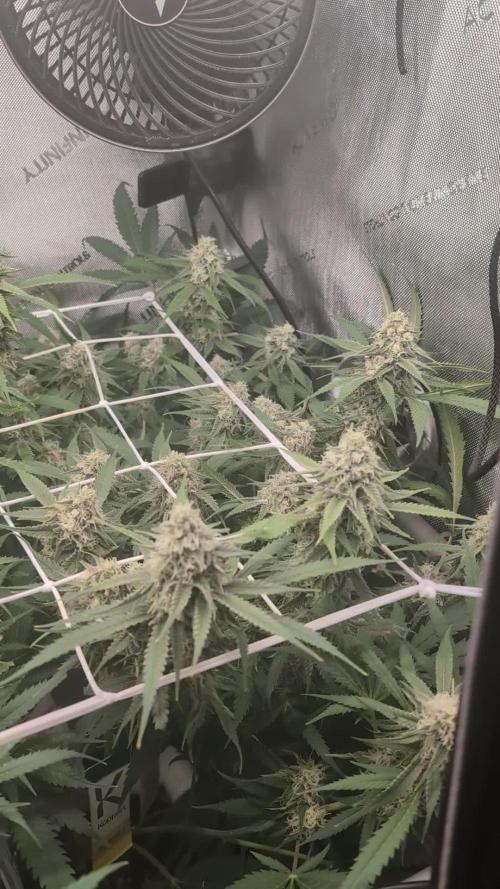
4ème semaine de floraison. Cette dame ce porte a merveille ☠️☠️💀 irrigation tous les 3 jours environ 6L, 12L/Semaine.


Likes
8
Share


@Elixire
Follow
Mainlining the and defoliation.
Trying to recover the little haze berry
Everything is running well


Likes
18
Share


@gottagrowsometime
Follow
Welcome to my Lemon Orange Diary, sponsored by Green House Seeds. Also a shout out to Mars-Hydro (for their FC3000 for veg). And to Spider-Farmer (for their SE5000 that'll be used in flowering). I thank you for your products. Still making great plants. Muchly appreciated.
This is a cross of Super Lemon Haze & Clementine bringing you an earthy lemon haze on the inhale and an orangy sweet smooth explosive burst on the exhale.
Hard Defoliation was done around day 30, as you can see. She had wide fans but underneath had grown her nodes enough to stand alone. Took about 25% of the Defoliation planned for the 3-4 Days.
On Day 34, she's a fantastic grower. The biggest in the tent out of them all. I plan to Pre flower her by next week. And after pre flower her tops will be HST'ed and during the start of the flip. I'll take most of what I don't want or that doesn't look like it'll have heavy stigmata sites. (Stand alone bud sites will be removed).
She just went through a hard defoliation of her many of her top fans throughout the week. I usually take up to 15-25% a day or until my fully planned defoliation is done 3-4 days. I'll give what's left time to catch up. Then remove those major fan leafs once they've produced a node that can grow on its own strenght without to much delay. So, all in all another week. Not the 2 months as planned in veg. But, I didn't expect such growth so fast. Not with this development anyways.
She's a super pheno. Checked sites, no bracts, hairs have popped (meaning she's throwing out the hormone that is telling you, she's ready to flip when you are)
730nm will be used during the Fattening stage to enhance the DLI (lighting on my 1hr40mins)
this will only be used for the fattening stage. Then UV-A will be used in ripening. 1hr a day in 2x30m windows and 1hr x2 after 5-6 days into ripening for the remaining of ripening up until the last 1-2 days when she'll be ran on a low ppfd (like a sunset) or ill put her to sleep and put in a 48hr dark rest. TBD
Day 35 she's at to moving through this week great. Took a clone. Had to. All though I've not had a taste. If the bud is good. I'll be delighted to have this clone that will be well into veg by the time she's done.
I've decided to put her into flower by day 40ish I'll LST her. Last defoliation of leafs were nodes have grown enough to push themselves. Its wasn't my plan. A 4-5 month grow. If I leave this girl for another 4 weeks in veg. She'll take over the whole tent.
Alga Grow will be stopped on after the next feeding. And bloom will be added. Power buds will be used for pre flower stage.
Green Sensation + pk booster for fattening and l ripening
THANKS TO MY SPONSORS, all those who stop by, drop a like so I can visit your diaries r throw any thoughts out in comments. Either way, thanks for stopping by.

Likes
61
Share


@MadeInGermany
Follow
I have now put all 8 cuttings from the nutriculture x stream into the growtool 0.8. the best 4 cuttings stay in the ScrOG.


Likes
20
Share

@AestheticGenetix
Follow
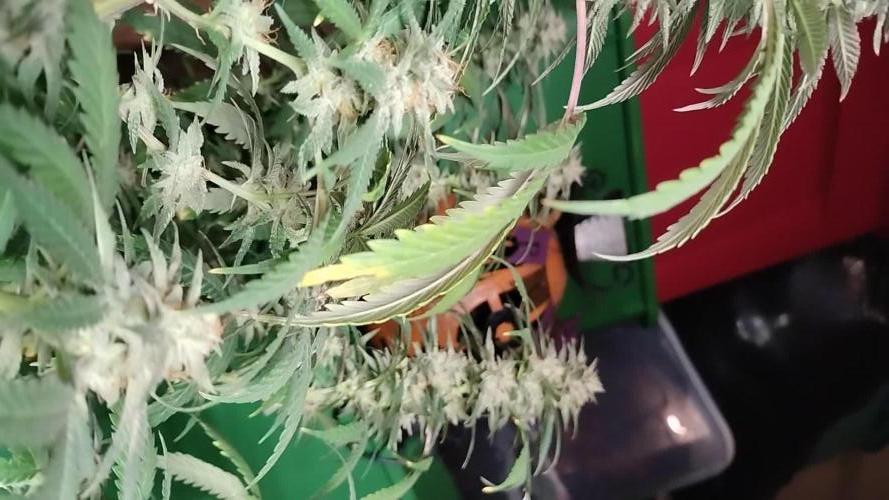
7/15/25 I think she may be getting close to the end. Day 42 as of today and I see 1 or 2 amber trichomes on the top buds.
Gave her the last feeding of this cycle. 2tsp of Bloom booster 1 tsp of microbe charge and 1 tsp of uprising foundation

Likes
7
Share


@Mr_nugs_lover_David
Follow
This strain had to suffer a little bit at the end of the cycle due to a fungus gnats issue but she managed great, her buds are really citrussy and dense and she has grown at a very fast pace in her vegetative stage. I really hope you guys enjoyed, this lady has been grown with kush FLO (Living soil blend) and water.

Likes
19
Share


@sellem
Follow
Growing and growing and growing..... This week i ramped up the ppfd to 750 by also bringing the light a good bit closer. Because i got scared by the crack in the previos week, which now showed, i didnt do any more LST-bending shenanigans, though im quite sure it wouldve been already too late for that, as both of the BPPs were growing some dummy thicc stems!
Water dosage ramped up to 2.5L which is or is really close to full saturation. PH in stays at 6,5 and out is now around 6,1 and im happy with that. Each plant received 2 ml/L of activera, biogrow and biobloom and 1 ml/L of topmax respectively.
They were really putting on some weight. i mainly defoliated a bit, mostly fanleaves that were blocking budsites. in retrospect, i shouldve more aggressively removed whole sidenodes from the inside, because its getting real crowdy in there now.
On the last day of week 5, they were growing some nice Flowersides AND - Plant B already started to make a name for herself - she started to purple up!
Likes
106
Share


@Med_in_Tropic
Follow
Still no sign of flowering.
Transplanted Novarine plant 2 into a 50-liters container. The spot is under a big shorea plant. Shorea is a South East Asian medicinal tree. This is minimum light spot in my yard. Hope she would flower. I choose plant 2 because I think plant 1 will stretch even further.
Plant 1 was also moved to a shaded spot under an tree jasmin. This Millingtonia, Indian cork tree. I have sweet flowers all year round. People told me that dried tree jasmine flower mixed well with weed and is good for people with ashma and sinus. Kind of useless since why would asthmatic people even smoke?
Plant 3 is my back up until I come up with a way to put her into flowers.
Clone are doing nicely. And I am growing 3 clones from plant 1 and only one clone from plant 2. I’ll be donating the rest to friends with weight and blood sugar issues. By year end, I probable keep only one or two clones. One clone from bigger branch is growing just fine without any benefit form lighted grow box.
Feeding plants with mid-level dose of cow manure tea and earth worm casting tea to keep leaves healthy. They should have been given a light dose of fertilizer. However, the flowering purslane are also eating and feeding soil microbes.
Got my paws on triancontanol and brassinolide. Perhaps these will jolt Novarine THCV into flowering. Triacontanol won't dissolve in neither water nor alcohol. And it is emulsified with polysobate.
Mixing of Triacontanol
Triacontanol does not dissolve in polysorbate. It is rather emulsified. Means that it need to be melt and there need to be water added.
My steps,
1) heated 70 grams of polysorbate in a big heat resistance glass cup. I used a beaker. Mix in 5 grams of triacontanol. And it does not melt.
2) Put in 100 cc of water and put in microwave. After the mix is boiled, triacontanol melt. There is foam. So a bigger cup and a spillage plate would prevent problem with my better half.
3) After heated, the mix is better. Then I added hot water from to make total 250 CC of solution. Then, the mix is clear.
4) Label the dose with pencil. This works better than labeling with ink.
I use 5 cc at a time for my entire garden. 250 CC would last me 50 doses. No need to buy so much. This is cheap. Let’s see next week how effective they are.


Likes
28
Share


@TheHighentist
Follow
Second week of flower, time to stretch!
Im very happy with the outcome so far, it is without worry that some tops are in shadow. Enough tops to go around, have to wait until after stretch to lollipop!
The lady all the way in the back, to the left, has either stunned growth or just slower than the other to go into stretch. However i will just play the waiting game, as i see no symptoms for a problem atm.
Last watering was 15/10
👽👉17/10 VPD is set to 1.2, but because of the function of my dehumidifier, it range from 1.1-1.3.
👽👉18/10 Waterday* They are real thirsty
First signs of pistils have shown!
I upped my nutes from EC1.36 to EC1.66
BioHeaven 2ML/L
BioGrow 1ml/L > 1.5
BioBloom 0.5ml/L >1.5
TopMax 0.5ml/L> 1
Calmag 0.3ml/L > 0.4
👽👉19/10
The ladies love it! Stretching and praying hands!
👽👉20/10
Impressed with the stretching. Not much to report, they just feeling the vibe.
👽👉21/10 Changed the lamp hanging system, to gain some more distance from light to canopy.
👽👉22/10 Thirsty ladies, but since i did not have time to water, i gave them 200ml each to survive another 24hours without feed.
👽👉23/10 Waterday*
I upped my nutes from EC1.66 to EC1.77
added 1ML/L Rootjuice to this feed
Bioheaven 2ML/L
BioGrow 1.5 ML/L > 2
BioBloom 1.5ML/L
TopMax 1ML/L
Calmag 0.4ML/L
Rootjuice 1ML/L
Likes
39
Share


@Loserofthemonth
Follow
Day 63/64 CPK. Starting week 10 just watered pH in 6.35 pH runoff 6.5, defoliated also.
Day 66 CPK. Fed nutes today. It's getting hard to control the pH probably salt retention. The pH in was 5.9 and the runoff pH was 6.7 so she is ready for a little flush on the next watering
Day 69 CPK. Water only today, mini flush to a half gallon runoff. End week 10. 3-9-22

Likes
7
Share

@Mr_nugs_lover_David
Follow
This strain had to suffer a little bit at the end of the cycle due to a fungus gnats issue but she managed great, her buds are really citrussy and dense and she has grown at a very fast pace in her vegetative stage. I really hope you guys enjoyed, this lady has been grown with kush FLO (Living soil blend) and water.
Likes
12
Share

@SheeshtheSchaller
Follow
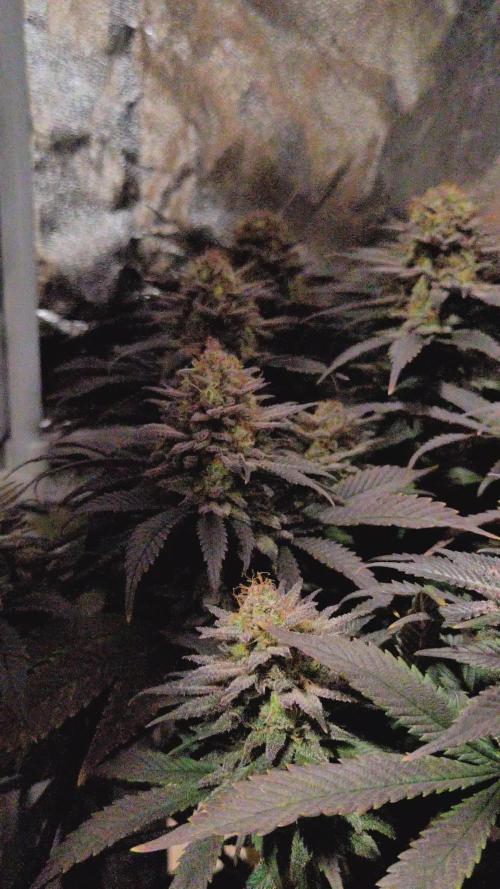
Day 141: The plant looks almost ready. I am not sure whether I'll still wait a couple of days or harvest tomorrow. Another week probably wouldn't hurt though. I'm looking forward to it nevertheless. No nutrients at this point, just water.



Likes
12
Share

@Kevin97
Follow
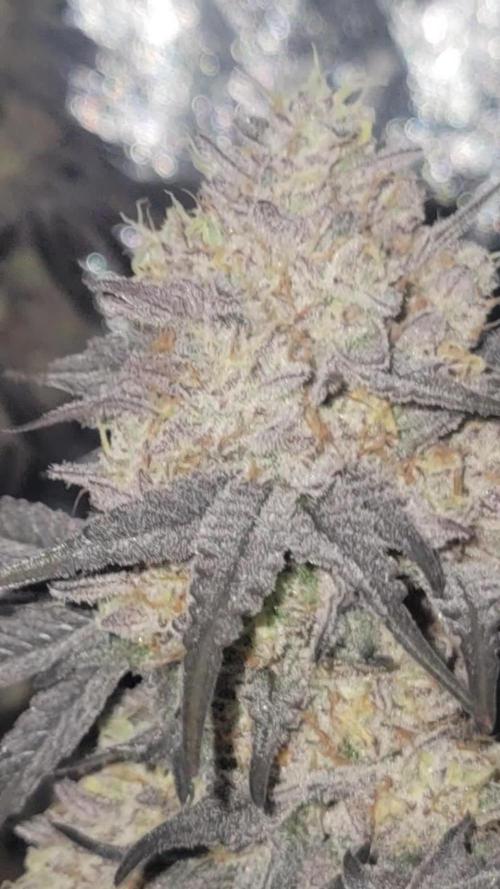
8iem semaine la korenji arrive a la fin la eaballz eclate toujours bientôt la coupe

Likes
28
Share


@Grow_N_Smoke
Follow
I let the girls spend the whole week getting used to their new home and recover from their transplant shock before I began Low Stress Training (LST).
Everything looks great in my opinion. A little on the smaller side for being so far along but I think they will burst in growth in the coming weeks. Don't forget that they will double in size during the initial flowering period.
I plucked a few leaves off and tied down 2-4 branches on each plant and will continue to tie down more throughout this week. I want to keep a nice even canopy from here on out.
Depending on how fast these ladies grow, I think I will be able to start super cropping soon. I'd like to get my SCROG net up so that I can start weaving branches as they continue to stretch.
This is the key to getting a good yield when working with a small area such as a 5x5 tent. I expect anywhere from 28-36oz which is around 2lbs. Of course good lighting, nutrients, and good genes go a long way but sometimes you just need that extra boost to get you there and these techniques are what has worked for me (LST, SCROG, Super Cropping).
The only thing I think I am lacking is Co2. I have read that I could increase my yield by up to 40%. That's incredible! I'm going to have to do some research on pricing and see what I can work out.
Thanks for checking in!

Likes
1
Share

@Northern_Ent
Follow
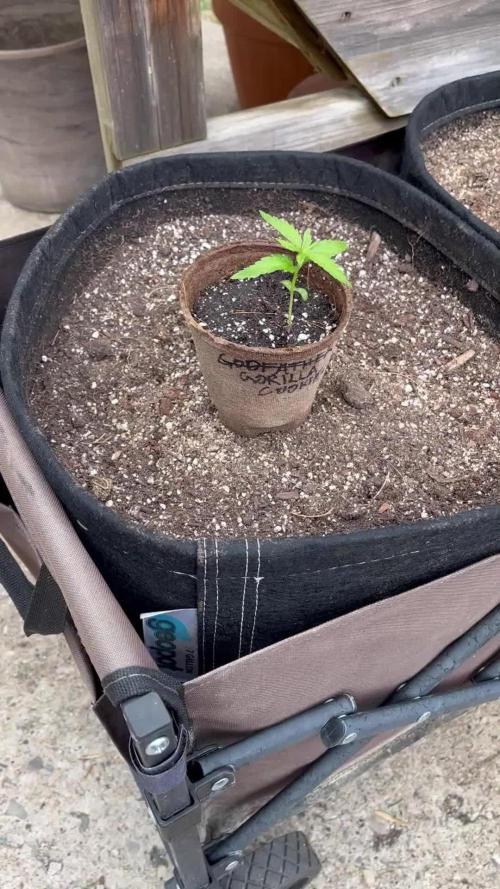
May 23 Day 22: transplant day. Soaked peat pot briefly before tearing off the bottom and some of the side and then planting a bit high in the soil level. Regular water misting to compensate for very low humidity that we get here.
May 26 Day 25: made a lazy compost tea today. Started at 8 am using 5 gallon pail filled with water and some compost, coco coir, Monster Maxx, molasses, and a tsp each of Extreme Blend and Soluble seaweed extract. In other words, good stuff that I had around. Called it ready after only 8 hours just cuz. Watered all my yard including around the edges of the cannabis grow bags.
May 27: foliar spray in morning with Extreme Blend. Good stuff and highly recommended. Also misting leaves periodically with water sprayer to make up for low humidity here.
May 28: watered with some fish fertilizer dregs left from last year.