


Likes
Comments
Share


Likes
7
Share


@PrinceOfHerbs
Follow
The plants are growing beautifully and the first signs of flowering can be seen.
Flowering day 10💚


Likes
4
Share


@IamCy
Follow
We have our color. Now for the buds to become more dense 😁
Edit: Just found out that this is a cross between Queen of the South from Relentless Genetics and Sugar Cane from Inhouse Genetics 🤯🤯🤯🤯
Likes
80
Share


@OrganicNature420
Follow
• Sugar Puss, Exotic Genetix
• Cheetahs piss x Bakers dozen (unreleased)
• 60 - 70 day flowering time
• Unknown Info nothing online
Nutrients • GreenBuzzNutrients
(DISCOUNT CODE • GD42025 ) %25
I use the whole product range and this stuff is a game changer. I've not had one bad grow with this company and it hasn't let me down once. Terps and taste are through the roof. No need for run off in coco only during flush week. Hands down the best nutrients on the market.
GREENBUZZ OUR NOW OFFEEING OUR FELLOW GROWERS A WHOOPING %25 OFF WHEN USING MY CODE ABOVE. BE AWARE IT HAS CHANGED 🌱💚 ENJOY
LIGHT/TENT • Mars Hydro FC-E6500 5x5 tent
Speechless ❄️ not going to be a huge yielder but this is either on par or better than the Biscotti Mintz. Frost machine and has the most amazing smell


Likes
87
Share


@Wastent91
Follow
Ehi ragazzi scusate il ritardo! Qua sta andando tutto più che bene! Ho spostato la ragazza gelosa insieme alla sorella che è già matura e probabilemnte farò l ultima settimana di sviluppo per questa, ma penso che sarà l ultima settimana, ormai è più he matura, cime dense come roccie e giganti come macigni! Sta prendendo un bel colore viola intenso, gli odori sono di frutti tropicali molto agrumati! Un profilo terpenico davvero spettacolare per quello che posso odorare senza averla ancora provata! Complimenti a zamnesia che sta partacmente raggiungendo come qualità le migliori case di semi! Spero vi piaccia come si è sviluppata la bimba, di sicuro non vincerò mai il contest, ma non si sa mai, sperare è sempre una bella cosa per tutti avere l oppurtunita di dimostrare le proprie qualità con prodotti professionali come quelli di plagron! Ma tutto questo vi ricordo che è stato possible solo grazie alla collaborazione con Mars hydro, che mi sta fornendo le attrezzature necessarie per avere un prodotto di qualità così eccellente, in un paese repressivo nei confronti della cannabis come quello in cui mi trovo io.. Free weed for everyone! Buon 420 a tutti voi! 💪😸💜💗🌱🌿🌲🧑🌾🤞

Likes
13
Share


@Droot
Follow
couldve gotten more off of training but im very happy with how the quality turned out
Likes
23
Share


@Bread_n_Buds
Follow
The first harvest of the spring session is ready: we are talking about the very fragrant, very resinous and delicious Fruit Punch Automatic naturally branded Zamnesia.
** We remind all users that we are growing two plants per strain, one worked with techniques and the other left to grow freely and beautifully to preserve its speed.
Description // This plant has not had any techniques applied, it has had few human interventions but always useful. Letting the plant grow does not mean "doing nothing" but you must always keep an eye on the color of the leaves, clean up the bottom while the plant grows and let only the last 20 cm or so of each branch flower. Of course there is a range of possibilities in this but know that the more stuff you leave below the more the stuff above will be weakened, so learning to find the right balance between cleanliness and size of the buds will make you better growers. I am very satisfied with this plant and one is coming with the main lining, low but with very large flowers and even more beautiful than this one.
Trichomes and Maturation // We made a careful observation in micro at 10x (and 10x x 1.6) and we noticed a good percentage of amber trichomes, the majority milky and few transparent, for us it is a great time to harvest. I do a lot of day use so I do not want to over-mature the plants, oxidize the THC and make them become relaxing. Even the best sativa matured on palal becomes more indica. I need to control the day use effect a lot.
Fertilizers and Soil // We used the organic line of Plagron fertilizers the whole time, all the recommended additives and the unfertilized and organic Pro Mix soil. Calculate everything according to your needs on the site ------ https://plagron.com/
Fertilizers are available in convenient packs on the Zamnesia website
--------- https://www.zamnesia.io/it/11457-plagron-easy-pack-natural.html
One of the best in recent years with a very high THC level
------------------------------------------------------------------
https://www.zamnesia.io/en/10965-zamnesia-seeds-fruit-punch-automatic.html
Zamnesia Brief Description // Sativa strains are very rewarding to grow, but their long flowering times and greater susceptibility to disease and over-fertilization can make them a little more difficult to manage. Additionally, their imposing heights are less suitable for indoor use and can attract unwanted attention when grown outdoors. However, with the arrival of Fruit Punch Automatic, growing sativa strains at home has become a lot easier. Combining Skunk #1, Haze and ruderalis, Fruit Punch Auto is 70% sativa dominant and produces up to 21% THC, along with a delicious blend of terpenes. Additionally, it can be grown indoors, outdoors and in greenhouses. With its bright shades of green, golden pistils and thick layer of resin, Fruit Punch Auto buds always have a great appeal. When you smoke her, you will be amazed by her flavours, aromas and effects! As the name suggests, Fruit Punch Auto boasts delicious tropical aromas reminiscent of banana, pineapple, mango and citrus. When you open the jars you will feel like you are in a tropical cocktail bar on an exotic beach. Fruit Punch Auto will delight your palate with pungent fruity notes followed by light notes of Skunk and spice on the exhale. Within minutes of taking the first hit, this powerful sativa will stimulate your mind, leaving you in an energetic and carefree state, ideal for morning or daytime sessions as well as social settings or creative pursuits.
The whole world of growing and much more is on Zamnesia: just take a look at the site and you will find "all the best that nature has to offer" in various shapes and colors.
---------------
www.zamnesia.com
Processing
Likes
3
Share


@Therbalist
Follow
Looks great can't wait to see what she smokes like if it is a she!
Likes
11
Share


@Sejnik
Follow
Poslední týden před přepnutím světel na 12/12.
Světlo běží na 75% a 50cm od rostlin.
Všechny rostliny vypadají naprosto spokojeně bez známek přehnojení nebo nedostatku živin.
Sweet Orange 1 jsem přesadil do skutečného 1L květináče jako její sestry a krávu jsem zlikvidoval.
D59 Úterý:
Holky zality 1,5L vody s 0,5ml/l RQS Flowering Booster : Bigger Flowers
D61 Čtvrtek:
Defoliace před kvetením . Odstranil jsem jen ty listy, které branily pronikání světla a vzduchu (asi 5-7 listů z každé rostliny). Většinu vějířovitých listů jsem pouze zastrčil aby nepřekážely.
Počkám ještě 2 dny, potom přepnu světla na 12/12.
D63 Sobota:
Holky dostaly 2L vody s živinami.
Přepnuto na 12/12

Likes
Comments
Share



Likes
14
Share

@GREENPHOENIX6262
Follow
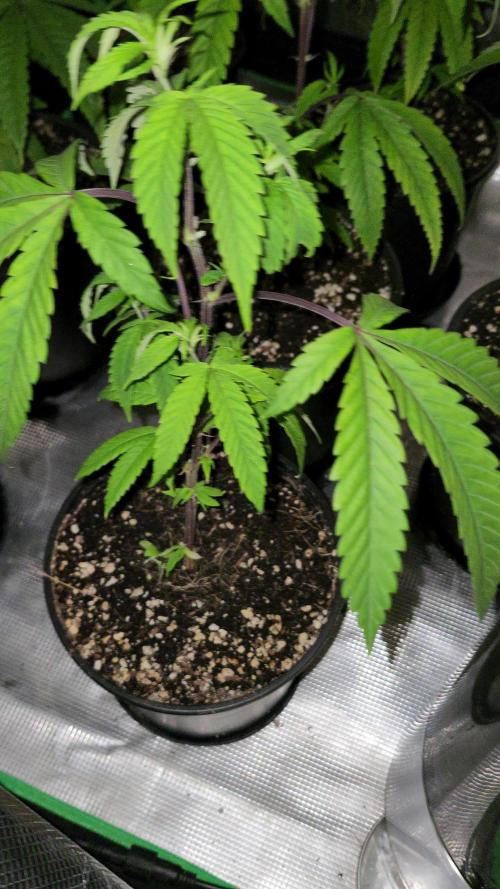
03/22 - (M) - She is perfectly - Her numbers are spot on and the feeding schedule seems to be dialed in perfectly - I will increase her carbohydrate feeds with the Raw Cane Molasse to increase terpene production.
03/22 - (C) - Hit a little snag with the babies last week and through off their PH/EC/PPM's - Gave them a hard flush yesterday (Only distilled water) to stabilize the numbers and got all of them down to optimal levels. Did some defoliation on the yellowing leaves. I will upload both night and day shots for this week for the babies
03/23 -(C) - Flushed them out hard last night and in less then 24hrs WHABAMMMM!!! they are already bouncing back - Will stick to just clean water feeds for now - They will begin a low-dosage nutrient feed (Micro-dosing) in about a week.😎😎😎😎😎😎😎

Likes
15
Share


@RussianGrower
Follow
Привет друзья, всем тем, кто следит за мной. Вновь обновляю свои дневники. Если вы следите за мной, то знаете, что на протяжение всей прошлой недели я брал клоны от своих растений. Вы можете следить за их развитием в соседнем моём дневнике. После того как я взял достаточное количество клонов, я сломал привычку растений выращивать один центральный стебель. Теперь я дам им немного покоя и буду наблюдать, как их внешний вид восстановиться после жёстких тренировок. Я даю растением небольшое питание, в основном из витаминов, гуминовых кислот и бактерий. Когда мои 50 клонов будут готовы к пересадке, я переставлю материнские растения в палатку поменьше и буду дальше экспериментировать над ними.
Если вам интересно следить за приключениями травки в России, подписывайтесь на мои дневники


Likes
5
Share


@JazzBerries
Follow
Organic, I'm on day ~55, but the flash photo was taken on day 50. I've had some problems, but it's looking like they'll hold out until fully ripe. Trichs are starting to look cloudy, but new pistils are still forming aggressively. I'll try for 1 more week.
Lower nugs are taking their time to finish.

Likes
3
Share


@Ogbangbang2981
Follow
same as last week nothing to special just growing healthy on her bat poo feed coming up nicely I think other people might see differently but that's small grow space C4Matic and friends .
Likes
8
Share


@ElchichodelaGrasa
Follow
En esta última han pegado un estirón de miedo y ya con la malla puesta a para el día 30 de vida

Likes
4
Share


@Kardo
Follow
Hat einen leichten Training bekommen ich bin gespannt wie du Buds aussehen werden 🤩

Likes
15
Share


@BeHappyNtoke
Follow
I can honestly say it’s been an amazing journey watching these babies grow they have really done well in response to training sour kush a has so many bud sites


Likes
68
Share


@cRypto666
Follow
Freunde der Sonne :) KURZE INFO DER LETZTE EINTRAG HIER IST IMMER DER AKTUELLLSTE NACH DATUM NACH UNTEN SOLLTEN UNTEN SCROLLEN UM ZU VORHIERIGEN EINTR'GE ZU GELANGEN : <3 WEEED
wollte dir ein text drücken :) hab mich vertippt... aö ich bin heute eine Bewustseinsstufe beim Grown aufgestiegen ! Endlich kann man jetzt Täglich meine Real Talk oder Reaktion ViD/PIC anschauen. Absofort werde ich meinen GARTEN anderts wahr nehme wer rein schaut kann Exklusive Tipps für seinen Garten gebrauchen. Gerne bin ich für Fragen offen und ich helfe wenn ich kann fals nicht findet sich in der Gruppe immer jemand.
DER GRUND IST DAMIT ICH NACHVOLLZIEHEN KANN WAS ICH FALSCH GEMACHT HABE BZW UM WISSEN ZU MANIFESTIRE UND GEWISSE GEDANKENVERBINDUNGEN GESACHFFEN SIND. IM GRUNDE MEIN GROWTAGBUCH ICH TEILE MEINE GEDANKEN MIT EUCH GLEICHGESINNTEN UND WÜNSCHE ALLEN EINE ERFOLGREICHEN GROW brO
cRypto666
2 minutes ago
cRypto666
<LIEBE> BRUDER ICH LADE DIE VIDEOS UND BILDER NOCH HOCH UND ICH BIN MIR EIGENTLICH SICHER ES KÖNNTE DIR GEFALLEN VIEL SPAß
AUF QEEN SEED GIBTS WIRKLICH GUTE BLOGS MIT TOURTORIALS FÜR NEULINGE/ANFÄNGER .
Konnte mir so mein Verständnis und Grundlage die fürs grown wichtig ist gut lernen und Aneignen ! WIRKLICH VIELE UND GUTE INFOS !!
https://www.royalqueenseeds.de/blog-cannabis-anbau-c3
https://www.royalqueenseeds.de/blog-die-10-grossten-fehler-von-cannabiszuchtern-n86
es ist soweit heute beginnt Woche 1 ... BEVOR WIR STARTEN, WICHTIG WASCH DIR GRÜNDLICH DIE HÄNDE UND BENUTZE GUMMIHANDSCHUE BEIM ARBEITEN! SEHR WICHTIG!
Ich freue mich das ich heute wieder das Gärtnern begonnen habe und eine Hällfte der Samen in der Erde sind. Kennt ihr das Gefühl der Vollkomenheit wenn man sich im Garten beschäftigt ? Für mich ist das Therapie und für euch?
Ich spiele mit dem Gedanken anstatt Samen zu growen mir einfach eine Mutterpflanze Anschaffe um mir meine Stecklinge zu ziehen ! Dafür brauch ich aber noch ein anderes Zelt und eine Lampe. Die Mütterpflanze kann dann erst mal wachsen und ich kann nebenbei noch mal ein Durchgang mit Autos schaffen bevor die Steckis fertig sind. Wenn es soweit ist gebe ich euch bescheid wenn ich Samen und Setup bei mir stehen.
So jetzt aufs eigentliche zurück. Ich habe heute erst mal mein Setup geprüft und so gut wie möglich desinfiziert. Es ist verdammt wichtig das nach jedem Durchgang sauber gemacht wird also zb Zeltwände, Boden, Topfe, Boxen, Wasserbehälter. Habe ich gemacht und habe meine ersten Samen in Anzucht Erde gesetzt, befeuchtet, markieren und in die Box. Wände und Deckel mit zersteuber befeuchten und ab unter die Lampe. WICHTIG MACH DIE ERDE NICHT SO NASS ! DAS GEFÄLLT IHNEN NICHT SONDERN HALTE SIE AM BESTEN FEUCHT IN DEM DU ABEND / MORGEN EIN BISCHEN WÄSSERST!
ICH STELLE DIE LAMPE AUF CA 40 cm zum Boden ein bzw der Box. Ein gewisser abstand muss sein um die Fläche komplett zu Beleuchten. Da meine Lampe dimmbar ist muss sie nicht ganz oben hängeng sondern Kann näher an die Pflanzen ran und Stelle den Dimmer auf 20 %. Das reicht anfangs in dem Stadium völlig aus, muss aber dann später angepasst bzw hoch geschraubt werden!
Lüfter I läuft 24/7 und sorgt für optimale Bedinungen! WICHTIG
LAMPE 20/4 HELL/DUNKEL (REGLER STEHT AUF 20 % LICHTLEISTUNG)
DANN HABEN WIR ES EIGENTLICH SCHON GESCHAFFT UND ALLES RICHTIG GEMACHT!
Ich versuche schon so viel wie möglich von meiem Wissen an euch weiter zugeben bzw auf Papier zubringen, ist aber NICHT IMMER ZU 100% Möglich, da es einfach zu viele Informationen sind !
Bei fragen einfach fragen und die Comiunity hilft sicher !!!
KOMMT ZEIT KOMMT RAT ... ich hab 2 Monate Infos eingeholt und Produkte verglichen !
Auf Queen Royal Seeds gibt es gute Anfänger Tipps sogar teilweise mit Video. Mir hat das sehr geholfen mein Grundwissen aufzubauen.
BEVOR IHR DAS GÄRTNERN ANFANGEN KÖNNTE MACHT DIR GEDANKEN WO DEINEN GARTEN STEHEN KANN.
#1 AM BESTEN IHR HABT EIN GARTENZIMMER DER NUR ZUM GÄRTNERN BENUTZT WIRD IST DIE BESTE LÖSUNG DA DU DEINE UMGEBUNG VIEL LEICHTER SAUBERHALTEN KANNST
#2 DU KANNST DEIN GARTEN AUCH INS WOHN. BZW SCHLAFZIMMER STELLEN WENN DU KEINE MÖGLICHKEIT HAST EIN GARTENZIMMER ZU MACHEN. DAS IST NICHT DIE PERFEKTE UMGEBUNG ABER WENN DU ABLUFT RAUSLEITEN KANNST DANN MACH ES ! DU KANNST ES AUCH IN DEN RAUM STRÖMEN LASSEN MUSST DIR ABER BEWUST SEIN DAS ES EVTL DAS SCHIMMELN IM RAUM ANFÄNGT! IST MIR SCHON PASSIERT ! LEITE SIE WENN MÖGLICH AM BESTEN RAUS !
ACHTE DAS DARUF DAS DEINE LUFTFEUCHTIGKEIT UND TEMP KONSTANT BLEIBEN UND ES NICHT EINMAL ZU WARM UND EINEMAL ZU KALT... IHR WISST SCHON SORGE FÜR EINEN KONSTANTE UMGEBUNG IN DEINEM GARTEN. DIE WAHL DER SAMEN IST AUCH WICHTIG DA ES SORTEN GIBT DIE EINE WARME UMGEBUNG EINE KONSTANTE ODER EINE EHER KALTE UMGEBUNG. AM BESTEN IHR PASST EURE SAMEN EURER UMGEBUNG AN HEIST DU WOHNST IN EINEN LAND WO ES EHER WARM IST ALSO 25-30 ° C dann WÄHLE AUCH EINE PASSENDE SORTE AUS!
MEHR GIBTS ERST MAL NICHT ! BIS ZUM NÄCHSTEN MAL!