The Grow Awards 2026 🏆
Likes
Comments
Share
Likes
2
Share
@Jotajota
Follow
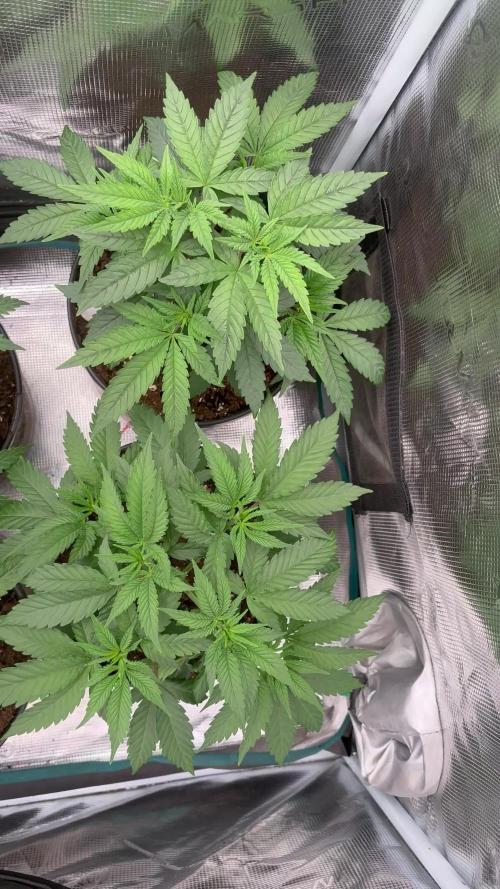
Estas imágenes y parámetros corresponden a 8 días después de germinacion.
Likes
4
Share
These ladies are doing mighty fine! The smell is unreal! Almost like walking into a candy shop! The color, cannot be better. I do have 3 purple phenos and 2 green. But even the green phenos have alot of purple. Gonna be a some beautiful stuff to say the least. Noticing some minor foxtailing on one, has ro be genetic. The environment is on point. Intoduced Big bud supplement to them this week, and they seem to love it so far..
Likes
27
Share
2 october What more can I say Busy with harvest, last minute changes relocating stuff. Pfff She has some time left. Some sunny weather once again. She is doing well. I hope she holds on for another 3-4 weeks. My schedule is full. Sexbud is clming. The guerilla grow is coming to an end. Shit got hot..at last Girls need it to finish😛
Likes
5
Share
Nice!! Together with the clones gonna be a good harvest 👍👍👍👍
Likes
2
Share
Day 36 - In the picture, I demonstrated the efforts I put in for leaf tucking, the back half, so that light can get deeper in the canopy. A had also removed all of the flowering cover crop to prevent it from going to seed. It served its purpose and now serves as compost for my outdoor garden. Day 37 - This plant does not slow down! It is maxed out, for my preference, horizontally. Stretch is slowing down. Bud growth will now be the focus. Day 38 - She really needed a haircut, so she got one. Everytime I do this, I honestly scare myself. I know the potential these plants have, but a mistake that would cause additional stress to the defol can change everything.. cover crop is also cut down and breaking down in my outdoor garden. One last spray down before buds appear and a good feeding to push her through this heavy strip. Love to see worms hanging out on the surface of the soil, breaking down all my top dresses. Day 39 - Day 40 - Day 41 - Day 42 -
Likes
24
Share
so this was the last week before harvest.. i intended to cut her down christmas day but decided to put her in 2 days of darkness before the chop.. she is now harvested an sat for a few days be4 entering jars for a curing.. the smell and these nugs is so yummi 😅
Likes
46
Share
@Roberts
Follow
I had a pretty good overall grow with Drunken Bitch Slap from Aeque Genetics. She grew well under the Hortibloom Solux 350. It looks like she will provide several ounces of good bud when dry. She got very big and has long saggy branches with nice frost buds on it. She smells like a black licorice, and gas smell. I am very curious to how she smokes. Thank you Aeque Genetics, and Hortibloom. 🤜🏻🤛🏻💪🏻❄️🌱 Thank you grow diaries community for the 👇likes👇, follows, comments, and subscriptions on my YouTube channel👇. ❄️🌱🍻 Happy Growing 🌱🌱🌱 https://youtube.com/channel/UCAhN7yRzWLpcaRHhMIQ7X4g
Likes
Comments
Share
@Lynx_361
Follow
16.06.2025 The Plant's had a ruff time with me recently! I lost one branch from Number 1 (the short one in the middle). And I had no Time to give them the needet attention..
Likes
9
Share
@jdean88
Follow
Chop day will update with weights when trimmed and dry I think about 500g. Dry
Likes
36
Share
@nonick123
Follow
Día 101 (09/09) Riego con 500 / 1000 ml H2O pH 6,5 Parece que se ha parado un poco el amarilleamiento que subía tan rápidamente por las plantas! Día 102 (10/09) Riego con 500 / 1000 ml H2O pH 6,5 Excepto LemonPaya, todas las plantas empiezan a llenarse de tricomas! 😍 Día 103 (11/09) Riego con 500 / 1000 ml H2O pH 6,5 Estoy emparanoiado con que la floración va lenta... Día 104 (12/09) Los cogollos no se están formado correctamente... Algo pasa... Los pistilos tienen un extraño color verde y no engordan... OnionOG #1 es la única que tiene un ritmo normal... Riego con 250 / 500 ml porque las temperaturas empiezan a bajar a 25 ºC diurnos / 22 ºC nocturnos y está bajando el consumo de agua... Día 105 (13/09) La deficiencia empeora... Solo se salvan OnionOG #1 y KS1 #2... Día 106 (14/09) La deficiencia sigue empeorando... Solo se salvan OnionOG #1 y KS1 #2... Día 107 (15/09) La floración se ha ido al traste! (Excepto OnionOG #1 y KS1 #2) Tras preguntar a Lurpe, GD e IG concluyo que el super soil tiene un bloqueo de nutrientes Debido al bloqueo, se ha detenido la floración en 4 de las 6 plantas Siguiendo las recomendaciones de Lurpe, hago flush hasta que el agua de escorrentía tiene una EC 2,5 (1250 PPMs) A ver si les da tiempo a recuperarse... 💦Nutrients by Lurpe Solutions - www.lurpenaturalsolutions.com 🌱Substrate PRO-MIX HP BACILLUS + MYCORRHIZAE - www.pthorticulture.com/en/products/pro-mix-hp-biostimulant-plus-mycorrhizae
Likes
34
Share
Yellow butterfly came to see me the other day; that was nice. Starting to show signs of stress on the odd leaf, localized isolated blips, blemishes, who said growing up was going to be easy! Smaller leaves have less surface area for stomata to occupy, so the stomata are packed more densely to maintain adequate gas exchange. Smaller leaves might have higher stomatal density to compensate for their smaller size, potentially maximizing carbon uptake and minimizing water loss. Environmental conditions like light intensity and water availability can influence stomatal density, and these factors can affect leaf size as well. Leaf development involves cell division and expansion, and stomatal differentiation is sensitive to these processes. In essence, the smaller leaf size can lead to a higher stomatal density due to the constraints of available space and the need to optimize gas exchange for photosynthesis and transpiration. In the long term, UV-B radiation can lead to more complex changes in stomatal morphology, including effects on both stomatal density and size, potentially impacting carbon sequestration and water use. In essence, UV-B can be a double-edged sword for stomata: It can induce stomatal closure and potentially reduce stomatal size, but it may also trigger an increase in stomatal density as a compensatory mechanism. It is generally more efficient for gas exchange to have smaller leaves with a higher stomatal density, rather than large leaves with lower stomatal density. This is because smaller stomata can facilitate faster gas exchange due to shorter diffusion pathways, even though they may have the same total pore area as fewer, larger stomata. Leaf size tends to decrease in colder climates to reduce heat loss, while larger leaves are more common in warmer, humid environments. Plants in arid regions often develop smaller leaves with a thicker cuticle and/or hairs to minimize water loss through transpiration. Conversely, plants in wet environments may have larger leaves and drip tips to facilitate water runoff. Leaf size and shape can vary based on light availability. For example, leaves in shaded areas may be larger and thinner to maximize light absorption. Leaf mass per area (LMA) can be higher in stressful environments with limited nutrients, indicating a greater investment in structural components for protection and critical resource conservation. Wind speed, humidity, and soil conditions can also influence leaf morphology, leading to variations in leaf shape, size, and surface characteristics. Small leaves: Reduce water loss in arid or cold climates. Environmental conditions significantly affect gene expression in plants. Plants are sessile organisms, meaning they cannot move to escape unfavorable conditions, so they rely on gene expression to adapt to their surroundings. Environmental factors like light, temperature, water, and nutrient availability can trigger changes in gene expression, allowing plants to respond to and survive in diverse environments. Depending on the environment a young seedling encounters, the developmental program following seed germination could be skotomorphogenesis in the dark or photomorphogenesis in the light. Light signals are interpreted by a repertoire of photoreceptors followed by sophisticated gene expression networks, eventually resulting in developmental changes. The expression and functions of photoreceptors and key signaling molecules are highly coordinated and regulated at multiple levels of the central dogma in molecular biology. Light activates gene expression through the actions of positive transcriptional regulators and the relaxation of chromatin by histone acetylation. Small regulatory RNAs help attenuate the expression of light-responsive genes. Alternative splicing, protein phosphorylation/dephosphorylation, the formation of diverse transcriptional complexes, and selective protein degradation all contribute to proteome diversity and change the functions of individual proteins. Photomorphogenesis, the light-driven developmental changes in plants, significantly impacts gene expression. It involves a cascade of events where light signals, perceived by photoreceptors, trigger changes in gene expression patterns, ultimately leading to the development of a plant in response to its light environment. Genes are expressed, not dictated! While having the potential to encode proteins, genes are not automatically and constantly active. Instead, their expression (the process of turning them into proteins) is carefully regulated by the cell, responding to internal and external signals. This means that genes can be "turned on" or "turned off," and the level of expression can be adjusted, depending on the cell's needs and the surrounding environment. In plants, genes are not simply "on" or "off" but rather their expression is carefully regulated based on various factors, including the cell type, developmental stage, and environmental conditions. This means that while all cells in a plant contain the same genetic information (the same genes), different cells will express different subsets of those genes at different times. This regulation is crucial for the proper functioning and development of the plant. When a green plant is exposed to red light, much of the red light is absorbed, but some is also reflected back. The reflected red light, along with any blue light reflected from other parts of the plant, can be perceived by our eyes as purple. Carotenoids absorb light in blue-green region of the visible spectrum, complementing chlorophyll's absorption in the red region. They safeguard the photosynthetic machinery from excessive light by activating singlet oxygen, an oxidant formed during photosynthesis. Carotenoids also quench triplet chlorophyll, which can negatively affect photosynthesis, and scavenge reactive oxygen species (ROS) that can damage cellular proteins. Additionally, carotenoid derivatives signal plant development and responses to environmental cues. They serve as precursors for the biosynthesis of phytohormones such as abscisic acid () and strigolactones (SLs). These pigments are responsible for the orange, red, and yellow hues of fruits and vegetables, while acting as free scavengers to protect plants during photosynthesis. Singlet oxygen (¹O₂) is an electronically excited state of molecular oxygen (O₂). Singlet oxygen is produced as a byproduct during photosynthesis, primarily within the photosystem II (PSII) reaction center and light-harvesting antenna complex. This occurs when excess energy from excited chlorophyll molecules is transferred to molecular oxygen. While singlet oxygen can cause oxidative damage, plants have mechanisms to manage its production and mitigate its harmful effects. Singlet oxygen (¹O₂) is considered a reactive oxygen species (ROS). It's a form of oxygen with higher energy and reactivity compared to the more common triplet oxygen found in its ground state. Singlet oxygen is generated both in biological systems, such as during photosynthesis in plants, and in cellular processes, and through chemical and photochemical reactions. While singlet oxygen is a ROS, it's important to note that it differs from other ROS like superoxide (O₂⁻), hydrogen peroxide (H₂O₂), and hydroxyl radicals (OH) in its formation, reactivity, and specific biological roles. Non-photochemical quenching (NPQ) protects plants from damage caused by reactive oxygen species (ROS) by dissipating excess light energy as heat. This process reduces the overexcitation of photosynthetic pigments, which can lead to the production of ROS, thus mitigating the potential for photodamage. Zeaxanthin, a carotenoid pigment, plays a crucial role in photoprotection in plants by both enhancing non-photochemical quenching (NPQ) and scavenging reactive oxygen species (ROS). In high-light conditions, zeaxanthin is synthesized from violaxanthin through the xanthophyll cycle, and this zeaxanthin then facilitates heat dissipation of excess light energy (NPQ) and quenches harmful ROS. The Issue of Singlet Oxygen!! ROS Formation: Blue light, with its higher energy photons, can promote the formation of reactive oxygen species (ROS), including singlet oxygen, within the plant. Potential Damage: High levels of ROS can damage cellular components, including proteins, lipids, and DNA, potentially impacting plant health and productivity. Balancing Act: A balanced spectrum of light, including both blue and red light, is crucial for mitigating the harmful effects of excessive blue light and promoting optimal plant growth and stress tolerance. The Importance of Red Light: Red light (especially far-red) can help to mitigate the negative effects of excessive blue light by: Balancing the Photoreceptor Response: Red light can influence the activity of photoreceptors like phytochrome, which are involved in regulating plant responses to different light wavelengths. Enhancing Antioxidant Production: Red and blue light can stimulate the production of antioxidants, which help to neutralize ROS and protect the plant from oxidative damage. Optimizing Photosynthesis: Red light is efficiently used in photosynthesis, and its combination with blue light can lead to increased photosynthetic efficiency and biomass production. In controlled environments like greenhouses and vertical farms, optimizing the ratio of blue and red light is a key strategy for promoting healthy plant growth and yield. Understanding the interplay between blue light signaling, ROS production, and antioxidant defense mechanisms can inform breeding programs and biotechnological interventions aimed at improving plant stress resistance. In summary, while blue light is essential for plant development and photosynthesis, it's crucial to balance it with other light wavelengths, particularly red light, to prevent excessive ROS formation and promote overall plant health. Oxidative damage in plants occurs when there's an imbalance between the production of reactive oxygen species (ROS) and the plant's ability to neutralize them, leading to cellular damage. This imbalance, known as oxidative stress, can result from various environmental stressors, affecting plant growth, development, and overall productivity. Causes of Oxidative Damage: Abiotic stresses: These include extreme temperatures (heat and cold), drought, salinity, heavy metal toxicity, and excessive light. Biotic stresses: Pathogen attacks and insect infestations can also trigger oxidative stress. Metabolic processes: Normal cellular activities, particularly in chloroplasts, mitochondria, and peroxisomes, can generate ROS as byproducts. Certain chlorophyll biosynthesis intermediates can produce singlet oxygen (1O2), a potent ROS, leading to oxidative damage. ROS can damage lipids (lipid peroxidation), proteins, carbohydrates, and nucleic acids (DNA). Oxidative stress can compromise the integrity of cell membranes, affecting their function and permeability. Oxidative damage can interfere with essential cellular functions, including photosynthesis, respiration, and signal transduction. In severe cases, oxidative stress can trigger programmed cell death (apoptosis). Oxidative damage can lead to stunted growth, reduced biomass, and lower crop yields. Plants have evolved intricate antioxidant defense systems to counteract oxidative stress. These include: Enzymes like superoxide dismutase (SOD), catalase (CAT), and various peroxidases scavenge ROS and neutralize their damaging effects. Antioxidant molecules like glutathione, ascorbic acid (vitamin C), C60 fullerene, and carotenoids directly neutralize ROS. Developing plant varieties with gene expression focused on enhanced antioxidant capacity and stress tolerance is crucial. Optimizing irrigation, fertilization, and other management practices can help minimize stress and oxidative damage. Applying antioxidant compounds or elicitors can help plants cope with oxidative stress. Introducing genes for enhanced antioxidant enzymes or stress-related proteins over generations. Phytohormones, also known as plant hormones, are a group of naturally occurring organic compounds that regulate plant growth, development, and various physiological processes. The five major classes of phytohormones are: auxins, gibberellins, cytokinins, ethylene, and abscisic acid. In addition to these, other phytohormones like brassinosteroids, jasmonates, and salicylates also play significant roles. Here's a breakdown of the key phytohormones: Auxins: Primarily involved in cell elongation, root initiation, and apical dominance. Gibberellins: Promote stem elongation, seed germination, and flowering. Cytokinins: Stimulate cell division and differentiation, and delay leaf senescence. Ethylene: Regulates fruit ripening, leaf abscission, and senescence. Abscisic acid (ABA): Plays a role in seed dormancy, stomatal closure, and stress responses. Brassinosteroids: Involved in cell elongation, division, and stress responses. Jasmonates: Regulate plant defense against pathogens and herbivores, as well as other processes. Salicylic acid: Plays a role in plant defense against pathogens. 1. Red and Far-Red Light (Phytochromes): Red light: Primarily activates the phytochrome system, converting it to its active form (Pfr), which promotes processes like stem elongation and flowering. Far-red light: Inhibits the phytochrome system by converting the active Pfr form back to the inactive Pr form. This can trigger shade avoidance responses and inhibit germination. Phytohormones: Red and far-red light regulate phytohormones like auxin and gibberellins, which are involved in stem elongation and other growth processes. 2. Blue Light (Cryptochromes and Phototropins): Blue light: Activates cryptochromes and phototropins, which are involved in various processes like stomatal opening, seedling de-etiolation, and phototropism (growth towards light). Phytohormones: Blue light affects auxin levels, influencing stem growth, and also impacts other phytohormones involved in these processes. Example: Blue light can promote vegetative growth and can interact with red light to promote flowering. 3. UV-B Light (UV-B Receptors): UV-B light: Perceived by UVR8 receptors, it can affect plant growth and development and has roles in stress responses, like UV protection. Phytohormones: UV-B light can influence phytohormones involved in stress responses, potentially affecting growth and development. 4. Other Colors: Green light: Plants are generally less sensitive to green light, as chlorophyll reflects it. Other wavelengths: While less studied, other wavelengths can also influence plant growth and development through interactions with different photoreceptors and phytohormones. Key Points: Cross-Signaling: Plants often experience a mix of light wavelengths, leading to complex interactions between different photoreceptors and phytohormones. Species Variability: The precise effects of light color on phytohormones can vary between different plant species. Hormonal Interactions: Phytohormones don't act in isolation; their interactions and interplay with other phytohormones and environmental signals are critical for plant responses. The spectral ratio of light (the composition of different colors of light) significantly influences a plant's hormonal balance. Different wavelengths of light are perceived by specific photoreceptors in plants, which in turn regulate the production and activity of various plant hormones (phytohormones). These hormones then control a wide range of developmental processes.
Processing
Likes
3
Share
@HELCIBAO
Follow
Those girls are growing like crazy, i'll give them one more week of vegetative before switching to 12-12. I've removed a lot of leaf during this week
Likes
70
Share
Doing great. Just turned on the big light. Hlg-600. The growth this week was pretty phenomenal. Won’t be that long until I’m stringing my scrog.
Likes
71
Share
@Roberts
Follow
Everything is going good with Quebec blast. The roots have just cleared the basket. So hopefully good growth from here out. I am using a Spider Farmer SE5000. I am growing her in a New Level hydro 5 gallon bucket links below. Thank you again Quebec Seeds, New level hydro, and Spider Farmer. 🤜🤛🌱🌱🌱 SE5000 https://amzn.to/3qFpAML Spider Farmer Official Website Links: US&Worldwide: https://www.spider-farmer.com UK: https://spiderfarmer.co.uk CA: https://spiderfarmer.ca EU: https://spiderfarmer.eu AU: https://spiderfarmer.com.au Coupon Code: saveurcash Thank you grow diaries community for the 👇likes👇, follows, comments, and subscriptions on my YouTube channel👇. ❄️🌱🍻 Happy Growing 🌱🌱🌱 https://youtube.com/channel/UCAhN7yRzWLpcaRHhMIQ7X4g www.newlevelhydro.com www.hygrozyme.com
Likes
47
Share
Likes
7
Share
Привет друзья. Хочу познакомить вас с новым фотоцветущим растением от Smail_Seeds сорт ORIGINAL CHEMZKITTLEZ F1 reg. Сегодня растению 58 дней. Перевёл на 12/12 1.10.2023 Растение очень хорошо развивается, ни каких сбоев в генетике не наблюдается😀 Сорт выводим сами. Смотри мой профиль, у нас всегда есть что то интересное. Не забудь поставить лайк❤️, если понравилась как прошла неделя И читайте наш TELEGRAM: https://t.me/smail_seeds #Smail_Seeds 😀
Likes
17
Share
Vamos familia, actualizamos la 4 semana de floración de estas Purple Og Kush . Y es que hasta aquí todo va correcto , tienen un buen color, se ven sanas, y van progresando las flores adecuadamente. La alimentación de Agrobeta la están aceptando muy bien , ya se las puede apreciar. Agrobeta: https://www.agrobeta.com/agrobetatiendaonline/36-abonos-canamo Mars hydro: Code discount: EL420 https://www.mars-hydro.com/ Las maximas de temperatura no superan los 26 grados y las mínimas no bajan 20, así que no me puedo quejar. Los niveles de humedad también son los correctos van entre 50%/65% de humedad relativa. Por supuesto el Ph lo estamos dejando alrededor de 6. Hasta aquí es todo, buenos humos 💨💨💨.
Likes
24
Share
@Doubleb84
Follow
Great harvest! Ended up a little shy of 12 ounces from the two plants, all super dense sticky top buds!! It’s smooth, flavorful and strong! Love it!
Likes
4
Share
Welcome to week 6 of flower for this lovely project! Last week was exciting this week should be even more exciting! With the ladies beginning to put on serious weight it's only a matter of time before I'll have to install a second net to help support the branches. With this being about the halfway point I'm excited to see them at the finish line! Huge shout outs to @MarsHydroLED for making epic lights and tents for people to grow in! Huge shout outs to all my followers and people who stop into the diary alike! Keep inspiring to grow! -The Projexx Day#36F Creamy Cereal is PUMPING frost now with its undeniable smell of fruit loops and milk. Day#37F Ladies are putting on mass and quickly! Day#38F Macmelonz continues to stretch and stack but looks like its nearing the end for her stretch phase. Hopefully she pumps HUGE kickass flowers for me. Day#39F Flowers are almost the size of a soda can now. The trichomes on these plants are wild like trichomes over trichomes. The flowers have really picked up on the aroma department as well very please with the plants. Day#40F Raised the light abit, Flowers are starting to display colour in them now can't wait to see them in a few weeks! Day#41F Pictures N/A. Ladies are still beefing up flowers some of the pistols are starting to turn. Day#42F Ladies are still putting on mass daily. Lots of lovely unique smells coming from the plants. Recap: Things went well this week , the ladies really put on some mass and all the flowers are hard as rocks! I will be taking away leaves over the course of the coming weeks to ensure the airflow to the flowers. Excited to see what the coming weeks bring!