


@Elguacho420
Follow
Buenas a tod@s... Bueno.. novena y última semana de estás lemon cookie kush... ⚡🚀💣 Un éxito... Se ven que explotan... La próxima es la cosecha... Ya les iré comentando q tal va de sabor, olor y de más cositas... Las verdad me la pasé a lo grande... QUE VIVA EL AUTOCULTIVO!!! 💪🏻🙌🏻 🇦🇷🤝🏻🇪🇦⚕️

shorts_status_processing


@Tazard
Follow
These are clones that I managed to take from my summer garden that became a disaster due to a heat wave that we had breaking 100 year records. I expect everything to be 48” in height at maturity.


@Passionatos
Follow
Start of the bloom phase I got some nitrogen deficiency but I could handle the problem by giving them some extra nutes


@AmniZombie
Follow
Plants almost doubled their height. So i did some lst on them for the last time.
Was hoping to use the scrognet, but i will wait with that till week 4 of flower.
Plants are very bushy and grow good till now on.
Feeding them with 2ml/l fishmix and 4ml/l bloom from biobizz.
Also i spray fishmix as foliar spray and the ladies love it.
Im growing in a 1.2x1.2x2m tent and it is a little tight with 2 50l buckets in here but i wanted to fill out the tent. So hopefully after this last time lst the 2 plants will almost cover the entire tent


@gadjoo
Follow
09/11/2022
switch to flowering (12-12)
first defoliation
09/13/2022
Watering 3l per plants


@Kushfarm1
Follow
Some plants getting near to harvest, some can't even hold the weight auf they own buds anymore.


@Blabina
Follow
😍 And here we are. 😍
👻 Every explanations about the moovie and what I did are written at the end of the video. 10 minutes of your life to watch 57hours and 54 minutes of my Quickgreen's life. ♥️Shot in 2k ♥️Watch it fulll screen ! 👻
♫♪ Music : Act I Year 1 of Akhnaten's Reign (Thebes) - Scene 1 Funeral of Amenhotep III ♥️♫ by Philip Glass ♪♫ End credits : Act I Year 1 of Akhnaten's Reign (Thebes) - Prelude - Refrain, Verse 1, Verse 2 ♥️♫ by Philip Glass ♪♫
😻It was a lot of work while I was feeding them at the same time, I got a small place for the grow area and the camera (who isn't small at all).
💪Thank you to my dwarves who accompany me during this creative process 💪
Enjoy the moovie ! 👻
👉 12th of october 2021 / DAY 6 👉 Shooting the film from day 10 late at night, this feed was not too hard (I bumped the tripod of my camera on day 5) 👽Calmag 1.6 ml/2L + 👽 Acti-Vera 0.8ml/2L 👽Bio-Grow 0.6ml/2L 👽Bio-Heaven 0.8ml/2L 👽Terra Aquatica Root booster (GHE) 10 ml/2L /// p.h. 6.3 EC : 07
I mooved a bit while feeding Quickgreen, the big star of the movie, during the shot... I will take some pictures of the 2 others on the following days when the moovie will be over.
👉 13th of october 2021 / DAY 7 👉 Finish and uploaded the moovie. First time my lovely quick have a light break !!! Lights where on for 3 days. 12h00 to 18h00, lights are off.
18h00 : 👽Calmag 2 ml/2L + 👽 Acti-Vera 2 ml/2L 👽Bio-Grow 0.6ml/2L 👽Bio-Heaven 1 ml/2L 👽Terra Aquatica Root booster (GHE) 10 ml/2L /// 😇 p.h. 6.0 EC : 07 degree 22° 😇 Run-off : The smart pot are in direct contact with "fresh" wood, naked wood so I don't know if the run-off is accurate despite the plastic plant cup i've put under them to retrieve the water and to test it : 😰 Quigreen (moovie star) : E.C. 1, ph. probably 7 degree 19° ... 😰 QuickPink : E.C. 1.2 ph 7.2 degree 19° 😰 QuickBlue : E.C. : 1.1 ph 7.3 degree 19°
Tent : Temp 24.2°- 19.5° // 61-81 % (light on - light off)
👉 14th of october 2021 / DAY 8 👉 👽Calmag 1 ml/1L + 👽 Acti-Vera 1 ml/1L 👽Bio-Grow 0.3333 ml/1L 👽Bio-Heaven 1 ml/1L 👽Terra Aquatica Root booster (GHE) 5 ml/1L /// 😇3 L. p.h. 5.9 EC : 08 degree 22° 😇 Run-off : from 0.8 to 1.2, quick blue seems to have troubles, ph seems decreasing, 6.9 about.
👻👻👻 New video : x3 speed with new music ! I keep shooting so I am adding materials, I will keep shooting until I have to close the tent in flow (smell reason)... Let's do it !👻👻👻 Edit : I've left a black frame (you will see shortly a fast cut) to show when the light turn off. So 6 hours in real life are not showned anymore since today.
👻💪😍Dwarves POWER 😍💪👻
👉 15th of october 2021 / DAY 9 👉 12:00 : took dailies back and added in editing timeline. Mooved the light from 100cm to ☼ 79cm (31inch) MAX 24.4°//92% MIN 20.4°//45% : average : 23°//61% Fan is on since yesterday (not the extractor but tent is a bit open on top so... we are good. /autoflower power
18h00: 👽Calmag 2 ml/3L + 👽 Acti-Vera 2 ml/3L 👽Bio-Grow 1 ml/3L 👽Bio-Heaven 2 ml/3L 👽Terra Aquatica Root booster (GHE) 15 ml/3L /// 😇3 L. p.h. 6.0 EC : 07 degree 23,8°
👉 16th of october 2021 / DAY 10 👉 12:00 : took dailies back and added in editing timeline. 👻👻👻 New video : x5 speed ! ... Let's do it !👻👻👻
18h00 : 👽Calmag 2 ml/3L + 👽 Acti-Vera 2 ml/3L 👽Bio-Grow 1 ml/3L 👽Bio-Heaven 2 ml/3L 👽Terra Aquatica Root booster (GHE) 15 ml/3L /// 😇3 L. p.h. 5.9 EC : 07 degree 22,4°
👉 17th of october 2021 / DAY 11 👉 12:00 : took dailies back and added in editing timeline.
18h00 : 👽Calmag 2 ml/3L + 👽 Acti-Vera 2 ml/3L 👽Bio-Grow 1.2 ml/3L 👽Bio-Heaven 2 ml/3L 👽Terra Aquatica Root booster (GHE) 15 ml/3L /// 😇3 L. p.h. 5.9 EC : 08 degree 21,4° /// Run-off pretty much the same for quickblue quickgreen and quickpurple. E.C. around 0.9 and p.h from 6.9 to 7.0, I don't know why my p.h is so high....
👉 18th of october 2021 / DAY 12 👉 12:00 : took dailies back and added in editing timeline.
👽Calmag 2 ml/3L + 👽 Acti-Vera 2 ml/3L 👽Bio-Grow 1.2 ml/3L 👽Bio-Heaven 2 ml/3L 👽Terra Aquatica Root booster (GHE) 15 ml/3L /// 😇3 L. p.h. 6.0 EC : 08 degree 21,5° /// Changed light hours : 13h00 - 19h00 dark
👉 19th of october 2021 / DAY 13 👉 19:00 : took dailies back and added in editing timeline.
👽Calmag 2 ml/3L + 👽 Acti-Vera 2 ml/3L 👽Bio-Grow 1.8 ml/3L 👽Bio-Heaven 2 ml/3L 👽Terra Aquatica Root booster (GHE) 15 ml/3L /// 😇3 L. p.h. 6.0 EC : 09 degree 23,3°
👻👻👻👻 /// The moovie (quick green) star IS UNFORTUNATLY NOT the QUICKEST Quick one I have, completly the opposite, she is definitly the slowest to grow (so I will take more time to shoot to have something more "spectacular" to show)👻👻👻👻
👉 20th of october 2021 / DAY 14 👉 13:00 : took dailies back and added in editing timeline.
19h00 : 👽Calmag 2 ml/3L + 👽 Acti-Vera 3 ml/3L 👽Bio-Grow 1.8/2.0 ml/3L 👽Bio-Heaven 2 ml/3L 👽Terra Aquatica Root booster (GHE) 15 ml/3L /// 😇3 L. p.h. 6.0 EC : 1.0 degree 24.2°


@AkatsukiVirtue
Follow
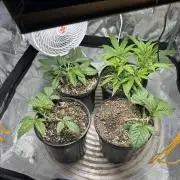
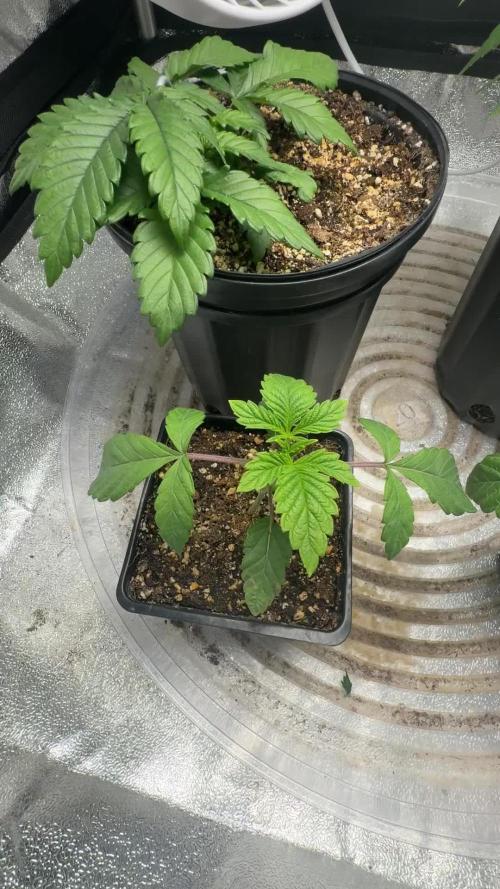
No huge changes.
GPA Cookies are still growing albeit slowly due to the cold. I hope it starts picking up soon.
HUGE defoliation on the Chocolate Skunk clone. This girl is responding very well.
Money Maker is just doing its thing! I didn’t expect much from this plant, but that just means it has no pressure and can take its time!




@Ultraviolet
Follow
Gave her a cocktail to help with stress. Added 1st net for lateral support, not so much now, but for later. Blue light is absorbed by photoreceptor proteins called phototropins, which trigger a hormonal response that causes cells on the shaded side to elongate, making the plant bend toward the light. Try and fill this side a little. She is quite big already, just needs to find her stride again after the undue torture.
The mind is constantly working and producing, just like a factory. It's not just a passive recipient of information but an active producer of ideas, attitudes, and beliefs. The "ingredients" in this factory are the information you consume, such as books, conversations, and the media you engage with. The "products" are your thoughts, beliefs, and actions. The quality of the ingredients directly influences the quality of the output.
5 apex stems with 20-30 mini cola, let them develop a little, with the apical dominance shattered, all those 20-30 will all compete with each other as soon as that stretch is initiated. Key to a good stretch is making sure the plant is cycling efficiently, with large ATP conversions occurring lights out.
For now, keeping light intensity high. A plant will slow its vertical growth in very high light intensities, leading to a more compact form with thicker stems and leaves. This response is a protective mechanism against light stress, which can damage the photosynthetic apparatus and lead to symptoms like leaf scorching, yellowing, and brittleness. Instead of growing taller, the plant invests its energy into creating a more robust, stress-tolerant structure.
Providing plants with necessary antioxidants helps protect the photosynthetic apparatus by scavenging reactive oxygen species (ROS) that cause damage from excess light.
UV light exposure can impact the xanthophyll cycle by either enhancing its photoprotective role or causing damage, depending on the intensity and type of UV radiation. UV exposure can trigger the synthesis of more xanthophyll cycle pigments to increase the plant's capacity to dissipate excess energy, but it can also cause direct damage, particularly to Photosystem II, and may lead to a decrease in the de-epoxidation state (DEPS ratio) which indicates a reduced capacity to dissipate excess energy.
Plants can respond to UV stress by increasing the synthesis of xanthophyll cycle pigments, such as violaxanthin and zeaxanthin, to improve their photoprotective capacity. UV-induced changes in xanthophyll cycle pigments can be linked to a plant's overall tolerance to high radiation stress. The xanthophyll cycle helps protect against photoinhibition, which is especially important when the plant is exposed to high levels of both UV and visible light. High doses of UV radiation can directly damage photosynthetic components, including the proteins, lipids, and pigments in the thylakoid membranes. Exposure to UV radiation can have a mixed effect on the de-epoxidation state (DEPS ratio) of the xanthophyll cycle pigments. In some cases, UV can inhibit the conversion of violaxanthin to zeaxanthin, resulting in a lower DEPS ratio and a reduced capacity for energy dissipation. However, the total pool of xanthophyll cycle pigments may increase, and this enhanced pool size could provide a greater potential for photoprotection despite a lower DEPS ratio.
The xanthophyll cycle works alongside other mechanisms, such as the accumulation of flavonoids (UV screens), to protect the plant from UV-induced damage.
Blue light repairs 100% UV-induced damage in plants through a process called photoreactivation, which uses a light-dependent enzyme called photolyase. This enzyme uses energy from blue and UV-A light to directly reverse the damaging pyrimidine dimers in the DNA caused by UV-B radiation, a key mechanism for maintaining the plant's genetic integrity.
After carbon, light, water, temperature, and nutrients, the limiting factor of a plant's growth is often its own internal factors or the amount of a key ingredient. Chlorophyll concentration is one such factor, as the amount of this pigment limits how much light can be captured for photosynthesis. Other factors include chloroplast number, respiration rate, and the concentration of carbon dioxide in the atmosphere, as plants are often in a CO2-deficient condition.
60x60x18=64800seconds x 700 = 45,360,000moles. 45DLI
Exposure to 165 µW/cm² of ultraviolet-B (UV-B) light for 3600 seconds = 1 hour, a extremely high, acute dose triggering stress responses and protective mechanisms.
.
The plant's photoreceptor protein, UVR8, senses the UV-B radiation. This triggers a signaling cascade that activates specific genes to protect the plant from damage. In response to the UV-B signal, the plant ramps up the biosynthesis of protective compounds like flavonoids, phenolic acids, and anthocyanins. These compounds absorb UV radiation and accumulate in the epidermal layers of leaves to shield inner photosynthetic tissues. The plant may increase leaf thickness or deposit more cuticular wax, creating a physical barrier to the radiation. The plant will produce more enzymatic and non-enzymatic antioxidants to neutralize the reactive oxygen species (ROS) produced by the UV-B radiation. The plant activates enzymes, including photolyases, to repair DNA damage caused by the UV-B. These repair mechanisms are critical for preventing permanent genetic mutations.
While protective measures are activated, a high dose delivered over a short period can cause stress that overwhelms the plant's defenses.
Photosynthesis is highly sensitive to UV-B. A high dose can inactivate Photosystem II (PSII), damage thylakoid membranes within the chloroplasts, and reduce chlorophyll content, which lowers the plant's overall photosynthetic capacity. Despite repair mechanisms, high UV-B doses can inflict persistent damage on the plant's DNA. The overproduction of reactive oxygen species can cause oxidative stress, leading to the oxidation of lipids and proteins and disrupting cellular function.
I am playing in the enchanted forest. A shift in perspective is what changes perception over time. By deliberately considering a situation from another point of view (perspective), you can challenge your initial, knee-jerk interpretation (perception). This is a valuable skill in both personal and professional life for fostering empathy, improving problem-solving, and making more informed decisions.
Move the mind off perception into perspective.
Thank you.


@Schnabeldino
Follow
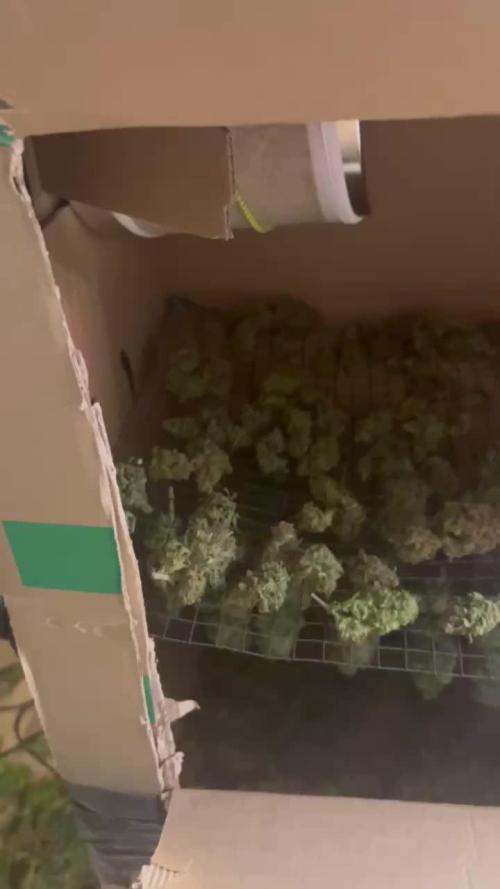
For my first trial run with Grand Cru Genetics, I’m definitely impressed. This strain shows great potential for flavor lovers and will be interesting to run again in the future.
With a little more care and training, she could have achieved more, but she stood in the far corner of the tent and was difficult to reach.
Drying takes place in our Dryomat; delivery of the Dryrocket has been delayed. According to my information, it will not arrive until October...perfect for winter growing.
Photos are wet buds. Once they are dry, the smoke report will follow!!!
See you again in 2-3 weeks 😇😇
shorts_status_processing


shorts_status_processing


@TegridyCal
Follow
The Pineapple Express is very pretty and in our opinion it is growing well, we are almost ready for the first topping we can't wait to structure it as we like it.

shorts_status_processing


@Mannabis
Follow
This week I took a few clones while I still could, didn’t want them too far into flowering. Normal week of (vigorous) growing in our Scrog canopy. Very surprised how quick she grew her leaves back after the defoliate.
The clone rooted quite quickly and has shown amazing vigor. It was reintroduced and will begin flowering immediately. It will still get 10 days of Veg while the plant figures out that it’s Fall time in here. (before it truly starts flowering)


@Farmer1
Follow
first day of week 7, pheno #1 stretched very little with short internode looking compact while pheno #2 stretched amazingly with lots of young buds. I slightly increase the dose of bloom and quantity of water.being bushy plants a good defoliation did them good.See you next week, bless and protect ✋🌳


@AutoCrazy
Follow
This plant sure is a dream to behold!! She’s starting to smell super sweet. The frost is starting to pop and the colours in the buds keep coming.
I did have a top off one cola go bad due to bud rot. It’s been super humid as of late.
Onward!!
😎🍿🍻🌱


@Ultraviolet
Follow
2nd net is up. Early bud formations are promising. holding up to the extremes pretty well, some leaves taking minor damage, but overall, she is holding up, gave her 1 night at 50F see how she would react, stressful. Not advised as it messes with her metabolism, but I want to see if it triggers any anthocyanin response. Love to see her purp up but no signs yet. Remember, For every molecule of glucose produced during photosynthesis, a plant needs to split six molecules of water. This process provides the hydrogen needed for synthesizing glucose and other organic compounds, while oxygen is released as a byproduct.
Homework.
If Rubisco activity is impaired and it cannot properly function or regenerate its substrate, the plant's leaves are likely to turn a pale green or lime green, a condition known as chlorosis. Essentially, Rubisco activity is highly regulated and susceptible to various environmental and metabolic factors that can cause it to become inhibited, leading to an apparent failure in RuBP regeneration due to a lack of consumption.
Rubisco regeneration is intrinsically linked to nitrogen supply because Rubisco is a major sink for nitrogen in plants, typically accounting for 15% to over 25% of total leaf nitrogen. The regeneration phase itself consumes nitrogen through the synthesis of the Rubisco enzyme and associated proteins (like Rubisco activase), and overall nitrogen status heavily influences the efficiency of RuBP regeneration. RuBisCO is a very large enzyme that constitutes a significant proportion (up to 50%) of leaf soluble protein and requires large investments in nitrogen. Insufficient nitrogen supply limits the plant's ability to produce adequate amounts of RuBisCO, thereby limiting the overall capacity for photosynthesis and carbon fixation. Maintaining the optimal, slightly alkaline pH is crucial for the proper function and regeneration of Rubisco. Deviations in either direction (too high or too low) disrupt the enzyme's structure, activation state, and interaction with its substrates, leading to decreased activity and impaired RuBP regeneration. (Lime/yellowing)
Structural Component: Nitrogen is an essential building block for all proteins, and the sheer abundance of the Rubisco protein makes it the single largest storage of nitrogen in the leaf.
Synthesis and Activity: Adequate nitrogen supply is crucial for the synthesis and maintenance of sufficient Rubisco enzyme and Rubisco activase (Rca), the regulatory protein responsible for maintaining Rubisco's active state. Nitrogen deficiency leads to a decrease in the content and activity of both Rubisco and Rca, which in turn limits the maximum carboxylation rate, Vmax, and the rate of RuBP regeneration Jmax, thus reducing overall photosynthetic capacity.
Nitrogen Storage and Remobilization: Rubisco can act as a temporary nitrogen storage protein, which is degraded to remobilize nitrogen to other growing parts of the plant, especially under conditions of nitrogen deficiency or senescence.
Nitrogen Use Efficiency (NUE): The allocation of nitrogen to Rubisco is a key determinant of a plant's photosynthetic nitrogen use efficiency (PNUE). In high-nitrogen conditions, plants may accumulate a surplus of Rubisco, which may not be fully activated, leading to a lower PNUE. Optimizing the amount and activity of Rubisco relative to nitrogen availability is a target for improving crop NUE.
Photorespiration and Nitrogen Metabolism: Nitrogen metabolism is also linked to the photorespiration pathway (which competes with carboxylation at the Rubisco active site), particularly in the reassimilation of ammonia released during the process.
To increase RuBisCO regeneration, which refers to the process of forming the CO2 acceptor molecule Ribulose-1,5-bisphosphate (RuBP) during photosynthesis, the primary methods involve optimizing the levels and activity of Rubisco activase (Rca) and enhancing the performance of other Calvin-Benson-Bassham (CBB) cycle enzymes.
Biochemical and Environmental Approaches:
Optimize Rubisco Activase (Rca) activity: Rca is a crucial chaperone protein that removes inhibitory sugar phosphates, such as CA1P (2-carboxy-D-arabinitol 1-phosphate), from the Rubisco active site, thus maintaining its catalytic competence.
•Ensure optimal light conditions: Rca is light-activated via the chloroplast's redox status. Adequate light intensity ensures Rca can effectively maintain Rubisco in its active, carbamylated state.
•Maintain optimal temperature: Rca is highly temperature-sensitive and can become unstable at moderately high temperatures (e.g., above 35°C/95F° in many C3 plants), which decreases its ability to activate Rubisco. Maintaining temperatures within the optimal range for a specific plant species is important.
•Optimize Mg2+ concentration: Mg2+ is a key cofactor for both Rubisco carbamylation and Rca activity. In the light, Mg2+ concentration in the chloroplast stroma increases, promoting activation.
•Manage ATP/ADP ratio: Rca activity depends on ATP hydrolysis and is inhibited by ADP. Conditions that maintain a high ATP/ADP ratio in the chloroplast stroma favor Rca activity.
Enhance Calvin-Benson-Bassham (CBB) cycle enzyme activity: The overall rate of RuBP regeneration can be limited by other enzymes in the cycle.
•Increase SBPase activity: Sedoheptulose-1,7-bisphosphatase (SBPase) is a key regulatory enzyme in the regeneration pathway, and increasing its activity can enhance RuBP regeneration and overall photosynthesis.
•Optimize other enzymes: Overexpression of other CBB cycle enzymes such as fructose-1,6-bisphosphate aldolase (FBA) and triose phosphate isomerase (TPI) can also help to balance the metabolic flux and improve RuBP regeneration capacity.
Magnesium ions, Mg2+, are specifically required for Rubisco activation because the cation plays a critical structural and chemical role in forming the active site: A specific lysine residue in the active site must be carbamylated by a CO2 molecule to activate the enzyme. The resulting negatively charged carbamyl group then facilitates the binding of the positively charged Mg2+ion. While other divalent metal ions like Mn2+ can bind to Rubisco, they alter the enzyme's substrate specificity and lead to dramatically lower activity or a higher rate of the non-productive oxygenation reaction compared to Mg2+, making them biologically unfavorable in the context of efficient carbon fixation. The concentration of Mg2+ in the chloroplast stroma naturally increases in the light due to ion potential balancing during ATP synthesis, providing a physiological mechanism to ensure the enzyme is activated when photosynthesis is possible. At the center of the porphyrin ring, nestled within its nitrogen atoms, is a Magnesium ion (Mg2+). This magnesium ion is crucial for the function of chlorophyll, and without it, the pigment cannot effectively capture and transfer light energy.
Mg acts as a cofactor: Mg2+ binds to Rubisco after an activator CO2 molecule, forming a catalytically competent complex (Enzyme-CO2-Mg2+). High light + CO2) increases demand: Under high light (60 DLI is a very high intensity, potentially saturating) and high CO2, the plant's capacity for photosynthesis is high, and thus the demand for activated Rubisco and the necessary Mg2+ cofactor increases. Mg deficiency becomes limiting: If Mg2+ is deficient under these conditions, the higher levels of Rubisco and Rubisco activase produced cannot be fully activated, leading to lower photosynthetic rates and potential photo-oxidative damage.
Optimal range: Studies show that adequate Mg2+ application can enhance Rubisco activation and stabilize net photosynthetic rates under stress conditions, but the required concentration is specific to the experimental setup.
Monitoring is key: The most effective approach in a controlled environment is to monitor the plant's physiological responses e.g., leaf Mg2+ concentration, photosynthetic rate, Rubisco activation state, and adjust the nutrient solution/fertilizer to maintain adequate levels, rather than supplementing a fixed "extra" amount.
In practice, this means ensuring that Mg2+ is not a limiting factor in the plant's standard nutrient solution when pushing the limits with high light and CO2.
Applying Mg2+ through foliar spray is beneficial to Rubisco regeneration, particularly in alleviating the negative effects of magnesium (Mg) deficiency and high-temperature stress (HTS). While Mg can be leached from soil, within the plant it is considered a mobile nutrient, particularly in the phloem. Foliar-applied Mg is quickly absorbed by the leaves and can be translocate to other plant parts, including new growth and sink organs.
Foliar application of: NATURES VERY OWN MgSO4 @ 15.0g L-1 in a spray bottle. For those high-intensity workouts when 1 meal a day is just not enough!
Foliar sprays are often recommended as a rapid rescue measure for existing deficiencies or as a supplement during critical growth stages, when demand for Mg is high. Application in the early morning or late evening can improve absorption and prevent leaf burn. The plant was getting a little limey yellow in the centre. Shortly thereafter, she was back in business, green mostly regenerated. The starting point [of creativity] is curiosity: pondering why the default exists in the first place. We’re driven to question defaults when we experience vuja de, the opposite of déjà vu. Déjà vu occurs when we encounter something new, but it feels as if we’ve seen it before. Vuja de is the reverse—we face something familiar, but we see it with a fresh perspective that enables us to gain new insights into old problems.
Confidence is evidence... nothing more. You are confident because you have driven 10,000 times, you are confident because you have spoken 10,000 times. People think confidence is a feeling, but it's not. If you want more confidence, then you need to create evidence, take more shots, collect more data, build more experiences, take more risks; fail, confidence doesn't come first; it is the reward you get for doing the work. no one else wants to do.

@soloczek
Follow
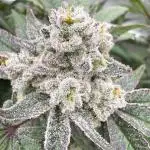
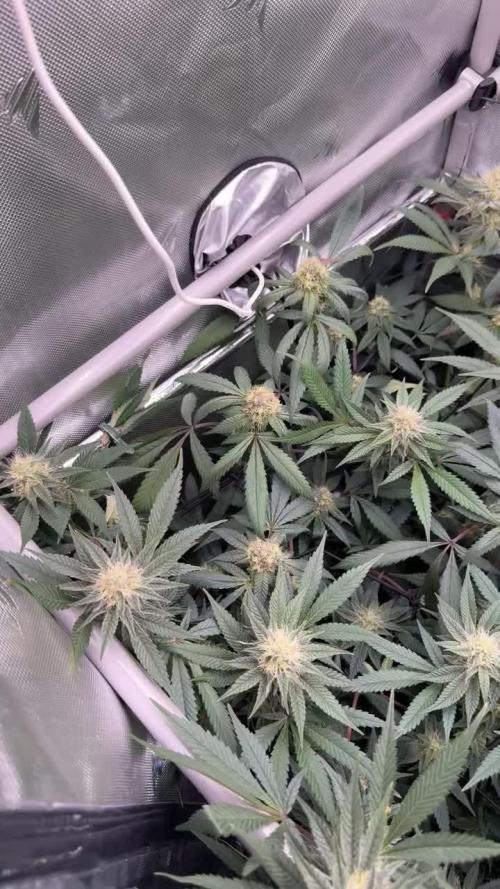
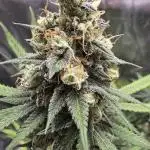
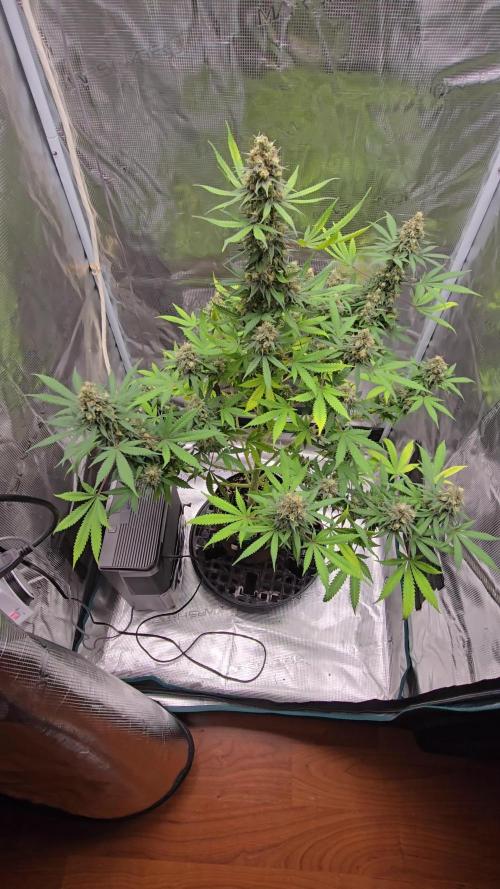
The smell is just gorgeous, ppd favorite for sure like a bag of fresh berries. Guzzlerz starts to purple, whole underside of the leafs are black. Purple Coolies Kush behind of all plants but will be very iced





@Hempface86
Follow
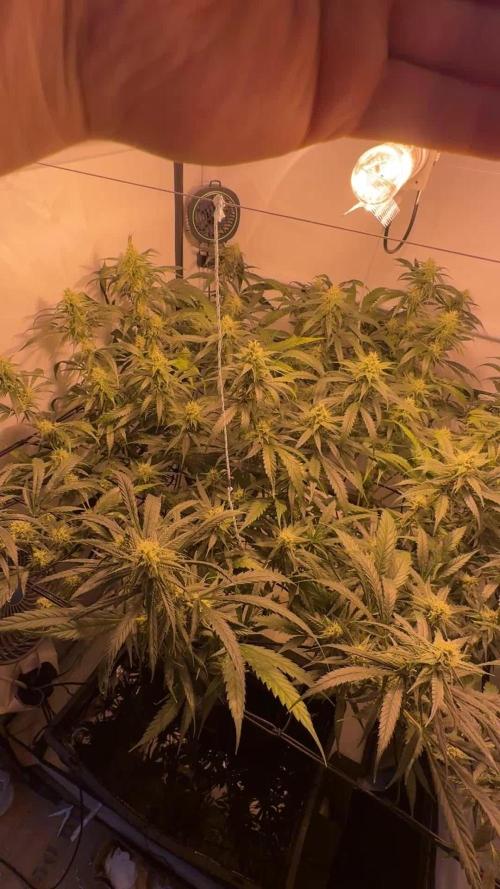
We are nearing the end. I just gave this girl fresh water and I think she's going to get water only for the duration of the next week or two.. i might start giving her ice water to see if we could bring out any colors... Again, this is a mystery plant, so I do not know what her capabilities are, so we shall see... I hope everyone is doing well this girl. I can't quite put a finger on it. Her smell is nothing crazy, but she does have some nice trichomes on the buds .. I hope everyone is doing well.God bless and happy growing ✌️


@love_2_grow
Follow
D8.
We're at the start of the second week, and the first side roots are visible.
------------------------------
D11.
Zzzzzzzzzzz...
------------------------------
D14.
At the end of the second week, there's still not much to report.
Yesterday, I increased the DLI to 20 after forgetting to ramp it up earlier in the week.
------------------------------