


Likes
Comments
Share


@pifflestikkz
Follow
Day 79
28/12/24 Saturday
Light 1L de-chlorinated tap water, with added big bud and bud candy 10ml each to 5L.
Girls were looking hungry for potassium.
Day 80
29/12/24 Sunday
Running 1L only de-chlorinated tap water pH 6.
Picture update 📸💚
Day 81
30/12/24 Monday
Ran a feed through today, dripper system 1.30min. using again de-chlorinated tap water , base nutes and additives.
Picture update 📸💚
Day 83
01/01/25 Wednesday (Happy NY 🎇💚)
De-chlorinated tap water only today pH 6.3.
Looking really good this week 😁
Buds are getting there structures, and the aroma coming through is heavenly... again 🤤
Picture and video update 📸💚
Day 84
02/01/25 Thursday (End of week)
De-chlorinated tap water and bud candy only today. pH 6.27
Picture update 📸💚



Likes
21
Share


@OGTrauma
Follow
Ill write from pc but as im trying to add a new nutrient i need to see if bulk ups without od
The update, and some source of knowledge - sadly the product is not registered .
https://www.growbaratochile.cl/thc-fertilizantes/sales-de-epson.html
https://www.royalqueenseeds.com/blog-epsom-salts-a-natural-hack-to-grow-healthy-cannabis-plants-n837
Thus: big gas leaks homies have nice halloween, the reason i'd flooded with photo this week was i needed to record any negative reaction caused by the incorporation of epson salts on the watering as i understand this shit also adds sulphur and be spreaded on soil for slow release, fixing too light or weakened soils , something i can't do with cal mag from bac, but that product has other sceneario where i can both water or spray on veg until early flowering so i wanted to try it but i didn't know the ratio, and the purposed spoon i used it on 1.5lt of water on 9 x 11lt Killer Kush that were soft to mild on specific carencies , additionaly, of using a very demanding food schema by boosters can accentuate the lack of specific nutrients like Calcium and Magnesium , so this add thick kick of Mg prevention as it pretty neat it's understanding, except on instructing the dosage and application. I did some barrier as is the last week i can do foliar spray as these bastards but furthermore is really a red flag as u can create the conditions for contract some fungi.
By a lot of having still figuring out the perfection of both illumination & thermals , still trying to enhance the light spectrum , and doing the first interaction with uv exposition to check that plants dont stress or physically burn, as i want to do the uv shit for late flowering as i expect by genetics this shit SHOULD BE A QUICK FLOWERING so, im entering to late flowering and do it for entire 4 weeks and then consider if plants show that are ripe enough, considering there is a quick underdeveloped automatic at bottom on a 12/12 scenario, and thus that motherfucker will not be forgiven by it unstability of this batch. 👻
Also i noticed i had slight fox-tailing that was quite provoked by messed up outside weather, so i still may need to ellaborate on lights to prevent excess of generated heat as well, as can incur in some penalty . I have a faint idea how to deal with as HEAT HERE WILL BE HELL.

Likes
Comments
Share

@Franco123
Follow
Hi the plant is fine and in recent days a lot of comparison has developed with the other plants (which all have the same parent) that were planted before her also because and it's the last mass June, the fertilization continues with earthworm humus and raw cane sugar and honey




Likes
6
Share


@Jhonnykush
Follow
5ta semana para estos dos esquejes de Darth haze de bsfseed en 15ltr geo textiles de santa planta de sustrato preparado pro mix para floracion, Vienen prometedoras lo único que se aplicó en este cultivo fue harina de hueso, mícrorisas , melaza A+ y aditivo b de namaste y potacio de namaste. ya empezamos a limpiar las raices de a poco con Detox de namaste espero les guste 💚🌱💨💨😎🇦🇷🇦🇷🇦🇷🇦🇷🇦🇷

Likes
5
Share


@Theia
Follow
The plants are all super healthy. Just getting water in their autopots. Absolutely huge . Gorilla girl is 10cm off my head height in her pot. And I am 6ft 2ins.
Rooms too full to get any pics that do not just look like jungle. But wow so healthy and green .
Love it.

Likes
2
Share


@Kirsten
Follow
16.2.25:
I decided to check out the lower canopies of all plants to see if I need to get rid of any foliage.
I did get rid of a few small branches and leaves.
However, whilst I was doing this, I saw more garden pegs from my LST remaining.
There were about 6 or more in Pink Mist alone. Additionally, on Watermelon, there were some left in, too.
I'm so annoyed to see that because the plants are really stretching, and I could've potentially disrupted this by leaving the pegs in for all this time without realising it.
🤞 that I haven't compromised things too much. We'll see.
I watered today with 2ltrs of dechlorinated water PH'd to 6.3 containing the following nutrients;
♡ .8g Green Leaf Nutrients PK booster
♡ .5g Ecothrive Biosys
I ordered quite a few things for the garden. I got Greenleaf Nutrients Sea K(elp) and Mega Crop Parts A+B. To go with their PK Booster I got last month. I'm excited to try it all together. Next run, maybe just using these. We'll see how it goes.
18.2.25:
The plants are going crazy for water! Everything is getting used right up so fast!
Today, I decided to add some more Black Strap Molasses to add some carbs and other micronutrients. I'll add the jar with the label in the photos section above.
I watered a very small amount to each plant.
What I put in:
♡ Black strap molasses 150g
♡ 2g Sea K(elp) Greenleaf nutrients.
I dissolved everything in 4ltrs of dechlorinated water PH'd to 6.4.
19.2.25:
I received the majority of the garden purchases that I made. I'm still waiting for the Ecothrive Life Cycle. I wanted to top dress, but it's been delayed unfortunately.
I am using my Greenleaf nutrients products which I bought on Amazon. I got the Mega Crop 2 part system Part A and Part B. I have the Sea K(elp), and the bud explosion PK booster.
I really wanted to get some of their sweet candy asking read many positive reviews. Unfortunately, for me, this is unavailable to buy currently. So that's a little disappointing.
I needed to do a good watering so when my nutes were delivered today, I got excited 🤗
I watered 2ltrs of dechlorinated water per plant, PH'd to 6.4, containing the following nutrients:
♡ 1g Mega Crop Part A
♡ 1g Mega Crop Part B
♡ .5g Sea K(elp).
The plants drank this up within a few hours.
I'm going to try and hold off on watering in hopes that my Ecothrive Life Cycle will arrive so I can top dress and water it in then.
20.2.25:
My Ecothrive Life Cycle arrived yesterday, and the plants are ready for their top dress and a good watering in.
I have some Biobizz Light Mix, Canna Coco,and perlite. I'm going to use this as a base to mix my amendments in.
I'm going to fill my 5 gallon bucket with about 4.5 gallons of my top dress mix. I will distribute this across 6, 4-5 gallon pots. Then I will water in well with Greenleaf nutrients Mega Crop Parts A+B and Sea K(elp).
I've made a crude attempt to video mixing my top dress. Don't listen to the audio. lol, my YouTube didn't stop playing whilst I recorded this 😂
So anyway, I added the following amendments to the above base mix of 4.5 gallons;
♡ 3 TBSP Ecothrive Life Cycle
♡ 3 TBSP Vitalink Bat Guano
♡ 3 TBSP Ecothrive Charge
♡ 1 TBSP RHS Mycorrhizal Fungi granules
♡ 6 TBSP Ground Cinnamon.

Likes
21
Share


@Growhouse_MLT
Follow
Fast Buds Run
Light at 75% and will stay like this for the coming week. Scrog net will also be installed this week.
09/04/24 - 2L RO Water with Cal Mag Xtra per plant.
11/04/24 - 3L RO Water only per plant.
14/04/24 - 3L RO Water with Nutes per plant.
Notes :
08/04/24 - Scrog net was installed, will continue to adjust branches this coming week.
11/04/24 - Was seeing leaves a little bit on the dark side so fed only plain water 6.5ph, next feeding will be with nutes again. Re-arranged scrog net a bit more to open up the canopy a little bit more.
Overall plants looking happy and all of them have now gone into the pre-flowering stage.
14/04/24 - Plants are doing really well in the pre-flowering stage and are really streching now. One last strech befor they go into full flower.
Likes
95
Share


@Roberts
Follow
Northern lights has been doing good. She has started growing up from the hst last week. She has been progressing more into flowering, and is looking good. Thank you Divine Seeds, and Spider Farmer. 🤜🏻🤛🏻🌱🌱🌱
Thank you grow diaries community for the 👇likes👇, follows, comments, and subscriptions on my YouTube channel👇.
❄️🌱🍻 Happy Growing 🌱🌱🌱
https://youtube.com/channel/UCAhN7yRzWLpcaRHhMIQ7X4g

Likes
59
Share


@MicrowGrow420
Follow
Getting close to switching her over to flower, she seems to be vegging well, fair few bud sites to watch develop, i also took some AG clones that are looking promising. The strain seems pretty hardy.


Likes
5
Share


@Ninjabuds
Follow
Gran turismo from lit farms is a super winner. I’m sad I didn’t take a clone. The plant has a craziest smell also it has super huge tricomb heads and its tricomb density is next level. When you touch the buds they are so so so very sticky and the smell is so strong probably the strongest smelling plant I have grown. Also the bud structure is super pretty and uniform. It’s almost unreal. I wish I had more seeds to this plant. I guess it will just be a memory after it’s all smoked and gone.

Likes
9
Share
@Roberts
Follow
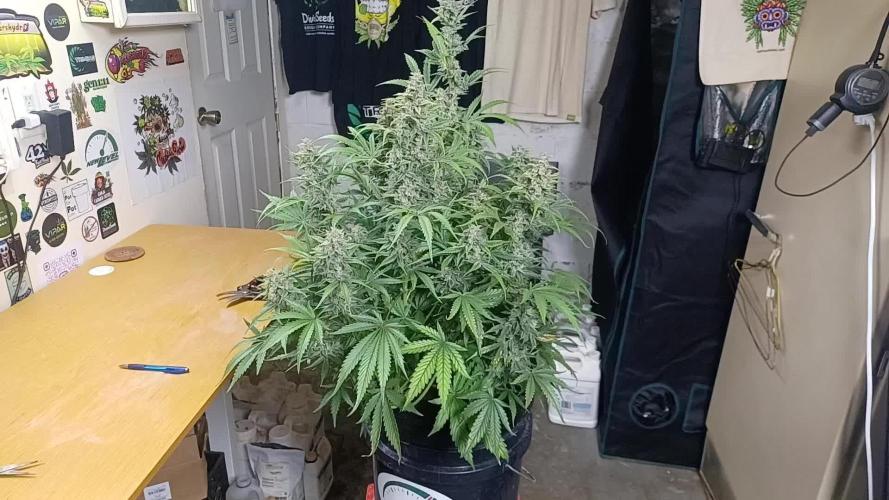
She is getting harvested today. She looks great and loaded in frosty flowers. She grew fast and well. Thank you Zamnesia seeds, Medic Grow, and Hon&Guan. 🤜🏻🤛🏻🌱🌱🌱
Thank you grow diaries community for the 👇likes👇, follows, comments, and subscriptions on my YouTube channel👇.
❄️🌱🍻 Happy Growing 🌱🌱🌱
https://youtube.com/channel/UCAhN7yRzWLpcaRHhMIQ7X4g.



Processing
Likes
73
Share


@Andres
Follow
she has 161 days outdoors .... and 98 days of flowering ... a lot of patience ... her smell is still strong ... a smell of mint. to pine ... the smell of indica is felt .. she will give some big buds .. especially her main crown ... she is a champion and fighter with the inclemency outdoor ... I believe that I will cut her on Sunday with 100 days of exact flowering ... but maybe ... I'll check your buds one by one ... I'll try more information ...

Likes
15
Share

@Crop_Top
Follow
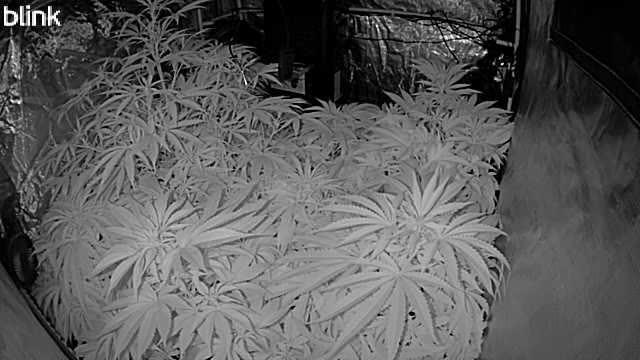
Spent the week playing around with a the temps/humidity to find the right setup to balance the numbers. VPD has stayed right around 1-1.18kpA.
Starting to think I might have stunted grow a little at the beginning of flowering. Looking through other grows and progress at week 3 of flowering mine seem to be a little behind. Next time I will back of defoliation and lollipopping some lol.
None the less everything seems to be going ok and plants still looking healthy. I’m hoping they stop growing as tent space is getting tight again.
I’ve been building out an actual grow space and setting things up to try out a hydro grow. Picked up 4 Scorpion Diablo lights, quest70 dehumidifier, and going with a RDWC setup. Did a ton of research and
Starting building my own system. Hopefully I can get things setup in the next week or so. I will update with a couple pictures as progress continues. Keep an eye out!

Likes
11
Share


@LACREME
Follow
Comecei a semana fazendo uma desfoliação e uma amarra LST.
Estou achando o desenvolvimento bom, crescendo bem rápido.
Observei pistilos aparecendo, logo ela entrará na floração.
Agora é aguardar os frutos...

