


Likes
Comments
Share


@Sensilover
Follow
Man sieht die Problematik jetzt deutlich das ich an den tabs sparen wollte


Likes
4
Share

@DogDoctorOfficial
Follow
8×8 Adventure – Week 11
Blueberry Muffin – Pheno B
💚 The Little One Keeps Shining
Hello everyone, and welcome back to another chapter of the 8×8 Adventure! 🌱💚
And here she is again...
Our little Blueberry Muffin Pheno B.
If you've been following this diary from the beginning, you already know exactly what makes this girl special.
She's small.
She's slow.
She's compact.
She's beautifully green.
And somehow...
she keeps getting more beautiful every week.
😂💚
While some of the plants around her have been stretching, reaching and trying to occupy every possible centimetre of the room, Blueberry Muffin Pheno B has remained completely committed to her own philosophy.
Stay small.
Build flowers.
Look beautiful.
Take your time.
And honestly?
I respect it.
This week isn't about dramatic intervention.
It's about watching her continue to develop while we give her exactly what she needs.
Because at this stage of flowering...
sometimes the best thing a grower can do is simply let the plant finish her story.
────────────────────────
🌸 Week 11 – The Quiet Stage Of Flowering
We're now at that interesting point in the flowering cycle where the major structural work is already behind us.
The plant has her architecture.
The flowering sites are established.
The roots are established.
The irrigation system is running.
The nutrition is established.
The lighting is in place.
And now...
the flowers get to do the talking.
That's exactly where Pheno B is right now.
We're not constantly reaching into the canopy.
We're not trying to reshape her.
We're not trying to make her taller.
We're not trying to make her behave like another phenotype.
We're simply observing.
Watering.
Feeding.
Monitoring the environment.
Checking the flowers.
And making adjustments only where the plants actually ask for them.
Pheno B isn't asking for much.
She's just quietly getting on with the job.
────────────────────────
🌿 Small Doesn't Mean She's Not Working
This little girl continues proving one of my favourite points from the entire 8×8 Adventure:
Height isn't everything.
At around 75 cm, Blueberry Muffin Pheno B is still one of the smallest plants in the room.
But look at her.
She's lush.
She's green.
She's full of flowering sites.
She's compact.
She's developing density.
And she's filling her available space extremely well.
She's not wasting energy trying to become a giant.
She's simply using the architecture she has.
And that's what I love about phenotype hunting.
You don't always get what you expect.
Sometimes the plant gives you something completely different from the picture you had in your head.
And instead of fighting it...
you learn to appreciate it.
Pheno B has made her position very clear.
She's the little one.
And she's perfectly happy with that.
😂💚
────────────────────────
🌸 The Flowers Are Becoming The Story
At this stage, her height isn't really what I'm watching anymore.
I'm watching the flowers.
And they're looking beautiful.
The developing buds continue gaining structure and volume.
The plant is gradually becoming more dominated by flowering growth, and those compact branches are carrying increasingly substantial floral sites.
This is where the patience starts becoming rewarding.
Week after week, the difference may seem small when you're standing in front of the plant every day.
But compare photographs.
Suddenly...
you see it.
More flower.
More structure.
More density.
More maturity.
And that's what we're looking for now.
Not another giant burst of vegetative growth.
Not another training session.
Just development.
────────────────────────
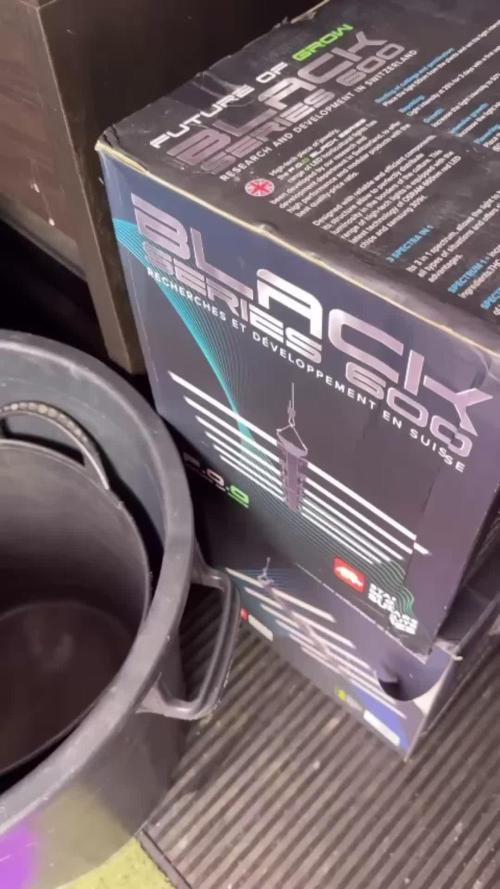
💡 Two More Future Of Grow Black Series 600W Fixtures
Now, although we're doing very little to the plant physically this week, there has been an important development above her.
Future of Grow provided us with two additional Black Series 600W fixtures for us to test as part of the 8×8 Adventure.
And that gave us a completely different lighting capability.
Once the additional fixtures were added, the available PPFD increased considerably.
Actually...
a little more than I wanted.
😂
So instead of simply running the fixtures at maximum power, we turned them down.
We're currently running at approximately 59% power from the plug.
At that setting, we're seeing approximately 1,500 PPFD across the upper canopy, with the intensity naturally decreasing lower down depending on plant height and canopy position.
And I'm very happy with that.
The important part isn't simply having 600W fixtures.
It's having control over them.
────────────────────────
🔌 More Light Doesn't Mean We Need More Power
This is something I really enjoy demonstrating in a real grow.
When you have powerful equipment, you don't necessarily need to run it flat out.
We increased the available lighting.
The PPFD went higher than I wanted.
So we reduced the power.
Simple.
😂
Now we're still providing an extremely strong light environment while using less electricity.
We're also avoiding unnecessary stress on the fixtures and the associated equipment.
And we're giving ourselves room to adjust later if the plants tell us they want something different.
That's one of the reasons I'm so happy with the additional Future of Grow fixtures.
They give us more capability.
More control.
And more room to experiment.
────────────────────────
☀️ Around 1,500 PPFD At The Top
The approximately 1,500 PPFD we're seeing is measured across the upper canopy.
Obviously, Blueberry Muffin Pheno B is not a perfectly flat surface.
She's a living plant.
Some flowers are higher.
Some are lower.
Some leaves face the fixtures directly.
Others sit at different angles.
So the light naturally changes throughout the structure.
And that's exactly what we expect.
The goal isn't to make every single square centimetre of the plant receive identical light.
The goal is to create a strong overall light environment and allow the plant to use those photons as efficiently as possible.
And with Pheno B's compact architecture, this is particularly interesting.
She has a relatively small vertical footprint, so we're able to provide a very strong upper-canopy environment without needing to chase a huge plant through the tent.
She's compact.
The light is strong.
And now...
we watch what she does with it.
────────────────────────
💚 Future Of Grow – A Big Thank You
I want to give Future of Grow a special shout-out this week.
Providing two additional Black Series 600W fixtures gives us the opportunity to explore how these plants respond when we substantially increase the available lighting capability.
And we're not just turning everything on and walking away.
We're testing.
We're adjusting.
We're measuring.
We're finding the level that makes sense.
That's exactly the kind of real-world testing I enjoy doing.
We increased the lighting.
We saw where the PPFD went.
We decided it was more than necessary.
We reduced the output.
And now we're sitting at a level I'm very comfortable with.
More capability.
Less unnecessary power consumption.
And plenty of light.
That's a pretty good combination.
────────────────────────
🌿 Pheno B Under The New Lighting
And what about our little Blueberry Muffin?
She's happy.
That's really the simplest way to describe it.
Her foliage remains lush.
Her colour remains beautiful.
Her flowering development continues.
And she isn't giving us any reason to suddenly start changing everything.
So we're not.
She's doing her thing.
We're doing ours.
The lights provide the photons.
The roots provide the foundation.
The irrigation provides the water and nutrients.
The environment provides the conditions.
And the plant decides how to put everything together.
That's the fun part.
────────────────────────
🥥 Nutrition – Another Small Step
There was also a small nutritional adjustment this week.
Nothing dramatic.
We're simply increasing Terra Bloom slightly from 2.2 ml/L to 2.3 ml/L.
The current recipe is:
• Terra Bloom — 2.3 ml/L
• Pure Zym — 1 ml/L
• Power Buds — 1 ml/L
• Sugar Royal — 1 ml/L
• pH Plus — 0.03 ml/L
• Lemon Kick — 0.03 ml/L
That small increase in Terra Bloom brought the EC up slightly.
We're now sitting around:
⚡ EC — 2.14 mS/cm
Again...
Nothing dramatic.
Just a small measured progression as flowering continues.
I don't believe in changing things simply because the calendar says another week has passed.
The plant tells us what she needs.
And Pheno B is telling us:
"I'm happy."
So we're making small adjustments rather than dramatic ones.
────────────────────────
💧 Irrigation – Keep The Roots Happy
The irrigation remains consistent as well.
We're currently around:
💧 1.45 L per plant / 24 hours
The current root-zone conditions remain stable, with the solution and substrate both around 25°C.
That's important.
Because while we can change the lighting strategy, adjust nutrition and make other decisions above the canopy...
The roots still need consistency.
Water.
Nutrition.
Oxygen.
A stable root environment.
And Pheno B is receiving exactly that.
Her slow growth isn't something we're trying to correct through excessive inputs.
That's simply her phenotype.
We're supporting her rather than trying to force her to become somebody else.
────────────────────────
🌡️ Week 11 – Current Conditions
This week's recorded conditions are:
• 🌡️ Day Temperature: 26.5°C
• 🌙 Night Temperature: 26°C
• 💧 Relative Humidity: 61%
• 🥥 Substrate Temperature: 25°C
• 💦 Nutrient Solution Temperature: 25°C
• ⚗️ pH: 6.02
• ⚡ EC: 2.14 mS/cm
• 💨 CO₂: approximately 693 ppm
• 💡 Light Schedule: 12/12
• 💧 Irrigation: approximately 1.45 L/plant/24h
• ? Pot Size: 15 L
• 📏 Plant Height: approximately 75 cm
The room continues to remain stable overall.
Summer can still create small fluctuations, of course, but we're keeping the variables we can control as consistent as possible.
And that's particularly important at this stage.
We're not looking for perfection every minute of every day.
We're looking for stability.
────────────────────────
🧠 Why We're Not Touching Her
I think this deserves its own section because it's an important part of the grow.
There is always a temptation to do something.
Remove a leaf.
Move a branch.
Change the feeding.
Change the light.
Adjust something.
But sometimes...
there is nothing that needs fixing.
Pheno B has a good structure.
Her flowers are developing.
Her foliage is healthy.
Her environment is stable.
Her irrigation is consistent.
Her nutrition is working.
So why would I disturb her?
We're watching her closely.
We're checking for problems.
We're monitoring development.
But we're not manufacturing problems just because we feel like we should be doing something.
This is the stage where patience becomes cultivation too.
────────────────────────
🌿 Compact Architecture – A Little Advantage
Her compact size is actually becoming quite enjoyable at this stage.
There isn't a huge vertical structure to manage.
There isn't an enormous stretch creating constant challenges.
She's simply sitting there...
building.
Her flowers are concentrated through a compact architecture, and that makes her a fascinating contrast to some of the taller plants in the 8×8.
Same room.
Same general philosophy.
Same lighting.
Same nutrition.
Same irrigation.
Different genetic expression.
That's the experiment.
And Pheno B continues giving us a very clear answer.
Small.
Compact.
Slow.
But beautiful.
────────────────────────
📸 The Photographs Tell The Truth
This is another reason I love keeping individual diaries.
If we only photographed the whole room, Pheno B could easily disappear into the bigger picture.
But when you isolate her...
You can appreciate her.
The lush foliage.
The compact structure.
The developing flowers.
The density.
The colour.
The progression.
She's not competing with anyone anymore.
She doesn't need to.
She's simply showing us what she can do.
And honestly...
I think she's doing a beautiful job.
────────────────────────
☀️ Photons, Plants & Patience
One of the things this stage reminds me of is that lighting is only one piece of the equation.
We're now giving these girls a very strong lighting environment.
Approximately 1,500 PPFD at the upper canopy.
That's a lot of photons.
But photons alone don't grow flowers.
The plant still needs:
Water.
Nutrition.
Healthy roots.
CO₂.
Temperature control.
Humidity control.
Healthy foliage.
And time.
Everything has to work together.
That's why we're not simply adding light and then expecting miracles.
We're giving the plants a complete environment and watching how they respond.
Pheno B is responding in her own way.
Slowly.
Quietly.
Beautifully.
────────────────────────
🔬 Same Genetics, Different Personality
This is probably one of the biggest reasons I enjoy having both Blueberry Muffin phenotypes documented separately.
They're related.
They're growing under the same general conditions.
But they don't express themselves exactly the same way.
Pheno B has consistently shown us that she's the smaller, slower phenotype.
And instead of treating that as something that needs correction...
I'm treating it as information.
This is what her genetics are expressing.
And that's valuable.
Because the purpose of a phenotype diary isn't to make every plant behave the same.
It's to discover how they behave.
And this little girl has been very clear.
😂💚
────────────────────────
🔮 Looking Ahead
From here...
We're keeping things simple.
We're going to continue monitoring the flowers.
Continue checking the foliage.
Continue watching the environmental conditions.
Continue providing consistent irrigation.
Continue with the flowering nutrition.
And continue testing the new lighting setup.
The two additional Future of Grow fixtures give us another exciting variable to observe.
We've already found a power level we're comfortable with.
Now we'll watch how the plants respond over the coming weeks.
And as for Pheno B?
She's going to keep doing what she does best.
Take her time.
Build quietly.
And look beautiful while doing it.
────────────────────────
💚 Final Thoughts – Let The Little One Finish
I think that's probably the biggest lesson this girl continues teaching me.
Not every plant needs to be big.
Not every plant needs to be fast.
Not every plant needs constant intervention.
And not every phenotype needs to be pushed toward the same result.
Sometimes...
the little one is exactly the one you want to watch.
Blueberry Muffin Pheno B is compact.
She's slow.
She's lush.
She's green.
She's flowering beautifully.
And she's becoming increasingly dense.
This week we haven't needed to do much physically to her.
And that's okay.
We've provided the light.
We've provided the nutrition.
We've provided the irrigation.
We've provided the environment.
And now...
we give her time.
That's the stage we're in.
The plant has done her part.
Now we watch the flowers finish the story.
And with the new Future of Grow lighting above her, a small increase in nutrition, a stable environment and a very happy-looking plant...
I'm really curious to see what this little Blueberry Muffin becomes by the end.
For now?
She's shining.
And that's enough.
💚🌸
────────────────────────
🙏 Thank You
A huge thank you to Zamnesia for giving us the opportunity to explore these Blueberry Muffin genetics and to follow this beautiful phenotype individually throughout the entire journey.
A heartfelt thank you to Plagron for the nutrition supporting these girls through flowering and helping us maintain such healthy, lush plants.
A massive thank you to Future of Grow for providing the Black Series lighting that has been powering this room and, especially this week, for providing two additional Black Series 600W fixtures for us to test.
Having more lighting capability and then being able to control the output to find the level that makes sense for the plants is exactly the kind of experiment I love documenting.
And thank you to Lumiflora for continuing to contribute additional light deeper into the canopy and helping us think about the plants as three-dimensional structures rather than simply flat canopies.
Thank you as well to everyone following the 8×8 Adventure here on GrowDiaries.
This project continues showing us something I never get tired of seeing:
Same room.
Same environment.
Same general cultivation philosophy.
Different genetics.
Different personalities.
Different stories.
Blueberry Muffin Pheno B may still be the little one.
She may still be the slow one.
But she's also one of the most charming plants in this room.
She's compact.
She's lush.
She's beautiful.
And she's quietly building something very interesting.
So this week, there isn't a dramatic intervention.
There doesn't need to be.
We're simply giving her what she needs...
and letting her finish.
Keep shining, little girl. 💚🌸
Until next week...
Growers Love, happy growing, and take care everyone! 🌱💚
Likes
5
Share


Likes
14
Share


@Highsince92
Follow
Forgot to take pics for week 9 so here is week 10. All chopped and drying after 48hrs darkness the Cali snow could have probably done with another week but all the rest were looking pretty done with about 20% amber. Drying at 19 degrees with humidity at 50% for the first couple of days then I’ll up it to 62% till there done. Going to be the longest 10 days of my life. Looking good I think for my first grow can’t believe how easy it’s been organic is the way for me I think.
Likes
8
Share


@Inceptionist
Follow
Now Milky Dreams is starting to fade as well even though it looks like a deficiency might play into it as well imo but I'm not quite sure.
At this point I can only repeat myself when saying that they look amazing


Likes
134
Share


@DogDoctorOfficial
Follow
And this Mama keeps getting better and better every week, she is now putting weight on her fruits to a point that i am already using extra help to keep them in place lol , and man she keeps increasing her trichomes to an outstanding levels and formation , she is a beauty of the goods and a keeper thats for sure.
Stop my P and increase my K and everything else except my CO2 levels , don wryly control that , and my PPFD that i control and am keeping the same as last week.
Not much else to say, she is as you guys can see gorgeous, at least to my eyes she is the most beautiful thing in the world <3 <3 <3 i will provably do a tiny defoliation at some point this or next week, and from there she will be on her way to finish most provably, lets see how this magical nature peace of art goes <3 <3 <3
Haded some night shots, man she is getting so frosty it gets cold just by looking at her lol <3 <3 <3
As always thank you all for stoping by, for your time, your love and for it all, i am truly blessed with you all.
All info and full product details can be find in can find @
https://dutch-passion.com/
https://aptus-holland.com/
#aptus #aptusplanttech #aptusgang #aptusfamily #aptustrueplantscience #inbalancewithnature #trueplantscience #dutchpassion #dogdoctorofficial #growerslove
With true love comes happiness , Always believe in your self and always do things expecting
nothing and with an open heart , be a giver and the universe will give back to you in ways you could not even imagine so
More info and full updates @
https://growdiaries.com/grower/dogdoctor
Growers love to you all
Likes
6
Share


@Lowkeynotbad
Follow
Currently at 2,722 grams with stems and untrimmed. Hoping to get around 800 grams dried. Prior to harvest I run lights for 48hrs
Likes
14
Share


@BLAZED
Follow
Week 11 (10-4 to 16-4)
10-4
Temperature: 24.4 degrees (lights on) 21.1 degrees (lights off)
Humidity: 60% (highest) 52% (lowest)
No pictures.
Added 10L to the reservoir, and turned it on for a couple of minutes.
11-4
Temperature: 24.4 degrees (lights on) 21 degrees (lights off)
Humidity: 61% (highest) 52% (lowest)
12-4
Temperature: 25.5 degrees (lights on) 22 degrees (lights off)
Humidity: 65% (highest) 57% (lowest)
Turned the reservoir on for a couple of minutes.
13-4
Temperature: 26.5 degrees (lights on) 23 degrees (lights off)
Humidity: 65% (highest) 56% (lowest)
14-4
Temperature: 26.4 degrees (lights on) 22.1 degrees (lights off)
Humidity: 64% (highest) 45% (lowest)
Turned the reservoir on for a couple of minutes.
The reservoir is almost empty, there is 850 ml left.
15-4
Temperature: 24.4 degrees (lights on) 20 degrees (lights off)
Humidity: 59% (highest) 49% (lowest)
No pictures.
16-4
Temperature: 23.5 degrees (lights on) 19.5 degrees (lights off)
Humidity: 60% (highest) 53% (lowest)
Today i defoliated both plants heavily for the last time, you can say i did a method called: schwazzing.
Turned on the reservoir for a couple of minutes. (Till the AutoPots are full and the valve closes)
Rised the pots aswell, so the canopy is very even.
I let them recover from the heavy defoliation i did, and next week i will slowly increase the light's strength. (Now still at 50% 50cm)

Likes
27
Share


@adam_pawloski87
Follow
Let’s Go day 29!! This week went real nice ! Girls are staying very healthy and building up nicely and even started showing signs of female sex which is super great ! We started doing a little bit of leaf tuck training method on em , nothing to big as like I said I want these girls just to do there thang an grow more on naturally side! My Air temp and Humidity have been on point all week, staying from 70-75 degrees throughout the day and humidity staying around 58-61% humidity , my girls are loving that summer an 75 feeling !! Can’t wait to see what we do this week ! Hopefully you all enjoy, and are ready for another great productive week ! Peace love an positive vibes to y’all Cheers 😶🌫️💨💨💨💨🤙🏻Happy Grows✌️🏻Week 4 let’s get it !
Likes
20
Share


@Mr_weed_pt
Follow
Last week. 9 weeks have pass now 48h of darkeness and then chop chop..
Processing
Likes
32
Share


@Vega0284
Follow
Hey Guys!
Super excited this week! I've really been wanting to try growing outdoors, so I built a cheap hoop house! Got most of this stuff for the frame from Lowes under 300$. All the soil products I got from GrowGreenMI. Some really cool people out there.
One thing I'm super worried about is drainage. Right now those holes are about 4 feet deep and they've got about 4 inches of water in them already. What's been cautioned is that, eventually, about 2 months in these plants roots will grow and reach the bottom and cause root rot to form. One of the biggest things I was trying to be wary of was causing root rot. This was also the biggest precautionary measure I took when mixing the soil. Adding the extra perlite, coco, and clay pebbles. Best advice right now is to build the soil up on the holes another 16 to 18 inches and possible stick a PVC pipe down to the lowest drainage point of the hole to allow some of that natural occurring water to evaporate.
Any advice anyone has on it is welcomed!
Making a compost tea for the soil outdoors, will probably put 2 cups in each RDWC bucket as well and let that do it's magic for a day or so before nutrient change. Raised the bed about 14 inches as well!
All the seeds sank! Off to a good start! Lol


Likes
6
Share


Likes
7
Share


@eldruida_lamota
Follow
Que pasa familia, vamos con la cosecha de estas Black Muffin F1 de Sweetseeds.
Esta variedad me resultó bastante sencilla de cultivary es bastante resistente, si no la maltratáis crece mucho y bien sana, la flor se ve increíble, tiene una cantidad de resina considerable y unos tonos rojos oscuros muy peculiares, se ven genial.
El olor que desprende es bastante frutal con toques cítricos, no pinta nada mal, las flores están prietas.
No da mayores problemas, el ciclo no es largo, cuiden con la altura ya que se desmadran un poco.
IMPORTANTE destacar: En las fotos comprobaréis que ya no hay botes de cristal con sobres de bóveda, ahora hay Grovebags.
Que son una especie de sobres o bolsas que retienen el peso, previene la aparición de moho y mantiene intacto el terpeno, para que el curado sea más óptimo.
Hasta aquí todo, Buenos humos 💨💨💨

Likes
10
Share


@MichaelMan
Follow
Plants are lookin really healthy. Smell are getting stronger. Switching to bloom cycle next week

Likes
2
Share


@RoccosForest
Follow
Was only able to plant 4 out 5 seeds one seed still hasn't germinated yet.

Processing
Likes
5
Share


@Kourtney80
Follow
I’ve started useing rain water to water them. They still look healthy as they are keeping they’re rich green colour I jus hope they’ll survive😅
I also have a new 600w light for them

