Likes
Comments
Share
@Roberts
Follow
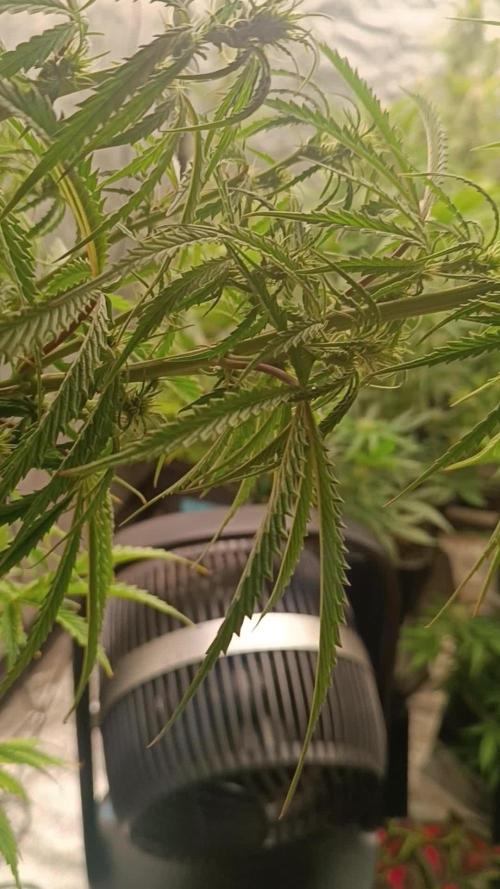
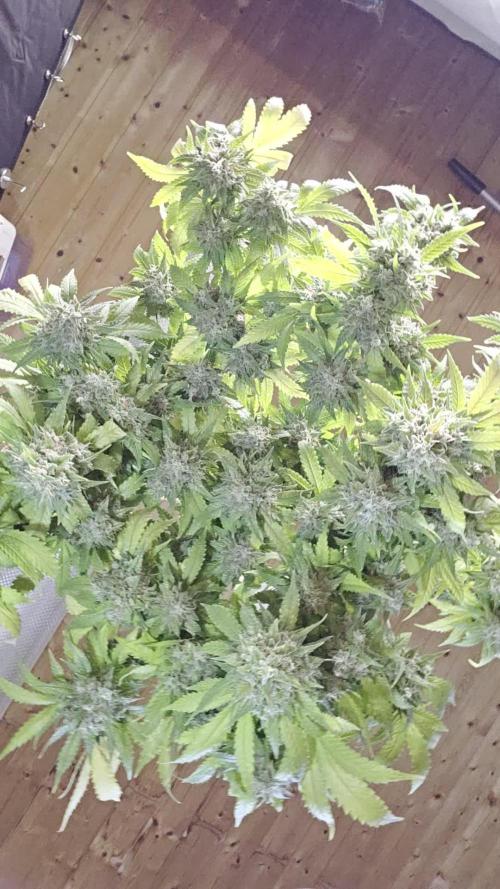
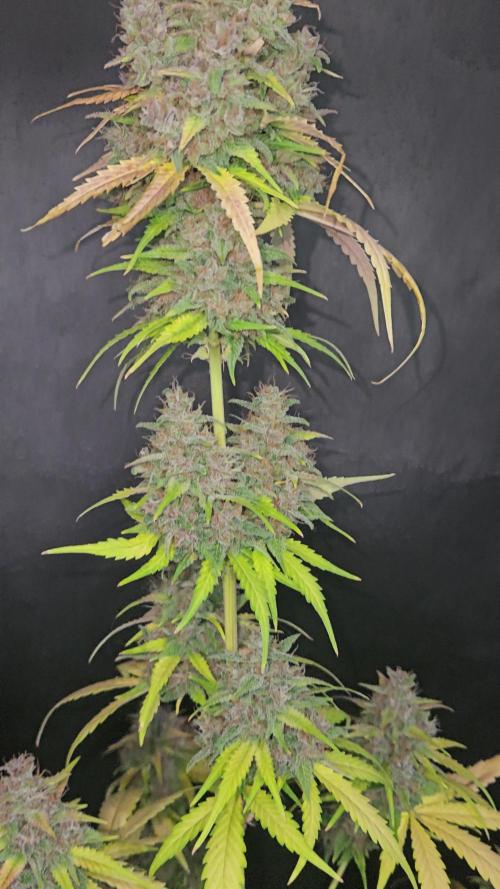
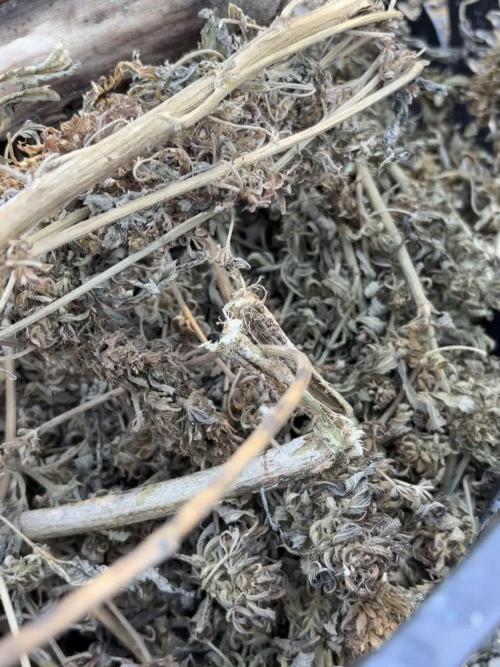
Sorry I have not updated in some time. A lot of the missed time was me recovering from hand surgery. In this time, I was not able to move plant and tend to them. Then, at the start of the new year, GD was acting horrible. It would allow some updates and then reject others. Luckily it was still allowing harvest updates. The flower has a strawberry berry smell. Strawberry flower is my favorite. It is super frosty, and smells delicious. I did lose half of the canopy during flowering. As it was too close to the fan. Causing it to l wind burned a lot and ate away at the plant as it grew. She did alright for what I could do 1 handed. Thank you Spider Farmer, Athena, and Herbies Seeds. 🤜🏻🤛🏻🌱🌱🌱 Thank you grow diaries community for the 👇likes👇, follows, comments, and subscriptions on my YouTube channel👇. ❄️🌱🍻 Happy Growing 🌱🌱🌱 https://youtube.com/channel/UCAhN7yRzWLpcaRHhMIQ7X4g.
Likes
3
Share
WOW these are surprisingly doing very well. Some are a little slower than others but not far behind.
Likes
10
Share
Automatic Royal Amnesia is growing at a rate that we really like a lot and with a very stable and orderly regularity. We made the topping leaving 2 floors of branches underneath that one as our usual style. She looks really strong, healthy and very beautiful.
Likes
7
Share
@Alvareas
Follow
Die Pflanze wächst und gedeiht. Am ersten Tag der Woche, konnte ich die nächsten Triebe, ein weiteres Mal, toppen. Die letzten verbliebenen Triebe, wurden am 4 Tag der Woche, zum letzten Mal getoppt. Somit sind wir bei 12 Trieben und mit diesen soll es auch in die Blüte gehen. Damit die Triebe möglichst auf gleicher höhe bleiben, habe ich an Tag 5 damit begonnen, die Triebe in der nächsten Ebene, mit LST-Clips zu trainieren. Was wieder sehr gut funktioniert hat, die Pflanze wird breiter und bleibt auf einer Höhe. Die Luftfeuchtigkeit wurde wieder etwas gesenkt im laufe der Woche und die LED ab dem 4 Tag auf 30% erhöht. Der Abstand der LED wurde so angepasst, dass ich auf ca. 500 PPFD und einen DLI 34 gekommen bin. Der Abstand der LED wurde nicht an das Pflanzen Wachstum angepasst, so das am Ende der Woche ca. 550 PPFD und ein DLI von 36, bei der Pflanze angekommen ist. Sollte nichts mehr Gravierendes dazwischenkommen, lasse ich die Pflanze jetzt noch ein wenig wachsen und stelle dann im laufe der nächsten Woche auf 12/12 und leite die Blüte ein. Die Parameter in Woche 5: Controller Einstellung Tag: Advanced AI Luftfeuchtigkeit 55% - 65% Controller Einstellung Nacht: Advanced AI Luftfeuchtigkeit 50% - 60% Durchschnittliche Tagestemperatur: 26,9 Grad Durchschnittliche Nachttemperatur: 23,2 Grad Durchschnittliche Luftfeuchtigkeit Tag: 60,3% Durchschnittliche Luftfeuchtigkeit Nacht: 56,8% Durchschnittlicher VPD Tag: 1,2 Durchschnittlicher VPD Nacht: 1,1 LED Leistung: 30% = 120 Watt Beleuchtungsdauer: 18 Stunden Umluft: Stufe 1 oszillierend
Likes
20
Share
@Hawkbo
Follow
Everything is movin along some will be coming down this week a few need a little longer. I'll get some pics up a little later today
Likes
15
Share
@Papabro2k
Follow
This one was a please watching grow I never did much training and she never got so much attention in the back turned out great ! So much frost thanks 😊
Likes
2
Share
@Luke_Lee
Follow
——————————————— WEEK 9 / DAY 58-64 BLOOM WEEK 2 / DAY 8-14 Mars Hydro FC-E3000 Floragard Professional GrowMix 11L fleece bags Light: 50cm Schedule: 12/12; PPFD: 875umol/m2/s DLi: 38mol/m2/d 20° C - 65RH 2L per Plant Hesi Bloom Complex (5ml/2L water) Hesi BOOST (2ml/2L water) PH 6,5 Fan, extractor and pump ON 24/0. ———————————————————— - DAY-58 / Bloomday-08 The second week of flowering begins. The plants are doing very well so far and are developing magnificently. They have gained a lot of leaf mass since the time change. The light has been adjusted PPfd: 875 / DLi: 38. - DAY-59 / Bloomday-09 Today each plant was watered with 2L of water with 4ml Hesi Bloomcomplex and 2ml Hesi BOOST. - DAY-62 / Bloomday-12 Today, at the end of the second week of flowering, the plants were little defoliated. They were then each watered with 3 liters of water with 2 ml HESI BOOST and 4 ml HESI Bloomcomplex. - DAY-64/ Bloomday-64 The last day of the second flowering week.
Likes
13
Share
@Bryankush
Follow
Settimana di lavaggio probabilmente la sua ultima. Le cime al tatto sono appiccicose ma più che altro farinose , emanano un aroma tropicale favoloso😋 Giorno 3 viene annaffiata con 1L di acqua a 0 ppm Giorno 7 oggi pomeriggio verrà tagliata Le cime sono veramente compatte e piene di resina come vedete nel video. Nel vassoio sottostante ci sono a sinistra la cima centrale e a destra l'altra apicale simmetrica.
Likes
14
Share
11/15 Coming along but not without problems. 3+ weeks in now I'm in the stage where I'm just trying to push all the right buttons and guide it to harvest. They've all demonstrated some level stress but bud formation is coming along well. I dont know if I'm just used to the smell but it hasn't really gotten much stronger. I'll try to take some more pics later on. The past week has been a little busy.
Likes
6
Share
Plant is doing amazing! This is my first grow & I am so excited , I’m in the process of practicing LST , I am not the best but you learn as you go! Let me know what you all think! Do you think my light should be highered?
Likes
10
Share
Eccoci qui... Tutto va per il meglio, questa settimana ho eseguito Lollipopping e Defoliation per far si che le cime principali sprigionino al meglio il loro vigore. Siamo verso la fine del progetto ora bisogna solo aspettare la fine... Grazie a tutti per il supporto🔥🌲❤️
Likes
6
Share
@KarmaBAB
Follow
Good germination left me with a strong seedling! Will start adding Xtra Roots after the first pair of true leaves develop. on the plant. I am very satisfied for now! 😀
Likes
45
Share
My homework. Rubisco regeneration is intrinsically linked to nitrogen supply because Rubisco is a major sink for nitrogen in plants, typically accounting for 15% to over 25% of total leaf nitrogen. The regeneration phase itself consumes nitrogen through the synthesis of the Rubisco enzyme and associated proteins (like Rubisco activase), and overall nitrogen status heavily influences the efficiency of RuBP regeneration.Structural Component: Nitrogen is an essential building block for all proteins, and the sheer abundance of the Rubisco protein makes it the single largest storage of nitrogen in the leaf. Synthesis and Activity: Adequate nitrogen supply is crucial for the synthesis and maintenance of sufficient Rubisco enzyme and Rubisco activase (Rca), the regulatory protein responsible for maintaining Rubisco's active state. Nitrogen deficiency leads to a decrease in the content and activity of both Rubisco and Rca, which in turn limits the maximum carboxylation rate, Vmax, and the rate of RuBP regeneration Jmax, thus reducing overall photosynthetic capacity. Nitrogen Storage and Remobilization: Rubisco can act as a temporary nitrogen storage protein, which is degraded to remobilize nitrogen to other growing parts of the plant, especially under conditions of nitrogen deficiency or senescence. Nitrogen Use Efficiency (NUE): The allocation of nitrogen to Rubisco is a key determinant of a plant's photosynthetic nitrogen use efficiency (PNUE). In high-nitrogen conditions, plants may accumulate a surplus of Rubisco, which may not be fully activated, leading to a lower PNUE. Optimizing the amount and activity of Rubisco relative to nitrogen availability is a target for improving crop NUE. Photorespiration and Nitrogen Metabolism: Nitrogen metabolism is also linked to the photorespiration pathway (which competes with carboxylation at the Rubisco active site), particularly in the reassimilation of ammonia released during the process. To increase RuBisCO regeneration, which refers to the process of forming the CO2 acceptor molecule Ribulose-1,5-bisphosphate (RuBP) during photosynthesis, the primary methods involve optimizing the levels and activity of Rubisco activase (Rca) and enhancing the performance of other Calvin-Benson-Bassham (CBB) cycle enzymes. Biochemical and Environmental Approaches: Optimize Rubisco Activase (Rca) activity: Rca is a crucial chaperone protein that removes inhibitory sugar phosphates, such as CA1P (2-carboxy-D-arabinitol 1-phosphate), from the Rubisco active site, thus maintaining its catalytic competence. •Ensure optimal light conditions: Rca is light-activated via the chloroplast's redox status. Adequate light intensity ensures Rca can effectively maintain Rubisco in its active, carbamylated state. •Maintain optimal temperature: Rca is highly temperature-sensitive and can become unstable at moderately high temperatures (e.g., above 35°C/95F° in many C3 plants), which decreases its ability to activate Rubisco. Maintaining temperatures within the optimal range for a specific plant species is important. •Optimize Mg2+ concentration: Mg2+ is a key cofactor for both Rubisco carbamylation and Rca activity. In the light, Mg2+ concentration in the chloroplast stroma increases, promoting activation. •Manage ATP/ADP ratio: Rca activity depends on ATP hydrolysis and is inhibited by ADP. Conditions that maintain a high ATP/ADP ratio in the chloroplast stroma favor Rca activity. Enhance Calvin-Benson-Bassham (CBB) cycle enzyme activity: The overall rate of RuBP regeneration can be limited by other enzymes in the cycle. •Increase SBPase activity: Sedoheptulose-1,7-bisphosphatase (SBPase) is a key regulatory enzyme in the regeneration pathway, and increasing its activity can enhance RuBP regeneration and overall photosynthesis. •Optimize other enzymes: Overexpression of other CBB cycle enzymes such as fructose-1,6-bisphosphate aldolase (FBA) and triose phosphate isomerase (TPI) can also help to balance the metabolic flux and improve RuBP regeneration capacity. Magnesium ions, Mg2+, are specifically required for Rubisco activation because the cation plays a critical structural and chemical role in forming the active site: A specific lysine residue in the active site must be carbamylated by a CO2 molecule to activate the enzyme. The resulting negatively charged carbamyl group then facilitates the binding of the positively charged Mg2+ion. While other divalent metal ions like Mn2+ can bind to Rubisco, they alter the enzyme's substrate specificity and lead to dramatically lower activity or a higher rate of the non-productive oxygenation reaction compared to Mg2+, making them biologically unfavorable in the context of efficient carbon fixation. The concentration of Mg2+ in the chloroplast stroma naturally increases in the light due to ion potential balancing during ATP synthesis, providing a physiological mechanism to ensure the enzyme is activated when photosynthesis is possible. At the center of the porphyrin ring, nestled within its nitrogen atoms, is a Magnesium ion (Mg2+). This magnesium ion is crucial for the function of chlorophyll, and without it, the pigment cannot effectively capture and transfer light energy. Mg acts as a cofactor: Mg2+ binds to Rubisco after an activator CO2 molecule, forming a catalytically competent complex (Enzyme-CO2-Mg2+). High light + CO2) increases demand: Under high light (60 DLI is a very high intensity, potentially saturating) and high CO2, the plant's capacity for photosynthesis is high, and thus the demand for activated Rubisco and the necessary Mg2+ cofactor increases. Mg deficiency becomes limiting: If Mg2+ is deficient under these conditions, the higher levels of Rubisco and Rubisco activase produced cannot be fully activated, leading to lower photosynthetic rates and potential photo-oxidative damage. Optimal range: Studies show that adequate Mg2+ application can enhance Rubisco activation and stabilize net photosynthetic rates under stress conditions, but the required concentration is specific to the experimental setup. Monitoring is key: The most effective approach in a controlled environment is to monitor the plant's physiological responses e.g., leaf Mg2+ concentration, photosynthetic rate, Rubisco activation state, and adjust the nutrient solution/fertilizer to maintain adequate levels, rather than supplementing a fixed "extra" amount. In practice, this means ensuring that Mg2+ is not a limiting factor in the plant's standard nutrient solution when pushing the limits with high light and CO2. Applying Mg2+ through foliar spray is beneficial to Rubisco regeneration, particularly in alleviating the negative effects of magnesium (Mg) deficiency and high-temperature stress (HTS). While Mg can be leached from soil, within the plant it is considered a mobile nutrient, particularly in the phloem. Foliar-applied Mg is quickly absorbed by the leaves and can be translocate to other plant parts, including new growth and sink organs. Foliar application of: NATURES VERY OWN MgSO4 @ 15.0g L-1 in a spray bottle. Foliar sprays are often recommended as a rapid rescue measure for existing deficiencies or as a supplement during critical growth stages, when demand for Mg is high. Application in the early morning or late evening can improve absorption and prevent leaf burn. The starting point [of creativity] is curiosity: pondering why the default exists in the first place. We’re driven to question defaults when we experience vuja de, the opposite of déjà vu. Déjà vu occurs when we encounter something new, but it feels as if we’ve seen it before. Vuja de is the reverse—we face something familiar, but we see it with a fresh perspective that enables us to gain new insights into old problems.
Likes
8
Share
Week 4 of flower is done. Adjusted the nutrient solution to the temps/humidity (vpd). If the VPD is high the solution should be more diluted. (At a VPD of 2 the Water Transports and transpiration is twice as high compared to a vpd of 1). This week I lowered the day/night temp difference for pest and disease control. By week 6 I’m going to lower the temps in general for quality and terp preservation. A bit defoliation was done to keep up a good circulation of air and a good penetration of light. Conditions of the Grow: 💡 PPFD: 1000 umol/m2/s ☀️ DLI: 43 mol/day 🌓 Lightcycle: 12/12 h 💨 Humidity: 47-52 % 🌡️ 🌞Daytime Temp.: 24-25 *C 🌡️ 🌙Nighttime Temp.: 22-23 *C 🌡️🌱Leaf Temperature: 22 *C 🌡️💧Water Temperature: 20-22 *C Water TDS: 950ppm | EC: 1900us/cm 🚰Watersource: Rainwater (TDS: 15ppm | EC: 0.03 us/cm Vegetation Equipment: 🔦 Lamp: Mars Hydro FC-E6500 📤Container: 3x DIY 63L Euro-Box with lid Pot: Netpot 2 inch 💦Pump: M.R.S. Ultimate Whisper Powerpump 22 bar 🚿Nozzles: 12x 0.3mm 🫧Waterfilter: 150 microns 🌬️Fan: 3x Clipfan 🌪️Duct-Fan: AC Infinity 200 mm with Controller and Carbon Filter 🍶Nutrient Brand: Terra Aquatica 🔬Sensors: Waterstation (EC, TDS, Temp, PH, Salt), CO2, Air Temp. & Humidity (VPD), Temperature-Sensor Root Container
Processing
Likes
6
Share
Likes
5
Share
Processing
Likes
52
Share
Day 44 : The seventh week is starting, today I think we are doing a defoliation on the Gorilla Glue. Day 46 : the Forest grows and the resin on the flowers increases 👽 Day 47 : Defoliation Day 50 : Last day of seventh week
Likes
3
Share
Processing
Likes
7
Share
@Kushizlez
Follow
Day 49-56 (Day 50) I hooked up my carbon filter to the humidity controller and it is keeping the room exactly at 65-70% RH night and day. It looks like it turns on about every 45 minutes for about 5 minutes so it allows me to run the co2 bag properly. I don’t even have to use my dehumidifier. The room is 100% dark now too. Even the small red lights on the space heaters. Not going to feed anything other than foliars this week. (Day 51) Blackberry #4 & #8 #9 and white widows #2 & #3 are all confirmed males. Chopped them down and recycled the soil. White widow #1 is the first official female and I’m starting to see pistils on the m39/zkittlez too. Plants seem to be responding to the light fairly well. It’s hung 32 inches above the canopy which is as high as it can go without strapping it to the roof, which may have to happen one day. The plant can get within 6 inches of the light so I’m probably good. The ppfd output is 1800umols which is super high so I want to hang them as high as possible in veg. I wish I could rent a ppfd meter to see if I’m in range at 32”. (Day 52) Blackberry breath #3 is the first official bbb female to show. I decided to scrap BCTG #2. It sounded like a good strain but after looking at pictures of people who have grown it online, it doesn’t look up to my standards. I found a very small patch of powdery mildew on one of the leaves so I’m not even going to start with that shit again. I’m really thinking about scrapping the m39/zkittlez and the white widow too. I’m praying that I get at least 4 females of BBB. I tried super cropping for the first time today. A few of the branches I definitely squished a bit too much as they turned quite brown and looked dead within a day. (Day 53) Despite the m39/zkittlez vigorous growth, I know it will be a shitty strain that will most likely herm as it’s from a bag seed of low grade weed. I’ve decided instead of scrapping it, I will use it for experimenting with a new chemical powdery mildew preventative. If it dies oh well. I doused it and chopped a limb off a few hours ago during lights on and it seems fine. (Day 54) I’m about 90% sure BBB 6&7 are both female. #2 & #5 are looking like males but too early too tell. #1 is really tough to say. Just gotta be patient I guess. #3 has a great spread out structure, I hope it doesn’t stretch too much. The scrogging is a priority. I put up the scrog net just to see how it fits. It’s a little small around the edges but that’s fine. So it’s looking like out the 9, I would be lucky to get 4 fems if #1 & 7 would show forsure already. If #1 is a female I have my 4 and I can throw out the white widow. The white widow is just insurance at this point. Super cropped plants have recovered nicely. Going to continue doing this more. I’ve noticed that the plants that were put into my custom soil mix have very small fan leaves compared to the fabric pots of straight promix and dry amendments. Could also be the fabric pot is helping dry downs too. (Day 56) I’m seeing some yellowing so I’m going to give a foliar spray just too keep some deficiencies at bay. All of the plants are stunted except the m39 and bbb#3. Node spacing has also reduced significantly. I can’t help but feel it’s from the intensity of my lights but maybe they just need a transplant into some new soil something. Luckily the stunt and droop is only really happening to what I suspect are male plants anyway. Leaves are looking twisted and gnarled on #5. Going to move it into the veg tent for a while. I’m going to mix up and amend my Destiny/coco blend today and transplant bbb#3 and 6 & 7 in a few days. I mixed them up in contractor bags making sure to toss and turn vigorously. Here is my blend: 2 bags 40L Destiny soil 2 bags 40L coco 700ml glacial rock dust 700ml oyster shell flour 700ml nature’s pride bloom 300ml basalt rock dust 150ml langbeinite 150ml nature’s pride veg I am also going to try the Destiny top dress as it’s only 13 bucks a bag and full of good shit. I’m trying to not feed heavy in flower other than 2 or 3 top dresses and 2 teas and nothing after week 5. Because it’s taken so long for the plants to show sex, when I transplant into the 10 gallon pots, they should have more than enough nutrients too keep them going strong all the way through flower with just water. I’m a little skeptical about that though. Besides teas and dressings are fun. Everything should be broken down by week 8 or so. Will transplant in a few days.
Processing
Likes
7
Share
@SybDarret
Follow
They are 45 and 50 cm Both of them look pretty, each one is different from the other but they are beautiful 😍 Taller still being fat, her leaves are turning darker and i like it. The smaller have more branches, so i think in the end they both will yield about the same, or maybe smaller yields more. Let's see. Both plants don't look like other diaries i've been following 😯 They have a strong fruity sweet smell, But not as strong as PE. Watered yesterday with nutrients, i'm not sure if keep feeding them or not. I guess if i give them one more week (maybe cut them on feb 11) their colas may gain some weight, specially lower buds. Added a video of each plant, i hope you enjoy 😺