Likes
8
Share
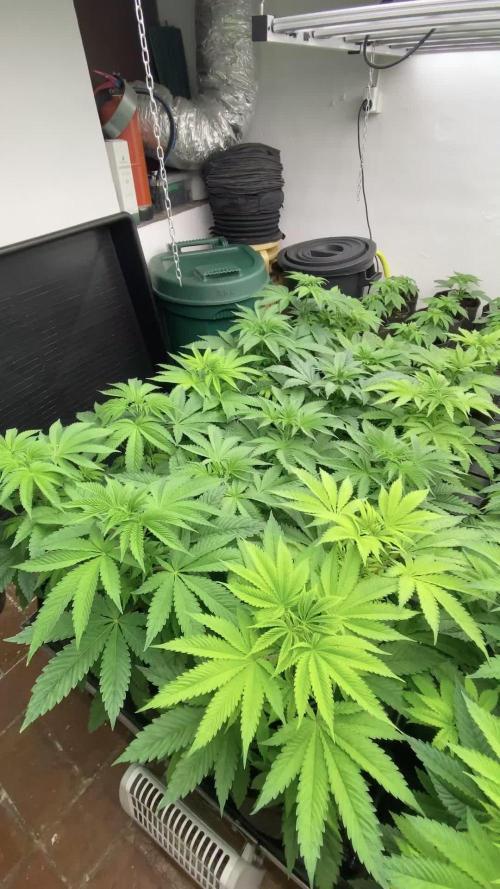
8th week! The plant has a slight guava scent, very interesting! Nice growth rate and no problems so far.
Likes
6
Share
@valiotoro
Follow
Hello everyone๐Ÿ‘‹ Week 2 for my girl They are doing very well,growing at fast pace and with a beautiful green colour on the leaves. Have a nice day ๐Ÿ˜Ž๐Ÿ”ฅ They are under the mars hydro FCE-6500 + UV55 5min/hour๐Ÿ’ก
Likes
5
Share
Received final hair cut beginning of week6 of flowering looking strong and amazing.
Likes
2
Share
We become aware at such times of man's wonderful ability to bring seemingly unrelated elements into harmonic balance, and receive a glimpse into a world where everything exists in conscious sympathetic attunement to everything else. When we listen to a piece of music that seems to strike a beautiful chord somewhere inside us, or view a painting that simply glows with harmonic awareness well executed, we probably do not spare much time to contemplate the wonderfully intricate combination of vibrations that our sensors make it possible for us to perceive. We tend to appreciate the relationship between the parts of something by an awareness of the harmony or dissonance of the whole. This ability enables us to say "what a beautiful house!" instead of "analysis has proven that this collection of building materials exhibits certain elements of harmonic proportion." While this ability to instinctively appreciate the beauty of true harmony has an important role to play in evolution, a more analytical understanding of the laws involved can be most useful. This is especially so if we wish to create works of art where each part exists in true harmony, not only with the other part of that particular whole, but with the universe within which the creator and the created exist. Everything vibrates. From the most dense matter to the most subtle cosmic rays, everything which our senses allow our thoughts to become aware of, can be specified in terms of wavelength or frequency of vibration. These two terms define the same thing, but from different points of view. The following are the approximate wavelengths of various energy carriers: Cosmic rays 0.000,000,001 mm Gamma rays 0.000,000,1 mm X rays 0.000,500 mm Ultraviolet rays 0.003 mm Visible light 0.006 mm Infrared 0.01 mm Sound waves 1 meter Radio waves 300 meters Violet light 400 nm to 450 nm Blue light 450 nm to 500 nm Green light 500 nm to 570 nm Yellow light 570 nm to 590 nm Orange light 590 nm to 610 nm Red light 610 to 700 nm 1 nanometer (nm) = 0.000,000,1 cm = 1/10,000,000 cm If a guitar string is plucked and we hear a sound, it is not too difficult for the human mind to associate this sound with the vibration of the guitar string. With color it is quite different. It is difficult for us to conceive that the color of a substance is not an inherent property of the substance itself, but an indication picked up by our senses of that substance's ability to absorb or reflect the light which happens to be shining on it at that moment. Neither the matter nor the light is colored. What happens is that the brain learns to differentiate between the frequencies reflected or transmitted by the substance the eyes are focused on. The same thing happens with sound. When we say "Oh! Listen, they're playing my favorite song," what we really mean is: "My brain has stored within it a particular pattern of frequencies. I have compared the new information being received with this stored pattern and have deduced the answer that the two patterns are similar within certain specified tolerances." The 'pleasure' involved could have something to do with our running the pre-recorded pattern at the same time, in 'sympathy' with the new pattern as it is received. The word sympathy describes very well our ability to appreciate color and sound. It also describes the reason behind certain elements of harmony. For instance, if a substance vibrating at 100 cycles per second (tone 1) is in the proximity of another substance vibrating at 200 cycles per second (tone 2), we could perceive, if we had the right equipment, a certain sympathetic relationship between the two. We will see from this that there is a uniform doubling of the first tone seen in the second. At various points along the waves, the two are the same in amplitude. At other points, they are at opposite poles to each other. This doubled frequency has more points of similarity to the original than any other frequency except the original itself. If the equipment we had available for measuring these two frequencies was a soundboard amplifier and a pair of ears, then we would hear what would sound to us like one tone. If we had the opportunity to hear one at a time, we would hear that although they sound the same, one is higher in pitch than the other. This characteristic of 'the same but different in pitch', musicians have called the octave. Any two tones produced where one has exactly doubled the frequency of the other is called an octave. Speaking in ratios, an octave would appear then as the ratio 2:1 or 1:2, depending on whether we are talking of an octave up or down. A single note produced by almost any instrument will contain more than one wavelength or frequency. It will have a dominant frequency, the wavelength of which we would call the note's 'fundamental' or 1st harmonic. It will also have a varying number of upper harmonics, gradually fading in intensity into infinity or silence. Natural harmonics always have the same pattern of intervals between them. The interval between the 1st and 2nd harmonic is a perfect octave; between the 2nd and 3rd a perfect fifth; between the 3rd and 4th a perfect 4th; and so on, the intervals becoming smaller and smaller until they lose any relationship with the western 12 tone scale as it exists at the moment. Just as an octave has certain elements of sympathy with its fundamental, so some intervals have been noted to be more perfectly in sympathy with the fundamental than others. The ratio of the 'perfect 5th' or interval of 7 semitones, as it occurs in the harmonic series, is 3:2 or 2:3, while that of the 'perfect fourth" is 4:3 or 3:4. All the tones in the western 12 tone scale can be expressed in terms of the ratio between the upper tone and its fundamental. This would seem to be an ideal way of generating a scale from any given fundamental and several attempts have been made to do this, the Pythagorean system being probably the most well known. Although when working with a single tone instrument playing on its own, the Pythagorean formula works wonderfully well, if we had several instruments tuned this way together and asked them to play almost any western music, we would find that at times they sounded quite out of tune to each other. The lack of flexibility of the various scale systems based on the harmonic series has led to what is known as the 'tempered' scale. This uses as its primary unit of interval the ratio of the octave or 2:1. It then proceeds to divide the interval between any fundamental and its upper octave into 12 smaller intervals by applying the ratio: two to the one-twelfth power, to one (21/12:1). This equals 1.059463094, so by multiplying any frequency by this number, we will obtain the tempered semitone next up from our fundamental. We will also find that any tone twelve semitones up from any other tone, in a scale generated in this way, will have exactly double the frequency. If we took the note middle C on a piano and halved the wavelength, we would have the note C one octave above. If we halved this, we would have the C above, and so on. However, within about 6 octaves, we would find that although a 'sound' was being produced, no human ear could perceive it. If we kept on going, halving and producing upper octaves of our fundamental C, we would proceed through the infrared band, into the visible light spectrum. If we happened to be outside during the day, we would, for one octave only, see the note C with our eyes. The next octave above would already be in the ultraviolet band, and outside the eye's sensitivity range. If we can think of color as being an indication of a substance's vibratory rate or wavelength, we may begin to see a relationship that could exist between the color and sound spectrums. The logical extension of what has so far been said is that there exists a scale in the color spectrum that corresponds exactly to the scale in the sound spectrum, each color tone being an octave of the equivalent note in the sound range. This is not the end of the story but only the beginning. If we can for the moment accept that any wavelength in one band has upper and lower octave stretching out to infinity, then the next question is 'fine, but what shall we use as our fundamental? A particular color? A particular sound frequency?' The musicians among us will probably say 'A 440'. This means that the note A should vibrate at 440 Hertz, or 440 times per second. They would tell us that this is standard pitch has been adopted by most orchestras around the world; pianos are tuned to it, instruments are constructed to formulas based on it, and so to them it would probably seem the most appropriate place to begin. Some of these musicians may know of the battle that is still raging with regards to this being the standard, but few would know why A = 440 Hz was chosen except that it worked when it was set to be a suitable compromise between the many different pitches in use at the time. 432 Hz is said to be mathematically consistent with the patterns of the universe. Studies reveal that 432 Hz tuning vibrates with the universeโ€™s golden mean PHI and unifies the properties of light, time, space, matter, gravity, and magnetism with biology, the DNA code, and consciousness. When our atoms and DNA start to resonate in harmony with the spiraling pattern of nature, our sense of connection to nature is said to be magnified. Another interesting factor to consider is that the A=432 Hz tuning correlates with the color spectrum, while the A=440 Hz is off. Audiophiles have also stated that A = 432 Hz music seems to be non-local and can fill an entire room, whereas A=440 Hz can be perceived as directional or linear in sound propagation. Once you adopt the idea that sound (or vibration in general) can have an equalizing and harmonizing effect (as well as a disturbing effect), the science of harmony can be applied to bring greater harmony into one's life or tune to specific energies. There is a form of absolute and relative harmony. Absolute harmony can, for example, be determined by the tuning of an instrument. The ancients tuned their instruments at an A of 432 Hz instead of 440 Hz - and for a good reason. There are plenty of music examples on the internet that you can listen to in order to establish the difference for yourself. Attuning the instrument to 432 Hz results in a more relaxing sound, while 440 Hz slightly tenses up the body. This is because 440 Hz is out of tune with both macro and micro cosmos. On the contrary, 432 Hz is in tune. To give an example of how this is manifested microcosmically: our breath (0,3 Hz) and our pulse (1,2 Hz) relate to the frequency of the lower octave of an A of 432 Hz (108 Hz) as 1:360 and 1:90. It is interesting to note that 432 Hz was the standard pitch of many old instruments and that it was only recently (19th and 20th century) the standard pitch was increased. This was done in order to be able to play for bigger audiences. Bigger audiences (more bodies) absorb more of the lower frequencies, so the higher pitch was more likely to โ€œcut throughโ€. One of the oldest instruments of the world is the bell ensemble of Yi Zeng (dated 423 BC), tuned to a standard F4 of 345 Hz, which gives an A= 432 Hz. The frequency of 345 Hz is that of the platonic year! Similarly, many old organs are tuned in A=432 as well; for example, St. Peterโ€™s Capella Gregoriana, St. Peterโ€™s Capella Giulia, S. Maria Maggiore in Rome. Maria Renoldโ€™s book โ€œIntervals Scales Tones and the Concert Pitch C=128 Hzโ€ claims conclusive evidence that 440 Hz and raising concert pitch above scientific โ€œCโ€ Prime=128 Hz (Concert A=432 Hz) disassociates the connection of consciousness to the body and creates anti-social conditions in humanity. The difference between concert pitch A=440 Hz and Concert A=432 Hz is only 8 cycles per second, but it is a perceptible difference of awareness in the human consciousness experience of the dream we share called existence.
Likes
2
Share
@Bluemels
Follow
Tag 44: Trotz des offensichtlichen mangels Blรผhen beide Pflanzen weiter.
Likes
22
Share
@Selkot
Follow
the week started with a novelty for me: the appearance of nematodes in my tanks... strange little worms, which gather in the water and move in little spasms (see video ๐Ÿ‘†) When I started growing, I bought a whole range of products against infestations, paranoid as I was (I'm sure others have experienced this ๐Ÿ˜…); Among other things, I bought NeemAzal, neem oil in emulsion. So I took a chance. I emptied my tanks, cleaned and dried the bottom, without much conviction as the worms must have been in the coco already. I made a new soup with my fertilizer, adding 20ml of neem per 10 litres. Well, I don't know if it was really the right product, but for the last 5 days there has been no trace of nematodes! The water seems soapy, the grease film is more important than without the neem, but if it takes the small sacrifice of a conscientious cleaning once a week, I'll gladly do it! In any case, my plants are doing absolutely no worse : the first one got its leaves back in 2 days, already forcing me to a small pruning 4 days later, now showing well several colas; I also defoliated the 2nd one for the first time, which produced leaves already bigger than my hand in 2 weeks of life! happy with this hydroponic experience so far ๐Ÿ˜Š
Likes
32
Share
@For2itous
Follow
She preformed way better than expected and has been my biggest auto to date definitely grow her again recommend to anyone wanting to try and big auto
Likes
5
Share
6 semana de floracion pleno engorde ๐Ÿฅฆ โ€ข1g de enhancer x litro de agua aplicaciรณn en el riegos
Likes
39
Share
I have experimented with a timelapse setup, which I hope in time will replace the manual photos, check out the footage from half of last week (I have footage from further back, but it was unstable). Day 2: Watered slightly, with way less water than usual as I am afraid of the soil not being able to dry out. Day 7: Watered.
Likes
8
Share
@pzwags420
Follow
Week 12 has started well. The flowers are still growing and the smell is still great :) I applied weekly nutrients on day 1 of week 12. On week 12 day 4 I added Z7 enzyme to my reservoir and I defoliated the girls to bring in more light to the lower canopy. On day 5 I decided to harvest two colas from Pheno 2. It seems to be finishing faster than the other phenos(mostly amber hairs although trichomes are not mature after closer inspection... I want to experience what effect I get from early harvest so to compare to later harvest. From now on I will leave the plants alone until they are all closer to harvest. ๐Ÿ˜…
Likes
3
Share
@halexxo
Follow
Comienzo del lst en dos de las plantas que estรกn mรกs sanas
Likes
25
Share
@TheeLemon
Follow
Plants taking to the technique very well imo. Particularly the back right one, which has created a almost perfect dome shape. I did miss a watering and they didn't like that atall. As I usually wait for the soil to be dry before I water again, so if I miss a watering, they get extremely dry. All the leaves dropped down completely vertical, I thought it was all over, but they bounced straight back with the next watering. ๐Ÿ™Œ The plant has now been topped twice, once to creat the initial + shape, and again to split each stem of the + into 2. So each plant now has 8 main stems.
Likes
15
Share
@Chubbs
Follow
This week we did a major defoliation and lollipop on the girls. We also switched to Bloom A & B with a PK booster 3ml/gal of each. Over all I'm excited to see as they just started flower and look amazing. I bumped up the co2 this past week up to 750ppm. I can't wait to see the flower progression through the next few weeks. Happy Growing
Likes
265
Share
Grow report week 1: The seedlings Hello dear growers and growerettes, it is time for an update on my grow. My plants have successfully passed the germination phase and have become healthy and lively seedlings. They are all between 5 and 10 cm tall and have exactly the same stages of development, as far as their leaves are concerned. The seedlings I have selected seven different strains from Zamnesia and Barneys Farm, which are all supposed to be very tasty and potent. I am curious how they will differ and which ones I will like best. The strains are: Bruce Banner 3 Banana Do-Si-Dos Gorilla Zkittlez Frosty Nightmare Pink Rozay Girl Scout Cookies The seedlings have all shown their first two cotyledons and their first two true leaves. They look healthy and strong and have a nice green color. They all have a similar size and shape, which indicates a good genetics and a uniform lighting. The care I planted the seedlings in the Lightmix from BioBizz, which is ideal for the germination phase. I moistened the seedlings with a spray bottle. I watered the seedlings once with Bio-Heaven, Root-Juice and Acti-Vera from BioBizz, which are supposed to support the soil, the roots and the plants. I used these products in a very low dosage, to not overfeed or burn the seedlings. I mixed them with pH-regulated water, to achieve the optimal pH value for the soil. I grew the seedlings in a closed room without a tent, which I lined with foil. I used two LED lamps from Lumatek, which each have a power of 300 watts. I set the lamps to a height of 50 centimeters above the seedlings, to not irradiate or burn them too much. The outlook I am very satisfied with the result of the first week. My seedlings have grown well and have shown no problems or deficiencies. I am looking forward to the next two weeks, where it will already be time for the first transplanting and the ladies will be able to taste the pre-fertilized soil for the first time. I will fertilize this run only a bit late, even if I will use osmosis water this time. The soil from BioBizz is really great and can carry the first weeks well on its own. I will start fertilizing about two weeks after the transplantation into the final pots. The next weeks I will introduce you to my water filter, which works much better than the current osmosis systems, without waste water, much faster, almost 1 to 1 flow and also much better for the environment. I am looking forward to your visits and the next weeks. I will continue to provide you with information and photos and let you participate in my grow. I wish you a nice day and a good grow! ๐Ÿ˜Š
Likes
2
Share
@Bncgrower
Follow
Second week,everything is fine for here, this girls developed very well, transplanted on the last day of week.. the roots were begging for a bigger pot. ๐Ÿ’ช
Likes
28
Share
Day 1 Top up 1 x 10 lire with 60 ml bloom nutrient change tomorrow. nothing near harvest yet Day 2 nutrient changed refilled @ 60 ml per 10 litres top ups will be 50 ml now day 3 1 x 10 litre top up 50ml bloom day 4 2 x 10 litres with 50 ml bloom in each top up Still no signs of trichomes turning used maybe 12/4 litres nutrient use has dropped a little bit must be getting near to harvesting some soon day 5 2 x 10 litre top ups with 50ml bloom in each probably used around 17 litres day 6 2 x 10 litres 50 ml bloom in each used around 16 litres last day of this week 1 x 10 litre 50 ml bloom
Likes
454
Share
@yan402
Follow
๐ŸŒธ๐Ÿโœจ๐Ÿญ๐ŸŒธ๐Ÿโœจ๐Ÿญ๐ŸŒธ๐Ÿโœจ๐Ÿญ๐ŸŒธ Hi and welcome to another Kannabia grow! This time Iโ€™m running their Apple Fritter (feminized photoperiod). Sheโ€™s going to veg under 24hr light and be manifolded. Still cleaning the rest of my Candy Cream GF (11.04.25) โ€” going to sow the seed tomorrow (12.04.25) *been lazy, sowed on 14.04.25 ๐ŸŒธ๐Ÿโœจ๐Ÿญ๐ŸŒธ๐Ÿโœจ๐Ÿญ๐ŸŒธ๐Ÿโœจ๐Ÿญ๐ŸŒธ --- ๐Ÿ’ญโ—๐Ÿ’ญโ—๐Ÿ’ญโ—๐Ÿ’ญโ—๐Ÿ’ญโ—๐Ÿ’ญโ—๐Ÿ’ญ โ—Events & thoughts worth notingโ— ๐Ÿ’ญโ—๐Ÿ’ญโ—๐Ÿ’ญโ—๐Ÿ’ญโ—๐Ÿ’ญโ—๐Ÿ’ญโ—๐Ÿ’ญ 12.04.25 (GW1) โ€“ Cleaning + flushing the old coco coir. Might need to add another brick. *No new brick needed โœ… This is how I recycle my coco coir โ€” fast, cheap, no BS. ๐ŸŒฟ Harvest plant โœ‚๏ธ Chop roots small โ€” they stay in for structure (organic perlite) ๐Ÿ’ฆ Hot water rinse โ€” remove salts & dust ๐Ÿถ Pre-soak with light feed: โ€ƒโ€ƒMicro 10ml โ€ƒโ€ƒBloom 0ml โ€ƒโ€ƒGreenBuzz 10ml โ€ƒโ€ƒCal-Mag 60ml โ€ƒโ€ƒFFJ/FPJ 10ml (new disgusting batch) โ€ƒโ€ƒpH down (citric acid) โ™ป๏ธ Media stays โ€” Roots stay โ€” Back in service. 14.04.25 (GW1) โ€“ Planted seed in final pot โœ… 16.04.25 (GW1) โ€“ Did last tent clean up + setup โœ…๐Ÿ“ธ 17.04.25 (GW1) โ€“ Seed germinated ๐ŸŽ‰๐Ÿ“ธ โ€” roughly 48hrs in final pot. Solid start๐Ÿ‘Œโ™ฅ๏ธ 23.04.25 (VW1) โ€“ Minimal burnt tips ๐Ÿ“ธ โ€” not progressing, not a concern. 26.04.25 (VW1) โ€“ Started using the new batch of FPJ/FFJ https://growdiaries.com/diaries/266849-grow-journal-by-yan402 30.04.25 (VW2) โ€“ Increased TriPartMicro & GreenBuzzBloom 10ml โ†’ 15ml 03.05.25 (VW2) โ€“ Increased TriPartMicro again 15ml โ†’ 20ml, topped the plant, and added final layer of clay pebbles around the base, trimmed side branches and did LST in preparation for "manifold" ๐Ÿ“ธ 08.05.25 VW3 finished manifold๐Ÿ“ธ 13.05.25 VW4 Increased TriPartMicro to 30ml and GreenBuzzBloom to 20ml. 15.05.25 VW4 Done defoliation and LST ๐Ÿ“ธ 18-19.05.25 VW5 pruned all the shoots bellow my "mains" and did a full defoliation๐Ÿ“ธ 24.05.25 VW6 increased GreenBuzzBloom to 30ml 04.06.25 VW7 did a cleanup๐Ÿ“ธ 11.06.25 VW8 increase TriPartMicro to 40ml 17.06.25 (VW9) โ€“ Final structure pass ๐Ÿ’ˆ๐ŸŒฟ Did a clean perimeter prune + removed weak shoots. Ended up with 12 tops, was aiming for less, but she made the call Didnโ€™t fight it, just shaped it the best I could Airflowโ€™s good, structureโ€™s stable ๐Ÿ›‘ No more cuts until post-stretch Pics coming shortly ๐Ÿ˜˜ Flip coming soon โ€” weโ€™ll see how she handles it. 20.06.25 VW9 Switched lighting to 12 hours, may the stretch begin ๐Ÿคž 22.06.25 VW10 Did a good LST session,made some pics, and came to some conclusions and a small change of plans: Originally planned for 8 mains โ€” long, spaced colas and maybe a couple stronger โ€œtitansโ€ if she wanted to go that way. But sheโ€™s showing me something else, and Iโ€™m not here to fight her โ€” just guide her. Now after stretch, Iโ€™m keeping side shoots only if they: Fill real canopy gaps Donโ€™t crowd neighboring tops (minimum 15cm spacing) Arenโ€™t growing into walls or toward the next plant Anything too close, too low, or heading into shade gets removed. No point forcing it. Looks like Iโ€™ll finish with 14โ€“16 solid tops, depending on how she settles. Iโ€™m just trying to give each one enough light and space to stack properly. No overcrowding, no larf โ€” just letting her do her thing with a bit of structure. Increased Tri Part Micro to 50ml as well. 28.06.25 VW11 one week since I flipped to 12/12 and she is stretching nicely, a bit shy in showing pistils compared to the Fantasy Feast regulars I have in the same tent. 29.06.25 VW11 increased GreenBuzzBloom 30โ†’ 60ml 06.07.25 FW1 TriPart Micro: 50โ†’ 30ml TriPart Bloom: 0 โ†’ 20ml Home-made FFJ/FPJ (Watermelon + Pumpkin): 10 โ†’ 30ml 12.07.25 FW1 GreenBuzzBloom 60 โ†’40ml, TriPart Bloom: 20 โ†’ 60ml, fpj 30โ†’60ml 19.07.25 FW3 Got some bleached tops, been out and about at job interviews and didn't notice a last minute stretch spurt ๐Ÿ˜ญ, should recover fine though plenty of time left ๐Ÿ˜ 22.07.25 FW3 TriPartMicro 30โ†’20ml , TriPartBloom 60โ†’80ml , GreenBuzzBloom 40โ†’50ml 24.07.25 FW3 Cal-Mag 60โ†’40ml ๐ŸŒฑ๐Ÿ’ฆ๐ŸŒฑ๐Ÿ’ฆ๐ŸŒฑ๐Ÿ’ฆ๐ŸŒฑ๐Ÿ’ฆ๐ŸŒฑ๐Ÿ’ฆ๐ŸŒฑ ๐ŸŒฟ Day to day tasks & actions ๐ŸŒฟ ๐ŸŒฑ๐Ÿ’ฆ๐ŸŒฑ๐Ÿ’ฆ๐ŸŒฑ๐Ÿ’ฆ๐ŸŒฑ๐Ÿ’ฆ๐ŸŒฑ๐Ÿ’ฆ๐ŸŒฑ 19.07.25 FW2 โ€“ Fed 5l of #1 โ†’ 2l runoff 20.07.25 FW3 โ€“ Fed 5l of #1 โ†’ 2l runoff 21.07.25 FW3 โ€“ Fed 5l of #1 โ†’ 1.5l runoff 22.07.25 FW3 โ€“ Fed 5l of #1 โ†’ 1.5l runoff 23.07.25 FW3 โ€“ Fed 5l of #1 โ†’ 1.5l runoff 24.07.25 FW3 โ€“ Fed 5l of #1 โ†’ 1.5l runoff 25.07.25 FW3 โ€“ Fed 5l of #1 โ†’ 1.5l runoff 26.07.25 FW3 โ€“ Fed 5l of #1 50% strengthโ†’ 1.5l runoff (*RUNOFF reused for tomato plants) ๐Ÿถ๐Ÿ’ง๐Ÿถ๐Ÿ’ง๐Ÿถ๐Ÿ’ง๐Ÿถ๐Ÿ’ง๐Ÿถ ๐Ÿ’ง Nutrients in 30L #1 ๐Ÿถ๐Ÿ’ง๐Ÿถ๐Ÿ’ง๐Ÿถ๐Ÿ’ง๐Ÿถ๐Ÿ’ง๐Ÿถ ๐Ÿ’ง TriPart Micro: 10 โ†’ 15 โ†’ 20 โ†’ 30 โ†’ 40 โ†’ 50ml โ†’ 30 โ†’ 20ml (0.67ml/L) ๐Ÿถ TriPart Grow: 0ml (0.00ml/L) ๐Ÿ’ง TriPart Bloom: 0 โ†’ 20 โ†’ 60 โ†’ 80ml (2.67ml/L) ๐Ÿถ GreenBuzz Bloom: 10 โ†’ 15 โ†’ 20 โ†’ 30 โ†’ 60 โ†’ 40 โ†’ 50ml (1.67ml/L) ๐Ÿ’ง Cal-Mag: 60โ†’40ml (1.33ml/L) ๐Ÿถ Home-made FFJ/FPJ (new batch): 10 โ†’ 30 โ†’ 60ml (2.00ml/L) ๐Ÿ’ง pH Down: Citric acid (buxXtrade) ๐Ÿ“ฆ TOTAL: 250ml per 30L ๐Ÿ”ฌ 8.33ml/L ๐Ÿถ๐Ÿ’ง๐Ÿถ๐Ÿ’ง๐Ÿถ๐Ÿ’ง๐Ÿถ๐Ÿ’ง๐Ÿถ โš™๏ธโœ‚๏ธโš™๏ธโœ‚๏ธโš™๏ธโœ‚๏ธโš™๏ธโœ‚๏ธโš™๏ธ โœ‚๏ธ Tools & equipment โœ‚๏ธ โš™๏ธโœ‚๏ธโš™๏ธโœ‚๏ธโš™๏ธโœ‚๏ธโš™๏ธโœ‚๏ธโš™๏ธ โœ‚๏ธ 2ร— MarsHydro SP3000 โš™๏ธ MarsHydro 150mm ACF Ventilator โœ‚๏ธ Trotec dehumidifier (big unit) โš™๏ธ Mini no-name dehumidifier โœ‚๏ธ Kebab skewers (LST โ€“ stainless) โš™๏ธ Wire + roast skewers (LST assist) โœ‚๏ธ Scissors (HST) โš™๏ธ Vacuum (for spills & cleanup) โœ‚๏ธโš™๏ธโœ‚๏ธโš™๏ธโœ‚๏ธโš™๏ธโš™๏ธโœ‚๏ธโš™๏ธโœ‚๏ธโš™๏ธโœ‚๏ธโš™๏ธ --- ๐Ÿ๐Ÿช๐ŸŒฌ๏ธ๐Ÿฌ๐Ÿ๐Ÿช๐ŸŒฌ๏ธ๐Ÿฌ๐Ÿ๐Ÿช๐ŸŒฌ๏ธ๐Ÿฌ Apple Fritter (Kannabia Seeds) ๐Ÿ๐Ÿช๐ŸŒฌ๏ธ๐Ÿฌ๐Ÿ๐Ÿช๐ŸŒฌ๏ธ๐Ÿฌ๐Ÿ๐Ÿช๐ŸŒฌ๏ธ๐Ÿฌ Species: 50% Indica / 50% Sativa Genetics: Sour Apple ร— Animal Cookies THC: Up to 25% Effect: Euphoric, relaxing, creative Flavor: Sweet, fruity, pastry notes Flowering: 56โ€“63 days Resistance: High Indoor yield: 450โ€“500g/mยฒ Outdoor yield: 600g/plant Structure: Strong, bushy, dense buds