


Likes
Comments
Share


@xTaps
Follow
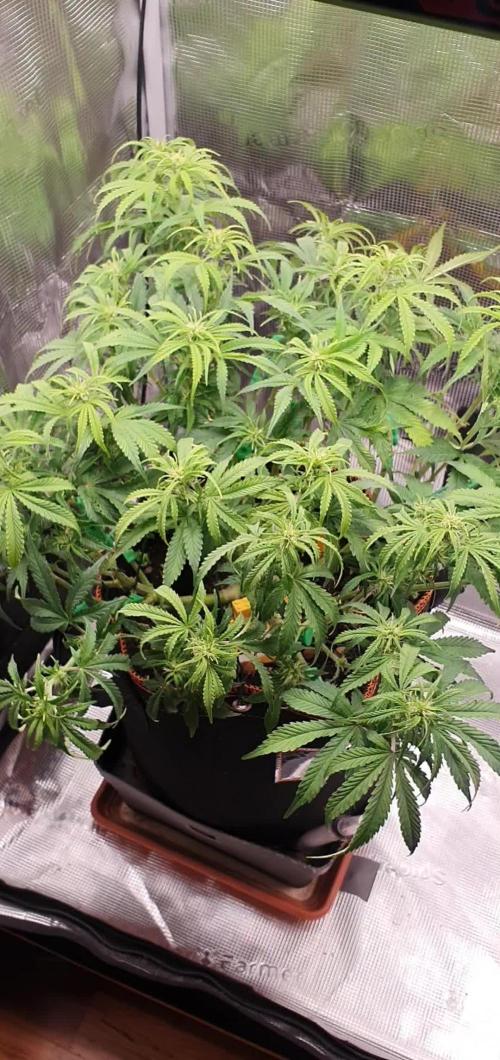
Just checking the trichome heads daily to harvest them at the for me perfect moment.



Likes
55
Share


@Max1973
Follow
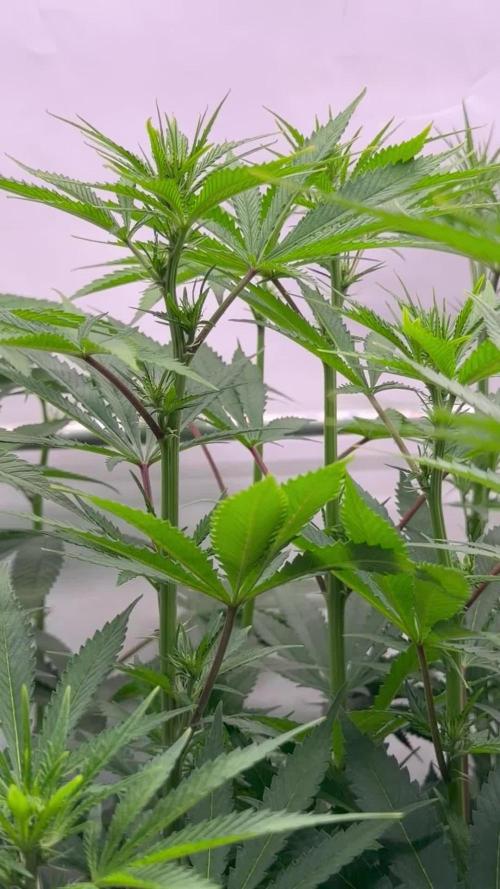
Week 2, all 7 repotted in 4.5L and 7.5L pots.... all lights wired up properly...... holding perfectly with 24oC, 40% humidity... relying on the soil nutes, and just tap water...... the PH of the tap water is abit high- 6-7... so i'll try to get some rainwater, or 10L box of spring water....
Likes
7
Share

@Relentless-Pressure
Follow
If you want to speak about my „Root•Lock•Method“ in Clone and Cut cases feel free to send me a dm !!!

Likes
44
Share


@RakonGrow
Follow
Note :
+ jegliches Zubehör wird in der GermniationsWoche aufgelistet . Zeitraffer Videos folgen immer nachträglich.
+ videos werden so geschnitten das nur ein geschlossenes Zelt erscheint , ergo Fehlen paar reale Minuten (ca 1 Std) .
Day 57:
+ 2.0 Liter Flaschenwasser
+ + Dünger für Blühte
+ + + Canna Terrar Flores (Achtung wirkt wie PH-)
+ + + Canna Boost
+ + + Cannazym
+ + + Canna PH+
+ + PH 5.91
Da es heute heiss ist , wird wie Gestern laufen . Bis 19:00 Uhr wird das Licht reduziert und dann DLI nachgeholt.
Day 58:
Da es immer noch heiss ist , wird wie Gestern laufen . Bis 19:00 Uhr wird das Licht reduziert und dann DLI nachgeholt.
Day 59:
+ 2.0 Liter Flaschenwasser
+ + Dünger für Blühte
+ + + Canna Terrar Flores (Achtung wirkt wie PH-)
+ + + Canna Boost
+ + + Cannazym
+ + + Canna Rhizotonic
+ + + Canna PH+
+ + PH 5.91
16h jetzt mit 1000 PPFD und jeweils 1 Stunde Sonnenaufgang und Sonnenuntergang.
Day 60:
Mal ein bissel Größenvergleiche gemacht .Das Clipper Feuerzeug ist 7.5 cm hoch .
Day 61:
+ 1.75 Liter Flaschenwasser
+ + Dünger für Blühte
+ + + Canna Terrar Flores (Achtung wirkt wie PH-)
+ + + Canna Boost
+ + + Cannazym
+ + + Canna Rhizotonic
+ + + Canna PH+
+ + PH 6.01
Day 62:
Das Wetter bleibt stabil, damit bleiben die Growwerte auch stabil. Bisher Läuft das 1000 PPFD Spitze und 750 PPFD Sekundätriebe ganz gut . Ihre Freundin die leider ein Wasserschaden erlitten hat (tja da war wohl irgendwas im Wasser was ein Regenbogenfilm erzeugt hat , im schlimmsten Fall Waschmittel) nimmt der einen Seite zwar licht, aber geht halt nicht anderes bei nur einer Lichtquelle . Ich fahr halt gleich ein doppel Experiement mit dem Licht. Bisher aber holt sie ganz gut nach mit 900-1000 PPFD auf die ziemlich gleich hohe Krone .
Day 63:
+ 1.75 Liter Flaschenwasser
+ + Dünger für Blühte
+ + + Canna Terrar Flores (Achtung wirkt wie PH-)
+ + + Canna Boost
+ + + Cannazym
+ + + Canna Rhizotonic
+ + + Greenhouse Feeding BioEnhancer
+ + + Canna PH+
+ + PH 6.01

Likes
51
Share

@Kirsten
Follow
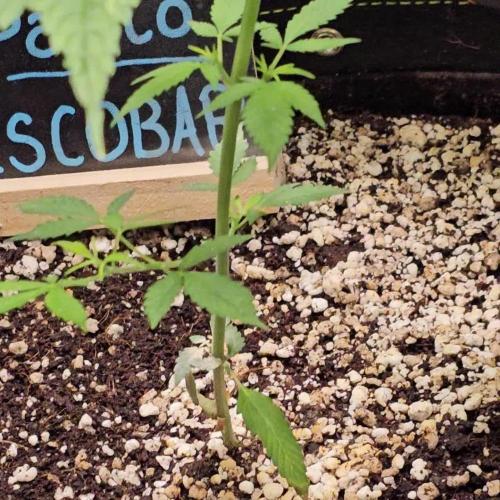
Pablo Escobar has just started early flower.
The top leaves are still yellow, and I'm pretty stumped as to why, but I'm determined to see it through 🤞
17.8.25:
I watered with 2ltrs of dechlorinated water PH'd to 6.5 with;
💜 1ml Trace
PH: 6.5
PPM: 355
Lets hope for the best for this little lady, thanks for stopping by this week 😊💚✌️🍃🤞


Likes
8
Share


@J_Kush
Follow
Have to harvest in a few days.
One of them doesn't smell like Runtz, but rather like lemon herbs and gout yogurt...
I only know this from some Afghani landraces. Maybe it has something to do with the ruderalis part.
2nd and photoperis are runtzy🤤

Likes
88
Share

@squalino
Follow
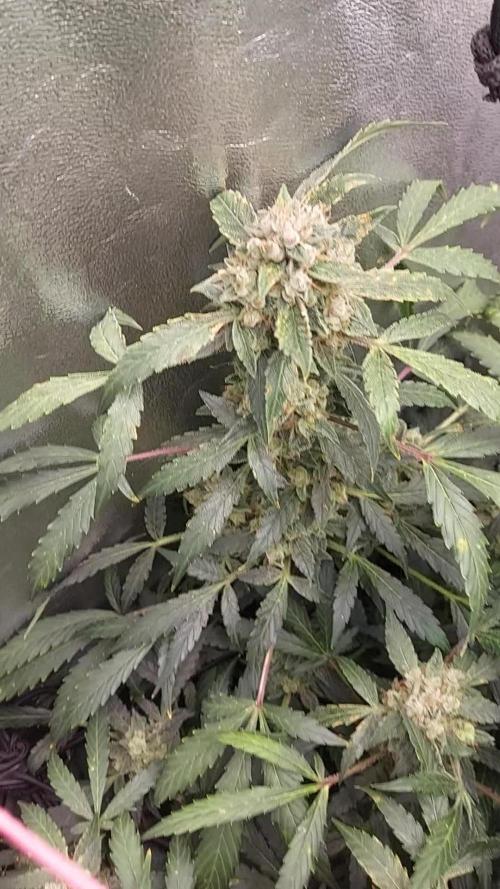
🌿 Journal de Culture : Mac 1 Autoflower
– "Bee Happy" 🐝 (Semaine 11)
#Dryrocket
On entre doucement dans la dernière ligne droite. La production de résine atteint son paroxysme et les choix stratégiques pour la récolte commencent à se profiler.
Un Grand Merci
Un merci tout particulier à @mia_biotabs et @Mrs_Larimar pour leur accompagnement tout au long de cette aventure, ainsi qu’à tous les cultivateurs qui suivent ce ce journal depuis le début !
Je tiens également à remercier chaleureusement @Dryrocket de me donner l'opportunité de tester leur appareil. J'espère sincèrement que j'aurai assez de silice pour mener à bien cette session avec, ça s'annonce super intéressant ! ☺️
Paramètres de Culture & Environnement
Taille : Toujours stable à 91 cm.
Le problème de colocation : "Bee Happy" est toujours très impactée et cachée par l'envergure de sa grande sœur Spirit. À cause de ce manque d'espace et de cette ombre imposée, il m'est encore difficile de me prononcer précisément sur la structure globale de la plante et sur l'estimation finale de la quantité. On fait avec, mais le potentiel est clairement là.
Climat & Environnement :
Les constantes restent inchangées. Lampe calée à 40 cm de la canopée, températures fixées à 24°C jour / 21°C nuit, et déshumidificateur en marche pour maintenir l'humidité à 60%.
Nutrition & Gestion de l'Eau
Système :
Le réservoir Autopot gère toujours l'arrosage automatique de fond en eau claire.
Ration du jour :
J'ai donné aujourd'hui une dose légèrement réduite par rapport à la semaine dernière : 4 ml de Liquid PK 5-8 Biotabs. On commence à lever le pied doucement en vue des prochaines étapes.
Étude des Trichomes & Structure des Buds
C'est ici que l'on constate une vraie divergence génétique. Les têtes de "Bee Happy" gonflent de façon totalement différente de celles de Spirit :
La structure :
Alors que Spirit développe des fleurs longilignes en forme de "sapin", "Bee Happy" nous sort des têtes ultra-compactes, très denses et groupées, qui ressemblent à des têtes de choux-fleurs.
L'évolution des trichomes :
Le givre est tout simplement impressionnant et très épais. À la loupe, les trichomes sont presque majoritairement laiteux. Il reste encore quelques trichomes transparents isolés et très peu d'ambrés pour le moment.
État général :
L'odeur sucrée est toujours bien présente et très agréable. Excellente surprise du côté de la santé globale : l'absence de sénescence se confirme, toutes les feuilles nourricières disponibles sont encore bien vertes et captent le moindre rayon disponible.
Perspectives pour la suite 🏁
Au vu de l'évolution des trichomes (majoritairement laiteux), le pic de THC est tout proche. Je pense que je vais la mettre au rinçage dans pas très longtemps. L'idée va être de couper le PK pour laisser la plante vider ses réserves et consommer les nutriments restants dans le sol avant la coupe.
Merci à tous d'avoir suivi cette mise à jour !
La fin approche pour "Bee Happy" et le test de l'appareil Dryrocket s'annonce très lourd pour la suite des événements.
À la semaine prochaine !

Likes
2
Share


@DrBud420
Follow
The plants were fed 3 days ago for the last time.. after the soil has dried, only flawless finish will go (probably from tomorrow) for the next 10-12 days, how long will it last... Glookies has a strong, exotic smell, it smells a lot like melon, sometimes a little like coffee... the smell is intense and can be felt even at 40-50 meters, especially at night... it is currently in full potency, some 90% trichomes are cloudy-milky and sometimes amber, when it is removed it will be exactly what an indica dominant hybrid should be... Dos Si Dos 33# also smells a bit like melon, but I think it will completely lose that smell by the end, no lime, citrus and mint as it says, it smells mostly like gelato, which makes sense because it's genetics,but I like it...it's like I planted gelato lol...but unfortunately I won't leave it as long as it requires because the weather won't allow it, I'll take it down in 12 days at the latest because after that the temperatures will go up to 3 degrees Celsius at night, the humidity will go over 70 , it's going to rain, there's no point in keeping it longer than that, I'm just increasing the risk of mold, and it's not like I haven't already thrown away a couple of moldy heads...50% of the trichomes are cloudy-milky, the rest are transparent and some amber... I hope that by the end it will be able to achieve at least full potency because time will not allow for more amber
These plants are real viking warriors, they didn't miss a bit of stress, but thank the dear Gods, it was reflected in the potency, and not in the production of seeds... this season is the worst season I've ever experienced, and so are my plants ...throughout the season they were under stress, and I was under even more stress...the weather in May and June was cold, without enough sun, temperatures were low, constant rain, ice and storms...after that came abnormal temperatures that easily exceeded 60 degrees Celsius in the direct sun....drought for almost 3 months, without a drop of rain, on the hottest days some plants drank 100+ liters of water, including food, I couldn't believe it with my own eyes... outdoor this year cost me more than if I did indoor... there were a lot of storms throughout the season... the last storm completely uprooted 3 of my plants and I had to take them down... of course I didn't manage to cut that much grass in time, so I ended up with over 600 g of dry moldy gorilla zkittlez( that's about it, the quarter that I cut gave 150 grams of dry matter, so I realized that there was no reason to continue cutting) it got worse because I didn't have time to cut it, and it was soaked from the rain... I still can't complain even if I I don't like the smell, I'm not a fan, it's potent and the work is relaxing and divine, I managed to save about 20 grams without it being touched at all... I have more strains that have been in jars for some time, but this is not the place for them now, I will certainly include some footage of them in jars as well...all the strains are superb and each is beautiful in its own way...I couldn't stop I decide on just one... dos si dos 33, runtz x layer cake, glookies and mimosa x orange punch I'm definitely planting again in the future..
I'm also interested in what barney's amnesia lemon is like because I really like this one, so next year I'll probably plant it too
Dos si dos is about 120 cm tall, glookies 2 m
These two plants had additional stress unlike the others which also didn't suffer...they were in smart pots, staked and one morning I go for a tour and see the plant broken, and the pot torn all the way, like a beast that was there.. .did some wild animal fly over there and got tangled up and uprooted it all... and it was as if someone had cut it with a knife, after a few days the same with the other plant, the same completely... then I seriously started to i mean someone is casting a spell on me lol then they were transplanted in early bloom into direct soil
Then glookies was transplanted to a place with much less sun than it was in, but at that moment I couldn't choose, what is there is..

Processing
Likes
11
Share


@Grow_Pro_031
Follow
Very basic start, had a small issue with the RH but rectified it quite quickly.


Likes
128
Share


@DreamIT
Follow
There isn't much more to say about this fantastic strain. Hardy, easy to clone, quick to flower and absolutely delicious in every respect. It resists well to high temperatures, "accidental" over fertilization, and recovers soon after a period of drought. Easy and fast.


Likes
11
Share

@Naujas
Follow
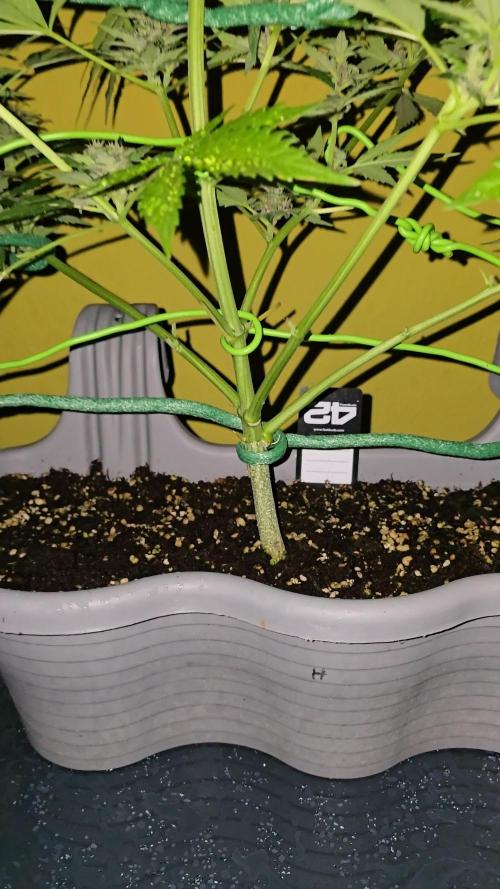
56 dienos!!!! Mergaitė atrodo tikrai gerai, sveika ir labai graži:) , tik vienas dalykas mane neramina, šią savaitę 5 dienas smarkiai lijo, bandau mergaitę šiek tiek paslėpti nuo lietaus, perkeldama ją arčiau namo sienos, bet ji vis dar labai šlapia, o jos žieduose jau renkasi drėgmė (bijau puvinio) na, tikiuosi, kad lietus greitai liausis ir viskas klosis sklandžiai, sėkmės visiems :)
Likes
24
Share


@Dingle
Follow
All on track ✅
Thankfully I managed to top all four plants without causing too much stress.
They all have shown really good growth since they where topped a few days ago so I plan to start some low stress training now to help even the canopy further.
🙏🌱🙏


Likes
15
Share


@STAYINGONMYMAINCBATORUNTWO
Follow
They have started to stop their stretch and started to work on the flowers! You can already see trichromes starting to show some cover! You can smell the terpenes getting stronger by the day! It’s another level of excitement from here! Stay tuned.
Likes
1
Share


@DisTentAint4Campin
Follow
Tents are the best in the game and mine ain't for camping folks goodnight......

Likes
19
Share


@EmeraldLakeCannabis
Follow
Great week both inside the tent and out this week. Inside they've been fattening and frosting up like crazy. Carl 1 is 50/50 on pistils and still mostly clear trichomes, I'm thinking 2-3 weeks. UKBS 1 is 80/20 on pistils and starting to cloud a little more, I'm thinking 1-2 weeks in that department.
Outside, I've built a little greenhouse thing for the plants to chill in, out of the extreme winds. They've been acclimatizing fairly well to the low night temps and very hot days, but that's not to say they're entirely thrilled with it. Hopefully they take fully and flower out well.
EOS Rebel T5 shots coming soon, tomorrow or the next day.
6/24/2021- Had some rain overnight, structure held up and kept the moisture out. Came outside to totally dry plants, and it'd been raining for several hours.
6/25/2021- Got the EOS T5 out tonight, got some real good shots of both plants. Carl 1's HUGENESS and UKBS 1's frostiness are definitely showcased well in my opinion.
-Timelapse is out this week. Should only be another couple weeks on the indoor plants, probably not enough for a month. (unfortunate as the youtube "Month" Timelapse is going up this week.)
6/29/2021 - Fade on both plants coming in nicely. Purple and yellow on Carl 1, and a much darker color scheme on UKBS 1.
Likes
39
Share


@GrowWiththeBro
Follow
Fed both on Day 46.
The Caramel cream likes to EAT!
R/O is high again. I’ll monitor again during the week to see if this is an issue.
Day 50: ph water feed w/ calimagic.
Moved into larger tent to prepare for flowering soon.
Added additional lighting as well flowering.
Grow on.

