




Likes
10
Share


@Soronata
Follow
On flush regime, water only, no nutrients, only a soil cleaning solution.
Still has some clear trichomes, a few milky and no browns.
Guess it has to flower 1 or 2 weeks more.
Full history of the setup on week 1.

Likes
5
Share


@CannabisAprendiz
Follow
Se deja de fertilizar con nutrientes , solamente se riega con agua para empesar el proceso de lavado de raiz / It stops fertilizing with nutrients, only watered with water to start the root washing process

Likes
2
Share

@Growfather1
Follow
Hello everyone!
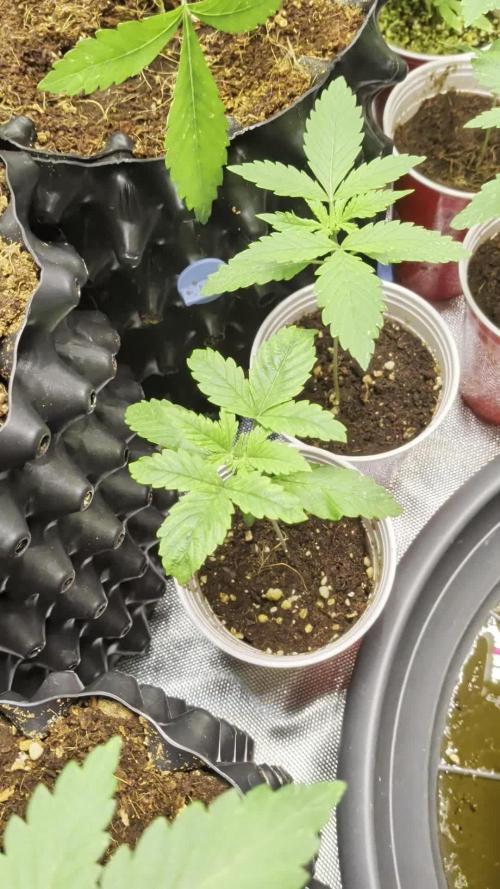
Everything is looking great as we officially enter week two of the Amnesia Grow Diary, Part Two.
The young seedlings are currently sitting pretty directly under the LED light rather than being shaded under the canopy of a flowering plant.
They are absolutely soaking up the rays and enjoying their dedicated light.
They are still hanging out in their solo cups for now, but a transplant is definitely on the horizon.
I plan to move them into their permanent homes in about 10 days from now.
Everything is looking perfectly okay in the grow room.
The environment is dialled in nicely right now:
• Humidity: Holding steady at 65%
• Temperatures: Ranging comfortably between 21°C and 26°C
To keep everything protected, I will be giving them a preventative treatment with neem oil over the weekend.
Honestly, they look so comfortable in those solo cups right now, I think they’re convinced they’re at a college frat party. Let's hope they don't get too attached to the plastic lifestyle before moving day!
Let’s see how they look next week.
Thank you for stopping by and have a nice day!
Best regards,
Growfather

Likes
4
Share

@Green_Zyphoria
Follow
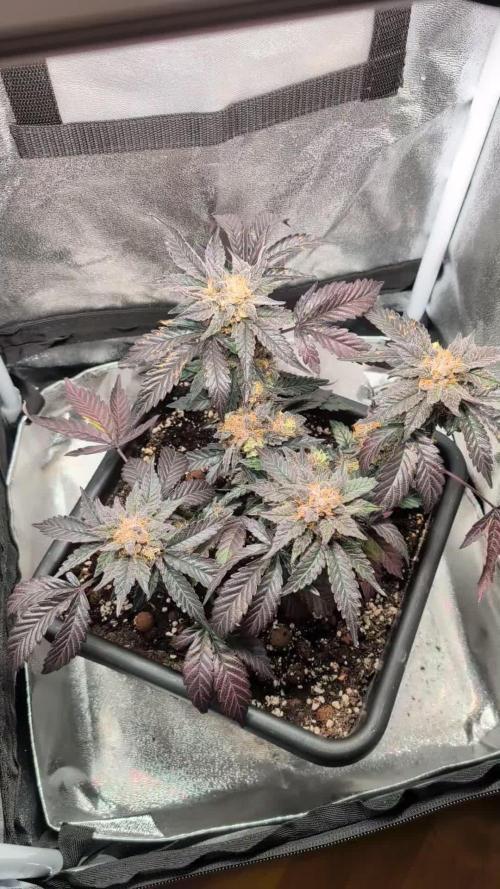
We’ve reached Day 56 of bloom. The Papayton #3 is showcasing a spectacular "black autumn" fade, with fan leaves turning a deep charcoal-violet, making the frost-covered buds stand out brilliantly. The resin production has hit its peak; the buds are incredibly sticky, feeling like superglue to the touch. Due to rising outdoor temperatures and tent peaks of 29°C, I’ve strategically dialed back the Sanlight to 80%. This preserves the sensitive terpenes and allows the lower flowers to ripen steadily without stressing the main colas.

Likes
35
Share


@MadeInGermany
Follow
Info :
Unfortunately, I had to find out that my account is used for fake pages in social media.
I am only active here on growdiaries.
I am not on facebook instagram twitter etc All accounts except this one are fake.
Flowering day 63
since time change
to 12/12 h.
Hey guys :-)
We arrived in the last week before the harvest :-).
The trichomes are 70% milky, 20% clear and 10% amber.
As always, it comes to the darkroom 48 hours before harvest.
This week it was poured twice with 1.3 l each.
Otherwise everything was checked again and checked for health.
Have fun and stay healthy 🙏🏻
You can buy this Strain at :
https://www.exoticseed.eu/
Type:
Herz Og
☝️🏼
Genetics:
Larry OG X Kosher Kush
Indica 60 % / Sativa 40 %
👍
Vega lamp:
2 x Todogrow Led
Quantum Board 100 W
💡
Bloom Lamp :
2 x Todogrow Led
Cxb 3590 COB 3500 K 205W
💡💡☝️🏼
Soil :
Canna Coco Professional +
☝️🏼
Fertilizer:
Green House Powder Feeding
☝️🏼🌱
Water:
Osmosis water mixed with normal water (24 hours stale that the chlorine evaporates) to 0.2 EC. Add Cal / Mag to 0.4 Ec Ph with Organic Ph - to 5.5 - 5.8 .
Likes
60
Share


@Drgreenthumb627
Follow
This strain grew tall and lanky, with very compact and beautiful nugs. the frost that came out is quite incredible and the fruity sweet and piney smells coming off the plant are lovely. i would definitely grow this plant again, it was easily trainable and the node spacing allowed light to penetrate deep into the canopy, maximizing my grow surface area


Likes
42
Share


@Maggie_de_Block
Follow
Didn't change anything to the feed because she seems happy
Did remove quite a bit of fan leaves, as I'm planning to send her into flower soon
Not exactly mainlining, but it definitely is a very beautiful canopy


Likes
6
Share

@Terp-A-Derp
Follow
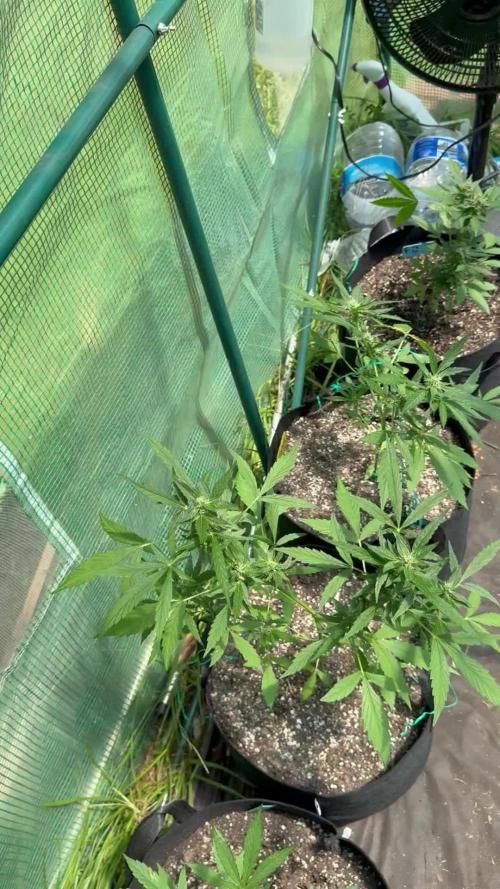
Plants are growing well big difference in height in the frost banger and northern light. Both holding up to the heat and humidity very well just a few heat spots. Watering cycle slowed due to humidity not letting plants dry out at night. Thanks following.
Likes
1
Share


@Ieiogrow94
Follow
Super eccitato per questa nuova collab con Divine Seeds, team davvero al top, che mi ha dato l’opportunità di testare questa nuova genetica e di condividere i progressi con tutti voi!!!
Come sempre partiamo nei bicchieri per poi travasare.. Questa volta verrà svolto tutto sotto la Lumatek Zeus 465 ProC, mi aspetto molto da questo ciclo!!
Sono davvero molto soddisfatto del risultato di questa piccola, con i suoi fiori rossi ha un sapore tropicale ed un odore davvero molto intenso..
Consiglio a tutti di provarla in quanto è davvero facile da coltivare ed il raccolto vale la pena!!
Grazie a tutti per il supporto ❤️🍀🔥


Likes
10
Share


@Canna96
Follow
Hey now, hope everyone has been well. Super excited football season is finally here so things are about to get busy. I went out of town for 4 days and the plants struggled a little bit with the PH getting slightly too high before I returned. I also came back to see that some type of insect was munching away on the lower leaves of my Sundae Driver which I sprayed the plant and coco with neem oil, but hopefully they didnt do much damage before I can get them under control I have never experienced insect problems indoors, likely because I grow in Coco and not Soil. However, I left a 5 gallon airpot full of coco from a previous grow outside for a couple weeks by mistake, and pretty sure bugs got into. I wont make that rookie mistake again. Anyways the rest of the ladies are looking pretty good, They are almost getting what I consider a full dose of nutrients, even though it half of the manufacturers recommended dosage. I am feeding all Gen Hydro cal mag, Armor Si, and maxi grow. I also add some food grade hydrogen peroxide to keep the reservoir fresh for around 10 days or so but I clean it once a week. Not sure why I cant select them on this site anymore, I know they got sold but they don't list them under either name. I did get all the ladies transplanted from solo cups to airpots on day 16, and it took 24 hours or so for them to recover from the transplant and start growing again. I am running 3 of the 3.4 gallon, and 2 of the 5.4 gallon just because that is what I had available. I hopefully top them all sometime this week for the first time, as soon as the roots are a little stronger. I let them grow to 7 nodes or so before I top them and make sure they're growing fast. Hopefully I can still mainline the Sundae Driver, she looks healthy other than those two leaves chomped off.
I dont really do any LST until I get get the first toppings done, because my primary goal at this stage is to ensure she grows a strong set of roots before I start manipulating her.
All the plants are on their 5th nodes, except for this Green Crack 2.0 which is only on her 4th node. We got another heat wave coming through my region that I am not too excited about but at least its earlly in the game and I dont need to crank this light up yet. I am only running it at 30% and its putting off plenty to keep this ladies happy. Hoping to get a topping done this week, then another one next week, and be ready to flip to flower by week 7 or so. Thanks for stopping by, Stay Safe and Blaze On!!! 💪
Website: https://medicgrow.com/
https://growdiaries.com/grower/medicgrowled

Likes
8
Share


@PollenSax
Follow
I just noticed my PH has been around 7, and a couple of the seed mothers are showing CAL/MAG deficiencies..
I use well water, and I don't have to adjust it in the summer, but around late fall the PH raises.
I forgot to get good pics of the seed mothers, since I was focused on the STS formulas at the time, but these are the Pollen donors transforming into male flowers. 5 weeks old.
The seed mothers are coming along nice with dime sized buds on them. I Topped them all at the 5th node, just before the cola, so the canopy would all be even under the lights.
I just sprayed these reversed buds 1 time only on day 17, after the first STS treatments, with 50ppm of Gibberellic Acid (GA3) to stretch them out away from each other.
Gibberellic Acid causes plants to stretch enormously, and PPM's of 50 to 100 can cause females to reverse to males.
Likes
7
Share


@baxpace
Follow
Day 1 - 03/31/2022
Hello, World! 34th Street AK-47 Autoflower from OCS.ca germinated in 1 day after placing seeds in the freezer over night before planting. This was my 3rd attempt and the freezing method seemed to have done the trick!
Sprouted on day 4. I placed the seed in the Aerogarden sponge pod and didn’t press it down too much. When the tap root started, it had nothing to grip onto, so I solved this by cutting a small portion of another sponge and placed it above the seed securing it in place with a loose “lid” on top so the sprout could easily push through.
-----------------------------------------------------------------------------------------------------------------------------------------------------------------------------------------------------------------------------------------------------------------------------------------------------------------------------------------
Day 3 - 04/02/2022
Hygrometer is in. Was drier than a popcorns fart in the closet so I got the humidifier going and it’s looking good. Went from 22% to 38% humidity in ~1 hour. pH, water temp and EC/PPM all seemed high so I added ~0.5 mL of pH Down that brought the levels to 5.4 (too low).
I added ~2 cups of Brita filtered water (water was getting low anyway) before I went to bed from the fridge that helped raise the pH, lower the EC/PPM, and the temp by a few degrees as well. In an attempt to cool the water down a bit over night, I took the “cap” off of the Aerogarden reservoir to let the water ‘breath’ while the light was off between 2 am and 6 am – that did not work...
-----------------------------------------------------------------------------------------------------------------------------------------------------------------------------------------------------------------------------------------------------------------------------------------------------------------------------------------
Day 4 - 04/03/2022
Water temp remains high at around 28 c. I replaced about 1/3 of the tank with new water and added ~1ml of Miracle Grow. Didn't effect the water temp at all.
-----------------------------------------------------------------------------------------------------------------------------------------------------------------------------------------------------------------------------------------------------------------------------------------------------------------------------------------
Day 6 - 04/05/2022
Levels appear the same. Tomorrow I’ll change the water out and start adding FloraMicro, FloraGrow and FloraBloom with some CaliMagic. Might pick up some Root inoculate of sorts or at least some preventative root rot formula – better safe than sorry. I’ll have to start seriously taking care of the water temp as well. Having it always around the 30 degree mark is not good.
On a side note, I inadvertently found a great way to bump up humidity and air temp quickly: add boiling/hot water to the humidifier. My humidifier ran out of water over night while I was asleep. At 6:30 am I was lucky enough to notice since the humidifier rattles when empty. Humidity was down to 38% at that point. I went back to bed, woke up at 8:30 and it was down to 28%. As luck would have it, there was some left over boiling water on the stove in a kettle and I needed something easy to pour with. I checked back 30 minutes later and the air humidity/temp was up to 60% / 30 C respectively. Perfect conditions for our little lady to get big and strong.
-----------------------------------------------------------------------------------------------------------------------------------------------------------------------------------------------------------------------------------------------------------------------------------------------------------------------------------------
Day 7 - 04/06/2022
First water exchange went smoothly. This was also the first time I added nutrients other than the NutriGrow formula. I mixed everything together in 16 cups of water. NOTE TO SELF: 16 cups is not enough for 1.1 gallons! I had to add another 5 cups of water/nutrients to get the water volume right. I added a bit of NutriGrow only in the last 5 cups with ~1mL of pH down (didn’t measure; kept applying in small doses until pH was around 6). Excited to see how she reacts to her tasty new treats! 😀
-----------------------------------------------------------------------------------------------------------------------------------------------------------------------------------------------------------------------------------------------------------------------------------------------------------------------------------------

Likes
44
Share


@XperencdGmanXG
Follow
So I decided to do bi weekly foliar sprays with the Liquid seaweed on top of the weekly Silica foliar sprays. I can say that I am seeing amazing results the plants are growing from every which way and getting nice and lush. Just pray for some rain!
Likes
11
Share


@Papastroumf
Follow
Day 65 : This lady started to make amber some of the trichomes. So today i flushed this mature lady with around 50L+ . Runout before flush was 1300ppm. After flush the runout was 400ppm. I decided to stop there. The plan is the next watering to be with pure water and when she drinks it chop chop. I goal for 15%-20% of amber. Now lets say that we are between 5%-10%. She has big heavy nuggs, not long but fat enough. LST was perfect on this lady, almost all colas are in the same height and growth.
Edit Day 69 : The nuggs are very thick, Stills i don't see the number of them that i want. So i watered with pure water and continue till is ready. Leaves started to getting yellowish, so flush was successful.

Likes
2
Share


@TowersD
Follow
3rd Week of flower and the plants have been stretching a lot. The nanaz x BBC are way taller that the Headbands.
I also replace the Electric Sky 180 V2 led light for a IONBOARD S24 200W from Ac Indinity.
The buds are starting to appear as well.
