




Likes
5
Share


@Rko41
Follow
Lime og bomb dons de aficionados French connection planter tardivement au mois de juin elle devrait pas tarder à passer en flo
Likes
6
Share

@Generalbudz
Follow
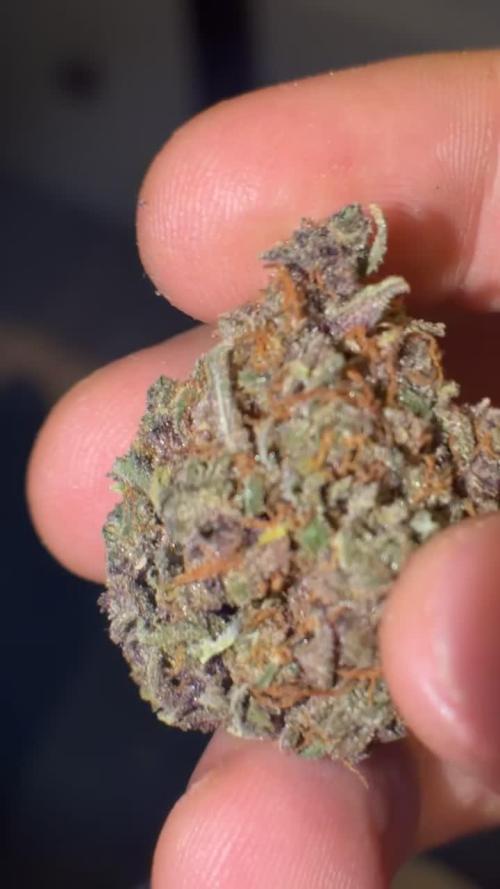
After previously harvesting a Cherry Cola RF3 decided to do a X4 cherry cola rf3 sea of green project, last harvest i was stunned how come a autoflower produce such stunning 10/10 optics/color & totally new like nothing else loud modern terps with distilate clean smoke but yet sweet and loud flavor with also high yield (not sponsored id wish) "i also attached some bud pictures and videos from last Cherry Cola harvest"
⚠️ONLY REVERSE OSMOSIS WATER OFC⚠️

Likes
2
Share


@Fat_Olsh_Farms
Follow
Day 57. Very frosty beautiful buds going. About to do some minor defoliation.
Day 60. Fed with megacrop. Giving it megacrop every other watering, 10-15% runoff.
Likes
22
Share


@BoboLacetti
Follow
I'll add pictures when it's timed and dried. It's just hanging in the dark


Likes
17
Share


@TightNugs
Follow
Flush day.
48 hour flush in filtered water ph 6.
Trichs 90% cloudy 10% amber
Harvest report and photos next week,
Happy growing Nugz 🤞🏴🍁
🍁🍁🍁
Breeder-Fast buds LSD-25 auto x2
🍁🍁🍁
Light-Voost VST 120 veg,VST 240 flower
https://voost.com/
7.5%discount over £200 Code-TightNugs
🍁🍁🍁
Seedbanks-Garden of green and Expert seeds
https://gardenofgreenseedbank.com/
Processing
Likes
Comments
Share


@eastcoasthomegrows
Follow
Temperatures ran very high during week 2, I had to invest in a closed loop ac system so I wouldn't lose any Co2 through ventilation. The plant itself is showing signs of heat stress but is beginning to get its legs. The stem is extremely week at the soil line, I'm hoping some strong air movement will fix that problem in no time.
Likes
2
Share

@all_about_420
Follow
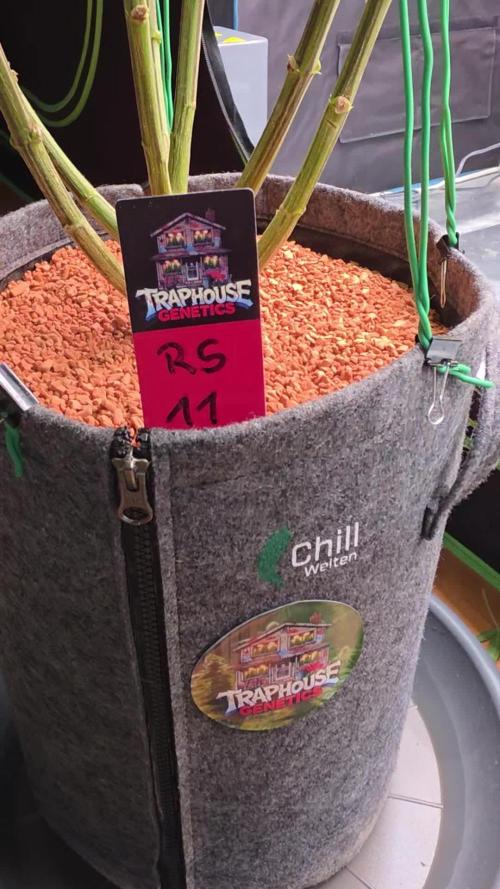
Diese Woche brachte für den Traphouse Genetics Cut eine spürbare Veränderung. Zu Beginn stand das Blattwerk noch sehr gedrungen, während die Spitzen bereits deutliche Blütenknäuel mit langen weißen Fäden zeckten. Es war an der Zeit, die Schere anzusetzen, um im Dickicht Platz zu schaffen.
Der radikale Schnitt zeigt sofort Wirkung: Das untere Drittel ist nun komplett kahl und von jeglichem Kümmerwuchs befreit. Gleichzeitig wurden gezielt Sonnensegel entfernt, damit das Licht ungehindert bis zu den unteren Ansätzen der künftigen Main-Colas durchdringen kann. Diese Maßnahme sorgt für eine optimale Luftzirkulation im gesamten Profil und kanalisiert die Energie aus dem 15-Liter-Topf hocheffizient. Dank der Vitalität des Advanced Nutrients Schemas zeigt sich die Pflanze von der Prozedur völlig unbeeindruckt. Die Weichen für eine ungehindere Entwicklung und die kommende Harzbildung sind damit perfekt gestellt.
Likes
1
Share


@bms1208
Follow
Buds poppin' off nicely. Rigged up some bamboo skewers to spread the canopy.
Scent's a wild mix - citrus vibes with that diesel kick. Like fuel-soaked shop rags, no joke.
Word is this strain ain't a monster yielder, but don't sleep on it. Sometimes the lowkey ones surprise you.
Can't wait to see how she turns out. Gonna be fire.


Likes
3
Share


@TGriner420
Follow
This week was a real breeze! She's gaining a ton of weight on the bud sites and she's really growing nicely! She's starting to bud around the flowering sites and really finishing nicely. The formation of bracks and the formation of the buds is my favorite part because that's when you get to see somewhat of the final picture and the time the flower is most colorful! Now the second best part is harvesting the flower for smoking which will be occuring soon! The smell on these girls is very invigorating!! She's putting out a smell of a Apple Tart! You can smell the Apple Strudel right away when you open up the tent! I can't believe how big she's got and how beautiful they are coming along! I have to say that this is one of my favorites to grow and my favorite smelling strain! I also love the way the flowers are stacking on the colas!!! The frost on top of the cola leaves is insane! During the day I drop the humidity down to 45-50% and then at night I raise the humidity up to 60-65% which helps a ton with flower promotion during the flowering stage! Also, I raise the temperature during the day to 80° and at night I lower the temperature to 55°-60° which helps mimic the autumn temperatures that aids a ton in flower production in the flowering stage!!! I'll be stopping the two Apple Strudel Auto's from receiving any synthetic nutrients soon and flushing them once harvest is closer. It will be within the next two weeks or so! I do that because they'll stop taking nutrients in and start to self canabulize as a normal (ending) part of plant life. Then I'll give the two ladies plain pH balanced H20 for the next 2 weeks to flush any and all nutrients out of them. Then three days of darkness. Finally I'll chop them down to hang in my harvesting closet for 7-14 days with a dehumidifier on at 65% humidity. Then I'll place the flower into the trimmer and then into the grove bags for the last step in harvesting! The grove bags will keep the flower at 58-62% humidity. They also help keep the flower fresh longer, the Terpenes fresh, the Terpenes flavors, and from becoming moldy or dried out! I've used both these and the mason jars with boveda humidity packs but to me the grove bags are a must and a go to fail safe!!! All you do is hang your buds upside down at 60/60 or 65/60 for 7-10 days or until the braches snap and make that noise. Thanks and as always stay safe, stay high, and stay blessed!


Likes
7
Share


@Athos_GD
Follow
D22. Defoliated, gave plain RO water and dimmed the light. Next is auto irrigation.
D23. Finally received all of the Athena nutrients and fed for the first time.
D25. Removed the small runt plant with the twisted stem. The plant started growing pollen sacks.
D26. Raised light as much as I could without using zip ties. PPFD now 650-790. EC tonight 2.4.
Likes
1
Share


@Bluemels
Follow
Tag 40: Ich gebe zusätzlich Alg a mic in das Gießwasser zur Stressbehandlung.
Tag 46: Ich habe mich entschlossen diesen Grow abzubrechen. Seit kurzem werden die Blätter hell und fühlen sich trocken an. Ich vermute es liegt daran das ich einmal ein großen Schluck zu hartes Wasser genommen habe. Ich hatte einmal zuwenig Gießwasser vorbereitet (PH wert eingestellt 6,3) und es lief unten nicht raus so nahm unvorbereitetes (PH wert 7 etwa) Wasser zum Schluss, zunächst wuchs die Pflanze normal weiter, doch nach 1-2 Wochen stagniert das Wachstum die Blätter sind hell und trocken, auch die neuen Triebe sehen nicht gut aus.


Processing
Likes
10
Share


@CanadianFillmore
Follow
Start of week 8 (week 7 feed for the super Lemon Haze, she's going one extra week in total (9)) th blueberries are packing on serious weight, size and stickiness, while also smelling dank as hell! The Super Lemon Haze is still nutrient hungry, I continue to feed her extra each week and she's packing on serious weight and size now as she goes into the last 2 weeks of her grow. Overall the last week 7 was great and the plants are looking good, approaching the end.

Processing
Likes
2
Share


@Sundown
Follow
This lady is getting real big, i wish i had induce her to flower 1 week before, but shit happens :) HST to deal with it :P
Never had a Blue Dream Pheno with so many sativa %,
I'm sorry about the quality of pics and videos but my phone sucks, i promisse some good bud porn with better quality for the next weeks :p

Likes
6
Share

@tteague75
Follow
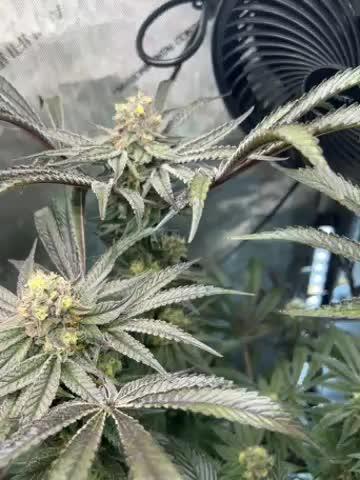
With only very light defoliation this girl is on her way. The smell is pure grape 🍇 on the initial smell that fades to a guava smell on the way out. I really can’t wait to see this one finished.