


Likes
Comments
Share


@Dagnele
Follow
Date: June 29, 2025
Stage: Flowering
Growth: Plants have stopped vertical growth. The tallest one is now 75 cm, the shortest 63 cm. Buds are swelling and flowering is progressing well.
Health: All plants are in excellent condition. Lower leaves have started to yellow due to the flowering stage and have been removed.
Smell: Very intense aroma, noticeable even from a distance.
Watering: Almost daily due to high temperatures – approx. 7 litres total for the four plants.
Feeding: Alternating between ATA Terra Max (5ml/L) and plain water.
Sunlight & Weather: Another very hot and sunny week. Max temperatures around 35°C.
Notes: A small praying mantis was spotted on one of the plants.

Likes
174
Share


@DreamIT
Follow
😬😆UnCoNvEnTiOnAl GrOwTh 😆😬
____________________________________________________________________________________________
🤪 23.01 ...
🤪 24.1 These days, I will work the honey cream a little and send it to bloom under the viparspectra lamp. I recently removed a plant under this lamp and in the few days it remained under there, I noticed a visual increase in the trichomes, I hope it keeps this line and makes me literally explode the flowers: D
🤪 25.1
🤪 26.1
🤪 27.1
🤪 28.1
🤪 29.1
______________________________________________________________________________________________________
📜👀 A look at the details of what I'm growing 👀📜
🍊💚 Red Mandarine F1 🍊💚🌱🍭 Sweet Seeds 🍭🌱
📋 Details 📋
⚧ Gender
▪️ Feminised
➰ Genes
▪️ 55% Indica / 45% Sativa
🎄 Genetics
▪️ Red Poison Auto (SWS39) хCalifornia Orange x Skunk hybrid)
🚜Harvest
▪️ 400 - 500 g / m²
🌷Flowering
▪️ 49 - 63 days
✨THC
▪️ 16%
✅CBD
▪️ 0,2%
🏡Room Type
▪️ Indoor
🌄Room Type
▪️ Outdoor
🕋Room Type
▪️ N/D
🎂Release Year
▪️ 2019
___________________________________________________________________________________________
👀📷🥇 Follow the best photos on Instagram 🥇📷👀
https://www.instagram.com/dreamit420/
🔻🔻🔻Leave a comment with your opinions if you pass by here🔻🔻🔻
🤟🤗💚Thanks and Enjoy growth 💚🤗🤟
Likes
2
Share

@GingerGarageGrow420
Follow
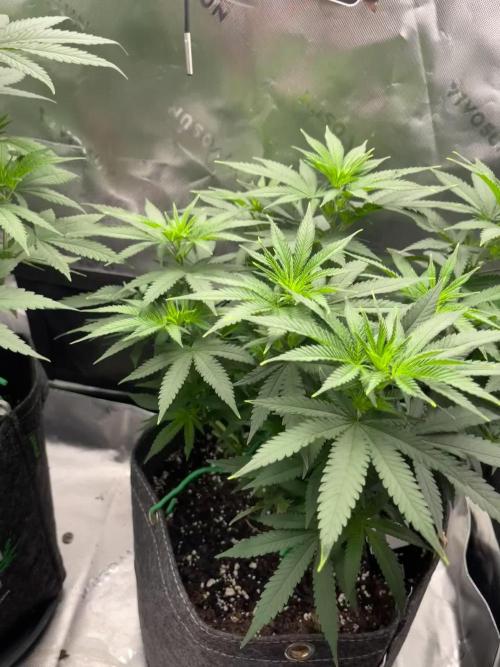
Strain: Chill Out OG F4
Day 0 of Flower
Day: 49 from sprout
Medium: Fox Farm Ocean Forest
Light: Vivosun VS2000 at 75%
Light Distance: 12 inches
Watering: By hand, ~12 oz daily
Nutrients: pH Perfect Advanced Nutrition Grow, Bloom, Micro 2 ml / L, 1 ml / L big bud
Just switched to Flower today
Likes
15
Share


@moritz
Follow
Day 31 / 01.05. The Plants really have taken off with growth since I turned on the autopot system, even the Super Lemon Haze which seemed to be growing quite slow in the beginning. I filled the reservoir on day 28 with an EC of 1.7 mS/cm. Currently I am fighting a bit with the humidity as it tends to rise quite a bit.


Processing
Likes
7
Share


@Kushizlez
Follow
Days 35-42
(Day 36) Some minor problems starting to arise here. A few times this week it got up to 90+ degrees which I think may have caused a bit of heat stress in some of the plants. I’m seeing a bit of cupping/crinkles on some of the fan leaves and some of the new growth is looking pretty gnarled and twisted. I hear windburn can cause this too so I’m turning my fans down to low speed. This could also be a problem with humidity so I’m going to turn off my humidifier, dim the lights and raise them. During my last feeding I mulched in some worm castings but it seems like they’re keeping the soil/coco from drying out. Pots are still decently heavy and even the surface is still quite moist but they aren’t showing any major signs of overwatering. I figure it will only be a few weeks before the castings break down so I will just leave it.
A few of the plants are starting to show yellowing leaf tips which is probably some kind of micro nutrient lockout from my PH being slightly too high. It could also be from nute burn so I will water in 6.0 until I see some runoff. Although the most likely culprit is potassium excess. I’ve been feeding potassium almost as much as nitrogen so far. I know that can cause the yellowing of leaf tips by locking out trace minerals. It can also cause leaf problems like crinkling. Excess K can even cause water retention! Will water at 6.0 until run off next watering.
The lst is coming along nicely. It was a good idea to remove the first two sets of branches (not leaves). Now I have 4-6 perfectly even stems coming from each plant that I plan to top one more time each.
(Day 37) Today I’m going to vacuum, clean, wipe down and spray all my equipment in the tent. I’ve been letting the floor get quite dirty and I haven’t had the chance for a thorough clean since last round. I’m kind of surprised I haven’t seen any powdery mildew yet. I guess the prevention spray is working because the room has to be infected from my last crop.
(Day 40) I was reading that you can foliar spray whatever you are deficient in for an immediate uptake. I‘m going to try that with my current potassium excess since it locks out trace minerals. I’m going to foliar feed a bit of phytoplankton at 15ml/L and some MagnifiCal + VeloKelp from Remo nutrients both at 5ml/L. The cal mag is not organic but as long as it’s not going into the soil and doesn’t contain chlorine I’m fine with it. I’m also going to be changing the light cycle to 18/6 for the remainder of veg. This will be their first dark cycle so they can properly foliar feed. Edit: humidity shot up to 85% a few hours after foliar spray.
I went to top dress everything today and I mixed up the plants while doing so! So the ones I was unsure about I gave 1 extra tablespoon. I won’t top dress again for at least 10 days. Might give a light tea sometime next week. I also tilled the shit out of the top of each pot. It had a hard crusty layer on top that was keeping the medium from drying out properly. I’m not going to water again until everything is bone dry. Then I will water until slight runoff at 6.0 ph with some Dr. Marijane bacteria/root probiotic.
I’m starting too see a lot more of these abrasions on some of the bigger fan leaves. It almost looks like thrip damage but I’m 100% sure it’s not a pest above ground. It could be bulb mites, which I found in my worm castings but I can’t check until the roots are more established in their pots. The leaves themselves are cold and feel damp to the touch. I haven’t even seen a fungus gnat since I last fed. I’m hoping it’s related to the K excess and clears up with the troubleshooting.
(Day 41) Just ordered a wire cube rack to prop my plants up with and help evaporation/root warmth. Each cube is 11.8”x11.8”x11.8” and it comes with 16 cubes. So it will fit just perfectly in my 4x4. Depending on the size, I might order another one for the flower room where I would need 25 cubes.
Likes
6
Share


Likes
36
Share


@Cannabeast40
Follow
Welcome back to yet another update on my summer grow 😎🤙🏻
Things are still going smooth, a bit defoliation and nematodes was used and hopefully they will do their job in a few days😁
Started to add bloom to the mix, so let’s see how things turn out.
As you can see the red spectrum is really working well, and soon I´ll add
some small amounts of IR/UV daily.
Looking forward to see the result 😊
_____________________________________________________________________________________________
SpectrumX LED🔥 @medicgrow
880 Watt⚡️
2x UV/IR LED panels 💥
2.7 μmol/J🔥
Full Spectrum V1,F1,VS,FS🌈
Display with PPFD & Live spectrum
Light measurement: Apogee MQ-610 & Apogee DLI-600.
Fertiliser:
Organics Nutrients
https://www.organicsnutrients.com/en/
Green Buzz Nutrients
Discount Code: GD42025
Grants 25% with a minimum Order value at 75 Euro.
https://greenbuzzliquids.com/en/shop/


Likes
101
Share


@Grey_Wolf
Follow
Winter Greenhouse grow #1
Dinafem seeds Cheese
6th May 2020
Last night we had a severe storm here with wind gusts at or above 100kmh an hour and heavy rain of about 45mm in the rain guage this morning.
The temp is currently 8 degrees outside at 12 noon and the minimum was 2 @ 630 am this morning.
I was half expecting to see the greenhouse had been smashed to pieces but luckily it seems to have survived so far relatively unscathed,
apart from the odd rip in the roof that is letting in water from the rain.
The little cheese plant has grown a tiny bit despite the rain but I'm really iffy about whether it will ever come to much 😏
Its just been too bloody cold and wet .
Time will tell I guess and I'll try to patch up the greenhouse when the weather improves other than that not a lot I can do.
Cheers for stopping by again 😀👍

Likes
2
Share


@fabialien071
Follow
Semana del 9 al 15 de septiembre 2024, van un poco lentas, pero se ven prometedoras ojala todo salga bien con está ya que es mi segunda vez probando Paradise.

Processing
Likes
7
Share


@gablmo
Follow
I finally turned 600 watts on, would love to get comments from you folks, so clueless here. If you see something wrong, please let me know.

Likes
58
Share


@Rap_a_cap
Follow
Great climate, ideal. No problems to report, for the moment the critters are focused on something else. If it doesn't get too hot, I'll start reducing irrigation and defoliate more. The smell is very strong. Today 13.27 of light.
Flowers are forming well, branches are finally swelling, bud structure is strong. Still stretching but less than previous days.
August 21 update - first day of new heat wave

Likes
10
Share

@farah4weed
Follow
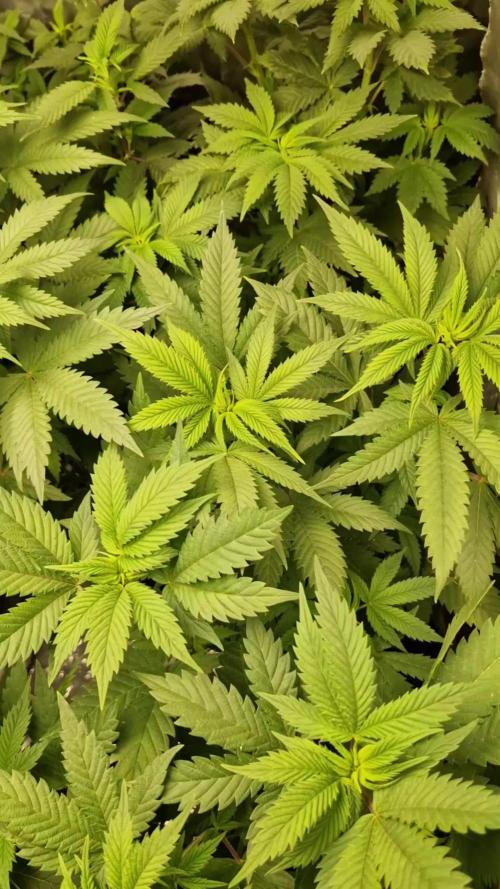
Hello, hello.
First week of flowering.
This week I used flowering feeding fertilizer and calcium.
I increased the difference between night and day temperatures.
I reduced the humidity.
I am slowly getting closer to the result of the project😋
Thank you for following me.
"farah4weed"
Likes
12
Share


@CanadianFillmore
Follow
Week 5 begins for LSD and Green Crack! The LSD ladies had the most yellowing over the last week, yet they have the most frost on the buds. The Green Crack ladies had a little bit of yellowing and has bigger buds, but no frost at this time. They all seem very happy in their new 4x8 home.
Thanks for stopping by growfessors, tune in next week for another episode of growfessor theatre. 👽🌳💚


Likes
31
Share


@Mrs_Larimar
Follow
2024-08-31
Tangerine Snow F1 fast, performs like a Queen,
iam so impressed by this Strain, really the bet i have grown for long time
in and outdoors!!!
The Outdoor Girl, soaks in the Perfect weather Conditions , she loves her spotunder the Roof
in good Company.
She drinks and eats like a champ, but as you can see she needs it.
Sher performs like a Plant that sits in open Ground, but she is into ( only) 15 L Growbag.
thats awsome
The revegetating Girl
She shows sweet new Flowers already
( she was harvested weeks ago, and i let her revegetate outdoors)
so we are going to have another Harvest here.
iam super fascinated.
BREEDER INFO
Tangerine Snow F1 Fast Feminised is a 75% sativa, four-way cross of (Boost x Tangelo) with (Lavender x Power Plant).
This Fast F1 hybrid is bred from Cali genetics and boasts great citrus terps, high resin production for extracts,
high levels of THC, very good yields and excellent mould resistance.
Tangerine Snow F1 Fast can be grown indoors as well as outdoors. Indoor flowering times are between 8 - 10 weeks
while harvest time in northern latitudes is during September while in the southern hemisphere growers will be harvesting during March.
Recommended climate regions are hot, dry, humid and warm. These are tall, semi-branched plants that grow in excess of 200cm
and display a high degree of vigour with very good uniformity.
In common with many other heavily sativa-dominant strains, Tangerine Snow F1 Fast offers excellent resistance to mould
as well as to plant pests and diseases. The combination of citrus terps and plenty of resin makes thi
a very good extract strain with the 'washing' method delivering very good yields of hash.
The citrus terpene profile is reminiscent of mandarins and tangerines and also has sweet candy notes.
THC production has been lab-verified at a strong 24% while CBD is low. The effect is uplifting and energising,
perfect for use during the day and early evening.

Likes
2
Share


@KeemBboomin
Follow
Everything is not as accurate as I would like to say, but I wanted you guys to see what I can do
Likes
22
Share


@NanoLeaf
Follow
End of Week 9 (Second week of flower)
Increased the CO2 to 1300ppm and the ladies have stopped stretching.
The main top-sites are starting to form buds. I defoliated a few fan leaves again because the fan leaves are growing so fast and blocking bud sites
I also gave a cup of worm castings as a top-up to each pot to give the microbes a boost and it replenishes vital minerals to the soil.
Pest Report: None


