


Likes
Comments
Share

@Hashy
Follow
********************************************
Week 16 Fade(week 12 flower)
********************************************
Light cycle=12/12
Light Power=110w 47%
Extractor controller settings (during lights on).
High temp= 26c
Temp step=0c
High Rh= 46%
Rh step=0%
Speed max=10
Speed min=5
Extractor controller settings (during lights off).
High temp= 20c
Temp step=0c
High Rh= 50%
Rh step=0%
Speed max=10
Speed min=5
Smart controller settings (during lights on).
Lights on=9.00am
Smart controller settings (during lights off).
Lights off=9.00pm
VPD aim=1.0-1.5
DLI aim=30-40
EC aim=1.0-1.8
PH aim=6.0-6.5
💧💧💧💧💧💧💧💧💧💧💧💧💧💧💧💧
NPK= 0-0-0
Method= Automatic
Feed=Fade nutes
Neutralise=0.1ml/L
Advanced Nutrients Flawless Finish=2ml/L
Easy Ph down=0ml/L
(1ml=24 drops, 1 drop=0.04ml)
Easy Ph Up=0.0ml/L
(1ml=24 drops, each drop is 0.04ml)
Ec=0.33 PH=7.0/6.9
Runs=10
Run times=3mins (0.75L/0.375L each)
Gap times= 17mins
Total runtime=30mins(6.0L/3.0L each)
Total flowrate= 0.25L/0.125L/min each
Auto start time=10.00am
Auto stop time=1.03pm
💧💧💧💧💧💧💧💧💧💧💧💧💧💧💧💧
********************************************
********************************************
📅24/5/25 Saturday(Day 106)
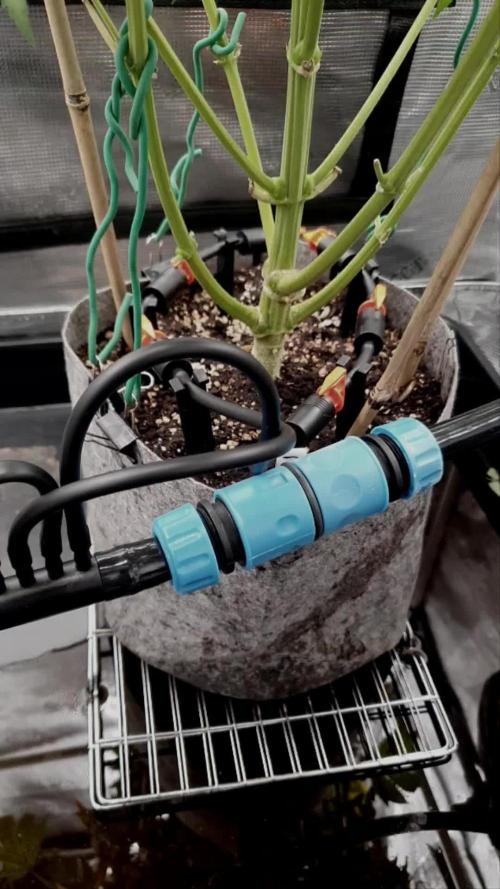
📋 Put stakes in and spread her out a little now she has all this space to herself.
📅25/5/25 Sunday(Day 107)
📋
📅26/5/25 Monday(Day 108)
📋
💧
Automatic Fade nutes
Ec=0.3 PH=6.5/6.2
Volume=6L
Volume left=2L
Volume used=4L
Total runoff=0.7L
Ec=2.1 PH=/6.8
💧
📅27/5/25 Tuesday(Day 109)
📋Lowered light power to 100w
📅28/5/25 Wednesday(Day 110)
📋Defoliate some spent leaves.
📅29/5/25 Thursday(Day 111)
📋
📅30/5/25 Friday(Day 112)
📋 Day 84 flower.
💧
Automatic Water
Ec=0.2 PH=6.8/6.9
Volume=6L
Volume left=1.5L
Volume used=4.5L
Total runoff=1L
Ec=2.3PH=/6.7
💧
********************************************
Weekly roundup.
📋 She's had a full week under the light to herself, she's almost ready. I'm tempted to chop at least the main top cola any day now and let the rest mature a little more. I may not complete another full week so this maybe my last weekly report before harvest.
Back soon.
Take it easy.
********************************************



Likes
21
Share

@Bncgrower
Follow
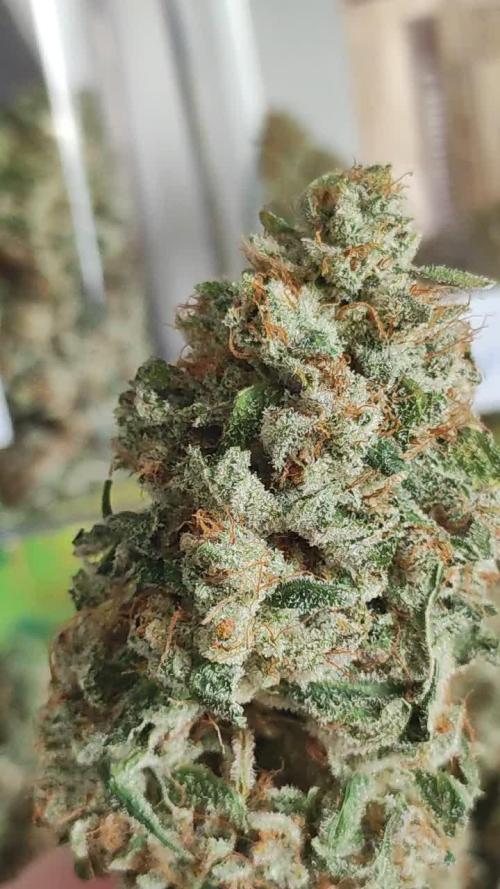
We've reached the end of this journey, the result was good, a very good strain to cultivate, a little sensitive at first, but then it reacted very well. The buds had a very good aroma, dense and resinous, now just wait for the drying and curing process to complete the cycle.. ✌️✌️✌️

Likes
70
Share


@Mosquito_Haarlem
Follow
Het is zover.
Vandaag 27 december is de laatste dag met de lampen aan.
Ze staat nu in het donker en morgenavond 28 december zal ze worden omgehakt en opgehangen.
28 december: de koningin is omgehakt en opgehangen aan de drooglijn.
Oogst rapport komt als de toppen droog zijn
To be continued..... stay tuned........🧐


Likes
7
Share


@DIY95
Follow
Woche 7: Die zweite Woche der Blütephase ging es der Blattmasse erstmal an den Kragen damit die Blüten auch etwas an Licht abbekommen 😅
Anfangs dachte ich, dass ich vielleicht etwas viel weggeneommen habe. Aber im Nachhinein hätte ich den unteren Bereich der Pflanzen deutlich radikaler Entlauben können. Ich war etwas zaghaft 😅 Ansonsten habe ich weiterhin versucht die große Skywalker zumindest etwas unter Kontrolle zu bringen.. Aber da sie fast doppelt so groß wie ihre Schwestern ist, bin ich schon in Planung einer zweiten Growbox. In dieser kann sie sich wenn es soweit ist ganz alleine austoben.. doch etwas muss sie sich noch gedulden.
Processing
Likes
21
Share


@CBD_Sweden
Follow
2018-04-02. Week 3 day 1. It was time too upgrade the 0.1 liter pot too the 1 liter.
Did the transplant today.
They are a little bit overwatered but i will let them dry out now.
This is the newest release from DinaFem seeds.
And i will veg her under a Apollo 10 led and flower her in Growroom Nr2 under a 600 w Hps on a light mover.
Its a organic grow and i will be using BioBizz nutrients.
Strain information.
Purple Moby Dick is a child of the legendary Jack Herer that was crossed with PAK. This is a sativa dominant hybrid that contains 60% sativa and 40% indica genetics. The THC content reaches 21% and the smoking brings cerebral effects.
This potent plant develops a big structure with lots of branches and can grow up to 3m tall. The flowering period brings amazing purple hues and fruity aromas. The strain needs lots of light, enough space, proper feeding and watering. It has a good mold resistance.
The flowering period takes 10 weeks and the harvest brings good yields of 650 g/m2 indoor and 1500 g/plant outdoor. The fat dense buds are coated with mass of crystals.
The smoke brings sweet, fruity smell and aroma and potent, long-lasting cerebral effect and euphoric high.
Feminised
Genes 60% sativa / 40% indica
Genetics Jack Herer x PAK
Harvest 650 gr/m2
Flowering 9-10 weeks


Likes
2
Share


@Kardo
Follow
Die Blätter werden schön Purple und die buds werden fester ich bin gespannt wie sie in 1-2 Wochen aussieht
Likes
7
Share

@NSABND
Follow
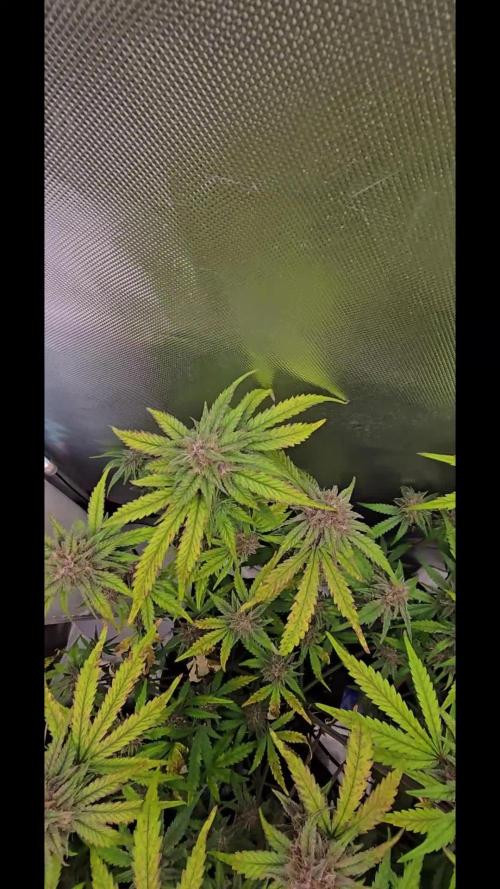
Day 64 the queens got some fertilizer 💪😃👍
Day 65 that massive smell and these juicy buds 😃👌
Day 66 that massive smell 😍👌
Day 67 i think the results are near 😍👍
Processing
Likes
5
Share


Likes
15
Share

@AestheticGenetix
Follow
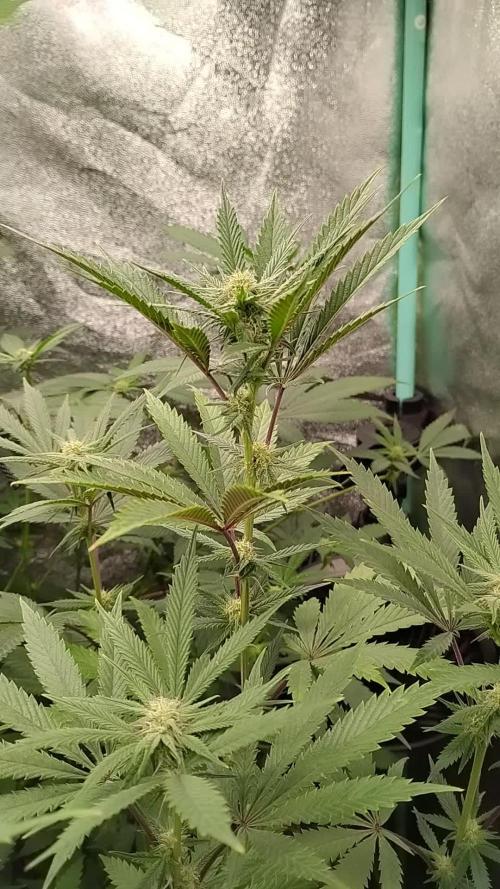
I will be applying some pollen I collected to specific branches each week to make sure they've been pollinated.
The Acai Gelato bud is looking different than before.
The whole tent may be pollinated to be honest.
The pistils have receded and it's looks more like plant matter rather than pistils and calyxes
Come check out my YouTube. Got lots of cool stuff and plenty of fun going on over there
Likes
19
Share


@RFarm21
Follow
Semana 5 ( 05Nov-11Nov)
Única rega da semana foi dia 11Nov. Os nutrientes foram misturados em 1,5L de água. Primeira dose de Bloom administrada.
Likes
14
Share


@420DeepGrow
Follow
📆 Semana 12
La Permanent Jealousy XL Auto entra en su recta final mostrando todo su potencial. Los pistilos se apagan y los tricomas comienzan a enturbiarse, indicando que la madurez está cerca. El aroma se intensifica con notas dulces y terrosas, y los cogollos engordan visiblemente cada día. Se ha iniciado el lavado de raíces con agua osmotizada y enzimas para asegurar un sabor limpio. Las hojas grandes comienzan a perder color, señal de que la planta ha dado todo lo que tenía.
¡ Seguimos creciendo fuerte! 💪


Likes
17
Share


@BioGrowKing
Follow
Die Woche ist sehr gut verlaufen :) das ist jetzt die letzte blütewoche ^^
Ich spüle seit 2-3 Tagen mit klarem Wasser die Erde durch :)
Nächste Woche schneide ich sie dann ab & lasse sie trocknen :)


Likes
8
Share


@DoMoNe
Follow
Following RQS auto guide : https://www.royalqueenseeds.com/blog-how-to-grow-autoflowering-cannabis-n83
WEEK 2: LATE SEEDLING STAGE #8 22.3. - #14 28.3.
#8 22.3.
- Canna PH- grow (and bloom) arrived today, mixed 6ml to 3liters and poured around the pots (hoping to get hum. up also)
will see what it does and if the PH starts going down from the 7+ i can start adding smaller amounts.
-Moved around the LEDlights (those have 'bout 2000LUX at plant level) so they are more along the tent walls.
-Moved temp meter from lamp to plant levet (have now confirmed the lamps wont heat up too much under current air flow so its safe to stop monitoring heat source temps.
-Removed the "glass" from 3in1 meter and the tape from the front, tested the luxes, still at few hundred, so i would guess the LUX meter in that cheap meter is BS!.
Now the PH is way more visible in the camera when there is no screen reflection etc. Added pics of the luxes from android app, will receive the "real"meter possbl this week.
-When i had tent door open and did the stuff mentioned above the temp dropped to about 13degrees, but now we are already back up at 23'c at plant level, so seems stat the current exh-fan rotation is good.
-Plants emself have taken some sort of an growth spur 'cause just few days ago they seemed like they are not growing at all, and ow i can really see the difference and they are making next set of leafes, might be that the temps risen so they enjoy em self now way more
- forgot to take new pics from the plants emself so will juts update pics from cam for now , at least there's been some change again.
-Will try to remember take proper pics of the plants next time i visit the tent physically
-Should remember to buy the "LST-wire" for training, would be good time to buy some eastern decorations fluffy wires.
#9 23.3.
-Noticed that the timelapse camera is getting thrown around as well as one LEDpanel, so went and tied em up to tent posts.
-Added 1,5liters of water that had 6ml of PH- canna in it, and poured in to "middle corner" of every pot.
-Tent was way more warm and moist inside then ever before, which is a good thing, im sure after the latest added water im getting there.
-Ordered a RAM humidifier. And some nutes pack from bio-grow.
-Updated "week2 timelapse" (Check 1st week for its timelapse)
-Note to self: Take those damn "camera quality" plant pictures, you are supposed to...-
#10 24.3.
-Started small form of LST
-Guess who forgot to take the closeup pictures... again... Well better luck next time :D
-Added 5liter RAM humidifier, at lowest possible setting, so that the water would last longest
-Added 1,5liters of water with BioBizz nutes that came today in mail, Alg-A-Mic, Root-Juice and Top-Max.
-Added ScrOG, but obviously its now just tested that it fits and its hanging at the tent side.
-Had to move the Fast Eddy a bit and make a "stand" for the humidifier.
-Moved the other LED (2300lux) a bit further up, will have more effect when plants grow, and those can be had as a xtra lights.
-Moved some wires around their sockets to get better fit for all connectors.
-Adjusted the camera directions
-Turned both fans to level 1 of 2
-exhaust fan still at about 50% timer on/off, that must been what caused the "wobbly"pictures in timelapse as the tent gained more vacuum inside which must have drawn in the walls a bit.
#11 25.3.
-Not sure if i did anything
#12 26.3.
-Water run out from humidifier
-Added a pic of the day
-Luxmeter arrived, didn't had time to install it yet, but tested and found working.
#13 27.3.
-Added Hydrometer
-Filled humidifier
-Poured 1liter of water with nutes
-Added/moved LST's
-Finally remembered to take the close up pics of the plants! wohoo.
-After following the hums i think i might add exhaust flow as its also warmer outside so the tent can now take it
#14 28.3.
-Last day of #2 week
-Did nothing, just watched em grow.
-Water run out of hum. hum went from 65% to 45%