


Likes
Comments
Share

@Ninjabuds
Follow
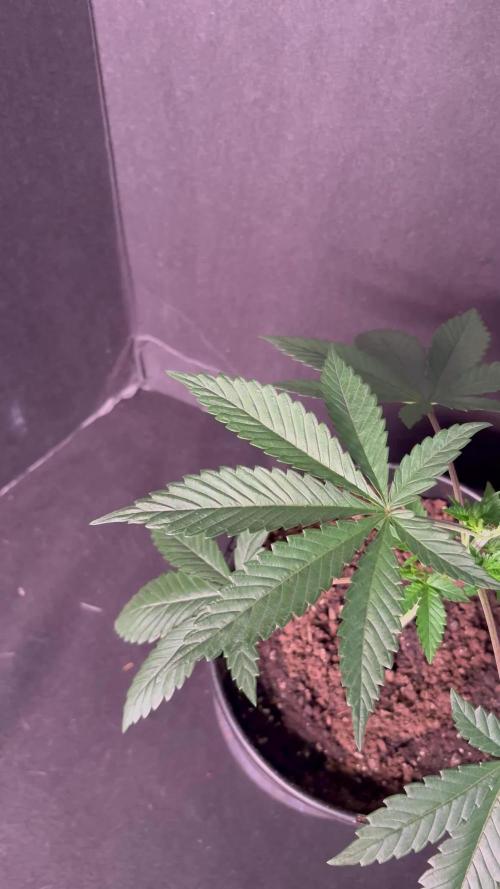
It’s day 27 from seed for all the plants in the photo sea of green. Let’s call it the battle of the strains summer 2025. All of the plants are starting to have visible differences. I’m already starting to tell witch plants are more sensitive than others.

Likes
65
Share


@Bluesbreeder
Follow
hey all,
let's do an experiment with budswelling and without !
i know it will not be exact science but i will give some insight if it works or not.
i have got 2 C.banana and 2Royal Gorilla on 1 plant of each sort i have done my budswelling
so we can compare both strains and the effect at the end of harvest to see if it makes a difference or not.
in my believe it makes a difference but i can not prove it maybe this will give an idea if it makes a difference or not.
also i have put an video on how i do the budswelling with scissors or with fingers.
i prefer to do it with fingers it's a lot quicker then with scissors.
You need to do this on al the buds not only on top. Some say you need to do this every week but i only do it after 3or 4 weeks into flowering.


Likes
27
Share


@Kloud9gardenz
Follow
I can sit and watch those purple buds form all day 😍 this may get flagged as porn but I'll deal with it lol. And to think I almost didn't buy this, she grows very compact and not much stretching which I really appreciate. She also smells a little sweet and citrus

Likes
1
Share


@nefcxt
Follow
These 2 are growing amazing, especially plant 1 is doing great.
I've had the humidity on about 40% for most of the time since I have another flowering auto in the tent but these don't seem to mind. I've also had them on about 400umol/m2/s


Likes
15
Share


@tsukigona
Follow
I am waiting, and for the moment, everything is good!
My plant looks healthy!
I'm happy to see that :)
I just started watering with nutrients, I'm quite worry about the quantity and I'm not sure about what I'm doing. For the moment, prevention is key, I don't water too much (maybe not enough but still ok I think)
Edit: I stop watering with nutrients because it's bad for my plant(thank you guy for your recomendation!)
Processing
Likes
20
Share


@eldruida_lamota
Follow
Que pasa familia, finalizamos segunda semana de floración, no veas que color y que vigor, están muy sanas, se agradece la luz del LED.
Controlamos ph 6,5 temperatura y humedad dentro de los parámetros correctos.
Añadimos bud candy para ir aportando a las flores los nutrientes necesarios para una mejor formación y sabor.
Por lo demás nada nuevo, todo va bien, entre riego y riego son 72h lo que pasan , en vez de 48h como pasa con el sodio. También se agradece en ese aspecto.
Un saludo fumetillas y muy buenos humos 💨

Likes
27
Share


@ButterfliesLittleFarm
Follow
Hello Diary.
The third week of vegetation has passed and Haze Berry Auto is entering the pre-flowering phase. Haze Berry has grown 63cm in the first three weeks which is really quite but not surprising considering he is Sativa. Haze lengthened nicely and the distance between the branches is much larger than, for example, with his roommate Fat Banana. Now the leaves and branches are already causing problems when watering.
I continue to add BioBizz to each watering on a schedule for that week, and I also started adding CalMag preventively.
The plants have generally become more thirsty, now watering is almost every two days when I prepare 6 liters of water with which to water all three plants evenly.
All in all, everything is fine for now and I’m looking forward to the start of flowering. Haze looks really promising.
Let’s take a look at the review of the week.
09/10/2020 - Day 16.
Watering. I added BioBizz as scheduled for the third week and added 1.5ml / lit CalMag preventively. p.H. I lowered the values to 6.4 with Plagron’s Lemon Kick. The temperature of the water I water with is always around 18, 19 degrees. I also put in a Box and another fan.
Temp / Humidity on the farm - 25.3 degrees and 48% humidity.
11/10/2020 - Day 18.
Watering. This time I didn’t add BioBizz but just put 1.5ml / lit CalMag and lowered the p.H. value at 6.4.
Temp / Humidity on the farm - 25.3 degrees and 45% humidity.
13/10/2020 - Day 20.
Watering. BioBizz for the third week and CalMag preventively. p.H was 6.3
Temp / Humidity on the farm - 25 degrees and 45% humidity.
14/10/2020 - Day 21.
Photography, Watering and height measurement. After photographing for the end of the third week of vegetation, I measured the plants on the farm and after all watered with BioBizz and added CalMag preventively. p.H. I dropped to 6.4
Temp / Humidity on the farm - 25.2 degrees and 45% humidity.
Haze Berry Auto # 1 - Day 21. - 63 cm
Haze Berry Auto # 2 - Day 14. - 25 cm
This week the vegetation is over and I am entering the flowering phase, which is obvious given the development of the plants. For now, they look happy and content. Their conditions are pretty good and I will try to keep it that way. See you next week.


Likes
4
Share


@DmbTexasRanger
Follow
Outdoor harvest smells and looks better than indoor. AN bloom boosters (full lineup) made a huge duffe


Likes
36
Share


@TheCannaProphet
Follow
~ Auto Skywalker Haze®️ by Dutch Passion ~
Skywalker Haze x Auto Amsterdam Amnesia
Well friends, here we go on another 'canna-venture' together cultivating Dutch Passion's Autoflowering version of their outstanding Skywalker Haze along with three other incredible autoflowers from Dutch Passion that I'm running separately, so buckle up and hold on! This will be a wild ride for sure!
I've wanted to grow this strain for some time now and finally have an opportunity to see what I can do with it, and I've germinated two so double the fun!
"Auto Skywalker Haze has a very pungent and fruity aroma! The incredibly firm and frosty buds give off a strong lemony, yet sweet, haze-like scent. The citrus and haze notes are clearly dominant.
The combination of the fruity, sour, pungent citrus-dominant terpene profile with the more pungent, spicy haze character makes this a strain for real enthusiasts.
The buds are completely covered in trichomes and in addition to providing a high cannabinoid profile. It also gives a true taste explosion. The terpenes are in abundance and they provide an exceptionally strong fruity haze taste. " **
"Auto Skywalker Haze is currently Dutch Passion's most potent autoflower with THC levels over 25%! 26.2% to be exact! This makes this strain even stronger than most of the photoperiod seed strains currently available worldwide.**
"The feminized Skywalker Haze is a cross of our original and classic Skywalker variety, which consists of a cross of Mazar x Blueberry which in turn is crossed with an Amsterdam Amnesia from the Amsterdam underground scene.
By crossing this photoperiod Skywalker Haze genetics with Auto Amsterdam Amnesia, Auto Skywalker Haze was created." **
"Auto Skywalker Haze produces robust and stable autoflower plants. This Sativa dominant cannabis strain is known for strong and sturdy plants that can take a beating. Most ladies grow into large plants with a real Sativa appearance.
These phenotypes can grow quite tall with wide and long branching, thin leaves and elongated Sativa buds. These phenotypes usually take a little longer to mature. The flowers, which are completely covered in crystals, may have a tendency to foxtail slightly, but that doesn't take away from its true beauty. These buds also become a lot more compact than you might expect from the Sativa appearance.
There are also phenotypes that remain just a little more compact and tend more towards the hybrid side. These mostly Skywalker-dominant phenotypes grow very hard and compact buds, sometimes reaching as thick as a Coke bottle.
All plants have a good flower-to-leaf ratio and trimming the plants is relatively quick. Some plants can even be picked completely by hand and are ready really quickly. The small sugar leaves are also completely full of resin and trichomes, so you don't necessarily have to be very precise. If you want use it, then you have excellent trim to make your own hash, oil or other cannabis concentrate.
Auto Skywalker Haze generally has a short internode distance. The flowers can grow nicely together and completely fill the branches from top to bottom with sticky buds.
Most Sativa-dominant plants usually have a little more space between the buds. This lady can also stretch a lot. Outside we have seen occasional plants that have reached a height of more than two meters in the open ground. That is very exceptional for an autoflower."**
"Auto Skywalker Haze generally takes about 12 weeks from seed to produce fully mature plants ready for harvest. There are two phenotypes of Auto Skywalker Haze that take a little longer, around 13 to 14 weeks.
These are really worth the wait! During the last few weeks the buds get a lot thicker and heavier and the potency continues to increase. Outdoors, Auto Skywalker Haze takes an average of between 12-15 weeks to fully mature." **
**Credit- Dutch Passion.com
______________________________________________________________________________________________________________________________________________________________________________________________________________________________________________________________________________________________________________________________________________________________________________________________________________________
~THE SETUP~
~ Grown in 15L Gronest geotextile pots filled with Mother Earth Grow 70/30 Coco/Perlite with Xtreme Gardening Mykos added.
~ Seeds were germinated directly in the medium without any 'pre-soak'
~ Seeds were planted three days before the Full Moon (Waning Gibbons) and sprouted within 72hrs, on the Full Moon.
~ Feeding will be by Lotus Nutrients (first time using)
~ 24hr light cycle while germinating
~ 20/4 light cycle after first leaves appear.
~ 4x8 Gorilla Tent
~ HLG 650R w/ 30w Supplemental UVA Bar controlled by a Trolmaster Hydro X controller set for a 15min Sunrise/Sunset simulation. (also a HLG Blackbird for additional side lighting if necessary)
~ Supplemental co2 controlled by an AutoPilot APC 8200 co2 controller
~ AC Infinity Cloudline T6 with Controller 67 using a Terrabloom 6x24" carbon filter
~ De-Humidifier and Humidifier when needed.
~ 14k BTU IdealAir portable A/C unit plumbed into tent for temperature control.
~ BlueLab testing instruments
~ Two Hurricane 18" oscillating fans
~ Two 6" Clip-on fans
~ Two 10" floor mounted fans
______________________________________________________________________________________________________________________________________________________________________________________________________________________________________________________________________________________________________________________________________________________________________________________________________________________
As a cannabis grower, I recently had the pleasure of growing two Dutch Passion Auto Skywalker Haze plants indoors. This hybrid strain is a cross between Skywalker Haze and Dutch Passion Auto Ultimate and is known for its strong cerebral effects and uplifting high. In this report, I will share my experience growing Dutch Passion Auto Skywalker Haze and provide some 'High Humor'.
~Growing conditions~
I grew my Dutch Passion Auto Skywalker Haze plants indoors in a 4x8 Gorilla tent. I germinated both seeds directly in the Coco/Perlite medium and both sprouted within 72 hours!
The growing environment was kept on point with the help of an AC Infinity Cloudline T6 exhaust fan coupled with their Series 67 Bluetooth Controller along with two 18" Hurricane fans, two floor mounted 8" fans and a 6" clip on fan providing ample air movement.
Also crucial to this grow was the supplemental Co2 via a 50# tank regulated by an Autopilot APC 8200 Co2 Controller that I set to keep the tent at 700-1200ppm's throughout the run.
Tent temperature's ran between 68-78℉, humidity was kept between 40-60%. I used a lighting schedule of 20/4 for the entire grow with a pair of HLG 650R's that also have supplemental UV bars attached. The exception being the last three weeks, where I added 4 hours a day of UV, and cut the cycle back to 19/5 for a week, and then finally to 18/6 for the last two weeks.
I used Lotus Nutrients for the first part of this grow but became concerned when I noticed that I was getting yellowing I used starting on the #1 plant going from the bottom up indicating to me that their was a problem with the nutrients. Let me say that I'm VERY OCD when it comes to the PH/EC of what I feed my babies, following all of the recommendations from Lotus, but continued to see the yellowing progress. I then switched to Dutch Pro liquid nutrients and within two feeds I could begin to see a noticeable difference in the #1 plants color and overall health! As I continued using the DutchPro nutrients the #1 plants health, vigor and color continued to dramatically improve all the way up until harvest. I can honestly say the I believe switching to DutchPro nutrients saved this grow from a possible dramatic failure!
~Flowering time~
My Dutch Passion Auto Skywalker Haze plants had a flowering time of 93 days from seed to harvest for the #2 plant and the #1 in an unbelievable 113 days! The #2 reached a height of 23" and produced yield of 116g, while the giant #1 plant came in with a whopping 279g total yield and grew to just shy of 40" tall! In addition to all the tasty flowers that these two plants provided, I took the 'sugar trim' from them and ran it through my sift screens resulting in a 24 gram mound of sift on the first sift!
And now for some 'High Humor':
~Growing Dutch Passion Auto Skywalker Haze was a bit like being a Jedi, except instead of using the Force, I used Coco/Perlite and DutchPro nutrients.
~ My Dutch Passion Auto Skywalker Haze plant was so big and beautiful, it could have been featured in the Millennium Falcon's garden.
~When it comes to smoking Dutch Passion Auto Skywalker Haze, it's like taking a ride on the fastest ship in the galaxy - it's a real trip.
In conclusion, the Dutch Passion Auto Skywalker Haze was one of my all time highest yielding and longest growing autoflowers to date. It was a very easy strain to grow, and it only required minimal care and attention to ensure that it grew to its full potential. Cultivating these two Dutch Passion Auto Skywalker Haze plants indoors was a great experience that resulted in two beautiful and high-yielding plants. Smoking the buds provided a strong cerebral high that was uplifting and energizing. I would highly recommend this strain to other growers looking for a relatively easy to grow variety with strong effects. May the Force be with you as you embark on your growing journey... May all your days and grows be Blessed! 😎🙏❤️
References:
Dutch Passion. (n.d.). Auto Skywalker Haze. Retrieved from https://dutch-passion.com/en/cannabis-seeds/auto-skywalker-haze
Leafly. (n.d.). Skywalker Haze Strain. Retrieved from https://www.leafly.com/hybrid/skywalker-haze



Likes
2
Share


@CannaIGrow
Follow
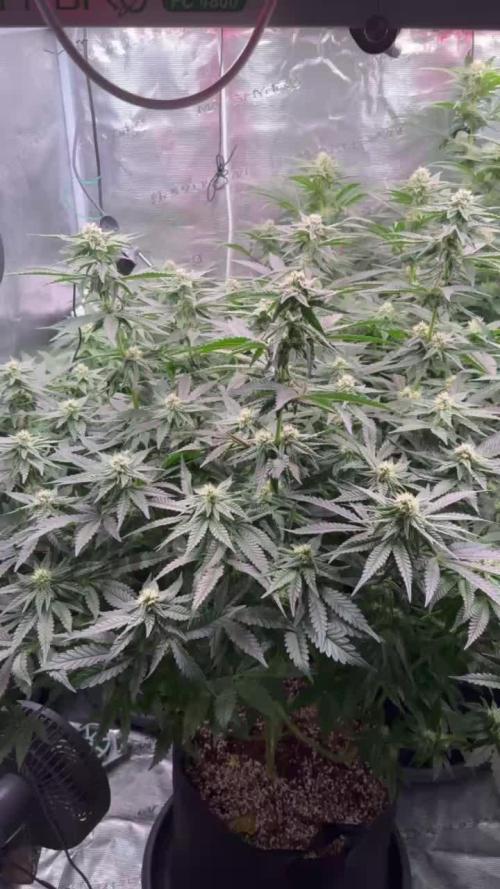
Topped this girl this week, she’s growing pretty good. Very nice looking plant to my eye.
Likes
11
Share


@Dreadnug
Follow
8 hours to start in a glass of water. Then transferred into paper towel. Will put into seed pod once tap root starts.
Future #1
Gorilla Glue #4 x Starfighter F2
Genetics: 50% Indica, 50% Sativa
Yield: 500g/m² • up to 700g per plant
Flowering time: 9-10 weeks
Harvest outdoors: begin of october
suitable for indoors and outdoors
Height: 110-130cm
THC: 37%
Aromas / flavors: pineapple, mango
Likes
37
Share

@MisterZ
Follow
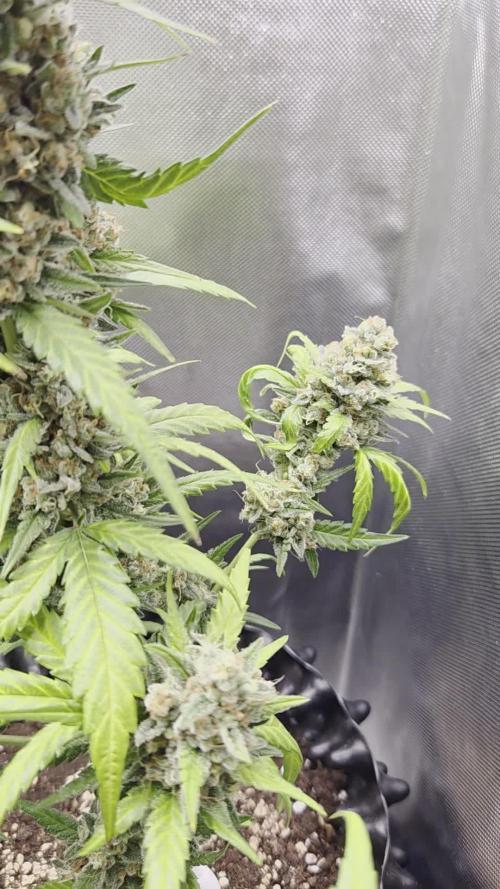
Bonjour les petits amis, voilà, c'est fini ! Cette petite plante a produit 110 g frais de belles têtes très denses. Pas besoin de lst ni aucune contrainte. Elle a formé un petit sapin magnifique. Il reste très peu de grandes feuilles. L'odeur est très douce. Je ne sais pas dire si la canicule a eu un effet sur son développement. Merci à tous pour vos likes et commentaires, à bientôt pour la dégustation de la crème au caramel, M.
Likes
28
Share


@Trickybis82
Follow
Will grow again for sure shout out to @420fastbuds for the strain what a all round great plant!!!!


Likes
4
Share

@grimm420
Follow
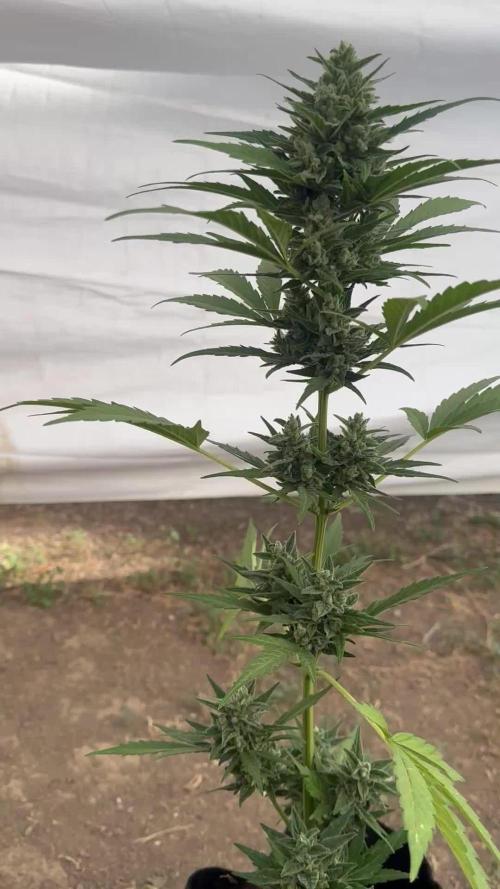
Small yield, I forget buds shrink a bit while drying even though I harvest often 😂 Overall though, beautiful strain! Next time I grow this I will lst, I loved the strong grape notes it gave during flower, a little bud fell in my trichomes! This thing is frosty as fuuck, the tiniest nugs ever but I think that was my fault, gotta reflect on what happened. I forsureee could’ve gone 2 or 3 weeks more but 11 weeks was good enough for me, almost all cloudy, few amber heads. Will update on weight and smoke report upon cure!
Dry weight stayed at 12g, dried in 5 days, 1 week curing and the sample nug came with a punch! Those trichomes are walking the talk! I feel a body and head buzz, but not couchlock-ish, could still be productive at ease. Imma cure longer and see how it smells like, dank with a slight pine smell, hoping to smell that grape note again!

Processing
Likes
20
Share


@No_Clout
Follow
Looking good this week gonna start to add some big bud coco next feed.
Likes
52
Share


@Ultraviolet
Follow
The cannabis strain Grape Guava can be a purple strain, depending on its specific phenotype and genetic makeup. While not all phenotypes of Grape Guava are purple, some variations, such as the Zatix Grape Guava, are noted for their striking purple appearance due to the genetic expression of anthocyanin pigments.
https://www.youtube.com/watch?v=cKdVmdoKJ5k
In a garden of green, Grape Guava gleams,
With its fruity aroma, enchanting dreams.
Clusters of grapes, guava's sweetness ignite,
A strain so divine, in purple and white.
Euphoria whispers, a lush fruity haze,
Grape Guava's embrace, a tranquil daze.
Off and away.@1400ppm. The increased CO2 allows plants to thrive at higher temperatures, which in turn necessitates higher humidity to maintain the ideal VPD for healthy growth and transpiration. 80F -5F = 75F LST with 70% RH = 0.72 kPa. Higher temperatures and humidity promote rapid growth, nutrient uptake, and photosynthesis while maintaining a lower stress level. Temperature influences the rate of enzymatic reactions involved in aerobic respiration. Enzymes, such as those involved in glycolysis, the Krebs cycle, and the electron transport chain, work most efficiently at an optimal temperature range. In low temperatures, enzymatic activity will slow down, thus reducing the rate of aerobic respiration. In high temperatures, enzymes can become denatured, thus impairing their function and stopping the process of aerobic respiration. Glucose is the primary fuel for aerobic respiration. The rate of aerobic respiration increases with the availability of glucose, as it is the starting point for glycolysis. If glucose levels are low, cells may rely on alternative energy sources such as fatty acids or amino acids , but these processes may yield less ATP or be less efficient. To determine this effect, carbon dioxide volume was measured (as carbon dioxide is an output of aerobic respiration)
18/6 with the 6 being IR. The near infrared (IR-a) borders around 700nm up to 1400nm @ photon par flux density of 1.8 instead of darkness, keeping temps overnight a neat 77F-80F.
Think of my tent as a lung. What goes in must come out. When the rate of air going out exceeds the amount of air coming in, it creates a negative pressure. Tent concaves (bends in). If set up correctly, your RH will begin to drop slowly to the desired level you set, and the extraction turns off when it reaches desired% RH. The plant, as it performs cellular respiration, will always be releasing more water into the air, so the RH% of the tent overnight will always increase, so long as oxidative phosphorylation is occurring. As soon as the RH% creeps back up to 55%, the extraction turns back on, over and over. This creates a strong pressure differential which will work wonders on your grow. Replicating high and low-pressure fronts in nature. Critical for oxygen diffusion at the critical time of peak cellular respiratory function..
Moisture will not transfer from a saturated atmosphere to another if that air is already at or above its saturation point, meaning the air can't hold any more water vapor. Once I understood that water is produced as a by product during cellular respiration, specifically at the very end of the electron transport chain (ETC) where electrons are finally transferred to molecular oxygen, the higher the RH of the air, the more resistance there is for more moisture to be added to that environment, and effects the ease with which it does so. But none of that water comes from the pot; it's pulled from the air. If you run high daytime RH, your medium/pot is 100% reliant on transpirational root pull to move water. ZERO evaporation happens across the atmosphere if the tent air has high RH%, the medium cannot release its water through evaporation. Once a canopy develops, light no longer slowly wicks and evaporates from the topsoil. The Soil-Plant-Atmosphere Continuum (SPAC) describes the continuous pathway and process of water movement, driven by a gradient in water potential, from the soil, through the plant's roots, stem, and leaves, and finally evaporating into the atmosphere through transpiration. There is evaporation, there is transpiration, and then there is evapotranspiration; Evapotranspiration (ET) is the combined total of two processes: evaporation (water lost directly from soil and surface water into the atmosphere) and transpiration (water released from plants to the atmosphere through their leaves). Evapotranspiration represents the total amount of water that moves from the medium into the air. There is no such thing as a medium with too much water, only a medium that retains too much for too long.
The water must always flow efficiently from one atmosphere(Medium) to another(Air) in a timely manner. Moisture is a critical factor for bacterial growth and decay. Dictating how long it's allowed to sit in any one location for any given period is a key preferred control. To ensure a net reduction in a bacterial population, the rate of removal (ET) must exceed the rate of bacterial growth (decay rate), which is often modeled as a growth rate for the specific bacterium under the given conditions. By optimizing daytime VPD, we also optimize conditions for bacterial growth to explode exponentially above 77°F.. If water is allowed to sit in a medium without an escape within a timeframe, nothing good will happen. IF High RH is maintained overnight as well as during the day, placing 100% of water movement at the behest of daytime transpiration, roots can only pull where they can reach, and if soil is compressed above a certain point, moisture will become trapped in a medium with no way of moving day or night. This will begin the countdown for decay to take hold. When water stagnates in a medium, it loses oxygen, creating anaerobic conditions that foster the growth of harmful microorganisms like bacteria and fungi, which can produce toxins and disease vectors.
Thigmomorphogenesis, the process by which plants respond to mechanical stimuli like touch by altering their growth and development, results in significant morphological changes to improve survival against mechanical perturbations. This complex response involves sensing touch and initiating physiological and genetic responses, leading to changes in form and structure over days or weeks. The process is triggered by physical forces such as wind, rain, or touch. Plants adapt to these stimuli by changing their shape and structure, which may include slower growth, thickened stems, or altered leaf development. Plants possess sophisticated mechanisms to detect even subtle mechanical stimuli and initiate responses. A variety of molecules, including calcium ions, jasmonates, ethylene, and nitric oxide, are involved in signaling these mechanical inputs. Touch can induce the expression of genes that encode proteins for calcium sensing, cell wall modification, and defense mechanisms. A plant exposed to constant wind may become shorter and sturdier. A plant that is touched frequently might grow more slowly to conserve energy and develop thicker cell walls. These changes increase a plant's resilience and ability to survive in harsh environments.
Let's get Thiggy with it.