


Likes
Comments
Share

@DogDoctorOfficial
Follow
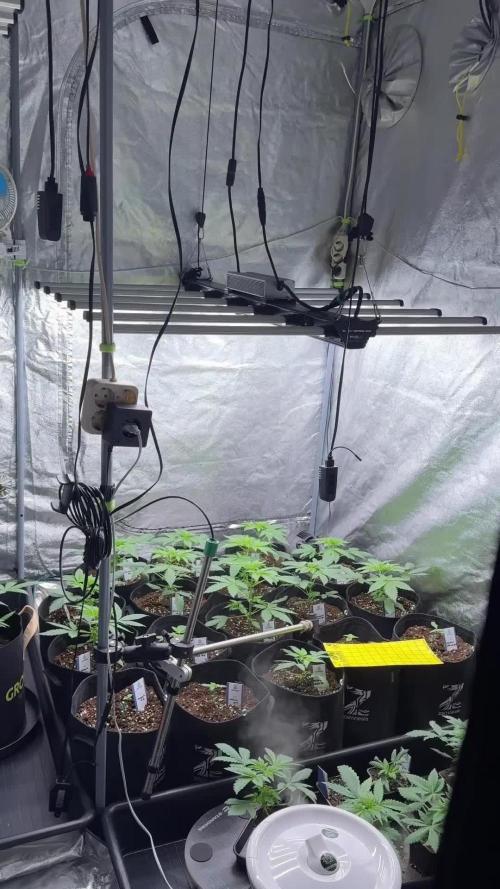
🌿 Week 3 – Transplant Week – Super Silver Haze (Zamnesia Seeds)
Grower: Dog Doctor
Strain: Super Silver Haze
Breeder: Zamnesia Seeds
Stage: Vegetative
Light: F.O.G. – Black Series 600W
Pots: 11L Zamnesia Fabric Pots
Environment: 8x8 Shared Tent
Watering: Hand Watering
CO₂: 632 ppm
Room Temp: 27°C
Humidity: 57.4%
Water Mix pH: 5.83
EC: 1.01
Water Temp: 18.5°C
⸻
🌱 The Transplant Ritual – Rooted in Respect
This week marked a milestone for our girls, the only transplant they’ll experience. From germination pods to their final homes: 11L fabric pots filled with a handcrafted super soil mix built to support them through the entire grow cycle.
And what a moment it was, roots white, strong, healthy, bursting with promise. We took our time, handling each one with care, giving them the space to breathe, stretch, and claim their territory.
⸻
🌾 Why Fabric Pots?
Fabric pots offer an environment where roots can breathe, not spiral. This air-pruning effect encourages a denser, more efficient root system, ideal for healthy nutrient uptake, pest resistance, and overall vigor. The 11L size gives them just enough space to thrive, while staying agile in the shared tent setup.
They also promote better drainage, stronger oxygenation, and more controlled wet/dry cycles, a perfect match for our hand-watering style and the super soil underneath.
⸻
💧 Soil Mix & Nutrient Support
Each pot was filled with a living substrate layered with Aptus Holland amendment, a clean, focused recipe:
🌱 Transplant Mix:
• Super Soil Base (custom blend)
• Aptus Mycor-Mix – inoculates roots with mycorrhizae
• Aptus Micro-Mix – provides beneficial bacteria and biological balance
• Aptus Substrate Buffer Powder – regulates pH and nutrient interactions
Feed Mix (per liter):
• Aptus Regulator – 0.15 ml
• Aptus CalMag Boost – 0.25 ml
• Aptus All-In-One Liquid – 1 ml
• Aptus Start Booster – 2 ml
A delicate, supportive formula designed for root establishment and pre-veg stability.
⸻
🌞 Light, Air, & Structure – The Gear in Action
The girls are basking under the F.O.G. Black Series 600W, delivering clean, full-spectrum power. The result? Compact internodal growth, vibrant greens, and a glow that’s impossible to ignore.
Airflow is key, and our current setup includes:
• 2x 6-inch Carbon-Filtered Exhausts:
• TrolMaster Aerofan 6”, controlled via the TrolMaster Hydro-X
• Spider Farmer 6”, managed by the GGS Controller
• 1x 6-inch Fresh Air Intake, carbon-filtered
Yes, it’s early for scent, but carbon filters also trap airborne contaminants, pollen, and dust. It’s about creating a pure, controlled biosphere where only what’s meant to be there… stays.
⸻
🔧 Ecosystem Evolution – TrolMaster Integration
The TrolMaster ecosystem is slowly syncing into place:
Lights, sensors, fans, cameras — all coordinated from the palm of our hand.
Some plants will shift into automated watering systems, while others, including the SSH for now, are still getting the hand treatment.
There’s magic in these moments. Feeling the medium. Listening to the plants.
Touch matters. 🌿
⸻
✨ SSH #1 & #2 – The Chosen Phenotypes
All three Super Silver Haze phenotypes have been stunning, but SSH #1 and #2 are standing out in structure, health, and spirit. These two are officially selected for the flowering stage.
We’re documenting their every move, even took them to the studio for portraits.
Yes, they deserved it.
And yes… they’ll probably be back under the lens next week before they get too big to leave the tent.
⸻
What to Expect Post-Transplant
Transplants can shock some plants, but not these ladies. Their roots were well-developed, and their new soil is welcoming.
What to expect:
• A short pause in above-ground growth as they settle in
• Explosive root expansion in the new soil
• Visible shoot growth by end of week
• No training just yet — we’ll let them tell us when they’re ready
We’re not rushing anything. This is about timing, rhythm, and letting nature sync with intention.
⸻
🎥 What’s Next?
Next week will reveal how well they’ve taken to their new homes.
We’ll start gentle training. Possibly first topping. Definitely more photos.
Stay tuned for:
• Full transplant video on YouTube
• Root shots, soil breakdown, and time-lapse updates
• Training techniques & early-stage shaping
⸻
📲 Join the Journey
You know where to find us — and if you don’t:
• GrowDiaries: https://growdiaries.com/grower/dogdoctorofficial
• Instagram: @DogDoctorOfficial
• YouTube: Dog Doctor
⸻
Tools of the Craft
Explore the gear powering this grow:
• Genetics: Zamnesia
• Nutrients: Aptus Holland
• Automation & Sensing: TrolMaster
• Lighting: Future of Grow
• Pots, soil & tech: Spider Farmer
• Storage/Curing: Grove Bags
⸻
With each week, we deepen the relationship between history and future, roots and reach, technology and touch.
This is Super Silver Haze.
She’s not just growing. She’s reclaiming her crown.
With gratitude to this amazing community — growers, sponsors, haters, lovers, and learners alike — we thank you.
Let’s continue this legendary journey.
💚 Growers love to all 💚
Dog Doctor
📲 Don’t forget to Subscribe and follow me on Instagram and YouTube @DogDoctorOfficial for exclusive content, real-time updates, and behind-the-scenes magic. We’ve got so much more coming, including transplanting and all the amazing techniques that go along with it. You won’t want to miss it.
• GrowDiaries Journal: https://growdiaries.com/grower/dogdoctorofficial
• Instagram: https://www.instagram.com/dogdoctorofficial/
• YouTube: https://www.youtube.com/@dogdoctorofficial
⸻
Explore the Gear that Powers My Grow
If you’re curious about the tech I’m using, check out these links:
• Genetics, gear, nutrients, and more – Zamnesia: https://www.zamnesia.com/
• Environmental control & automation – TrolMaster: https://www.trolmaster.eu/
• Advanced LED lighting – Future of Grow: https://www.futureofgrow.com/
• Root and growth nutrition – Aptus Holland: https://aptus-holland.com/
• Nutrient systems & boosters – Plagron: https://plagron.com/en/
• Soil & substrate excellence – PRO-MIX BX: https://www.pthorticulture.com/en-us/products/pro-mix-bx-mycorrhizae
• Curing and storage – Grove Bags: https://grovebags.com/
⸻
We’ve got much more coming as we move through the grow cycles. Trust me, you won’t want to miss the next steps, let’s push the boundaries of indoor horticulture together!
As always, this is shared for educational purposes, aiming to spread understanding and appreciation for this plant. Let’s celebrate it responsibly and continue to learn and grow together.
With true love comes happiness. Always believe in yourself, and always do things expecting nothing and with an open heart. Be a giver, and the universe will give back in ways you could never imagine.
💚 Growers love to all 💚

Likes
10
Share


@Sleestacker
Follow
My first Mephisto run, got a new tent, light, and humidifier from me for Xmas. I started 2 seeds in paper towel in a cd case wrapped in a tshirt in the basement. 1 popped 2 days later, the other split still hasn’t really popped so I stuck it in a plug in a solo cup. I got pissed one night after it didn’t pop when I was drinking, so I started the single Dutch Passion®️Banana Blaze seed I had, it popped and went into a rapid rooter in the new tent 1/5/22.
Mephisto Genetics®️Double grape 🍇 (which I’m calling Henrietta) went to her forever 3 gallon fabric pot with the bottom 1/3 FFOF, and the top 2/3 FFHF with a 2 liter greenhouse dome on 1/06/22. Welcome to this world lil lady!

Likes
120
Share


@OrganicNature420
Follow
Germination date 🌱 02/12/2021
Day 52 26/01/2022
Strain 🍁 Barneys Farm Biscotti Mintz
(Biscotti x Mintz)
THC% • 30% 🤤
💡 Mars Hydro FC-E6500
• Power draw 650W + 5%
• Max coverage 5 x 5
• LED 3978 pcs high quality chips
• Max Yield 2.5g / watt
• Noise level 0 DB
• Removable Driver & Light bars
• Daisy chain
• Fast cool system
https://marshydroled.co.uk/ 🇬🇧
PROMO CODE • (organicnature420) DISCOUNT
https://www.mars-hydro.com/ 🇺🇲
PROMO CODE • (ORG420) DISCOUNT 👍🏻
⛺ Mars Hydro 150 x 150 x 200cm
📤📥 AC infinity 6inch
💧 10lt dehumidifier
❄️ 3.1kw air con system
💉 Nutrients GreenBuzzLiquids 🇩🇪
⭐⭐⭐⭐⭐
Organic Grow Liquid • 1-4ml until 2wk flower
Organic Bloom Liquid • 2-4ml flower stage
Organic More PK • 2-4ml +wk3 of flower
Organic Calmag • 1-2ml/lt whole grow
Fast Plants Spray • first 2wks at night lights off
More Roots • 2-5ml veg +2wks flower
Fast Buds • 5ml 12days before flower until wk1
Humic Acid Plus • 2-5ml whole grow
Growzyme • 2-5ml whole grow
Big Fruits • 2-5ml flower stage
Clean Fruits • 5ml flush 1wk
Ph powder
Root Gel
Living Organics
https://greenbuzzliquids.com/
PROMO CODE • organicnature420 15% off ✌️🏼
🥥 Growing Media • Coco Coir
Notes 📝
Another week another dolla! All good in the hood 🌱💚
Discount codes in bio for Mars and GreenBuzzLiquids 👍🏻 game changers 🏆

Likes
2
Share

@Riboh
Follow
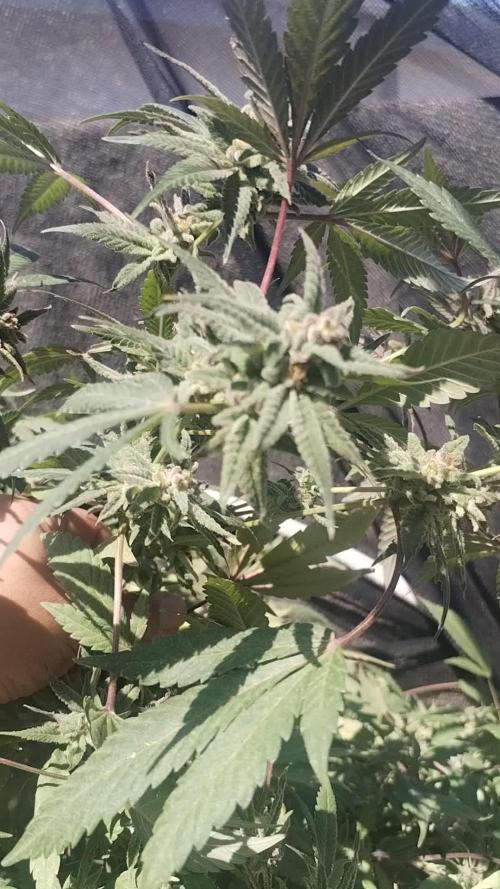
Week 8 and the Tart Pops girl is looking frosty and fragrant — sweet candy terps with a tangy twist filling the tent. Buds have packed on some serious weight over the past two weeks, with dense colas coated in a thick layer of sticky trichomes. The colors are starting to show hints of purple and pink under the sunlight, giving them that “dessert shelf” look.
Pistils are about 70–80% turned, and trichomes are mostly cloudy with a few clear still hanging around. Feedings are being tapered down, and the plants are cruising into their final phase before the flush begins.
Estimated harvest window Day 63–70 (Week 9–10) depending on trichome maturity. A few more days to let those terps peak and resin fully ripen before the chop. The Tart Pops are almost ready to live up to her name — sweet, sticky, and seriously tempting.

Likes
3
Share


@BioGrowBayer
Follow
In der zweiten Blütewoche läuft alles ohne Probleme. Die Pflanzen zeigen weiterhin gesundes Wachstum und reagieren sehr gut auf die Bedingungen. Wir haben langsam begonnen, die Nährstoffzufuhr auf Blüte-Dünger umzustellen, um die Entwicklung optimal zu unterstützen. Gleichzeitig wurde die Lichtleistung schrittweise von 50 % auf 75 % erhöht, um den Pflanzen mehr Energie für die Blüte zu geben.
Zudem wurde eine leichte Entlaubung durchgeführt, um die Luftzirkulation zu verbessern und den Fokus der Pflanze auf die Blütenbildung zu lenken. Alles in allem verläuft die zweite Woche der Blütephase sehr vielversprechend.
Der Stretch ist extrem
Likes
9
Share

@PSK23
Follow
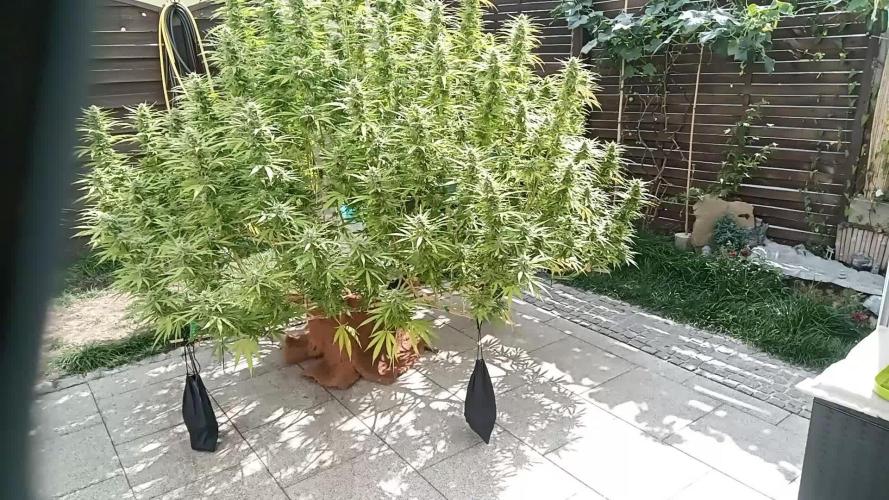
The plant is around day 32 of flowering, though I start counting from one week after it actually began. She’s currently measuring nearly 2.4 meters wide and 1.8 meters tall, excluding the pot
Likes
121
Share


@ctm_dzagi
Follow
Ten weeks passed. Step by step coming for final weight. Flush value show it's time to move ppm to 500. Try some today in dynovap, it's nice, cool body effect with clear mind. Find some banana flavor.

Processing
Likes
2
Share


@MidwestBudz
Follow
Off to another great start, with feeding can’t wait to see what adventures these girls will test my learning knowledge in this hobby I’m enjoying!!


Processing
Likes
81
Share


@LockDownGrow
Follow
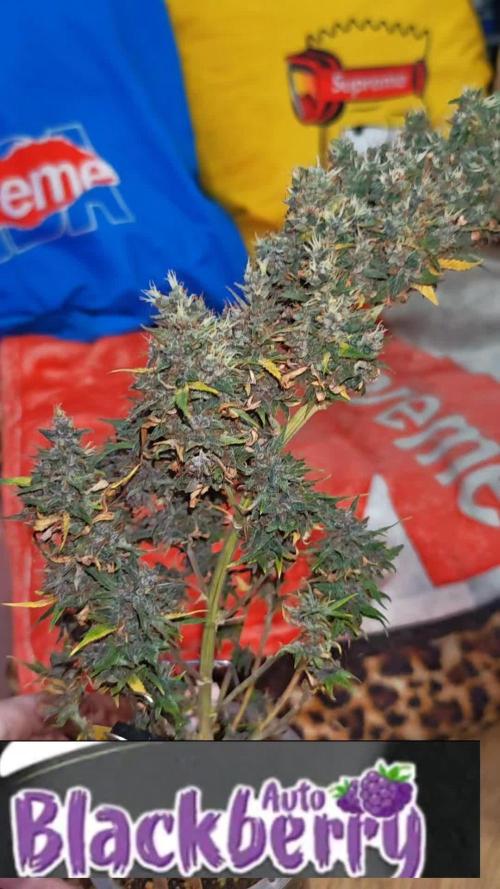
ok so everything has gone fantastic , no nutrient burns at all , and have been slowly creeping up the base nutrients , i have stopped the cal mag and now adding house and gardens bud XL at full strength these girls are now in full swing of flower the Cal mag has made absolutely no difference too the yellow colour of this blackberry so I suspect it is just how this strain is as meany diary's on here of the same strain are also on the yellow side , but it's certainly not affecting the speed of the growth of her , i also bought a new ph stick this week ,
i have found when PHing the feed bucket that its best too have air stones in the bucket , add all nuts and then ph but do not use the feed that day as if you check the next day the ph is off again so i left it 24 hours after i add more ph down , and it seems too make the measurements alot easier and stable , i have bent down the main stems " without damaging them onto my netting too A keep the canopy all the same high so my lighting is covering all plants at the same distance and also it allowed the side stems too reach up too ,
i also was sponsored another new led light by kingbo this week so have added another 600watt led too the grow , so now have two 600's and one 900watt , and temps are still fine sitting at 24c lights on and 19-20 off , so am pleased with that ,
I accidentally bend the main stem last week while I was putting them under the netting too try and control the stretch , luckily it did not crack or snap the branch at all and she didn't droop on that branch at all and has healed already , it may or may not be related but as soon as it happened the side branches thickened up too the thickness of the main stem , this plant has over taken the rest in size even being a full week too 15 days younger , it's certainly not ideal but it really does not appear too have slowed down the growth and may well go in my favour , this lady really did stretch out from week 4 into 5 and is showing no sign of slowing down , her side branches are very thick almost as thick as the main stem , her leaf production was minimal and I have only had too remove very few too expose the bud sites , the yellowing seems too be recovering now and most of the plant is green now ,
Update ,
Now gone a lush green colour instead of that horrible yellow , and the buds have already started too purple , she has also stepped up a gear with her nutrient intake almost drinking 6 pints since Thursday ,
She seems too have slowed down on the stretch and has so meany bud site scattered all over her with as the diary name suggests black roses everywhere , and note too any seed banks reading this if there is not a purple stain out there already called black rose now is your chance lol and Iwant a sample pack first kinda like the tester :)
Now defoliation , as you can see they really didn't seem too mind at all being stripped and within a couple of days they had all replenished the lost leaves and even this week olive had to pull the odd few off as they have grown out ,
Method , well all info now is simple ,
Anything I cannot tuck under something that is blocking a bid site with shade I remove too middle or bottom ,
Everything else stays , I just stand above the plant and pull off anything covering the sites , it's really as simple as that , I see some strip them until there is nothing left on but a few sugar leaves , but for me didn't like the look of the plants , for me the growing process is just as much fun as the fruits ,

Likes
26
Share


@DisTentAint4Campin
Follow
I can tell I'm going to have to scrog these girls when it's time to flip esp the cherry paloma they seem like stretchers

Likes
Comments
Share


@hinterhofgrower
Follow
🌱: topdressed her with Dolmite Lime on day 16
💧 : 4l
💡 : Dli: 35 mol/m²/d
🤔: Back from mountain biking on day 16, she survived my absence well, but looks a bit yellowish.
After my experience with the Amnesia Haze https://growdiaries.com/diaries/256489-fast-buds-amnesia-haze-auto-grow-journal-by-hinterhofgrower#weeks/1485085, I'm adding some Dolomite Lime to the soil as a preventative measure to avoid the CalMag problem.
I watered the dolomite lime into the soil with 2 liters of 2ml/liter Supermix, also to give the upper roots more NPK. What she can draw from the reservoir through capillary action doesn't seem to be enough yet.
As an Indica dominant, I didn't top her but removed the bottom two branches and try to keep the central branch under control by removing leaves. In total, I now have 5 main branches.
Likes
43
Share


@FreezingIslandBoi
Follow
I have been slowly defoliation as they were getting too bushy. They have been gaining size almost everyday.
I increased feed to 1200ppm for Tangerine Dream and Bad Azz kush. 1000ppm max for Abusive OG as I started seeing some nutrient burn.
Tangerine dream and Bad Azz kush is nitrogen deficient at the bottom once I exposed them to light. I will increase nitrogen feed and stop until they turn green. They don’t seem to nutrient burn yet and I am having more deficiencies mainly nitrogen and phosphorus. I have no clue what the buds are going to be like since this is my 2nd grow. My first grow was sadden with nitrogen toxicity and I was away for service calls for too many times. The landlord was selling the apartment and I had to hide it multiple time which messed with the atmosphere constantly. I will look in my old phone and try uploading it here. Now I am investing to see how it goes. Lots of growers here just delivers godlike buds and I wish I could hit y’all buds 😙💨💨 ✌️🏽
Week ending:
Being at 1200ppm and 1000ppm respectively, I noticed some tip burn. I went down to 1000ppm and 900ppm for TD, BAK and Abusive OG. Abusive OG is still stretching and I had to bend her down. She is 1 week late in flowering. I defoliated Tangerine Dream end of week 2, BAK throughout week 3 and Abusive OG end of week 3.
Likes
2
Share


@Budking420
Follow
She was a little dried out before this update I gotta admit. So shes a little upset but otherwise looking really good. Shes drinking a lot right now! Check back next week for more

Likes
16
Share


@Chocolopeison
Follow
Comenzando semana 7 de estás nenas, aun las mantengo en 1L y hoy le hicimos su primera defoliación masiva, ahora a esperar que se recuperen para hacerle trasplante a maceta de 3,5L.
La verdad no eh tenido muchos problema, todo sigue igual siguiendo el mismo orden de nutrientes, bacterias y hongos benéficos una vez por semana, enzimas ahora se las estoy dando día por medio o cada 3 día.
Ya logramos sacar los primeros clones de la watermelon, punch y cookie y la thc bomb. la dss aun la tenemos tirando fuerza que no va mal pero no tenia espacio para más clones.
Saludos


Likes
22
Share


@RDWCGrowing
Follow
1/11/2024 Vegetation Week 1 Day 1- I have a root almost in the water.. Yay!! Top feeding is almost done. she is looking a little sad as I work the transition Top feeding but once the roots are fully in the water she will start to take off. Ensured my PPFD is set between 250-300 it is set to: 258
1/12/2024 Vegetation Week 1 Day 2- I have a root in the water.... NO TOP FEED TODAY SIR!!! now that a root is touching the water and she looks stable, I am not going to topfeed, I will see how she looks tomorrow and as long as everything looks good I am going to go ahead and do a change and week 1 fill on Nutes.. I know it is a couple of days in but the same Nutes go through Week 2 and get changed at Week 3 So I should be good to go.. I will just ensure I fill to root touching the water when I change tomorrow.
1/13/2024 Vegetation Week 1 Day 3- Water Change Day!!
I added 36 Gallons of Water to the system:
Silica= .5mil/gal= 18mil
CalMag= .75mil/gal = 27mil
FloraMicro=3.0mil/gal = 108mil
FloraGro=2.0mil/gal = 72mil
FloraBloom= 2.0mil/gal = 72mil
PH DOWN= 30mil
Very important thing with this system is to now wait the 24 hours for the system to adjust.. Do not make any further adjustments to your PH up or Down for 24 hours to allow time for the system to balance.
1/14/2024 Vegetation Week 1 Day 4- Today I just adjusted the PH to ensure that it was right at 6.0
1/15/2024 Vegetation Week 1 Day 5- Today I Cleaned up the lower damaged leaves from the transition from top feeding to roots in the water. She looks good today.
1/16/2024 Vegetation Week 1 Day 6- Today I just took a picture of the beautiful lady for Log. Other than that just normal day to day operations, check the pH, check the Humidifiers and fill as necessary, check level of water in the Res. Everything looks great. onto Tomorrow!!
1/17/2024 Vegetation Week 1 Day 7- Today I filled the humidifers, checked the PH and just let her grow.. Grow baby Grow.....
Likes
33
Share


Likes
11
Share


@russrahl
Follow
Had a cold, slow growing week this week. Night temps dropped down pretty low a few nights before I noticed, had a cold snap and I recently took my heating vent out of the tent, so I rerouted one of my AC exhausts trough this tent to heat it up again. I also had a bit to much nitrogen in my water mixture so this also slowed them down a bit, I diluted the nutrients in half but removing half of the water and adding strait water. There coming around now a few days later. Gonna be moving them to the big 4’x8’ tent soon(week or so prob till the tent is empty) with the RDWC 5gal bucket system and 1000w HPS for flowering. Gonna let them grow up a bit still before be start there LST, don’t wanna stress them yet after last week and there still staying low and bushy, not quite long enough shouts to pull over yet. Well that’s it for this week, cheers💨 #trusttheplant🌱


Likes
17
Share


@Ashbash
Follow
So just waiting for the soil to dry out on this one. Will post a harvest when it happens. Surprised i havent pulled it out yet TBH haha.
Accidentally gave water with lots of nutes..........watered the wrong plant. So it got overwatered and overfed. But as its organic im not too concerned. Might be a bit rough to smoke but itll be mine!!
