


Likes
Comments
Share

@blaze454
Follow
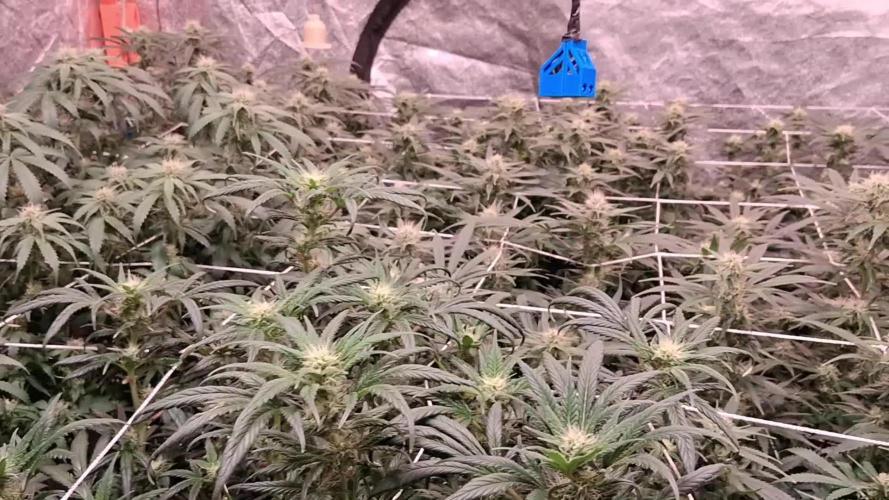
Flowering nicely, starting to stack a little already.
Did a 50% defoliation and removal today. going to remove some more popcorns and climate blockers tommorow.
There are allot of tops. I have to train myself on training plants better to dial in how many cola tops i want and get them at the same height.
Not a strong smell coming off but when you smeel the fingers , Ooohhh its so smooth ans sweet.
This is looking like its going to be a big year for the tent.
I am liking the Canna nutes.
Delay after delay on dripper setup i am now puttin three more valves in for flushing off flush water reservoir, just waiting for parts and assembly.
Home Assistant is fantastic at controlling entire setup!
Lets roll with it.
Likes
76
Share


@DogDoctorOfficial
Follow
🌸 Week 9 – Letting Go to Shine Brighter 🌸
Welcome to Week 9 of flower in the Eternity Grow Cup, a milestone moment where we shift gears and let the plants begin their final expression. This is the week we cut all nutrients — a bold move made with care and trust — leaving only System Clean to keep our lines pristine in the Autopot system. No harsh flushes, no dry backs, just gentle guidance toward the finish line.
We didn’t wait for the reservoir to hit empty. Instead, we added pure water early, letting the system blend into a soft EC of 0.45, with a reservoir temperature of 21.9°C and a pH tuned to 6.3 — perfect for this phase. In the soil, EC sits at 0.95, giving the plants enough to sip on while encouraging them to cannibalize their stored energy, pushing out their richest colors, aromas, and trichome production.
And what a show they’re putting on.
The colors in the room are breathtaking: purples, oranges, yellows, deep greens — a painter’s palette. But above all, there’s this serene dark fade taking over, a sign of maturity and final expression. Trichome production is off the charts, with Runtz #1 still dominating the aroma game — sweet, powerful, unforgettable — while Runtz #4 emerges as the frost queen, covered head to toe in shimmering resin.
The environment is dialed in:
• Humidity at 52%
• Temperature holding at 28°C
• PPFD reduced to 683 to ease the plants into ripening
• CO₂ around 1000 ppm for that final metabolic push
We’re focusing now on presence and precision — ensuring airflow, temperatures, and humidity are in harmony. Every decision from here is about preservation, encouragement, and letting nature take the lead.
This week’s update includes a special series of photos taken through the mask lens — showing the garden from my eyes, from tops to bottoms, sides to centers, trichomes to fade tones. It’s a personal view I’m grateful to share.
The structure of the grow has become something of a symbol: four phenos in each corner, one in the center — creating an X from above, a cosmic mark that feels intentional, aligned, and just… right. They’ve bushed out so beautifully that this symmetry, almost a message from the plants themselves, is impossible to ignore.
And from the top down to the lowest buds, there’s no weak link. No “B-buds” here — they’ve become A-tier expressions, worthy of jars and not just extracts. The synergy between Plagron, Aptus Holland, and the TrolMaster & ThinkGrow lighting ecosystem is performing at an elite level — tuning spectrum, dialing environment, and nurturing these compact queens into full form.
This is a week of wonder, of silence before the final bloom. A week of gratitude.
⸻
🌟 With Grower’s Love, I want to thank:
• Our incredible community — lovers, haters, dreamers, doers
• The sponsors who make this possible
• And every grower competing in this cup — you are the fire that keeps this space glowing. I’m humbled to grow alongside you.
🎥 Full 4K episodes now on YouTube — come join us there for the full experience
📸 Daily beauty and behind-the-scenes on Instagram
Let’s celebrate the craft. Let’s finish strong.
Good luck to all. Eternity is in bloom.
Genetics - Runtz https://www.zamnesia.com/6000-zamnesia-seeds-runtz-feminized.html
Nutrients - Plagron https://plagron.com/en/hobby
- Aptus Holland https://aptus-holland.com/
Controls - Trol Master https://www.trolmaster.eu/
LED - https://www.futureofgrow.com/en
LED - https://www.thinkgrowled.com
Soil - https://www.promixgardening.com/en
Germination - Cannakan https://cannakan.com/?srsltid=AfmBOopXr-inLXajXu3QFgKXCXXos4F1oEvScjMKIB5MR5dk8-GJ-F49
DOGDOCTOR 15% off
Smoking Papers - https://ziggioriginal.com/
Terpene saver - https://grovebags.com/
As always thank you all for stopping by, for the love and for it all , this journey of mine wold just not be the same without you guys, the love and support is very much appreciloved and i fell honored with you all in my life
With true love comes happiness Always believe in your self and always do things expecting nothing and with an open heart , be a giver and the universe will give back to you in ways you could not even imagine so
As always, this is shared for educational purposes, aiming to spread understanding and appreciation for this plant. The journey with nature is one of discovery, creativity, and respect. Let’s celebrate it responsibly and continue to learn and grow together!
Growers Love To you All 💚
#EternityGrowCup #RuntzHunt #GrowersLove #CannabisCommunity #AptusHolland #ProMixSoil #TrolMaster #Zamnesia #Plagron #ZiggiPapers #Grovebags

Processing
Likes
6
Share


Likes
9
Share


@TheGreenGroomer
Follow
Guys, I did it! I managed to get to the end of my grow with no problems and a whopping dry weight of 189 grams (6.6 oz). I am over the moon with the outcome, especially considering this was my first time. The buds have been curing for 12 days now, breaking down extra chlorophyll for a smoother smoke.
The aromas are subtle when putting your nose in the jars—nothing crazy—but when you break into a bud, it smells absolutely amazing. It has an aroma almost like Stardog, with a diesel, piney, and gassy scent.
As for the taste, the buds are just as impressive! They taste exactly how they smell: diesel, piney, and gassy, much like a Stardog. The effect is incredible; it numbed my whole body and put me in a couch lock state. This strain is probably not the best for daytime smoking due to its potent, body-numbing effect.
I can't wait to continue this journey with my next grow!

Likes
29
Share

@BudBrewerz
Follow
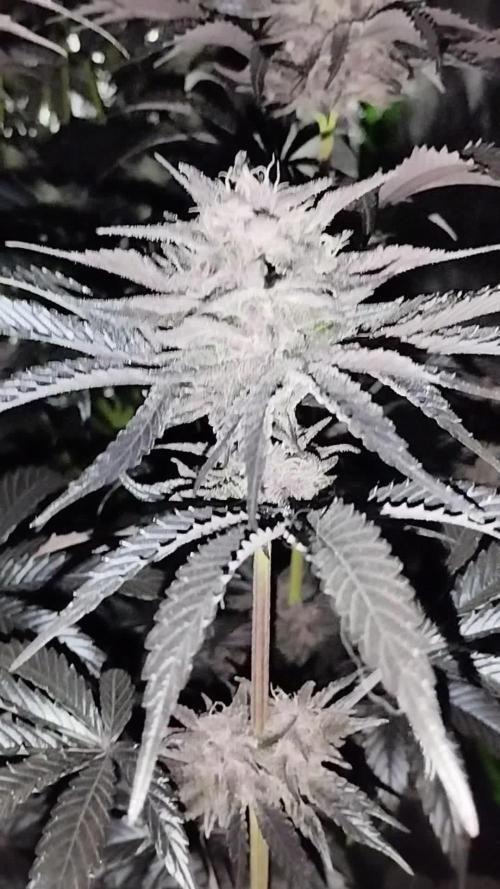
Tis Fruit Tartare has grown on some pretty buds by now and waaaaauw the colour she's got is amazing. The purple has gotten even more darker and intense , she's a real beauty. I'm guessing she has got another two to three weeks to go, so Im hoping for her buds to get a little thicker and denser before she goes.

Likes
35
Share


@MadeInGermany
Follow
Info:
Unfortunately, I had to find out that my account is used for fake pages in social media.
I am only active here on growdiaries.
I am not on facebook instagram twitter etc All accounts except this one are fake.
Flower Day 77
since the time
change to 12 / 12h.
Hey everyone 😀.
Today the time had finally come and the lady was harvested :-).
before that, as always, she came in the dark for 48 hours.
After harvesting, the buds immediately went into the drying box at 62%.
It stays there for 8-12 days before it goes into the jars to ferment with 62% boveda packs :-).
Of course there is one last update after the fermentation.
Until then, I wish you a lot of fun and all the best ☺️
You can buy this Strain at :
https://www.zamnesia.com/de/3271-zamnesia-seeds-blue-dream-feminisiert.html
Type:
Blue Dream
☝️🏼
Genetics:
Blueberry x Haze
20% Indica / 80% Sativa
👍
Vega lamp:
2 x Todogrow Led
Quantum Board 100 W
💡
Bloom Lamp :
2 x Todogrow Led
Cxb 3590 COB 3500 K 205W
💡💡☝️🏼
Soil :
Canna Coco Professional +
☝️🏼
Fertilizer:
Green House Powder Feeding
☝️🏼🌱
Water:
Osmosis water mixed with normal water (24 hours stale that the chlorine evaporates) to 0.2 EC. Add Cal / Mag to 0.4 Ec Ph with Organic Ph - to 5.5 - 5.8 .
Likes
13
Share


@Livinit2019
Follow
Can't believe we're at the start week 5 already. This is such a beautiful process.
Things are looking good - I started defoliation on all the ants this week. I figure, the little one isn't getting much bigger, the big one is so bushy the light is having trouble getting thru even with LST, and the bag seed seems to be a photoperiod plant so I have all the veg time I need to recover on that one.
Update: The bigger girl started flowering on day 32!
Let me know what y'all think!

Likes
23
Share


@Firepharmer
Follow
Flushed and chopped down!!
Vert impressed with the Futur vert flora max series led’s killer quality killer yield


Likes
37
Share


@Wrongholn519
Follow
The Blackberry auto by Fastbuds has been a thrilling plant to grow. Starting off as a tri-cotyledon seedling, she's been a rush from the start.
When she came out mutated I didn't even know if I wanted to keep her; I asked the growdiaries.com community for help. After speaking with a few experts I decided to keep it and see what would happen.. Since then she has developed thick healthy stocks stalks and dark leaves with ripe purple flowers bursting out between them add every node.
Using a home mix super soil with Promis Organic as the base, I decided to feed compost extracts laced with Golden Tree & CalMag which helped kick this girl into over drive and push out these dense sticky buds.
I'm expecting around 3 ounces from her and it's day 73 since she popped out of the soil. She has a sweet aroma and is completely covered in trichomes.
Drying/ Curing process:
- she will be hung upside down by the main stock until she is dry (8-12 days)
- My humidity will be set to 55 - 60 % and my temps will range from 65-70 degrees F
- Will store in Glas Mason jars with 2-way Boveda humidty packs. These are a lifesaver for new growers. They will keep the humidity in the jar at 62%.
- after 2 weeks I'll throw down a mad sesh
Thanks to everyone who offered me tips and help when I needed it.
Thanks Fastbuds for all you do for the community, including growdiaries.com


Likes
4
Share


Likes
91
Share


@MrCOCO
Follow
On day 15, I defoliated the girls. The girls are growing up like crazy, they have already doubled their height. Everything is going well, I'll probably have to do supercroping in the following days ...

Likes
19
Share


@GoldenWeedGrower
Follow
Legend
Timestamp: 📅
Measures: 🛠️
Water: 🌊
Actions: 💼
Thoughts: 🧠
Events: 🚀
________________________________
📅 D57/F18 - 19/10/23
🛠️ EC 1.2 (stable) pH 6.0 (rising) --> EC 1.1 pH 6.3
🌊 Added water and nutes (B52, Big Bud and Bud Candy, only little bit of Bloom A and B)
💼 Little defolation and some adjustment on the little one. As I saw some light stress symptom I changed the light schedule to 12-12 but with red lights always on.
🧠 I can't wait to see the buds of Little Marlene reaching out Big Marlene
🚀 Little Marlene is now quickly blooming. Some light burn symptoms on little Marlene
________________________________
📅 D58/F19 - 20/10/23
🛠️ EC 1.2 (stable) pH 5.7 (falling)
🌊 No water neighter nutes added
💼 Sprayed Spinosad
🧠
🚀
________________________________
📅 D59/F20 - 21/10/23
🛠️ EC 1.4 (rising) pH 5.4 (falling) --> EC 1.2 pH 5.5
🌊 Added 5L water, nutes Bloom A - B and calmag
💼
🧠
🚀Little Marlene leaves are wilting down
________________________________
📅 D60/F21 - 22/10/23
🛠️ EC 1.3 (rising) pH 5.3 (falling) --> EC 1.2 pH 5.4
🌊 Added 2L water and nutes: Calmag, Bud Candy, Big Buds
💼 Made a big defolation and sprayed Spinosad.
🧠 I really hope Spinosad will solve the situation here.
🚀
_____________________________
📅 D61/F22 - 23/10/23
🛠️ EC 1.3 (rising) pH 5.5 (stable) --> EC 1.2 pH 5.5
🌊 Added 4L water and nutes: Calmag, Rhino Skin, Bloom A, B
💼 Little defolation on the big one.
🧠 Never again two girls germinated in a such big time difference (3 weeks)
🚀
_____________________________
📅 D62/F23 - 24/10/23
🛠️ @17.00 EC 1.3 (rising) pH 5.1 (falling) @23.30 EC 1.4 (rising) pH 5.2 (stable) --> EC 1.2 pH 5.2
🌊 Added 2 L of water, calmag, big bud and B52
💼 Little defolation on the big one.
🧠
🚀
_____________________________
📅 D63/F24 - 25/10/23
🛠️ EC 1.3 (rising) pH 4.7 (falling) --> (by setup) --> EC 1.2 pH 5.5 . Check in the night EC: 1.13 (stable) pH 6.2 (rising)
🌊 RES Changed 💦💦💦 -> Added calmag, Bloom A-B, Bud Candy, Big Bud and B52
💼
🧠 Quite strange, but good, pH goes up in that way
🚀

Likes
6
Share


@LoganatorDude
Follow
Well, I suppose it was my ambition that influenced all the soil amendments that I added. Just a little too much it turns out. So I figured the only solution to prevent the plant from sitting in all that strong stuff was to transplant into a bigger pot. Her roots have developed fast and she had created a new root ball with the 2.3 L pot. So I ended up going with the big 4 gallon. I hope this will correct the problem. I also added charcoal to the new media to help balance out the concentrations. So for now I will just be watering with plain water or maybe a CalMag water here or there

Likes
10
Share


@AsNoriu
Follow
Day 29. Best from all but very sensitive to nitrogen, pot is still full and as she takes over all of it , she constantly have few overdose issues. Very responsive to leaf tucking , stem twisting, forms nice canopy, will be biggest producer no doubts in this run. Will try to bend main stem with some LST in few days.
Mars TS1000 - Light is solid and does job. For last week output is on max . Still rotate a lot, but am happy with development. I miss more good wind inside, but i live in shared house ;)))))))))))) even really silent air system is still loud on desired speeds ...
Hope next week ill send her to flower. Will top up with Worm Castings and Mycorrhizae during training in few days, when girls will be watered next time. Rhythm is good, every 3 days pots are light. 1.5 liters to each went straight in after photo shoot.
Day 31. Applied BioBizz Leaf Coat when lights went off. Loads of training was made today too.
Day 33. Now girls are trained daily. Top shoot twisting, leaf tucking, rotation around axis , changing positions inside of tent and so on. Always wash hands before any training, it is a must.
Still havent made mind, scrog or lst ... Think tomorrow will be watering day and i have to decide which way to go , i am fliping them at next watering 100%, otherwise again rush to harvest before late spring holidays ...
Happy Growing !!!

Likes
21
Share


@WEEDOOR
Follow
All the things going well. I think that the plant is near the end of is life, faster than I expected. I will be happy to hear yours opinions.
Likes
2
Share


@Easygrower
Follow
Hello growers day 22 with the hulkberry auto what can I say but wow this girl is really taking off the stem and branching so thick and strong very impressive in 22 days I see her first pistols yesterday so iv added biobizz top max / bio heaven 2ml of each to the mix the 4 other girls I have in 6.5l it’s are doing well 2 of them are just like the 1 in the 11l pot doing very well but 2 are abit slower all in all a very good week iv also been trimming the lower big fan leafs through out the week just to help them breathe thay are growing some big ones so snip them off that’s all for this week be safe and happy growing

Likes
24
Share


@Newbiegrower420
Follow
UPDATE: Day 1 of week 14- Thursday 19th Nov!!!!
Woop woop! We’re getting close, my magnifying lense arrived and I’ve got my first real good look at the trichomes.. All looking fairly cloudy with about 10-15% ambers coming through.
So as we’re super close now I’ve now started flushing. Not doing a run off as have been using Biobizz soil & Nutes. First flush is done and girls are looking happy. One lady seems to have really heavy colas as she’s struggling to stand up straight. So I’ve staked her to keep her more upright. Think she may bring the best yield of all four girls as it stands so far.
Final couple of weeks now, I can’t believe I’ve made it this far and really can’t wait to try my first home grown bud🍃
UPDATE: Day 2 of week 14 - Friday 20th Nov:
Had to water them early as the girls were very dry after their first flush.. I on average water them every 48 hrs, but they were ready after 36. Already noticing some slight discolouration on the leaves 🍁... Glad I didn’t jump the gun and chop them this week after seeing some amber trichomes..
A bit more LST as they had stretched a little. I’m short on lamp to plant distance but noticed what looked like a little leaf burn on one of the tallest nugs. So did what I could to bring the height of them down just a little 👌
UPDATE: Day 4 of week 14 - Sun 22nd Nov:
As soon as the lights went on today, more water seemed required at around 36hrs since the last flush. The girls seem to be loving it!
Buds do seem to be fattening up a little more each day and I think one girl is slight more ahead than the others as she has mostly orange pistils compared to the other three..
Still need to see more amber trichomes on all four ladies before they’re ready!
UPDATE: Day 5 of week 14 - Monday 23rd Nov:
Small amount of LST to keep the girls as even as poss.. Defo seeing some discolouration in the fan leaves now.. All but one of the four girls have nearly completely orange pistils now which are folding back in to the buds. But Trichomes need to be a little more amber before they’re ready.. The fourth lady however is slightly behind with less orange pistils, some white ones still to turn orange and trichomes are still a mix of milky and clear on the lower buds. When I topped this one it didn’t work as well as the others so she has one really massive cola and all the others are much smaller in comparison to the other three plants..
I think we’ve got a week to 10 days left roughly till harvest.
UPDATE: Day 6 of week 14 - Tuesday 24th Nov:
Another water flush again today.. All seems well, lower small buds still need a few more amber trichomes I think.. But gonna post a question on here to make sure.. Don’t wanna get this wrong.
Sooooooo close now and I’ll be seeing 🤩🤩🤩

Likes
38
Share


@Aedaone
Follow
I start this in a "safe zone" of plain potting mix. It takes a little over a week for them to get into the pre mixed nutes. They should jump this week when they do. I got tired of waiting and watered them with 20ml liquid kelp, 20ml liquid fish, and 5ml molasses per gallon of ph 6 water. Roughly 2-1-1 to give them a boost on day 2 week 2. This week was a success. Pest have been controlled and the plants made progress. One plant gg4 #3 is behind the others. There's a tree top that throws shade on it for about 1.5 hours longer than the other two in the morning. This will be fixed for week 3. It's warmed up considerably with the day time temp reaching 90 plus f for day 6 and 7 of this week. This should really speed up the vegative growth.
Likes
9
Share


@nerdz
Follow
36 to 42 Thursday
We made it through the big week. Plants are happy but I may again have to defol them. They don't appear to be massive producers but frost is pretty intense and shape/colors look cool.
I'll say maybe 600g for the 3 plants.
Cut out Magnifical, lowered feed strength.
1000ppm @ 6
25c/52rh
Lights 100% @ 10-12"
