Likes
Comments
Share


@Salgeezi
Follow
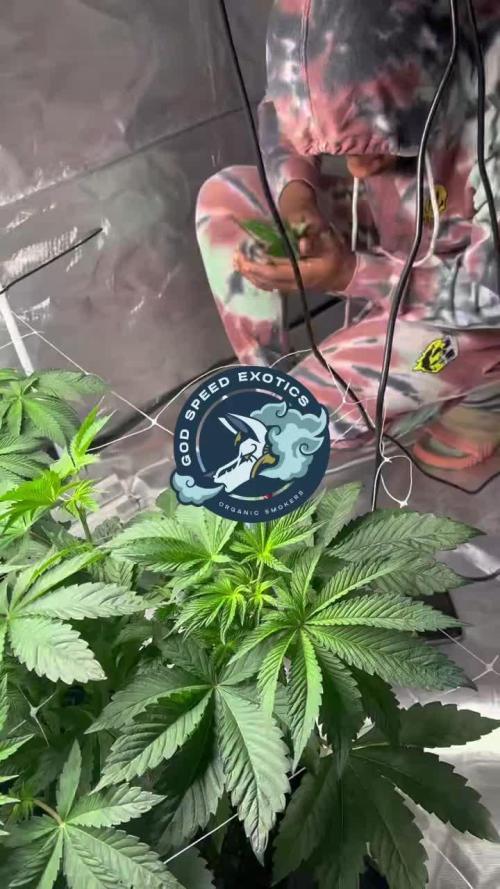
Well going good so far. Kinda thought I had zinc lockout due to adding too much ph down (phosphorous) to the res rising every other day to 6.5ish. I have a bubbler and a water pump running in there. Gave them a flush of 2l each PhD water with calmag. Looking a bit better hopefully fixes soon


Likes
45
Share


@Ultraviolet
Follow
2nd net is up. Early bud formations are promising. holding up to the extremes pretty well, some leaves taking minor damage, but overall, she is holding up, gave her 1 night at 50F see how she would react, stressful. Not advised as it messes with her metabolism, but I want to see if it triggers any anthocyanin response. Love to see her purp up but no signs yet. Remember, For every molecule of glucose produced during photosynthesis, a plant needs to split six molecules of water. This process provides the hydrogen needed for synthesizing glucose and other organic compounds, while oxygen is released as a byproduct.
Homework.
If Rubisco activity is impaired and it cannot properly function or regenerate its substrate, the plant's leaves are likely to turn a pale green or lime green, a condition known as chlorosis. Essentially, Rubisco activity is highly regulated and susceptible to various environmental and metabolic factors that can cause it to become inhibited, leading to an apparent failure in RuBP regeneration due to a lack of consumption.
Rubisco regeneration is intrinsically linked to nitrogen supply because Rubisco is a major sink for nitrogen in plants, typically accounting for 15% to over 25% of total leaf nitrogen. The regeneration phase itself consumes nitrogen through the synthesis of the Rubisco enzyme and associated proteins (like Rubisco activase), and overall nitrogen status heavily influences the efficiency of RuBP regeneration. RuBisCO is a very large enzyme that constitutes a significant proportion (up to 50%) of leaf soluble protein and requires large investments in nitrogen. Insufficient nitrogen supply limits the plant's ability to produce adequate amounts of RuBisCO, thereby limiting the overall capacity for photosynthesis and carbon fixation. Maintaining the optimal, slightly alkaline pH is crucial for the proper function and regeneration of Rubisco. Deviations in either direction (too high or too low) disrupt the enzyme's structure, activation state, and interaction with its substrates, leading to decreased activity and impaired RuBP regeneration. (Lime/yellowing)
Structural Component: Nitrogen is an essential building block for all proteins, and the sheer abundance of the Rubisco protein makes it the single largest storage of nitrogen in the leaf.
Synthesis and Activity: Adequate nitrogen supply is crucial for the synthesis and maintenance of sufficient Rubisco enzyme and Rubisco activase (Rca), the regulatory protein responsible for maintaining Rubisco's active state. Nitrogen deficiency leads to a decrease in the content and activity of both Rubisco and Rca, which in turn limits the maximum carboxylation rate, Vmax, and the rate of RuBP regeneration Jmax, thus reducing overall photosynthetic capacity.
Nitrogen Storage and Remobilization: Rubisco can act as a temporary nitrogen storage protein, which is degraded to remobilize nitrogen to other growing parts of the plant, especially under conditions of nitrogen deficiency or senescence.
Nitrogen Use Efficiency (NUE): The allocation of nitrogen to Rubisco is a key determinant of a plant's photosynthetic nitrogen use efficiency (PNUE). In high-nitrogen conditions, plants may accumulate a surplus of Rubisco, which may not be fully activated, leading to a lower PNUE. Optimizing the amount and activity of Rubisco relative to nitrogen availability is a target for improving crop NUE.
Photorespiration and Nitrogen Metabolism: Nitrogen metabolism is also linked to the photorespiration pathway (which competes with carboxylation at the Rubisco active site), particularly in the reassimilation of ammonia released during the process.
To increase RuBisCO regeneration, which refers to the process of forming the CO2 acceptor molecule Ribulose-1,5-bisphosphate (RuBP) during photosynthesis, the primary methods involve optimizing the levels and activity of Rubisco activase (Rca) and enhancing the performance of other Calvin-Benson-Bassham (CBB) cycle enzymes.
Biochemical and Environmental Approaches:
Optimize Rubisco Activase (Rca) activity: Rca is a crucial chaperone protein that removes inhibitory sugar phosphates, such as CA1P (2-carboxy-D-arabinitol 1-phosphate), from the Rubisco active site, thus maintaining its catalytic competence.
•Ensure optimal light conditions: Rca is light-activated via the chloroplast's redox status. Adequate light intensity ensures Rca can effectively maintain Rubisco in its active, carbamylated state.
•Maintain optimal temperature: Rca is highly temperature-sensitive and can become unstable at moderately high temperatures (e.g., above 35°C/95F° in many C3 plants), which decreases its ability to activate Rubisco. Maintaining temperatures within the optimal range for a specific plant species is important.
•Optimize Mg2+ concentration: Mg2+ is a key cofactor for both Rubisco carbamylation and Rca activity. In the light, Mg2+ concentration in the chloroplast stroma increases, promoting activation.
•Manage ATP/ADP ratio: Rca activity depends on ATP hydrolysis and is inhibited by ADP. Conditions that maintain a high ATP/ADP ratio in the chloroplast stroma favor Rca activity.
Enhance Calvin-Benson-Bassham (CBB) cycle enzyme activity: The overall rate of RuBP regeneration can be limited by other enzymes in the cycle.
•Increase SBPase activity: Sedoheptulose-1,7-bisphosphatase (SBPase) is a key regulatory enzyme in the regeneration pathway, and increasing its activity can enhance RuBP regeneration and overall photosynthesis.
•Optimize other enzymes: Overexpression of other CBB cycle enzymes such as fructose-1,6-bisphosphate aldolase (FBA) and triose phosphate isomerase (TPI) can also help to balance the metabolic flux and improve RuBP regeneration capacity.
Magnesium ions, Mg2+, are specifically required for Rubisco activation because the cation plays a critical structural and chemical role in forming the active site: A specific lysine residue in the active site must be carbamylated by a CO2 molecule to activate the enzyme. The resulting negatively charged carbamyl group then facilitates the binding of the positively charged Mg2+ion. While other divalent metal ions like Mn2+ can bind to Rubisco, they alter the enzyme's substrate specificity and lead to dramatically lower activity or a higher rate of the non-productive oxygenation reaction compared to Mg2+, making them biologically unfavorable in the context of efficient carbon fixation. The concentration of Mg2+ in the chloroplast stroma naturally increases in the light due to ion potential balancing during ATP synthesis, providing a physiological mechanism to ensure the enzyme is activated when photosynthesis is possible. At the center of the porphyrin ring, nestled within its nitrogen atoms, is a Magnesium ion (Mg2+). This magnesium ion is crucial for the function of chlorophyll, and without it, the pigment cannot effectively capture and transfer light energy.
Mg acts as a cofactor: Mg2+ binds to Rubisco after an activator CO2 molecule, forming a catalytically competent complex (Enzyme-CO2-Mg2+). High light + CO2) increases demand: Under high light (60 DLI is a very high intensity, potentially saturating) and high CO2, the plant's capacity for photosynthesis is high, and thus the demand for activated Rubisco and the necessary Mg2+ cofactor increases. Mg deficiency becomes limiting: If Mg2+ is deficient under these conditions, the higher levels of Rubisco and Rubisco activase produced cannot be fully activated, leading to lower photosynthetic rates and potential photo-oxidative damage.
Optimal range: Studies show that adequate Mg2+ application can enhance Rubisco activation and stabilize net photosynthetic rates under stress conditions, but the required concentration is specific to the experimental setup.
Monitoring is key: The most effective approach in a controlled environment is to monitor the plant's physiological responses e.g., leaf Mg2+ concentration, photosynthetic rate, Rubisco activation state, and adjust the nutrient solution/fertilizer to maintain adequate levels, rather than supplementing a fixed "extra" amount.
In practice, this means ensuring that Mg2+ is not a limiting factor in the plant's standard nutrient solution when pushing the limits with high light and CO2.
Applying Mg2+ through foliar spray is beneficial to Rubisco regeneration, particularly in alleviating the negative effects of magnesium (Mg) deficiency and high-temperature stress (HTS). While Mg can be leached from soil, within the plant it is considered a mobile nutrient, particularly in the phloem. Foliar-applied Mg is quickly absorbed by the leaves and can be translocate to other plant parts, including new growth and sink organs.
Foliar application of: NATURES VERY OWN MgSO4 @ 15.0g L-1 in a spray bottle. For those high-intensity workouts when 1 meal a day is just not enough!
Foliar sprays are often recommended as a rapid rescue measure for existing deficiencies or as a supplement during critical growth stages, when demand for Mg is high. Application in the early morning or late evening can improve absorption and prevent leaf burn. The plant was getting a little limey yellow in the centre. Shortly thereafter, she was back in business, green mostly regenerated. The starting point [of creativity] is curiosity: pondering why the default exists in the first place. We’re driven to question defaults when we experience vuja de, the opposite of déjà vu. Déjà vu occurs when we encounter something new, but it feels as if we’ve seen it before. Vuja de is the reverse—we face something familiar, but we see it with a fresh perspective that enables us to gain new insights into old problems.
Confidence is evidence... nothing more. You are confident because you have driven 10,000 times, you are confident because you have spoken 10,000 times. People think confidence is a feeling, but it's not. If you want more confidence, then you need to create evidence, take more shots, collect more data, build more experiences, take more risks; fail, confidence doesn't come first; it is the reward you get for doing the work. no one else wants to do.
Likes
10
Share

@sellem
Follow
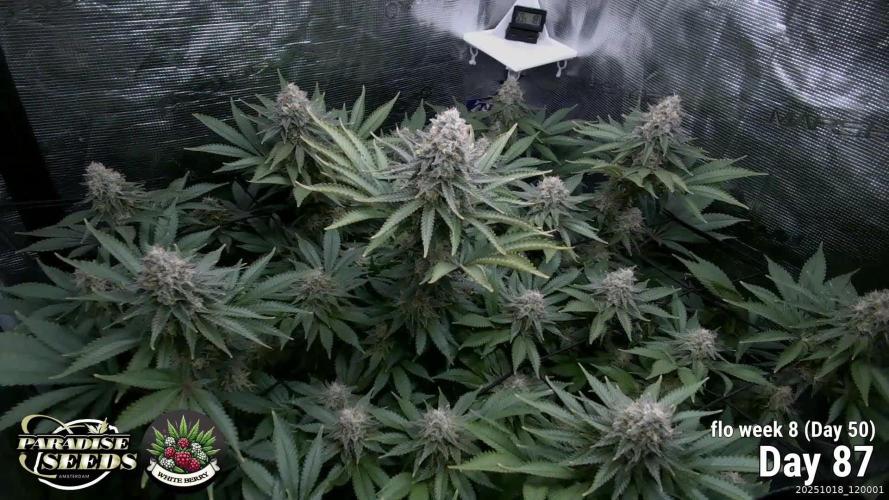
My how she smells and fades 😋😍👌
Getting some really nice coloration on her in her last stage 👏👏.
Trichomes look good, ill let her rip for another week or so to have the middle and bottom buds catch up a bit, and probably harvest during my vacation. Looks im gonna be busy for a while with her.😵
Watering still stays 6L at ~6PH 5ml/L Bloom, 5ml/L Green Sens.
Did some final and thorough defoliaton this week because i did not like that the RH was creeping towards 60%.
Next run already decided for a 1:1 Plant, also from Paradise Seeds. Photoperiods it is for now 👻
Harvest is approaching 💀

Likes
8
Share


@TrickzGrowz
Follow
Der eine Trieb hängt ein wenig noch nach, anonsten steht sie super da. Ein paar Sticks angebracht um ein wenig Richtung zu geben.
Likes
44
Share


@Chedderbob112
Follow
Just flipped everything is growing like mad all the revegged monster cropped clones n that had been in flower n now hav fresh growth am buzzin will need to go in n defoliate a bit lolly pop and clean it up a bit bit yeah oh yeah chedder does it well @chedderbob112 @s2340420


Processing
Likes
Comments
Share


@Steviegrows
Follow
Planted germinated seed on 6/6. The girl on the right came out first, followed by middle, then left by mid-week. By end of week, each stood about 3". Sporadic light watering throughout the week with a dropper at the base of the sprout, spritzed the soil surface and inside of humidity domes which were placed over pots periodically. Only the two 150w COBs are switched on, the 100w QB is off to protect the babies.


Likes
176
Share


@DevilsBud
Follow
Week 2 of flowering phase
Cookies Gelato by royal queen seeds
Hallo fellow growers here we go
Day 8 flowering phase
looking good amazing to see them developing up close day by day . Today no watering maybe some defoliation below the net but that it cool beans 😎
Day 9 Flowering phase
Didn't see the plant for 20hours and jebus they grew over night they went up 15cm . But they are looking healthy
Gave them almost 1.2L nutrients was getting dry that was it .
Day 10 flowering phase
Today adjust some things in the tent it didn't feel a right not to happy with tents quality 🤔 also it's very challenging to get to back corner plant. I need to fully open the tent. There are no peak holes ore other opening to get to the back . And it feels unstable
. Plants i only did some final defoliation and gave 0.5l normal water
Day 11 flowering phase
Plants looking okay to me. Didn't water them today want to let them dry out some . I think because of all the watering i am Struggling with the humidity in the tent . It is around 80% and that little dehumidifier don't do jack patetoe . Def need to think of a solution for later in the weeks
Day 12 Flowering phase
Gave nuts water and put a 2nd ScrOG up a little higher .
Today got my
3X 🧟♂️ haze seeds from Sumo Seeds
3x Taison Autoflower from VIP seeds
1x girls scout cookies from Zamnesia
Free with order 👌
Day 13 Flowering phase
Sunday relax day no watering . Everything looking good that budcandy and Big bud from advanced Nutrients are working like a charm . I have bin semi keeping to the recommend advanced Nutrients schedule and i think works for me . I have here and there play around a bit but they seem to not be having problems with that . Advanced Nutrients is getting 10/10 for me
Day 14 Flowering phase
Week 2 of flowering phase complete
It was a learning week for me . Got bit scared how they grow 15 cm in a day . But it's seems to be oké i got still some real estate left. I think that i am not giving them any water what so ever . I need to learn to let them dry out some . Also a bit struggling with humidity in the tent . I am trying to give them water right before light on ore right after light out . It's definitely a learning process that i don't mind learning 🤘🏻🤘🏻
Thanks for stopping by growmies i appreciate it a lot 😎.
And for the one's that read my stuff sorry for misspelled English
Likes
6
Share


@TheStaffedition
Follow
Привет друзья.
Наше знакомства продолжается с новым сортом автоцветущих растений от Smail_Seeds сорт .TROPICANNA POISONZKITTLEZ XL AUTO Reg.
Сегодня растению 97 дня.
Шишки налились очень хорошо😀
Вы всё сами видите.
Скоро будут феминизированные
Сорт выводим сами.
Смотри мой профиль, у нас всегда есть что то интересное.
Не забудь поставить лайк❤️, если понравилась как прошла неделя
И читайте наш TELEGRAM: https://t.me/smail_seeds
#Smail_Seeds 😀
Likes
19
Share


@SooSan
Follow
Elle sent la mangue, le sucre, les tropiques 😍
Et ce champs de trichomes est superbe...


Likes
5
Share


@Zeaiache
Follow
Se lograron estabilizar después del transplante, y logran comer bastante, los riegos son cada 2 días, allá purple nos da una distancia internodal mas corta que la 10th, aun así ambas están hermosas

Likes
8
Share


@Organic473
Follow
It was not a sight I was expecting so soon lol…rain fell last night her buds got soaked and the wind picks up you already know what happened after.

Likes
Comments
Share


@eldruida_lamota
Follow
Vamos familia, actualizamos la tercera semana de floración de estas Forbidden Mochi fast de Seedstockers, Aplicamos varios productos de Agrobeta, que son increíbles para aportar una buena alimentación a las plantas.
Temperatura y humedad dentro de los rangos correctos dentro de la etapa de floración.
La tierra utilizada es al mix top crop, por cambiar.
De 5 ejemplares seleccioné 4 para completar el indoor y trasplanté directamente a macetas de 7 litros, cambie el fotoperiodo a 12/12 y aplique una buena poda de bajos, se ven bien sanas las plantas tienen un buen color y progresan a muy buen ritmo, ya empezaron a formarse las flores y a coger tonos púrpuras rosáceos, están increíbles.
Agrobeta:
https://www.agrobeta.com/agrobetatiendaonline/36-abonos-canamo
Hasta aquí todo, Buenos humos 💨💨💨

Likes
5
Share


@jim321
Follow
seen fungus gnats and unidentified bugs "live soil" applied sf nematodes. clipped future #1. Kush fruit salad for thanksgiving.
:)

Likes
10
Share

@420DeepGrow
Follow
📆 Semana 10
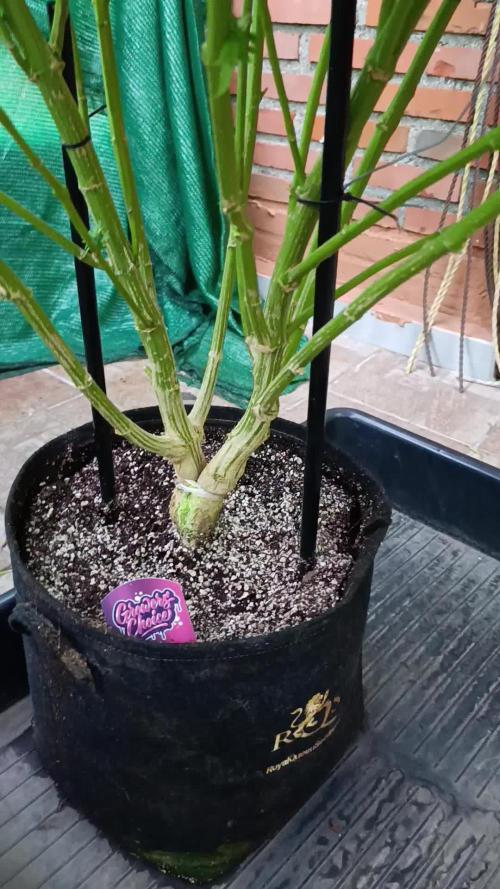
La planta sigue avanzando con muy buena pinta y los cogollos empiezan a mostrar una estructura más compacta y definida. La producción de resina también va tomando protagonismo, mientras la floración se acerca poco a poco a su tramo final.
Esta semana mantengo el Bloom Booster para seguir acompañando el desarrollo floral, sin realizar cambios bruscos en la nutrición. Ahora toca dejar que la planta siga haciendo su trabajo y observar cómo termina de madurar durante las próximas semanas.
⚡ EC de entrada: 1.1
💧 pH: 6.2–6.3
🌡️ Agua: 18–22°C
☀️ Luz: Sol directo
🔥 Nota de cultivo: Cada semana se empieza a notar más la evolución de las flores. La estructura se va cerrando, la resina gana presencia y el cultivo entra en una fase donde toca paciencia y dejar que la planta termine de expresar todo su potencial.
¡Seguimos creciendo fuerte! 💪

Likes
9
Share


@Bread_n_Buds
Follow
Zamnesia's Georgia Pie #1 performed that miracle I love so much: a magical foliage at the end pushed the leaves to a very dark purple/black color. Beautiful, absolutely beautiful. I dare say, cannabis is magical, but this color change process at the end is part of the magic in its own right.
The plant, like many American strains, flowers in clusters, which doesn't mean it's any less good. Not seeing the swords is scary, but the Americans, through hybridization, have created magnificent strains with flavors, tastes, and especially resin formation that are rare in European cannabis.
The genetics are Gelatti x Kush Mintz, and as I always say, where there's Kush Mintz, there's Magic. Always. The strain is a balanced day/night indica/sativa and has very, very sweet aromas that herald a mind-blowing taste.
The trichomes are very beautiful and fantastic in the purple areas. They're around 20% Amber, 50% Cloudy, and 30% Clear. The plant is slightly more Indica, and I don't want to let it ripen too much. That's fine with me.
The pistils are very, very mature, around 90%.
It's a plant with well-proportioned, medium internodal spacing.
This strain is much-loved; there are many good and famous versions, but ours here at Zamnesia is the best of all.
We grew it in a classic 6.5-liter square plastic pot and then transplanted it into a 19-liter airpot.
The flowers are all excellent quality, and the yield is excellent. I think 50-70 grams, trimmed and pruned, not a normal-sized plant trimmed.
This one was processed with 16 toppings.
The soil we chose is the recently launched Plagron Bio LightMix, which will allow us to start with more gradual and consistent watering, without the sudden changes that liquid fertilizers can cause. A week of soil is enough, so don't overdo it.
Choose your preferred style and calculate the results on the website:
www.plagron.com
Z - https://www.zamnesia.io/en/531-growshop
I can almost hear Ray Charles singing... Georgiaaa, try it.
Z - https://www.zamnesia.io/en/11085-zamnesia-georgia-pie-semi.html
Z - Spice up your grow with this delicious US hybrid. Originally developed in San Francisco, Zamnesia breeders worked hard to trace and stabilize the Gelatti x Kush Mints genetic line that gave rise to the original Georgia Pie. The result? A 50/50 indica/sativa hybrid that grows beautifully both indoors and outdoors, quickly producing dense buds with deliciously sweet terpenes and a powerful effect.
Combining the genetics of two fantastic parent strains (Gelatti and Kush Mints), Georgia Pie is both productive and easy to grow. During the vegetative stage, plants grow vigorously, developing moderately spaced internodes and fairly broad fan leaves. Expect noticeable stretch during the transition to flowering: mature plants can reach 130 cm indoors and up to 200 cm outdoors, with numerous side branches that will develop large buds. Thanks to its exuberant leaf growth, Georgia Pie responds very well to regular pruning, defoliation, and training. These interventions will open up the plant's canopy, exposing even the lowest buds to light. Indoors, Georgia Pie typically requires 8-10 weeks of flowering to produce up to 500 g/m², while outdoors, plants are generally ready for harvest around mid-October, producing up to 500 g/plant.
You know it, but I recommend it: here you will find so many wonderful things, practically "all the best that nature has to offer."
Z - www.zamnesia.com
Music //
www.radionula.com
+ Feng Shui Music
+ Frequencies 432 Hz
Translate
Likes
44
Share


@The_Good_Twin
Follow
24 Oct 2021
Week 16 began yesterday, but the first watering of the week was today. I’m keeping up with the flush, starting the 2nd week today. Hopefully I’ll be able to harvest in a few days.
My Trio is looking really lovely. Their buds are covered in trichomes that glisten under the lights. They are starting to darken in color in some areas like their mother did. They may take on some pinkish/purple hues before it’s all done. Some of their leaves are turning purple as well. The sugar leaves are somewhat dark, but still green. All three of them are very nice to look at, and their smell is super strong! It’s really nice in my grow room!
Yesterday I went out and got some more of those support sticks from the local home store and provided support for all of the branches that needed it. Which was a lot! I got 7 new support sticks and used them all. All of the branches are now supported and flourishing!
Today each of my girls received a gallon of properly pH’ed water, and each had a sufficient amount of runoff from which to gather measurements. The process went as follows:
C1 & C2 had an initial pH of 6.9, and C3’s initial pH was 6.8.
I added .2ml of pH DOWN to each gallon which adjusted the pH to 6.4 for C1, and 6.3 for C2 and C3. TDS going in was 88 ppm for C1, 86 ppm for C2, and 84 ppm for C3.
Runoff measurements were a little weird. The runoff pH for C1 was 5.9. The TDS was (at first) 600 ppm. I thought that was an incredible drop from the other day, so I did it again. It was 603 ppm the second time. Ok, moving along nicely! The runoff for C2 was pH - 5.8, and TDS was 1101 ppm. 😳 That’s a lot more than C1. C3 had a pH of 5.6, and TDS of 1212 ppm. Which is even more; so I measured a little more from C1 again, and the 3rd time it measured 736 ppm. 🤔 That seems weird to me, but I’ll keep an eye on it. If it continues to be that low then I will end up harvesting it before the others which won’t be so terrible. I’ll just have to wait and see.
The temperature in the tent was 81F, and humidity was 47%.
My ladies are looking lovely and growing better than I could have hoped for. This grow has been awesome, but I can’t wait to be done.
Happy growing everyone!
27 Oct 2021
Feeding/flushing time again! I was somewhat perplexed the other day when I got the runoff reading for the TDS in C1. It was 500-600 ppm less than C2 & C3 respectively. Since I was having some issues with the TDS meter I thought that IT may be the cause. I made a note to check on it today, and there seems to be no problem with the TDS meter at all. Keep reading for details.
My plants are still looking as lovely as I could ever have hoped for! C1 has started showing more color changes than the other 2, and the only thing I can say the difference is, is that I defoliated some of C1’s larger fan leaves last week, and wasn’t able to do the same for the other 2. That is the ONLY thing I can think of that has been different between all 3 plants this entire grow. Regardless, all 3 plants are looking wonderful!
Today each of my lovely ladies received a gallon of property pH’ed water with an expected amount of runoff for testing. The preparation went as follows:
C1 & C2 had an initial pH of 6.9, and C3 was at 7.0.
I added 0.2ml’s of pH DOWN to each gallon which adjusted the pH of all 3 gallons to 6.3.
TDS going in for C1 & C2 was 85 ppm, and C3 was 84 ppm.
Runoff levels were different for all three plants. C2’s runoff pH was 5.7, and TDS was 1041 ppm. C3’s pH was 5.6, and TDS was 1059 ppm. Last time C1 was significantly lower than the others, and I thought that maybe it was a TDS meter issue. Evidently it wasn’t. C1’s TDS today was 526 ppm! 😳 still much lower than the others, and pretty much ready for harvest.
The temperature in the tent was 81F, and humidity was 43%.
Although harvest time is much closer, I don’t believe it will be done in time for this month’s grow diary of the month contest. So sad, but that’s life.
Happy growing everyone! See you again soon.
29 Oct 2021
Today is the last day of week 16. I was planning on continuing the flush today, but remembered something that I had forgotten about….
I remembered the branch that had broken off of C1 back on October 10th in week 14. She had held on for well over a week in a can of water, but finally her leaves started to droop. I hung it up all by itself in my small tent to dry. Until today that is!
I took it outside and trimmed it on my deck. Even outside, in a pleasant breeze, the amazing smell of this branch was easily detected. It’s kind of windy, rainy, and chilly here today, but still …. That sweet blueberry muffin smell was there.
Her buds; still covered in the dried, crystallized trichomes were super sticky! I must admit that they are the stickiest buds I have grown to date.
I weighed the dry bud to add to the grand total of C1’s harvest later. Then I ground it up and smoked it.
All I am going to say is that from my reaction to smoking it; I have decided that no additional flushing is needed. After all, what I smoked today broke right before I started flushing, and I could taste nothing other than what I would hope to taste.
So my fellow Growmies; I am ending this week right here. The next report you will see will be the harvest report!!
Stay tuned!

Likes
6
Share


@GoodTimesOrganics
Follow
Nach dem sich die Pflanze wunderbar ernten ließ. Wenig Sonnensegel und sehr gut zu bearbeitenden Zuckerblätter ein echter Hingucker.
Auch die Aromen sind wie schon erwähnt unfassbar Einzigartig mit einem Profil nach Früchten, Zuckerwatte, Energiedrink oder auch gebrannten Mandeln.
Wirklich unglaublich dieser Strain!
💚🍭🍇