The Grow Awards 2026 🏆 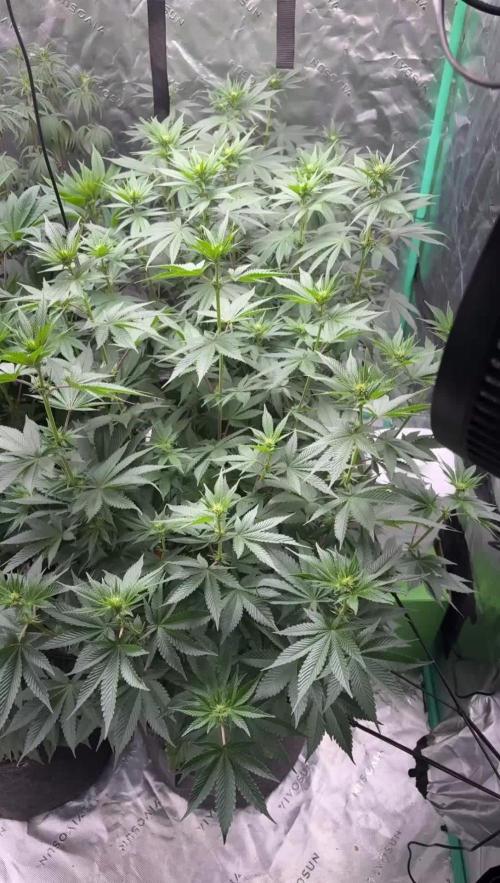










Likes
Comments
Share
@TTerpz
Follow
Start of week two of flower
Fed with nutrients 8/10
Fed with plain water 8/12
As of 8/15: 7 more days till lollipop and defoliation.. need to feed all 3 with nutrients TODAY!
Likes
3
Share
@420DeepGrow
Follow
Semana de cosecha
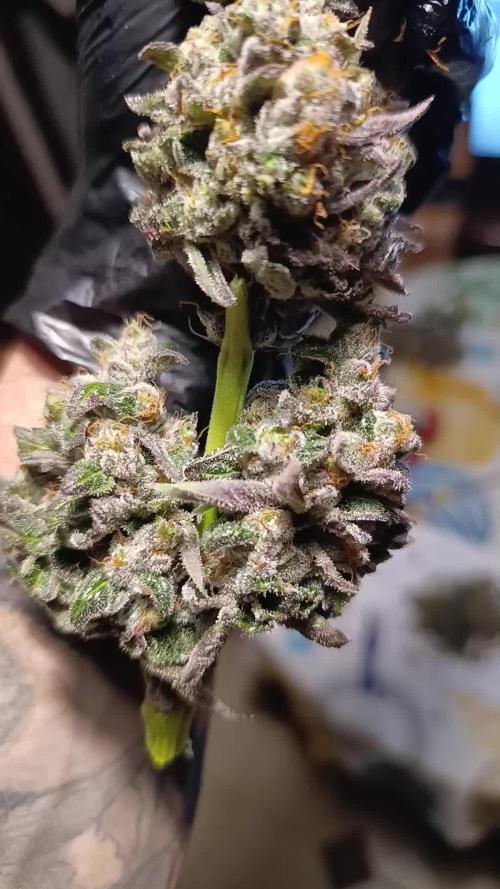
La Papayton de 42 Fast Buds llega al final con una presencia brutal. Los cogollos, ya completamente formados, salen duros, pesados y bañados en una resina espesa que deja los dedos pegados al mínimo toque. Los tonos grisáceos y rojizos se han asentado del todo, dando ese aspecto maduro y uniforme tan característico de esta genética.
El aroma tropical se vuelve aún más profundo al cortar: dulce, afrutado y con ese golpe de papaya madura que confirma que estaba en su punto óptimo. La planta llevaba días sin crecer, enfocada solo en rematar tricomas y apretar cada flor.
Todo ha cerrado perfecto, tal y como esperaba.
¡Seguimos creciendo fuerte 💪!

Likes
45
Share
@masterofsmeagol
Follow
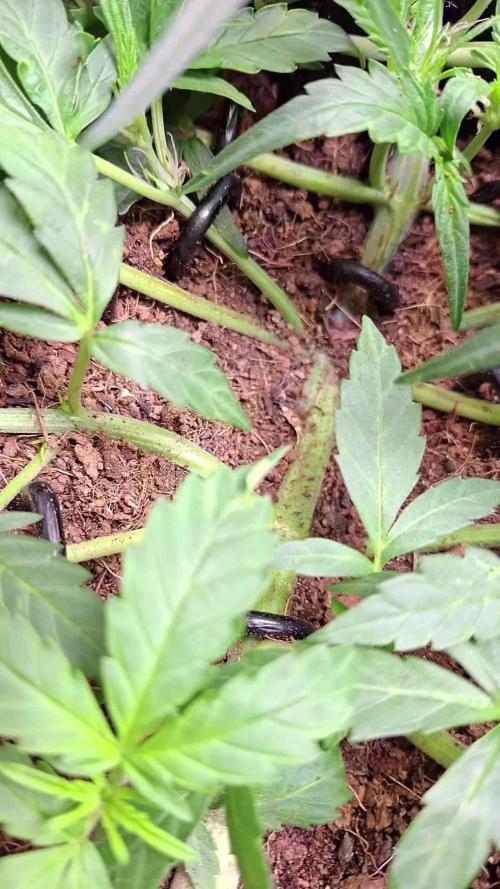
6/19 Knowing it was going to be over 100° for the majority of the day I WATERED the garden with 3 1/2 gallons. I went to check around 4 and everything looked amazing. We got some hard rain from a thunderstorm at 4pm but it seems like these girls like it rough and did fine. The take a beating and come back stronger. Knock on wood but I haven't seen any problems on the plant I snapped amd dict taped.. Everything seems to have toughened up and the leaves are an awesome healthy color. They grow observable every day now. Tomorrow is supposed to reach 100 again for most of the day before weather goes back to semi normal. I took a video but it will take way to long to upload. Tons of other pics didn't upload either.
6/20 Another day that's going to be over 100°. Plants seem to love it lol. I can't believe what I'm seeing. Bags still had some heft so I didn't water this morning. I figure I'll check them around noon and then plan on watering tonight if they need it. Hopfully they'll get some rain from thunderstorms. This crop has been through a lot. I think that has helped them significant deal with this unpredictable weather.
6/21 We had a MAJOR thunderstorm with sheet rain yesterday. I missed it but it was intense. I saw some videos. First time dad seemed concerned. Fortunately there was no damage. I was going to water today but I decided to hold off due to the look of the plants and the "praying leaves" at 4pm and feeling some moisture in the soil. Bags seemed to still have some heft. I'll probably water tomorrow. Need to transplant the 1 gals and need to figure out what I want to do for nutes this year. So far I've put in much less effort and I'm still doing great. I just don't have as many plants as usual.
6/22 Rained last night. Not much but the bags were heavy still so I held off watering. Plants looked happy and I can fix under watering much easier. It will rain tomorrow. I'll check throughout the day and update but things are going good. I should transplant those 3 seedlings in 1 gals.
6/23 It Rained last night and is suppised to rain today. It was raining when i went over. Just the kind if rain the plants love. I'll check again before church but I'm eventually going to have to water them. Those thunder storms helped a lot.
6/24 Rained about an inch yesterday. Plants loved it. Bigger everytime I see them. One seedling showed a pistol and I'll transplant it with the rest. It was the only one I was worried about. I've seen a FEW leaf hopper punctures and some other bites that could be anything. Time to get the ipm
6/25 Looks like its gonna be a nice sunny day. 75° at 10am. Plants are doing amazing and growing at a rapid pace. Haven't done anything ipm as of yet but any damage I've seen is localized to "A" leaf on "A" plant. I'll be paying attention and watching for signs of deficiencies. As of now though they LOOK great. I'll try to transplant the 3 seedlings today.

Likes
27
Share
@Prototype0181
Follow
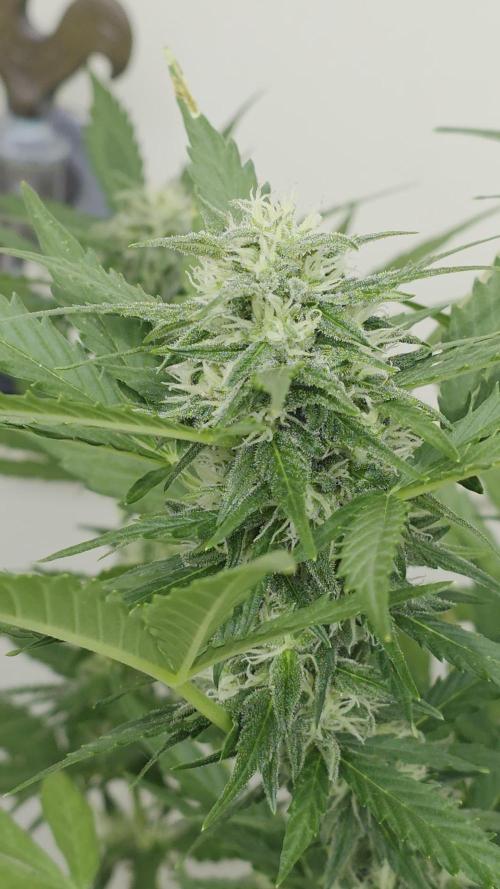
Horrible week :( 1 of the dosi's hermed so im down to 4 plants, 1 DNA Genetics Bakers Delight and 3 Barney's farm Dos-si-dos 33. ( I started with 6 dosi's -_- ) never running these again. The remainers are stacking up nicely after PK week. The DNA genetics bakers delight is absolutely gorgious, the smell is insane!! I'm happy i replaced my carbonfilter a couple of weeks ago. Def be running this strain again.
Rock on Growmies


Likes
7
Share
@HIAZ_urbanbudfarmer
Follow
Hi Gromie's, upped nutrients & turned light up to 75% (360w), wich has helped bring up temps to 22-24°c really good growth. DD#2 ,DD#3, DD#4 are 1 week younger than DD#1, had originally fimmed 2, 3,&4 but changed my mind & decided to top them & mainline them. I have topped DD#1 for a 2nd time & I am following nebula haze's (grow weed easy.com) method of mainlining keeping the first & 3rd node's to give me 4 cola's per side, 8 total. So till next time Gromie's, ☮️👍🤘

Likes
6
Share
@Zuzugrowz
Follow
"W4 is ON 🔥! Both cannabis queens are thriving 💚! @demonicgenetics is an absolute dream to grow, loving the LST training 🤩. Every day I'm hooked, going back for more 📈! Meanwhile, @fastbuds420 is waking up and getting her groove on 💃. Weeks 5 & 6 are gonna be HUGE 🚀, can't wait to share the progress! Stay tuned for next week's update 📺!"
Likes
11
Share
@Kitties_and_Colas
Follow
Went to check her under the glass for the first time and she was ready before I was lol...hopefully she smokes as good as she smells

Likes
37
Share
@Schnabeldino
Follow
_____📅 Week 5 | 📅 Day 29 - 35 | 27.05 - 02.06 ______
27.05.25 | Day 29 🌞💧
🔸The ladies moved into the big tent on the 29th day after I had cleaned it and hung up my new lights.
🔸A&B is developing superbly, all branches are equally developed and grow evenly. She is doing wonderfully with the LST.
🔸I only work with hooks and occasionally with clips, but I've often broken branches with them so I prefer to use hooks hehe :D
01.06 | Day 34 💧
🔸 1500 ml
🌡️🔆= 23-24°
🌡️🌜= 18-19°
💨 Hum. = 65%
🔦 PPFD = 500 umol 18/6
🔦⌚DLI = ~ 32
_________________________________________________________________________________________
Equipment to use:
💡 Light: 2 x Sanlight Evo 4- 120 on 50%
⛺ 120 x120 x 180
🍯 Pots: 18 liter pot
🌱 Soil: Bio-Bizz light mix
💊 Nutrients: Advanced Nutrients
💧 Water: Tap Water 0,5 EC

Likes
56
Share
@Prilyfe13
Follow
April 26, 2024 Day 71
It's a new week and the start of late flower. It was also cleaning day. Both reservoirs have been cleaned out and are freshly loaded with new water.
This week we are focusing on watering and nutrients. I may start to drop the dose until flush, over this week and the next.
The light power will also be gradually dropped down over the next 2 weeks. Not much this week, I think I'll drop the DLI down to 43 mol/m²/d in the middle of the week. Next week I'll drop it down to 38 mol/m²/d. It all depends on what the plants look like.
The plants are getting ready to hunker down and finish up. Both have decent sized buds and just need to finish swelling. I'd say another 2 weeks maybe? Flushing will start at some point over the next 2 weeks as well. Flushing won't be much of a big deal as it's just cleaning the reservoirs and running a week of Flawless Finish.
The environment is changing a bit as well. I dropped the day temp down to 75° and the night temps to 65° or lower. Not cold enough to cause stress, but enough to get some purple I hope. The humidity is sitting at 47% and I'll be leaving it there unless somehow I can get it to go lower. For now it's pretty solid at 47% and everything looks great, so no need to worry.
I'll be taking trichome pics every few days. One pic for each plant. No point in loading up the whole photo gallery with even more daily pics. Plus, the progression of trichomes isn't fast enough to really notice daily. So every 3 days should be fine.
Grow System Environment:
Temp: 74.2°
RH: 47.7%
VPD: 1.49 kPa
April 27, 2024
Nothing happening today. Both ladies were inspected with no issues. I snipped a single leaf off of Banana Purple Punch B. Just one. Blocking bud sites.
Banana Purple Punch A has some massive buds. About the size of golf balls. Maybe a bit smaller. They are still swelling and have a good 2 weeks left. Pistils are still mostly white, so that's a good sign for larger buds and more trichomes.
Banana Purple Punch B is looking wonderful as ever. She doesn't seem to be suffering any issues with nutrient burn unlike her sister plant. She's perfectly healthy and has very nice bud production. The buds aren't quite as big as Banana Purple Punch A, but still nice and sizeable.
The nutrient burn seems to have stopped for Banana Purple Punch A. So that's good. It should be perfectly fine now.
Lighting is staying the same for the next couple of days. Although, I may keep it the same for the rest of the week.
The environment is excellent now. It's raining today and the humidity is still at 47%. I did get it down to 44% for most of the afternoon yesterday, so I may be able to keep it down after the rain stops. Or just wait for the afternoon and see what happens. Either way, the humidity is now at 47% and the temp is at 76.8°. The VPD is at 1.57 kPa. A tiny bit high, but still well within range. Last night's temp was a little high at 69°. I'll have to drop the temp lower again to get that 65° sweet spot.
Grow System Environment:
Temp: 74.4°
RH: 45.7%
VPD: 1.55 kPa
April 28, 2024
Not much to do today. I mixed a new batch of nutrients for both plants. The only difference is that I cut the Overdrive in half down to 2 ml/gal. Neither plant needs it, but now it's mixed and ready to go. I may end up filling the reservoirs tonight as it stands. Or later this afternoon. I don't think they will last til tomorrow morning.
Both plants are putting off a wonderful aroma. I honestly can't describe it. Like sweet and kind of a hint of banana and a bit heady.
Trichome production is picking up quickly. The pistils are starting to turn orange as well. They are definitely in the late flowering stage.
I think I'll start dropping the nutrients for the next watering. And I'll drop the DLI down to 40 mol/m²/d tomorrow I think. Not much else to say about nutrients or lighting, so moving on to the environment.
It's a warm humid day out and raining off and on. My whole environment is wonky, with humidity being at 57% and the temp at 77°. I turned the AC on about an hour ago and the temp went down to 75°, and humidity up to 60%. I think I'll crank the AC all the way down. And hopefully get rid of the humidity with the temp being a bit lower than perfect.
Update: I ended up adding about a half gallon of plain water to both reservoirs. Just Incase I have nutrient lockout or something. They should go through that by tomorrow afternoon. Maybe late evening.
Grow System Environment:
Temp: 75.6°
RH: 52.8%
VPD: 1.39 kPa
April 29, 2024
No watering today. I'm still waiting for the plain water work it's way through. However, I did drop the light power.
Both ladies look great. Big buds, great scent and nice color. I'm not seeing any fade yet, but the nutrient burn is still there. I hope it will fix itself with the plain water. And then maybe fading will start. These two need a good 2 weeks or so before harvest.
The lighting, as I said, was changed today. I dropped the power down to 70% to get as close as possible to 40 mol/m²/d. I may have to drop it another 10%. I'm not too sure. I'll check the DLI again when I'm more awake. (I'm finally on my second cup of coffee. Lol) Looks good though. Just around where I want it to be.
But there are a lot of spots where the DLI is a bit high at 43 mol/m²/d. The tallest tops are also kind of high at 45 mol/m²/d. Again, I'll double check on a couple hours, but it should be fine.
The environment is wonky again today. The temp is fine, but the humidity is still high at 60% and I don't see a way to drop it again. Not with the current weather. Hopefully I can get it down with some heat. The AC method did not work. Well, it maybe will work tonight. I'll be dropping that bad boy down to 59° tonight and hopefully it will do what I need it to.
Grow System Environment:
Temp: 74.2°
RH: 59.8%
VPD: 1.15 kPa
April 30, 2024
Watering day. The reservoirs were both nearly empty and there was just enough space for a full gallon in each one. It's the normal nutrient dose with Overdrive being at 2 ml/gal.
These two plants are looking mighty fine. Excellent bud swelling and trichome production. I'm definitely going to be wet trimming them instead of my normal dry trim. I may leave the bods on the branches and do a partial wet trim, or I guess mostly wet trim.
They smell great! Very strong aroma now. I swear they smell like artificial grape. I can't describe it any other way. Grape and pungent. Awesome.
So far the light seems to be fine. No reaching or showing any signs of lack of lighting. They look pretty happy. Although, Banana Purple Punch A is a bit sad from nutrient burn. Banana Purple Punch B however didn't seem to have much of a problem with the burn.
The environment is still pretty wonky. High humidity again. I can control the temp pretty easily, but the humidity is another issue. It's currently sitting at 56% and I'm holding the temp at 76°.
Grow System Environment:
Temp: 75.5°
RH: 57.0%
VPD: 1.26 kPa
May 1, 2024
Not a whole lot going on today. No water needed, no light changes. I rotated both ladies 180° so now they are getting light on other sides. I'll leave them like this for the rest of the grow I think.
Banana Purple Punch A actually fits better in the new position. Less wall touching and about the same neighboring plant touching. I also removed 3 leaves. Ones that were misshapen from being crushed against the tent walls.
Banana Purple Punch B seems to fit a little better in the new position, mostly because of her sister plant. More room on the outside and a little less room inside. No leaves were removed today. I'll reserve that for the last 2 days of the grow cycle. Then I'll do a massive defoliation and then a wet trim.
It's humid here right now and I need the space. Otherwise I'd stick with dry trimming. But I can't hold up the tent for 3 more weeks. I have other plants getting ready to be planted in their final containers. Like a week for that, I might be able to squeeze a week and a half, but that's it. They will have a space, but the main tent is where they will need to be. Not a 2x2 dry tent. I'll work it how I need to I guess.
Anyway, both ladies look great! Trichome production is coming along nicely as well. They are very smelly now and I love it. They are also still packing on weight I think. Not a ton, but the buds are clearly getting denser now that some of the pistils are starting to turn orange. I'd say another 2 weeks on these two.
As I said, the lighting hasn't changed at all. Not for another few days to a week. Then it will have another power drop. Until then, we are staying at a DLI of 40 mol/m²/d. It's roughly 38 mol/m²/d on the outer part of the canopy.
The environment is STILL wonky. I cannot for the life of me get that damned humidity down at all. Not with a dehumidifier, not with the heat cranked, not with the AC cranked. I'll try my big dehumidifier in my room, but the humidity is like 49% and frankly I'd rather the room humidity stay there. Much easier to breathe. However, the humidity in the tent is suffering at 59% while the temp is hanging out still at 76°
Grow System Environment:
Temp: 75.2°
RH: 56.1%
VPD: 1.27 kPa
May 2, 2024
Not a lot going on today. No watering needed, no trimming, nothing.
I found a broken bud on Banana Purple Punch A. It must have been from when it was against the wall, or too close to the other plants and got stuck on a branch while I was rotating. Oh well. It's a lower bud, so not huge.
It's also the last day of the week and that means new videos!
For the rest of the grow, I'll be making weekly videos of the individual plants. So that will.be this week and the next 2 weeks or so.
Banana Purple Punch A looks great aside from that one broken bud. Her buds are fat and thick. Super dense from what I can see. I would like to note that the fade hasn't started yet, so we still have that 2 weeks left. Unless it starts in the next day or 2, I'll be banking on 2 weeks.
Banana Purple Punch B is still compact as ever, but her buds are getting fatter everyday and of all the plants in the tent, she has done the best with the nutrients. Very little burn and didn't seem to be bothered by it. Maybe I did something early on to have such a small plant, but still. I think I can bank on 2 oz from each plant. Maybe 3 oz. It's really nothing compared to previous grows, but as I said before, as long as it's fire, I'm happy.
Trichome production on both plants is fantastic. They are loaded from top to bottom. And building more and more everyday. There's still plenty of time left for there 2 as well. Most of the trichomes are clear with about 20% being cloudy and sparsely amber. That's another sign that they need another couple of weeks. Maybe slightly less.
I increased the light power yesterday back up to 80%. I think I was a bit early on the intensity drop, so I'll drop it again in a few days I think. Around mid week coming up. Now we are running a DLI of 43 mol/m²/d inside and 40 mol/m²/d on the outside.
The environment kinda fixed itself, but not to the ideal climate. It's still at 55% humidity. Better than 60%, but still not good enough. It needs to be below 50%. However, I can still control the temp and I have it at 74.5°. I'll turn it up a bit and see if I can clear out the last 5% of the humidity.
Grow System Environment:
Temp: 73.7°
RH: 55.2%
VPD: 1.24 kPa
Update: I added a couple test videos to see if they would upload. Success!
Likes
15
Share
@Shizzlemanizzle
Follow
First week of flower started with a bit downs :/ leaves were hanging and I didn’t know why but some guys helped me here ❤️ changed the watering habit now. Started watering with feeding when pots were dry/light and watered until I got 5-10% runoff - next watering when pots are dry/light

Processing
Likes
63
Share
@AsNoriu
Follow
Day 78. Just runs fine.
Day 42 for Control garden. Biggest Incredible Bulk is amazing plant, very strong, should be really nice to harvest, 3 weeks veg is my shortest ever....
Thinking to leave them untouched, hope they will mature quicker, even without direct light, they grow amazing..
For now just heavy feed, reached 1100, normally 1200 is my max.
Day 79. Girls are fine, plain water today. Thinking to leave Control Garden with all leaves, but despite them growing not under direct light they are 70+ cm height. Now they cause shadow and block air move...
In doubts a bit...
Day 83. Control garden is a lot behind and still stretching , took 12 leaves in total from 3 plants. Now second canopy will have more light, should really chop bottom branches and leaves, but maybe will do it on second defoliation round...
All girls getting heavy feed 1250 ppm. Gorillas still too hungry, Cookies overfed as always... Hard grow for lazy hard stoner :)))


Likes
11
Share
@Green_Hornet
Follow
those pictures are from day 22 of flowering
added some additive PK 13 / 14 from Plagron
And a small closet tour video :)
enjoy


Likes
15
Share
@GYOweed
Follow
Nothing special. Its sis in south facing solo cup smells amazing and sticky but that one is farther ahead. Gonna do just organic ferts and water see what happens im getting lazy


Likes
62
Share
@SimpleGrow
Follow
Hello again guys and welcome to day 89!
The girls are taking their time but finally the trichomes are turning milky. As you can see from the videos, they still aren’t quite there yet. I really want them to reach their maximum potential instead of rushing it. I think in maybe a week or so they should be ready!
Thanks for stoping by
Likes
4
Share
@MoonFlowerOrganics
Follow
Welcome back for week 8 of life and the end of week 2 of flower. Busy week for these 3 ladies. In 16 days these girls have tripled in size. I switched to flower at 18 to 19in and 2 of these girls are slightly taller then 4ft.
This strain is definitely has not stopped stretching sense the beginning. Topping and lst couldn’t keep them down. I try to keep an even canopy little over 3ft so I can avoid light problems but these girls are going to test my tent space and light.
I added a video this week so everyone can see the difference compared to my other plant, which include 2 other royal queen seed strains.
I’m couriers to see how buds will form on these girls. Definitely about 4 to 5in in between growth noobs. I don’t expect to see a large yield but that’s definitely my fault for not training a little to keep them more compact.
Excited for the last 6 weeks of flower. Sink or swim at this point, but who doesn’t love a good challenge.
Stay Tuned!
Likes
3
Share
@CheeRz
Follow
This week we only had bad weather and a lot of rain. But according to the weather forecast, it should get better again in the next few days. ☀️☀️☀️

Likes
21
Share
@Trickybis82
Follow
All genetics are loving life and looking great as you can see 👀
Thanks for answering my question regarding light schdule. I am keeping them on 18.6. If something isn't broken why change it. That is the motto I think.
Shout out to all that have commented and watching and popping In to see my progress I appreciate it all.

Likes
4
Share
@UKFieldNinja
Follow
On week 6, thought they were coming up to harvest but still keeps popping pistels.. probably another few weeks till they are finally done