


Likes
Comments
Share


@DevelGrow
Follow
Hallo Freunde 👋 die Reise ist nach 72 Tagen zu Ende! Es hat sehr viel Spaß gemacht und es ist eine sehr schön gewachsene Pflanze mit Statue entstanden! Danke an Patricia und Zamnesia Seeds!✌️🍀💚🍀 Shiva ist für Zamnesia only! Also werden wir schauen was als nächstes schönes kommt! Growers Love keep Green and grow High ✌️🍀💚🍀

Likes
32
Share


@gottagrowsometime
Follow
Grew really well. As I said topped early on during veg. And trained her with LST the wk before flipping and adjusted during. Defoliation was done as a move node training tool, aswel as crop steering "water starvation" to make the plant produce bigger buds from her own steam. With heavy airflow through the grow it make for a real strong girl that loved life right till the end and produced close to 2oz of dried bud.
Trimming was an ease. Very sticky and fruity while trimming. Notes of pineapple and an earthy scent, (like a wooden forest). Very fruity as I said with notes of citrus also but overwhelming blueberry scent that has dominated her scent after 2 weeks curing. Was burped 2x a day 1st week . And now its done once a day. Blueberries are so lush and ripe it's like holding a handful of fresh picked fruit.



Likes
Comments
Share


Likes
17
Share


@Shugz_Nugz
Follow
This grow went extremely easy, I believe I held off on harvest till week 13
She dried for 7 days around 55-60 RH and 72-75° F could have been better but not the worst
Good moisture level still inside the buds been burping the jars and reloading them letting the RH slowly decrease inside the buds
This stuff gave me 1 gram of rosin off a 3.5 gram press at 205°f
Great returns overall and awesome smell!

Likes
10
Share


@DogDoctorOfficial
Follow
🌱 Animal Mints — Week 6 From Seed
(≈ Week 2 Flower / Pre-Flower Phase)
Quick Recap for New Readers
This run includes multiple Animal Mints plants, all treated similarly, but we’re mainly cataloging two reference plants to clearly show how timing affects structure and development:
• Plant A → 12/12 from seed
• Plant B → ~15 days under 16/8 veg, then flipped to flower
Same genetics, same room, same feeding — different timelines.
That’s the whole experiment.
⸻
Plant A vs Plant B — Why Two Plants?
• Plant A (12/12 from seed)
• More compact
• Slower early structure
• Responds very well to gentle leaf bending and light training
• Still stretching and stacking nicely
• Plant B (short veg period)
• Bigger frame
• More developed branching
• Further along in flower at the same “seed age”
• Took light cleanup / lollipopping better
This small veg window made a huge difference in structure and flower progression, and that’s exactly why we’re documenting both.
⸻
✂️ Canopy Work (No Heavy Defoliation)
This week we did selective leaf removal, not a true defoliation:
• Opened airflow and light paths
• Removed shaded or blocking leaves
• Light lollipopping on Plant B only
• Plant A kept mostly intact, just leaf bending and spacing
Goal wasn’t stress — it was space, airflow, and efficiency.
⸻
🌡️ Environment Update
• Day Temp: ~28°C (successfully raised)
• Humidity: ~65%
• PPFD: ~600–850 (depending on height & position)
• CO₂: ~900 ppm (now stabilizing around 909 ppm)
As outside temps stayed cooler, the room naturally became its own heat source:
• Increased plant mass
• Higher light intensity
• Under-canopy lighting added
No forced heaters. No extremes.
Just letting the system balance itself.
🌬️ Airflow
• Vortex extraction
• Multiple cross-flow fans
• Constant gentle movement
No leaf chaos — just steady motion.
⸻
💧 Feeding & Nutrition Strategy
This week marks a clear transition phase.
• EC: ~2.4
• pH: 6.5 (transitioning down — all feeds now 6.0+)
Why Higher pH Right Now?
As plants move into flower, nutrient demand shifts:
• Better Ca / Mg uptake
• Stronger phosphorus & potassium availability
• Root activity increases
Slightly higher pH at this stage supports structural growth and flower formation, especially under higher light and CO₂.
Nutrient Transition
• Terra Grow → Flowering nutrients
• Supporting the hormonal shift from stretch → stack
• Small signs of possible cal-mag demand observed — already being addressed, nothing severe
⸻
🌿 Growth Observations
• Both plants look healthy and vigorous
• Plant B is clearly ahead in flower development
• Plant A continues to stretch and respond beautifully to training
• Leaf color overall is excellent
• Bud sites stacking cleanly
At this point:
• All plants are in pre-flower / early flower
• We’re counting this as Week 2 flower in the life cycle
⸻
📸 Studio Session
Plants were brought into the studio to:
• document structure clearly
• show node spacing and canopy differences
• create a clean visual timeline
Photos reflect real structure, not “posed perfection”.
⸻
❤️ Final Words
Big thanks to:
• the geneticists
• the sponsors
• the platform
• the OGs
• the newcomers
• the critics
• the lovers
• even the haters
Everyone has a place here.
We share wins, mistakes, and lessons openly so we can all grow better together.
Criticism is welcome — it’s how progress happens.
Plants are doing amazing, and we’re excited for what the next weeks bring 🌱
More updates soon.
📡 Please stay tuned.we never quit https://www.youtube.com/@DOGDOGTHEDOCTOR NEW STAY TUNED
🙏 Thank you for your patience and continued support.
FOR DISCOUNT CODES AND MORE JUST FOLLOW THE LINK https://website.beacons.ai/dogdoctorofficial
📲 Don’t forget to Subscribe and follow me on Instagram and YouTube @DogDoctorOfficial for exclusive content, real-time updates, and behind-the-scenes magic. We’ve got so much more coming, including transplanting and all the amazing techniques that go along with it. You won’t want to miss it.
GrowDiaries Journal: https://growdiaries.com/grower/dogdoctorofficial
Instagram: https://www.instagram.com/dogdoctorofficial/
YouTube: https://www.youtube.com/@dogdoctorofficial Deleted by Youtube
Vimeo : https://vimeo.com/dogdoctorofficial Under construction stay tuned ⸻
Explore the Gear that Powers My Grow
If you’re curious about the tech I’m using, check out these links:
🔆 Lighting & Environmental Control
• Future of Grow — Advanced LED lighting technology
https://www.futureofgrow.com/
DISCOUNT CODE: DOG20
• Lumiflora — Under-canopy LED lighting
https://lumiflorade.com/
• TrollMaster — Environmental controllers and automation gear (past collaboration)
⸻
Genetics
• Zamnesia Seeds — Genetics used in this project
https://www.zamnesia.com/
⸻
🌱 Soil, Substrates, Boosters & Root Support
• Plagron — Substrates, bio mixes, and supportive products
https://plagron.com/en/
⸻
🎒 Storage, Curing & Preservation
• Grove Bags — Curing and storage solutions
https://grovebags.com/
⸻
📸 Photography Equipment & Tools
(Not sponsors, but part of my creative toolkit)
• Sony A6700
• Sony full-frame macro lens + few more
• Stacking photography workflow - learning
• iPhone (for behind-the-scenes shots)
We’ve got much more coming as we move through the grow cycles. Trust me, you won’t want to miss the next steps, let’s push the boundaries of indoor horticulture together!
As always, this is shared for educational purposes, aiming to spread understanding and appreciation for this plant. Let’s celebrate it responsibly and continue to learn and grow together.
With true love comes happiness. Always believe in yourself, and always do things expecting nothing and with an open heart. Be a giver, and the universe will give back in ways you could never imagine.
💚 Growers love to all 💚
📸 P.S. – The Eye Behind the Lens
All photos in this diary (for now — except for the ones showing the camera, which I took with an iPhone) are taken with a Sony A6700 paired with a Sony full-frame macro lens and a few more.
Photography is part of the story — it’s how we share the fine textures, the glow, and the quiet details that words can’t always capture.
I’ve also started experimenting with photo stacking — a technique where multiple images, each taken at a slightly different focus point, are layered together to create one perfectly sharp image from front to back.
It’s not digital enhancement or AI; it’s pure photography — a way to reveal the plant’s beauty in microscopic depth, from trichome to petal.
You’ll even see a few shots of "ghost me" capturing the shots — camera, lens, setup — because every grow deserves not just to be cultivated, but documented like art.
FOR DISCOUNT CODES AND MORE JUST FOLLOW THE LINK https://website.beacons.ai/dogdoctorofficial
NEW DISCORD - Official Server Invite Link : https://discord.gg/ksjAkA5T74

Likes
136
Share


@Kitties_and_Colas
Follow
~_~_~_~_~_~_~_~_~_~_~_~_~_~_~_~_~_~_~_~_~_~_~_~_~_~_~_~_~_~_~_~_~_~_~_~_~_~_~_~_~_~_~_~_~_~_~_~_~_~_~_~_~_~_~_~_~_~_~_~_~_~_~_~_~_~_~_~_~_~_~_~_~_~_~_~_~_~_~_~_~_~_~_
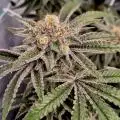
💡🌱🤘🐱 Week 10 of flower! Amber trichomes are starting to form, we're cloudy in most sections but there's still a bunch of clear a little deeper in. This is probably their last full week..we cut all nutrients nearly a month ago and have been watering heavy (as we typically do during flush) but they have only lightened slightly, we use a soilless media which should be completely flushed out by now but most the leaflets are still super dark, after seeing several other grows of this strain we assume it must be characteristic of B.B..we have 4 grow areas in our grow room and the Bangers can be smelled over everything else.. It smells like Fruit Loops with notes of gasoline 🍓⛽...The SP-3000 by MarsHydro is an absolute beast in a 4x2, this is our 2nd grow under The SP-3000 and we completely filled the 4x2 on both occasions. Each run resulted in massive, compact Buds just covered in resin..its without a doubt the best LED of its size we have in house or have ever been privileged to use honestly...
Full disclosure: we got a little impatient starring at these girls, so we (well I did lol) pulled down a bud 2 days ago (approx. 10grams) and immediately threw it in the oven for decarb..we made a 5oz batch of tincture and this is easily the "speediest" Seedsman strain I've tried to date, its a surprisingly clear headed high, definitely a daytime smoke..however, may have a different opinion after a proper dry and cure..we'll update our smoke report after drying...thanks as always for dropping by and happy harvests everyone!! ❤️💡🌱
⚡Mars Hydro/SP-3000⚡ Specifications ⚙️:
Diodes: Samsung LM301B / Osram 660nm (960 total!)
Driver: Meanwell 300watt 🔌 (300W±5% @AC120V-277V)
PPF: 824umol/S ☢️
PPE: 2.8 µmol/j 〰️〰️
Lifespan: 50k+ hrs ⌛
Weight: 10.1 lbs (4.6kg)
Veg Coverage: 3 x 5 ft 🌱
Flowering Coverage: 2 x 4 ft 🌼
-The SP-3000 uses an aluminum heatsink (no fan) and the driver can be placed outside the tent 🌡️⬇️
-IP65 waterproof ratings, tolerant to high humidity grow environments 💦 ..
-Up to 15 can be daisy-chained together and all controlled from a single light! 💡~💡~💡~💡~💡
~_~_~_~_~_~_~_~_~_~_~_~_~_~_~_~_~_~_~_~_~_~_~_~_~_~_~_~_~_~_~_~_~_~_~_~_~_~_~_~_~_~_~_~_~_~_~_~_~_~_~_~_~_~_~_~_~_~_~_~_~_~_~_~_~_~_~_~_~_~_~_~_~_~_~_~_~_~_~_~_~_~_~_


Processing
Likes
6
Share


@MissSolasolita
Follow
End of week 1 of flower
Started LST today
She is doing very well
The other Power Plant in shared pot has grown 5cm this week and is in full flower by 1 week


Likes
93
Share


@Ferenc
Follow
Okay, so the plants were still in seedling stage only thing I changed was the environment that I have placed them to the grow tent. They started growing faster and from the 2nd week, I started watering with 30ml water 2 times a day in the morning and in the evening, so one plant gets 15 ml 2 times approximately 12 hours difference the first 3 days and then 100ml (50ml morning, 50ml at night) so 25 ml/plant 2 times a day in the next 4 days. I also used the trigger spray to keep the soil moist and the humidity high as the seedling stage requires. No ventilation yet. No fertilization. It looks they feel okay, so far everything is alright. :)

Likes
52
Share


@Ultraviolet
Follow
Lacewings seemed to have mostly killed themselves by flying into hot light fixtures. I may have left the UV on which was smart of me :) Done very little to combat if anything but make a sea of carcasses, on the bright side its good nutrition for the soil.
Made a concoction of ethanol 70%, equal parts water, and cayenne pepper with a couple of squirts of dish soap.
Took around an hour of good scrubbing the entire canopy.
Worked a lot more effectively and way cheaper.
Scorched earth right now, but it seems to have wiped them out almost entirely very pleased.
Attempted a "Fudge I Missed" for the topping. So just time to wait and see how it goes.
Question?
If I attached a plant to two separate pots but it was connected by rootzone, one has a pH of 7.5 ish the other has 4.5. Would the Intelligence of the plant able to dictate each pot separately to uptake the nutrients best suited to pH or would it still try to draw nitrogen from a pot with a pH where nitrogen struggles to uptake?
Food for stoner thought experiments!
Another was on my mind.
What happens when a plant gets too much light?
Well, it burns and curls up leaves.
That's the heat radiation, let's remove excess heat, now what?
I've always read it's just bad, or not good, but when I look for an explanation on a deeper level it's just bad and you shouldn't do it.
So I did.
How much can a cannabis plant absorb, 40 moles in a day, ok I'll give it 60 moles. 80 nothing bad ever happened.
The answer, finally. Oh great........more questions........
Reactive oxygen species (ROS) are molecules capable of independent existence, containing at least one oxygen atom and one or more unpaired electrons.
"Sunlight is the essential source of energy for most photosynthetic organisms, yet sunlight in excess of the organism’s photosynthetic capacity can generate reactive oxygen species (ROS) that lead to cellular damage. To avoid damage, plants respond to high light (HL) by activating photophysical pathways that safely convert excess energy to heat, which is known as nonphotochemical quenching (NPQ) (Rochaix, 2014). While NPQ allows for healthy growth, it also limits the overall photosynthetic efficiency under many conditions. If NPQ were optimized for biomass, yields would improve dramatically, potentially by up to 30% (Kromdijk et al., 2016; Zhu et al., 2010). However, critical information to guide optimization is still lacking, including the molecular origin of NPQ and the mechanism of regulation."
What I found most interesting was research pointing out that pH is linked to this defense mechanism. The organism can better facilitate "quenching" when oversaturated with light in a low pH. Now I Know during photosynthesis plants naturally produce exudates (chemicals that are secreted through their roots). Do they have the ability to alter pH themselves using these excretions? Or is that done by the beneficial bacteria?
If I can prevent reactive oxygen species from causing damage by "too much light".
The extra water needed to keep this level of burn cooled though, I must learn to crawl before I can run.
Reactive oxygen species (ROS) are key signaling molecules that enable cells to rapidly respond to different stimuli. In plants, ROS plays a crucial role in abiotic and biotic stress sensing, integration of different environmental signals, and activation of stress-response networks, thus contributing to the establishment of defense mechanisms and plant resilience. Recent advances in the study of ROS signaling in plants include the identification of ROS receptors and key regulatory hubs that connect ROS signaling with other important stress-response signal transduction pathways and hormones, as well as new roles for ROS in organelle-to-organelle and cell-to-cell signaling. Our understanding of how ROS are regulated in cells by balancing production, scavenging, and transport has also increased. In this Review, we discuss these promising developments and how they might be used to increase plant resilience to environmental stress.
Temperature stress is one of the major abiotic stresses that adversely affect agricultural productivity worldwide. Temperatures beyond a plant's physiological optimum can trigger significant physiological and biochemical perturbations, reducing plant growth and tolerance to stress. Improving a plant's tolerance to these temperature fluctuations requires a deep understanding of its responses to environmental change. To adapt to temperature fluctuations, plants tailor their acclimatory signal transduction events, specifically, cellular redox state, that are governed by plant hormones, reactive oxygen species (ROS) regulatory systems, and other molecular components. The role of ROS in plants as important signaling molecules during stress acclimation has recently been established. Here, hormone-triggered ROS produced by NADPH oxidases, feedback regulation, and integrated signaling events during temperature stress activate stress-response pathways and induce acclimation or defense mechanisms. At the other extreme, excess ROS accumulation, following temperature-induced oxidative stress, can have negative consequences on plant growth and stress acclimation. The excessive ROS is regulated by the ROS scavenging system, which subsequently promotes plant tolerance. All these signaling events, including crosstalk between hormones and ROS, modify the plant's transcriptomic, metabolomic, and biochemical states and promote plant acclimation, tolerance, and survival. Here, we provide a comprehensive review of the ROS, hormones, and their joint role in shaping a plant's responses to high and low temperatures, and we conclude by outlining hormone/ROS-regulated plant-responsive strategies for developing stress-tolerant crops to combat temperature changes.
Onward upward for now.
Next!
Adenosine triphosphate
(ATP) is an energy-carrying molecule known as "the energy currency of life" or "the fuel of life," because it's the universal energy source for all living cells.1
Every living organism consists of cells that rely on ATP for their energy needs. ATP is made by converting the food we eat into energy. It's an essential building block for all life forms. Without ATP, cells wouldn't have the fuel or power to perform functions necessary to stay alive, and they would eventually die. All forms of life rely on ATP to do the things they must do to survive.2
ATP is made of a nitrogen base (adenine) and a sugar molecule (ribose), which create adenosine, plus three phosphate molecules. If adenosine only has one phosphate molecule, it’s called adenosine monophosphate (AMP). If it has two phosphates, it’s called adenosine diphosphate (ADP).
Although adenosine is a fundamental part of ATP, when it comes to providing energy to a cell and fueling cellular processes, the phosphate molecules are what really matter. The most energy-loaded composition for adenosine is ATP, which has three phosphates.3
ATP was first discovered in the 1920s. In 1929, Karl Lohmann—a German chemist studying muscle contractions—isolated what we now call adenosine triphosphate in a laboratory. At the time, Lohmann called ATP by a different name. It wasn't until a decade later, in 1939, that Nobel Prize–-winner Fritz Lipmann established that ATP is the universal carrier of energy in all living cells and coined the term "energy-rich phosphate bonds."45
Lipmann focused on phosphate bonds as the key to ATP being the universal energy source for all living cells, because adenosine triphosphate releases energy when one of its three phosphate bonds breaks off to form ADP. ATP is a high-energy molecule with three phosphate bonds; ADP is low-energy with only two phosphate bonds.
The Twos and Threes of ATP and ADP
Adenosine triphosphate (ATP) becomes adenosine diphosphate (ADP) when one of its three phosphate molecules breaks free and releases energy (“tri” means “three,” while “di” means “two”). Conversely, ADP becomes ATP when a phosphate molecule is added. As part of an ongoing energy cycle, ADP is constantly recycled back into ATP.3
Much like a rechargeable battery with a fluctuating state of charge, ATP represents a fully charged battery, and ADP represents a "low-power mode." Every time a fully charged ATP molecule loses a phosphate bond, it becomes ADP; energy is released via the process of ATP becoming ADP.
On the flip side, when a phosphate bond is added, ADP becomes ATP. When ADP becomes ATP, what was previously a low-charged energy adenosine molecule (ADP) becomes fully charged ATP. This energy-creation and energy-depletion cycle happens time and time again, much like your smartphone battery can be recharged countless times during its lifespan.
The human body uses molecules held in the fats, proteins, and carbohydrates we eat or drink as sources of energy to make ATP. This happens through a process called hydrolysis
.
After food is digested, it's synthesized into glucose, which is a form of sugar. Glucose is the main source of fuel that our cells' mitochondria
use to convert caloric energy from food into ATP, which is an energy form that can be used by cells.
ATP is made via a process called cellular respiration that occurs in the mitochondria of a cell. Mitochondria are tiny subunits within a cell that specialize in extracting energy from the foods we eat and converting it into ATP.
Mitochondria can convert glucose into ATP via two different types of cellular respiration:
Aerobic (with oxygen)
Anaerobic (without oxygen)
Aerobic cellular respiration transforms glucose into ATP in a three-step process, as follows:
Step 1: Glycolysis
Step 2: The Krebs cycle (also called the citric acid cycle)
Step 3: Electron transport chain
During glycolysis, glucose (i.e., sugar) from food sources is broken down into pyruvate
molecules. This is followed by the Krebs cycle, which is an aerobic process that uses oxygen to finish breaking down sugar and harnesses energy into electron carriers that fuel the synthesis of ATP. Lastly, the electron transport chain (ETC) pumps positively charged protons that drive ATP production throughout the mitochondria’s inner membrane.2
ATP can also be produced without oxygen (i.e., anaerobic), which is something plants, algae, and some bacteria do by converting the energy held in sunlight into energy that can be used by a cell via photosynthesis.
Anaerobic exercise means that your body is working out "without oxygen." Anaerobic glycolysis occurs in human cells when there isn't enough oxygen available during an anaerobic workout. If no oxygen is present during cellular respiration, pyruvate can't enter the Krebs cycle and is oxidized into lactic acid. In the absence of oxygen, lactic acid fermentation makes ATP anaerobically.
The burning sensation you feel in your muscles when you're huffing and puffing during anaerobic high-intensity interval training (HIIT) that maxes out your aerobic capacity or during a strenuous weight-lifting workout is lactic acid, which is used to make ATP via anaerobic glycolysis.
During aerobic exercise, mitochondria have enough oxygen to make ATP aerobically. However, when you're out of breath and your cells don’t have enough oxygen to perform cellular respiration aerobically, the process can still happen anaerobically, but it creates a temporary burning sensation in your skeletal muscles.
Why ATP Is So Important?
ATP is essential for life and makes it possible for us to do the things we do. Without ATP, cells wouldn't be able to use the energy held in food to fuel cellular processes, and an organism couldn't stay alive.
As a real-world example, when a car runs out of gas and is parked on the side of the road, the only thing that will make the car drivable again is putting some gasoline back in the tank. For all living cells, ATP is like the gas in a car's fuel tank. Without ATP, cells wouldn't have a source of usable energy, and the organism would die.
Eating a well-balanced diet and staying hydrated should give your body all the resources it needs to produce plenty of ATP. Although some athletes may slightly improve their performance by taking supplements or ergonomic aids designed to increase ATP production, it's debatable that oral adenosine triphosphate supplementation actually increases energy.
An average cell in the human body uses about 10 million ATP molecules per second and can recycle all of its ATP in less than a minute. Over 24 hours, the human body turns over its weight in ATP.
You can last weeks without food.
You can last days without water.
You can last minutes without oxygen.
You can last 16 seconds at most without ATP.
Food amounts to one-third of ATP production within the human body.

Likes
34
Share


@SavTheGrower
Follow
So I addressed the calcium and magnesium deficiency, I purchased Roots Organic’s calcium and magnesium dry amendment and top dressed all of the plants accordingly.
They are bouncing back currently, I will be setting up the SCROG this week and will post pictures on Sunday.
Really excited for Bluenana she is definitely going to be something to watch!
Honestly they are have me excited.
Also, I’m growing organically and have not used any bottled nutes. I’m currently using all Roots Organic products. Sorry for not stating this sooner
.
I fixed the high temps in the room, always another good week growing!


Likes
21
Share


@BushDoctor740
Follow
The last two ladies are mature and ready to cut down I’m going to wait until Easter Sunday 420 :)
Likes
27
Share


@knackundback
Follow
###English below###
Die Blüten werden dicker! Sonst, passiert nicht viel; Die ersten Blätter bleichen aus und die Pflanzen zeigen
Phosphormangel (lila Stiele und ein paar braune Flecken) und evtl. auch Kaliummangel (gestreckte Blätter). Das vermute ich jedenfalls.
Eventuell
Mittlerweile betrachte ich die Trichome jeden Tag. Heute konnte ich die ersten Braunen entdecken. Es geht dann doch zu schnell. Heute ist die jüngste Pflanze 7 Wochen alt, die anderen beiden sind 2-3 Tage älter. Quick One benötigt laut Datenblatt 8-10 Wochen. War ich zu sparsam mit dem Dünger? Muss ich in Zukunft mehr auf den PH-Wert achten und evtl auch den EC-Wert ins Spiel bringen?
Im Großen und Ganzen bin ich zufrieden mit meinem ersten Grow. Ich freue mich jetzt auf die Endphase (Wie lange wohl noch bis zur Ernte? 1-2 Wochen?) und in meinem Kopf spuken schon jede Menge Ideen für meinen nächsten Grow.
Ich freue mich auf eure Anmerkungen. =)
###English###
The buds become thicker! Otherwise, not much happens; the first leaves are fading and the plants show phosphorus deficiency (purple stems and a few brown spots) and possibly also potassium deficiency (stretched leaves). At least that's what I suspect.
I now look at the trichomes every day. Today I spotted the first brown ones. It's going too fast after all. Today the youngest plant is 7 weeks old, the other two are 2-3 days older. According to the data sheet, Quick One needs 8-10 weeks. Was I too frugal with the fertilizer? Do I need to pay more attention to the pH value in future and possibly also bring the EC value into play?
All in all, I'm happy with my first grow. I'm now looking forward to the final phase (how much longer until harvest? 1-2 weeks?) and I already have lots of ideas in my head for my next grow.
I look forward to your comments. =)
Translated with DeepL.com (free version)

Likes
19
Share


@DrGr33nThumb
Follow
So heen away a while not too sure what day I'm on but the weeks are correct lol... photo and vid dump I'm getting super excited at how well it's doing.
Dropped in abit of calmag to the feed this week as its was showing signs of deficiency.


Likes
5
Share


@BettaN
Follow
Still fighting the heat, added a stronger bottom vent, managed to stabilize the temp to 25C.
Relative Humidity is still a bit high, specially when opening the tent in the morning and at nighttime.
AC working strong.
Started taking PH measurements, though not very accurately (chem test).
Apparently my mix of 2:1 Brita/tap water was good, the water in the tap is very alkaline (>8), the filter reduces the PH nicely.
I read that Brita also filters out CalMag, so I've added a little boost.
I'll stop using the greengro nutrient next week, I think it's Nitrogen level is too high.
I received Johnny Green's Greengro in a grow deal, the other nutrients (except CalMag) are from the same line.
Likes
141
Share


@Tropicannibis_Todd
Follow
💩Holy Crap Growmies We Are Back💩
Well growmies we are 70 days in and everything is going as good as it can👌 Afraid she's had some major issues but that's just how it goes folks 😉 she's definitely on the mend 👈
👉 Shes a short chunky little plant,😉
Lights being readjusted and chart updated .........👍 Even with early major issues due to the soil/medium she's come a long way 👈
👉I used NutriNPK for nutrients for my grows and welcome anyone to give them a try .👈
👉 www.nutrinpk.com 👈
NutriNPK Cal MAG 14-0-14
NutriNPK Grow 28-14-14
NutriNPK Bloom 8-20-30
NutriNPK Bloom Booster 0-52-34
I GOT MULTIPLE DIARIES ON THE GO 😱 please check them out 😎
👉THANKS FOR TAKING THE TIME TO GO OVER MY DIARIES 👈


Likes
12
Share


@ChiTaN
Follow
Due to the speed of growth, breaking was necessary.The girl got through it without any problems.Three branches were ultimately broken.From today I change the light spectrum to harvest (UV light will join).
