Likes
Comments
Share
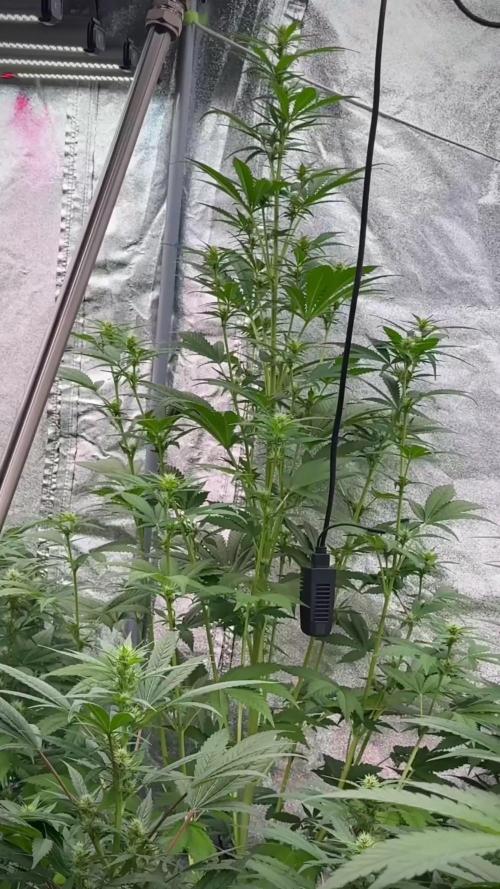
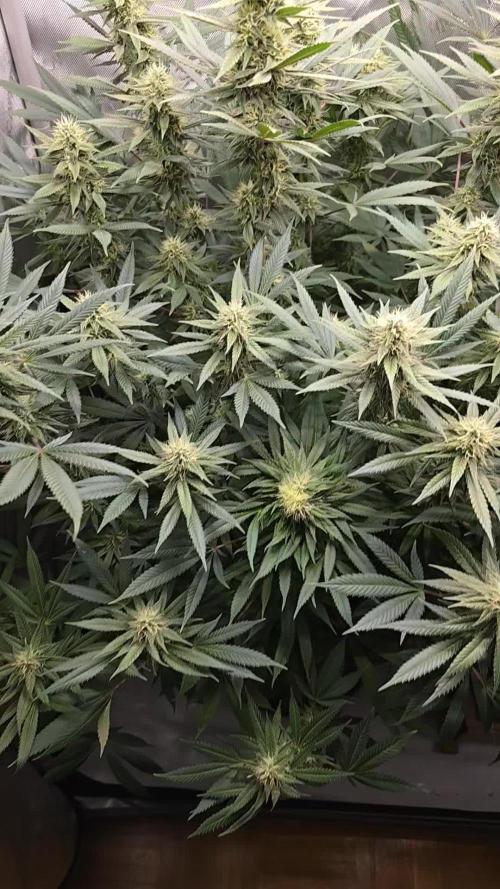
Week 3 Flower – Super Silver Haze (Zamnesia Seeds) Grower: Dog Doctor Strain: Super Silver Haze Breeder: Zamnesia Seeds Phenotypes: SSH #1 & SSH #2 Stage: Flower – Week 3 Pots/Medium: 11L fabric pots, custom super soil (Aptus amendments) Watering: Hand watering, irrigation by substrate moisture Tent: 8×8 shared room Control: TrolMaster Hydro-X + Tent-X, WCS substrate sensor Lighting (room): F.O.G. Black Series 600W + ThinkGrow ICL-300 (x2) + Lumatek Zeus Compact Pro 465W Climate this week: ~29.6 °C, 67% RH (VPD ≈ 1.37 kPa), CO₂ ~700 ppm ⸻ This Week at a Glance • Structure: Both phenos are thriving and still tracking like twins—compact plants with clean symmetry now at ~120 cm. Bud sites are stacking; white pistils are abundant. • Leaf morphology: Classic hybrid look—rounded blades, neither narrow “pure sativa” nor broad “pure indica.” • Roots: Pots are clearly “alive”—great colonization and visible vigor through the fabric. • Defoliation: Performed a light defol only to open the canopy and improve airflow/light to interior sites. No heavy stripping. • Media & feed: Continuing the same program as last week (Aptus + Plagron). No All-In-One Liquid for now—the super-soil and pellets are carrying base NPK exactly as intended. Fewer photos this week (busy!), but there’s a room video and a couple of room shots showing the general happiness of the canopy. ⸻ Feeding Program (unchanged from Week 2) • Aptus: Regulator, CalMag Boost, Top Booster • Plagron: Power Buds, Sugar Royal, Green Sensation • Why this mix now: We’ve pivoted from early growth stimulation to floral support, aromatics, and metabolic efficiency. The super-soil + pellets provide the backbone; the liquids fine-tune the bloom signal and energy management. (You noted solution pH ~6.3, low input EC because the medium is pre-charged, and healthy daily uptake at ~1.5–2.0 L per plant, irrigating around 19–20% substrate dryness, kept as operational context.) ⸻ Environment, Monitoring & Why It Matters • Temperature & RH: ~29.6 °C and 67% RH. That calculates to VPD ≈ 1.37 kPa (not “137”—decimal matters). • What this does: • VPD in the 1.2–1.5 kPa range drives active transpiration and nutrient flow—good for biomass and stacking. • With higher temps, plants demand steady water availability and reliable Ca/Mg delivery to avoid tip-burn or micro-deficiencies. • Risks if this persists: • In late flower, warm & humid microclimates can increase powdery mildew/Botrytis pressure inside dense colas. • Heat can push foxtailing, reduce volatile terpene retention, and increase overall plant stress. • Mitigations already in play: • Light defol to open the canopy (great call). • Strong, clean airflow in the 8×8 (dual 6″ exhausts with carbon filters + filtered intake). • TrolMaster WCS sensor guiding irrigation by moisture and watching substrate EC—keeps the rhizosphere stable. • AC unit arriving—expect a meaningful drop in day temps; aim to settle around mid-20s °C with RH mid-50s as flowers pack on. • Lighting layout: F.O.G. Black Series 600W + ThinkGrow ICL-300s + Lumatek Zeus 465W provide a broad, balanced spectrum across the room. PPFD varies by position (natural growth and fixture spread), which is fine—site-by-site variation keeps edges productive while the center stacks. As biomass increases, incremental dimming or fixture height tweaks can hold the canopy in that efficient PPFD window without overshooting. ⸻ Genetics Note (because she’s a queen) Super Silver Haze is old-school royalty—her name carries cups and history. Seeing these phenos remain compact, calm, and synchronized in early flower is a treat. It’s a reminder that legendary haze lines can deliver refined structure when the root zone, spectrum, and climate are in tune. Thank you to Zamnesia Seeds for the representation of this classic, so far, these two are everything we hoped for. ⸻ What to Watch Next • Stretch trajectory: At ~120 cm now, expect the last of the vertical push to taper soon. Netting/support only if needed—right now form is clean. • Microclimate hygiene: Keep leaves gently moving everywhere; defol only in small passes to avoid shocking resin production later. • Moisture-guided irrigation: Stay with the WCS moisture trigger to prevent both saturation pockets and drought spikes as flowers thicken. • AC commissioning: Once installed, re-check overnight RH (often creeps up in cooler dark cycles); a slight dehumid bump at lights-off is a big win for late-flower health. ⸻ Gratitude & Credits • Genetics: Zamnesia Seeds • Control & sensing: TrolMaster Hydro-X + Tent-X, WCS substrate sensor and more • Lighting: Future Of Grow Black Series 600W, ThinkGrow ICL-300 (x2), Lumatek Zeus Compact Pro 465W • Nutrition: Aptus Holland + Plagron • Room design: 8×8 with dual 6″ carbon-filtered exhausts and filtered intake From seed to now: steady hands, living soil, measured light, and a room that keeps getting smarter. These Super Silver Haze phenos are writing a beautiful chapter. On to Week 4. 📲 Don’t forget to Subscribe and follow me on Instagram and YouTube @DogDoctorOfficial for exclusive content, real-time updates, and behind-the-scenes magic. We’ve got so much more coming, including transplanting and all the amazing techniques that go along with it. You won’t want to miss it. • GrowDiaries Journal: https://growdiaries.com/grower/dogdoctorofficial • Instagram: https://www.instagram.com/dogdoctorofficial/ • YouTube: https://www.youtube.com/@dogdoctorofficial There’s a new series blooming and it’s more than just plants. It’s about process, patience, and paying attention. ⸻ Explore the Gear that Powers My Grow If you’re curious about the tech I’m using, check out these links: • Genetics, gear, nutrients, and more – Zamnesia: https://www.zamnesia.com/ • Environmental control & automation – TrolMaster: https://www.trolmaster.eu/ • Advanced LED lighting – Future of Grow: https://www.futureofgrow.com/ • Root and growth nutrition – Aptus Holland: https://aptus-holland.com/ • Nutrient systems & boosters – Plagron: https://plagron.com/en/ • Soil & substrate excellence – PRO-MIX BX: https://www.pthorticulture.com/en-us/products/pro-mix-bx-mycorrhizae • Curing and storage – Grove Bags: https://grovebags.com/ ⸻ We’ve got much more coming as we move through the grow cycles. Trust me, you won’t want to miss the next steps, let’s push the boundaries of indoor horticulture together! As always, this is shared for educational purposes, aiming to spread understanding and appreciation for this plant. Let’s celebrate it responsibly and continue to learn and grow together. With true love comes happiness. Always believe in yourself, and always do things expecting nothing and with an open heart. Be a giver, and the universe will give back in ways you could never imagine. 💚 Growers love to all 💚
Likes
62
Share
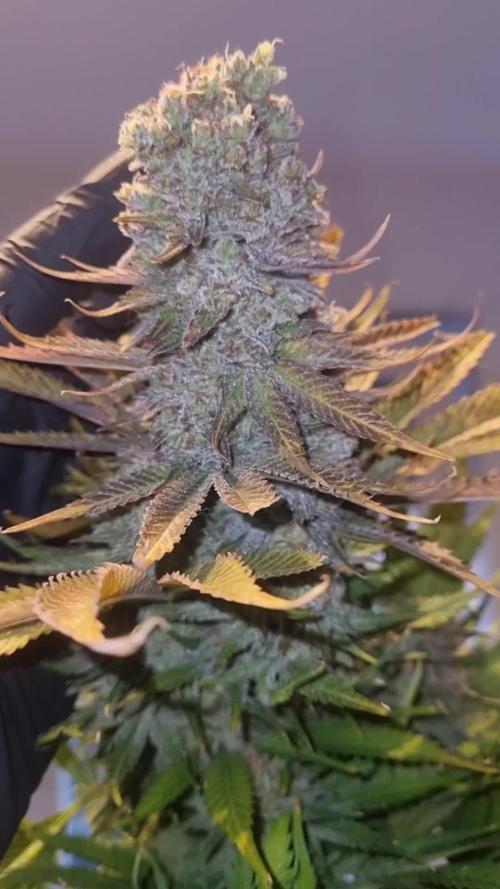
Buds evolving greatly , put in first P/K boost this week Buds are full of resin, real frosty, must be from UVA...last grow with same strain had much less resin at the same time and same conditions First signs of leafburn due to UVA, but only on 1 leaf so far...will keep the 5h / day
Likes
119
Share
Salutations, my fellow cultivators and botanical enthusiasts! Welcome to the much-anticipated Week 3 Flower Report for our radiant queen, Jealousy, in the Power Buds competition. The journey through the flowering phase is akin to watching a mesmerizing performance, and Jealousy, true to her name, has us all captivated. As we transition into the third week of flowering, the grow room has transformed into a sanctuary of delicate buds, and Jealousy, adorned in green jewels, is perpetually in prayer. It's like witnessing a botanical congregation, where each bud is a devout follower, reaching for the heavens in pursuit of the ultimate floral nirvana. Now, let's talk about the delay. The ticking clock of the contest deadline has kept us on our toes, and yet, Jealousy stands resilient. Despite the time constraints, she continues to unfurl her petals with grace, and I can't help but marvel at her determination. It's like a race against time where our green queen is sprinting toward the finish line with unwavering resolve. In the midst of this floral ballet, the clones, those green offshoots of our regal Jealousy, have rooted with astounding success. It's like witnessing the next generation of botanical royalty sprouting from the roots of their majestic ancestor. These rooted clones are not just a testament to Jealousy's genetic prowess but also a green insurance policy for the future. And let's not forget the continuous prayer pose that Jealousy maintains. This phenomenon, known as "praying leaves," where the foliage points upward toward the light source, is a visual testament to the plant's happiness and optimal conditions. It's like Jealousy is sending leafy blessings to the botanical gods, asking for a plentiful harvest. As we navigate the third week of flowering, let's extend our gratitude to Zamnesia and Plagron, the silent architects of our green utopia. Their contributions continue to shape the landscape of our horticultural adventure. A hearty applause to the Grow Diaries community – your shared experiences and collective wisdom are the threads that weave the fabric of our green journey. To my fellow contestants and growers, may your buds swell with abundance, and may the contest deadline bow down to the prowess of your green kingdom. Here's to a week of perpetual prayer, botanical grace, and the anticipation of a harvest that will leave us all in awe. Stay green, stay inspired, and keep cultivating those dreams! As always, thank you all for stopping by, for the love and for it all. This journey of mine would just not be the same without you guys. The love and support are very much appreciated, and I feel honored and blessed with you all in my life !!! With true love comes happiness. Always believe in yourself and always do things expecting nothing in return, with an open heart. Be a giver, and the universe will respond in ways you can’t even dream of . Friendly reminder: all you see here is pure research and for educational purposes only. Genetics - Jelousy @Zamnesia Nutrients @Plagron Light - @viparspectra P2000 Room size - 3x3 - 0,9x0,9
Likes
12
Share
Starting week 2 Veg - See below for specs Nutrient feeds remain the system Height - 2 inches (Not much progress in height) Width has definitely grown out Water feeds continue to be everyday - Have a gallon+Nutes Light Intensity - 100% *Mid-week review - 8/18* Introduced Cal-Mag (4 ml/Gal) Plants grown approximately .5 inches in height - 2.5 -3.0 inches in width Light Intensity 100% *End of week recap* (08/20) Both have grown about 1 - 1.5 inches in height and 2 - 2.5 inches in width. Fan leafs deep lushes green Bud sites topped Thus far all is running smoothly.
Processing
Likes
17
Share
Likes
10
Share
@LowzGrowz
Follow
Should Be Finnishing up any Day now Strong Aroma
Likes
4
Share
TODO VA GENIAL, MUCHISIMA RESINA Y OLOR EN ESTA ETAPA. HE NOTADO QUE ALGUNAS HOJITAS SE ESTAN QUEMANDO EN LAS PUNTAS Y DOBLANDOSE HACIA ARRIBA, SUPONGO QUE FUE DEMASIADA COMIDA. DE TODOS MODOS ES MINIMO, NADA DE QUE PREOCUPARSE POR EL MOMENTO, VOY A HACER DOS RIEGOS CON AGUA Y LUEGO VOLVEMOS A FERTILIZAR!
Likes
26
Share
@Haoss
Follow
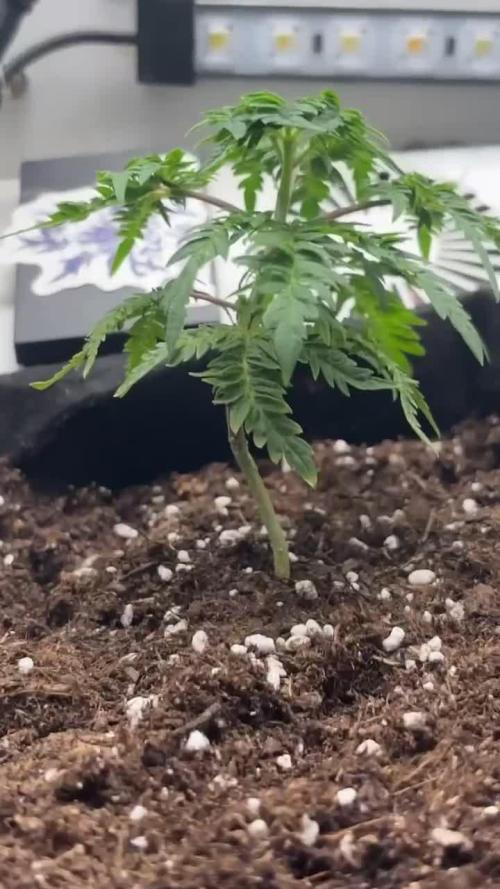
A new plant was born, thanks to the seeds of Zamnesia, I hope the best girl will grow up
Likes
57
Share
what do they say about different strains on the same RES, in the same pot??? welp, here goes nothing... Last time I saw this waterfarm I was still a teenager. Ran it in a closet with two 4ft flouro shop lights either side going vertically upward like the letter "A". Had two BIG ASS plants roughly 4ft tall in it side by side going STRONG! Healthy asf, huge ass healthy leaves, some 13 fingered. Flipped em and turned out BOTH were male... Been toying with the idea of doing it again... So what the hell... Here goes, 2 Girls 1 Cup or "pot"... One Herbies Godzilla Cookies Auto and one Fastbuds Wedding Glue Auto. Current setup: -36x36x60 tent -"1000w" led light (130w from the wall) -4in extraction fan/scrubber -20+ yr old GHE Waterfarm fitted with ice probe w/ controller and PLENTY of insulation around RES. -Multiple circulation fans -Taotronics humidifier Stay tuned to watch me fuck this up too 🤣 *Sow'd em both in organic peat pellets after a 24hr soak. Getting them acclimated to their new home early. Doing environment tests and dialing it in with the new to me ice probe, and the change to hydro versus soil plants that were in there. Will be more moisture in the air until a canopy covers my balls with the evaporation from the light. **lookey lookey, BOTH have come to life and are making way to the surface. Not long and they'll be in their new "cup". Last update on germination week as once they pop we start counting I suppose.
Likes
26
Share
Day 51 20/08/24 Tuesday Feed today using de-chlorinated tap water pH 6. With Plagron PK13-14 and power buds. Noticing the stretch stop, and now packing out there bud sites 💪💚 ACOP , Melonade Runtz have Xmas tree structure where as orange bud is pure tall sativa structure... The Overdose is a compact indica looking dwarf but the bud sites are packing out a punch 👊🤣 Day 54 23/08/24 Friday Watering only today using de-chlorinated tap water pH 6, I'm watering in 350ml no run off. 400ml I'm seeing tiny run off. Day 56 25/08/24 Sunday Water today using de-chlorinated tap water pH 6. Added bud candy and rhino skin 1ml per litre
Processing
Likes
4
Share
@Drtomb
Follow
I'm about 13 days from the 60 day mark. I can't remember the actual finish on this plant, but I'll figure it out this time. Seed breeder suggests 60 days.
Likes
4
Share
Vamos familia, actualizamos la novena y última semana de floración de estas Runtz de MSNL. La temperatura que estuvo entre los 22-24 grados y humedad dentro de los rangos correctos. Este armario se contaminó esta semana , tengo que para un poco para desinfectar todo bien. Las flores acaban madurando bien y se llenaron de tricomas, por el momento todo correcto, os dejé también alguna novedad y un cambio en la sala, agradecer al equipo de Mars hydro por el nuevo TSW2000. (los últimos 5 años cultive solo con los leds de esta marca). - os dejo por aquí un CÓDIGO: Eldruida Descuento para la tienda de MARS HYDRO. https://www.mars-hydro.com Hasta aquí todo, Buenos humos 💨💨💨
Likes
19
Share
DAY 1 (06/03/2020) The seedlings started growing tonight after 4 days since they were planted inside the rockwool cube (02/03/2020). They are under a 23w CFL until they are a little taller and start to make the first 2 leaves. The distance is very small from the light to not get them too stretched. Feeding just water now. I already prepared the RDWC setup with a 60 liters box (0,6 m x 0,4 m x 0,25 m) for 3 plants. The grow tent is 120x120 cm. The light will be a Sylvania 600w HPS powered by a Gib Ligthing LXG Timer 600w Electronic Ballast. Since it is dimmable I will start with 250w and increase in the first weeks until reaching 600w. The ballast has the Sunlight mode which increase the wattage of the lamp during the first hour and decrease during the last to simulate the sun cycle. DAY 5 (10/03/2020) Seedling are growing well. I started RDWC yesterday and put 25 liters of water with 15 ml of FloraCoco Grow, 15 ml of FloraMicro,15ml of FloraBloom. I also added 5 ml of Great White Mycorrhizae to strengthen roots. The water from my tap is 40 ppm , the water in the reservoir is 500 ppm. Increased power light to 350w. Temperature and Humidity when lights on: 23°C and 35%. Added a humidifier inside the room to increase humidity.
Likes
9
Share
El video mas comentado del momento...a ver qué te parece...son de plástico, no?!? Un saludo fuerte a todos los hermanos y hermanas growers... 420 Siempre y Dios Jah siempre en el comando....
Processing
Likes
29
Share
Likes
52
Share
Lacewings seemed to have mostly killed themselves by flying into hot light fixtures. I may have left the UV on which was smart of me :) Done very little to combat if anything but make a sea of carcasses, on the bright side its good nutrition for the soil. Made a concoction of ethanol 70%, equal parts water, and cayenne pepper with a couple of squirts of dish soap. Took around an hour of good scrubbing the entire canopy. Worked a lot more effectively and way cheaper. Scorched earth right now, but it seems to have wiped them out almost entirely very pleased. Attempted a "Fudge I Missed" for the topping. So just time to wait and see how it goes. Question? If I attached a plant to two separate pots but it was connected by rootzone, one has a pH of 7.5 ish the other has 4.5. Would the Intelligence of the plant able to dictate each pot separately to uptake the nutrients best suited to pH or would it still try to draw nitrogen from a pot with a pH where nitrogen struggles to uptake? Food for stoner thought experiments! Another was on my mind. What happens when a plant gets too much light? Well, it burns and curls up leaves. That's the heat radiation, let's remove excess heat, now what? I've always read it's just bad, or not good, but when I look for an explanation on a deeper level it's just bad and you shouldn't do it. So I did. How much can a cannabis plant absorb, 40 moles in a day, ok I'll give it 60 moles. 80 nothing bad ever happened. The answer, finally. Oh great........more questions........ Reactive oxygen species (ROS) are molecules capable of independent existence, containing at least one oxygen atom and one or more unpaired electrons. "Sunlight is the essential source of energy for most photosynthetic organisms, yet sunlight in excess of the organism’s photosynthetic capacity can generate reactive oxygen species (ROS) that lead to cellular damage. To avoid damage, plants respond to high light (HL) by activating photophysical pathways that safely convert excess energy to heat, which is known as nonphotochemical quenching (NPQ) (Rochaix, 2014). While NPQ allows for healthy growth, it also limits the overall photosynthetic efficiency under many conditions. If NPQ were optimized for biomass, yields would improve dramatically, potentially by up to 30% (Kromdijk et al., 2016; Zhu et al., 2010). However, critical information to guide optimization is still lacking, including the molecular origin of NPQ and the mechanism of regulation." What I found most interesting was research pointing out that pH is linked to this defense mechanism. The organism can better facilitate "quenching" when oversaturated with light in a low pH. Now I Know during photosynthesis plants naturally produce exudates (chemicals that are secreted through their roots). Do they have the ability to alter pH themselves using these excretions? Or is that done by the beneficial bacteria? If I can prevent reactive oxygen species from causing damage by "too much light". The extra water needed to keep this level of burn cooled though, I must learn to crawl before I can run. Reactive oxygen species (ROS) are key signaling molecules that enable cells to rapidly respond to different stimuli. In plants, ROS plays a crucial role in abiotic and biotic stress sensing, integration of different environmental signals, and activation of stress-response networks, thus contributing to the establishment of defense mechanisms and plant resilience. Recent advances in the study of ROS signaling in plants include the identification of ROS receptors and key regulatory hubs that connect ROS signaling with other important stress-response signal transduction pathways and hormones, as well as new roles for ROS in organelle-to-organelle and cell-to-cell signaling. Our understanding of how ROS are regulated in cells by balancing production, scavenging, and transport has also increased. In this Review, we discuss these promising developments and how they might be used to increase plant resilience to environmental stress. Temperature stress is one of the major abiotic stresses that adversely affect agricultural productivity worldwide. Temperatures beyond a plant's physiological optimum can trigger significant physiological and biochemical perturbations, reducing plant growth and tolerance to stress. Improving a plant's tolerance to these temperature fluctuations requires a deep understanding of its responses to environmental change. To adapt to temperature fluctuations, plants tailor their acclimatory signal transduction events, specifically, cellular redox state, that are governed by plant hormones, reactive oxygen species (ROS) regulatory systems, and other molecular components. The role of ROS in plants as important signaling molecules during stress acclimation has recently been established. Here, hormone-triggered ROS produced by NADPH oxidases, feedback regulation, and integrated signaling events during temperature stress activate stress-response pathways and induce acclimation or defense mechanisms. At the other extreme, excess ROS accumulation, following temperature-induced oxidative stress, can have negative consequences on plant growth and stress acclimation. The excessive ROS is regulated by the ROS scavenging system, which subsequently promotes plant tolerance. All these signaling events, including crosstalk between hormones and ROS, modify the plant's transcriptomic, metabolomic, and biochemical states and promote plant acclimation, tolerance, and survival. Here, we provide a comprehensive review of the ROS, hormones, and their joint role in shaping a plant's responses to high and low temperatures, and we conclude by outlining hormone/ROS-regulated plant-responsive strategies for developing stress-tolerant crops to combat temperature changes. Onward upward for now. Next! Adenosine triphosphate (ATP) is an energy-carrying molecule known as "the energy currency of life" or "the fuel of life," because it's the universal energy source for all living cells.1 Every living organism consists of cells that rely on ATP for their energy needs. ATP is made by converting the food we eat into energy. It's an essential building block for all life forms. Without ATP, cells wouldn't have the fuel or power to perform functions necessary to stay alive, and they would eventually die. All forms of life rely on ATP to do the things they must do to survive.2 ATP is made of a nitrogen base (adenine) and a sugar molecule (ribose), which create adenosine, plus three phosphate molecules. If adenosine only has one phosphate molecule, it’s called adenosine monophosphate (AMP). If it has two phosphates, it’s called adenosine diphosphate (ADP). Although adenosine is a fundamental part of ATP, when it comes to providing energy to a cell and fueling cellular processes, the phosphate molecules are what really matter. The most energy-loaded composition for adenosine is ATP, which has three phosphates.3 ATP was first discovered in the 1920s. In 1929, Karl Lohmann—a German chemist studying muscle contractions—isolated what we now call adenosine triphosphate in a laboratory. At the time, Lohmann called ATP by a different name. It wasn't until a decade later, in 1939, that Nobel Prize–-winner Fritz Lipmann established that ATP is the universal carrier of energy in all living cells and coined the term "energy-rich phosphate bonds."45 Lipmann focused on phosphate bonds as the key to ATP being the universal energy source for all living cells, because adenosine triphosphate releases energy when one of its three phosphate bonds breaks off to form ADP. ATP is a high-energy molecule with three phosphate bonds; ADP is low-energy with only two phosphate bonds. The Twos and Threes of ATP and ADP Adenosine triphosphate (ATP) becomes adenosine diphosphate (ADP) when one of its three phosphate molecules breaks free and releases energy (“tri” means “three,” while “di” means “two”). Conversely, ADP becomes ATP when a phosphate molecule is added. As part of an ongoing energy cycle, ADP is constantly recycled back into ATP.3 Much like a rechargeable battery with a fluctuating state of charge, ATP represents a fully charged battery, and ADP represents a "low-power mode." Every time a fully charged ATP molecule loses a phosphate bond, it becomes ADP; energy is released via the process of ATP becoming ADP. On the flip side, when a phosphate bond is added, ADP becomes ATP. When ADP becomes ATP, what was previously a low-charged energy adenosine molecule (ADP) becomes fully charged ATP. This energy-creation and energy-depletion cycle happens time and time again, much like your smartphone battery can be recharged countless times during its lifespan. The human body uses molecules held in the fats, proteins, and carbohydrates we eat or drink as sources of energy to make ATP. This happens through a process called hydrolysis . After food is digested, it's synthesized into glucose, which is a form of sugar. Glucose is the main source of fuel that our cells' mitochondria use to convert caloric energy from food into ATP, which is an energy form that can be used by cells. ATP is made via a process called cellular respiration that occurs in the mitochondria of a cell. Mitochondria are tiny subunits within a cell that specialize in extracting energy from the foods we eat and converting it into ATP. Mitochondria can convert glucose into ATP via two different types of cellular respiration: Aerobic (with oxygen) Anaerobic (without oxygen) Aerobic cellular respiration transforms glucose into ATP in a three-step process, as follows: Step 1: Glycolysis Step 2: The Krebs cycle (also called the citric acid cycle) Step 3: Electron transport chain During glycolysis, glucose (i.e., sugar) from food sources is broken down into pyruvate molecules. This is followed by the Krebs cycle, which is an aerobic process that uses oxygen to finish breaking down sugar and harnesses energy into electron carriers that fuel the synthesis of ATP. Lastly, the electron transport chain (ETC) pumps positively charged protons that drive ATP production throughout the mitochondria’s inner membrane.2 ATP can also be produced without oxygen (i.e., anaerobic), which is something plants, algae, and some bacteria do by converting the energy held in sunlight into energy that can be used by a cell via photosynthesis. Anaerobic exercise means that your body is working out "without oxygen." Anaerobic glycolysis occurs in human cells when there isn't enough oxygen available during an anaerobic workout. If no oxygen is present during cellular respiration, pyruvate can't enter the Krebs cycle and is oxidized into lactic acid. In the absence of oxygen, lactic acid fermentation makes ATP anaerobically. The burning sensation you feel in your muscles when you're huffing and puffing during anaerobic high-intensity interval training (HIIT) that maxes out your aerobic capacity or during a strenuous weight-lifting workout is lactic acid, which is used to make ATP via anaerobic glycolysis. During aerobic exercise, mitochondria have enough oxygen to make ATP aerobically. However, when you're out of breath and your cells don’t have enough oxygen to perform cellular respiration aerobically, the process can still happen anaerobically, but it creates a temporary burning sensation in your skeletal muscles. Why ATP Is So Important? ATP is essential for life and makes it possible for us to do the things we do. Without ATP, cells wouldn't be able to use the energy held in food to fuel cellular processes, and an organism couldn't stay alive. As a real-world example, when a car runs out of gas and is parked on the side of the road, the only thing that will make the car drivable again is putting some gasoline back in the tank. For all living cells, ATP is like the gas in a car's fuel tank. Without ATP, cells wouldn't have a source of usable energy, and the organism would die. Eating a well-balanced diet and staying hydrated should give your body all the resources it needs to produce plenty of ATP. Although some athletes may slightly improve their performance by taking supplements or ergonomic aids designed to increase ATP production, it's debatable that oral adenosine triphosphate supplementation actually increases energy. An average cell in the human body uses about 10 million ATP molecules per second and can recycle all of its ATP in less than a minute. Over 24 hours, the human body turns over its weight in ATP. You can last weeks without food. You can last days without water. You can last minutes without oxygen. You can last 16 seconds at most without ATP. Food amounts to one-third of ATP production within the human body.