


Likes
Comments
Share



Likes
3
Share

@zenderman
Follow
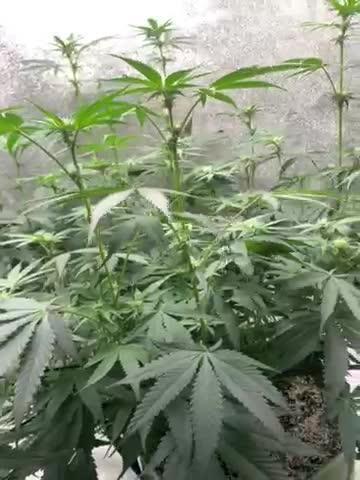
16/6/26.
day 15 of flowering.watered with all set of nutrients.
watering once in two days(4,5l on 20 l pot) with filtered and remineralised water PH6.0(twice only water,1-with nutrients)

Likes
110
Share


@Dennis_Bong
Follow
!!!!!!!!!!!!!!!!!!!!!!!!!!!!!!!!!!!!!!!!!!!!!!guckt euch letzen Report an !!!!!!!!!!!!!!!!!!!!!!!!!!!!!!!!!!!!!!!!!!!!!!!!!!!!!!
Blüte hat begonnen:
Edit:11.05
Die Pflanzen sind innerhalb von 2 Tagen explodiert. Ich habe das Licht nun auf 75 Prozent gestellt und noch einmal Cal-Mag nachgegeben, da die letzte Gabe nur eine halbe war. Die beiden Titan sehen fast identisch aus. Die beiden Epsilon sind circa 3 Tage unterschiedlich, eine ist etwa 5 cm kleiner als die andere und hat noch kaum Blüten. Ich denke, in 3 Tagen wird das der Fall sein. Die Cosmos F1 ist im Umfang circa 50-50 cm, kaum Blüten bisher. Ich hoffe, sie wird nicht noch viel größer, da der Platz langsam eng wird. Ich bin von dem Wachstum dieser Pflanze absolut begeistert. Mal gucken, was die Blüte bringt.
Edit ende
Ich habe alle Blüten entfernt, die nicht im direkten Licht sind, und alle Blätter, die die Blüten bedecken.
Die Pflanzen weisen einen Cal-Mag-Mangel auf, was bei der Blüte normal ist, gerade bei diesem Licht.
Ich habe dem Gießwasser etwas Cal-Mag hinzugefügt.
Die Pflanzen sind drei Tage älter als im letzten Report.
letzte Woche :
Die Pflanzen sind seit der Keimung auf diesen Fotos genau 30 Tage alt.
Ich habe eine Pflanze ausgetauscht, da es sich um eine Epsilon F1 handelte, die vermutlich Mutationen aufwies. Sie hatte verkümmerte Blätter, die nicht wie die ihrer Artgenossen aussahen, und wuchs deutlich langsamer. Daher habe ich sie nach 2,5 Wochen ausgetauscht. Der kleine Mann(die ausgetauschte Pflanze) leidet natürlich jetzt ein bisschen unter Lichtstress, deswegen werde ich wohl nur eine sehr gestauchte Pflanze erhalten. Aber besser, als die Fläche leer zu lassen.
So viel zu dem, was nicht funktioniert hat:
Die Sanlight stand die ersten 2 Wochen auf 20 Prozent.
Dann habe ich sie teilweise mit dem Dimmer höher gestellt: 2 Stunden auf 25 Prozent.
Eine Woche später bin ich auf 30 Prozent und 2 Stunden mit 35 Prozent gegangen.
Für Woche 4 habe ich 40 Prozent und 2 Stunden auf 45 Prozent gewählt.
Ich erhoffe mir, die Pflanzen so schneller an die starken Lampen zu gewöhnen.
Im Nächsten grow soll bei jeder Pflanze die TDS per Infrarot gemessen werden. Da werde ich dann ein Experiment zu machen, wie die Lichtsteigerung am besten umzusetzen ist.
Zu den Lampen kann ich bis jetzt nur Positives sagen. Im Gegensatz zur dazugehörigen App, diese ist wirklich nicht sehr gut umgesetzt. Das Menü und die Einstellungen sind teilweise irreführend und nicht sehr durchdacht. Ich muss mir immer wieder die Tutorials in der App ansehen, da diese immer wieder angezeigt werden.
Noch dazu hätte ich gerne die Möglichkeit, mehr Einstellungen treffen zu können. Das ist aber Meckern auf hohem Niveau, weil auch die App das macht, was sie soll, nur eben meiner Meinung nach nicht sehr gut umgesetzt.
Die Pflanzen wurden von mir mit Klipsen aus dem 3D-Drucker gestützt. Diese Klips kann man Stück für Stück im Winkel verstellen, so dass man die Triebe damit neigen kann. Das habe ich von Tag zu Tag im Winkel verstellt, so dass ich am Ende einen 45-Grad-Winkel habe. Das habe ich insgesamt über 6 Tage gemacht.
Die Pflanzen haben an sich ein sehr gleichmäßiges Wachstum. Die Cosmos F1 wächst so optimal, dass kein LST mit den Klipsen nötig ist. Ich habe an den Pflanzen keine Mängel entdecken können und auch keine Anzeichen von Mutationen.
Die Pflanzen haben im Durchschnitt eine Höhe von 35 cm, wobei eine etwas stärker abweicht mit 22 cm (wieder eine Epsilon F1). Der Umfang mit LST bei der Cosmos F1 liegt ohne LST bei 20 cm im Durchschnitt, wo wir wieder die Epsilon im Negativen haben mit 14 cm.
Die Pflanzen wurden alle entlaubt, das eine Woche vor der Blüte. Morgen werden die Pflanzen erneut entlaubt und ge-lollipoppt.
!!!!!!!!!!!!!!!zusätliche infos werden morgen ergänzt + Fotos !!!!!!!!!!!!!!!!!!!!!!!!!!!!!!!!
*1. Foto Mutation:
Dieses Foto wurde nur 5 Minuten nach dem Umtopfen der Pflanze aufgenommen. Vorher stand sie in einem größeren Topf, in dem sie genauso aussah. Ich habe sie umgetopft, weil ich den Topf brauchte, aber die Pflanze nicht wegwerfen wollte. Der Pflanze geht es gut, aber sie sieht im Moment etwas mitgenommen aus. Bilder folgen
Likes
10
Share


@Stork
Follow
Day 127 Mon
Add water
PH 5.8
EC 0.6
PPM 300
DLI
PPFD
Water 18
Day 128 Tue
Flushing
PH 6.0
EC 0.1
PPM 50
DLI
PPFD
Water 19c
Day 129 Wed
Add Ph Down
PH 6.3 - 5.9
EC 0.1
PPM 60 - 50
DLI
PPFD
Water 18c
Day 130 Thu
PH 5.9
EC 0.1
PPM 60
DLI
PPFD
Water 20

Likes
51
Share


@Cannabeast40
Follow
Finally harvest time arrived 🤗
It’s been a great run, though I had to improve a lot along the way. But as usual there was a way to get things done and finished up😎
After a long heatwave I decided to chop the whole tent, just a bit before I actually wanted to. But I see amber trichomes and heavy buds, so I think it’s safe to chop now, so here we go. 🤩
Can’t wait to taste this after so long watching over it🤤
More details to come.

Likes
213
Share


@Rock_n_Roll_Randy
Follow
35 days in flower and im seeing swollen bud sacks everywhere so..... IT WORKED. Nuken pollen on my monkey dough and gorilla glue and backcrossed a couple nukens
Likes
6
Share


@Young_agronomist
Follow
22.09.23- 84 день жизни замечательного растения !
Это финальная прямая 10 дней только вода , 4 из которых уже прошло ))
6 дней воды с пш, день засухи и харвест .
Шишки очень нравятся , жду не дождусь когда попробую . Очень плотные и твердые.
Для достижения большего количества трихом , за 2-3 дня буду царапать или раздваивать ствол в качестве эксперимента .
23.09.23-Продолжаю давать только чистую воду. Смотря на трахомы я вижу , что почти все облачные !
6 дней до харвеста
26.09.23- 88 дней от прорастания Все еще получает только воду !
Сегодня я оборвал все веерные листья, чтобы растение получило стресс и выкинула трихомы.
Завтра последний полив и 2 дня засухи перед харвестом .
28.09.23- 90 дней от всхода !
Вчера положил лед для лучшей выработки трихом и 1 день засухи 🙃
Likes
15
Share


@DailyhighclubNLyara
Follow
Still busy weeks lol,
The buds grew amazingly this week and I’m really happy with how dense the weed feels. Previous grown was under a Blurple 1000W (10W measured 😅) and vergeleken met de lamp die de dailyhighclub.nl aan mij heeft gegeven is dit 1000x beter. Dit licht komt gewoon zoals beschreven: DHCxAR1000 pro 110W Full Spectrum LED! Ja sowieso reclame hoort erbij en ik ben gewoon ontzettend tevreden met dit licht!
Ik probeer een zo budget mogelijke grow te kweken zodat iedereen zn eigen weed kan kweken. Autoflowers zijn bijna zo simpel als goede aarde an goed opletten op hoe je water geeft, liever te weinig dan te veel. Nou das niet zo moeilijk, zeg ik als lui persoon.
Maar DikkeToppenWilNietStoppen

Likes
9
Share


@HIAZ_urbanbudfarmer
Follow
Been a busy week getting the new setup going. She has been going really well , first week of flower , interested to see how she goes. She is a nice little plant problem free so far.


Likes
9
Share


@Gawelwel
Follow
4 jours après la transplantation elle a déja bien grandi, je lui coupe donc 2 branches et je vais pouvoir attendre qu'elle reprenne une forme normale. toujours 1 thé de compost par semaine.

Likes
24
Share


@Dr_Sampson
Follow
This experiment has taught me a great deal about all of these strains. I switched half way to NPK Raw and watched all the Harley Smith videos I could find. These strains all displayed differing deficiencies at different times. My 10L res PH, supporting 4 x 5g Buckets, plummets Daily failing from 6.5 to 5.3. Exclusivly H20 topups. Co-planting deficiency overall is that you can’t cater to anyone on a shared resivoir.


Likes
45
Share


@masterofsmeagol
Follow
8/1 This wad the most fucked up morning ever. Didn't get much time with the girls. I was able to take a few pics when I got back amd a video this morning. Pillars are still around. I killed a couple but I probably should spray BT. I think we got rain last night. Bags are heavy. I defoliated a little bit more on the interior and found some small yellow leaves. Event horizon is still on point to flower first. I NEED to lst and add supports for flower bit I've got a lot of other things going on too. I'm going to TRY to spray BT tonight if weather permits and I should have the supports up this weekend. At least that's what I'm hoping.
8/2 Quickly watered as I had to fix a flat tire to get my wife to the doctor. Gave most a gallon but closer to 3/4 on one event horizon and the sherb pie. Half g for the 10 and I gave the 5 and the 50 a little water. I didn't give the 50 much. That holds water far longer. I'm glad I got it done. It was 90°+ and sunny all day. Earlier everything looked great. I think I'm gonna go check them and maybe add a few pictures.
WENT OVER AND FOUND THE EVENT HORIZON I GAVE A LUTTLE LESS WATER TO, IN THE BACK COMPLETELY DEOOPED OVER AND DRY. I QUICKLY WATERED A GALLON. I CHECKED THE OTHER PLANTS AND SAW A COUPLE THAT "MIGHT'VE STARTED DROOPING BUT WERE LIGHT SO I GAVE ALL THE GMO'S HALF A GALLON. I WATERED THE CONTAINER PLANTS AND THE ONE IN THE 50. BETTER SAFE THAN SORRY. THEY WERE SUPER LIGHT. SOME ARE SHOWING SOME HEAT STRESS BUT I DONT BLAME THEM WHEN ITS PUSHING 100° OUT. I HOPE THIS PLANT WILL PICK UP BUT ILL HAVE TO WAIT UNTIL MORNING TO SEE. I GOTTA GO EAT DINNER AND IT WAS IN ROUGH SHAPE. CANT BELIEVE THIS. ITS THE FURYHEST IN FLOWER TOO. INTERNET TOO SLOW TO UPLOAD
8/3 This morning it was "maineing" out. Basically like raining but more of an alternating mist. The event horizon that looked DEAD is completely recovered! I'm so stoked. I've had a really rough few days but at least I've still got my girls. After this little bit of rain I'll do the supports and a spray of BT for the pillars. I'm noticing more damage and I don't want them arpund when they can burrow into buds.
WENT BACK AT LIKE FIVE. THE 5 GAL WAS DROOPING AND THE 10 WAS DRY AF. OTHERS WERE ALSO LIGHT. I USED 5 GALLONS ON THE GARDEN AS SOME STILL "LOOKED GOOD" BUT WERE DUSTY AND DRY. I ONLY GAVE THE GMO IN THE 30 A HALF GALLON. DIDNT WATER THE ECENT HORIZON IN THE BACK AND THE GMO IN THE FRONT BY THE DOOR ASXTHE LOOKED GOOD AND STILL HAD SOME WEIGHT TO THEM. THIS WAS ANOTHER DAY IN THE 90s THAT WAS SUPPOSED TO HAVE RAINED. LUCKILY IVE GOT THAT INTUITION AND I CAN CHECK. CAMS HELP WITH THAT BUT ITS BEST TO CHECK A FEW TIMES A DAY IN WEATHER LIKE THIS. FAR TO HOT TO SPRAY ANYTHING.
8/4 Chose not to water as we were supposed to get an inch of rain, then a half in and now it says .1in. I'm going to go over and check on the garden and see what they look like. I took pictures but I'll have to wait to upload them.
WENT BACK OVER IN THE AFTERNOON AROUND 2ISH. GMO IN THE FRONT WAS DROOPY. WATERED THAT A GALLON AND IT WAS UP BY THE TIME I LEFT. THE GMO ON THE END (MY CANARY) WAS SUPER LIGHT SO SHE GOT A GALLON. THE EVENT HORIZON I DIDNT WATER YESTERDAY GOT ABOUT 3/4 OF A GALLON AND I WATERED THE ONE IN THE 10 1/2 GALLON. SHOWERS ARE IN THE FORECAST AND EVERYTHING ELSE LOOKED PRETTY GOOD AND WASNT DEAD LIGHT. AS OF 3 EVERYTHING IS GOOD. I IMAGINE ILL PROBABLY NEED TO WATER SOMETHING TOMORROW. IT SUCKS HAVING TO DO THIS SEPERATELY BUT SOMETIMES THATS HOW IT GOES. I DONT EXPECT THESE 90 TEMPS WILL CONTINUE. ALSO NOTICING SOME FADING AS THEY TURN TO FLOWER. DEF NEED NUTES. AND ONCE THE TEMPS GO DOWN I NEED TO SPRAY EITHER BT OR SPINOSID.
8/5 It Rained last night so I didn't need to water. Everything was nice and heavy. Beautiful day today. Hopfully I can do an app of bt tonight. Weather man needs to get things right. It says we got .005in last night but I heard it and it was way more than that. This is a tiny town.
WENT BACK OVER AND FED. EVERYTHING GOT 1.75 PINTS. THE 10 GOT HALF THAT. THE FIVE A LITTLE LESS. I DEFINATELY NEED TO SPRAY FOR PILLARS. I ALSO HAVE A BIT OF DEFOLIATING ON A COUPLE PLANTS THAT I NEED TO DO. USUALLY I'VE LOST TONS OF LEAVES BY NOW. I JUST NEED TO IMPROVE AIRFLOW. THE TRELLIS WILL HELP WITH THAT PLUS SUPPORT. I THINK I MAY BE ABLE TO SPRAY PISSIBLY TONIGHT (DEPENDING ON WEATHER) AND SUPPORTS AND DEFOLIATION THE NEXT FEW DAYS.

Likes
36
Share


@GYOweed
Follow
One pheno smells like straight up slurricane i grew from clones so im sure not a mixed up seed lol
One pheno has not much scent and probably leans bubba kush.
I have no idea where this sweet candy berry pheno is coming from...probably wedding cake.
I hope to get some damn cheese from the 3rd one that i saved but didnt make the flower room cut.
Size and trichomes for week 3 is satisfactory given i did a heavy defoliaton at flip, and these are only 10L/3 gallon grow bags sharing a 200w light.
Tried to stop stretch with cytokinins and kelp but i may have to raise the lights?

Likes
33
Share


@Boos_Buds88
Follow
Day 69 for the blueberry, after her supercrop she's been topped all over to make lower growth become more dominant (more tops) she's coming along into a lovely bush shape 😍 nothing to report, we've had a 5 week draught with temps of 25-30°c so all my girls have been loving it 😁 happy & healthy so far, so good!

Likes
241
Share


@GERGrowDesigns
Follow
Sweet Seeds Tropicana Poison F1 Harvest on Day 80 After Round About 7 Weeks Flower . Amazing Strain with beatiful Dense Foxtail Buds and amazing Coloure Swap from RED to purple / Black . The Smell is Amazing Gas/Berry Type. The Smoke is Smooth . Couring some for the upcoming Summer .
Drying time : 8 days ~55% 20°

Likes
43
Share


@Indica_Jones
Follow
DFIe Buds entwickeln sich sehr gut :) diese Woche war relativ enbtspannt da ich hauptsächlich nur Gießen musste und das ein oder andere Sonnensegel entfernt habe damit ausreichend licht auf alle Buds fällt allerdings bin ich damit leider noch nicht fertig :)

Likes
14
Share

@Chubbs
Follow
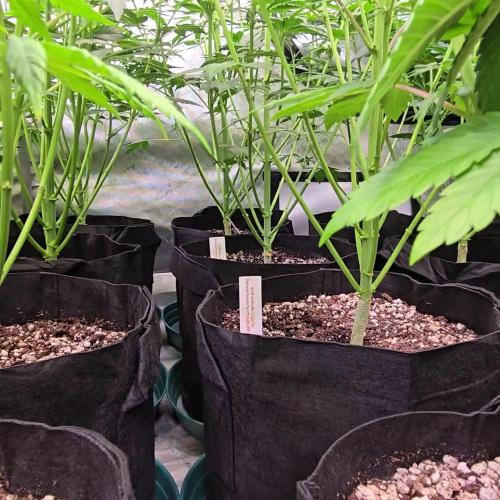
This week we did a major defoliation and lollipop on the girls. We also switched to Bloom A & B with a PK booster 3ml/gal of each. Over all I'm excited to see as they just started flower and look amazing. I bumped up the co2 this past week up to 750ppm. I can't wait to see the flower progression through the next few weeks.
Happy Growing
Likes
12
Share


@Elk419
Follow
Removed adjustable rope hangers from light. Stretch should be winding down.
Likes
2
Share


@High_Grade_Dadli
Follow
Missed last week update but did some cutting girls have to live up to the mission 73 between the 5 plant....added one more which was a cutting from a seed plant harvested previous...didn't look like I did anything so cut dem a few day later 85 between the same plants... only cut the lower half of G4 n smaller inside branches( going to stop they dont hold up well)
