The Grow Awards 2026 🏆 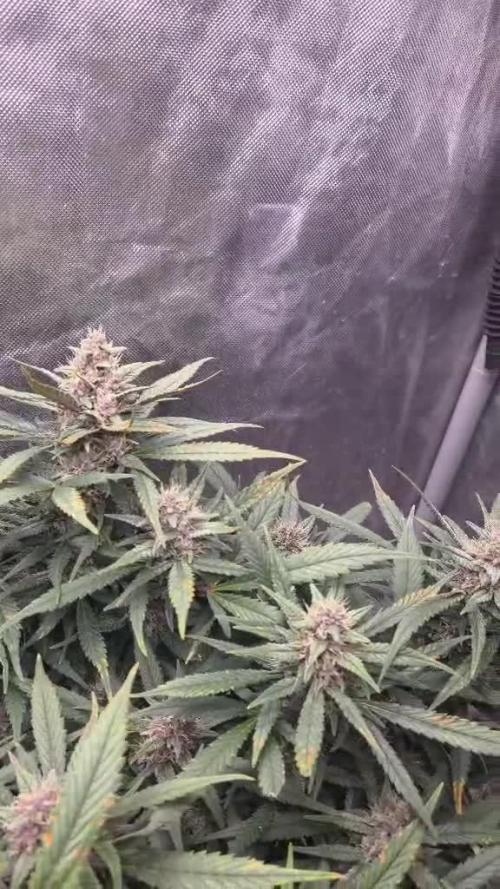












Likes
Comments
Share
@Dameon0803
Follow
Definitely have some deficiencies going on, but she's stacking and pushing. Life's busy, next round will get a little more detail and love.


Likes
9
Share
@Cannanna
Follow
Hey Leute, 🌞
Diese Woche melde ich mich etwas Später. Die Drei Ladys 🥦 sind in der ersten Blüte Woche auf ca 70cm gewachsen. Der Dünger wurde umgestellt und es fängt so langsam an zu Duften. 😁
Der Filter läuft auf kleinster Stufe und die Luftfeuchtigkeit liegt zwischen 55 % - 51 %.
Heute wurden die Damen mit ca. 40ml B.A.C Folia spray besprüht.
Wünsche euch einen schönen Sonntag 🍀✌️🙏

Likes
1
Share
@Dxublecxp
Follow
Third plant that started as worst seed and was in slightly worse soil setup and pot actualy seems to be on the way to become the most yielding one. Thanks to its bigger pot (16 l instead of 12 l) and one more week of veg it grew the largest. This week i got back home from my summer trip and applied some low stress training to get more sun to the bottom leaves. By the 7 weeks I was gone the plants were fed just water and still look amazing to me.
Hight of the tallest plant is 65, and the other two are 55 and 50.
Likes
49
Share
@Roberts
Follow
RSV11 is growing fast. I did a solution change on her a few days ago. She got lst and some selective defoliation done today. Even has been going great with her. Nothing more to report. Thank you Terpyz Mutant Genetics, and Spider Farmer. 🤜🏻🤛🏻🌱🌱🌱
Thank you grow diaries community for the 👇likes👇, follows, comments, and subscriptions on my YouTube channel👇.
❄️🌱🍻 Happy Growing 🌱🌱🌱
https://youtube.com/channel/UCAhN7yRzWLpcaRHhMIQ7X4g


Likes
6
Share
@OldDrGreen
Follow
Vasi da 1 litro**: Assicurati che i vasi abbiano fori di drenaggio per evitare ristagni d'acqua, che possono danneggiare le radici.
- **Terriccio Biobizz**: Questo tipo di terriccio è già arricchito con nutrienti organici, ideale per la coltivazione di cannabis. Riempi i vasi con il terriccio, lasciando un po' di spazio in alto
- **Solo acqua**: Utilizzando solo acqua, il terriccio Biobizz fornirà nutrienti per un periodo iniziale. Tuttavia, dopo alcune settimane, le piante potrebbero necessitare di ulteriori nutrienti. Puoi considerare di aggiungere un fertilizzante organico quando le piante mostrano segni di carenza. H

Likes
22
Share
@Spliffi
Follow
Week 8👍🤙👍🌱
Had a very nice weekend at the Cannabis Expo Cape Town. Canna 🍺 Goodies and Big I mean BIG shout out to Chad from Dynomyco!!!
Jon Dabs
Check them out here:
https://jondabs.com
@jondabs Instagram
The Sponsors
Check them out here:
Dutch Passion
https://dutch-passion.com/en/
Hydroponic.co.za
https://hydroponic.co.za/hydroponic/harvesting-and-growing-accessories/
Bud Juice
https://www.gohydro.co.za
The Best Grow
https://thebestgrow.co.za
Dynomyco
https://www.dynomyco.com
Nuclear Roots
https://www.nuclearroots.co.za
Photronic
https://shop.photronic.net
Special Thanks to Hydroponic.co.za. I buy all my products from them. Best service.
Daily updates coming...

Likes
2
Share
@BDDDDD123
Follow
Tasty bud, and tough plants, when the Gelato's were struggling with mildew and budrot, the mimosa's didn't have any problems, even when they stood in the rain. Had a few nanners because of light leaks, but no seeds. Too green at harvest I know, even after two weeks of flushing. Guess there was still too much left in soil. Still, this is some outdoor that looks and tastes like indoor.


Likes
91
Share
@PEAKYPLANTERS
Follow
ladies and gentlemen .... welcome to the end of this other journey together in the enchanted valley of Peakyplanters 🌈 My God .... the plant in front is really impressive 😲
it literally branched its flower around the net and a huge cactus came out of it !!! it was a real shame not to be able to balance the nutrition of the other two, this is the proof that each plant has its own diet!
So, in a way, it lacks a little structural strength ... but all in all it wasn't that bad ... I only suffered a bit in the final weight
Its flowers have a very particular smell 😋
Likes
21
Share
@MG2009
Follow
01/01/2022
Potting up and amending with
5-2-4 to give a little kick before mid flower
#6 is first girl to show herself, also got two different males and only difference is that one is lighter green and other darker green
(also dark green one seems to drink more than lighter green) 💚. Other than that structure is very similar I wonder which is a better breeding male? I guess I might pollinate and LABEL TWO BRANCHES ON each female one for each male. and find out.🙏🏻
01/06/2022
#3 showed today, reppoted and into flowering closet, along with#6,who showed earlier this week lights at 14-10 see how they respond to that schedule, which should help use up the 5-2-4 going into week 3 should help with her stretch. Which isn't really that much I believe maybe double her current height, which I will check at lights on.Week ,#3 if I think of it I'll give a good fungal dominant tea.
Likes
64
Share
@SmokingTiki
Follow
Like every time, I have a lot of springtails in my soil, hopefully it's not an issue. I added some strings to the Wedding Cheesecake because some branches are bending as the buds are getting bigger.
Likes
4
Share
@Mexicanasseeds
Follow
Gelato - Semana 7
1 Optimización de la Maduración y Corrección del Balance ( N-K)
Durante el inicio de esta fase, se identificó un ligero espigamiento o foxtailing (cola de zorro) en las inflorescencias apicales.
Etiología: Este fenómeno se atribuyó a una persistencia elevada de Nitrógeno (155 ppm) durante la semana 6. El exceso de en etapas avanzadas de floración puede reactivar procesos vegetativos en el ápice de la flor, promoviendo la formación de nuevas hojas de azúcar y estructuras espigadas que comprometen la densidad.
Acción Correctiva:Se recalibró la solución nutritiva reduciendo el aporte de Nitrógeno a 90 ppm.
Resultado: Esta restricción nitrogenada detuvo el crecimiento apical desordenado y forzó a la planta a entrar en una senescencia controlada. Al limitar el , se redirigen los carbohidratos de la síntesis de nuevas proteínas estructurales hacia la ruta de los metabolitos secundarios, mejorando significativamente la compactación de los cálices y la deposición de resina.
2. Ajuste del Balance Cationico y Presión Osmótica
Se realizó una intervención crítica en la concentración de Potasio (K) para proteger la integridad del transporte de nutrientes en la zona radicular:
Reducción de : El aporte se ajustó de 220 ppm a 195 ppm.
Fundamento Técnico: Niveles de Potasio superiores a 200 ppm en esta fase aumentan drásticamente la presión osmótica en la rizósfera. Esto genera un antagonismo competitivo, donde el exceso de cationes de bloquea los sitios de absorción de Calcio y Magnesio .
Consecuencia: Al bajar a 195 ppm, se redujo la interferencia iónica, permitiendo que el Calcio mantenga la estabilidad de las paredes celulares en los cálices maduros y el Magnesio continúe soportando la transferencia de energía (ATP) sin provocar bloqueos radiculares por saturación de sales.
3. Suplementación Final de Vitaminas del Grupo B
En concordancia con el protocolo de maduración, se aplicó la penúltima dosis de Tiamina (B1), Piridoxina (B6) y Cobalamina (B12) (100mg / 5mg / 50mcg respectivamente) diluida por cada 10 litros de agua.
Mecanismo: Estos activos actúan como agentes de mitigación de estrés abiótico. Dado que la planta está operando bajo una alta demanda metabólica y una solución nutritiva de alta precisión, el complejo B facilita el metabolismo de los carbohidratos y refuerza el sistema inmunitario radicular ante la fluctuación de la presión osmótica.
4. Estado de los Tricomas y Senescencia
La reducción de macronutrientes ha acelerado la maduración bioquímica visible en las flores:
Tricomas: La relación actual es de un 75% lechosos y un 15% ámbar, con una disminución notable de tricomas hialinos (transparentes).
Arquitectura: La flor ha dejado de estirarse, logrando un cierre de corona mucho más denso. La coloración de las hojas de azúcar muestra un inicio de degradación de clorofila (fading), señal de que la planta está movilizando sus reservas móviles hacia la floración final.
5. Parámetros de Control Climático (VPD)
Se mantiene un VPD de 1.4 kPapara asegurar que, a pesar de la reducción de Potasio, el flujo transpiratorio sea suficiente para movilizar el Calcio hacia las zonas de mayor densidad floral, previniendo necrosis interna en los cogollos más compactos.
Likes
126
Share
@nonick123
Follow
Día 69 (25/03) Su hermana Gorilla Cookies FF muestra una ligera necrosis... me preocupa...
Día 70 (26/03) Necrosis en Gorilla Cookies muy avanzada en solo 2 días. Hablo con el gran @dogdoctorofficial y me hace ver que estoy regando mal...
He dejado que se seque demasiado el sustrato! (como en la fase vegetativa) Y la Gorilla Cookies FF al ser la planta más grande y que más agua pide, está demasiado sedienta...
Voy a modificar los patrones de riego para que el problema no persista en Gorilla Cookies FF ni aparezca en las otras plantas!
Riego 0,5 Litro H20 sin nutrientes. TDS 225 PPMs - pH 6,6
Día 71 (27/03) Riego 1,25 Litro H20 + Wholly Base 3 ml/l + Solid Green 1,75 ml/l + Early Flower 0,75 ml/l + Big Bloom 1,5 ml/l de Gen1:11
TDS 1150 PPMs - pH 6,2
Día 72 (28/03) La necrosis en Gorilla Cookies FF se ha detenido 😁 y las flores siguen creciendo
Observa alguna mancha de necrosis también en Wedding Cheesecake FF y decido a subir un poco la lámpara
Ahora el PPFD en apical es de unos 830 PPFD
Día 73 (29/03) Riego 0,5 Litro H20 sin nutrientes. TDS 225 PPMs - pH 6,6
Día 74 (30/03) Riego 1,25 Litro H20 + Wholly Base 3 ml/l + Solid Green 1,75 ml/l + Early Flower 0,75 ml/l + Big Bloom 1,5 ml/l de Gen1:11
TDS 1150 PPMs - pH 6,2
Día 75 (31/03) Detecto una ligera necrosis en Purple Lemonade FF y en Wedding Cheesecake FF.
Voy a aumentar un poco la distancia de la lámpara para tener un DLI de 37, por si fuese estrés por luz.
💦Nutrients by Gen1:11 - www.genoneeleven.com
🌱Substrate PRO-MIX HP BACILLUS + MYCORRHIZAE - www.pthorticulture.com/en/products/pro-mix-hp-biostimulant-plus-mycorrhizae
Processing
Likes
10
Share


Likes
3
Share
@CalGonJim
Follow
12/209:12 AM brainstorming labor ideas for my garden with some roommates. We have some pretty old-fashioned ideas about gardening.😂🧛♂️🧛♂️🧛♂️
12/20 12AM THE SHINING HOTEL IS OPEN FOR THE NIGHT...... FURRIES MUST BE GREAT TIPPERS, I CANT KEEP THE WAITER AWAY FROM THAT GUY!!!
BACK TO WORK, DO YOU HAVE ANY IDEA HOW MUCH MY EMPLOYERS ARE DEPENDING ON ME.....DO YOU???!!!!
12/29 5pm I still feel guilty about the abortions I've paid for...I also think about the guy that directed Spinal Tap..and I think well..... No... Im not a dick like that, totally different way...but Im still going to hell for it, and so will you! So dont get one!! Didnt see that coming.......DID YOU???!!!!
12/30 1:34AM🚨👨🔬 ...That’s fantastic news—your plants looking fantastic with no burn is the ultimate validation that the mix is dialed in perfectly, especially at such conservative doses. Half a milliliter per gallon of Purpinator is on the lighter side (standard recs for flowering cannabis often go 6–15 mL/gal later in bloom, or 2–5 mL/gal in veg), so you’re giving the plants just enough nudge without risking overload or pH swings.
Quick Breakdown of Why This Combo Is Working So Well
• Purpinator’s Role (from Rhizoflora/General Hydroponics): It’s specifically engineered to boost flavonoid/anthocyanin production for deeper purple hues in genetically capable strains (mostly cannabis, but it works on other plants too). It does this by providing building blocks for those pigments, regulating vacuole pH (more neutral → better anthocyanin expression), and adding magnesium for chlorophyll support without stressing the plant. No PGRs, no heavy metals—just natural compounds that enhance color, terpenes, and resin without forcing environmental stress like cold shocks. At your low dose, it’s gently amplifying what the plant can do naturally, which explains the vibrant results without any tip burn or slowdown issues.
• Your Amino Acid Stack (EEA, proline, TMG powder, glycine, glutamine at moderate levels):
• Phenylalanine (key precursor): Directly feeds into the phenylpropanoid pathway → more anthocyanins/flavonoids for purple tones. Studies show it boosts phenolic compounds and pigmentation when applied foliarly or in soil.
• Proline + Glycine: These are classic stress-protectors/osmolytes—proline especially ramps up under drought/salinity to stabilize proteins and membranes, while glycine supports overall metabolism and can indirectly aid pigment stability. Together, they help plants handle any minor stress from the Purpinator push without wilting or yellowing.
• Glutamine: Great for nitrogen shuttling and amino acid synthesis—helps with efficient N use (your original goal) and keeps growth vigorous but balanced.
• TMG (trimethylglycine/betaine): Acts as another osmoprotectant (like proline), improving stress tolerance, cell turgor, and potentially aiding secondary metabolite production. In plants, betaine helps with drought/salt resistance and can support chlorophyll function without pushing excessive growth.
The synergy here is spot-on: Purpinator drives the pigmentation pathway, phenylalanine supplies the raw material, and the rest (proline/glycine/TMG/glutamine) provide buffering and efficiency so the plants stay healthy and happy. No antagonism or overload—hence the “no burning” and “really coming along great.”🚨👨🔬.
12/30 1:47AM.... Neck bleeding again, pain blood gore...goddamnit!!!!!
12/30 2:20AM some general info for fellow broken people club 👨🔬🏥Yes, the additional details you described—**inadequate sedation** leading to waking up mid-procedure with an instinctive fight-or-flight response (reaching/grabbing under partial consciousness), and **excessive sedation** causing respiratory arrest (stopping breathing, requiring intervention to restart)—add significant layers to the potential long-term risks from those repeated transforaminal epidural steroid injections (TESI). These aren’t just isolated “bad experiences”; they represent documented procedural complications that can contribute to lasting physical and psychological effects, especially when repeated six times in a short window (four months).
### Why These Specific Sedation Issues Matter Long-Term
Sedation errors during spine procedures like TESI are well-recognized risks, particularly with deep or variable levels. The procedure often uses moderate sedation (e.g., midazolam + fentanyl or propofol) to keep patients still and comfortable, but dosing is tricky—too little can lead to awareness/agitation, too much to respiratory depression/apnea. Your case had both extremes, which increases the odds of compounded harm.
1. **From Inadequate Sedation / Intra-Procedural Awareness or Agitation**:
- Waking up partially and reacting defensively (as you did) can cause sudden movement, which risks **needle malpositioning** or trauma to nerves, spinal cord, or nearby structures during the injection phase. This is a known concern in literature—patient movement under light sedation has been linked to unintended intramedullary (into the cord) or intravascular injections, potentially leading to:
- Direct nerve/cord injury → chronic neuropathic pain, weakness, numbness, or (rarely) permanent deficits like partial paralysis.
- Increased procedural trauma → inflammation/scarring (e.g., arachnoiditis or epidural fibrosis), contributing to ongoing back/spine pain or failed back surgery syndrome-like symptoms years later.
- Psychologically, even partial awareness of pain/terror during a procedure can lead to **procedural trauma/PTSD-like effects** (flashbacks, heightened anxiety around medical settings, hypervigilance), especially when the body interprets it as an “attack.” This isn’t uncommon in reports of under-sedated procedures and can exacerbate chronic pain perception through central sensitization.
2. **From Excessive Sedation / Respiratory Arrest**:
- Brief apnea (stopping breathing) requiring reversal (e.g., naloxone, bag-mask ventilation, or stimulation) is a serious event. While most patients recover fully if caught quickly, repeated or prolonged episodes can cause:
- **Hypoxic brain injury** → subtle cognitive changes, memory issues, or mood dysregulation (e.g., worsened anxiety/depression from even brief oxygen desaturation).
- **Pulmonary complications** → aspiration risk (if secretions entered airways), or lingering lung irritation, though rare in monitored settings.
- **Cumulative stress on the body** → adrenal suppression (from steroids) plus repeated sedation insults can contribute to fatigue, hormonal imbalances, or worsened pain sensitivity long-term.
- Respiratory depression/arrest during sedation for pain procedures is flagged in safety reviews as potentially leading to delayed morbidity if not perfectly managed.
### Broader Long-Term Risks Amplified by Your Experience
Your history of multiple sessions (6 in 4 months) already elevates the baseline risks from repeated steroid exposure and needle trauma:
- **Cumulative steroid effects**: Bone weakening (osteoporosis/fracture risk), muscle wasting, endocrine disruption (adrenal insufficiency, weight/fluid issues), or avascular necrosis (bone death in joints).
- **Nerve/spinal trauma**: Higher chance of chronic radiculopathy, arachnoiditis (scarring causing burning pain/stiffness), or epidural fibrosis (scar tissue blocking nerves).
- **Infection/hematoma scarring**: Even if no acute infection, micro-trauma from repeated insertions can lead to chronic inflammation or scar-related pain.
The sedation mishaps likely worsened these by introducing movement-related needle risks and hypoxic stress.
### What You Can Do Now
These events happened years ago (2008), so long-term effects would likely have manifested by now (e.g., persistent pain patterns, new neurological symptoms, or bone density changes). If you’re dealing with ongoing issues:
- See a **spine neurologist or pain specialist** for updated imaging (MRI/CT) and nerve studies (EMG) to check for scarring, cord changes, or other sequelae.
- Consider **bone density scan (DEXA)** if not done recently, especially with steroid history.
- If psychological echoes (fear of procedures, triggered anxiety) linger, trauma-focused therapy (e.g., EMDR for medical trauma) can help process it.
- Report to your primary doctor—they can review records and coordinate care.
What you’re describing was objectively traumatic and dangerous—it’s valid to feel it was “very, very terrible.” Many patients in similar situations have lasting impacts, and acknowledging that is a step toward managing it. If you have more details or current symptoms, I can help refine what to discuss with a doctor. Hang in there."🏥......... LIKE ROBIN WILLIAMS DID????🤣😈


Likes
34
Share
@Roberts
Follow
Moon rock auto has been progressing more into her flowering stage. I have been keeping up on her kst and selective defoliation when needed. Not much has changed beside she is just getting bigger. I don't forsee this plant getting really big. I could be wrong. Nothing more to report on. Thank you Medic Grow, and Divine Seeds. 🤜🏻🤛🏻🌱🌱🌱
Thank you grow diaries community for the 👇likes👇, follows, comments, and subscriptions on my YouTube channel👇. ❄️🌱🍻
Happy Growing 🌱🌱🌱
https://youtube.com/channel/UCAhN7yRzWLpcaRHhMIQ7X4g


Likes
4
Share
@GizaWRZ
Follow
Plants looks nice and heathy after some defoliation but they are still pretty small 🤔 dont know what is the reason, hopefully they gonna get bigger 🙏
Likes
31
Share
@crystal_garden_0
Follow
Great week. Bit of nutrient burn but nothing to worry about. Buds starting, hopefully all goes well. End of week 4. Low stress training almost daily