The Grow Awards 2026 🏆
Likes
Comments
Share
@Organic_G
Follow
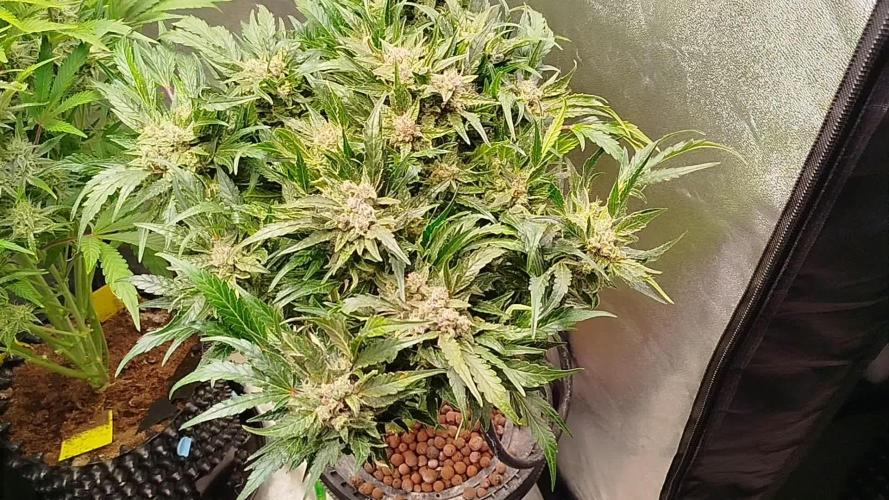
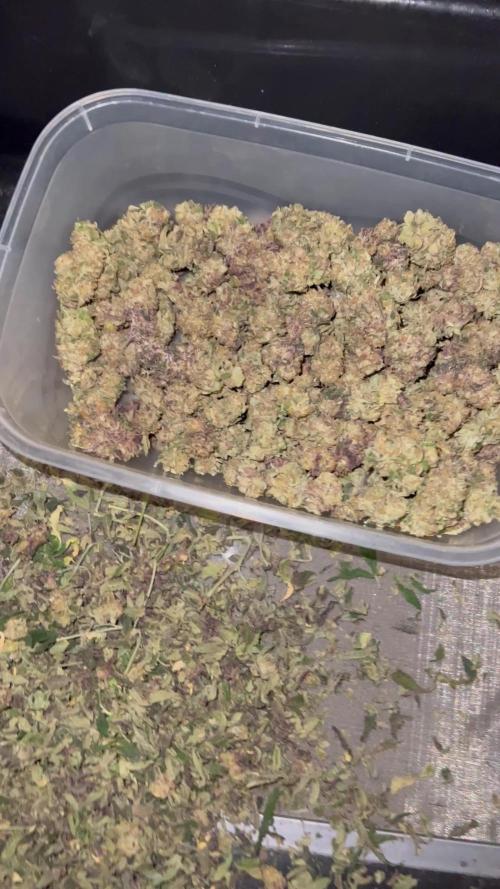
Mein bester und Ertragreichster grow kommt zum Ende… 115,5 g Shuga Leaves/small Buds 450g Proper Buds
Likes
12
Share
Productive week, finally raised the funds for a 1000w led and a new tent so I've moved my OG indoors to finish her off 👍🏻
Likes
20
Share
@Hashy
Follow
Week 8 Light cycle=12/12 Light Power=180w Extractor controller settings High temp= 24c Low temp= c Temp step=0c High Rh= 50% Low Rh= % Rh step=0% Speed max=10 Speed min=1 Smart controller settings (during lights on). Lights on=10.01-21.59 Radiator on= below 22.0c Radiator off= above 23.0c Dehumidifier on= not in use Dehumidifier off= not in use Smart controller settings (during lights off). Lights off=22.00-10.00 Radiator on= below 18c Radiator off= above 19c Dehumidifier on= not in use Dehumidifier off= not in use VPD aim=0.6-1.4 DLI aim=40-45 EC aim=1.9 PH aim=6.4 Thur 15/2/24 #2 (Day 50)(Day 18 flower) 📋 H=93cm D=19cm DLI=65.0 Hst, remove some side branches. Fri 16/2/24 💧💧💧💧💧💧💧💧💧💧💧💧💧💧💧💧 Method= automatic Feed=bloom nutes. Neutralise=0.1ml/L Silicon=1.0ml/L Calmag=0.75ml/L Terra Bloom=4.0ml/L Sumo Boost=2.0ml/L Roots=0.2ml/L Easy Ph down=0.11ml/L Ec=1.85 PH=6.4/6.6 Time start=12.00pm Finish time=13.45pm (11×5 minute runs with 5 minute gaps) Total flow rate=190ml/min Flow rate per plant=47ml/min. Total volume made=13L(13.5L) Total volume left=3L Total volume used=10.5L Volume per plant=2.6L (Est) Runoff. Total runoff=1.2L Ec=2.13 PH=6.1/6.3 💧💧💧💧💧💧💧💧💧💧💧💧💧💧💧💧 #2 (Day 51)(Day 19 flower) 📋 she is starting to show signs of light stress. Lowered light power from 180w to 170w. New DLi=60.0 Sat 17/2/24 #2 (Day 52)(Day 20 flower) 📋 H=94cm D=18cm DLI=62.7 Sun 18/2/24 #2 (Day 53)(Day 21 flower) 📋 Lowered light power again as they are showing a bit of stress from the light. Power was 170w now 160w. I'm going to have to have a think about my next grow, either I stick with this tent and hit the plants hard with light when I flip to flower to keep them small, or try and cram a slightly bigger tent in the space allocated for it. This tent is 61×76×150cm with the option to extend it to 173cm. Mine is configured to the 150cm height, but because its extendable the top 30cm is inaccessible at the best of times let alone when the plants reach a decent height. Extending this tent will be pointless because that's another 23cm of inaccessible space. Besides I only have a max head room for 160cm where the tent is. Mon 19/2/24 #2 (Day 54)(Day 22 flower) 📋 H=96cm D=16cm DLI=62.7 HST Tue 20/2/24 💧💧💧💧💧💧💧💧💧💧💧💧💧💧💧💧 Method= automatic Feed=water Neutralise=0.1ml/L Easy Ph down=0.01ml/L Ec=0.2 PH=6.2/6.2 Time start=12.00pm Finish time=13.45pm (11×5 minute runs with 5 minute gaps) Total flow rate=190ml/min Flow rate per plant=47ml/min. Total volume made=13L Total volume left=2.4L Total volume used=10.6L Volume per plant=2.6L (Est) Runoff. Total runoff=1.25L Ec=1.33 PH=6.4/6.4 💧💧💧💧💧💧💧💧💧💧💧💧💧💧💧💧 #2 (Day 55)(Day 23 flower) 📋 Wed 21/2/24 #2 (Day 56)(Day 24 flower) 📋 H=100cm D=12cm DLI=65. She has reached a nightmare hight for this tent and I can't get my camera in there to take any pictures. She is progressing at a decent speed and looking great, she is showing a few signs of heat/Light stress so I'll have to dim the light a little soon. Back soon. Take it easy.
Likes
6
Share
@IamCy
Follow
She's starting to fatten up nicely! Terps still off the meter,and the roots are ridiculous. Definitely one of the best plants I've ever grown.
Likes
126
Share
@nonick123
Follow
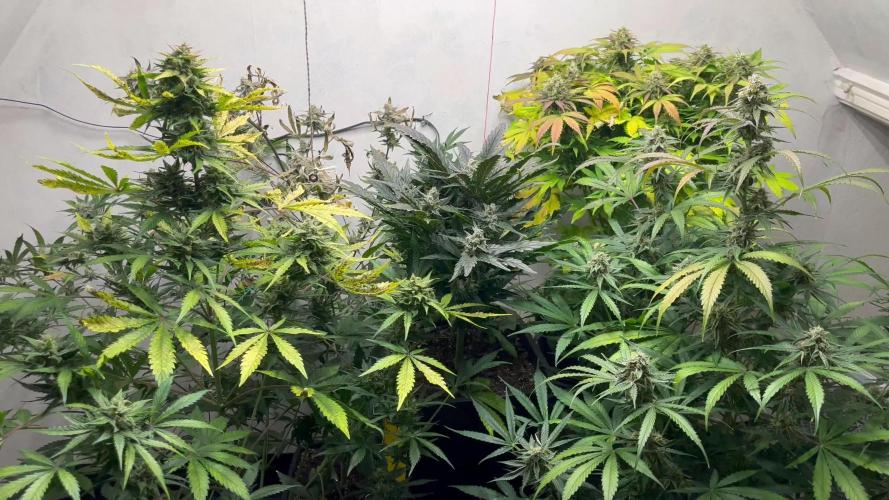
Día 69 (25/03) Su hermana Gorilla Cookies FF muestra una ligera necrosis... me preocupa... Día 70 (26/03) Necrosis en Gorilla Cookies muy avanzada en solo 2 días. Hablo con el gran @dogdoctorofficial y me hace ver que estoy regando mal... He dejado que se seque demasiado el sustrato! (como en la fase vegetativa) Y la Gorilla Cookies FF al ser la planta más grande y que más agua pide, está demasiado sedienta... Voy a modificar los patrones de riego para que el problema no persista en Gorilla Cookies FF ni aparezca en las otras plantas! Riego 0,5 Litro H20 sin nutrientes. TDS 225 PPMs - pH 6,6 Día 71 (27/03) Riego 1,25 Litro H20 + Wholly Base 3 ml/l + Solid Green 1,75 ml/l + Early Flower 0,75 ml/l + Big Bloom 1,5 ml/l de Gen1:11 TDS 1150 PPMs - pH 6,2 Día 72 (28/03) La necrosis en Gorilla Cookies FF se ha detenido 😁 y las flores siguen creciendo Observa alguna mancha de necrosis también en Wedding Cheesecake FF y decido a subir un poco la lámpara Ahora el PPFD en apical es de unos 830 PPFD Día 73 (29/03) Riego 0,5 Litro H20 sin nutrientes. TDS 225 PPMs - pH 6,6 Día 74 (30/03) Riego 1,25 Litro H20 + Wholly Base 3 ml/l + Solid Green 1,75 ml/l + Early Flower 0,75 ml/l + Big Bloom 1,5 ml/l de Gen1:11 TDS 1150 PPMs - pH 6,2 Día 75 (31/03) Detecto una ligera necrosis en Purple Lemonade FF y en Wedding Cheesecake FF. Voy a aumentar un poco la distancia de la lámpara para tener un DLI de 37, por si fuese estrés por luz. 💦Nutrients by Gen1:11 - www.genoneeleven.com 🌱Substrate PRO-MIX HP BACILLUS + MYCORRHIZAE - www.pthorticulture.com/en/products/pro-mix-hp-biostimulant-plus-mycorrhizae
Processing
Likes
13
Share
We are really happy to show youethe progress of the girl's, we are going to upload the week's that'we couldn't Upload from the app, we are getting really frosty on these two Epic Genetics Strains, the epical widow and epic spigol Field, both really beautiful Strains
Likes
13
Share
@Hashy
Follow
This week has gone well. 6 plants in such a small space is playing havoc with the humidity but I feel I'm just about on it enough not to cause any rot. The Cherry Cola is really developing quickly, the Hst where I snapped the main cola seems to have repaired itself. ******competition time****** I have an extra pack of 3 seeds of this strain that I'm willing to give away to UK growers. To win this pack all you have to do is guess the dry weight and put your guess in the comments. Closest guess wins the seeds. Notes. Extractor settings. Temp 28c step 2c Humidity 50% steps 2% Max speed 8 Min speed 1 Day 43 Saturday 15/10/22 Feed= autofeed 2hrs Volume= 10L, Ec= 1.51, PH=6.2 Left= 4L, Used= 6L = 1L each Runoff= 0L, Ec= , PH= Lifted light 4cm Day 44 Sunday 16/10/22 #4 H=CM, D=CM, DLI=43.1, PPFD=599 Day 45 Monday 17/10/22 Feed=autofeed 2.5hrs Volume= 10L, Ec= 1.5, PH=6.2 Left= 2.5L, Used= 7.5L =1.25L each Runoff= 0.7L, Ec= 2.3, PH=6.1 Big defol on all 6. Humidity to high really. Day 46 Tuesday 18/10/22 Extractor settings. Temp 26c step 2c Humidity 55% steps 2% Max speed 10 Min speed 1 #4 H=CM, D=CM, DLI=40.1, PPFD=557 Day 47 Wednesday 19/10/22 Feed=autofeed water 3hrs Volume= 10L, Ec= 0.2, PH=6.2 Left= 1L, Used= 9L = 1.5L each Runoff= 1.8L, Ec= 2.2, PH=6.1 Day 48 Thursday 20/10/22 Day 49 Friday 21/10/22 Neutral 0.1ml/L Silicon 0.75ml/L Calmag 0.25ml/L Bloom 3.0ml/L Boost 2.0ml/L Pk boost 1ml/L Ec 1.85 Ph 6.6 Feed=autofeed 3hrs Volume= 10L, Ec= 1.85, PH= 6.6 Left= 1L, Used= 9L = 1.5L each Runoff= 1.8L, Ec= 2.12, PH=6.1 #4 H=60CM, D=40CM, DLI=36.2, PPFD=502 Viparspectra xs2000 75% power 7 days £0.30 /Kwh = £7.56 for the week. Thanks for stopping by. Take it easy.
Likes
11
Share
Likes
4
Share
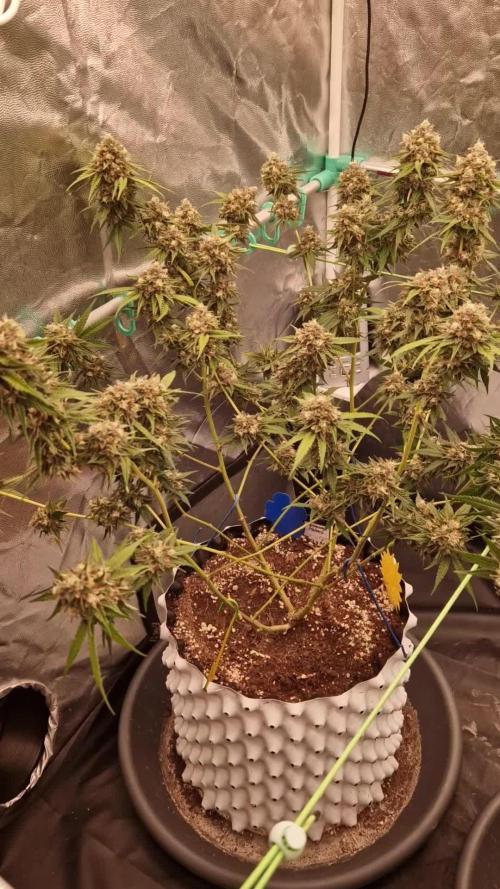
Blue Cheese is officially in beast mode. She’s spread wide like a bonsai on steroids and showing off over 30+ bud sites across a super flat, trained canopy. Every top is reaching for the light—she’s stacking up nicely and loving the MPK boost. The smell is starting to whisper cheesy promises, and the stretch is just about done. Leaves are praying, growth is explosive, and airflow is steady. To do list Light defoliation to open up lower sites. Feeding bloom nutrients + MPK for stacking.
Likes
10
Share
Likes
56
Share
Once again she passes my expectations, late to the show with trichome production. I'm surprised there is purple on the bud, maybe Purpinator does work. I thought I could see hints under the grow lights and thought my eyes were deceiving me, I was just being hopeful. But nah 2 of the 3(under the UV) have developed a beautiful tone of purple. I was never going to bother with a deep freeze but maybe the whole bud will change given conditions, that would be something, fingers crossed. 🤔 was a little skeptical that reducing temps humidity would change density, but it does, buds are solid something I've not been able to achieve before. Rule of thumb is never to surpass 60% RH in the flowering phase and try to progressively reduce it down to 40% in the last 2–3 weeks before harvest. The plant will react as it seeks to protect its flowers, responding by producing denser buds and a higher concentration of resin. Cannabis plants are sensitive to sudden temperature changes, especially in the flowering stage. Extreme heat or cold can impact bud density and overall yields. In nature as a defense mechanism from cold, the plant sensing sudden dips in temperature will attempt to remove the pockets of air within the bud, it achieves this by compacting itself in doing so to better protect itself from cold snaps which are normally indicators in nature that worse weather is on the way. Terpene levels are the highest just before the sun comes out. Ideally, you want as many terpenes present in your plants as possible when you harvest. Cannabis plants soak up the sun during the day and produce resin and other goodies at night. The plant is at its emptiest from "harvest undesirables," so to speak,k right before the lights come on. Freshly cut buds are greener than dried buds because they still contain loads of chlorophyll. However, when rushed through the drying process, the buds dry but retain some chlorophyll, and when you smoke it, you will taste it. Chlorophyll-filled buds are smokable, but they aren’t clean. Slow drying gives the buds enough time and favorable conditions to lose the chlorophyll and sugars, giving you a smoother smoke. How the plant disposes of the chlorophyll and sugars by a process of chemically breaking them down and attaching the decomposed matter once small enough to water molecules, which then evaporate back into the ether. Time must be given to the process to break down the chlorophyll and sugars. Think of it like optimizing the environment for decay. Plant growth and geographic distribution (where the plant can grow) are greatly affected by the environment. If any environmental factor is less than ideal, it limits a plant's growth and/or distribution. For example, only plants adapted to limited amounts of water can live in deserts. Either directly or indirectly, most plant problems are caused by environmental stress. In some cases, poor environmental conditions (e.g., too little water) damage a plant directly. In other cases, environmental stress weakens a plant and makes it more susceptible to disease or insect attack. Environmental factors that affect plant growth include light, temperature, water, humidity, and nutrition. It's important to understand how these factors affect plant growth and development. With a basic understanding of these factors, you may be able to manipulate plants to meet your needs, whether for increased leaf, flower, or fruit production. By recognizing the roles of these factors, you'll also be better able to diagnose plant problems caused by environmental stress. Water and humidity *Most growing plants contain about 90 percent water. Water plays many roles in plants. It is:* A primary component in photosynthesis and respiration Responsible for turgor pressure in cells (Like the air in an inflated balloon, water is responsible for the fullness and firmness of plant tissue. Turgor is needed to maintain cell shape and ensure cell growth.) A solvent for minerals and carbohydrates moving through the plant Responsible for cooling leaves as it evaporates from leaf tissue during transpiration A regulator of stomatal opening and closing, thus controlling transpiration and, to some degree, photosynthesis The source of pressure to move roots through the soil The medium in which most biochemical reactions take place Relative humidity is the ratio of water vapor in the air to the amount of water the air could hold at the current temperature and pressure. Warm air can hold more water vapor than cold air. Relative humidity (RH) is expressed by the following equation: RH = water in air ÷ water air could hold (at constant temperature and pressure) The relative humidity is given as a percent. For example, if a pound of air at 75°F could hold 4 grams of water vapor, and there are only 3 grams of water in the air, then the relative humidity (RH) is: 3 ÷ 4 = 0.75 = 75% Water vapor moves from an area of high relative humidity to one of low relative humidity. The greater the difference in humidity, the faster water moves. This factor is important because the rate of water movement directly affects a plant's transpiration rate. The relative humidity in the air spaces between leaf cells approaches 100 percent. When a stoma opens, water vapor inside the leaf rushes out into the surrounding air (Figure 2), and a bubble of high humidity forms around the stoma. By saturating this small area of air, the bubble reduces the difference in relative humidity between the air spaces within the leaf and the air adjacent to the leaf. As a result, transpiration slows down. If the wind blows the humidity bubble away, however, transpiration increases. Thus, transpiration usually is at its peak on hot, dry, windy days. On the other hand, transpiration generally is quite slow when temperatures are cool, humidity is high, and there is no wind. Hot, dry conditions generally occur during the summer, which partially explains why plants wilt quickly in the summer. If a constant supply of water is not available to be absorbed by the roots and moved to the leaves, turgor pressure is lost and leaves go limp. Plant Nutrition Plant nutrition often is confused with fertilization. Plant nutrition refers to a plant's need for and use of basic chemical elements. Fertilization is the term used when these materials are added to the environment around a plant. A lot must happen before a chemical element in a fertilizer can be used by a plant. Plants need 17 elements for normal growth. Three of them--carbon, hydrogen, and oxygen--are found in air and water. The rest are found in the soil. Six soil elements are called macronutrients because they are used in relatively large amounts by plants. They are nitrogen, potassium, magnesium, calcium, phosphorus, and sulfur. Eight other soil elements are used in much smaller amounts and are called micronutrients or trace elements. They are iron, zinc, molybdenum, manganese, boron, copper, cobalt, and chlorine. They make up less than 1% of total but are none the less vital. Most of the nutrients a plant needs are dissolved in water and then absorbed by its roots. In fact, 98 percent are absorbed from the soil-water solution, and only about 2 percent are actually extracted from soil particles. Fertilizers Fertilizers are materials containing plant nutrients that are added to the environment around a plant. Generally, they are added to the water or soil, but some can be sprayed on leaves. This method is called foliar fertilization. It should be done carefully with a dilute solution because a high fertilizer concentration can injure leaf cells. The nutrient, however, does need to pass through the thin layer of wax (cutin) on the leaf surface. It is to be noted applying a immobile nutrient via foliar application it will remain immobile within the leaf it was absorbed through. Fertilizers are not plant food! Plants produce their own food from water, carbon dioxide, and solar energy through photosynthesis. This food (sugars and carbohydrates) is combined with plant nutrients to produce proteins, enzymes, vitamins, and other elements essential to growth. Nutrient absorption Anything that reduces or stops sugar production in leaves can lower nutrient absorption. Thus, if a plant is under stress because of low light or extreme temperatures, nutrient deficiency may develop. A plant's developmental stage or rate of growth also may affect the amount of nutrients absorbed. Many plants have a rest (dormant) period during part of the year. During this time, few nutrients are absorbed. Plants also may absorb different nutrients as flower buds begin to develop than they do during periods of rapid vegetative growth.
Likes
4
Share
this is the start of the GG4 sherbet FF by 420 fast buds I’m super excited to start this one. I can’t wait to see if there’s any citrus notes in it and remember gave one seed to a buddy it’s 420 somewhere ™️
Likes
9
Share
9/22 topped them at 4th node. some of them are looking better for mainlining that others. some of them i may not mainline and others i left an extra node in case i want to keep clones around. #1 is looking happy with the topping and looks really good. #2 is the only one thats been praying and is the tallest and strongest looking all around. #5 short and such tight internodal spacing that it makes it hard to see whats all there. just looks like a bunch of small leaves until they grow out. i may not mainline this one either be cause of it being so tightly packed it may make it 9/27/24 day 20 theyre growing quite well. #1 i ended up taking the bottom nodes. i was originally goi g to use them as clones later on but decided to just let her go with her 4 nodes. #5 is so tightly packed, she has like 8 mains all in such a small space, its hard to even make sense of it all.
Likes
36
Share
@GYOweed
Follow
New rule: If your fan leaves aren't bigger than your hand and super green after a month of veg in 3 gallon pot then you got the wrong genetics or something.
Likes
8
Share
Hello everyone, The girls are finally outside in 20 gallon fabric pots. This season I have a greenhouse for them and I hope it goes good. Still have to build the first cages around them and start stretching them. 🎊🎉 finally, summer is here 🎉🎊 See you guys next week 🤞🤞🤘🤘👊👊👊
Likes
20
Share
Endspurt 🤗 Es wird sich hier nur noch um Tage handeln🙌 dann heißt es endlich... Erntezeit😅 Es duftet herrlich und die Knospen sind ordentlich geschwollen und können noch ein kleines bisschen😉😁 Fortsetzung folgt...✌️😊💚