


Likes
Comments
Share

@Kaya666
Follow
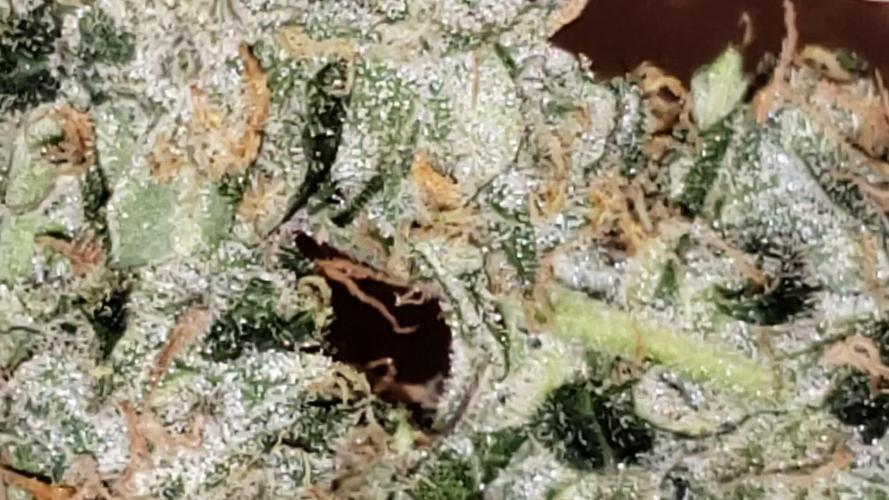
Dry yield is sadly an estimate, as I smoked some as it cured and then sort of got my jars mixed up lol. But the top half of the plant was definitely 5.6 grams. Then I just added what I thought to be the second box of buds lol woops. 9.3g is the LOW estimate of dry weight. Either way, it'll last me ages.


Likes
3
Share

@BlunthumbMD
Follow
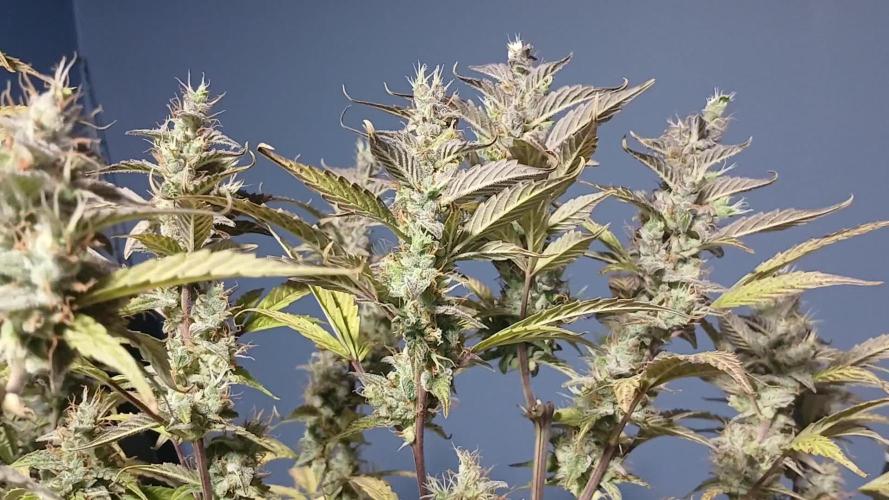
Chopped today, not enough room in dry tent to give her 48 hours in dark prior. The 4 tops didn't develop as well as hoped. It was the first time I topped an auto twice and still ran out of room. On the plus side the plant developed more uniformed. Buds were dense, hard. Hung 4 candelabra looking tops, the rest hung in bread wire chains. Great colors, decent gassy smell. Updates on weight and smoke in about 3 weeks.


Likes
12
Share


@Gardens_of_Of
Follow
- Streching is ended.
- Just like last week, humidity has been a very big problem in Berlin due to multiple storms and heat waves this week as it spiked between 50-85 % outside whole week.
- VPD fluctuated this week between 1,0 and 1.65 kPa , averaging at 1,29 kPa. Better than last week because of the crazy heat wave covering huge humidity.
- Tent temperature fluctuated around 24 at night and 27-28 Celsius at day time, averaging at 25.2. A lot higher than last week even though I have increased the exhaust fan speed but that’s all my exhaust fan can handle.
- Humidity fluctuated crazy between 50-85% this week, averaging at 59.8. Not much I can do other than trusting the non-stop ventilation in the tent.
- This week, I kept giving increased Ph (6.8) of water first half of the week as the medium Ph is still cruising under 6. But then I switched to 6.5 on the 2nd half of the week.
- Much more frosting can be observed on Chemical Bride.
- White pistils are slowly turning orange on both plants and the flowers are gaining mass.
- Both have a similar pleasent gummy smell.
- I believe that Kings Kush is not as capable as Chemical Bride in terms of heat and humidity resistance. My observation is that Chemical Bride is a week ahead already. But let’s see!!
- This week, I will add a dehumidifier to the setup.

Likes
4
Share


@SlickCityOrganics
Follow
By the end of week 6, went on and took the plant of the Autoflower tent and placed it in the 3 x 3 by itself tp begin the flowering process. Gave it water and mycorrhizae.
Likes
18
Share


@Hempface86
Follow
This girl is looking grey and she is gaining some good size considering she is only in a one gallon pot... i keep thinking she's flipping a flower, but she hasn't. So I don't know if we have a photo on our hands, because like I said she's only in one gallon of dirt, I figured she would be flipped by now... I'm going to give her another week.And if she is not in flower and showing sex i'm going to put her in my other ten and put her on a twelve and twelve cycle ... either way she has 9 finger leaves showing some good haze traits ... Thank you to Herbies Seeds for making this grow possible and so far so good... I really hope everyone is doing well out there, and so are there ladies... God bless and happy growing ✌️
Likes
2
Share


@zombikush81
Follow
beginning of the third week of flowering ....! what a nice variety ...!

Likes
29
Share


@Lboogie
Follow
Stretch is still going on, and thing is fine so far, they seem happy. Flowers have started to appear on all, the LA s.a.g.e starting last of the 4.
Now it's gonna be exciting to she how they will develop in bloom.😁
Happy growing to everybody out there✌️


Likes
71
Share


@DogDoctorOfficial
Follow
🌸 Week 7 Flower — Eternity Grow Cup Update 🌸
📍Week 18 from seed
📸 +150 high-quality photos & videos provably more ups but they are shining and they deserve the attention
EC 2.5 | pH 6.2 | Full spectrum + under canopy light tuning
Welcome back to one of the most breathtaking updates so far in the Eternity Grow Cup. Week 7 Flower has arrived with a storm of frost, color, aroma, and structure — this is the beginning of the final masterpiece, and it’s nothing short of spectacular.
Each of the five phenotypes is shining in her own unique way, and the individuality of each plant is now in full display. From deep fruit tones to dense stacking, this week is a celebration of what happens when genetics, environment, and love come together in harmony.
💎 Standouts of the Week
• Pheno #1: Still holding the crown for the most intense fruity profile — bursting with sweetness, almost candy-like, and surpassing all expectations week after week.
• Frost levels are skyrocketing across the board. These buds are starting to look snow-covered, shimmering under every light source.
• Bud structure is really starting to swell — you can see the shift now as things gear up for ripening. We’re talking weight, mass, and beauty.
🔬 What’s Working
This is a week where everything is clicking:
• The mix of Plagron and Aptus nutrition lines is showing insane synergy. The balance of strength and finesse is just right, and the girls are loving it.
• ICL 300 under-canopy lights are performing beyond expectations. They’re lighting up every shaded spot, helping buds form from bottom to top with full integrity. You can see the results in the side buds — tight, frosty, and reaching up.
• We’re holding strong on spectrum tuning and DLI, hitting the right numbers at the right time, and that precision is paying off in how fast these ladies are moving forward.
• Temperatures and airflow have been key — we’re still running the vortex-style air movement, and it’s doing wonders for the microclimate around each plant.
🌿 Just 2–3 Weeks From Harvest
It’s starting to feel real. We’re entering the final arc. The finish line is not far, but right now, it’s all about patience, observation, and letting nature complete its masterpiece. Every moment counts now.
🎥 We’ve documented everything in full 4K and high-res stills. This is a week for the books — every trichome, every pistil, every sparkle. Be sure to head over to YouTube for the full experience and follow the journey with us.
🤝 Special Thanks
To all the growers, new followers, silent watchers, lovers, haters, and everyone in between — thank you. This journey is built with you, and this cup wouldn’t exist without your energy.
To all the participants in the Eternity Cup — congratulations. Every diary, every tent, every effort is valid. We’re getting close to the finish line, and it’s now in the judges’ hands. But no matter what happens, you’re all already legends for growing with intention and passion.
📲 Don’t forget to follow us on Instagram for sneak peeks, unseen content, and special behind-the-scenes looks. Every plant has a story, and we’re telling it together.
With deep gratitude,
Grower’s Love
DD
Reporting directly from 🌍 Eternity Grow Cup to You 🙌
--------------------
Genetics - Runtz https://www.zamnesia.com/6000-zamnesia-seeds-runtz-feminized.html
Nutrients - Plagron https://plagron.com/en/hobby
- Aptus Holland https://aptus-holland.com/
Controls - Trol Master https://www.trolmaster.eu/
LED - https://www.futureofgrow.com/en
LED - https://www.thinkgrowled.com
Soil - https://www.promixgardening.com/en
Germination - Cannakan https://cannakan.com/?srsltid=AfmBOopXr-inLXajXu3QFgKXCXXos4F1oEvScjMKIB5MR5dk8-GJ-F49
DOGDOCTOR 15% off
Smoking Papers - https://ziggioriginal.com/
Terpene saver - https://grovebags.com/
As always thank you all for stopping by, for the love and for it all , this journey of mine wold just not be the same without you guys, the love and support is very much appreciloved and i fell honored with you all in my life
With true love comes happiness Always believe in your self and always do things expecting nothing and with an open heart , be a giver and the universe will give back to you in ways you could not even imagine so
As always, this is shared for educational purposes, aiming to spread understanding and appreciation for this plant. The journey with nature is one of discovery, creativity, and respect. Let’s celebrate it responsibly and continue to learn and grow together!
Growers Love To you All 💚
#EternityGrowCup #RuntzHunt #GrowersLove #CannabisCommunity #AptusHolland #ProMixSoil #TrolMaster #Zamnesia #Plagron #ZiggiPapers #Grovebags
Likes
6
Share

@GoodTimesOrganics
Follow
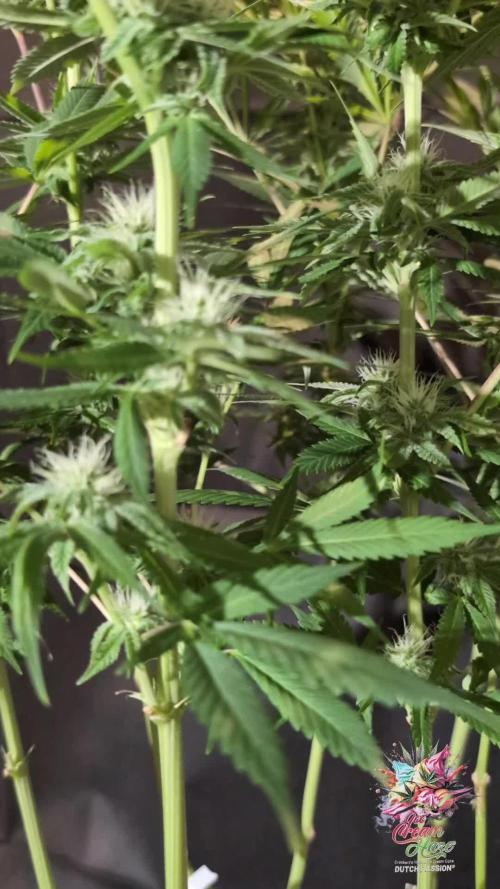
Hi liebe Community! 💚 Nach der dritten Blütewoche bilden sich die Stigmen rasant aus Trichombildung nimmt langsam an Fahrt auf.
Bereits bei meiner regilären Version konnte ich beobachten, das das Icing bei dieser Sorte sehr früh Eintritt und sich dann auch rasant ausbildet.
Die Blütenbildung ist sehr kräftig und der süße Geruch nimmt auch rasant zu.
Außerdem habe ich nun nochmal die Sonnensegel zurückgeschnitten. Ab jetzt werden keine Triebe mehr abgeschnitten und die Pflanze kann sich jetzt voll auf die Blüte konzentrieren.
Die Sanlight habe ich nun auf die stärkste Stufe eingestellt und weiter hochgesetzt.
Nächste Woche bekommt die Pflanze noch einen PK Komposttee.
Insgesamt ist die Pflanze sehr Vital und hat eine sehr schöne Wuchsform und eine schöne Blütenstruktur😉
Die Wachstumsbedingungen im Growzelt sind weiterhin am Optimum und Stabil:
———————
🌞 Temp: 24,3°C
🌚 Temp: 20 °C
💨 RH: 56%
VPD: 0,97 kPa
😎PPFD: 830 mqm
———————
Stay Tuned! 💚


Processing
Likes
8
Share


@Max1973
Follow
Day 49 - lookin good..... been bending her, trimmin abit, messin with the water solution.....
ph and ppm have been all over the place..... lol
she's been transitioning from grow to flower, and once she settles into night mode, the
solution and growing should stabilize......
the new fan is cool... tents working properly now, neg pressure, drawing in air behind the floor fan, blown around the bottom,
and cpu extractor fan pushing the air out the top of the tent, straight into the filter..... really nice way to run a little tent, low airflow........
keeps the impurities out of the buds.....
the stalks have all tuffened up since trimmin, and pretty strong now.... should hold the full weight that's about to occur all over the place......
i've simplified the nutrients, they were gettin alittle confusing, so started doin nuets differently, .... so,
just making my own nuet solutions, nothing fancy just base amount of normal elements ....
should be a pretty good christmas ......
Day 51 - pics/vids...
👍😎


Likes
6
Share


@Eldorado_ed
Follow
Absolutely over the moon with my first attempt really interesting and fun think I have myself a new hobby and grateful for the help from you guys on here ✌️🏻


Likes
21
Share


@Mosquito_Haarlem
Follow
Week nummer 6 en ze is gaan bloeien.
Heb haar in de tent geplaatst DS60 onder de ledverlichting.
Omdat ik Spa Reine mineraalwater gebruik en dit zeer weinig calcium en magnesium bevat heb ik haar ook extra calmag gegeven.
Laten we zien hoe ze zich deze week gaat ontwikkelen.
Ik zal gedurende de week nog verse foto's updaten.
To be continued....

Likes
21
Share


@TripLife
Follow
The bigger plant is doing amazing, I supercropped the top branch and it instantly accepted it and the buds were reaching within the hour! The little guy I’m still not so sure about yet.
Likes
34
Share


@SalocinSpecial
Follow
D75 (04/02/2021): Glue Gelato has been in the closet for 24h. Banana Kush is ripening everyday. I might place her in the closet with light ON for one more week when Glue Gelato will be chop and in the tent drying. RH% and temperature are fine in the closet at the moment and it does not smell that strong with Glue Gelato inside. That give me an option to continue Banana Kush for more days in it.
- temp in the tent: 22C light ON ; 18-19C light OFF
- temp in the closet: 18-19C
- water: approx. 3L of tap water for Banana Kush
- RH in the tent: 42% light ON ; 45% light OFF
- RH in the closet: 42-44%
D76 (05/02/2021): Glue Gelato has been in the closet for 48h. I will chop her tonight! I will place Banana Kush in the closet with light ON. She needs at least one more week I guess
- temp in the tent: 22C light ON ; 18-19C light OFF
- temp in the closet: 18-19C
- water: approx. 2L of tap water for Banana Kush
- RH in the tent: 40% light ON ; 46% light OFF
- RH in the closet: 42-44%
D77 (06/02/2021): Banana Kush is in the closet and the environment is good at the moment.
- temp in the closet: 18-19C
- no water
- RH in the closet: 42-44%
D78 (07/02/2021): Banana Kush buds are getting fat. When I squeeze them I can tell that they are getting denser. She drink less water which is a sign she's getting closer to the end.
- temp in the closet: 18-20C
- no water
- RH in the closet: 40%
D79 (08/02/2021): I gave around 3L of tap water. Trichomes still look cloudy with no amber but I can see more of them and they look bigger.
- temp in the closet: 20-21C
- water: 3L of tap water
- RH in the closet: 35-40%
D80 (09/02/2021): She get frostier everyday! It's beautiful to see! She definitely have more trichomes than she had last week when she still was in the tent. The trichomes of Banana Kush are not yet at the same stage where Glue Gelato's trichomes was when I chopped Glue Gelato. I'm glad that I waited and that I did not chop both at the same time.
- temp in the closet: 20-21C
- no water
- RH in the closet: 35-40%
D81 (10/02/2021): I gave approximately 3L of tap water. She's a beauty but she's not ready. I said one more week last week... I say the same haha one more week! 😅😏
- temp in the closet: 20-21C
- water: tap water, 130 PPM, PH7.0
- RH in the closet: 35-40%

