




@UglyEarth
Follow
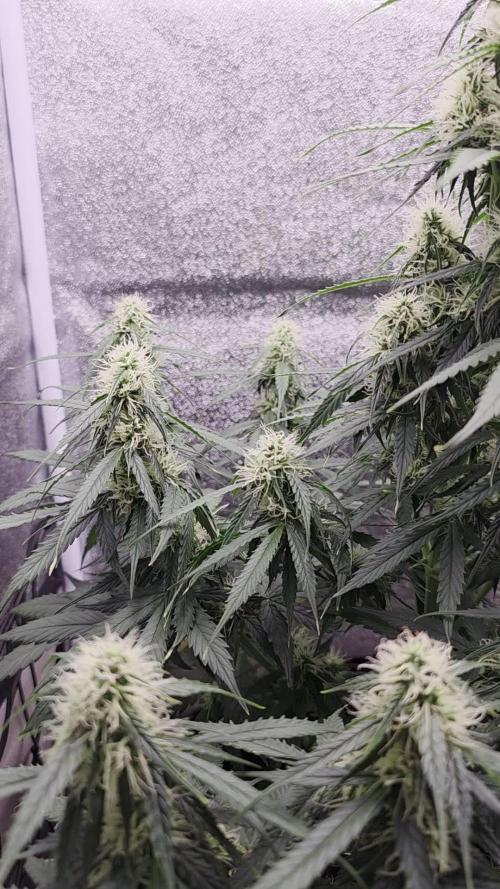
This week was a bit chaotic due to the transplant of the seedlings, setting up a new tent, and the CalMag deficiency in the "big" ones. 🌿 But I managed to get it all under control. 💪🌱




@DogDoctorOfficial
Follow
Get ready for a fun and informative update, including the training techniques i am using to shape our Tangie into a true ninja warrior!
Our Tangie has been flourishing with energy and vigor, showcasing her ninja skills at every turn. With each passing day, she grows taller and stronger, reaching for the sky like a true botanical ninja. Her vibrant green leaves are a testament to her health and vitality, shimmering in the grow room like emerald blades of a ninja's sword.
To help guide our Tangie's growth and maximize her potential, i've employed the art of Low Stress Training (LST). Picture this: we're like plant whisperers, gently manipulating her branches to create a symphony of growth. Through the technique of leaf bending, i encourage her branches to spread out, creating a wide and even canopy. It's like teaching her the ancient martial art of flexibility and agility.
By skillfully bending and tying down her branches, i ensure that each bud site receives an equal amount of light. This training technique not only promotes better light penetration but also encourages the growth of multiple colas, leading to a higher yield of resinous and potent buds. Our Tangie is like a ninja warrior, adapting to her environment and maximizing her potential with every training session.
But training isn't limited to physical techniques alone. I am also nurturing our Tangie with the perfect balance of nutrients from Aptus Holland. Their specialized formulas act as her ninja fuel, providing her with the essential elements she needs to grow strong and healthy. With each nutrient feeding, she absorbs the power of growth and development, inching closer to becoming a legendary ninja of the cannabis realm.
Of course, light plays a crucial role in our Tangie's training regime. She thrives under a PPFD (photosynthetic photon flux density) of 500, bathing in the intense glow of her training camp. These photons are like her training partners, pushing her to optimize photosynthesis, grow denser foliage, and develop the building blocks for future bud production. With each photon absorbed, she becomes a more formidable ninja warrior.
Creating the ideal environment for our Tangie is essential for her training success. She prefers a cozy temperature range of 27 to 28 degrees Celsius, providing her with the warmth and comfort of a tropical paradise. With a relative humidity level of 60 to 70%, she thrives in the perfect balance of moisture and freshness, creating an environment that supports her ninja-like growth and training.
Before we conclude, let's give another shoutout to Dutch Passion, the master breeders behind our Tangie strain. Their dedication to crafting top-notch genetics has allowed us to embark on this incredible journey. I am forever grateful for their expertise and commitment to the world of cannabis cultivation.
So let's continue this thrilling adventure with our Lego Ninja Tropical Tangie Run. Embrace the power of LST and leaf bending as you shape your plants into formidable ninja warriors. Remember to provide them with the right nutrients, light, and environment to support their growth. May your gardens be filled with the spirit of the ninja, and may my Tangie's training lead to an abundance of resinous and flavorful buds.
Stay tuned for the next update, where we'll unravel more tales from the captivating world of our Tangie. Until then, keep training with passion, harness the power of LST, and watch as your plants transform into stealthy ninja warriors.
As always thank you all for stopping by, for the love and for it all , this journey of mine wold just not be the same without you guys, the love and support is very much appreciated and i fell honored and blessed with you all in my life<3 <3 <3
#aptus #aptusplanttech #aptusgang #aptusfamily #aptustrueplantscience #inbalancewithnature #trueplantscience #dutchpassion #dogdoctorofficial #legoninjago #growerslove
With true love comes happiness <3 <3 <3 Always believe in your self and always do things expecting nothing and with an open heart , be a giver and the universe will give back to you in ways you could not even imagine so <3 <3 <3
Friendly reminder all you see here is pure research and for educational purposes only
<3 <3 <3 Growers Love To you All <3 <3 <3


@Gardengobblin
Follow
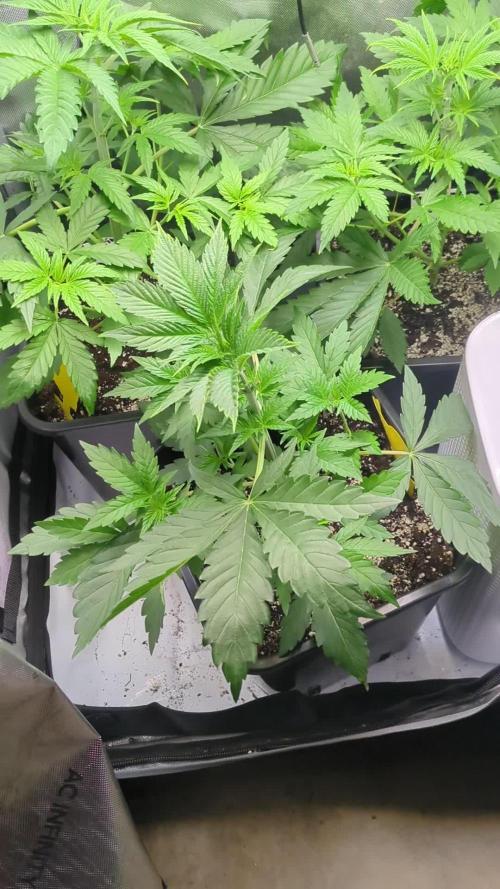
Toujours un bonheur de cultivé les semence fastbuds. La gorilla skittles est ma strain préférer et elle ne semble pas vouloir me décevoir encore cette fois





@PatriciaGant
Follow
Dane, We all should help one another.
Human beings are like that.
We should live by each other’s happiness - not by each other’s misery.
We don’t want to hate and despise one another, share the Joint.
And mother earth is rich and can provide for everyone.
We can Grow enough Happiness, In this paradise, there is room for everyone.
We only exist to bring joy into the world and The way of life can be free and beautiful,
but we have lost the way.
Grow High and Give the world A smile.
At the end we own nothing more then all our memories, lets make them amazing for everyone,
nothing to loose only everything to win.
A last kiss goodby, a second one, softer and long as a sign, that you are woth it.
That Everyone worth who loved and give.
Enought Hippie Talk, now have a nice day and an even better grow, thx for watching by.
week report
main harvest only few days away.
81 1-2 days more maby more
82 a week more maby
the 12/12 light seems to slow her down


@Ilovekush17
Follow
Week 6. Im watering every 2 days. Fish shit and mammoth p every 3rd water. Rest just ph'd water. Alot of tricombs on the Purple Punch. Getting fat and juicy. Probably gonna ha4vest the Purple Punches in a week. GMOs finally coming along starting to fatten up and become a bit crystally. They still got 4 weeks or so left.


@valiotoro
Follow
Hello everyone 😎
Week 7 of flower for the Amnesia Zkittlez🍭
Only 1 plant left then finito✔️
Very nice smell super sweet🤤
The buds are super sticky🔥




@Natrona
Follow
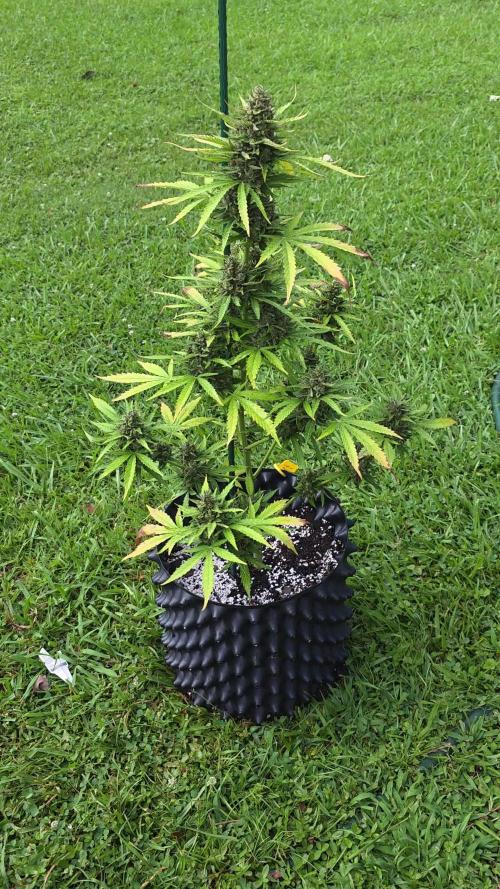
Amnesia Auto from SeedSupreme 2026 Outside grow
7/5-11 W10 F7
Hello Friends,
Our weather has been hazy, hot and humid with thunderstorms, heat advisories and flash flood warnings.
7/7 I did trichome checks with the microscope. They are mostly milky. To allow the soil to dry out, I moved Amnesia inside to my 3x3. I will let the soil dry out for the next few days, do a wet trim and hang her by next week. The mesh bags kept the cabbage moths and Japanese beetles off my plant. Now her dense buds need to dry to prevent bud rot from trapped moisture. The buds are frosty and sticky with very dark brown pistils.
Remember to check out SeedSupreme current sales.
Use my code Natrona20 for a 20% discount on seeds.
https://www.seedsupreme.com/?a_aid=Natrona
July is a big sale month:
• Jul 1–7: Freedom BOGO | BOGO All Seeds Sitewide + free seeds on every order +
• Jul 8–10: 710 THCa Flash | 25% off All THCa Flower & Concentrates (3-day window)
• Jul 15–21: Mix Pack Madness | 30% off All Mix Packs + BOGO All Autos
• Jul 22–28: Strain Spotlight | 50% off 1 featured strain (limited stock, first come first served)
Stay green, growers love 💚🌿
💫Natrona💫


@bioaccessory
Follow
Хотелось побыстрее, а получилось как всегда 😄 К 38 дню от каски растишка только показала пол, и вошла в стадию предцвета, поэтому начало цветения ожидаю на следующей неделе. В остальном же всё прекрасно, кушает хорошо, я постепенно повышаю дозу базовых удобрений, и видимо дойду до табличных значений AN.
upd. Конец недели, убрал все растяжки - к началу цветения готовы. 😎
Спасибо, что заглянули, и будьте здоровы! 🙏
Продолжение следует ...😶


@Naujas
Follow
My house is full of sweet chocolate and fruit aroma:) her flowers are full of shiny trichomes :) the girl only bloomed for 57 days, but she is already ready, maybe her flowering sped up in my grow box, high temperature 33°, because of that under my arm my light was set to 85%. From the first days, the girl showed fast and healthy growth:) I made a timelapse video, but unfortunately due to problems with the SD memory card, it takes 3-4 days at the end of the video, besides, my tent is too small for that :D I also made bubble hash from sugar leaves myself :) I tried Zamnesia seeds for the first time - I hope that someday this seed bank will offer me its products to try again :) thank you all. you were together :) good luck with the growing.


@smokeyspartacus
Follow
the waterworks come covered in some olie residue and i only did a few rinses. I think it kept the ph high for some time and i did a few more water cycles after complete setup. Everytime getting rit of more oil film.
I like the bucketd rinsed the leca pepples in high ph tap water and again it took me some time to get ph down but this time no oil residue :)
After a few days i felt i got ph under control so started the canna nutes schedule.


@Ultraviolet
Follow
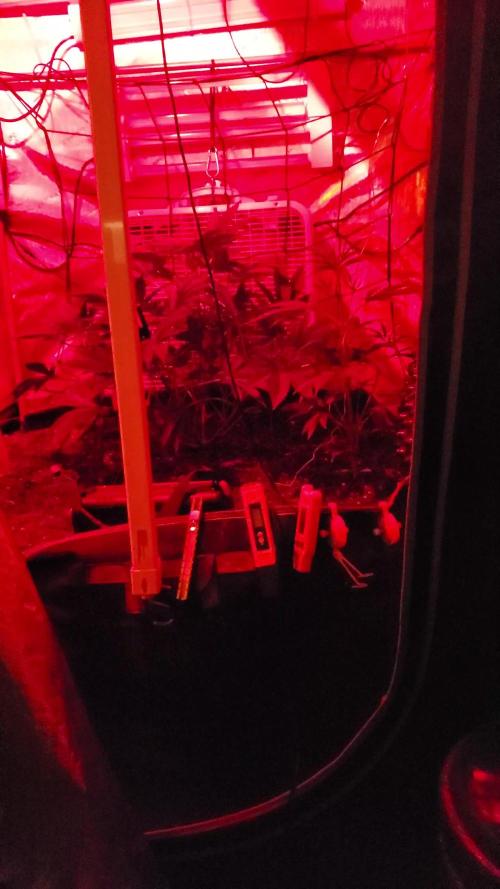
Removed autoflower and put her in her own pot outside the tent.
Foliars applied in strong blue 430nm with 4000Hz tone. 20-minute dose prior to application.
In essence, you're seeing a combination of the infrared light reflected by the plant, which the camera perceives as red, and any residual visible blue light the plant reflects, which results in a purple hue.
I was doing more stretching of the stems, adjusting weights, just a little too much, and it snapped almost clean. I got a little lucky in that it was still connected, wrapped her almost instantly while holding her in place with yoyo's. The core framework is now in place.
If your soil has a high pH, it's not ideal; you want a pH of 6.4, 6.5, or 6.6, which is ideal. If you are over a pH of 7, you have no hydrogen on the clay colloid. If you want your pH down, add Carbon. If you keep the pH below 7, you will unlock hydrogen, a whole host of new microbes become active and begin working, the plant will now be able to make more sugar because she has microbes giving off carbon dioxide, and the carbon you added hangs onto water. Everything has electricity in it. When you get the microbes eating carbon, breathing oxygen, giving off CO2, those aerobic soil microbes will carry about 0.5V of electricity that makes up the EC. The microorganisms will take a metal-based mineral and a non-metal-based mineral with about 1000 different combinations, and they will create an organic salt! That doesn't kill them, that the plant loves, that the plant enjoys. This creates an environment that is conducive to growing its own food.
Metal-based: Could include elements like iron, manganese, copper, or zinc, which are essential nutrients for plants but can exist in forms not readily accessible.
Non-metal-based: Examples like calcium carbonate, phosphate, or sulfur are also important for plant growth and potentially serve as building blocks for the organic salt.
Chelation in a plant medium is a chemical process where a chelating agent, a negatively charged organic compound, binds to positively charged metal ions, like iron, zinc, and manganese. This forms a stable, soluble complex that protects the micronutrient from becoming unavailable to the plant in the soil or solution. The chelate complex is then more easily absorbed by the plant's roots, preventing nutrient deficiency, improving nutrient uptake, and enhancing plant growth. Chelation is similar to how microorganisms create organic salts, as both involve using organic molecules to bind with metal ions, but chelation specifically forms ring-like structures, or chelates, while the "organic salts" of microorganisms primarily refer to metal-complexed low molecular weight organic acids like gluconic acid. Microorganisms use this process to solubilize soil phosphates by chelating cations such as iron (Fe) and calcium (Ca), increasing their availability.
Added sugars stimulate soil microbial activity, but directly applying sugar, especially in viscous form, can be tricky to dilute. Adding to the soil is generally not a beneficial practice for the plant itself and is not a substitute for fertilizer. While beneficial microbes can be encouraged by the sugar, harmful ones may also be stimulated, and the added sugar is a poor source of essential plant nutrients. Sugar in soil acts as a food source for microbes, but its effects on plants vary significantly with the sugar's form and concentration: simple sugars like glucose can quickly boost microbial activity and nutrient release. But scavenge A LOT of oxygen in the process, precious oxygen. Overly high concentrations of any sugar can attract pests, cause root rot by disrupting osmotic balance, and lead to detrimental fungal growth. If you are one who likes warm tropical high rh, dead already. Beneficial, absolutely, but only to those who don't run out of oxygen. Blackstrap is mostly glucose, iirc regular molasses is mostly sucrose. Sugars, especially sucrose, act as signaling molecules that interact with plant hormones and regulate gene expression, which are critical for triggering the floral transition. When sucrose is added to the growth medium significantly influences its effect on floral transition.
Probably wouldn't bother with blackstrap given its higher glucose content. Microbes in the soil consume the sugar and, in the process, draw nitrogen from the soil, which is the same nutrient the plant needs. Glucose is not an oxygen scavenger itself, but it acts as a substrate for the glucose oxidase (GOx) enzyme, effectively removing oxygen from a system. Regular molasses (powdered if you can), as soon as she flips to flower or a week before, the wrong form of sugar can delay flower, or worse. Wrong quantity, not great either. The timing of sucrose application is crucial. It was more complicated than I gave it credit for, that's for sure. When a medium's carbon-to-nitrogen (C:N) ratio reaches 24:1, it signifies an optimal balance for soil microbes to thrive, leading to efficient decomposition and nutrient cycling. At this ratio, soil microorganisms have enough nitrogen for their metabolic needs, allowing them to break down organic matter and release vital nutrients like phosphorus and zinc for plants. Exceeding this ratio results in slower decomposition and nitrogen immobilization, while a ratio below 24:1 leads to faster breakdown and excess nitrogen availability.
Carbon and nitrogen are two elements in soils and are required by most biology for energy. Carbon and nitrogen occur in the soil as both organic and inorganic forms. The inorganic carbon in the soil has minimal effect on soil biochemical activity, whereas the organic forms of carbon are essential for biological activity. Inorganic carbon in the soil is primarily present as carbonates, whereas organic carbon is present in many forms, including live and dead plant materials and microorganisms; some are more labile and therefore can be easily decomposed, such as sugars, amino acids, and root exudates, while others are more recalcitrant, such as lignin, humin, and humic acids. Soil nitrogen is mostly present in organic forms (usually more than 95 % of the total soil nitrogen), but also in inorganic forms, such as nitrate and ammonium. Soil biology prefers a certain ratio of carbon to nitrogen (C:N). Amino acids make up proteins and are one of the nitrogen-containing compounds in the soil that are essential for biological energy. The C:N ratio of soil microbes is about 10:1, whereas the preferred C:N ratio of their food is 24:1 (USDA Natural Resource Conservation Service 2011). Soil bacteria (3-10:1 C:N ratio) generally have a lower C:N ratio than soil fungi (4-18:1 C:N ratio) (Hoorman & Islam 2010; Zhang and Elser 2017). It is also important to mention that the ratio of carbon to other nutrients, such as sulfur (S) and phosphorous (P) also are relevant to determine net mineralization/immobilization. For example, plant material with C:S ratio smaller than 200:1 will promote mineralization of sulfate, while C:S ratio higher than 400:1 will promote immobilization (Scherer 2001).
In soil science and microbiology, the C:S ratio helps determine whether sulfur will be released (mineralized) or tied up (immobilized) by microorganisms.
A carbon-to-sulfur (C:S) ratio smaller than 200:1 promotes the mineralization of sulfate, when the C:S ratio is low, it indicates that the organic matter decomposing in the soil is rich in sulfur relative to carbon. Microorganisms require both carbon and sulfur for their metabolic processes. With an excess of sulfur, microbes take what they need and release the surplus sulfur into the soil as plant-available sulfate
A carbon-to-sulfur (C:S) ratio higher than 400:1 will promote the immobilization of sulfur from the soil. This occurs because when high-carbon, low-sulfur materials (like sawdust) are added to soil, microbes consume the carbon and pull sulfur from the soil to meet their nutritional needs, temporarily making it unavailable to plants.
200:1 C:S 400:1: In this range, both mineralization and immobilization can occur simultaneously, making the net availability of sulfur less predictable.
This dynamic is similar to how the carbon-to-nitrogen (C:N) ratio regulates the availability of nitrogen in soil. Just as microbes need a certain amount of nitrogen to process carbon, they also require a balanced amount of sulfur. Both mineralization and immobilization are driven by the metabolic needs of the soil's microbial population.
Sulfur is crucial for protein synthesis. A balanced ratio is particularly important in relation to nitrogen (N), as plants need adequate sulfur to efficiently use nitrogen. A severely imbalanced C:S ratio can hinder the efficient use of nitrogen, as seen in trials where adding nitrogen without balancing sulfur levels actually lowered crop yields.
Maintaining a balanced carbon-to-sulfur (C:S) ratio is highly beneficial for plant growth, but this happens indirectly by regulating soil microbial activity. Unlike the C:N ratio, which is widely discussed for its direct effect on nutrient availability, the C:S ratio determines whether sulfur in the soil's organic matter is released (mineralized) or temporarily locked up (immobilized).
Applied 3-day drought stress.
Glucose will hinder oxygenation more than sucrose in a solution because glucose is consumed faster and has a higher oxygen demand, leading to a more rapid decrease in oxygen levels. When cells respire, they use oxygen to break down glucose, and this process requires more oxygen for glucose than for sucrose because sucrose must first be broken down into glucose and fructose before it can be metabolized.
In a growth medium, glucose is a more immediate and universal signaling molecule for unicellular and multicellular organisms because it is directly used for energy and triggers a rapid gene expression response. In contrast, sucrose primarily acts as a signaling molecule in plants to regulate specific developmental processes by being transported or broken down, which can be a more complex and slower signaling process.
Critical stuff.
During wakefulness (DC electric current) life can not entangle electrons and protons. During the daytime, the light is sensed as multiple color frequencies in sunlight. Coherence requires monochromatic light. Therefore, at night, IR light dominates cell biology. This is another reason why the DC electric current disappears during the night. The coherence of water is maintained by using its density changes imparted by infrared light released from mitochondria in the absence of light. This density change can be examined by NMR analysis, and water is found to be in its icosahedral molecular form. This is the state that water should be in at night. This is when a light frequency is lowest and when the wave part of the photoelectric effect is in maximum use.
3600


@Hashy
Follow
Grow diary 11.
This grow I'm running 4 diaries, one for each strain in the tent. So my plan is instead of a week being 7 days, my weeks are most likely going to be every 10 days. I think I'm going to take pictures every 5 days so there is a mid week and end week shot.
I'm germinating in my propagation tent which is secret jardin dp60. I soaked the seeds in water for 15 hours. The seeds sank so i took that as a good sign. After the seed had soaked for 15 hours I then soaked the rockwool cube for 30 mins in PH 5.8 water with 0.5ml/L hydroguard. Gave the cube a shake and let it drain for 30 mins before placing the seed pointy side down so the top of the seed is level with the cube. Covered seed with a loose bit of rockwool. Placed into propagator with the sunblaster t5 lights on constant. After 71 hours the seed popped
TEMP
MAX 34.2C
AVG 30.1C
MIN 25.8C
HUMID
MAX 86.3%
AVG 80.3%
MIN 57.2%
VPD
MAX 2.07
AVG 0.83
MIN 0.64
Hopefully back in 10 days.


@Prototype0181
Follow
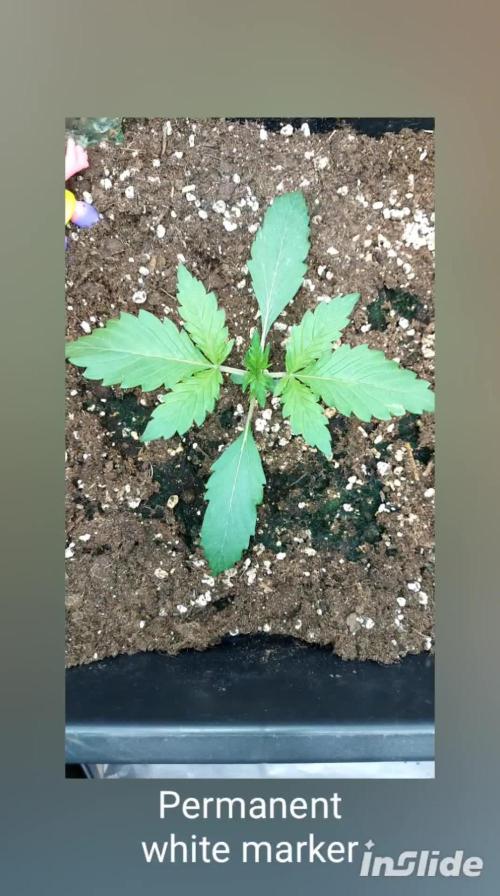
Flipped on 17-7 to flower🌺 and the first issue came 🤷 the sativa dom cookie ( stretchy girl ) couldnt handle the feed and got a little burned, nothing to bad. She's going on a water only diet next two rounds.


shorts_status_processing




@squalino
Follow
📖 Chroniques de l'Oasis : La Marque Blanche
🐪 Chapitre 10 : Le Sacre de la Grande Dame
Date : 29 Avril 2026
Âge : J+70
Taille : 67 cm
Le temps des grandes enjambées vers le ciel est désormais révolu. La Sultane, que je voyais autrefois comme une adolescente impatiente de conquérir l'espace, s'est métamorphosée. Elle s'est stabilisée à 68 cm, comme si elle resserrait son corset de résine pour mieux porter ses atours. Elle a acquis ce port de tête altier des dames de la haute noblesse du Rif, celles qui ne courent plus, mais que l'on vient admirer.
Son charme est devenu magnétique. Elle déploie ses "atouts" avec une assurance qui impose le silence : ses fleurs se parent de dentelles de cristaux si denses que le blanc de ses pistils scintille désormais comme des colliers de perles sur une robe de gala. On ne voit plus qu'elle. Elle occupe l'espace avec une noblesse naturelle, m'invitant à contempler la perfection de ses formes avant le grand final du voyage.
🏜️ Le Climat du Sanctuaire
La stabilité est le luxe des reines :
Chaleur : 25°C le jour / 21°C la nuit.
Humidité : 50%.
Lumière : Intensité 75%, toujours à 55 cm de la couronne royale.
Le Banquet de la Sultane
Pour soutenir son rang et la densité de ses bijoux, elle a reçu son plus riche festin :
Le 27/04 :
Apport de PK 5-8. C'est le signal du gonflement final, l'élixir de poids qui transforme son charme en un trésor de cristal.
Le 30/04
élixir de vie
apport de 1,5 litre eau PH 6,3
Le 03/05
élixir de vie
apport de 1,5 litre eau PH 6,3
🔬 L'Analyse du nomade
En observant , on voit que la "Grande Dame" est en plein travail de finition :
L'Éclat du Diamant :
La production de résine s'intensifie. Les trichomes envahissent désormais les "sugar leaves" (petites feuilles de têtes), créant ce halo argenté typique de la White Marker.
Le Miroir de Pistils :
La masse de pistils blancs est à son apogée. Ils sont si denses qu'ils masquent le cœur des calices, reflétant la lumière exactement comme un miroir de palais. C'est l'atout majeur de son élégance actuelle.
Le Sacrifice de la Noblesse :
Le jaunissement des grandes feuilles du bas s'accentue. C'est le signe que la Dame puise dans ses dernières réserves personnelles pour faire briller ses joyaux. C'est une fin de cycle saine et naturelle.
📜 L'Anecdote du Rif :
La Justice de la "Jmaâ" et l'Honneur des Champs
Dans les montagnes du Rif, la plantation était bien plus qu'une culture ; c'était l'honneur de la famille et la survie de la tribu. Voler dans le champ d'un autre était considéré comme l'un des crimes les plus graves.
Le savoir ancestral : La justice n'était pas rendue par la police, mais par la Jmaâ (le conseil des sages de la tribu). Les plantations n'avaient pas de clôtures, elles étaient protégées par le "Haous" : un code d'honneur sacré.
Si un voleur était pris en flagrant délit dans une plantation, le châtiment était éducatif et impitoyable. On ne l'emprisonnait pas. On l'emmenait sur la place du village, et il devait payer une "Amende de Sang" (Laâda) souvent sous forme de bétail. Mais le plus dur était le "Tach-hir" : la honte publique.
Le voleur devait traverser le village avec un sac de terre sur la tête, symbolisant qu'il avait tenté de voler la terre de ses frères. Personne ne lui adressait plus la parole pendant une lune.
Dans le Rif, on disait que "celui qui vole une fleur vole l'âme de la montagne". La peur d'être banni de la communauté était bien plus efficace que n'importe quel mur de pierre.
merci a tous qui me suivez et m'encourager
à bientôt pour la suite



@Budz_Bunny
Follow
Grow Report Week 14: The Final Phase of Flowering is Approaching
Hello dear grow friends,
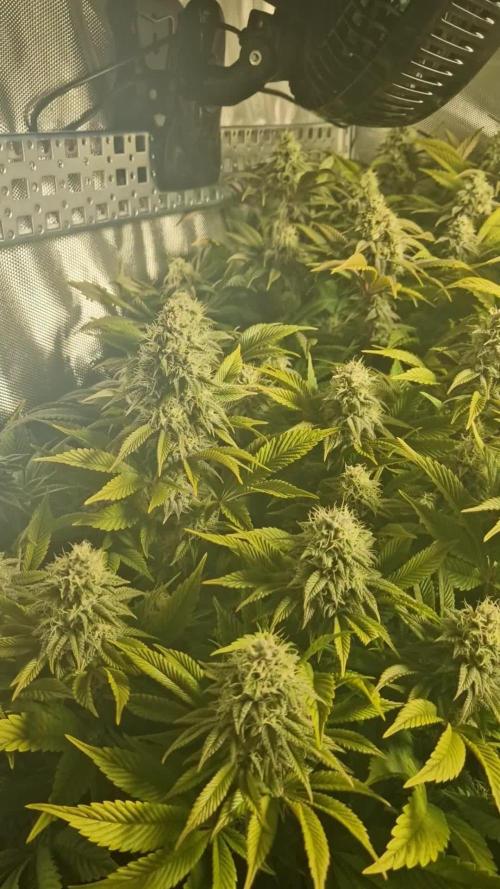
We’re starting a new week, and I’m pleased to report that everything is going well. Although the rear area of the grow is not yielding as lush results as the front, I am overall very satisfied, especially with the scents.
Scent and Resin
All plants really smell excellent and are well-resined, which indicates a good effect. I expect that the plants will need about 2-3 more weeks to mature.
Expectations and Hopes
I hope that especially the plants in the rear area will catch up a bit. The next few weeks will show how the buds will develop in their fullness and potency.
I look forward to sharing the progress with you and am curious to see what the coming time will bring. Until the next update!
Thank you for being there and all the best for your grows! 😊


@Mimi420
Follow
Day 42 — FLO | Mixed SCROG (120×80) Box smells unreal — sticky as hell. Buds are packing weight and the trichs are starting to turn milky in spots, but most are still crystal-clear so I’m letting them cook a bit longer. Canopy is fat, structure solid; loads of resin on every cola — fingers already gluey from checking. Night temps and RH still a pain (cold garage), so I’m watching for any mold hotspots and keeping airflow moving. Overall super happy with how this mixed run turned out so far.
Quick state:
Lights: 400W HPS + 300W LED (4000K) — plenty of punch.
Media: 20 L smart pots, BioBizz soil + myco, organic feeds (BioBloom, TopMax, Green Sensation).
Training: SCROG, LST/HST done, minimal tweaks now — mostly letting the flowers fatten.
Trichomes: pockets of milky, majority still clear — not chop-ready yet, keep peeping with scope every 2–3 days.
Plant-by-plant notes (position → short ID + what I see)
Back-left — Wedding Cake (Portland)
Very frosty, main colas are dense and sugary. Pistils starting to darken a bit, buds showing early signs of swelling. Trichome coverage is heavy — this one will likely be a resin monster. Watch for the classic sweet/creamy aroma to deepen.
Back-center — Kush Crasher
Properly turning purple and looking gorgeous. Leaves are showing that cool kush coloration and the colas are chunky and stout. Very sticky, strong nose developing (earthy / diesel kush). Keep temps stable so the purple stays and you don’t stress it too hard.
Back-right — AK-47
Shorter, compact nodes but stacking nice little cola clusters. Classic AK structure — not the frostiest but reliable bud density and a punchy terp profile expected. Nice even development under the HPS.
Front-left — Double Krush
Buds forming tight clusters — a little leaner than the gassier strains but foxtailing less and stacking nicely. Shows vigour and is filling in under the canopy. Good candidate for chunky colas if you let it finish a touch longer.
Front-center — Wappa
Main cola is a beast — this one’s the show-stealer for bulk. Fat, chunky top cola, already showing awesome density and slight color shift. Expect a heavy, compact cola at chop. Loving how the Wappa is responding to your SCROG.
Front-right — Detroit Runtz
Longer, slightly looser colas compared to the others but super resinous. Shows those fruity/runts vibes — buds are coating in trichomes and the structure looks promising for aroma/density trade-off. Might finish a touch sooner or later depending on phenotype, keep an eye on the trichs.
What I’d do next (short checklist):
Keep scope-checking trichs — pockets of milk = start of the final swell. Most still clear → not ready yet.
Hold off major defol or HST now; only small tidy-up if airflow spot is tight.
Watch RH closely at night — lower if I can (dehumidifier or heater + intake trick). Mold is the enemy at this point.
Last heavy feed flush plan: stay conservative — these look on the edge of finishing, so taper nutrients as trichs go 30–50% milky and pistils darken.


@LockDownGrow
Follow
ok so everything has gone fantastic , no nutrient burns at all , and have been slowly creeping up the base nutrients , i have stopped the cal mag and now adding house and gardens bud XL at full strength these girls are now in full swing of flower and i bought a new ph stick this week ,
i have found when PHing the feed bucket that its best too have air stones in the bucket , add all nuts and then ph but do not use the feed that day as if you check the next day the ph is off again so i left it 24 hours after i add more ph down , and it seems too make the measurements alot easier and stable , i have bent down the main stems " without damaging them onto my netting too A keep the canopy all the same high so my lighting is covering all plants at the same distance and also it allowed the side stems too reach up too ,
i also was sponsored another new led light by kingbo this week so have added another 600watt led too the grow , so now have two 600's and one 900watt , and temps are still fine sitting at 24c lights on and 19-20 off , so am pleased with that , this lady is by far the bushyist plant with the most branches she also didn't stretch much and is packed with bud sites ,